Resources for Studying the Prophets

This past Sunday we began a new series at White Fields called “Remember the Prophets“.

The idea for the series comes from James 5:10, where James tells us to “remember the prophets who spoke in the name of the Lord. Take them as examples of patient endurance under suffering.”  In this series, we will be looking at a different Old Testament prophet each week, considering their lives and their messages and what we can learn from them.

remember the prophets main title 16x9

We are moving through them chronologically, and so began with Amos, an interesting person with an important message. Click here to listen to that message: Amos: Faith that Works

This Sunday we will continue the series by looking at Hosea, a gripping story of adultery and faithfulness which gives us insight into God’s heart.

Resources for Studying the Prophets

Generally speaking, the prophetic books are not well known by many people who even regularly read the Bible. Part of the reason for that is because of the negative tone of some of the books, as well as the feeling that without understanding the context of the books, they don’t make sense.

People have asked me at times what books or materials are good to use if they want to get to know the prophetic books better. Here are my top two recommendations:

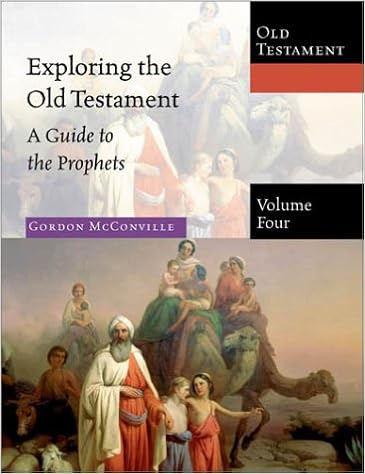
Exploring the Old Testament: A Guide to the Prophets, J. Gordon McConville

Image result for exploring the old testament a guide to the prophetsI had the pleasure of studying under Gordon McConville at the University of Gloucestershire in England, where he is professor of Old Testament theology. This was one of my text books, but is part of a great series from Inter-Varsity Press and is very accessible to the average reader and also scholarly at the same time.
On the scholarly side, this book tends to get a little bit into the weeds about theological discussions and debates, but the introductions and outlines of the books, their themes and their structures are very good. In other words, you can use it to go as deep as you’re ready to go.

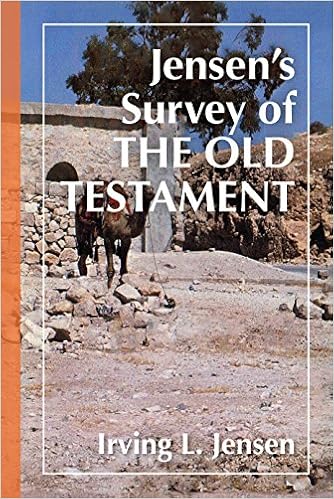
Jensen’s Survey of the Old Testament, Irving L. Jensen

When I first became a pastor, one of my mentors told me, “You’re going to need some books.” He then walked me into the book store at the church we were at and pulled Jensen’s surveys of the Old Testament and New Testament off the shelf and handed them to me.
The benefit to these books published by Moody Press is that rather than being a commentary that tells you information, they instead instruct you about how to ask the right questions. Thus, you are the one doing the exegetical work, or the inductive Bible study, rather than just passively receiving information. They do, however, give you important background information in order to get the context you need, but they also tell you where to go to get that context if it is found in other places in the Bible.

I hope these resources are helpful for you, as they have been for me!

How Can You “Count it All Joy” When Hardships Come Your Way?

In the month of December, we did a month-long series at White Fields on the topic of joy, and how Christianity gives a unique perspective on joy because it finds the source of joy in a unique place.

This past week, Mike and I sat down to discuss Christian joy and what it means when the Bible tells us to “count it all joy when you fall into various trials”, and what this means especially at the outset of the new year.

Here is a link to the Joy to the World series, where you can listen to those messages, and here is the video of our discussion:

(if you watch closely, I get a phone call in the 6th minute of the video!)

How to Not Be Boring

I gave a talk this past July at the Expositors Collective event in Denver which was posted this week on the Expositors Collective Podcast.

The message was on the topic of homiletics, which is the art of preaching well.

In the talk I described why it is that someone can present a message which is accurate and true, and yet so crushingly boring that it makes you want to cry. I also give some instruction on how not to do that, and how to teach and preach well by tapping into the power of narrative. Finally I give a few very practical tips about structure, illustrations and preparation.

Check it out:

Making Resolutions is Not a Lack of Faith, It Can Be an Act of Faith

You know the drill: the parking lot at the gym is full on New Year’s Day, but by March it’s empty again. “Why bother making New Year’s resolutions,” some ask, “if I’m just going to break them anyway?”

Others, I have noticed, state that they do not make New Year’s resolutions because they choose instead to “trust in God” rather than “rely on themselves,” assuming that to make plans and set goals is antithetical to faith, trust and reliance on God.

But is it?

I might argue that not setting goals and making plans is what reflects a lack of faith.

Real Faith Manifests Itself in Actions

The theme for our ministry year at White Fields for 2019 is: “Faith in Motion”, and during this year, we will be studying the Epistle of James, as well as looking at the lives of some of the Old Testament Prophets, because James tells us to “remember the prophets who spoke in the name of the Lord. Take them as examples of patient endurance under suffering.” (James 5:10)

49124887_529821080863590_6906526974991138816_n

We will begin that series this Sunday by looking at Amos: a man who – in a time of “professional prophets” was a mere shepherd and fig-picker, but was given a calling and message from God, and he responded faithfully. In other words: his faith in God was reflected in his actions of obedience.

James famously tells us: “I will show you my faith by my works.” (James 2:18). The point is clear: real faith manifests itself in actions. If you really believe something is true, you will live – and plan – accordingly.

However, James also warns us against presumption in this. He says: ‘Come now, you who say, “Today or tomorrow we will go into such and such a town and spend a year there and trade and make a profit”— yet you do not know what tomorrow will bring. What is your life? For you are a mist that appears for a little time and then vanishes. Instead you ought to say, “If the Lord wills, we will live and do this or that.” (James 4:13-15)

The solution, James tells us, is NOT to not make any plans, but rather to still make plans, but submit those plans to God, and be flexible if God decides to take you in a different direction.

In other words: making resolutions (whether at the New Year or any other time of the year) can actually be an outworking of genuine faith. If you set goals which are in line with biblical and godly values, and make plans for how you are going to do those things, that is an act of stewardship.

A Matter of Stewardship

God has a LOT to say about stewardship in the Bible – starting with: Moreover, it is required of stewards that they be found faithful. (1 Corinthians 4:2). The point of stewardship is that you have been entrusted with certain things, and given a responsibility to use them according to the master’s wishes and purposes.

Jesus told his disciples: “I am the vine, you are the branches. Apart from me, you can do nothing.” (John 15:5) But to conclude that this means that we should then never attempt to do anything would be foolish and not at all what Jesus intended. It is not apart from Him that we attempt to accomplish anything, but with Him and by His power.

Paul the Apostle wrote this: “But by the grace of God I am what I am, and his grace toward me was not in vain. On the contrary, I worked harder than any of them (the other apostles), though it was not I, but the grace of God that is with me.” (1 Corinthians 15:10)

It is wrong to think that planning, effort and thoughtfulness are somehow opposed to spirituality. Rather these are faith in motion: the outworking of values which come as a result of seeking God and seeking to follow God – similar to Daniel, who “resolved in his heart not do defile himself” while in Babylon. (Daniel 1:8) That was a resolution based on a conviction, and an act of faith, not of self-reliance.

Challenging Goals Actually Make You More Dependent on God

One of the greatest benefits of setting attainable, yet challenging goals is that it also fuels my prayer life. If I set goals that I cannot achieve on my own, apart from the work of God, then I am in a position of being even more dependent on Him.

My Resolutions Annual Goals

I don’t set “New Years resolutions” per se, but what I do every year is set attainable, yet challenging goals for the year which serve as guides for me later on, when I’m not feeling motivated or when I lose steam or need to be reminded of what I should be working on or towards.

I’ve found that having goals keeps me focused and motivated over longer periods of time. I can look back at them and be reminded of the things which I believed at one time were important guides to keep me on track.

Some of my goals are family-related. Some are related to my work as a pastor. Many others are personal. I set goals for how many books I will read, and in which languages. I set goals for how many kilometers or miles I will run, and I set goals to accomplish certain projects.

I have been doing this for the last several years, to good effect. I haven’t always met all of my goals, but at least having the goals kept me moving in the right direction on the days when I am tired or begin to miss the forest for the trees – and lose sight of the big picture.

My Advice on Setting Goals: Make them Specific and Measurable

I encourage you to consider setting some goals here at the outset of the year. If you are a Christian, let biblical and godly values drive your goal setting. But don’t only set goals, also map out plans for actually attaining them. If you plan to run 500 miles, calculate how many miles you will need to run each week. If you plan to read through the Bible this year from cover to cover, figure out how much you need to read each day in order to do that.

Don’t make goals that are not specific; rather than saying “I want to get in shape” or “I want to be kinder”, set concrete, specific and measurable goals, so that you will be able to measure whether you succeeded in reaching those goals or not.

I wish you all the best in this new year! May it be a year in which you walk with God like never before!

The 7 Most Popular Posts of 2018

person writing on notebook

Thank you for taking the time to read and engage with this blog!

Our readership increased this year by 230% over last year, which itself was a 90% increase over the year before. At this point, the blog is being visited about 40,000 times a year by about 30,000 people.

These were the most popular posts from 2018:

  1. Pastors, Depression and Suicide

  2. Why Did Jesus Tell Some People to Keep Quiet About His Miracles and Identity?

  3. Anthony Bourdain, Suicide and the Bible

  4. Why the Dead Sea Scrolls Matter for Christians

  5. Will Studying Science Make You an Atheist?

  6. Making Sense of Different Bible Translations

  7. Expository Preaching: Structure and Progression

If you’ve found any of the content on this site helpful, please share it with others!

Thanks, and Happy New Year!

Falling Through the Cracks, or Straying Sheep?

white and black animal standing on green grass

“It’s an all-too-common phenomenon in churches. A church member stops showing up on Sunday mornings. A few weeks pass, and then a few months, before someone notices.”

This past November, on our annual elders retreat, the elders of White Fields Community Church read Jeremie Rinne’s book Church Elders, which is part of the 9 Marks series. Jeremy brings up an interesting point:

‘People in my congregation refer to this phenomenon as “falling through the cracks.” They say things like: “Have you seen Sally around church lately? I hope she didn’t fall through the cracks.”

What if, instead of “falling through the cracks,” we use a different image: “straying from the flock.” That picture seems more fitting for at least two reasons. First, “straying” implies that a disconnected church member bears a personal responsibility to stay involved with the congregation. Sheep don’t ordinarily leave a flock by inadvertently plummeting into a void. They wander away over time through a series of choices.

Second, the image of straying sheep also suggests that someone should keep watch over the flock and take action when a sheep begins to meander away. Yes, each member has a personal responsibility not to roam, but all church members have a duty to watch out for one another. However, one group in particular has an obligation to be on the lookout for straying sheep: the elders.

Elders watch to make sure that no “wolves” infiltrate their congregations with false teaching. But elders also keep watch for unwanted movement in the other direction: members straying away from the flock and from the Lord. This is part of basic shepherding work. Shepherds feed the sheep, guard them from predators, and keep track of them.’

He goes on to point out something interesting from Ezekiel:

‘Ezekiel prophesied against Israel’s leaders by accusing them of negligent shepherding: “Woe to the shepherds of Israel, who have been feeding themselves! Shouldn’t the shepherds feed their flock?” (Ezek. 34:2). And what was one of the ways they failed to shepherd? “You have not . . . brought back the strays, or sought the lost” (v. 4). As a result, “My flock went astray on all the mountains and every high hill. They were scattered over the whole face of the earth, and there was no one searching or seeking for them” (v. 6).’

Jesus, in contrast, is the “good shepherd” who leaves the 99 to pursue the one wayward sheep, something which is indeed “reckless” from a business perspective (and this is exactly what the lyrics of Cory Ashbury’s song “Reckless Love” come from).

The difficult balance from a church leader’s perspective is how to be a good shepherd under Jesus, and being overbearing. May God give us wisdom and grace as we seek to do His work!

SNL’s Nativity

Emma Stone and SNL put together a great skit on the nativity and how un-glamorous it must have actually been to have a baby in a barn.

My favorite lines:

Wise man: “We brought you gold, frankincense and myrrh.” 
Mary: “Great! I heard ‘blankets, diapers and a crib…'”

“I’m sorry, I guess when I found out that I was going to give birth to the Savior, I just assumed it was going to be … nicer. There would be a real bed, and, I don’t know, like: a doctor. And no sheep poop on the floor.”

Check it out:

Project Greatest Gift 2018 Wrap-Up

Project Greatest Gift, our church’s annual outreach to children and caretakers in the foster care system in Northern Colorado, was a success again this year.

20181217_094203
Loading up gifts to deliver for Project Greatest Gift

In the end, we were able to sponsor 241 children and caretakers in three northern Colorado counties. Additionally, we were able to take part in an event to meet and bless the families who were recipients of these gifts. Along with giving gifts, we were able to include materials in each bag explaining to each child and caretaker the hope that we have because of Jesus.

20181217_110711
Delivering gifts in Greeley

One thing to pray about for 2019 is that Weld County (where the majority of our recipients come from) is considering cancelling their program next year. If that happens, White Fields would consider taking over the program from them. This would require significant resources, meaning we would likely have to expand what we do beyond our church. This might just be the next step God has for this project, but do pray for God’s leading and provision as we move forward!

Check out this interview that our worship pastor Mike Payne did with Christine Appel, the founder and leader of Project Greatest Gift:

“They worshiped Him, but some doubted.”

adult art backlit boy

One of the most intriguing phrases to me in the Gospel of Matthew is found in Matthew 28:16. It says that after Jesus’ resurrection, the 11 disciples (Judas was gone now) went to Galilee, to the mountain where Jesus had directed them. And when they say him they worshiped, but some doubted.

“When they saw him they worshiped him, but some doubted.” (Matthew 28:16)

It would seem that it is possible to worship and have doubts – at the same time!

Doubt is Part of Having Faith

In fact, there is a sense in which doubt is an inherent part of faith.

Jude tells us to “have mercy on those who doubt” (Jude 1:22)

For more on doubt and faith, check out: The Role of Doubt in Faith

It has been said that “A faith without some doubts is like a human body without any antibodies in it.” 1

It is important that we ask the hard questions and wrestle through our doubts in order to make sure that what we believe is really true! Anselm of Canterbury famously defined the study of theology as, “Faith seeking understanding”.

So it would seem that is it possible to worship and have doubts – at the same time.

Why Did Matthew Include This Detail?

What is interesting is to consider why Matthew included this phrase in his gospel account. I believe it is because Matthew, with a heart of empathy and pastoral sensitivity, recorded this detail about doubt so that readers would be encouraged in their own struggles between worship and doubt.

This detail shows us that the disciples were not spiritual giants; Jesus gave the “great commission” to go out into all the world and carry on his work by making disciples of him – to an ordinary group of people like you and me.

What Should We Do With Our Doubts?

I was really encouraged this year by a podcast episode I heard this year about the importance of directly addressing the doubts that people have in regard to Christianity: not only for the sake of those who aren’t Christians, but also for the sake of those who are sitting in our churches, who are worshiping, yet they are struggling with doubts. By addressing some of the opposition to Christianity, you are speaking both to critics of Christianity, but also to those who want to believe, but are struggling to do some in some areas.

We did a series earlier this year, which has borne a lot of fruit – even residually. It was called: The Trouble Is… (link to sermon audio – and – link to YouTube follow-up videos). In this series we addressed some of the reasons why people commonly reject or doubt Christianity, including: Science, Hypocrisy, Hell, Suffering, and others.

We put that series onto pen-drives and have handed them out at community events here in Longmont, as well as made them available for free for people who come on Sunday mornings for church, and we have not been able to keep up with demand. We have handed out several hundred of these so far, as people take them to give to friends and co-workers. In fact, I had someone tell me the other day that they have been using the series to lead a group discussion at their workplace; every week they listen to one message and then watch the YouTube follow-up video, and then discuss it. Attending this group are people from all kinds of backgrounds, including agnostics, Buddhists, and lapsed Christians. Very cool to see God using it in this way!

What should we do with our doubts? We should press into them, and seek out answers, because if what the Bible says is true, then it will hold up under scrutiny, and our seeking will lead to finding, which will lead to the dispelling of doubts and the strengthening of faith. This is exactly what happened with the disciples themselves, who – though they doubted here in Matthew 28 – they were able to dispel their doubts and became so convinced of the reality of it, that all of them suffered for it, and all but one (John) gave their lives for it!

I Could Never Believe in a God Who…

As we look forward to the new year and plan our teaching schedule, we will be doing another series along these lines. Likely, this will become an annual thing for us.

This one will be called “I Could Never Believe in a God Who…” We will spend 6-7 weeks directly addressing the questions that people struggle with, such as: sexual orientation, genocide in the Old Testament, the historicity of the Bible, why “bad things happen to good people”, etc.

As I did previously, I will be posting a poll online to gather information and would love your feedback, so please keep an eye out for that.

In the mean time, don’t let your doubts stop you from worshiping! But don’t let your doubts derail you either. Press in, seek God, and seek the answers to the questions you have. You will be strengthened in the process, and you will also be equipped to help others.


The Christmas Song Which Isn’t Actually About Christmas

One of the most characteristic songs of the Christmas season is Joy to the World. It’s sung by carolers and played in instrumental pieces all over the world, and wherever its famous tune rings, it sets the tone of Christmas.

Except… this quintessential Christmas hymn isn’t actually about Christmas.

67460Written by Isaac Watts and first published in 1719, Joy to the World was a hymn Watts wrote based on Psalm 98, which describes the eternal kingdom which God promised to one day bring about via the Messiah.

Watts, in writing this hymn, considered Psalm 98 along with the New Testament writings about Jesus’ second coming, and wrote this song – which is all about what the world will be like when Jesus comes again.

In this sense, we can say that Joy to the World is an Advent hymn, even if it is not necessarily a Christmas hymn.

Advent is the four weeks leading up until Christmas, during which Christians have historically focused their hearts and mind’s on Jesus’ coming. The word Advent comes from the Latin phrase Adventus Domini, which means: ‘the coming of the Lord.’

During the Advent season we do two things:

  1. We look BACK to Jesus’ first coming and the incarnation (Christmas) – that act in which God took on human flesh in order to save us.
  2. We look FORWARD to Jesus’ second coming, when he will come again according to his promise, to judge the nations and rule over his eternal kingdom.

And so it is in this latter sense that Joy to the World is absolutely an Advent hymn, as it looks forward to the second coming of Christ, when nature will sing and Jesus will rule as King over all.

Another thing you may not know about the hymn Joy to the World is that it was originally set to a different tune than the iconic one that we associate with it today.

Over 100 years after Isaac Watts originally wrote the song, a composer named Lowell Mason, inspired by Handel’s Messiah, wrote the melody which we know today. He titled this musical piece Antioch, but it didn’t have any words to go with it.

For three years Mason searched for the right words to fit his melody, finally settling on Isaac Watts’ lyrics for Joy to the World, and the rest is history.

Joy to the World: An Advent Series

This Advent at White Fields Church in Longmont we are doing a series for the month of December, including Christmas Eve, called Joy to the World, in which we will be looking at how the gospel brings lasting, powerful joy into our lives which overcomes sorrow and cannot be taken away.

Yesterday was our first message in that series, which came from the Gospel of John chapter 16 and was titled “Your Sorrow Will Turn Into Joy.” For the audio of that message, click here.

47579721_2049642181725446_1581936317401399296_n

We’d love to have you and your friends and family join us at White Fields this Advent and on Christmas Eve. Our services will be at 4:30 & 6:00pm at the St. Vrain Memorial Building at 700 Longs Peak Avenue in Longmont, Colorado. For more information and directions, click here.