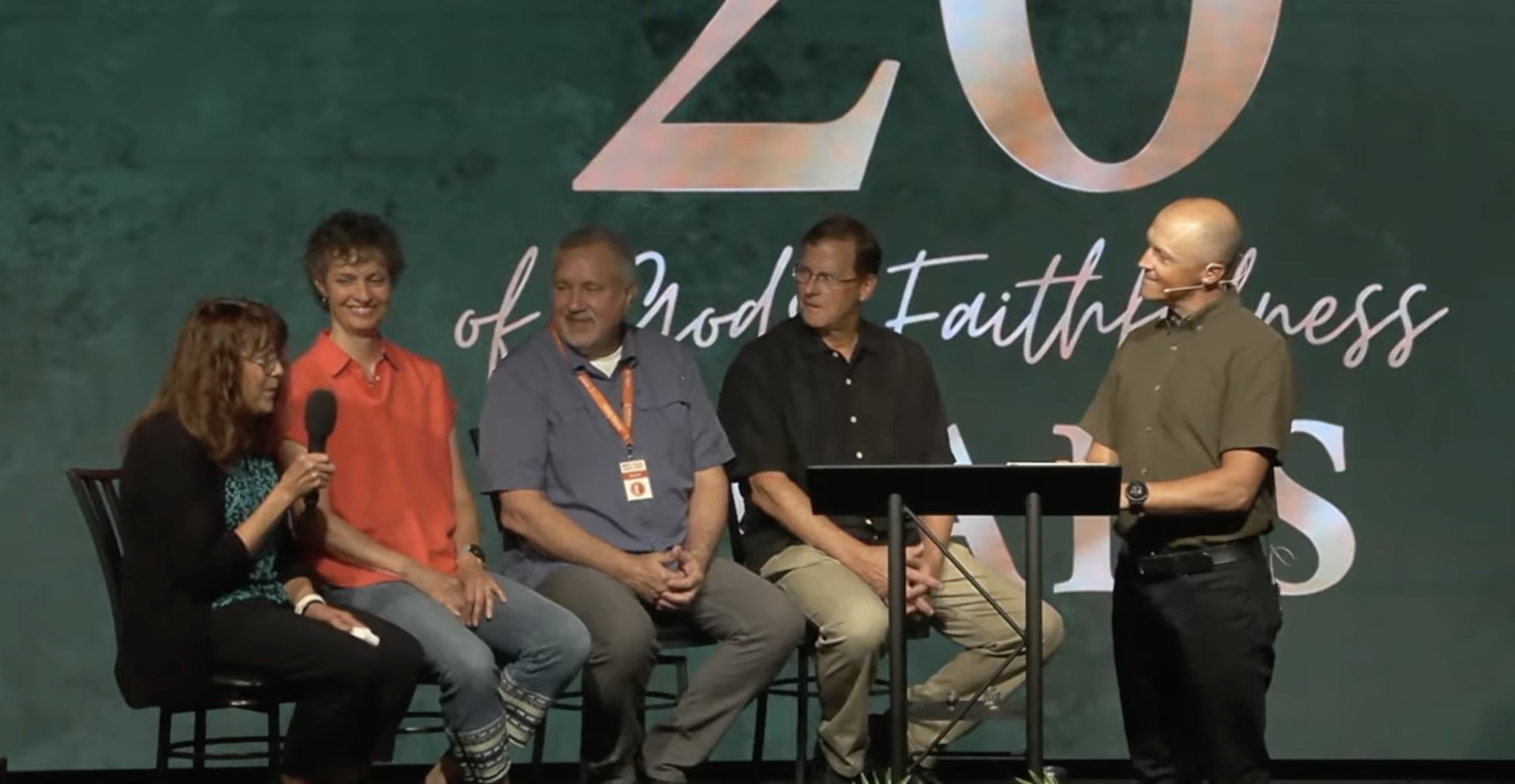
2026 marks 20 years since White Fields Community Church began.
I have only been the Lead Pastor of White Fields since 2012, but the church began six years earlier, as a Bible study and prayer meeting in the basement of the Lutheran church on 3rd Avenue and Terry Street in Longmont.
The first service was held at the Saint Vrain Memorial Building, where we held services all the way up until March of 2020, when we moved into our current facility – just in time for a world-wide pandemic! Our expenses increased 10-fold, while we were not able to welcome anyone but staff into the building. We had counted on growth being able to help us afford the new location, but became concerned when we found out that the lockdown would be longer than originally announced.
By God’s grace, He provided for us through the generosity of people, and we actually ended that year “in the black”!
Furthermore, during that time we started the food assistance ministry which is now known as Table of Hope, and serves hundreds of families and individuals in need in Boulder and Weld Counties.
For the anniversary celebration, our team decorated the church, including a wall of testimonies – where people shared why they are thankful for White Fields, and how God has used the church in their lives.
We also invited some long-time members to speak about the church, and tell the history of it through their experiences.
There’s so much more that could have been said. I’m thankful to Jason, Tatum, Ocean, and the rest of the team who brainstormed this event and made it happen.
In this conversation, I share about my experience moving to Hungary and dealing with cultural challenges – both as a young person and a foreigner. We also talk about family expectations and the process of overcoming language barriers.
I first met Elsa when she was a medical student in Debrecen, Hungary. She is from New York, and is a first-generation American born to parents from South India. With her family background and her experience studying cross-culturally in Europe, she has a unique perspective on culture.
My favorite definition of what culture is, is that “Culture is ‘the way things are done around here,'” – wherever here is. Cultures can reflect deeply held values, or contradict them. Cultures can be healthy or toxic. And culture is created both through intentional actions, and through passive inaction: both by what is said and what is left unsaid – both by what is done and by what is allowed.
Elsa is a medical doctor. Her husband Tenny, also a good friend of mine, is also a doctor and is a leader in their church in Oklahoma City, and Elsa recently won an award for her writing.
Check out this episode, and I hope the conversation will encourage you!
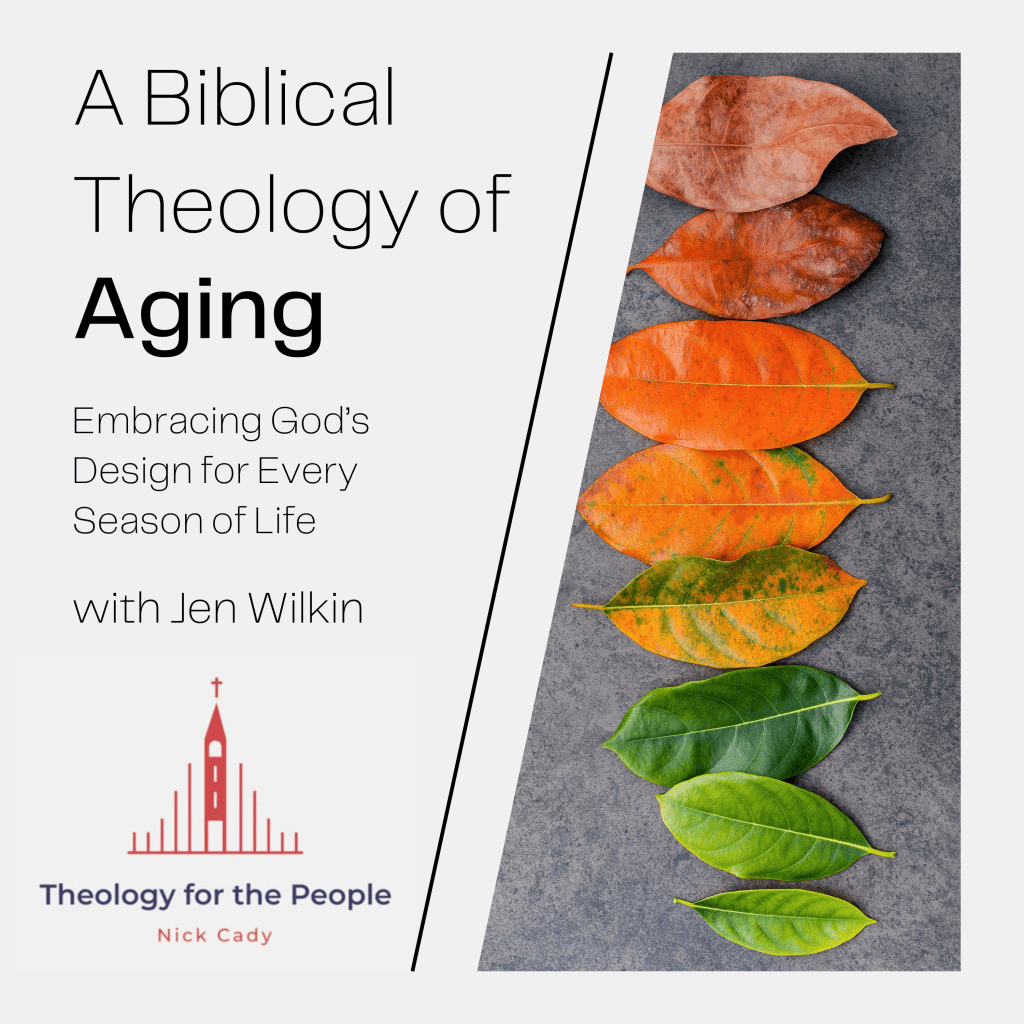
What does it mean to age wisely in a culture obsessed with staying young?
On this episode of the Theology for the People Podcast, I speak with Jen Wilkin to discuss her book, Dust to Dust: Aging Wisely in an Anti-Aging World, and the radically different stories that culture and Scripture tell about growing older.
Jen explains the book’s central image: the human lifespan forms a kind of chiasm. Birth corresponds to death, childhood dependence anticipates the dependence of our final years, and caring for children corresponds to caring for aging parents—with midlife serving as the place of perspective.
In this conversation, Nick and Jen discuss:
Why aging itself is part of God’s original design—not merely a consequence of the Fall
How our bodies can decline while we continue to develop as people
Why midlife often brings disorientation and reexamination
How Western culture’s ideal of independence shapes our fear of aging
Why older believers are indispensable to the church
How churches can cultivate meaningful friendships across generations
What it means to number our days and use our limited time wisely
The difference between Bible literacy and Bible fluency
Jen also reflects on unexpectedly needing a wheelchair when her book about aging was released—and what disability can teach us about dependence, dignity, and preparing to grow old faithfully.
Jen Wilkin is an author and Bible teacher whose work emphasizes Bible literacy and theological formation.
A Biblical Theology of Aging: Embracing God's Design for Every Season of Life – with Jen Wilkin –
Theology for the People
What does it mean to age wisely in a culture obsessed with staying young?Jen Wilkin joins Nick Cady to discuss her book, Dust to Dust: Aging Wisely in an Anti-Aging World, and the radically different stories that culture and Scripture tell about growing older.Jen explains the book’s central image: the human lifespan forms a kind of chiasm. Birth corresponds to death, childhood dependence anticipates the dependence of our final years, and caring for children corresponds to caring for aging parents—with midlife serving as the place of perspective.In this conversation, Nick and Jen discuss:Why aging itself is part of God’s original design—not merely a consequence of the FallHow our bodies can decline while we continue to develop as peopleWhy midlife often brings disorientation and reexaminationHow Western culture’s ideal of independence shapes our fear of agingWhy older believers are indispensable to the churchHow churches can cultivate meaningful friendships across generationsWhat it means to number our days and use our limited time wiselyThe difference between Bible literacy and Bible fluencyJen also reflects on unexpectedly needing a wheelchair when her book about aging was released—and what disability can teach us about dependence, dignity, and preparing to grow old faithfully.Jen Wilkin is an author and Bible teacher whose work emphasizes Bible literacy and theological formation.Learn more:JenWilkin.netTraining the ChurchIf this conversation encourages you, please like the video, subscribe to Theology for the People, and share it with someone who would benefit from it.
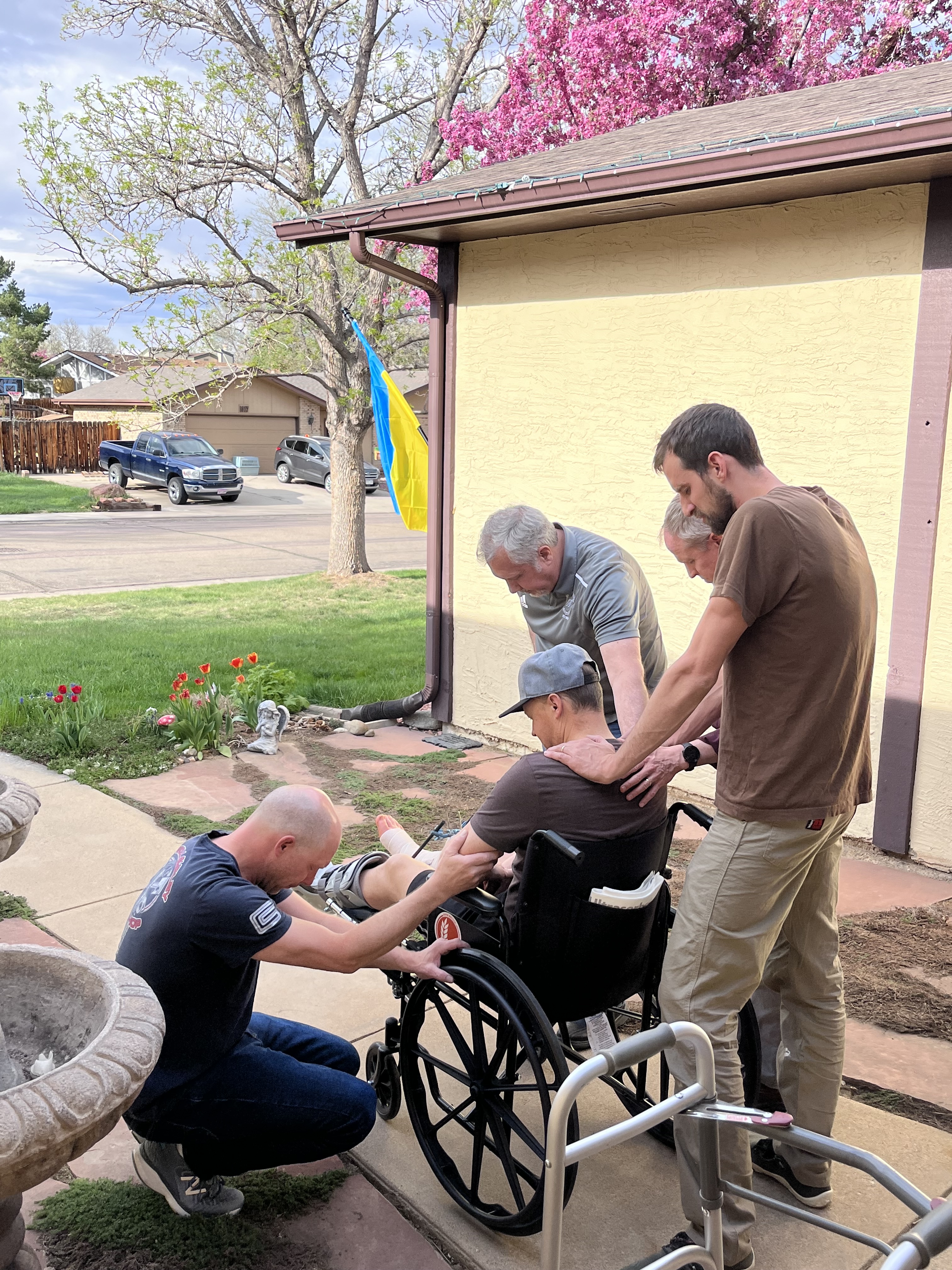
In April 2023, I had a snowboarding accident that changed my life. I broke both my legs and shattered my right ankle. Over the months that followed, I underwent three surgeries, including reconstructive surgery. I spent time in a wheelchair and then progressed to a walker and crutches as I started to walk again.
I am grateful that I can walk. But I am also permanently handicapped. I won’t run again. I can’t jump or move quickly, and I still frequently need crutches and use mobility devices. Pain and physical limitations are now part of my everyday life.
At the same time, there have been some meaningful signs of progress. I am able to cycle, which has become an important mental and physical outlet for me. Cycling puts enough pressure on my ankle to be therapeutic without causing further damage. It is also something I can be good at—and when I am riding my bike, I don’t feel handicapped.
I have even been able to snowboard again, although with significant limitations. I can really only use my heel-side edge, and riding causes considerable pain. But being back on the mountain matters to me, and that pain is a price I am willing to pay.
Throughout my injury and recovery, many people cared for me and my family in beautiful ways. They brought meals, prayed for us, visited me, and helped with practical needs. I remain deeply grateful for the love we received.
There were also moments when kind and well-intentioned people said things that were not especially helpful. I don’t fault them for that. When someone is hurting, many of us don’t know how to respond. Sometimes people avoid the hurting person, or they minimize their pain by saying it could have been worse, or by offering reassurances they can’t guarantee. Another common response is trying to explain why God must have allowed it to happen.
My experience has made me think more carefully about how we minister to people who are suffering. Here are a few things I have learned.
1. Don’t Ignore It
When someone has experienced a tragedy, disability, death, diagnosis, or other major loss, we may be tempted to remain silent because we are afraid of saying the wrong thing. Maybe you assume the person “needs space.” But silence can unintentionally communicate indifference. Saying something is always better than pretending nothing happened.
You do not need profound words. Your words aren’t going to fix the situation – but your lack of acknowledgement can cause offense. Acknowledgement of the person’s pain, on the other hand, will be meaningful – perhaps very meaningful.
A simple statement such as, “I’m so sorry to hear about what happened,” can mean a great deal. It acknowledges the reality of what they are carrying, and it opens the door for them to share with you, if they want to. If you promise to pray for the person, do it! God will hear you, and it will help you process things as well.
The Bible tells us to “weep with those who weep” (Romans 12:15). That does not require us to understand everything they are experiencing or to know how their story will unfold. It simply calls us to enter, in some measure, into their sorrow.
2. Don’t Minimize or Try to Explain Their Pain
Christians sometimes feel a particular pressure to attach a spiritual explanation to suffering. We may say, “[This or that] must be why God allowed this to happen,” or, “God is going to use this in an amazing way.” We may promise, “It’s going to be okay.”
Those statements are usually motivated by faith and kindness. Some may even prove true in time. But in the immediate aftermath of suffering, they can sound like a trite attempt to tidy up something that is still devastatingly messy.
We should be cautious about claiming to know why God has allowed a particular trial. Scripture assures us that God is good, sovereign, and able to work through suffering – but that does not authorize us to explain every painful event from God’s perspective.
The most cathartic thing someone said to me after my injury was: “That really sucks. I’m sorry. How are you feeling about it?” It did not minimize the loss, rush toward a resolution, or turn the conversation into a theological lesson. It gave me room to be honest.
Sometimes the most spiritual thing you can do is acknowledge that something is truly terrible and then listen. The Bible addresses suffering with incredible intellectual integrity; it say that bad things are genuinely bad – so bad that God himself had to come to rescue us from it and make all things right.
3. Be Willing to Sit with Someone in Their Lament
When I was in the height of my pain after my accident, I had a visitor who stated that, when they came to visit me, all I did was complain. They felt that this brought undue negativity into their day. I’m sure they were right about me complaining; I was grieving the loss of abilities I had assumed I would possess for the rest of my life. I was in pain, on medication, dependent on others, and uncertain about my future. I thought I could process that grief with them.
Hurting people do not always need correction or a more positive perspective. Sometimes they need the freedom to say, “This hurts. I hate this. I don’t understand why this happened.”
The Psalms show us that God is not threatened by honest lament. Again and again, faithful people bring Him their confusion, frustration, sorrow, and even their complaints. God is willing to listen to hurting people lament; we should be willing to do the same.
Job’s friends did their best ministry before they began offering explanations. They sat with him in silence for seven days because they saw that his suffering was very great (Job 2:13). Their problems began when they tried to explain what had happened and why.
Listening is not inactivity. It is a ministry of presence. It tells the hurting person, “You don’t have to carry this moment alone.”
4. Remember the Anniversaries
The date of a traumatic event often remains significant long after everyone else has moved on. An anniversary not only brings back memories of what happened – sometimes it causes wounds to be reopened and hurt again. On the one year anniversary of my accident, I remember being very discouraged by that milestone – that I wasn’t further along in recovery. That feeling hasn’t gone away with subsequent anniversaries.
Remembering the date and sending a brief message can be a meaningful act of love. You might simply say, “I know this week may be difficult, and I wanted you to know that I’m thinking about you and praying for you.”
By remembering, you communicate that their pain and their story have not been forgotten.
5. Keep Checking In
In the early days of a crisis, support often arrives in abundance. People bring meals, send messages, visit, and offer help. Over time, however, the initial wave of care naturally recedes. Everyone returns to the demands of ordinary life.
But for the person who has been injured, bereaved, or diagnosed – “ordinary life” may never fully return.
This is why it matters to check in after the meal train has ended, after the hospital visits have stopped, and after the situation is no longer new. A message several months later can be especially meaningful: “How are you doing with everything now?” or, “I know this is still affecting your life. How can I pray for you?”
Galatians 6:2 tells us, “Bear one another’s burdens, and so fulfill the law of Christ.” Some burdens are not carried for a week or a month. Loving people well means recognizing that the need for companionship may last much longer than the crisis itself.
The Ministry of Presence
Ministering to hurting people does not require perfect words. It requires humility, compassion, patience, and a willingness to be present.
We do not have to explain their suffering. We do not have to make it sound less painful than it is. We do not have to force a redemptive lesson before they have had time to grieve. We can acknowledge what happened, sit with them in it, listen to what they need to say, and continue loving them after others have moved on.
A friend of mine, who also suffered a terrible accident, told me after my accident: “People are going to ask you what God is teaching you through this. One day, you will know the answer to that question, but it will take some time for it to be clear. Right now, this is a terrible thing you have to go through; don’t feel pressured to figure out what God is doing through this.” He was right. I have learned things through this, primarily about the nature of life, empathy for hurting people, and my own limitations and how they relate to dependance on God.
Jesus did not remain distant from human suffering. He entered into it. He wept with those who mourned, showed compassion to those in pain, and bore our griefs and sorrows Himself. When we draw near to hurting people with gentleness and patient love, we reflect something of His heart.
Why is happiness so difficult to find—and does God actually care whether we are happy?
On this episode of the Theology for the People Podcast, I speak with Jen Oshman to discuss her book Why Is It So Hard to Be Happy? Together, we examine the common – and in my opinion, somewhat incorrect – Christian distinction between happiness and joy, what the Bible means when it calls people “blessed,” and why Scripture presents God himself as happy and as the source of genuine happiness.
We also explore seven practices that psychologists associate with greater happiness, why those practices echo biblical wisdom, and what the Apostle Paul discovered that surpasses them all. According to Paul, even the best circumstances, achievements, and habits cannot compare with the surpassing worth of knowing Jesus Christ and being found in him.
Is God indifferent to our happiness—or is he eager to make us happy in himself?
Jen Oshman is an author, speaker, and former missionary in Japan and the Czech Republic. Learn more about her work at jenoshman.com.
In this episode:
Why Christians should be the happiest people
What happiness actually is
Whether happiness and joy are truly different
Why makarios can be translated “happy”
What psychology gets right about human flourishing
Why good habits cannot satisfy our deepest longings
Why is happiness so difficult to find—and does God actually care whether we are happy?Jen Oshman joins Nick Cady to discuss her book Why Is It So Hard to Be Happy? Together, they examine the common Christian distinction between happiness and joy, what the Bible means when it calls people “blessed,” and why Scripture presents God himself as the source of genuine happiness.They also explore seven practices that psychologists associate with greater happiness, why those practices echo biblical wisdom, and what the Apostle Paul discovered that surpasses them all. According to Paul, even the best circumstances, achievements, and habits cannot compare with the surpassing worth of knowing Jesus Christ and being found in him.Is God indifferent to our happiness—or is he eager to make us happy in himself?Jen Oshman is an author, speaker, and former missionary in Japan and the Czech Republic. Learn more about her work at jenoshman.com.In this episode:What happiness actually isWhether happiness and joy are truly differentWhy makarios can be translated “happy”What psychology gets right about human flourishingWhy good habits cannot satisfy our deepest longingsHow expectations contribute to disappointmentWhy Christians should be the happiest people
Some scriptures refer to Christ being in those who believe. But Jesus said that he would send the Holy Spirit to dwell in us. Could you please help me understand these two seemingly contradictory statements?
If we examine the passages in which these statements are made, we discover the beauty of the Trinity and the reality of God’s presence indwelling those who believe, which is the fulfillment of a promise made by the prophets and realized through the coming of Jesus, the Messiah.
On the night before His crucifixion, Jesus told His disciples that He would be leaving them physically when He ascended to the Father after His death and resurrection. Jesus then promised that the Holy Spirit would come and dwell in them (John 14:16-17). But Jesus also said, “I will not leave you as orphans; I will come to you” (John 14:18), and He also spoke of both Himself and the Father making their home with believers (John 14:23).
“If anyone loves me, he will keep my word, and my Father will love him, and we will come to him and make our home with him” (John 14:23)
So when the New Testament speaks of “Christ in you” (Colossians 1:27; Galatians 2:20), it doesn’t mean that Jesus is physically living inside us. Rather, the risen Christ is present in us through the indwelling Holy Spirit. In fact, Romans 8:9-10 moves almost seamlessly between the phrases “Spirit of God,” “Spirit of Christ,” and “Christ in you.”
In Ephesians 1, Paul tells us that when we believe, we are “sealed” with the Holy Spirit, who is “the guarantee of our inheritance until we acquire possession of it” (Ephesians 1:13–14). Similarly, in 1 Corinthians 3:16, Paul says that “God’s Spirit dwells in you.” And in Galatians 4:6, the Holy Spirit who has been given to us is called “the Spirit of [God’s] Son.”
So I would put it like this: Jesus is physically at the right hand of the Father, but He is spiritually present with and in His people through the Holy Spirit. The Holy Spirit doesn’t replace Jesus; He brings us into communion with Jesus and makes the presence of Christ a reality in our lives.
The Father, Son, and Holy Spirit are distinct persons, yet they are one God. So, the coming of the Holy Spirit does not mean that Jesus has become absent from His people. Rather, through the indwelling Holy Spirit, believers experience the presence of the Father and the Son.
That’s why Jesus could say it was better for Him to go away (John 16:7). While He was physically on earth, Jesus was limited to being in one place at a time. By the Holy Spirit, He is now present with every believer, all the time, all over the world, wherever they go.
Prophetic Fulfillment
In the Old Testament, God promised that a day would come when He would dwell with His people in a new and intimate way. Through the prophet Ezekiel, God promised, “I will put my Spirit within you” (Ezekiel 36:27). Jeremiah similarly spoke of a new covenant in which God’s law would no longer merely be external, but would be written on the hearts of His people (Jeremiah 31:31–34).
During His earthly ministry, Jesus was physically present with His followers, but by sending the Holy Spirit to indwell believers, God is no longer simply dwellingamong His people; He is also dwelling within His people.
This indwelling of the Holy Spirit represents a significant milestone in redemption history. In the Old Testament, God’s people experienced the Holy Spirit with them, and sometime upon them for empowerment – but through Jesus, the promised New Covenant gift of the Spirit has now been poured out upon all who believe, so that every believer is indwelt by the Spirit. (Read more about the Three Relationships with the Holy Spirit here)
Conclusion
The language of “Christ in you” does not contradict the indwelling of the Holy Spirit, rather it describes the incredible reality that, through the Spirit, God has made His home in us who believe.
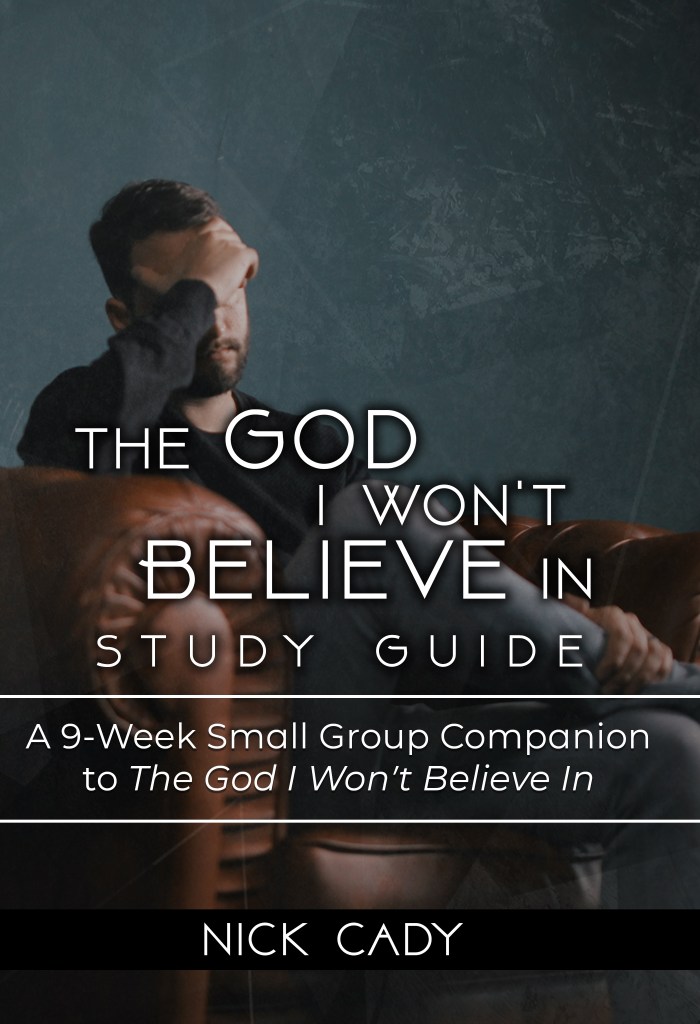
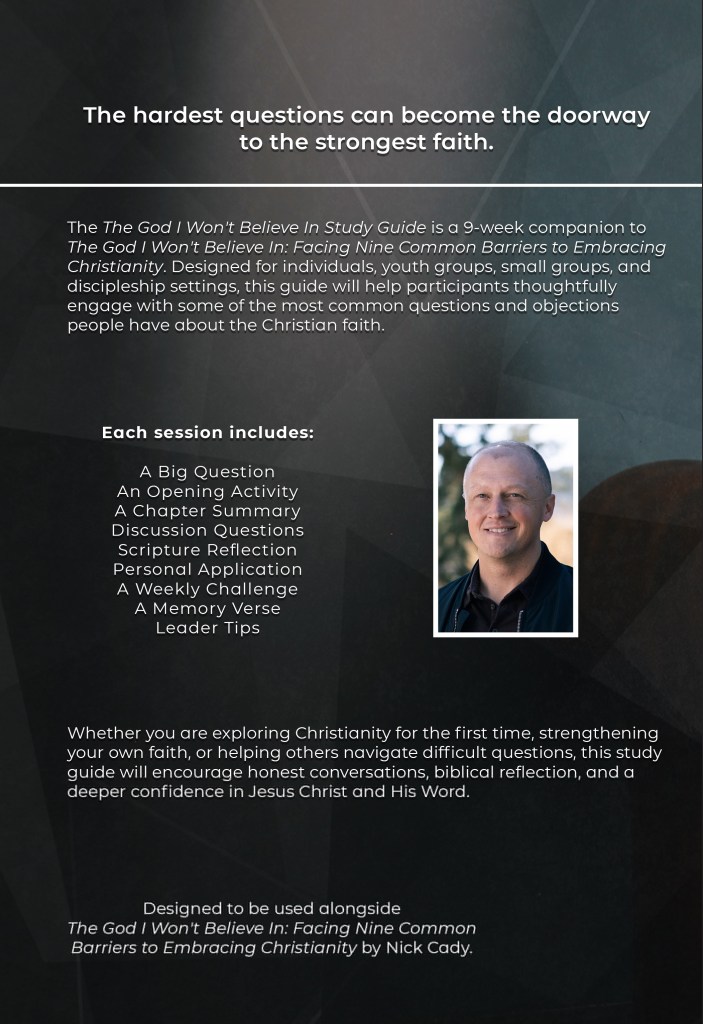
When I published The God I Won’t Believe In: Facing Nine Common Barriers to Embracing Christianity a few years ago, I hoped it would help people who were wrestling with difficult questions about the Christian faith. I also hoped it would equip Christians to have thoughtful, gracious conversations with friends and family who were asking those same questions.
Since its release, I’ve been encouraged to hear from readers around the world. But one of the most common questions I’ve received from pastors, youth leaders, and small group leaders has been: “Do you have a study guide?”
The answer is now, “Yes!” It is available here online, and in the Book Shop at White Fields Church.
A Resource Years in the Making
Shortly after the book was published, our Youth Ministry at White Fields Community Church spent nine weeks working through it together. I worked with our youth leaders to create a curriculum that would be engaging and helpful to small groups, both for youth and adults.
Over those nine weeks, we found that that students resonated with the questions discussed in the books, and we had honest and thoughtful discussions. As we worked through the material together, I was able to test out and adapt the discussion questions and activities into a study guide.
But then… life happened, and the documents we had created sat in a folder on my computer for years while other ministry responsibilities took priority.
Earlier this year, a few church leaders reached out looking for curriculum material, and I mentioned that I had created a study guide for my book, but it wasn’t finalized or published yet. Those requests, along with a little bit of time away from the pulpit, gave me the motivation to finally get this study guide over the finish line and out to the public.
Why I Wrote This Book—and This Study Guide
One of the convictions that shaped both the book and this study guide is simple: Questions are not the enemy of faith.
Throughout Scripture, we find people asking difficult questions. Abraham questioned God about justice. Moses questioned God’s plan. Job questioned God’s purposes. David poured out his doubts in the Psalms. Even John the Baptist wrestled with questions about Jesus.
The Bible doesn’t hide those struggles.
I’ve become increasingly convinced that one of the best things the church can do is create spaces where people can ask honest questions and explore them together in light of Scripture.
Christianity isn’t threatened by honest investigation.
If Jesus is who He claimed to be, and the Bible is true, then every sincere question is worth exploring because the answers will lead us to deeper faith.
What’s Included in the Study Guide
The study guide is designed to be used over nine weeks and accompanies each chapter of the book.
Every session includes:
A Big Question
An Opening Activity
A Chapter Summary
Discussion Questions
Scripture Reflection
Personal Application
A Weekly Challenge
A Memory Verse
Leader Tips
It’s designed for:
Small groups
Youth groups
Discipleship relationships
Sunday school classes
Personal study
Whether you’re a believer looking for a study guide to strengthen your faith, or a church leader looking for a discussion guide, or a person wanting to investigate Christianity – my hope is that this resource will help you engage these topics thoughtfully and, ultimately, help you know and trust Jesus more deeply.
If you use it in your church or small group, I’d love to hear how it goes. Stories of how God uses these resources are one of the greatest encouragements to keep writing.
Thank you to everyone who encouraged me to finish this project. I hope it serves you well!
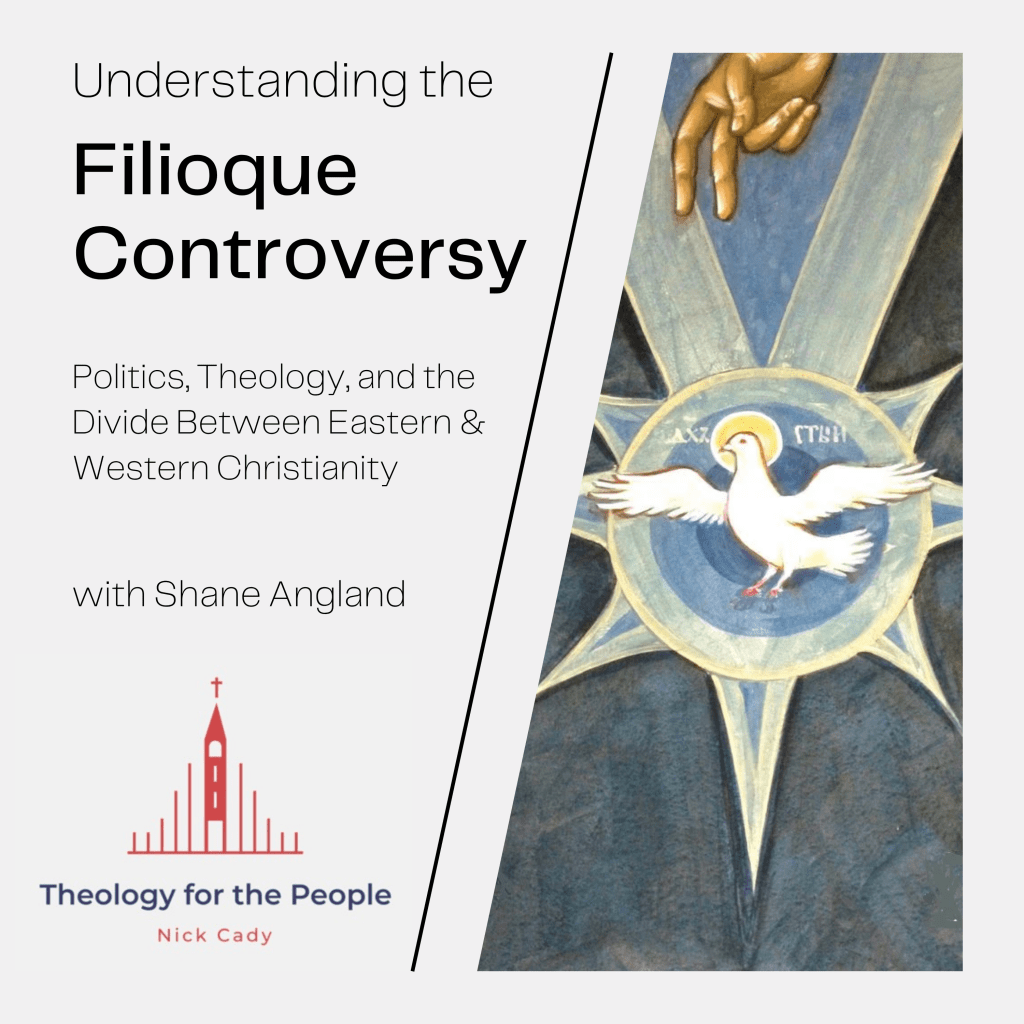
What does it mean that the Holy Spirit “proceeds from the Father” — and why did adding “and the Son” (Filioque), lead to one of the greatest divisions in church history?
I recently wrote two articles; one on the question of what it means that Jesus is the “begotten” Son of God, and the other on what it means that the Holy Spirit “proceeds” from the Father (and maybe the Son!). You can find those articles here:
These questions have to do what theologians call the “Eternal Generation” (of the Son) and the “Eternal Procession” (of the Holy Spirit). The question of the Holy Spirit gets into one of the fiercest theological debates in history; one which played a major role in the division between Eastern and Western Christianity (Orthodox vs. Roman Catholic).
In this episode of the Theology for the People Podcast, I speak with Shane Angland to unpack the history, theology, and ongoing significance of the Filioque controversy.
Together, we explore the origins of the Nicene Creed, the debates at the Council of Constantinople (381), and why the Western church added the Filioque clause.
We also discuss: • The difference between eternal procession and the mission of the Spirit • Why the East and West approach theology differently • The role of language (Greek vs. Latin) in shaping doctrine • How politics—not just theology—deepened the divide • Whether this issue still matters for Christians today
If you’ve ever wondered why theology can get so complex—or why it actually matters—this episode will help you see that these debates aren’t just academic, they’re about faithfully understanding who God is.
What does it mean that the Holy Spirit “proceeds from the Father” — and why did adding “and the Son” (Filioque), lead to one of the greatest divisions in church history?In this episode of Theology for the People, Nick Cady is joined by Shane Angland to unpack the history, theology, and ongoing significance of the Filioque controversy. Together, they explore the origins of the Nicene Creed, the debates at the Council of Constantinople (381), and why the Western church added the Filioque clause.They also discuss:The difference between eternal procession and the mission of the SpiritWhy the East and West approach theology differentlyThe role of language (Greek vs. Latin) in shaping doctrineHow politics—not just theology—deepened the divideWhether this issue still matters for Christians todayIf you’ve ever wondered why theology can get so complex—or why it actually matters—this episode will help you see that these debates aren’t just academic, they’re about faithfully understanding who God is.Visit the Theology for the People blog at nickcady.org
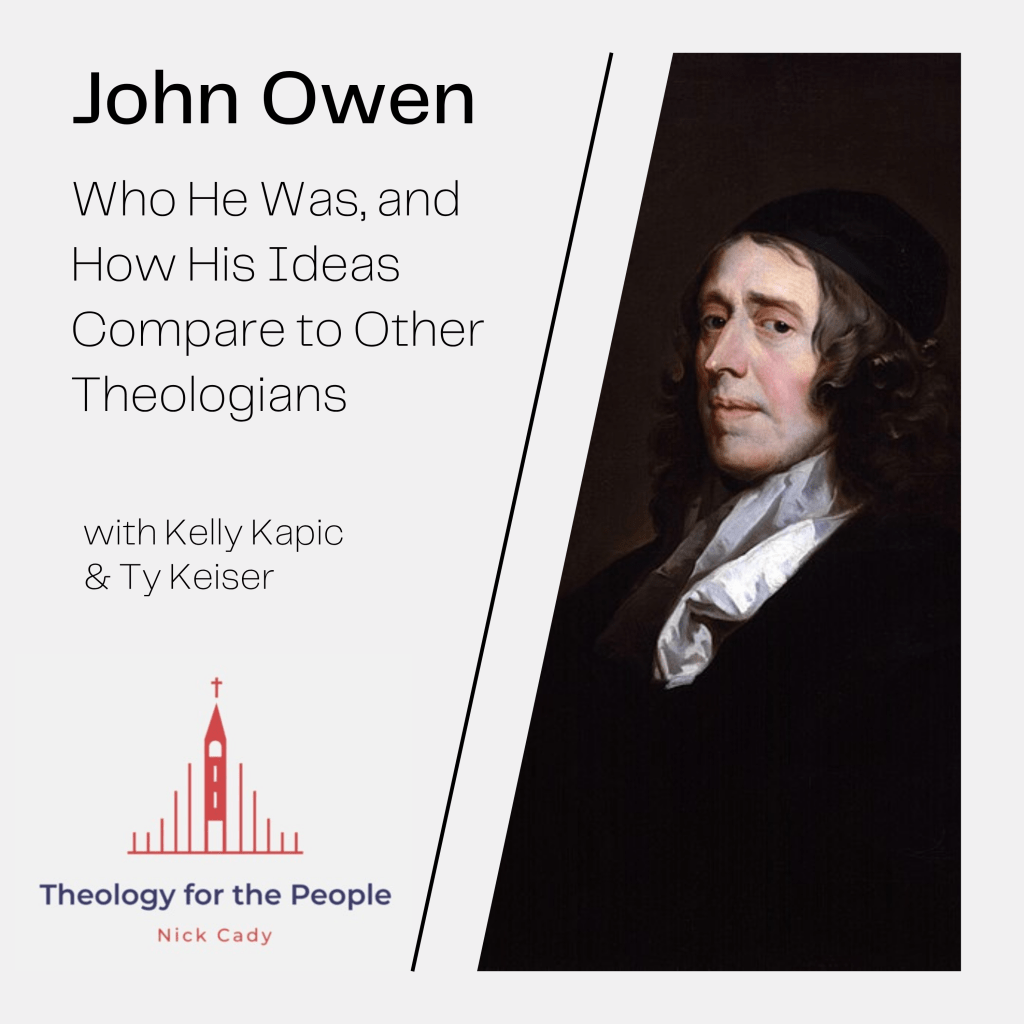
In this conversation, we explore: • Why theology is best done in conversation, not isolation • How John Owen interacts with figures like Bernard of Clairvaux and Karl Barth • Whether the Song of Songs should be read as a love poem, an allegory of Christ, or both • Karl Barth’s radically Christ-centered theology—and why it both attracts and unsettles evangelicals • How engaging other traditions can deepen our understanding of Scripture
Ty and Kelly argue that faithful theology requires both conviction and humility: learning from the broader Christian tradition while remaining rooted in the authority of Scripture.
If you’ve ever wondered how to engage theological voices outside your tradition without compromising your convictions, this episode will help you think more deeply and faithfully.
What happens when we read a theologian like John Owen alongside voices from across church history?In this episode of Theology for the People, Nick Cady interviews Kelly Kapic and Ty Kieser, authors of Owen Among the Theologians: Conversations Across the Christian Tradition.In this conversation, we explore:Why theology is best done in conversation, not isolationHow John Owen interacts with figures like Bernard of Clairvaux and Karl BarthWhether the Song of Songs should be read as a love poem, an allegory of Christ, or bothKarl Barth’s radically Christ-centered theology—and why it both attracts and unsettles evangelicalsHow engaging other traditions can deepen our understanding of ScriptureKapic and Kieser argue that faithful theology requires both conviction and humility: learning from the broader Christian tradition while remaining rooted in the authority of Scripture.If you’ve ever wondered how to engage theological voices outside your tradition without compromising your convictions, this episode will help you think more deeply and faithfully.
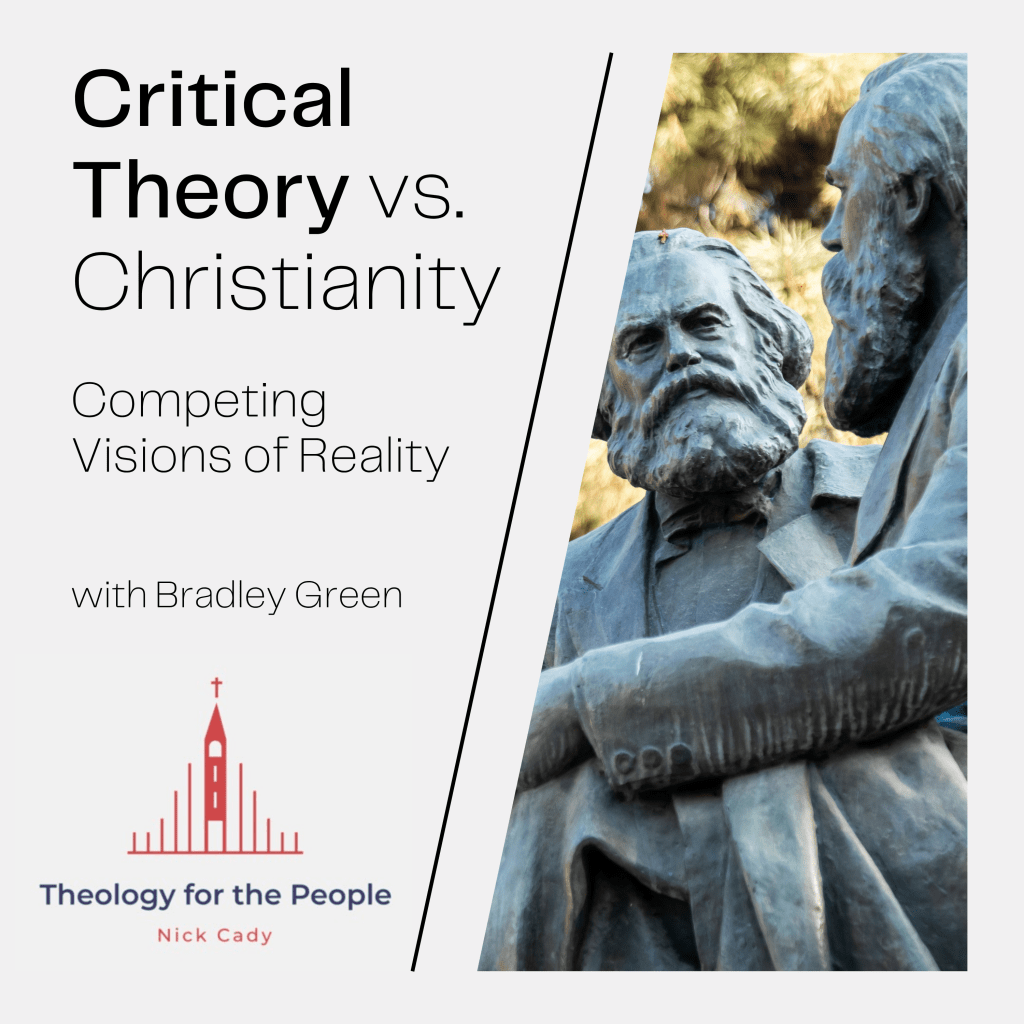
In this episode of the Theology for the People Podcast, I speak with theologian and professor Bradley Green to unpack one of the most commonly mentioned but rarely understood ideas in today’s cultural moment: critical theory.
Many people have heard of critical race theory—but Green explains that critical theory is actually a much older and broader worldview rooted in Marxist thought and developed by the Frankfurt School. More than just a social theory, Green argues that critical theory functions as a kind of alternative theology—with its own views of reality, sin, and redemption.
In this conversation, you’ll learn: • The distinction between critical theory as a whole, and critical race theory specifically • How Marxism evolved from economics into cultural Marxism • Why critical theory focuses on oppression and liberation • What Green means by calling critical theory a “Christian heresy” • How critical theory borrows from—and distorts—biblical categories like creation, sin, and redemption • Why institutions like family and church are viewed as oppressive within this framework • What Christians can affirm, critique, and learn from critical theory • Why the gospel offers a better and more complete answer
Bradley also highlights an important insight: while critical theory correctly identifies that something is wrong in the world, it ultimately misdiagnoses the root problem—and therefore offers a flawed solution.
If you’ve ever wondered how to think clearly—and biblically—about critical theory, this episode will give you helpful categories and clarity.
In this episode of Theology for the People, Nick Cady sits down with theologian and professor Bradley Green to unpack one of the most commonly mentioned but rarely understood ideas in today’s cultural moment: critical theory.Many people have heard of critical race theory—but Green explains that critical theory is actually a much older and broader worldview rooted in Marxist thought and developed by the Frankfurt School. More than just a social theory, Green argues that critical theory functions as a kind of alternative theology—with its own views of reality, sin, and redemption.In this conversation, you’ll learn:The distinction between critical theory as a whole, and critical race theory specificallyHow Marxism evolved from economics into cultural MarxismWhy critical theory focuses on oppression and liberationWhat Green means by calling critical theory a “Christian heresy”How critical theory borrows from—and distorts—biblical categories like creation, sin, and redemptionWhy institutions like family and church are viewed as oppressive within this frameworkWhat Christians can affirm, critique, and learn from critical theoryWhy the gospel offers a better and more complete answerGreen also highlights an important insight: while critical theory correctly identifies that something is wrong in the world, it ultimately misdiagnoses the root problem—and therefore offers a flawed solution.If you’ve ever wondered how to think clearly—and biblically—about critical theory, this episode will give you helpful categories and clarity.