What Does It Mean that Jesus is the “Begotten” Son of God?

I recently received this comment on my post titled What Does It Mean that Jesus is the Son of God?:

One definition of “begotten” is to create or produce, to bring into existence. 

If God and Jesus are both eternal, and they have no beginning of existence and no end of existence, how is Jesus God’s begotten son?

The answer to this question lies in understanding the Greek word translated “begotten” and the attempt to explain something important that challenges the limits of human language.

“Begotten” Does Not Mean “Created”

When the early church clarified its beliefs about Jesus at the Council of Nicaea (325 AD), it used a very precise phrase:

γεννηθέντα, οὐ ποιηθέντα (gennēthenta, ou poiēthenta) = “Begotten, not made.”

That phrase is crucial.

  • “Made” means created—something that comes into existence
  • “Begotten” means sharing the same nature as the one who begets
  • gennaō (γεννάω) = “to beget” implies the same nature
  • poieō (ποιέω) = “to make” implies a different nature

So when Christians say Jesus is begotten, they are explicitly saying that He is not a created being.

This language was chosen in response to teachers like Arius, who argued that the Son (Jesus) was a created being. The church’s answer was clear: Jesus is not made—He is begotten.

Why Say that Jesus is “Begotten” at All?

We get this language from the Bible, and from Jesus’ own words. For this reason, it’s important that we not dismiss them, but receive them and try to understand them.

In passages like John 1:14, 1:18, and 3:16, Jesus is called the “only begotten Son.”

The Greek word behind this phrase is: μονογενής (monogenēs)

While it has traditionally been translated in English as “only begotten,” its meaning is slightly different. It most directly means: “one of a kind,” “unique,” or “only one of His kind”

So when John calls Jesus the monogenēs Son, he is emphasizing that:

  • Jesus is the unique Son of God
  • He is not one Son among many
  • He is the Son in a completely different category

This fits with what the creed later clarifies: Jesus is not just another “child of God” – He is the Son of God in a way that no one else is.

“Begotten” Speaks of Relationship, Not Beginning

Theologians have used the phrase “eternal generation” to describe this truth:

  • The Father is eternally Father
  • The Son is eternally Son
  • The Son is from the Father—but not after the Father

In other words: There was never a time when the Son did not exist. So “begotten” does not describe a moment in time, but rather an eternal relationship within the Godhead.

Why Not Just Say “Born”?

The Greek word gennaō can also be translated “born,” so this raises a question about why English translations of the Bible and creeds use the word “begotten” instead?

The reason is an attempt at theological precision.

  • “Born” tends to imply a moment in time
  • “Begotten” emphasizes shared nature, without implying that there was a “starting point” when it began.

So, begotten is carefully chosen to preserve the idea that the Son is unique and that He shares in the Father’s nature, but was not created.

The Unique Son: Jesus Is the Son by Nature; We Become Sons by Adoption

This brings us to an important distinction. The Bible says that we become sons or children of God through faith in Jesus (John 1:12, 1 John 3:1)

As sons of God, we share in the inheritance which is ours as sons, and Jesus is our brother. But there is a difference between the way that we are sons of God and the way that Jesus is the Son of God.

  • Jesus is the only begotten Son
  • Believers are adopted as sons (Romans 8:15; Galatians 4:4–7)

Jesus is:

  • Son by nature
  • Eternal
  • Shares the same divine essence as the Father

We (believers) are:

  • Sons and daughters by adoption
  • Not sons from eternity past, but:
  • Brought into God’s family by grace

John 1:12 says: “But to all who did receive him, who believed in his name, he gave the right to become children of God”

We become children of God. Jesus never became the Son, He has always been the unique Son of God – in a way that no one else is or ever will be.

Why This Matters

This isn’t just a technical theological point, it’s actually essential to the gospel.

If Jesus were made, then He would be a creature. But if Jesus is “begotten, not made,” then He is fully God.

And that matters because:

  • Only God can fully reveal God
  • Only God can truly save

The message of the gospel is that the eternal Son of God came to us, so that we, who are not sons by nature, might become sons by grace.

Going Deeper: “Eternal Generation” versus “Procession”

The doctrine of “Eternal Generation” is the way that theologians explain some of the passages in the Bible which describe the Son as being from the Father, while not being created by the Father. This is different from “procession,” which is the term traditionally used for the Holy Spirit.

For more on that, read: What Does It Mean that the Holy Spirit “Proceeds” From the Father (and the Son)?

But as for the Son coming from the Father, consider these examples:

  • “And the Word became flesh and dwelt among us, and we have seen his glory, glory as of the only Son from the Father, full of grace and truth.” (John 1:14)
  • “For as the Father has life in himself, so he has granted the Son also to have life in himself.” (John 5:26)
  • “He is the radiance of the glory of God and the exact imprint of his nature, and he upholds the universe by the word of his power.” (Hebrews 1:3a)
  • “In the beginning was the Word, and the Word was with God, and the Word was God.” (John 1:1)

The Bible describes the Son as being “from” the Father, but not as a created being or someone who came into existence at some point—rather, as the eternal Son who has always been in perfect relationship with the Father.

Here are four basic assertions about the Trinity that are universally accepted by Christians [1]:

  1. There is one and only one true and living God.
  2. This one God eternally exists in three Persons—God the Father, God the Son, and God the Holy Spirit.
  3. These three Persons are completely equal in attributes, each sharing the same divine nature.
  4. While each Person is fully and completely God, the Persons are not identical.

It is in an attempt to write down what the Bible, and Jesus Himself stated regarding the nature of God, that we use the terms “begotten” and explain it using the language of “eternal generation.”

Resources for Further Study

The Bible in Patristic Thought: Authority, Clarity, and the Rule of Faith

In this episode of the Theology for the People Podcast, I speak with Shane Angland to explore a question that I have thought about for a long time: Did the early church fathers view Scripture the way Protestants do today—or is the Protestant view of the Bible a Reformation novelty?

Shane and I walk through patristic theology and discuss how figures like Irenaeus, Athanasius, Chrysostom, Jerome, and Augustine spoke about the inspiration, authority, sufficiency, and clarity of Scripture. We also examine the “rule of faith” and whether it functioned like a controlling magisterium—or more like a summary of Scripture’s core teaching that guided interpretation.

Along the way, we discuss:

  • What “patristics” are, and where the patristic era generally begins and ends
  • Whether the fathers believed Scripture could contain errors
  • How early Christians handled difficult passages (textual issues, translation, and humility)
  • The unity of Scripture and the Christ-centered reading of the whole Bible
  • The Reformation’s claims about Sola Scriptura and the perspicuity (clarity) of Scripture
  • Augustine’s On Christian Doctrine and why it’s really about how to interpret the Bible
  • Whether the church creates Scripture’s authority or recognizes it
  • How medieval developments changed the relationship between Scripture and tradition

If you’ve ever wondered whether the Reformation recovered an earlier Christian approach to the Bible—or introduced something new—this conversation is for you.

Watch or Listen to the Episode Here:

Follow Theology for the People on YouTube⁠https://www.youtube.com/@theologyforthepeople

Click here to listen to the episode, or listen in the embedded player below.

The Bible in Patristic Thought: Authority, Clarity, and the Rule of Faith – with Shane Angland Theology for the People

In this episode of Theology for the People, Nick Cady is joined by recurring guest Shane Angland to explore the question: Did the early church fathers view Scripture the way Protestants do today—or is the Protestant view of the Bible a Reformation novelty?Nick and Shane walk through patristic theology and discuss how figures like Irenaeus, Athanasius, Chrysostom, Jerome, and Augustine spoke about the inspiration, authority, sufficiency, and clarity of Scripture. They also examine the “rule of faith” and whether it functioned like a controlling magisterium—or more like a summary of Scripture’s core teaching that guided interpretation.Along the way, they discuss:What “patristics” are, and where the patristic era generally begins and endsWhether the fathers believed Scripture could contain errorsHow early Christians handled difficult passages (textual issues, translation, and humility)The unity of Scripture and the Christ-centered reading of the whole BibleThe Reformation’s claims about sola Scriptura and the perspicuity (clarity) of ScriptureAugustine’s On Christian Doctrine and why it’s really about how to interpret the BibleWhether the church creates Scripture’s authority or recognizes itHow medieval developments changed the relationship between Scripture and traditionIf you’ve ever wondered whether the Reformation recovered an earlier Christian approach to the Bible—or introduced something new—this conversation is for you.

I have recently started posting more on the Theology for the People YouTube channel. You can watch this interview on video here:

The Council of Chalcedon (451 AD) – with Shane Angland

In this episode of the Theology for the People Podcast, I sit down with returning guest Shane to explore the Council of Chalcedon (AD 451), the fourth ecumenical council of the early church.

Recorded live in Colorado during an Expositors Collective training weekend, this conversation traces the events leading up to Chalcedon, its theological breakthroughs, and its messy aftermath.

From the fallout of the Council of Ephesus, to the clash between the Alexandrian and Antiochian schools of Christology, and the mess of Ephesus II, Shane breaks down the stakes: how do we understand the two natures of Christ—human and divine—in one person?

The episode also tackles the political power plays, the deposition of bishops, and the schisms that followed, including the rise of the Oriental Orthodox churches. Plus, hear why Shane sees Chalcedon as both a triumph and a tragedy—and what it still teaches us today.

Resources Mentioned:

Click here to listen to the episode, or listen in the embedded player below.

The Council of Chalcedon (451 AD) – with Shane Angland Theology for the People

In this episode, Nick sits down in person with returning guest Shane to explore the Council of Chalcedon (AD 451), the fourth ecumenical council of the early church. Recorded live in Colorado during an Expositors Collective training weekend, this conversation traces the events leading up to Chalcedon, its theological breakthroughs, and its messy aftermath. From the fallout of the Council of Ephesus to the clash between the Alexandrian and Antiochian schools of Christology, Shane breaks down the stakes: how do we understand the two natures of Christ—human and divine—in one person? The episode also tackles the political power plays, the deposition of bishops, and the schisms that followed, including the rise of the Oriental Orthodox churches. Plus, hear why Shane sees Chalcedon as both a triumph and a tragedy—and what it still teaches us today.Resources Mentioned:The Definition of Chalcedon (available online for further reading).Bruce Shelley’s Church History in Plain Language (Fifth Edition).Augustine’s The Unity of the Church on the role and limits of councils.Visit TheologyforthePeople.com

The Council of Ephesus (431 AD) – with Matthew Pursely

In this episode of the Theology for the People Podcast, we continue our series on the first four ecumenical councils of the early church, diving into the Council of Ephesus (431 AD).

Matthew Pursely, Executive Pastor at Park Hill Church in San Diego, CA, joins us again to explore the theological debates surrounding Nestorius, the nature of Christ, and the implications of the hypostatic union—Jesus being fully God and fully man.

We discuss how this council addressed Nestorianism, affirmed Mary as the “Theotokos” (God-bearer), and shaped Christian understanding of communion and humanity’s connection to Christ.

Click here to listen to the episode, or listen in the embedded player below.

The Council of Ephesus (431 AD): Hypostatic Union, Nestorianism, & Theotokos – with Matt Pursely Theology for the People

In this episode, we continue our series on the first four ecumenical councils of the early church, diving into the Council of Ephesus (431 AD). Matthew Pursely joins us again to explore the theological debates surrounding Nestorius, the nature of Christ, and the implications of the hypostatic union—Jesus being fully God and fully man. We discuss how this council addressed Nestorianism, affirmed Mary as the "Theotokos" (God-bearer), and shaped Christian understanding of communion and humanity’s connection to Christ.Recommended ResourcesFor those wanting to dive deeper into the councils and related theology:Edward Siecienski – The Filioque: History of a Doctrinal ControversyAdonis Vidu – Exploring the Doctrine of Divine InseparabilityJohn Behr – The Nicene Faith (2 volumes) and John the Theologian and the Mystery of ChristKallistos Anatolios – Retrieving NicaeaJohn Henry Newman – Arians of the Fourth CenturyWilliam Bright – Notes on the Canons of the First Four General CouncilsTodd Miles – Superheroes Can’t Save You: Epic Examples of Historic Heresies (compares heresies to superhero archetypes—highly recommended entry-level read).Connect with Us:Subscribe to the Theology for the People podcastVisit the Theology for the People website at theologyforthepeople.com

The Council of Constantinople – with Matthew Pursely

How did the early church come to a clear understanding of who Jesus is and how the Holy Spirit relates to the Father and the Son? And why did it take more than one council to settle these questions?

In this episode, I’m joined again by Matthew Pursley, Executive Pastor at Park Hill Church in San Diego, CA, and an expert in historical theology. Last time, we discussed the Council of Nicaea, and in this episode, we continue the conversation by diving into the Second Ecumenical Council—Constantinople (381 AD).

We discuss why the Council of Constantinople was necessary even after Nicaea, the role of the Cappadocian Fathers in defining the Trinity, the Filioque controversy, and how this council still shapes our faith to this day.

Click here to listen to the episode, or listen in the embedded player below.

The Council of Constantinople (381 AD) – with Matthew Pursely Theology for the People

How did the early church come to a clear understanding of who Jesus is and how the Holy Spirit relates to the Father and the Son? And why did it take more than one council to settle these questions?In this episode, I'm joined again by Matt Pursley, Executive Pastor at Park Hill Church in San Diego, CA, and an expert in historical theology. Last time, we discussed the Council of Nicaea, and in this episode, we continue the conversation by diving into the Second Ecumenical Council—Constantinople (381 AD).We discuss why the Council of Constantinople was necessary even after Nicaea, the role of the Cappadocian Fathers in defining the Trinity, the Filioque controversy, and how this council still shapes our faith to this day. Make sure to visit the Theology for the People website.

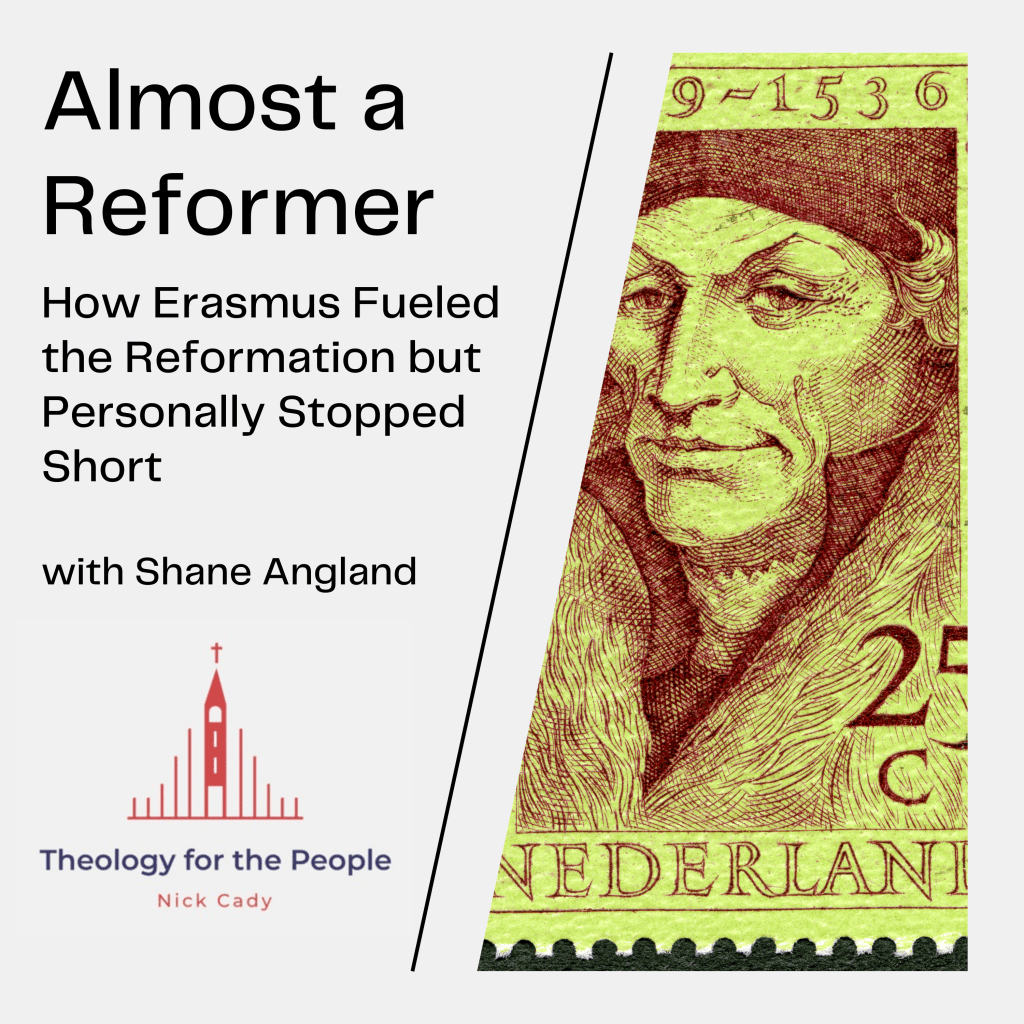
Almost a Reformer: How Erasmus of Rotterdam Fueled the Reformation but Personally Stopped Short – with Shane Angland

In this episode of the Theology for the People Podcast, I speak with Shane Angland. Shane has been a recurring guest on the podcast, and is excellent on the topic of historical theology.

In this episode, we discuss Desiderius Erasmus, one of the most important figures in the history of the Protestant Reformation. He was a key thinker, and the compiler of many of the manuscripts that were used in translating the Bible from Greek and Hebrew into languages of the people. He was also in communication with many of the key figures of the reformation, like Martin Luther.

And yet, Erasmus stopped short of being a Reformer. In this episode, Shane and I talk about this intriguing person, the contributions he made, and why he fell short.

Shane lives in Ennis, Ireland where he serves at Ennis Evangelical Church. He holds a Masters of Divinity from Dallas Theological Seminary, and has served as a missionary in Ukraine.

Click here to listen to the episode, or listen in the embedded player below.

Almost a Reformer: How Erasmus of Rotterdam Fueled the Reformation but Personally Stopped Short – with Shane Angland Theology for the People

Desiderius Erasmus is one of the most important figures in the history of the Protestant Reformation. He was a key thinker, and the compiler of many of the manuscripts that were used in translating the Bible from Greek and Hebrew into languages of the people. He was also in communication with many of the key figures of the reformation, like Martin Luther. And yet, Erasmus stopped short of being a Reformer. In this episode, I speak with Shane Angland about this intriguing person, what contributions he made, and why he fell short. Shane Angland is from Ennis, Ireland and holds a Masters of Divinity from Dallas Theological Seminary. Make sure to check out the Theology for the People website at nickcady.org

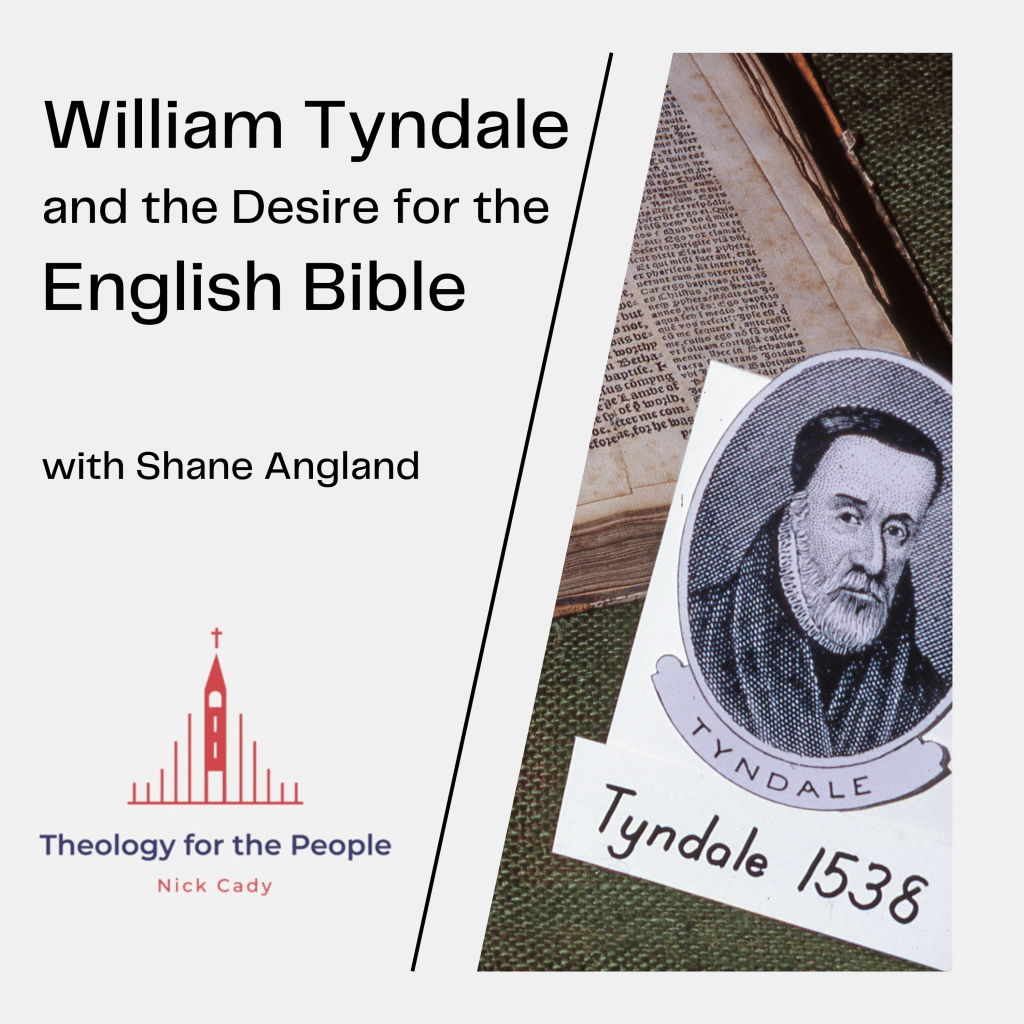
William Tyndale and the Desire for the English Bible – with Shane Angland

If you read the Bible in English, you may not realize all of the drama and sacrifices that went into getting the Bible translated into the English language. 

In this episode of the Theology for the People Podcast, I speak with Shane Angland of Ennis Evangelical Church in County Clare, Ireland. Shane holds a Master of Divinity degree from Dallas Theological Seminary, and specializes in historical theology.

Shane and I speak about William Tyndale: an English biblical scholar and linguist who became a leading figure in the Protestant Reformation, until he was executed for his beliefs. Tyndale created the first English translation of the New Testament from the original Greek text and was working on translating the Old Testament from Hebrew. Much of his work can still be seen in the way the Bible is translated into English to this day. 

Click here to listen to the episode, or listen in the embedded player below.

William Tyndale and the Desire for the English Bible – with Shane Angland Theology for the People

If you read the Bible in English, you may not realize all of the drama and sacrifices that went into getting the Bible translated into the English language.  William Tyndale was an English biblical scholar and linguist who became a leading figure in the Protestant Reformation, until he was executed for his beliefs. Tyndale created the first English translation of the New Testament from the original Greek text and was working on translating the Old Testament from Hebrew. Much of his work can still be seen in the way the Bible is translated into English to this day.  In this episode, my guest is Shane Angland of Ennis Evangelical Church in County Clare, Ireland. Shane holds a Masters of Divinity from Dallas Theological Seminary, and specializes in historical theology.