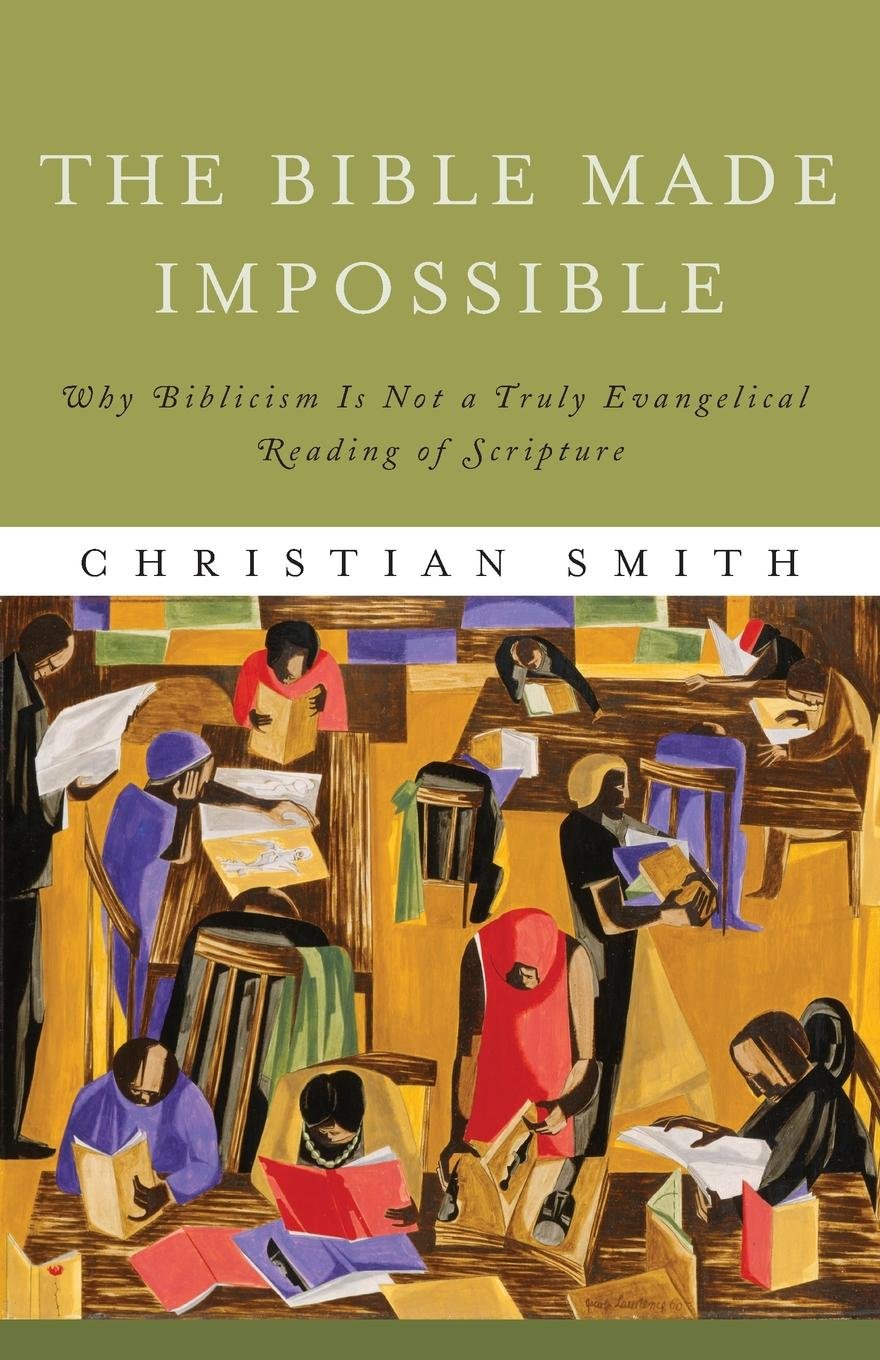

Book Review: A Framework for Understanding Poverty

A Framework for Understanding Poverty 5th edition 9781938248016 1938248015This book: A Framework for Understanding Poverty, was recommended to me by Aaron Campbell, who pastors a church in urban Philadelphia: https://antiochphilly.org

While the book is written primarily for educators to understand and help students in poverty, the research and principles outlined in the book have a much broader application.

Poverty is a Theological Issue

Poverty is not only a political and economic issue, for Christians it is also a theological issue. What the Bible has to say on the topic of poverty goes far beyond the statement that “the poor you will always have with you.” (Mark 14:17)

Taken on its own, this statement of Jesus is often used to say that poverty isn’t something that we as Christians need to care about, since we will never succeed in eradicating it prior to the return of Jesus. However, taking a broader look at the Bible reveals that God has a lot to say about poverty.

For example, the books of the minor prophets, particularly Amos, chastise the people of God for not caring for the poor, and even exploiting them. See Amos: Faith that Works.

Amos is not alone in this message, however. We can say that poverty is a result of the fall, i.e. sin in the world. Like sickness, it is a symptom of the present fallen human condition which Jesus will ultimately make right.

Going all the way back to the Law of Moses and throughout the prophets, the message is that God’s people are to watch out for what is called “the quartet of the vulnerable,” i.e. the most vulnerable people in society, who in their case were: widows, orphans, sojourners, and the poor. Provisions were made in the Law of Moses to prevent systemic poverty and to provide for the needs of those who wound up in poverty as a result of their own choices.

Poverty is a Lack of Access to Resources

Ruby Payne describes poverty as a lack of access to resources. She explains that poverty is relative to location, but that there are certain behavioral patterns which characterize those in poverty which are true across cultures and national boundaries. Interestingly, to prove this, the author did research not only in urban settings in the United States, but also rural settings and internationally, including in Hungary and Slovakia, places I am very familiar with from having lived in North-East Hungary, near the border with Slovakia. I recognized some of the characteristic behaviors she described both in people I worked with in Eastern Europe, as well as in my own family of origin.

She began the book by dispelling many myths about poverty, such as that poverty is the result of laziness, or that it is limited to minority populations or urban areas. She then went on to describe some of the hardships those in generational poverty (two or more generations) face which often prevent them from escaping. Generational poverty can have damaging effects on the brain, as the constant struggle for survival and the presence of different kinds of predators can prevent the development of skills which are needed for the kinds of success in life which allows someone to escape poverty.

Understanding poverty as a lack of resources is important, because it means – as Payne states – that poverty is not mostly about not having money. It is most significantly about relationships.

The Importance of Faith Communities in Relieving Poverty

Payne states that the most important factor that can help those in poverty is for them to be part of a faith community. This is both because of the spiritual resources which provide hope, or “a future story” as Payne calls it, as well as the social and supportive aspects. This is part of the reason why Paul the Apostle is able to say that though he had no money, in Christ he was rich. For more on this, see the recent message I gave on this topic: The Soul Felt Its Worth

May we as the people of God have the heart of God towards those who are weak and vulnerable in our society, and may we act of His hands and feet!

I found this book very insightful, and I recommend it for anyone looking for a balanced and research-backed approach to understanding this important issue.


Most Popular Posts of 2019

macbook pro beside spiral notebook

Thank you for reading and subscribing to this blog. 2019 saw continued growth in readership.

I wrote 101 articles this year, which were viewed 58,000 times, a 70% increase over last year. Subscriptions increased by 35%.

Most Popular Posts of 2019:

  1. The Gospel of Caesar Augustus & What It Tells Us About the Gospel of Jesus Christ

  2. Joaquin Phoenix is Playing Jesus, but Refused to Reenact One of His Miracles
  3. Did People Go to Heaven Before Jesus’ Death & Resurrection?
  4. Augustine & Disordered Loves
  5. Why is Satan Going to Be Released at the End of the Thousand Years
  6. Jordan Peterson & the Bible
  7. What Does it Mean to Live “Coram Deo”?
  8. Why Gossip is Like Pornography
  9. New Zealand, Nigeria & New York: Religious Violence, Refugees & Reporting
  10. Is Christianity About Denying Yourself or About Being Happy?

If you haven’t subscribed yet, please do!

Have a happy New Year, and may God bless you in 2020!

Upcoming Trips and Speaking

grey apple keyboard and grey ipad

Here are some upcoming events I’ll be attending. I would love to have you join me if you are in the area, or pass the info on to anyone you know in these places.

January 27-31, 2020: Calvary Chapel European Pastors & Leaders Conference – Millstatt, Austria. More information and registration: http://eplc.calvarychapel.com/

February 21-22, 2020: Expositors Collective Training Weekend – Las Vegas, Nevada. More information and Registration: https://www.expositorscollective.com

March 7, 2020: Expositors Collective Training Day – Budapest, Hungary.

March 10, 2020: Ukrainian Evangelical Theological Seminary – Kyiv, Ukraine. More information: https://www.uets.net/

March 13-14, 2020: Calvary Chapel Ukraine Pastors & Leaders Conference – Irpin, Ukraine.

May 8-9, 2020: Expositors Collective Training Weekend – Seattle, Washington. More information and Registration: https://www.expositorscollective.com


Most Listened-To Sermons of 2019

silver iphone x with airpods

Our church’s website was recently updated, including a major overhaul of the sermon archive, which now allows you to browse by series and books we have taught through. Check it out here: White Fields Community Church Sermons

If you haven’t done so yet, you can subscribe to our podcast here, or just search White Fields Community Church in whatever podcast app you use. If you like what you hear, please rate and review us, as that helps boost us in their algorithm, and helps other people discover us.

I recently switched to the Overcast app for listening to podcasts. I like that it cuts out pauses and regulates audio to a consistent level, and allows me to make playlists. Overcast is only available for iOS, but the best app for Android, which has many of the same features is Podcast Addict. My wife’s biggest hesitation with switching to an iPhone recently was that she would lose Podcast Addict.

These sermons I preached in 2019 were listened to and downloaded the most:

10. Amos: Faith that Works

9. Daniel: How to Live a God-Honoring Life in a Hostile Environment

8. How to Be Right When You are Wronged – 1 Peter 3:8-22

7. What is Your Life? – James 4:13-5:6

6. Encouragement for the Fainthearted – 2 Thessalonians 1:1-12

5. Count It All Joy – 1 Peter 1:1-9

4. I Could Never Believe in a God Who: Condoned Genocide in the Old Testament

3. I Could Never Believe in a God Who: Hasn’t Proven His Existence

2. I Could Never Believe in a God Who: Does Not Affirm Some People’s Sexuality

1. I Could Never Believe in a God Who: Sends People to Hell

Analysis

A few things pop out at me from this list. First of all, the fact that some of our more recent sermons are in the top ten means that listenership to our podcast is increasing.

Secondly our biographical look at the prophets, called “Remember the Prophets” was a lot of fun. Those books and their authors are often overlooked for various reasons, but their messages are very important.

Finally, our apologetics series “I Could Never Believe in a God Who…” was our second consecutive year doing a series like this, and clearly it struck a chord with a lot of people. These kinds of series are helpful both for engaging with those who might be skeptical about Christianity, and for teaching Christians how to respond well to those who ask questions. Oftentimes many of us who are Christians struggle with questions even though we choose to trust God and believe. As the church we engage with those issues and equip others to do so as well.

What Didn’t Make the List?

Leave me a comment below and let me know which sermon from this year made the biggest impact on you!

If need to refresh your memory, a list of our past sermons from this year can be found here: White Fields Sermons

Christmas is for “Those People”

pexels-photo-2733337.jpeg


The Ins and the Outs

If you read the narratives about Jesus’ birth, you notice that two very different groups of people came to celebrate the event: the magi and the shepherds.

These groups could not have been more different.

  • The magi were “wise men from the East,” whereas the shepherds were local.
  • The magi who educated whereas shepherds were uneducated.
  • The magi were trained in astronomy: a practice common amongst social elites at that time. The shepherds were illiterate.
  • The magi were wealthy. The shepherds were the poorest of the poor.
  • The magi were elites: they easily got an audience with the king. The shepherds were outcasts: dirty, smelly, and looked-down upon by others.

The wise men were the 1%-ers. The shepherds were the undesirables.

Honored yet Disgraced

Then there’s Mary. When the angel came to her to tell her that God had chosen her to be the one through whom the promised Savior would come into the world, her response was:  “Me?   Really?”  Later on she says that God had “looked upon her lowly estate” (Luke 1:48).

Mary was a young woman and she was poor. She was engaged to a blue-collar construction worker. We know that together they were poor because when they dedicated Jesus as a baby in the temple, they gave an offering of two turtledoves (pigeons), which was the sacrifice that the poorest of the poor were allowed to make (the wealthy were required to sacrifice a lamb, but this allowance was for those who couldn’t afford to buy a lamb). Truly: he was was rich became poor… (2 Corinthians 8:9)

Furthermore, since God’s plan necessitated that the Messiah, the promised savior, be born of a virgin (Genesis 3:15, Isaiah 7:14, Matthew 1:22-23), that necessitated that whoever would be chosen to bear the Messiah would become a social pariah by doing so, because they would become pregnant outside of wedlock.

Mary had to be content with knowing who she was in God’s eyes, because in the eyes of those in her community she was disgraced. In fact, John’s Gospel tells us that Jesus had to deal with insults and people calling him a bastard because of his mother’s assumed impropriety (John 8:41). Scholars also note that when Mark’s Gospel reports that Jesus was called “the son of Mary” rather than the common way of referring to a child as the son of their father, i.e. “the son of Joseph” – that this was a slight, insinuating that Jesus was the product of Mary’s adultery.

Hope for “Those People”

Sometimes people look at Christianity and say, “the problem with Christianity is that it is so narrow and exclusive,” because Christianity says that if Jesus is God, if Jesus is the Savior, then you have to put your trust in Him and follow Him in order to be saved.

But here’s what’s interesting: I have met many people who say: “All you have to do to be saved is: be a good and moral person.”

Most people don’t believe that all people will be saved. They fully expect that Hitler and Stalin and Pol Pot will go to hell, as well as those who hurt children or the weak. They believe that those who are cruel and mean, and those who do bad things and hurt others deserve Hell rather than Heaven.

In fact, many people find it scandalous that by just believing in Jesus, a person like Jeffery Dahmer, who has done truly terribly things, could be forgiven of their sins and still go to heaven. People even go so far as to say things like, “If someone like that is in Heaven, then I would rather not be there.” The assumption is that for God to forgive someone like that would be a grave act of injustice.

The problem, though, with saying that “All moral and decent people will go to Heaven,” or “If you live a good life, then you will be saved,” is that not all of us are moral! Not all of us have lived good lives! Some of us are failures. Some of us are broken. All of us have done things that we’re not proud of. We have all done things that hurt other people.

To say that “good and moral people” will be saved, or that in order to be saved you must “live a good life” is narrow and exclusive, because it puts “those people” on the outside. The gospel, on the other hand, offers hope to “those people” because it says that anyone who comes to Jesus will be welcomed, received, forgiven, and transformed.

The message of the gospel is good news for all people – for the elites and the outcasts. For the decent and the indecent. For the good and the bad (see Matthew 22:10 – both “the good and the bad” were invited to the wedding feast). The gospel is scandalously open to all people who will come and receive the free gift of redemption through Jesus. That’s good news for “those people” like me and you!

Merry Christmas!

Is Christmas Pagan in Origin?

flatlay photography of gift and baubles

I hope I won’t ruin Christmas for you if I tell you that Jesus was almost certainly not born on December 25.

Unlike Easter, which we know corresponds to Passover, and therefore we can be quite sure of when it happened, the Bible doesn’t actually tell us what time of year Jesus was born. Based on the placement of stars in the sky and the fact that Luke tells us that shepherds were watching their flocks by night, many scholars believe that Jesus was likely born sometime in September – since in late December it would be too cold even in Israel for shepherds to sleep outside overnight with their flocks.

What then is the reason we celebrate Jesus’ birth at the end of December (or in early January for the Eastern Church)? The reason is historical rather than biblical, and this has led some to conclude that Christmas is pagan in origin and therefore Christians should have nothing to do with it. I do not agree with that view. Let me explain why.

For a related topic, check out: Does Easter Come From Ishtar?

The Winter Solstice and Saturnalia

December 25 often corresponds with the shortest day of the year. In animistic and pagan communities, the winter solstice was/is often celebrated as a holiday. Pagan Romans celebrated Saturnalia at this time, which was a week-long celebration of lawlessness, lewdness, and hedonism during which people were exempt from punishment for acts which were usually punished as crimes. [1]

Christianity was considered an “illicit religion” until the Edict of Milan (AKA the Edict of Toleration) in 314 AD under Constantine. It was a generation later, under Theodosius I that Christianity became the official religion of the Roman Empire. Long before this, however, Christianity had already become the dominant faith in the empire, particularly in the urban centers.

As part of the official Christianization process, the Winter Solstice and Saturnalia celebrations were banned, and this time period was designated as the time in which Christians would celebrate the birth of Jesus into the world. Christians at this time understand that this was not Jesus’ actual birthday, but simply the time of the year which was set aside to remember and celebrate the incarnation: the coming of God into the world “in the flesh” in the person of Jesus Christ.

Should Christians Not Celebrate Christmas Because of the Origin of Christmas?

There is certainly nothing requiring anyone to celebrate the coming of Jesus into the world at the end of December. Ideally, a Christian should celebrate this event every day of the year. Since none of us know the actual date of Jesus’ birth, what matters is that we celebrate it, not when we celebrate it.

The meaning of a holiday is determined by what people are celebrating. No one who believes they are celebrating the birth of Jesus on December 25 is inadvertently or accidentally worshiping pagan gods or condoning paganism or hedonism by celebrating the coming of Jesus into the world on a day which was formerly used by pagans for a celebration of a completely different nature and meaning.

Paul the Apostle said, “Therefore let no one pass judgment on you in questions of food and drink, or with regard to a festival or a new moon or a Sabbath. These are a shadow of the things to come, but the substance belongs to Christ.” (Colossians 2:16-17)

If you celebrate the substance of Jesus Christ and his coming on December 25, then it does not matter what other people might have used this day for in the past.

The repurposing of this cultural holiday in the 4th Century was viewed by Christians as the redeeming of a day for the worship of Jesus which had formerly been used for the celebration of the work of the devil.

Infusing it with new meaning, Christians saw significance in celebrating the coming of Jesus into the world on the darkest day of the year, after which everything becomes brighter. They connected this with the biblical picture of the coming of Jesus into the world as the beginning of “dawn” (see 2 Peter 1). Dawn is the time when when light breaks the darkness of night, beginning the unstoppable process of the eventual cresting of the sun over the horizon giving rise to a “new day” – at which time the darkness will be driven away completely.

For more on this, check out: Advent Meditations: 2 – The Dawn

Jesus Took Advantage of “Cultural Moments” and Special Days

While there is no biblical requirement that anyone celebrate the coming of Jesus on December 25, it is a unique time in which people in our society, and now all over the world, including those who are not Christians, are uniquely focused on Jesus. No matter how much society has tried to make Christmas about other things, it is still recognized that, at bottom, this celebration is about the coming of Jesus into the world.

Statistics have shown that this is the time of the year when people who don’t usually attend church are most likely to accept an invitation to a church service from a family member or friend.

To not take advantage of this unique cultural opportunity for the sake of God’s mission is, in my opinion, a mistake.

Jesus himself did something similar: in the Gospel of John chapter 10, we read about a time when Jesus went up to Jerusalem in the winter for the Festival of Dedication (Hanukkah), a festival which does not have its origin in the Bible. Yet Jesus took advantage of this cultural celebration in order to draw attention to himself and why he had come as the shepherd of God’s people (a Messianic title). I believe this sets a precedent for us to use appropriate cultural celebrations as missional bridges between the gospel and people in our societies.

May God help us to make much of Jesus this Christmas season!

The Fig Tree & the Tree of Life

gray trunk green leaf tree beside body of water

In 2 Timothy 1:10, Paul the Apostle tells us that Jesus came to abolish death and bring life and immortality to light through the gospel. I looked at this passage yesterday in a sermon titled “Born That Man No More May Die,” as part of our Advent series, looking at who Jesus was and why he came.

In the sermon I looked at a story that has always intrigued me: Jesus’ encounter with Nathaniel in John 1, in which Jesus declares that Jacob’s ladder (Genesis 28) was a foreshadowing of Him: Jesus is the bridge between Heaven and Earth, between mortal humanity and immortality.

What Was Nathanael Doing Under the Fig Tree?

In John 1, we read that Nathanael is skeptical when he hears that Jesus is from Nazareth; he cannot believe that the Messiah could ever come from a place like that. In my sermon, I explained that the reason Nazareth was despised was because it was a generally poor, working class town, where most of the people worked for the pagan Greeks in the nearby city of Sepphoris.

Nathanael is then introduced to Jesus, and immediately he lets go of his skepticism and is convinced that Jesus truly is the Messiah. What changed his mind? It was something that Jesus said to him as soon as they met:

Jesus saw Nathanael coming toward him and said of him, “Behold, an Israelite indeed, in whom there is no deceit!” Nathanael said to him, “How do you know me?” Jesus answered him, “Before Philip called you, when you were under the fig tree, I saw you.” (John 1:47-48)

What was Nathanael doing under the fig tree? According to some Jewish rabbis, Jewish people would traditionally read the Scriptures under a fig tree because of the belief that the Tree of the Knowledge of Good and Evil (the tree Adam and Eve were told not to eat from lest they die), was a fig tree, because after they sinned and their eyes were opened to the fact of their nakedness, Adam and Eve tried to cover themselves with fig leaves.

The statement about an Israelite in whom there is no deceit is likely as allusion to the story of Jacob, whose name means: “deceiver”, but after wrestling with God, he was given a new name: Israel, which means something like: “grapples with God”, “subdued by God” or “governed by God.”

These allusions to Jacob “the deceiver” whose identity was changed by his encounter with God, along with the mention of the fig tree lead many to believe that Nathanael must have been reading about Jacob in the Book of Genesis, and the fact that Jesus knew that, convinced Nathanael that Jesus was indeed the Messiah, the promised Savior and king.

Cut Off from the Tree of Life?

Speaking of the Tree of the Knowledge of Good and Evil, in Genesis 3, after Adam and Eve ate of it, they were cast out of the Garden of Eden, and an angel with a flaming sword was placed to guard the entrance of it, lest they – or anyone else – eat of the Tree of Life and live forever. (Genesis 3:22)

That verse might strike you as a little bit confusing: Doesn’t God WANT us to eat of the Tree of Life and live forever?

The answer is: Yes, but not in this fallen state. In other words, it was an act of God’s mercy that Adam and Eve were cut off from the Tree of Life, lest they eat from it and live forever in their fallen state. Instead, God allowed them to die, so that he might one day redeem them through Jesus, and ultimately resurrect them unto eternal life. For us as well, it is God’s mercy that he allows us to die “the first death” (physical death) and saves us from “the second death” (eternal Spiritual death, see Revelation 21:8).

Further Discussion

Mike and I sat down this week and discussed these and other topics in our weekly Sermon Extra video. Check it out:

Longmont Ranked the Number 1 ‘Boomtown’ in the United States

image.png

According to the Boulder Daily Camera, the financial advising and credit monitoring company SmartAsset recently named Longmont its No. 1 “boomtown” after conducting a study of 500 largest communities across the country.

CBS Denver explains that the designation is based on a variety of factors including unemployment, population growth, the number of businesses created, and the local housing market.

Also included in the top 10 boomtowns were Greeley (#5) and Denver (#7).

Here’s the report from SmartAsset: Top Boomtowns in America – 2019

For those of us who are Christians in Longmont, we know that God has called us here for such a time as this! Please pray for our city and God’s work here, especially through White Fields Community Church.

What Did John Calvin Mean By, “We must remember that Satan has his miracles too”?

image.png

In a recent post titled If Satan Has Been Defeated, Why Is He Still “Prowling Around”?, we looked at how Satan is not God’s counterpart, and certainly not his equal. How then can someone like John Calvin, who has a high view of God’s sovereignty and power, say that “Satan has his miracles too?

Calvin was referring to Matthew 24:24 – where, in his Olivet Discourse, Jesus states that during a time to come of great tribulation, “false messiahs and false prophets will arise and perform great signs and wonders, so as to lead astray, if possible, even the elect.”

The Context of Calvin’s Statement: A Response to Roman Catholic Criticisms About a Lack of Miracles in the Reformation

This statement is only part of a bigger statement by John Calvin. It is found in the “Prefatory Address to the King of France,” at the beginning of Institutes of the Christian Religion. In this section, Calvin is responding to Roman Catholic criticisms of the Reformation, one of which was that the Reformation lacked miracles, which they said proved that the Reformation was not a legitimate, apostolic, work of God.

In his response, Calvin said that the immediate purpose of a miracle like healing was to bring relief to the individual, but the ultimate purpose was to prove that the apostolic preaching was true. Calvin then argues that the Reformation is not a new revelation, but rather the reaffirmation of the original apostolic preaching, therefore it does not necessitate miracles to confirm its validity.

Calvin then takes it one step further by suggesting that many of the supposed miracles reported by the Roman Catholic Church may not be from God, but may instead be of the sort talked about by Jesus in Matthew 24:24, i.e. performed by false prophets by the power of Satan to lead people astray and deceive them.

Interestingly however, Calvin does not disavow miracles entirely, but suggests that there were actually miracles that accompanied the Reformation. He then makes the concluding point that the test of miracles should be what they cause you to worship and trust in. Any miracle which causes you to trust in false doctrines or turn away from the Word of God, he says, are suspect in their origin.

This final point is a good one; you might remember that in Exodus, Pharaoh’s sorcerers were able to do replicate some of the miracles which Moses performed. The effect of these miracles was to cause people not to listen to God and repent, but to trust in false gods. I have witnessed a similar phenomenon amongst people in some circles today who seek signs and wonders; sometimes the signs they seek cause them to trust in things other than God, His Word, and the gospel.

You can read a larger excerpt of what Calvin wrote here, but here are some highlights:

In demanding miracles from us, they act dishonestly; for we have not coined some new gospel, but retain the very one the truth of which is confirmed by all the miracles which Christ and the apostles ever wrought.

But the mark of sound doctrine given by our Savior himself is its tendency to promote the glory not of men, but of God (John 7:18; 8:50). Our Savior having declared this to be test of doctrine, we are in error if we regard as miraculous, works which are used for any other purpose than to magnify the name of God.

And it becomes us to remember that Satan has his miracles, which, although they are tricks rather than true wonders, are still such as to delude the ignorant and unwary. Magicians and enchanters have always been famous for miracles, and miracles of an astonishing description have given support to idolatry: these, however, do not make us converts to the superstitions either of magicians or idolaters.

But our opponents tell us that their miracles are wrought not by idols, not by sorcerers, not by false prophets, but by saints: as if we did not know it to be one of Satan’s wiles to transform himself “into an angel of light” (2 Cor. 11:14).

We, then, have no lack of miracles, sure miracles, that cannot be gainsaid; but those to which our opponents lay claim are mere delusions of Satan, inasmuch as they draw off the people from the true worship of God to vanity.

Source: John Calvin, Institutes of the Christian Religion, cited in: The Reformation’s Lack of Miracles: A Response by John Calvin

Christmas Eve Church Services in Longmont

Screen Shot 2019-12-11 at 10.05.58 AM

Join us at White Fields Community Church on December 24, 2019 at 5:00 or 6:30 PM for a special Christmas Eve service which will include Christmas music from our band and choir, as well as a reading of the Christmas story and a message titled, “In Thy Dark Streets Shineth”

Location: St. Vrain Memorial Building, 700 Longs Peak Ave. Longmont, CO 80501

Invite someone to join you as well! Studies have shown that most people are willing to attend church on Christmas Eve if they are invited by a friend or family member. Consider yourself invited, and invite someone to join you and get Christmas started by focusing on Jesus!