The Active Passive Actions of Relationship with God

82034485_2736402666395387_7737323707604926464_n.png
Abide and Bear Fruit is our theme this year at White Fields Church

The Bible uses a few terms to describe what a relationship with God looks like, and how it is to work in practice. Some of these terms imply movement, such as walking with God (Genesis 5:22, 6:9, 17:1; Luke 1:5).

There are other terms however, which at first glance appear passive. A further look into these terms reveals that they actually imply action:

Wait on the Lord

The word “wait” conjures up thoughts of waiting at government offices, hospital waiting rooms, or waiting for Christmas to come. All of these are passive actions: you have no control over the outcome, and many times these experiences of waiting sap our energy. Waiting for 2 hours at the DMV can be exhausting, even if you spend the whole time sitting in one place and not moving.

However, to “wait on the Lord” is not a completely passive action. The word “wait” in Hebrew is the word Qavah which means “to hope” or “to expect.” It can also be translated “to bind up,” or “gather together.”

While on the one hand, the outcome is out of your control, you are not completely passive nor inactive; you are doing something because you know the God who controls the outcome.

It is in this way that Isaiah the Prophet could say,

“Even youths shall faint and be weary,
and young men shall fall exhausted;
but they who wait upon the Lord shall renew their strength;
they shall mount up with wings like eagles;
they shall run and not be weary;
they shall walk and not faint. (Isaiah 40:30-31)

Whereas in many cases waiting can be an exhausting and energy-sapping experience, waiting on the Lord, Isaiah tells us, actually renews your strength and invigorates!

It is in this sense that the Psalm-writer says, “I wait for the Lord, my soul waits, and in His word I hope.” (Psalm 130:5)  This is not the waiting of passive inaction, but the hopeful expectation of trusting in God’s word and God’s promises.

Abide in Christ

At the Last Supper, Jesus told his disciples:

I am the vine; you are the branches. Whoever abides in me and I in him, he it is that bears much fruit, for apart from me you can do nothing.

By this my Father is glorified, that you bear much fruit and so prove to be my disciples.

As the Father has loved me, so have I loved you. Abide in my love.   (John 15:5,8-9)

To abide means “to remain, to dwell.” In the picture of a vine and its branches, the branch has to merely stay attached to the vine.

Yet, while on the outside it may not appear that there is any movement involved in the branch abiding in the vine, under the surface there is movement of nutrients from one to the other, providing life, health, and growth, which is seen by the fact that this abiding produces something: fruit.

For us to abide in Christ, on the one hand, involves not moving away from Christ, but the actions of abiding are anything but passive. Another definition of abide is to adhere to a pattern of life. Practically speaking, abiding in Christ requires intentional action to pursue fellowship with God.

These intentional actions by which you abide in Christ are also referred to by the term spiritual disciplines, things like prayer, studying the Scriptures, fellowship with other believers, generosity and giving, and more.

Click here for articles on spiritual disciples and spiritual formation.

In 2 Peter chapter 1, Peter urges the believers to “make every effort” to add to their faith: virtue, knowledge, self-control, steadfastness, godliness, brotherly affection, and love (2 Peter 1:5), stating that these things help us not to fall, and they help us to “grow in the grace and knowledge of our Lord and Savior Jesus Christ.” (2 Peter 3:18)

The outcome may ultimately be the Lord’s work in us, but we are invited to participate in working out what God has worked into us, and we get to participate in cultivating our own spiritual growth.

May we be those who trust in, wait up, and abide in the Lord Jesus, not passively – but actively. May we be those who work out our own salvation, knowing that it is God who works in us to will and do to His good pleasure. (Philippians 2:12-13)

For sermons from 2 Peter, click here: Pilgrim’s Progress: a Study Through 1 & 2 Peter

Upcoming Expositors Collective Training Weekends: Las Vegas, Budapest – and More

lasvegas.png

The Expositors Collective is a growing network of pastors, leaders, and laypeople which exists to equip, encourage, and mentor the next generation of Christ-centered preachers through two-day interactive training seminars, a weekly podcast, and ongoing mentoring relationships.

Our training weekends are open to men and women ages 18-34 who want to grow in teaching and preaching the Word of God.

These are regional events which many people fly in for, so even if you don’t live in area where an event is being held, consider joining us for a weekend. We always have discounted hotel rates for those who attend.

Las Vegas, Nevada: February 21-22, 2020

Our next event will be in Las Vegas, Nevada on February 21-22, 2020 at Calvary Chapel Las Vegas.

Click here for more information and registration.

Budapest, Hungary: March 7, 2020

This event will be a little bit different from what we usually do; it will be a one-day event, and will be bilingual: English and Hungarian.

For more information and to register, click here.

Upcoming Events in 2020

If you can’t make it to Las Vegas or Budapest, consider joining us later this year at one of these events:

  • May 8-9, 2020 – Seattle, Washington
  • October 2020 – Honolulu, Hawaii

Is the Term “Evangelical” One We Should Embrace or Avoid?

man wearing black crew neck shirt reading book

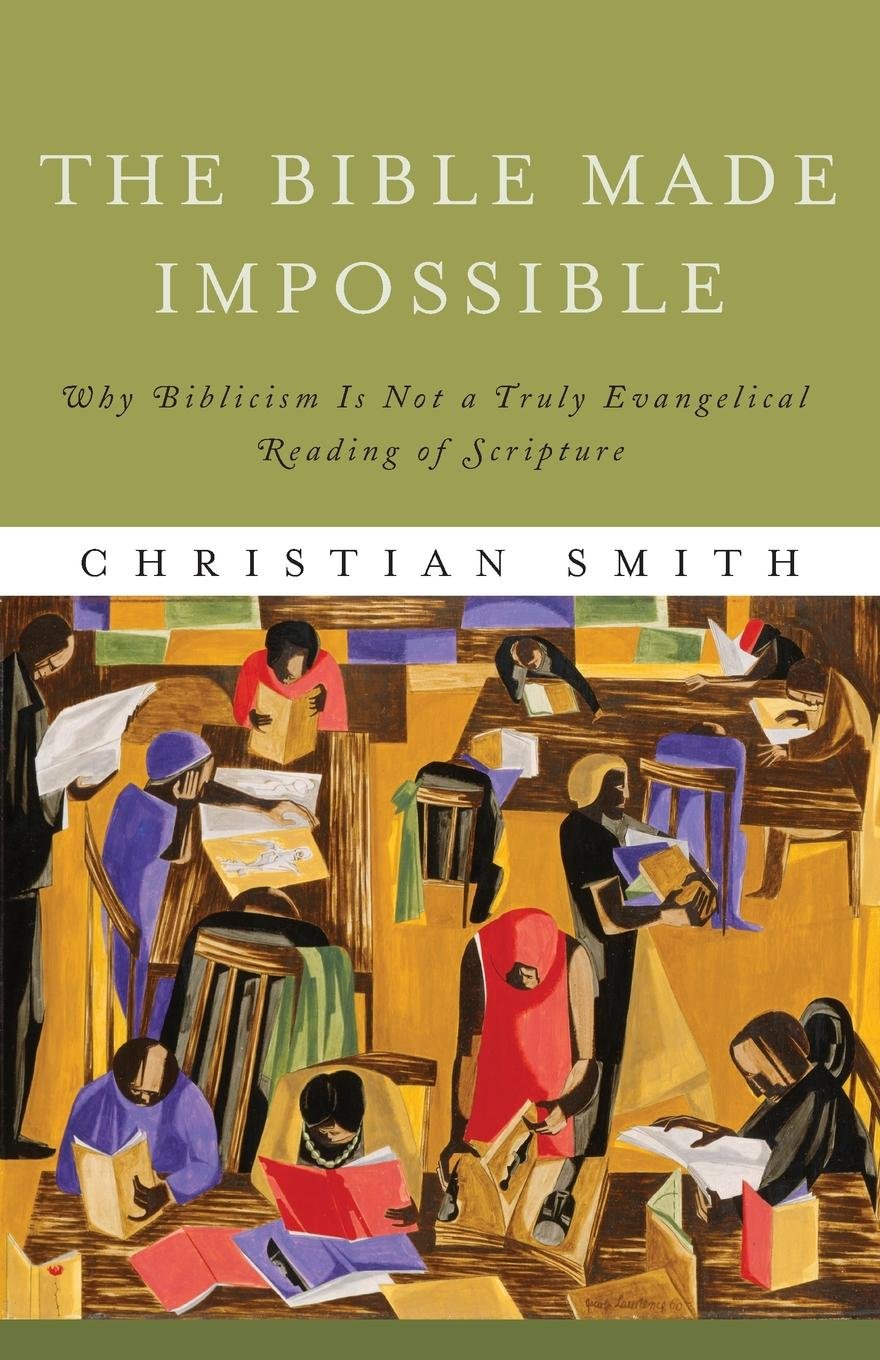
In a recent post, I reviewed Christian Smith’s book, The Bible Made Impossiblein which he takes aim at “biblicism,” which he claims is particularly prevalent amongst evangelical Christians.

This brings up an important question: What exactly is an “evangelical”?

Popular Usage

Recently a friend from church approached me before service one Sunday morning. He pointed out an article in the New York Times about evangelicalism in America, and asked what exactly an evangelical is, and whether our church was evangelical.

Another friend recently posted online about two Christian leaders who had written a book about their support for a particular political issue, and my friend’s comment was that the divide between evangelicals and Jesus is widening all the time.

Obviously my friend is speaking of evangelicals as if they are a single, united group of people, who for the most part do not only hold certain religious beliefs, but also certain political and social positions.

Again, it begs the question: what exactly is an “evangelical”?

Origin of the Term

The word “evangelical” means “of the gospel” or “about the gospel.” It comes from the Greek word evangelion, which means a proclamation of good news.

See also: The Gospel of Caesar Augustus, & What It Tells Us About the Gospel of Jesus Christ

The gospel, which is the proclamation of Jesus Christ and what He has done in order to save us, redeem us, and reconcile us to God, is the core message of Christianity. Thus, an “evangelical Christian” simply means: a Christian who is about the gospel, or a gospel Christian.

Co-Opting of the Term

Since the gospel is the core message of Christianity, one would assume that all Christians would be people who are about the gospel! Unfortunately, some political groups have attempted to co-opt the term evangelical to give the impression that theologically conservative Christians all agree with particular political, social, and economic positions and support certain political parties.

This has led some Christians to feel that they should abandon the term evangelical, as they feel it is no longer helpful in identifying them because the term may be associated in some people’s minds with certain political positions, thus creating an unnecessary barrier for some in approaching Christianity.

So what is an evangelical?

Defining Evangelicalism

Theologian and historian Mark Noll says: “the groups and individuals making up the postwar evangelical movement unite on little except profession of a high view of scripture and the need for divine assistance in salvation.” [1]

Another definition states that evangelicalism is “a transdenominational movement that has sought to transcend its differences in order to work together toward certain common activities and goals, particularly evangelism, world missions, and ministries of mercy and justice.” [2]

Nathan Hatch explains that evangelicals cannot be spoken of as if they are one united group of people who all share the same core beliefs, nor is there one leader who represents or speaks on behalf of evangelicals as a whole. He states, “In truth, there is no such thing as one evangelicalism. [It is made up of] extremely diverse coalitions dominated by scores of self-appointed and independent-minded religious leaders.” [3]

Thus, for my friend to say that “evangelicals are moving farther away from Jesus every day” is to suppose that certain leaders speak on behalf of a movement which is united in both their theological and political views, which is absolutely not true. Nevertheless, many people obviously hold this opinion, partly because of “self-appointed” leaders who act as if they do speak on behalf of evangelicals as a whole, which is the reason why many Christians are considering whether it would be best to distance themselves from this descriptor.

Not an American Movement

One of the problems with associating the term evangelical with Christians who hold certain political positions is that it fails to recognize that evangelicalism is a worldwide movement, not an American one, and evangelicals around the world hold a wide variety of positions on social and economic issues. Even in the United States, evangelicals are not united in their political views or affiliations.

Should We Embrace It or Avoid It?

Words are only helpful until they are not. Furthermore, the helpfulness of words depends on context, because in different contexts, the same words can be associated with different things. If a word carries a lot of baggage in a particular context, it might be better to find a different word.

For example, in Hungary, where I pastored for several years, the word evangéliumi (literally: of the gospel) was a helpful and positive term which gave people a sense of who we were and what we were about. In England, where I have done my theological education, the term evangelical does not carry heavy political connotations, and is therefore helpful in describing a certain kind of Christian who is active in their faith, takes the Bible seriously, and is engaged socially. John Stott, an Anglican, is remembered in England as the face of the Evangelical Alliance, a group of churches that works together beyond denominational lines to further the gospel.

In the United States some Christians, including myself, have opted for using alternative monikers, such as “Gospel-Centered,” which retains the idea of being focused on the gospel, while not using a term which has come to be associated with many things other than the gospel in American society. As I often say: as a Christian, the only controversy I want to be known for is the controversy of the gospel.

Book Review: The Bible Made Impossible

Recently I finished reading The Bible Made Impossible: Why Biblicism Is Not a Truly Evangelical Reading of Scripture by Christian Smith.

Content

When approaching the book, it is important to note that Smith is neither an evangelical nor has he been trained as an academic theologian. He is a sociologist and a professor at Notre Dame University; his writing is scholarly and well-informed, but his purpose is writing this book is to critique a certain tendency which he perceives to be a problem amongst evangelicals. This problem is something he calls “biblicism” – which is basically making the Bible the end-all, be-all source of not only theology, but practical living (including things such as diet, finance, etc.).

Smith’s biggest contention is that biblicism leads to “pervasive interpretive pluralism,” which basically means that the Bible can be used to justify several positions which may stand in conflict to one another.

He then asserts that “biblicists” are using the Bible in a way it was never intended to be used, and suggests instead that the Bible should be read through a Christological hermeneutic lens, i.e. that the Bible exists not to be a handbook for everything in life, but for the sole purpose of pointing us to the gospel of Jesus Christ.

While the Christological hermeneutic might seem quite obvious, Smith goes on to state that as a result of this Christo-centric view of Scripture, we therefore do not need to consider all parts of Scripture as equally inspired by God, nor applicable to the modern person. Thus, whatever is written in the New Testament, for example, such as household codes and practical rules for life, does not need to be heeded by the modern person in so much as it does not point to Christ and the saving work of God through Him.

Ultimately, Christian Smith’s biggest assertion is that Jesus himself, rather than the Bible, is what should be considered the “rule of faith,” i.e. the measuring rod by which all things are judged. What is important about his point is that he says that texts and words of the Bible itself should be judged by this rule (Jesus Christ himself), and those parts set aside, which do not align with this “rule.”

Finally, Smith closes the book with a lengthy epilogue in which he complains about those who have not agreed with his claims.

Critique

I agree with Christian Smith’s assertion that some people look to the Bible to be something which God never intended it to be (e.g. “The Daniel Diet” or as a guide for investment practices), and I believe he rightly disassembles the views underlying these practices. However, where the Bible does speak to practical issues of life, it would be foolish to write those off as uninspired, or pick-and-choose based on some arbitrary sense of what you perceive to be really about Jesus.

While Smith repeatedly asserts that “pervasive interpretive pluralism” is a problem, he gives insufficient rationale for why it is a problem. Simply repeating something loudly is not a convincing argument. He fails to explain why it is a problem that the Bible can be interpreted in multiple ways using theological and canonical reasoning.

I would argue that the Bible was inspired by God with a degree of ambiguity on certain topics by design! On the most important topics (primary theological issues), the Bible speaks without ambiguity, but on secondary issues, there is often, what I believe to be an intended ability and possibility for pluralistic interpretations. The purpose of this? As Smith rightly says: the Bible is not intended to be handbook, or a manual for life, as much as something which trains us how to think and act in a dynamic relationship with God. It is designed in such a way that we must continually be reading it and studying it, as well as engaging with others, as to its interpretation and application for one’s contemporary setting and circumstances. This is by no means to say that there is an infinite horizon of possibilities of interpretation; there are certainly boundaries for interpretation which are defined within the Scriptures themselves (canonical reasoning), but within these boundaries, sometimes there can be multiple options for interpretation and application – and I believe this is by design, and is not the problem which Smith claims it is.

See also: Is There Only One Correct Way to Interpret a Given Passage of Scripture?

The Key Issue

Where I disagree most with Christian Smith is in regard to what constitutes the “rule of faith.” His claim that Jesus is the rule of faith might sound nice at the outset, but it is wrought with difficulties.

First of all, who defines who Jesus is? How do we know who Jesus is, what He is about, or what He thinks or stands for? Those things are passed down for us through tradition, but guess how: through the canon of Scripture! It is through Scripture, which is the recorded, preserved, and affirmed record of apostolic tradition, that we know anything about Jesus.

Furthermore, and very importantly: the Scriptures of the Bible were the “rule of faith” that was used by the church fathers in determining doctrine at the great ecumenical councils of Nicaea, Constantinople, Ephesus, and Chalcedon.

Conclusion

The Bible Made Impossible was a roller-coaster ride. Some of Smith’s points are excellent, and deserve attention by Christians today, whereas some of his other points seemed either half-baked or completely misguided.

I’m glad I read it, but I would only recommend it to those with a keen ability to “spit out the seeds” and think critically and question what might seem at face-value to be a convincing argument.

Identity Issues: Function, Labels, Sin & Jesus

close up of hand holding text over black background

Where does your identity come from? What defines who you are?

Many people look to their function to give them their sense of identity. This is wrought with peril, as it is an inherently fragile foundation; what you do can and will change throughout your life. You will lose abilities, positions, and even loved ones. Surely you are more than what you currently do.

Other people find their identity in appearance, culture, and other things. Sometimes we feel that a person’s identity is defined by their past actions, whether successes or failures.

As human beings, we have a tendency to categorize and label people in an attempt to try to more easily make sense of the world and our place in it. Labeling and categorizing is powerful, as it then shapes our perceptions of people, including ourselves.

This week, Mike and I sat down to discuss this issue – and it led to what I think was one of our best discussions yet, in which we reflected on some of our own struggles with identity. Check it out:

Last week I was in Austria for the Calvary Chapel European Pastors and Leaders Conference. It was a great time of fellowship, teaching, conversations, encouragement, and refreshment.

I arrived back from Austria on Saturday night, and preached on Sunday at White Fields, which was way harder than I had expected, but I wanted to be there to finish up our Vision series.

The final message in this series was: A Vision for Others, in which we looked at how God sees other people, including us, and the implications of that for us.

This issue of identity was also part of the message I shared in Austria. No matter what stage of life you are in, and no matter your vocation, identity is an important issue, and one that God thankfully has a lot to say about in His Word to give us guidance.

Check out the video and the sermon for the answer on the dangers of finding your identity in the wrong places, and the freedom that comes from finding your identity in Christ.

Rhode Island & Walden Pond: How They Shaped the Way Americans Think About Church

person sitting on bench under tree

It has been said that there are two men who did more to shape the American psyche and culture than anyone else:

#1: Roger Williams, Founder of Rhode Island

Roger Williams moved from England to Boston in the 1600’s to be part of the Puritan colony of Massachusetts

The Puritans’ goal was to create a pure church, free from politics, corruption, and compromise.

Roger Williams loved this idea… the only thing was: after a while he noticed some things in the church there in Boston that he didn’t really like. Things such as how baptisms were carried out, and how the church was managed.

So, do you know what he did?   He left.

Roger moved down south of Boston and established his own colony, with its own church, in what is now Providence, Rhode Island.

But then, guess what happened… After a while, Roger found some things he didn’t like about this new church, and some of the people there (the very church he himself had founded!). And so, Roger Williams left that church as well, and established another church nearby.

And then he left that church too…

Every church he started, he eventually left – because he found things he didn’t like… and they never completely matched his vision for what a perfect church should be, which is particularly interesting since he was the leader of these churches.

Roger Williams ended up alone, still having faith, but completely withdrawn from Christian community.

#2: Henry David Thoreau

Thoreau was a writer, who famously encouraged us to “march to the beat of our own drum.”

He lived in a hut, next to Walden Pond, and would write about going for walks in the forest alone.

Thoreau expressed a very powerful theme for Americans: we take care of ourselves, we work for ourselves, we answer to ourselves — and when it comes to church, we do that for ourselves too.

Thoreau shaped American culture by putting the self at the heart of the American psyche.

His biographer put it this way:  Henry David Thoreau “stands as the most powerful example…of the American mentality of: self-trust, self-reverence, or self-reliance.”

But here’s the thing:  if you look at Thoreau’s life, you don’t find a happy person. He struggled to engage in long-term, meaningful relationships with others, and at the end of his life he had no friends.

Rugged Individualism + Personal Religion = Selling Us Short

The “rugged individualism” of Thoreau plus the “personal religion” of Roger Williams shapes American culture to this day.

Like fish in water, it is hard for us to imagine things any other way, but thankfully God’s Word gives us God’s vision for what the Body of Christ, the gathered, redeemed People of God, AKA: the Church is intended to be and called to be. And when understood, it becomes clear that our culture of rugged individualism + personal religion is selling us short. God has something better for us!

See the article: A Culture of Loneliness and What to Do About It 

I love this quote from Scottish theologian Sinclair Ferguson:

We are not saved individually and then choose to join the church as if it were some club or support group. Christ died for his people, and we are saved when by faith we become part of the people for whom Christ died.

This Sunday at White Fields Church in Longmont, we will continue our Vision series by looking at God’s vision for the church. If you are in the area, we would love to have you join us!

For more on this, check out the book: A Fellowship of Differents: Showing the World God’s Design for Life Together by Scot McKnight

Calvary Live Schedule Change

sound speaker radio microphone

Switching from Mondays to Fridays

Starting this week (January 24, 2020), I will be hosting the Calvary Live call-in show on GraceFM on Fridays from 4:00-5:00 PM Mountain Time.

Calvary Live is a show where listeners can call in with questions about the Bible, theology, and Christian living, as well as with prayer requests.

The program airs on 89.7 FM along the northern Front Range (Cheyenne, WY to Castle Rock, CO) and on 101.7 in Colorado Springs. It is also syndicated on Hope FM (Pennsylvania, New Jersey, Maryland) and Truth FM (Tennessee).

Calvary Live also airs live online at gracefm.com, and we regularly have listeners from all over the US and abroad.

Join me on Fridays on Calvary Live! Call in at (303-690-3000) or text (720-336-0897).

Keystone Habits and Christianity

Image result for keystone in an arch

In his book, The Power of HabitCharles Duhigg talks about something researchers call “keystone habits.”

According to Duhigg, keystone habits are “small changes or habits that people introduce into their routines that unintentionally carry over into other aspects of their lives.”

Like the keystone in an arch, these habits have a synergistic effect that overflows into other areas of your life.

Exercise is a well-known keystone habit. When people start exercising, it has an affect on many other areas of their lives, including patience and productivity.

Having dinner as a family is another keystone habit which has outsized beneficial effects in areas such as children’s emotional control and performance at school. [1]

Keystone Spiritual Habits

What about spiritual habits and disciplines? Are there any keystone habits when it comes to Christianity? There most certainly are, in fact – most of the spiritual disciplines that are taught in the Bible would qualify as keystone habits, which have effects which overflow into other areas of your life.

See also: The Role of Habits in Transformation & Inputs and Outputs for Growth and Maturity

Giving

For example, giving, both in generosity towards others and to support the work of God through the church, is a spiritual discipline. One pastor I know used to explain tithing and financial giving like this:

“Tithing isn’t God’s way of raising money, it’s God’s way of raising kids.”

His point was that when God calls us to give, it’s not because He needs money, but because we need to benefit from the practice of giving away 10% or more of our money.

Giving/tithing/generosity is a keystone habit; it shapes the way you live in other areas of your life. It shapes the way you think about what you possess, and the purpose of your life. Since money is literally effort and time made tangible, you are making a choice to spend your life on things other than yourself: on other people, and on furthering the work of God.

Jesus told us that where your treasure is, your heart will be also. This is true: if you give towards someone or something, you will be much more interested and invested in what happens, rather than if you did not have any skin in the game.

Another pastor explained it like this: when you give, you are making a conscious choice not to let your money or possessions possess you. You are choosing to love people and use money, rather than love money and use people. You are deciding that you will not let money set its claws into your heart.

Prayer

According to an article about these studies in Psychology Today, praying makes you nicer, more forgiving, more trusting, and offsets the negative health effects of stress. Prayer has also been shown to boost self-control.

Bible Reading

In his book, Your Future Self Will Thank You, Drew Dyke cites a study on spiritual growth which surveyed more than 250,000 people in 1,000 churches. Their conclusion was that nothing has a greater impact on spiritual growth than engagement with Scripture. Their research showed that Bible-engagement is the single most spiritually catalytic activity a person can engage in.

Church Attendance

A 2016 Harvard study found that frequent church attendance actually lowers the likelihood of death over a 20 year period 😮. Studies show that churchgoers are less prone to mental illness, report higher levels of happiness, and have better sex lives.  Students who attend church regularly have higher GPAs on average and are less likely to live in poverty. [2]

See: “After 12 Years Of Quarterly Church Attendance, Parents Shocked By Daughter’s Lack Of Faith” – from the Babylon Bee

Before it was cool…

Basically, the Bible has been teaching “keystone habits” since before it was cool. What we have now is a large body of research which explains how and why these practices are so effective in shaping us our lives, leading to greater well-being all around.

May we, by God’s strength that he gives us, apply these habits in our lives, for His glory, and our good.

The Least Popular Fruit of the Spirit

apple tree

In Galatians 5:22-23, Paul writes, “But the fruit of the Spirit is love, joy, peace, patience, kindness, goodness, faithfulness, gentleness, self-control; against such things there is no law.”

I would venture to say that all of these fruits are very popular today, with one exception: the last one – “self-control.”

Jesus told his disciples that a tree is known by its fruit, i.e.: the way to identify what kind of “tree” (or person) someone is, is by looking at the outward evidences that their life produces. And self-control made the short-list of evidential fruits.

John Stott on Why Self-Control is Essential to Loving Others

“Why do I say that love is balanced by self-control? Because love is self-giving, and self-giving and self-control are complementary, the one to the other. How can we give ourselves in love until we’ve learned to control ourselves? Our self has to be mastered before it can be offered in the service of others.” – John Stott, “A Vision for Holiness”

Self-Control Requires Some Effort on Our Part

Colossians 1:29 describes human effort and divine power working together: “For this I toil, struggling with all his energy that he (Jesus) powerfully works within me”

In Philippians 2:12-13, Paul tells us that we are to work out our own salvation with fear and trembling, but then tells us that it is God who works in us to will and to act according to his good purpose.

Drew Dyke, in his book, Your Future Self Will Thank You, describes how God’s power and our effort work together to produce fruit in our lives:

Sanctification is like sailing. Sailors can’t move without the wind, but that doesn’t mean they kick up their feet on the deck and wait to start moving. They’re tying knots, adjusting sails, turning the rudder—all while making sure the boom doesn’t swing across the deck and smack them in the head. Sailing is hardly a passive enterprise—but it’s completely dependent upon the wind. In a similar way, we’re completely dependent on God’s Spirit to make progress. But we’re not passive. Our effort works with God’s power to move us forward.

How to Bring Glory to God

In John 15:8, in the same passage where Jesus tells his disciples that the way to bear fruit is by abiding in Him (and He in them) – Jesus then says this: “By this my Father is glorified, that you bear much fruit”

Why should we care about spiritual disciplines and spiritual development? Why should we care about being fruitful? Because it brings glory to God – and this is the very reason we exist! It’s what we were made for!

May the Spirit of God move in us that we would produce the fruit of self-control, and may we be those who work with all the energy that God supplies in order to bear much good fruit that brings God glory!

For more on this subject, see: The Role of Habits in Transformation

The Role of Habits in Transformation

white concrete spiral stairway

We tend to use the word “habit” to refer to negative behaviors, such as biting your nails, wasting time online, cracking your knuckles. But not all habits are bad.

In his book The Power of Habit: Why We Do What We Do in Life and BusinessCharles Duhigg talks about the science behind how habits are created, and how to replace bad habits with good ones.

Habits As Vehicles for Transformation

In my recent post Going Through the Motions, I talked about how the biblical metaphor of walking, which describes a pattern of life, implies small, continual actions which lead somewhere. With this in mind, habits can be vehicles for transformation. They help us build practices into our lives that shape us into certain kinds of people.

In his book, Desiring the KingdomJames K.A. Smith pushes back against Rene Descartes assertion that we are fundamentally “thinking beings” who happen to have bodies, and asserts that are bodies play a much more integral part in our formation than many in Western society have tended to think (as a result of Descartes’s philosophy). Thus, the things we do with our bodies have a role in shaping our affections and forming sanctified habits.

“Spiritual disciplines” refer to actions such as prayer, church attendance, studying the Bible, giving generously, serving, taking communion, fasting, and more – which are taught in the Bible and were modeled by Jesus himself. Spiritual disciplines are habits which serve as vehicles of transformation: shaping us through repeated action into certain kinds of people.

See: Why Go to Church If You Already Know It All? Here’s Why

Habits Prescribed by God

Drew Dyke in his book, Your Future Self Will Thank You, points out how God prescribes routines and rituals designed to build holy habits into the lives of His people:

“God commanded the ancient Israelites to observe seven sacred annual feasts, keep the Sabbath, tithe their income, purify themselves, worship regularly, and present offerings and sacrifices at the temple.

Though the New Testament frees Christians from having to keep the whole Jewish law, there are still sacraments like baptism to symbolize our spiritual rebirth and the communion meal to remind us of the sacrifice of Jesus. On top of this, our weekly gatherings include rituals designed to instill beliefs and behaviors to bring us closer to God and each other.

Even in ‘low church’ settings that don’t use the liturgical calendar or recite ancient creeds, there’s often a rather predictable cycle of songs, prayers, and preaching each Sunday. There are Sunday school or midweek small group meetings.”

“But We Shouldn’t Be Religious or Legalistic, Right?”

I have met people who say:  “Oh, I don’t want to be religious or legalistic — so I only do those spiritual disciplines sporadically.”

This is not about legalism nor empty religiosity. We do not believe for a minute that any of these things save us. Nor do we do these things in order to manipulate God into blessing us or giving us what we want. That is the definition of legalism: believing that your relationship with God is predicated on your ability to keep rules.

Instead, we do these things in order to be healthy and grow. Eating and sleeping and drinking fluids help us be healthy physically: to do these things only sporadically would be very unwise and cause you to be very unhealthy. The same is true when it comes to a neglect of spiritual disciplines.

Atheism and the Ache for Spiritual Disciplines

Drew Dyke shares in his book about a talk he heard from a man who “gushed about how brilliant the church is to establish such rhythms.” “He waxed eloquent about singing Christmas carols, looking at religious art, and the experience of paging through the Bible.” The surprising thing is that the speaker, Alain de Botton, is an atheist.

“We tend to believe in the modern secular world that if you tell someone something once, they’ll remember it…. Religions go, ‘Nonsense. You need to keep repeating the lesson 10 times a day. So get on your knees and repeat it,’” – Alain de Botton

He isn’t being critical of repetition; just the opposite. He acknowledges that Christianity is very good at creating habits which fuel transformation, and recognizes that atheists are poorer for lacking this.

I would argue that these spiritual disciplines cannot be translated into an atheist or agnostic framework because they are tied to Christian theology. Some humanists try to be “good without God” – but what they lack is the foundation of Christian spiritual formation, which is justification by faith: the fact that in Christ we are accepted and loved by God apart from our good works.

Alain, like James K.A. Smith, states that “The other thing that religions know is we’re not just brains, we are also bodies. And when they teach us a lesson, they do it via the body.” He also praised the biblical practice of dividing up time by having repeating holidays such as Easter and Christmas, which force us to “bump into” key beliefs and celebrate them again and again.

Essentially what this atheist man was rightly observing and praising was that spiritual disciplines are designed to help transform through the development of habits.

Spiritual disciplines are “Spirit-empowered, heart-calibrating, habit-forming practices to retrain our loves.”[1]

Video Discussion

Check out the discussion Mike and I had about transformation, and the roles of the hope of the resurrection and the empowering of the Holy Spirit. Also, about half-way through I  spill coffee on my Bible…