
Saint Patrick: Differentiating Myth from History – with Shane Angland (Mdiv) from Ennis, Ireland

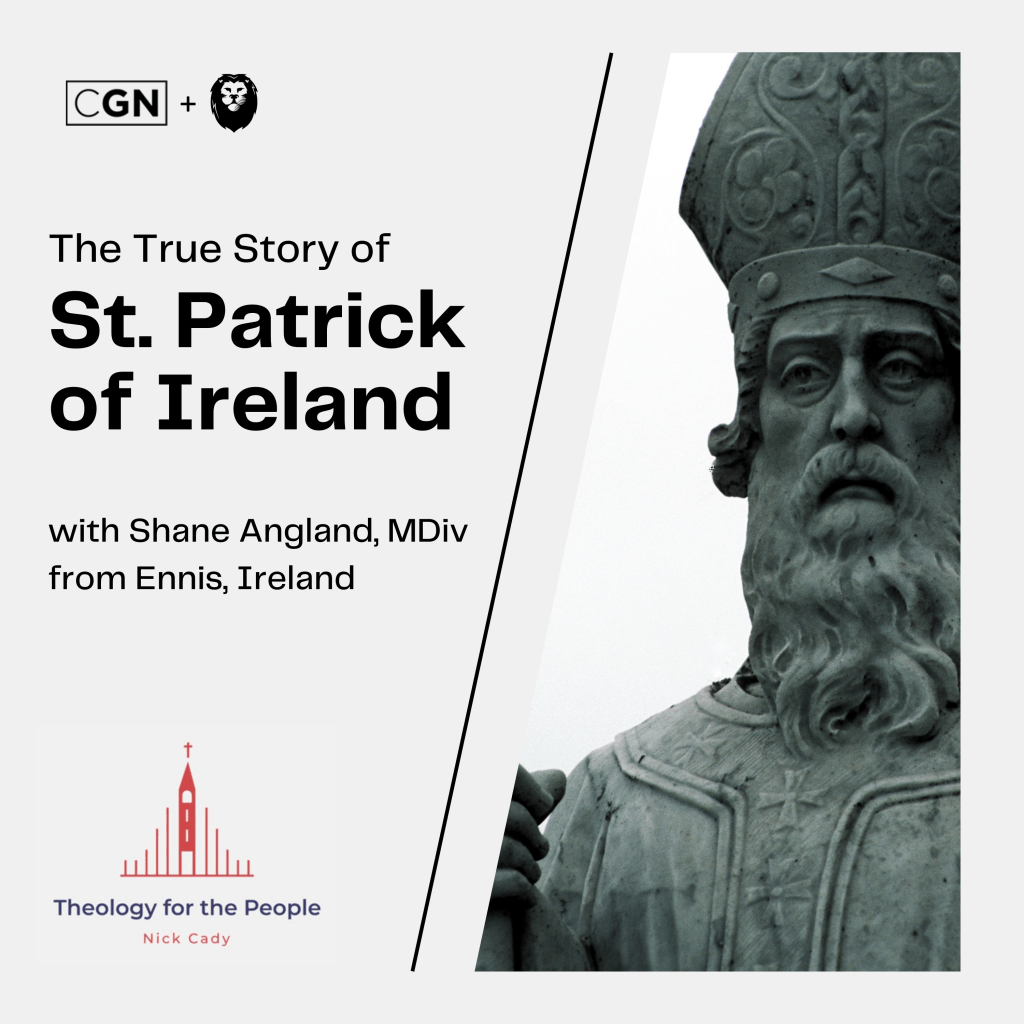
March 17 is St. Patrick’s Day, and on this week’s episode of the Theology for the People podcast I speak with Shane Angland (Mdiv, Dallas Theological Seminary) about the true story of St. Patrick, and how we can know the difference between what is myth and what is historically true when it comes to him.

Did Patrick really drive the snakes out of Ireland? Did he face off with druids? Did he use the shamrock as a teaching tool to explain the Trinity? Did you know that Patrick wasn’t actually Irish – and that he fought against human trafficking?

Shane explains how the true story of Patrick is actually much better than the legends, and that there are actually writings from Patrick which are available today. He also shares about the ongoing legacy of Patrick in Ireland and beyond.

Here is a link to an article Shane wrote, which is mentioned in this episode: St. Patrick, Grey Wolves, and the Cimbid King

If you find this episode interesting or helpful, please share it with others and leave a rating and review on your podcast app, as that helps other people discover this podcast and its content.

Click here to listen to the episode, or listen in the embedded player below.

The True Story of Saint Patrick of Ireland – with Shane Angland, MDiv from Ennis, Ireland Theology for the People

March 17 is St. Patrick's Day. What is the true story of St. Patrick? Shane Angland (MDiv, Dallas Theological Seminary) joins the podcast today to help us know the difference between what is myth and what is historically true when it comes to St. Patrick. Did Patrick really drive the snakes out of Ireland? Did he face off with druids? Did he use the shamrock as a teaching tool to explain the Trinity? Shane explains how we can know the difference between what is true about Patrick and what is fable, and how the true story of Patrick is much better than the legends. Here is a link to the article Shane wrote, which is mentioned in this episode: St. Patrick, Grey Wolves, and the Cimbid King If you find this episode interesting or helpful, please share it with others and leave a rating and review on your podcast app, as that helps other people discover this podcast and its content. Make sure to visit the Theology for the People blog at nickcady.org

My Book Is Now Available for Purchase + Book Signing This Sunday

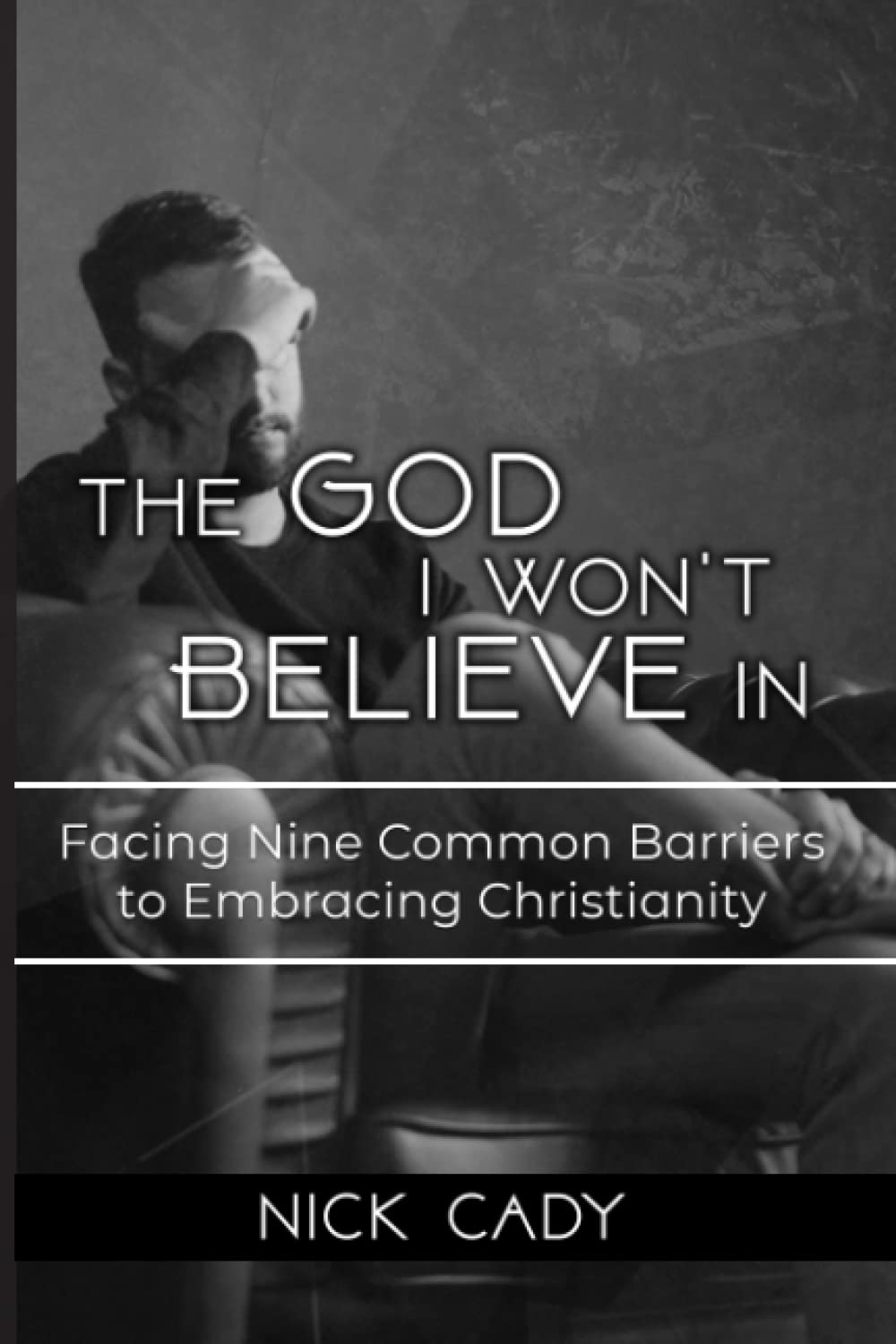
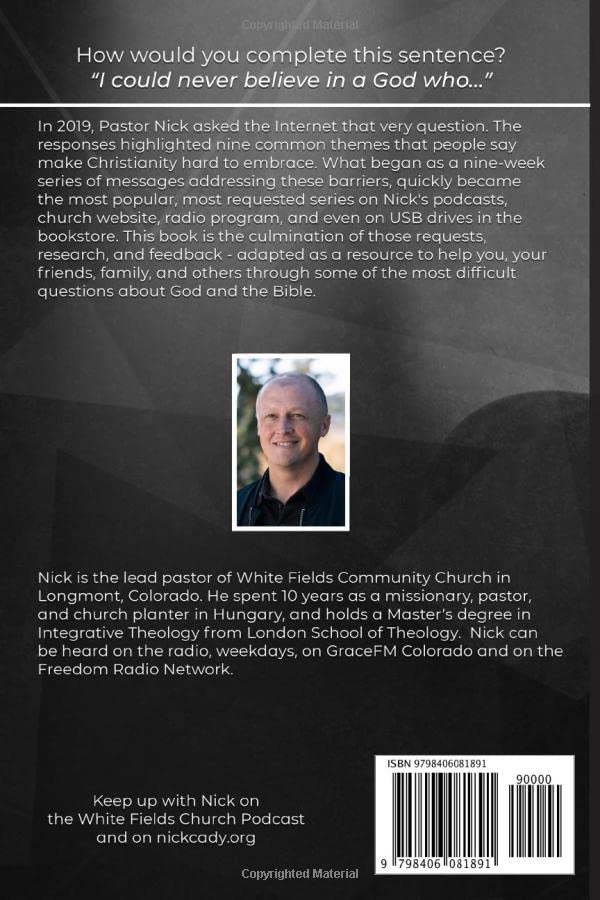
My first book, The God I Won’t Believe In: Facing Nine Common Barriers to Embracing Christianity, is now available for purchase in paperback and Kindle formats. 

We have paperback copies of the book for sale in our church’s bookstore, and it will be available in other churches and through book distributors soon.

If you would like to get copies for your church or group at bulk discount, contact us here.

Click here for more information and to purchase online.

Here’s a List of the Chapters

Each chapter begins with the phrase: “I Could Never Believe in a God Who…”

  1. A God Who Hasn’t Proven His Existence
  2. A God Who Gave Us a Faulty Bible
  3. A God Who Condoned Genocide in the Old Testament
  4. A God Who Creates Hateful, Hypocritical Followers
  5. A God Who Suppresses Women and Minorities
  6. A God Who Sends People to Hell 
  7. A God Who Says Some Love is Wrong
  8. A God Who Lets Bad Things Happen to Good People
  9. A God Who Doesn’t Answer My Prayers

Book Signing This Sunday

For those who are within driving distance of Longmont, Colorado, this Sunday I will be signing copies of the book after each of our 3 services at White Fields Church. We will have copies for sale on site. If you can make it out, I’d love to see you there!

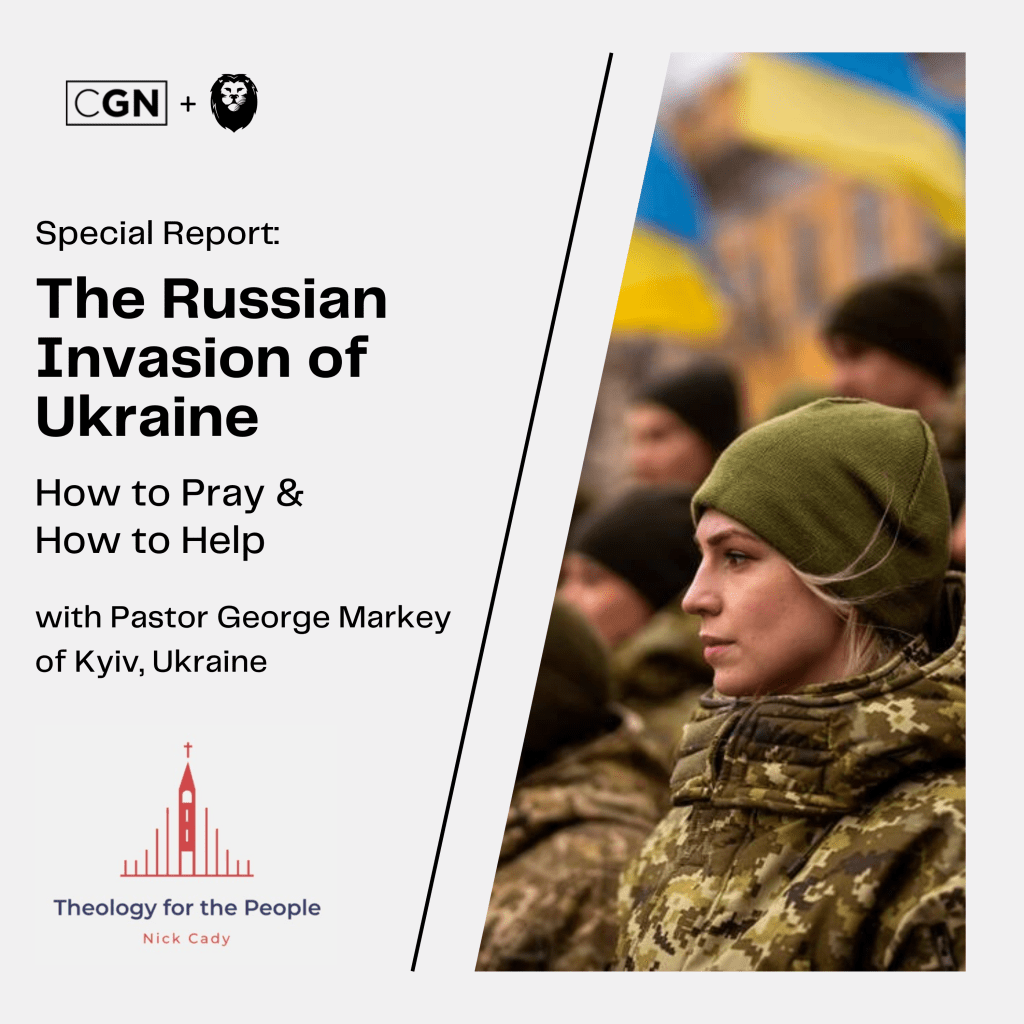
Special Report: The Russian Invasion of Ukraine: How to Pray & How to Help – with George Markey

This week’s episode of the Theology for the People podcast is a discussion I recorded in Budapest, Hungary this week with Pastor George Markey of Kyiv, Ukraine.

This was originally recorded for KWAVE Radio in Southern California, but I am putting it out here as well, so more people can hear it.

George has lived in Ukraine for the past 30 years, and is the overseer for the Calvary Chapel churches in the country.

In this episode, George shares his perspective on what is going on as Russia is attacking Ukraine, as well as stories of how God is working in the midst of it. We also discuss needs, what is currently being done, and how you can get involved and help. Finally, George shares how he personally prays for Ukraine during this time.

Click here to listen to the episode, or listen in the embedded player below.

The Russian Invasion of Ukraine: How to Help & How to Pray – with George Markey Theology for the People

Recorded in Budapest, Hungary this week with Pastor George Markey of Kyiv, Ukraine, originally for KWAVE Radio in Southern California. George has lived in Ukraine for the past 30 years, and is the overseer for Calvary Chapel churches in Ukraine.  In this episode, George shares his perspective on what is going on as Russia is attacking Ukraine, as well as stories of how God is working in the midst of it.  We also discuss needs, what is currently being done, and how you can get involved and help. Finally, George shares how he personally prays for Ukraine right now. Please share this episode with others, subscribe to the podcast, and check out the Theology for the People blog at nickcady.org

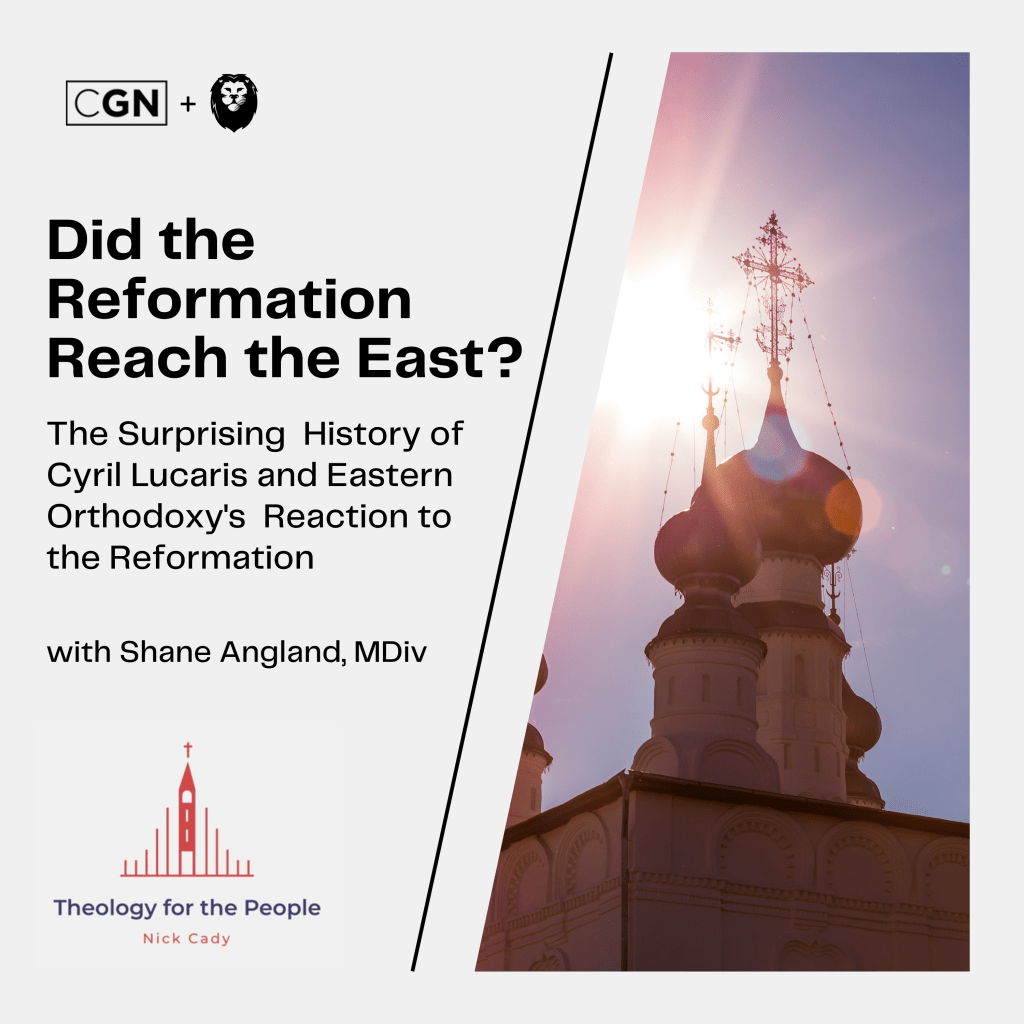
Did the Reformation Reach the East? The Surprising History of Cyril Lucaris and Eastern Orthodoxy’s Reaction to the Reformation – with Shane Angland

Many people assume that the Protestant Reformation was something that only affected the Western, or Roman Catholic Church, but in this week’s episode of the Theology for the People podcast, Shane Angland (Mdiv, Dallas Theological Seminary) shares the incredible story of how the Reformation reached the East. 

Shane explains how Martin Luther actually referenced the Eastern Orthodox churches as examples of Christianity which were not subject to the dictates of Roman papal authority, and he tells the story of Cyril Lucaris, the Greek Orthodox theologian and patriarch of Constantinople, who was highly influenced by the Reformation and its principles.

Shane resides in Ennis, Ireland. He spent years working in Ukraine as a missionary with IFES and serving in a Calvary Chapel church in the city of Kharkiv, before going to Dallas for seminary.

Next month, Shane will be back on the podcast, sharing the true history of Saint Patrick of Ireland, explaining which parts of the commonly-told stories about Patrick are myth, and which parts of the story are often not told, but deserve to be. Stay tuned and keep an eye out for that!

At the end of this episode, listen for a preview of my forthcoming book, The God I Won’t Believe In: Facing Nine Common Barriers to Embracing Christianity. 

Click here to listen to the episode, or listen in the embedded player below.

Did the Reformation Reach the East? The Surprising History of Cyril Lucaris and Eastern Orthodoxy's Reaction to the Reformation – with Shane Angland Theology for the People

Many people assume that the Protestant Reformation was something that only affected the Western, or Roman Catholic Church, but in this episode, Shane Angland (Mdiv, Dallas Theological Seminary) shares the incredible story of how the Reformation reached the East.  Shane explains how Martin Luther actually referred to the Eastern Orthodox churches as examples of Christianity which were not subject to the dictates of Roman papal authority, and he tells the story of Cyril Lucaris, the Greek Orthodox theologian and patriarch of Constantinople, who was highly influenced by the Reformation and its principles. Shane Angland resides in Ennis, Ireland. He spent years working in Ukraine as a missionary with IFES and serving in a Calvary Chapel church in the city of Kharkiv, before going to Dallas for seminary. At the end of the episode, listen for a preview of my forthcoming book, The God I Won't Believe In: Facing Nine Common Barriers to Embracing Christianity.  Visit the Theology for the People blog site for articles and more.

My Flight to Ukraine Was Cancelled…

This coming Sunday, I was scheduled to fly to Kyiv, Ukraine, where I and some others were going to be speaking at a seminary and then leading a conference for Calvary Chapel pastors and leaders from all over the country.

We were notified this week that Lufthansa and KLM cancelled our flights to and from Kyiv because of the escalating tensions with Russia.

We are tentatively planning to reschedule the conference for later this year, in the spring, hoping that things will have calmed down by then.

I am grieved by Russia’s attacks against Ukraine, and what it means for the Ukrainian people. I long for the day when righteousness and the knowledge of God will cover the Earth like water covers the sea, and people will beat their weapons into plowshares and wage war no more. (Habakkuk 2:14, Isaiah 2:4)

I have many friends all over Ukraine, and our church supports several missionaries there.

Please join me in praying for the safety of the Ukrainian people in general, and for our friends and missionaries in particular, especially those in the city of Kharkiv, which is very close to the Russian border.

Pray for their churches to be havens that people flock to, for the believers to shine the light of the knowledge of Jesus in this dark time, and that they would be beacons of the hope of the resurrection and the good news of the gospel.

Big Announcement: I Wrote a Book! Here’s the Story Behind It and What It’s About

In this week’s episode of the Theology for the People podcast, I sit down with Michael Payne and Curt Fuller to discuss my forthcoming book, The God I Won’t Believe In: Facing Nine Common Barriers to Embracing Christianity. The book is scheduled to be released on March 6, 2022, and will be available for purchase online, as well as in our church’s bookstore. We are currently working on distribution, and getting it into other bookstores and book distributers as well.

In this episode, Michael interviews me and Curt, who edited the book, as we discuss the backstory behind how it came about, as well as the content of the chapters, and who this book is for.

I hope this book will be a great resource to help both those who are wrestling through facing these barriers to embracing Christianity, as well as those who seek to be equipped to help their family and friends move from doubt to belief.

I’d love it if you’d consider buying a copy of the book, and if you’d help spread the word about it online!

Click here to listen to this episode, or listen in the embedded player below.

Book Release Announcement & Preview – The God I Won't Believe In: Facing Nine Common Barriers to Embracing Christianity Theology for the People

Nick wrote a book! It's coming out March 6, 2022 and is available for pre-order on Amazon here. The book is titled, The God I Won't Believe In: Facing Nine Common Barriers to Embracing Christianity.  In this episode, Nick sits down with Michael Payne and Curt Fuller, who edited the book, the discuss how the book came about, who it's for, and what it's about. Make sure to visit the Theology for the People blog at nickcady.org for more articles and content.

The Relationship Between Clergy & the Congregation + Study & the Spirit: with Dr. Roy Collins

In this week’s episode of the Theology for the People podcast, I speak with Dr. Roy Collins about the relationship between clergy and the congregation, and study and the Spirit.

Dr. Collins is a returning guest on the podcast; his previous episode: Guidelines for Biblical Interpretation: Properly Understanding & Faithfully Applying God’s Word, has been one of the most popular episodes on the podcast. In that episode, Dr. Roy alluded to his bad experiences in ministry as a pastor, and I responded that we could talk about that in a later episode. Well, that “later episode” is here!

In this episode, we talk about some of our experiences as pastors, specifically in regard to training and support. What is the responsibility of someone who is called to ministry to study to show themselves approved, a workman who can rightly divide the Word of God (2 Timothy 2:15)? What responsibility does the congregation have towards the minister – for support and providing care and coaching?

We discuss these and other subjects in this episode.

Dr. Collins has served as a pastor and a professor of Biblical Interpretation at Colorado Christian University. He is a member of White Fields Community Church in Longmont, Colorado, where he teaches an adult Sunday School class at 8:00 AM on Sunday mornings.

We also explain and mention two initiatives I am involved in, which were designed to meet these needs:

  • Expositors Collective: a group of Christian leaders who are working together to raise up the next generation of Christ-centered Bible teachers and preachers, through our 2-day interactive seminars and our weekly podcast. Our next training seminar will be held in Costa Mesa, California, on February 18-19, 2022. If you’d like more information, and to register, go to expositorscollective.com
  • Cultivate Training Program: This is a relationally focused, local-church based training program which helps assess, train, and potentially deploy new church planters and missionaries.

Click here to listen to this episode, or listen in the embedded player below.

The Relationship Between Clergy & Congregation + Study & the Spirit – with Dr. Roy Collins Theology for the People

Dr. Roy Collins returns as a guest to the podcast to share his difficult experiences as a young pastor, and how they have led to the dual conclusions that a congregation has a responsibility to a pastor, both to train and to support them, and that a person in ministry has a responsibility to pursue ongoing training in order to stir up the gifts that God has placed within them, so they can serve people well.  In this episode, Dr. Collins speaks candidly about some of his experiences, and Nick shares some current training initiatives that can help provide support for the very areas which Dr. Collins addresses as being needs. For more information on these programs, visit: Expositors Collective Cultivate church planter training program Visit the Theology for the People website for more information and articles.

Adoption, the Gospel, & Practical Theology: with Nate Medlong – Podcast Season 2, Episode 1

In this first episode of Season 2 of the Theology for the People podcast, I speak with Nate Medlong, a missionary and pastor in Kharkiv, Ukraine, about adoption, the gospel, and practical theology.

Last year. I started this podcast really at the urging of two friends, Ocean and Aaron, who were, separate from each other, both encouraging me to start a podcast. I decided to give it a shot, and I’ve been amazed at the response to the podcast, as I’ve watched the analytics and how many people have been listening.

For Season 2, I’ve made some improvements, including new intro music by Dávid Payne. I plan on releasing episodes weekly, so please subscribe if you haven’t already.

In this first episode of the season, I speak with Nate Medlong about our personal experiences with adoption, how adoption is a picture of the gospel, and how practical theology actually is: the reason Christians practice adoption is because of our theology, but as we live out our theology in this or any other way, it causes us to grow in understanding and appreciation for the theological truths we believe.

This episode also includes a lot of jokes about Cleveland, and a hot take on Utah’s license plates. I hope you enjoy it!

Click here to listen, or listen in the embedded player below.

Adoption, the Gospel, and Practical Theology – with Nate Medlong Theology for the People

Nate Medlong is a pastor and missionary in Kharkiv, Ukraine. He and his wife Diana have fostered and adopted several children, and in this episode Nate and I discuss how adoption is a picture of the gospel. Not only is adoption a picture of the gospel, and the practice of adopting children is an outworking of the gospel, but we discuss how parenting adopted children helps a person to grow in their understanding of and appreciation for what God has done for us in Christ, by making us his children and adopting us into his family. Make sure to check out the Theology for the People website as well for more content.

What is the Role of the Holy Spirit in Eternity?

There is a page on this site where readers can submit questions or suggest topics

Recently someone submitted this question:

Both God the Father and the Son have distinct and obvious eternal roles that we see played out in the Bible, with Jesus being more obvious, but as I was thinking through the role of the Holy Spirit in eternity, I couldn’t come up with anything concrete.
Could you give a brief overview of the roles of the triune persons of God as it pertains to eternity? I’m mostly interested in the Holy Spirit, but would love a pastor’s perspective on the other two also.

The “Ontological Trinity” and the “Economic Trinity”

There are two fields of discussion when it comes to the Trinity. The “ontological” and the “economic.” “Ontological” refers to who God is, i.e. that which pertains to being, whereas “economic” refers to what God does.

Specifically applied to the Trinity, study of the “ontological Trinity” is focused on those parts of the Bible which communicate that the Father is God, the Son is God, and the Holy Spirit is God, and yet these three, while distinct persons, are one God. Study of the “economic Trinity” is focused on the passages in the Bible which tell us what each of these three persons does as their role in “the Godhead.”

So, ontologically, it is important to point out that eternality is part of God’s nature. God is eternal, and each person of the godhead is eternal. So, the role of God in eternity is merely a continuation of who God has been until now, and who God will forever be.

However, the question above is about the economics of the Triune God after this present age is over, and we have transitioned into what the Bible calls “the new heavens and new Earth.” What will the functions of the three persons of the Triune God be in “the age to come”?

The Role of the Son in the Age to Come

The Son, we are told, is currently seated at the right hand of the Father, and for eternity he will reign and rule as king over all of redeemed creation. (See Revelation 22:3)

Currently, Jesus is making intercession for believers, advocating for us, and is seated on a throne, but for eternity, all we really know is that he will be an eternal sovereign, ruling over a kingdom of righteousness and peace which will never end.

The Role of the Father in the Age to Come

Along with ruling over the redeemed creation from a heavenly throne, revelation tells us that God (not necessarily just the Father) will be a source of light, which will preclude the need for the sun to illuminate, since God himself will be our light.

The Role of the Holy Spirit in the Age to Come

The one thing that sticks out about the Holy Spirit’s role in eternity, is that, whereas the Father and the Son have a throne in the New Heavens and New Earth, the Holy Spirit does not (Revelation 22:3).

Beyond this, I can’t think of any verses which speak specifically about a role of the Holy Spirit in the age to come – but that is not surprising, and here’s why:

What we read regarding the economic Trinity mostly has to do with the work of God to redeem human beings. Remember, the Bible is a book about Jesus: who he is, and how he saves us.

Since the Bible is focused on the story of the salvation and redemption of humankind, it does not tell us very much about what God did before creating the world, nor does it tell us much about what God will do after the redemption of the world is complete.

“The Great Story Which No One on Earth has Read”

This reminds me of the final paragraph of C.S. Lewis’ The Final Battle, which is the final book in the Chronicles of Narnia series, which is full of allegories about biblical passages and teachings.

C.S. Lewis poetically describes “the age to come” in this way:

“…but the things that began to happen after that were so great and beautiful that I cannot write them. And for us this is the end of all the stories, and we can most truly say that they all lived happily ever after. But for them it was only the beginning of the real story. All their life in this world and all their adventures in Narnia had only been the cover and the title page: now at last they were beginning Chapter One of the Great Story which no one on earth has read: which goes on for ever: in which every chapter is better than the one before.”

C.S. Lewis, The Last Battle

The Bible doesn’t tell us much about what the three persons of the Trinity will do in eternity, because that is not the story which the Bible exists to tell.

God Will Do What God Did Before

Prior to the creation of the world, it is important to remember that God existed from eternity past. Without human beings to rescue, sanctify, and redeem, what did God do?

What we can be sure of, is that God was neither bored nor lonely.

From eternity past, the one God, who exists as Father, Son, and Holy Spirit existed as a mutually edifying and glorifying community unto himself. Creation, was God inviting us to join in the “perichoresis,” the eternal relationship which exists between Father, Son, and Holy Spirit, sometimes referred to as “the dance of God.”

In other words, in eternity, we can expect that God will do what God did before: delighting in himself, with each person fueling this mutually edifying and glorifying relationship.

Ask a Question or Suggest a Topic

If you have a question or would like to suggest a topic for me to address here on the blog, click here: Ask a Question or Suggest a Topic