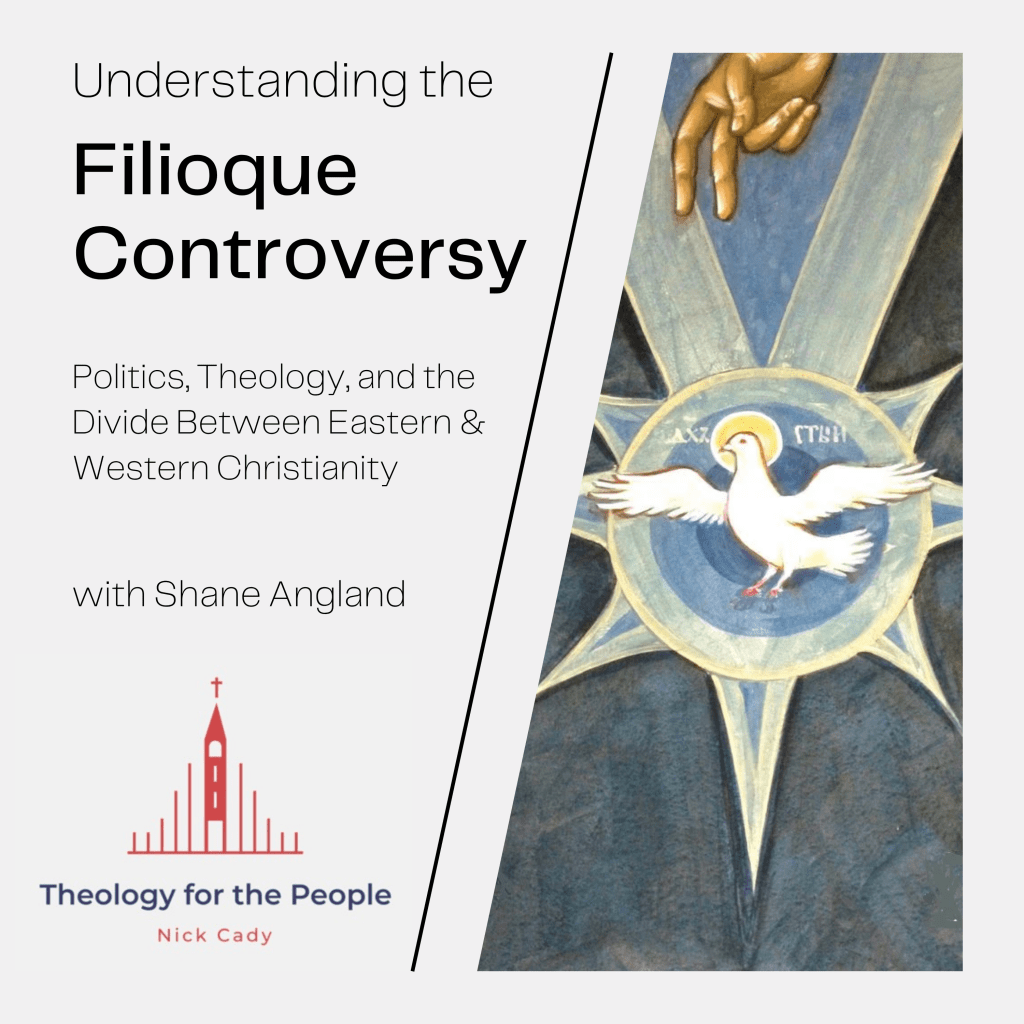
Understanding the Filioque Controversy: Politics, Theology, and the Divide Between Eastern & Western Christianity

What does it mean that the Holy Spirit “proceeds from the Father” — and why did adding “and the Son” (Filioque), lead to one of the greatest divisions in church history?

I recently wrote two articles; one on the question of what it means that Jesus is the “begotten” Son of God, and the other on what it means that the Holy Spirit “proceeds” from the Father (and maybe the Son!). You can find those articles here:

These questions have to do what theologians call the “Eternal Generation” (of the Son) and the “Eternal Procession” (of the Holy Spirit). The question of the Holy Spirit gets into one of the fiercest theological debates in history; one which played a major role in the division between Eastern and Western Christianity (Orthodox vs. Roman Catholic).

In this episode of the Theology for the People Podcast, I speak with Shane Angland to unpack the history, theology, and ongoing significance of the Filioque controversy.

Together, we explore the origins of the Nicene Creed, the debates at the Council of Constantinople (381), and why the Western church added the Filioque clause.

We also discuss:
• The difference between eternal procession and the mission of the Spirit
• Why the East and West approach theology differently
• The role of language (Greek vs. Latin) in shaping doctrine
• How politics—not just theology—deepened the divide
• Whether this issue still matters for Christians today

If you’ve ever wondered why theology can get so complex—or why it actually matters—this episode will help you see that these debates aren’t just academic, they’re about faithfully understanding who God is.

Watch or Listen to the Episode Here:

Follow Theology for the People on YouTube⁠https://www.youtube.com/@theologyforthepeople

Click here to listen to the episode, or listen in the embedded player below.

Understanding the Filioque Controversy – with Shane Angland Theology for the People

What does it mean that the Holy Spirit “proceeds from the Father” — and why did adding “and the Son” (Filioque), lead to one of the greatest divisions in church history?In this episode of Theology for the People, Nick Cady is joined by Shane Angland to unpack the history, theology, and ongoing significance of the Filioque controversy. Together, they explore the origins of the Nicene Creed, the debates at the Council of Constantinople (381), and why the Western church added the Filioque clause.They also discuss:The difference between eternal procession and the mission of the SpiritWhy the East and West approach theology differentlyThe role of language (Greek vs. Latin) in shaping doctrineHow politics—not just theology—deepened the divideWhether this issue still matters for Christians todayIf you’ve ever wondered why theology can get so complex—or why it actually matters—this episode will help you see that these debates aren’t just academic, they’re about faithfully understanding who God is.Visit the Theology for the People blog at nickcady.org

Watch on YouTube here:

The Raskol of 1666 and What it Shows Us About Russian Orthodox Theology

On this episode of the Theology for the People Podcast, we dive into the topic of Russian Orthodox Christianity.

My guest is Shane Angland. Shane is a graduate of Dallas Theological Seminary, and he was also a missionary in Eastern Ukraine.

The Raskol of 1666 was a schism that took place in the Russian Orthodox Church, which highlights some of the distinctive features of Orthodox theology, and Russian Orthodoxy theology uniquely. Furthermore, we talk about how Russian Orthodox theology plays a role in the current war in Ukraine.

Click here to listen to the episode or listen in the embedded player below.

The Raskol of 1666 and What It Shows Us About Russian Orthodox Theology Theology for the People

On this episode of Theology for the People, we dive into the topic of Russian Orthodox Christianity.  My guest is Shane Angland. Shane is a graduate of Dallas Theological Seminary, and he was also a missionary in Eastern Ukraine.  The Raskol of 1666 was a schism that took place in the Russian Orthodox Church, which highlights some of the distinctive features of Orthodox theology, and Russian Orthodoxy theology uniquely. Furthermore, we talk about how Russian Orthodox theology plays a role in the current war in Ukraine. Visit the Theology for the People blog at nickcady.org

Did the Reformation Reach the East? The Surprising History of Cyril Lucaris and Eastern Orthodoxy’s Reaction to the Reformation – with Shane Angland

Many people assume that the Protestant Reformation was something that only affected the Western, or Roman Catholic Church, but in this week’s episode of the Theology for the People podcast, Shane Angland (Mdiv, Dallas Theological Seminary) shares the incredible story of how the Reformation reached the East. 

Shane explains how Martin Luther actually referenced the Eastern Orthodox churches as examples of Christianity which were not subject to the dictates of Roman papal authority, and he tells the story of Cyril Lucaris, the Greek Orthodox theologian and patriarch of Constantinople, who was highly influenced by the Reformation and its principles.

Shane resides in Ennis, Ireland. He spent years working in Ukraine as a missionary with IFES and serving in a Calvary Chapel church in the city of Kharkiv, before going to Dallas for seminary.

Next month, Shane will be back on the podcast, sharing the true history of Saint Patrick of Ireland, explaining which parts of the commonly-told stories about Patrick are myth, and which parts of the story are often not told, but deserve to be. Stay tuned and keep an eye out for that!

At the end of this episode, listen for a preview of my forthcoming book, The God I Won’t Believe In: Facing Nine Common Barriers to Embracing Christianity. 

Click here to listen to the episode, or listen in the embedded player below.

Did the Reformation Reach the East? The Surprising History of Cyril Lucaris and Eastern Orthodoxy's Reaction to the Reformation – with Shane Angland Theology for the People

Many people assume that the Protestant Reformation was something that only affected the Western, or Roman Catholic Church, but in this episode, Shane Angland (Mdiv, Dallas Theological Seminary) shares the incredible story of how the Reformation reached the East.  Shane explains how Martin Luther actually referred to the Eastern Orthodox churches as examples of Christianity which were not subject to the dictates of Roman papal authority, and he tells the story of Cyril Lucaris, the Greek Orthodox theologian and patriarch of Constantinople, who was highly influenced by the Reformation and its principles. Shane Angland resides in Ennis, Ireland. He spent years working in Ukraine as a missionary with IFES and serving in a Calvary Chapel church in the city of Kharkiv, before going to Dallas for seminary. At the end of the episode, listen for a preview of my forthcoming book, The God I Won't Believe In: Facing Nine Common Barriers to Embracing Christianity.  Visit the Theology for the People blog site for articles and more.