Developing & Implementing Vision in the Local Church

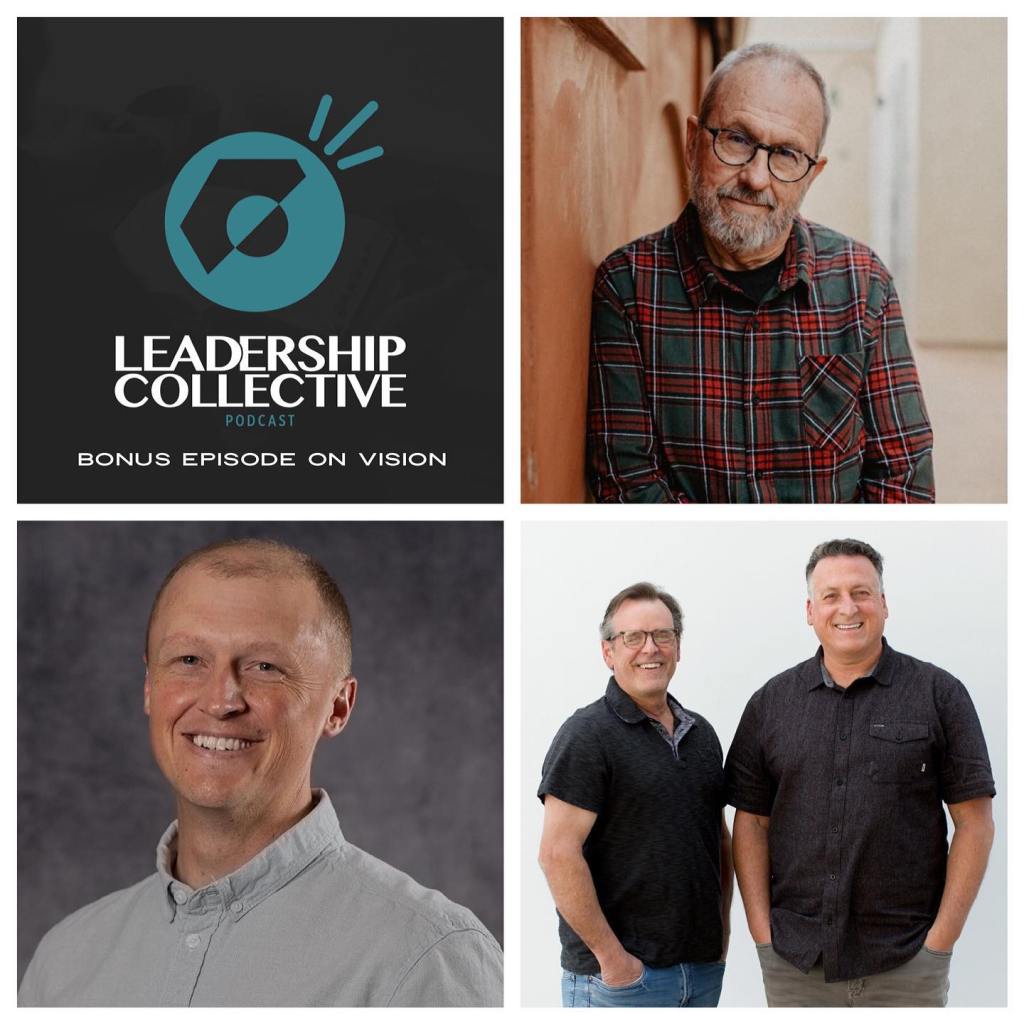
My friends and co-laborers, Ted Leavenworth and Rob Salvato, both pastors in Southern California, started a new podcast called Leadership Collective, in which they curate helpful conversations with church leaders about relevant topics.

I had the pleasure of being a guest on the podcast along with Dr. Mark Foreman. Our discussion was about the nuts and bolts of how we develop, cast, and implement “vision” in our churches. Mark pastors a mega-church in Southern California, and I pastor a medium sized church on the Front Range of Colorado, so there are some pretty big differences in how we go about this process, but many similarities as well.

Earlier in my ministry I used to hate the word “vision” because it seemed so nebulous and abstract. However, since then I have come to understand that “vision” can simply be defined as: “a desired outcome.” Putting it in those terms, the question of “vision” becomes much more manageable. Beginning with a desired outcome, you can then begin thinking about the way to achieve that outcome, and break it down into a process with steps, depending on the given time-frame.

Not only is it imperative that we have vision as leaders, it’s also important for us to communicate it. What I have learned is that most leaders unwittingly under-communicate vision, and it’s very rare for people to feel that leaders over-communicate vision. The point is, for most of us, we need to communicate vision more than we currently are, and more than we think we need to.

You can check out that episode here, or listen in the embedded player below: Vision | Mark Foreman & Nick Cady

If the Leadership Collective is of interest to you, make sure to subscribe to their podcast!

Vision – Bonus Episode | Mark Foreman & Nick Cady Leadership Collective Podcast

Pastor Mark Foreman of North Coast Calvary in Carlsbad, California joins Pastor Nick Cady of White Fields Community Church in Longmont, Colorado to discuss the topic of vision.  —- North Coast Calvary Chapel — northcoastcalvary.org White Fields Community Church — whitefieldschurch.com

Why Does God Judge Some People More Harshly Than Others?

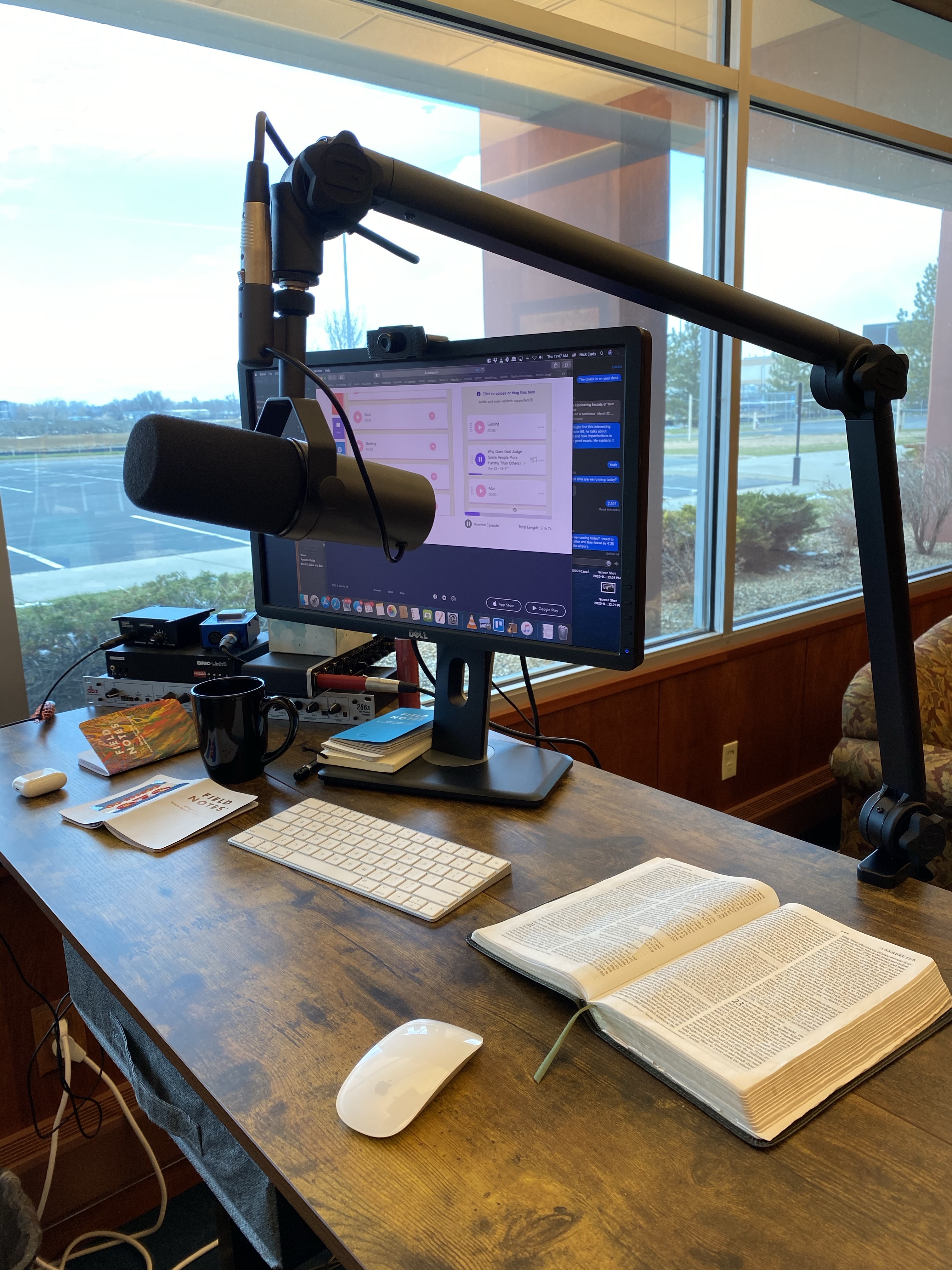
My desk in my office at church

Why is it that in the Bible, sometimes God punishes certain people severely for their sins, but other people receive no punishment for similar actions?

This question was submitted via this form: Ask a Question or Suggest a Topic:

Why does God bring judgment upon some sinful people, yet others who do much worse things remain healthy, prosperous, and well? In some cases they even seem to be getting God’s approval or at least not His punishment for the same sins as those who receive judgment. Examples of this would be Michal (David’s wife) and Uzzah in 2 Samuel 6, and the story of the two prophets in 1 Kings 13.

This is a good question, and is related to a question that David asked in the Psalms about why God allows wicked people to prosper and righteous people to suffer. This question, from David, was not an abstract query, but one that was deeply person to his lived experience.

We can see this dynamic at work in the world today as well, where some people do evil things and seem to suffer no consequences, and in some cases succeed as a result, whereas many who endeavor to lead a godly life don’t succeed or even suffer.

I responded to this question with a podcast episode which is embedded and linked below. In this episode, I give three important considerations which help us to understand this dynamic.

Podcast Episode: Why Does God Judge Some People More Harshly Than Others?

Podcast Exclusive: Does God Hate Religion?

In the latest episode of the Theology for the People podcast, Mike and I discuss the question of whether God hates religion.

Is religion opposed to relationship with Jesus? What is “religion” anyway – and is Christianity a religion or not?

In this episode we look at uses of the word “religion” in the Bible (there are 5 of them!), as well as passages like Isaiah 1 and Amos 5 where God talks about despising the religious practices of Israel; the very practices which He himself commanded them to do earlier in the Bible…

We also examine Jefferson Bethke’s spoken word YouTube video: “Why I Hate Religion but Love Jesus,” as well as a New York Times article about popular views on religion and biblical examples from Jesus, the apostles, and the New Testament church.

You can check out the episode here: Theology for the People: Does God Hate Religion? or by listening in the embedded player below.

Does God Hate Religion? Theology for the People

In this episode Nick and Mike discuss what the Bible has to say about religion and how God feels about it. Is religion opposed to relationship with Jesus? What is "religion" anyway – and is Christianity a religion or not? We look at uses of the word "religion" in the Bible, as well as passages like Isaiah 1 and Amos 5. We also examine Jefferson Bethke's spoken word YouTube video: "Why I hate religion but love Jesus," as well as a New York Times article about popular views on religion – along with biblical examples from Jesus, the apostles, and the New Testament church.

Is Church an (un)Necessary Evil?

A few days ago I received this comment on one of my posts called The Impact on Kids of Dad’s Faith and Church Attendance:

Laura says:

What is the benefit of attending church? A person is demanded to surrender personal faith in Jesus and personal relationship with Jesus Christ to become a Borg in a socialist swamp. It’s great for becoming robotized, lobotomized, Romanized, and institutionalized.

But its pointless for knowing Jesus Christ personally.

Don’t go. Jesus isn’t welcome there. Conformity is King. Not Jesus.

I was tempted to ignore the comment, but I think this view of church is actually pretty widespread, even amongst professing Christians, that it warranted a response. And since I’ve recently started the Theology for the People Podcast, I figured this would be a good topic to discuss in more detail there.

You can check out the episode here: Podcast Exclusive – Church: a Necessary Evil?, or by listening in the embedded player below.

Podcast Exclusive – Church: An (un)Necessary Evil? Theology for the People

In this episode Nick and Mike discuss a comment that came in to the Theology for the People blog claiming that church is only good for "becoming robotized, lobotomized, Romanized, and institutionalized," and is "pointless for knowing Jesus Christ personally." This comment represents a not-uncommon attitude to "organized religion" in general and church in particular. This episode includes discussions about the Bible, Jesus, American history, and Henry David Thoreau. The book recommended in this episode is The Bible in America: Essays in Cultural History 

Rebranding Our Radio Ministry: “Life in the Field” Has Become “Be Set Free”

Our radio ministry has been expanding and we felt this was a good time for some rebranding. As of April 1, 2021, “Life in the Field” has become “Be Set Free”

Our program airs Monday-Friday at 9:30 AM and 2:30 PM, and Sundays at 1:00 PM on GraceFM: 89.7 FM along the Northern Front Range (Cheyenne, WY – Castle Rock, CO) and 101.7 in Colorado Springs, CO. We can also be heard online at gracefm.com and on the GraceFM app.

Along with this rebranding, we have started a dedicated webpage for Be Set Free, where you can find each day’s message from the radio: besetfreeradio.com. You can even sign up on the site to have those messages delivered directly to your inbox.

You can also subscribe to the Be Set Free Podcast, and every day you will get that day’s episode delivered directly to your podcast app. Go to: Be Set Free Podcast

Be Set Free is a listener-supported ministry, and if you would like to contribute to helping to spread the gospel over the airwaves through clear, relevant expository Bible teaching, you can donate here.

Hurts So Good Part 1 Be Set Free

Date: 2024 April 11 Hebrews 12:1-13 Fixing our eyes on Jesus as the cure for enduring hardship. Understanding the role of the Father's discipline in our lives From our series: Hebrews: An Anchor for the Soul
  1. Hurts So Good Part 1
  2. Of Whom the World Was Not Worthy Part 2
  3. Of Whom the World Was Not Worthy Part 1
  4. Unlikely Heroes Part 2
  5. Unlikely Heroes Part 1

Rebranding: “Theology for the People” + Podcast

Recently I was talking to my friend Aaron Salvato who heads up the GoodLion Podcast Network. I reached out to him regarding the idea of possibly creating a podcast with audio versions of some of my articles from this blog. Aaron’s advice was that I consider rebranding the blog since “Longmont Pastor” might tell people who I am, but it doesn’t help them know what this site (and potential podcast) is about.

So, in light of Aaron’s advice, the “Longmont Pastor” blog has been rebranded as “Theology for the People” – which better reflects my goal with this site: to bring understanding of God’s Word and application for the questions that people are asking today.

Theology for the People Podcast

I have also started a Podcast, and I would love it if you would subscribe and share it with others. You can find it on all major podcast platforms, but you can click here to find it on the podcast platform of your choice: Theology for the People Podcast

On the blog you will now see this icon above some posts:

If you click that icon, it will take you to the podcast episode in which you can listen to an audio version of that post.

I plan to create podcast-specific content as well, so make sure to subscribe!

Thanks for reading (and now listening!) – and please continue submitting your questions (click here to ask a question or suggest a topic), and I will continue doing my best to write and record helpful content!

Here are the episodes currently on the podcast:

Why Apprenticeship is the Truest Form of Discipleship – with Heath Hardesty Theology for the People

What does it really mean to be an apprentice of Jesus in a fragmented world? In this episode of Theology for the People, Pastor Heath Hardesty shares how his years as an apprentice plumber shaped his vision for discipleship and following Jesus.Heath is the Lead Pastor of Valley Community Church (VCC) in Pleasanton, California, and the author of the recent book, All Things Together: How Apprenticeship to Jesus Is the Way of Flourishing in a Fragmented World.In this episode, we discuss:Why apprenticeship is a better paradigm for following Jesus than “just” discipleship classesThe four pillars of apprenticeship: union, abiding, obeying, and imagingHow sin fragments our lives and how Jesus reintegrates usPractical spiritual practices for ordinary TuesdaysWhy following Jesus is a fully embodied way of life—not just information in our headsWhether you’re feeling spiritually stagnant or longing for a more integrated faith, this conversation will challenge and encourage you.📖 All Things Together releases October 14 and is available wherever books are sold.
  1. Why Apprenticeship is the Truest Form of Discipleship – with Heath Hardesty
  2. The Gospel in the Midst of Grief: Lessons from Widowhood – with Susan VandePol
  3. The Conversion of the Vikings: Finding Bridges to the Gospel for Missionary Encounters
  4. When War Scatters the Church: Lessons from Ukraine – with Sharon Markey
  5. Why We Need to Think About Heaven More (Not Less) – with Matt McCollough

Jerks for Jesus?

Sometimes you spend hours preparing for Sunday’s sermon, but the one thing you say that gets remembered most was something you said off the cuff, that wasn’t in the notes. That happened to me this past Sunday.

I was teaching a message called “Thriving in Exile” in which I was looking at Daniel and Jeremiah and what it took for the people of God to live faithfully in the Babylonian exile, especially since the Apostle Peter states that the Israelites in exile in Babylon is a perfect picture of what it means for us to be Christians in the world today.

During a section in which I was pointing out that the exiles needed to have conviction in order to live faithfully in exile, I pointed out that Daniel and the others with him were also very courteous towards those in Babylon who didn’t believe what they believed, which is notable since it seems that some people think that to be a person of conviction means to be a “Jerk for Jesus.”

In contrast to that, the example we have throughout the Scriptures and from Jesus, Paul, and Peter specifically is that rather than an adversarial approach, we are to take a missionary approach to those who believe and think differently than we do, so that we might be used by God to help bring his light, love, and truth into their lives.

The fact is, it’s pretty hard, if not impossible, to influence people who can tell that you despise them. Those bombastic people who think they are dropping “truth bombs” tend to only embolden those who already agree with them and further alienate those who don’t – rather than wooing them to consider the beauty of the gospel.

Below you can listen to the podcast of this discussion and/or watch the video of it.

Here is a link to the book Mike and I discussed, in which I heard the phrase “Jerks for Jesus:” Accidental Pharisees: Avoiding Pride, Exclusivity, and the Other Dangers of Overzealous Faith by Larry Osborne. I recommend this book. In it, Larry Osborne points out how the pharisees never set out to become “pharisees” – they started out as people who cared about truth and following God whole-heartedly, but this devolved into pride, exclusivity, and creating rules which God never ordained, as well as fences which God never put in place. For those of us who truly care about truth and walking with God, this should be a warning to us lest we accidentally become pharisees ourselves. The book of course goes into much more detail and explanation. I especially appreciated what he had to say about Joseph of Arimathea, Nicodemus, and the “secret disciples” mentioned in the gospels. It’s definitely worth a read.

Also embedded below is the video I mention about Ray Comfort, the Kiwi evangelist. I watched this film with my kids, and it was so inspiring. He speaks with so much compassion and empathy, and is a good example of how to not water down the truth, but still be courteous – and how many doors that opens for effective gospel ministry. The movie is called The Fool

In Nehemiah 2:1-20 we see that God’s work advances as we boldly respond in faith to what He has revealed.
  1. Nehemiah 2:1-20 – Faith Fueled Actions
  2. Sermon Extra: The Difference Between Godly and Ungodly Discontentment
  3. Nehemiah 1:1-11 – A Godly Burden
  4. Sermon Extra: Finding Faith in the Trenches of World War I
  5. Daniel 3:8-30 – God With Us in the Fire

Cancel Culture, Sarah Silverman, and the Hope of Redemption

Sarah Silverman — Armchair Expert

Years ago I was telling my dad about the moral failure of a high profile Christian leader which had disqualified him from ministry. I concluded the story by saying something to the effect of: “Well, I guess he showed his true colors.”

My dad’s response was: “What if that’s not who he is at the core, but a mistake that he made?”

There I was, judging this man based on one of his worst moments, and saying: “That is who he IS!” My dad was willing to say that while what this man did was wrong, he should be given the opportunity for redemption rather than being forever dismissed and defined by his worst moment.

This isn’t to say that people are not sinners or that sinful actions are justifiable, or can just be chalked up as an “oops” that doesn’t count against us. No.

And yet: What do we do with sinners? Do we write them off and condemn them, standing upon their fallen frames in order to make ourselves appear that much taller? Or do we believe that redemption is possible and desire to see it take place?

I don’t pay much attention to Sarah Silverman, but I stumbled upon this clip of her talking about cancel culture and how it labels people as irredeemable. She makes a great point: Don’t we want to see people change? If so, we should encourage and celebrate transformation rather than self-righteously writing off people forever who have made mistakes.

This is what made Jesus so incredible: he showed love to those whom his society considered irredeemable: prostitutes, tax collectors, sinners. Far from affirming their sins, he offered them redemption, a new identity, and a new destiny.

Here is the clip from Sarah Silverman:

Sarah is not a Christian, but she is touching on something that is core to Christianity.

May we as the church be those who champion redemption, who provide a place where people are loved and are shown that they are not irredeemable because of Jesus!

In him, fallen people like us have had our sins dealt with before God, and therefore we can receive forgiveness, redemption, a new identity, and a new destiny. That’s good news.

Expositors Collective Webinar w/ Ryan Huguley

Because of the ongoing Coronavirus situation we postponed the Expositors Collective in-person two-day training weekends in Seattle and Honolulu, but we continue to look for ways to continue our mission to equip, encourage, and mentor the next generation of expository Bible teachers and preachers.

Our next webinar will be on September 19, 2020 from 9:00-10:00 AM Pacific Time (10:00-11:00 AM Mountain Time), and the theme is: Preaching to the Heart of Our Hearers.

We will be joined by pastor and author Ryan Huguley. Ryan is the pastor of Ridgeline Church in Salt Lake City, Utah and is the the author of 8 Hours or Less: Preparing Faithful Sermons Faster.

Ryan has a heart to help teachers and preachers grow in their calling. He has been a guest on the Expositors Collective Podcast and we are excited to have him join us for this webinar which will include a short message followed by an opportunity to ask questions and discuss topics.

Here’s an audio clip from Ryan introducing the webinar:

This is a free event, but is limited to the first 100 who sign up, which you can do by clicking the button below.

A Biblical Discussion of Current Politics and Where Our True Citizenship Lies

My friend Nate Morris is the pastor of a great church: Mountain Life Calvary Chapel, which has campuses in Edwards and Carbondale, Colorado, serving the communities of the Vail Valley and the Roaring Fork Valley.

Recently Nate started a podcast: the New Day Podcast, which aims, in his words, “to talk about the topics which you shouldn’t talk about around the dinner table,” such as religion, race, politics, and so on.

I was honored to be a guest on his podcast; you can check out our discussion here: Special Guest: Pastor Nick Cady – A Biblical discussion of current politics and where our true citizenship lies.

In the episode, we talk about how my decade as a missionary in Hungary has affected my views on politics, as well as my concerns and hopes for the church in our current political and social situation.

Check it out the episode and leave a comment on this post with your thoughts and reactions, and make sure to subscribe to the New Day Podcast with Pastor Nate Morris!