If “It’s All Gonna Burn” Then What’s the Point? – How the Resurrection Gives Meaning to Work & Art

In this episode I’m joined by Pastor Jon Markey from Ternopil, Ukraine. Along with being a pastor and missionary, Jon is a musician and producer. We discuss how the resurrection infuses our lives, including our work and art, with meaning and purpose.

Sometimes people have the idea that if the world is going to burn anyway, then there is no point in trying to invest time and energy into work or art in this world; it would simply be akin to hanging curtains in a house that is on fire. However, as Jon and I discuss, Jesus’ resurrection changes that story in a big way.

Check out Jon and Steffie’s work at Room for More on Instagram and YouTube.

Click here to listen to the episode, or listen in the embedded player below:

If "It's All Gonna Burn" Then What's the Point? – How the Resurrection Gives Meaning to Work & Art – Theology for the People

In this episode I'm joined by Pastor Jon Markey from Ternopil, Ukraine. Along with being a pastor and missionary, Jon is a musician and producer. We discuss how the resurrection infuses our lives, including our work and art, with meaning and purpose. Sometimes people have the idea that if the world is going to burn anyway, then there is no point in trying to invest time and energy into work or art in this world; it would simply be akin to hanging curtains in a house that is on fire. However, as Jon and I discuss, Jesus' resurrection changes that story in a big way. Check out Jon and Steffie's work at Room for More: Instagram YouTube 
Zombies in the Bible? Why Did the Dead Come Out of their Graves and Walk Around When Jesus Died?

In Matthew 27:52-53 it says that when Jesus died, “The tombs also were opened. And many bodies of the saints who had fallen asleep were raised, and coming out of the tombs after his resurrection they went into the holy city and appeared to many.”

Why did this happen? And what happened to these “walking dead”: did they ascend into Heaven with Jesus, or did they die again at a later date? What was the meaning and significance of this?

I address this question in the latest episode of the Theology for the People Podcast – in which I tell a story of regret from my honeymoon and explain why this event can only be understood in light of Jesus’ first miracle of turning water into wine.

Click here to listen, or listen in the embedded player below: Zombies in the Bible? Why Did the Dead Come Out of Their Graves and Walk Around When Jesus Died?

Zombies in the Bible? Why Did the Dead Come Out of Their Graves and Walk Around When Jesus Died? – Theology for the People

In Matthew 27:52-53 it says that when Jesus died, "The tombs also were opened. And many bodies of the saints who had fallen asleep were raised, and coming out of the tombs after his resurrection they went into the holy city and appeared to many." Why did this happen? And what happened to these "walking dead": did they ascend into Heaven with Jesus, or did they die again at a later date? What was the meaning and significance of this? You can find more articles and content, as well as a place to submit questions or suggest topics at the Theology for the People blog site.

Atheists Have Doubts Too

Doubt is an inherent part of having faith. Faith, the Bible tells us, is having convictions about things which you cannot see (Hebrews 11:1). This extends to things which cannot be empirically proven through scientific method. If you can see something and prove it, there is no need for faith. Doubt therefore, is not how faith ends, but is the occasion where faith and trust begin.

But it is not only “believers” who have doubts. Studies have shown that professing atheists also have doubts about whether they are right.

CS Lewis, in his book Mere Christianity said, “When I was an atheist, I had moods in which Christianity looked terribly probable.”

A recent poll from Newman University and YouGov found that one in five British atheists and over a third of Canadian atheists agreed with the statement: “Evolutionary processes cannot explain the existence of human consciousness.” [1]

In his book The Reason for God, Timothy Keller challenges those who doubt to “doubt their doubts,” i.e. to consider to the faith and beliefs (the assumptions which cannot be empirically proven) that underly their doubts, and to honestly question whether they actually stand on firm ground. His conclusion is that faith is God is actually more plausible than the alternative.

This week in our Sermon Extra, Pastor Mike and I discussed the role of doubt in faith, the fact that atheists have doubts too, and what we should do with our doubts. Check it out here:

In this week's sermon extra, Pastors Nick Cady and Michael Payne discuss reasons why people doubt Christianity and what the Bible says about it.   I Could Never Believe in a God Who… https://whitefieldschurch.com/media/series/i-could-never-believe-in-a-god-who/  The Trouble Is… https://whitefieldschurch.com/media/series/the-trouble-is/  To listen to Sunday's sermon: https://whitefieldschurch.com/sermon/from-doubt-to-belief/

What are “Winds and Waves” of Doctrine, and How Can We Recognize Them?

In this week’s episode on the Theology for the People Podcast, Mike and I discuss what it means in Ephesians 4:14 where the Apostle Paul talks about “winds and waves of doctrine.”

What are they? How do we recognize them before it’s too late? And how do we avoid being carried away by them?

We give some examples of winds and waves in the recent past, as well as the desire to move beyond the basics of Christianity to the “deeper things.” We discuss what people often mean when they use that phrase, and how to discover and experience the deepest things in reality.

Listen here, or in the embedded player below: What are “Winds and Waves of Doctrine,” and How Can We Recognize Them?

What are “Winds & Waves of Doctrine,” and How Can We Recognize Them? – Theology for the People

In this episode Nick and Mike discuss what it means in Ephesians 4:14 where the Apostle Paul talks about “winds and waves of doctrine.” What are they? How do we recognize them before it’s too late? And how do we avoid being carried away by them? Along with some examples of winds and waves in the recent past, we discuss the “deeper things” of Christianity: what many people mean when they use that phrase and what the deepest things are in reality. Also visit the Theology for the People blog.

Theology for the People Now on GoodLion Podcast Network

The Theology for the People podcast is now on the GoodLion Podcast Network, where you can find a lot of other great podcast content. As part of joining GoodLion, all of our episodes were updated with new graphics. Check them out:

Developing & Implementing Vision in the Local Church

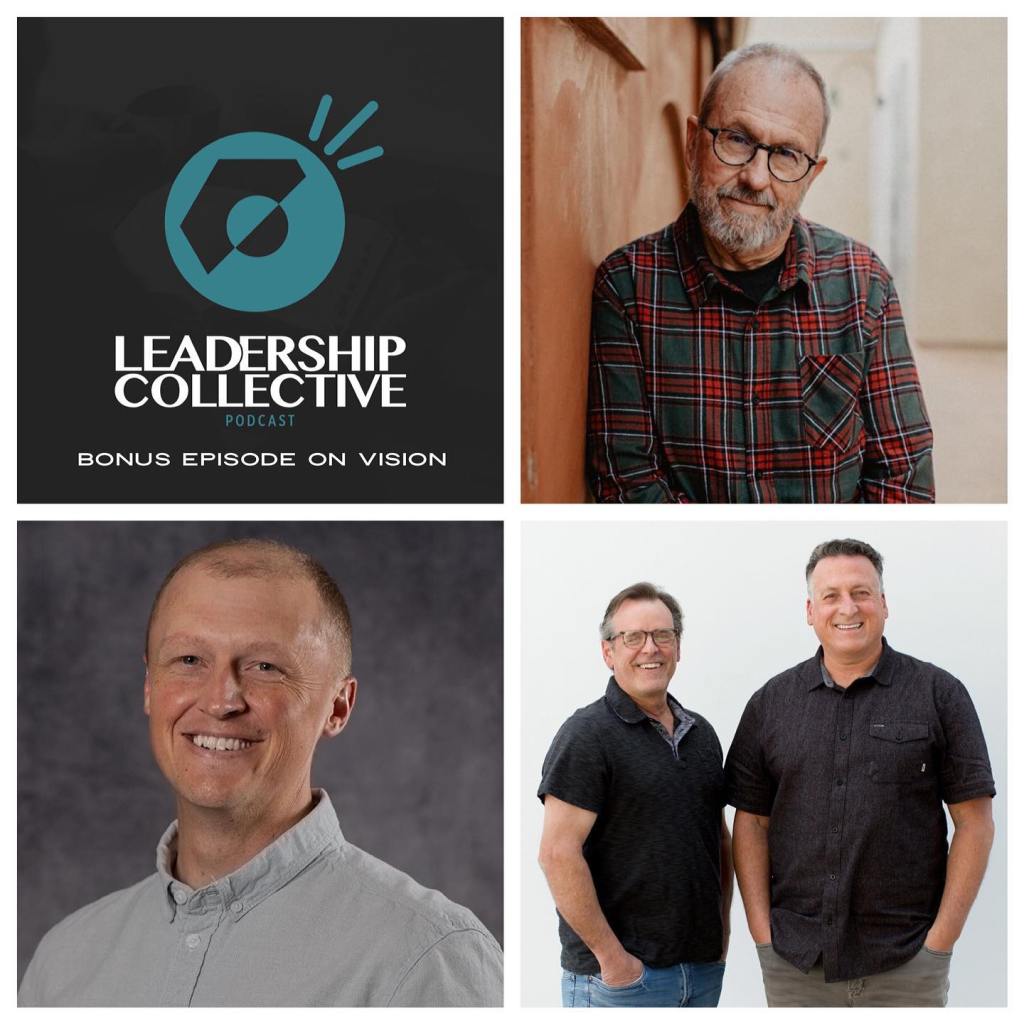
My friends and co-laborers, Ted Leavenworth and Rob Salvato, both pastors in Southern California, started a new podcast called Leadership Collective, in which they curate helpful conversations with church leaders about relevant topics.

I had the pleasure of being a guest on the podcast along with Dr. Mark Foreman. Our discussion was about the nuts and bolts of how we develop, cast, and implement “vision” in our churches. Mark pastors a mega-church in Southern California, and I pastor a medium sized church on the Front Range of Colorado, so there are some pretty big differences in how we go about this process, but many similarities as well.

Earlier in my ministry I used to hate the word “vision” because it seemed so nebulous and abstract. However, since then I have come to understand that “vision” can simply be defined as: “a desired outcome.” Putting it in those terms, the question of “vision” becomes much more manageable. Beginning with a desired outcome, you can then begin thinking about the way to achieve that outcome, and break it down into a process with steps, depending on the given time-frame.

Not only is it imperative that we have vision as leaders, it’s also important for us to communicate it. What I have learned is that most leaders unwittingly under-communicate vision, and it’s very rare for people to feel that leaders over-communicate vision. The point is, for most of us, we need to communicate vision more than we currently are, and more than we think we need to.

You can check out that episode here, or listen in the embedded player below: Vision | Mark Foreman & Nick Cady

If the Leadership Collective is of interest to you, make sure to subscribe to their podcast!

Vision – Bonus Episode | Mark Foreman & Nick Cady – Leadership Collective Podcast

Pastor Mark Foreman of North Coast Calvary in Carlsbad, California joins Pastor Nick Cady of White Fields Community Church in Longmont, Colorado to discuss the topic of vision.  —- North Coast Calvary Chapel — northcoastcalvary.org White Fields Community Church — whitefieldschurch.com

Why Does God Judge Some People More Harshly Than Others?

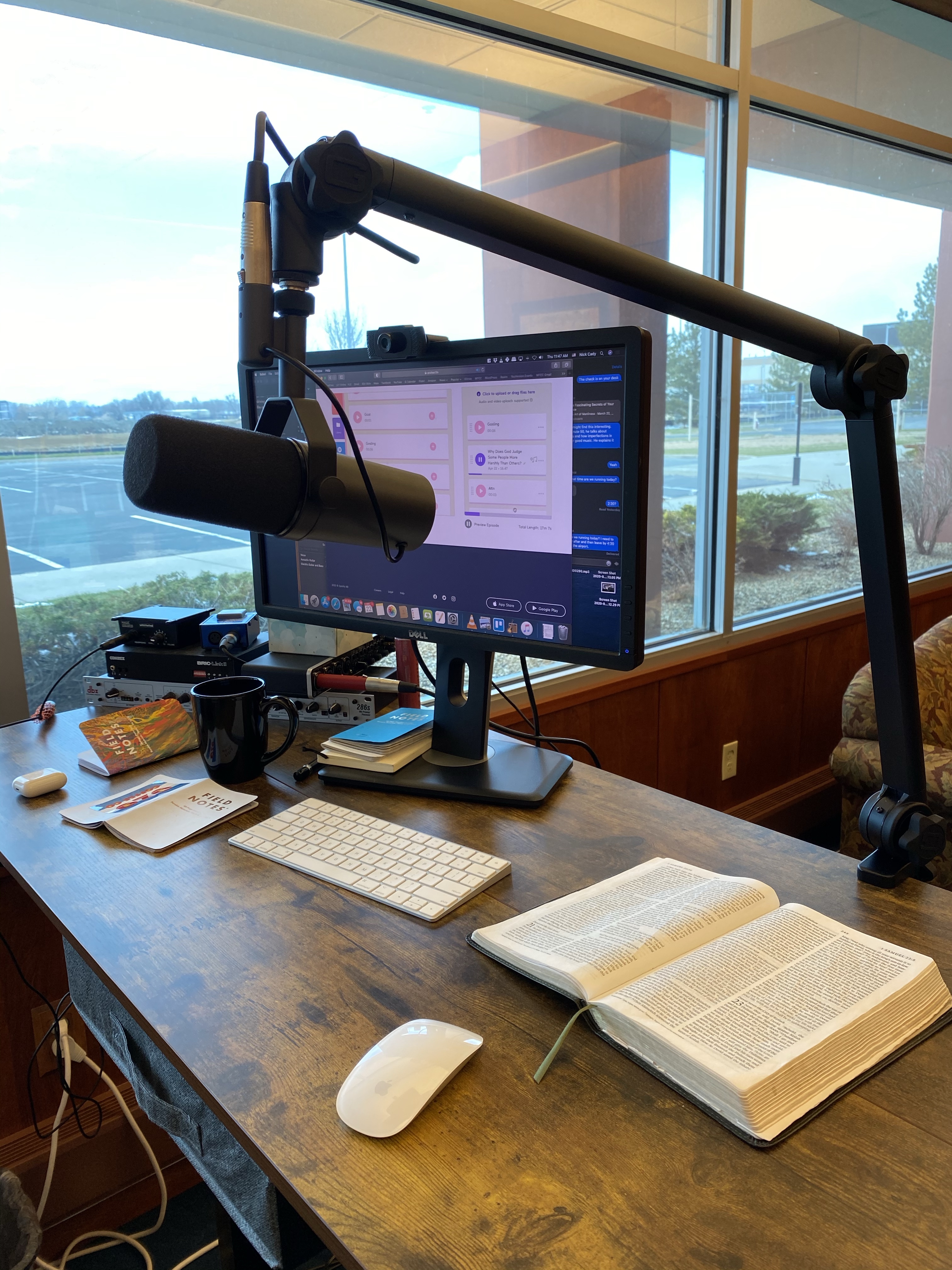
My desk in my office at church

Why is it that in the Bible, sometimes God punishes certain people severely for their sins, but other people receive no punishment for similar actions?

This question was submitted via this form: Ask a Question or Suggest a Topic:

Why does God bring judgment upon some sinful people, yet others who do much worse things remain healthy, prosperous, and well? In some cases they even seem to be getting God’s approval or at least not His punishment for the same sins as those who receive judgment. Examples of this would be Michal (David’s wife) and Uzzah in 2 Samuel 6, and the story of the two prophets in 1 Kings 13.

This is a good question, and is related to a question that David asked in the Psalms about why God allows wicked people to prosper and righteous people to suffer. This question, from David, was not an abstract query, but one that was deeply person to his lived experience.

We can see this dynamic at work in the world today as well, where some people do evil things and seem to suffer no consequences, and in some cases succeed as a result, whereas many who endeavor to lead a godly life don’t succeed or even suffer.

I responded to this question with a podcast episode which is embedded and linked below. In this episode, I give three important considerations which help us to understand this dynamic.

Podcast Episode: Why Does God Judge Some People More Harshly Than Others?

Podcast Exclusive: Does God Hate Religion?

In the latest episode of the Theology for the People podcast, Mike and I discuss the question of whether God hates religion.

Is religion opposed to relationship with Jesus? What is “religion” anyway – and is Christianity a religion or not?

In this episode we look at uses of the word “religion” in the Bible (there are 5 of them!), as well as passages like Isaiah 1 and Amos 5 where God talks about despising the religious practices of Israel; the very practices which He himself commanded them to do earlier in the Bible…

We also examine Jefferson Bethke’s spoken word YouTube video: “Why I Hate Religion but Love Jesus,” as well as a New York Times article about popular views on religion and biblical examples from Jesus, the apostles, and the New Testament church.

You can check out the episode here: Theology for the People: Does God Hate Religion? or by listening in the embedded player below.

Does God Hate Religion? – Theology for the People

In this episode Nick and Mike discuss what the Bible has to say about religion and how God feels about it. Is religion opposed to relationship with Jesus? What is "religion" anyway – and is Christianity a religion or not? We look at uses of the word "religion" in the Bible, as well as passages like Isaiah 1 and Amos 5. We also examine Jefferson Bethke's spoken word YouTube video: "Why I hate religion but love Jesus," as well as a New York Times article about popular views on religion – along with biblical examples from Jesus, the apostles, and the New Testament church.

Is Church an (un)Necessary Evil?

A few days ago I received this comment on one of my posts called The Impact on Kids of Dad’s Faith and Church Attendance:

Laura says:

What is the benefit of attending church? A person is demanded to surrender personal faith in Jesus and personal relationship with Jesus Christ to become a Borg in a socialist swamp. It’s great for becoming robotized, lobotomized, Romanized, and institutionalized.

But its pointless for knowing Jesus Christ personally.

Don’t go. Jesus isn’t welcome there. Conformity is King. Not Jesus.

I was tempted to ignore the comment, but I think this view of church is actually pretty widespread, even amongst professing Christians, that it warranted a response. And since I’ve recently started the Theology for the People Podcast, I figured this would be a good topic to discuss in more detail there.

You can check out the episode here: Podcast Exclusive – Church: a Necessary Evil?, or by listening in the embedded player below.

Podcast Exclusive – Church: An (un)Necessary Evil? – Theology for the People

In this episode Nick and Mike discuss a comment that came in to the Theology for the People blog claiming that church is only good for "becoming robotized, lobotomized, Romanized, and institutionalized," and is "pointless for knowing Jesus Christ personally." This comment represents a not-uncommon attitude to "organized religion" in general and church in particular. This episode includes discussions about the Bible, Jesus, American history, and Henry David Thoreau. The book recommended in this episode is The Bible in America: Essays in Cultural History 

Rebranding Our Radio Ministry: “Life in the Field” Has Become “Be Set Free”

Our radio ministry has been expanding and we felt this was a good time for some rebranding. As of April 1, 2021, “Life in the Field” has become “Be Set Free”

Our program airs Monday-Friday at 9:30 AM and 2:30 PM, and Sundays at 1:00 PM on GraceFM: 89.7 FM along the Northern Front Range (Cheyenne, WY – Castle Rock, CO) and 101.7 in Colorado Springs, CO. We can also be heard online at gracefm.com and on the GraceFM app.

Along with this rebranding, we have started a dedicated webpage for Be Set Free, where you can find each day’s message from the radio: besetfreeradio.com. You can even sign up on the site to have those messages delivered directly to your inbox.

You can also subscribe to the Be Set Free Podcast, and every day you will get that day’s episode delivered directly to your podcast app. Go to: Be Set Free Podcast

Be Set Free is a listener-supported ministry, and if you would like to contribute to helping to spread the gospel over the airwaves through clear, relevant expository Bible teaching, you can donate here.

Hurts So Good Part 1 – Be Set Free

Date: 2024 April 11 Hebrews 12:1-13 Fixing our eyes on Jesus as the cure for enduring hardship. Understanding the role of the Father's discipline in our lives From our series: Hebrews: An Anchor for the Soul
  1. Hurts So Good Part 1
  2. Of Whom the World Was Not Worthy Part 2
  3. Of Whom the World Was Not Worthy Part 1
  4. Unlikely Heroes Part 2
  5. Unlikely Heroes Part 1

Rebranding: “Theology for the People” + Podcast

Recently I was talking to my friend Aaron Salvato who heads up the GoodLion Podcast Network. I reached out to him regarding the idea of possibly creating a podcast with audio versions of some of my articles from this blog. Aaron’s advice was that I consider rebranding the blog since “Longmont Pastor” might tell people who I am, but it doesn’t help them know what this site (and potential podcast) is about.

So, in light of Aaron’s advice, the “Longmont Pastor” blog has been rebranded as “Theology for the People” – which better reflects my goal with this site: to bring understanding of God’s Word and application for the questions that people are asking today.

Theology for the People Podcast

I have also started a Podcast, and I would love it if you would subscribe and share it with others. You can find it on all major podcast platforms, but you can click here to find it on the podcast platform of your choice: Theology for the People Podcast

On the blog you will now see this icon above some posts:

If you click that icon, it will take you to the podcast episode in which you can listen to an audio version of that post.

I plan to create podcast-specific content as well, so make sure to subscribe!

Thanks for reading (and now listening!) – and please continue submitting your questions (click here to ask a question or suggest a topic), and I will continue doing my best to write and record helpful content!

Here are the episodes currently on the podcast:

Did Paul Regret His Sermon in Athens? – Persuasion Versus Manipulation in Preaching – Theology for the People

Is persuasion a form of manipulation, or can it actually be an act of love?The Apostle Paul wrote, "Knowing the fear of the Lord, we persuade others" (2 Corinthians 5:11). But how can Christians seek to persuade people without resorting to manipulation? And what makes for preaching that is not only biblically faithful, but also clear, compelling, and transformative?In this episode of Theology for the People, Pastor Nick Cady sits down with Jeremy Meeks, co-author of Persuasive Preaching, director of the Chicago Course on Preaching at the Charles Simeon Trust, and pastor at Christ Church Chicago.Together, they discuss the biblical basis for persuasion, the difference between faithful preaching and manipulation, and why clarity and effective communication matter for anyone who wants to share God's truth.They also explore:Why expository preaching involves more than reading out and commenting on a series of verses.What Paul meant when he rejected persuasive words of human wisdom in 1 Corinthians 2.Whether Paul regretted his approach to preaching in Athens (Acts 17).How preachers can grow in clarity, persuasion, and communication.Why the principles of persuasive communication matter for everyone – not just pastors.Whether you're a pastor, Bible teacher, ministry leader, or simply someone who wants to communicate more effectively, this conversation will challenge and encourage you to speak the truth with greater clarity, conviction, and love.Resources mentioned:Jeremy Meeks: https://jeremymeekspreaching.comCharles Simeon Trust: https://simeontrust.orgExpositors Collective: https://expositorscollective.comTheology for the People is hosted by Pastor Nick Cady and explores how theology shapes the way we think, live, and engage with the world.
  1. Did Paul Regret His Sermon in Athens? – Persuasion Versus Manipulation in Preaching
  2. A Biblical Theology of Aging: Embracing God's Design for Every Season of Life – with Jen Wilkin
  3. Does God Care About Your Happiness? – with Jen Oshman
  4. Understanding the Filioque Controversy – with Shane Angland
  5. John Owen: Who He Was & How His Ideas Compare to Other Theologians