Tim is the Pastor for Preaching at Reality Ventura and Founding Pastor of Reality Church London and Reality LA. A native to California, Tim’s first ten years of church-planting ministry started as the Lead Pastor of Reality LA in 2006, a thriving church in the heart of Hollywood, before planting Reality London in the UK in 2016. In 2021, Tim returned to California to take up the Pastor for Preaching role at Reality Ventura.
In this episode we talk about culture in general, and “gospel culture” specifically. What is “gospel culture” and how is it developed amongst a group of people, whether that be a church, a family, a staff, or elsewhere?
Tim’s first two books, Better: How Jesus Satisfies the Search for Meaning and The Truth about Lies, were projects which came from lessons learned while living and pastoring in urban areas. Pastor Tim and his wife Lindsey care deeply about the ministry of the local church and seek to devote themselves to helping churches begin and flourish in their mission to share and reflect the gospel.
Tim and I will both be speaking at the Calvary Chapel / CGN International Conference in Orange County, California, June 26-29. More information and registration can be found here at conference.calvarychapel.com
If you find this episode interesting or helpful, please share it with others and leave a rating and review on your podcast app, as that helps other people discover this podcast and its content.
Tim Chaddick is the Pastor for Preaching at Reality Ventura and Founding Pastor of Reality Church London and Reality LA. A native to California, Tim's first ten years of church-planting ministry started as the Lead Pastor of Reality LA in 2006, a thriving church in the heart of Hollywood, before planting Reality London in the UK in 2016. In 2021, Tim returned to California to take up the Pastor for Preaching role at Reality Ventura.
In this episode we talk about culture in general, and "gospel culture" specifically. What is "gospel culture" and how is it developed amongst a group of people, whether that be a church, a family, a staff, or elsewhere?
Tim and I will both be speaking at the Calvary Chapel / CGN International Conference in Orange County, California, June 26-29. More information and registration can be found here at conference.calvarychapel.com
Tim's first two books, Better: How Jesus Satisfies the Search for Meaning and The Truth about Lies, were projects which came from lessons learned while living and pastoring in urban areas. Pastor Tim and his wife Lindsey care deeply about the ministry of the local church and seek to devote themselves to helping churches begin and flourish in their mission to share and reflect the gospel.
Several years ago, I remember talking with my pastor, Tom Stipe, and discussing something I had observed: Sin makes you weird, but walking with Jesus makes a person increasingly healthy and “normal.”
Who Defines What is “Weird”?
Some people might bristle at the terms “weird” and “normal,” wondering whose definition of “normal” we should use, but in this case I use it in the sense of the healthy standards for behavior and attitudes that are laid out in the Bible, and which have shaped global society in a pervasive way.
For more on that, see Tom Holland’s incredible book, Dominion: How the Christian Revolution Remade the World. Holland is not a “Christian author” per se; he is a historian who has spent most of his life studying history as relates to other topics, but he has admitted that his research for this book profoundly impacted his life and faith personally. I read it last year and would recommend it.
So, when I say “normal” in this sense, I am referring to virtues which are not only biblical, but which are affirmed by the majority of cultures worldwide. Things such as goodness, kindness, charity, graciousness, and the like – in contrast to abuse, usury, envy, pride, and so on.
Brain Scans
My conviction that “sin makes you weird” is not new to me, but it has been verified through the ever-increasing use of brain scans which show how certain behaviors affect brain activity.
One of the chief among these, and most reported on, is the use of illicit drugs, including marijuana, and pornography.
Do Other Sins Make You Weird? What’s the Solution?
I would venture to guess that other behaviors have similar affects on behavior, outlook, and the brain, such as lying, jealousy, and other attitudes and actions.
In it, importantly, we talk about the solution to the problem, which is: abiding in Christ, which Jesus defines as living in abiding relationship with him, by obeying his commandments (John 15:10).
On our wedding day, as my wife was walking down the aisle, she looked at me intently, and the big question in her mind was, “Is he going to do it?” Her friend’s husband had done it at their wedding, and she wondered if I would too. But much to her dismay, I did not cry when she walked down the aisle. She asked me later on why I had not cried. “Why would I?”, I asked. “That was a moment to celebrate, not to cry!”
And yet, the Gospel of Luke tells us, that on Palm Sunday, when everyone else was celebrating and rejoicing, Jesus was crying. Why? The answer draws us into the heart of the gospel.
GOD’S PROMISE OF A TRUE KING
Israel had many kings throughout their history, but, as we see in the books of 1-2 Kings, each one was a disappointment. Some were better than others, but none of them fulfilled their potential, and all left the people hoping for more.
God had promised that one day, He would send them a true king, who would rule in righteousness. He would be a liberator, who would set the people free from all oppression and establish a kingdom of peace and justice, which would have no end. And yet, no governing administration ever produced what they hoped it would.
JESUS, THE TRUE KING & PROMISED MESSIAH
Rumors had been swirling for years that Jesus was the promised Messiah, the true king, but Jesus had refused to allow people to revere him as such, until Palm Sunday. On Palm Sunday, with the city of Jerusalem full of people who had come to celebrate Passover, Jesus affirmed publicly that he was indeed the Messiah, and he rode into the city on a donkey, fulfilling the prophecy of Zechariah 9:9.
The people waved palm branches (John 12:13), laying them on the ground, along with their cloaks, before Jesus to create a “red carpet” for the rightful king. The significance of this act is found in 2 Kings 9:13, when Jehu became king of Israel, overthrowing the wicked dynasty of the Ahab and Jezebel. At that time, the people laid their cloaks on the ground before him. Additionally, some 200 years before Jesus was born, in the Maccabean Revolt, Israel had successfully cast off their Syrian overlords and gained their independence — at which time, the people celebrated with a parade, in which they waved palm branches. The palm branch, stamped on Jewish coins, was a symbol of deliverance from oppression.
JESUS GOES TO THE TEMPLE, FAILING TO MEET THEIR EXPECTATIONS
And yet, upon entering Jerusalem, instead of going to the Antonia Fortress to put the Romans on notice, Jesus went to the Temple, where he drove out the money changers and healed the sick (Matthew 21:12-14). Clearly, many of the people were disappointed that Jesus did not give them a political solution that day. Perhaps some of the same people who shouted, “Hosanna,” on Palm Sunday were even amongst the crowd shouting, “Crucify Him,” on Good Friday, having been disillusioned that Jesus hadn’t done what they expected him to do.
Perhaps they should have read Zechariah’s prophecy again. “Behold, your king is coming to you; righteous and having salvation is he” (Zechariah 9:9). Jesus, the true king, came to meet our greatest need. The unrighteous, the Bible says, will not enter the Kingdom of God (1 Corinthians 6:9-10). Jesus, the only truly righteous person who has ever lived, came to meet our greatest need: so that through his life, death, and resurrection, we might be justified by his grace, and thereby be saved from judgment!
GOD’S PLAN: BETTER THAN WHAT THEY HOPED FOR
The people in Jerusalem had an expectation of what Jesus was going to do for them, but when Jesus didn’t do what they expected He would, some of them turned away — and yet, what Jesus was doing for them was better than what they had hoped for, and was what they truly needed!
May that be a lesson for us this Palm Sunday, so that we would walk with God by faith, trusting in His character, His love, and His plans. Rather than a genie in a bottle, who always gives us what we want, we have a Father in Heaven, who loves us and gives us what we need — and that is infinitely better!
Jesus Wept With Us So That One Day We Might Rejoice With Him Forever
In Luke 19:41, we read that as Jesus was riding into Jerusalem on Palm Sunday, as the crowds were cheering, Jesus was crying.
Shouldn’t He have been reveling in receiving the recognition that He rightly deserved? The reason Jesus cried is because, as He looked over Jerusalem, He knew that the current enthusiasm would not last, and He would soon be crucified as a criminal by the people He had come to save.
Yet, with tears streaming down His face, Jesus continued into Jerusalem. Why? Because, Hebrews 12:2 tells us of the joy that was set before him.
Jesus wept with us for a moment, so that one day, we might rejoice with Him forever.
In the Book of Revelation, we are given this preview of Heaven: “After this I looked, and behold, a great multitude that no one could number, from every nation, from all tribes and peoples and languages, standing before the throne and before the Lamb, clothed in white robes, with “palm branches” in their hands, and crying out with a loud voice, “Salvation belongs to our God who sits on the throne, and to the Lamb!” (Revelation 7:9-10).
PALM BRANCHES – THE SYMBOL OF DELIVERANCE, AGAIN
In Heaven, we see palm branches, the symbol of deliverance from oppression, because Jesus, the true king, has liberated us from that which is at the root of all oppression! Whereas on Palm Sunday, people shouted “Hosanna!” (“Save Now”), the great multitude in Heaven declares that Jesus has saved them.
Palm Sunday points us to the heart of the gospel: The true King came to meet our greatest need, and He wept with us so that one day we might rejoice with Him forever.
We discuss the difference between interpreting the Bible “literally” and interpreting it “literarily,” i.e. according to the genre of a given passage. Kristie describes the 8 major literary genres found in the Bible, and their unique aspects. We give a few examples of how not taking genre into account can lead to misinterpretation and misapplication of particular texts.
Kristie is married to Pastor Thabiti Anyabwile and they serve at Anacostia River Church in Washington D.C. For more about Kristie, visit her website: kristieanyabwile.com.
Kristie also shares with us in this episode the meaning of her last name!
Also mentioned in this episode are two groups Kristie is involved with:
If you find this episode interesting or helpful, please share it with others and leave a rating and review on your podcast app, as that helps other people discover this podcast and its content.
How Does Understanding Biblical Genres Affect How We Interpret and Teach Passages in the Bible? –
Theology for the People
In this episode, I speak with Kristie Anyabwile, who recently wrote a book called, Literarily: How Understanding Bible Genres Transforms Bible Study.
We discuss the difference between interpreting the Bible "literally" and interpreting it "literarily," i.e. according to the genre of a given passage. Kristie describes the 8 major literary genres found in the Bible, and their unique aspects. We give a few examples of how not taking genre into account can lead to misinterpretation and misapplication of particular texts.
Kristie is married to Pastor Thabiti Anyabwile and they serve at Anacostia River Church in Washington D.C. For more about Kristie, visit her website: kristieanyabwile.com.
Also mentioned this episode are:
Charles Simeon Trust
The Pelican Project
If you find this episode interesting or helpful, please share it with others and leave a rating and review on your podcast app, as that helps other people discover this podcast and its content.
Make sure to visit the Theology for the People blog at nickcady.org
On this week’s episode of the Theology for the People podcast, Aaron Salvato interviews me about hypocrisy can be a barrier to people embracing Christianity, and what the solution is to this problem.
In my recent book, The God I Won’t Believe In: Facing Nine Common Barriers to Embracing Christianity, one of the chapters addresses the question of how Christianity can really be true if many of its adherents are hypocritical or hateful people. Can this problem be blamed on Christianity itself? Or is there another explanation? Either way, it certainly hurts Christian witness, so what, if anything, should or can be done about it?
If you find this episode interesting or helpful, please share it with others and leave a rating and review on your podcast app, as that helps other people discover this podcast and its content.
On this week’s episode of the Theology for the People podcast, I speak with Michael Payne, worship pastor at White Fields Community Church, about Jesus’ ascension into Heaven.
Is the ascension simply something that happened, which we acknowledge, or did it actually accomplish something which could not have happened otherwise? How did the early Christians and the Church Fathers understand the ascension? What difference should the ascension make for our lives today?
In 2021, I asked Mike to teach on the Ascension, as part of our Eastertide series, “The Risen Life,” in which we looked at the appearances of Jesus in the Gospels after His resurrection. As Mike studied and prepared for that teaching, he found that the ascension really deserves more attention than it generally gets in most churches today.
In this episode, I speak with Michael about his discoveries, and he explains what the church has lost by not focusing enough on Jesus ascension, and he explains why Jesus’ ascension matters for the gospel and for us.
If you find this episode interesting or helpful, please share it with others and leave a rating and review on your podcast app, as that helps other people discover this podcast and its content.
Does the Ascension Deserve More Attention? – Why Does Jesus' Ascension Matter for the Gospel and for Us? –
Theology for the People
In this episode, Nick Cady and Michael Payne discuss Jesus' ascension into Heaven and why it matters for the gospel and for us.
Is the ascension simply something that happened, which we acknowledge, or did it actually accomplish something which could not have happened otherwise? How did the early Christians and the Church Fathers understand the ascension? What difference should the ascension make for our lives today?
If you find this episode interesting or helpful, please share it with others and leave a rating and review on your podcast app, as that helps other people discover this podcast and its content.
Make sure to visit the Theology for the People blog at nickcady.org
March 17 is St. Patrick’s Day, and on this week’s episode of the Theology for the People podcast I speak with Shane Angland (Mdiv, Dallas Theological Seminary) about the true story of St. Patrick, and how we can know the difference between what is myth and what is historically true when it comes to him.
Did Patrick really drive the snakes out of Ireland? Did he face off with druids? Did he use the shamrock as a teaching tool to explain the Trinity? Did you know that Patrick wasn’t actually Irish – and that he fought against human trafficking?
Shane explains how the true story of Patrick is actually much better than the legends, and that there are actually writings from Patrick which are available today. He also shares about the ongoing legacy of Patrick in Ireland and beyond.
If you find this episode interesting or helpful, please share it with others and leave a rating and review on your podcast app, as that helps other people discover this podcast and its content.
The True Story of Saint Patrick of Ireland – with Shane Angland, MDiv from Ennis, Ireland –
Theology for the People
March 17 is St. Patrick's Day. What is the true story of St. Patrick? Shane Angland (MDiv, Dallas Theological Seminary) joins the podcast today to help us know the difference between what is myth and what is historically true when it comes to St. Patrick.
Did Patrick really drive the snakes out of Ireland? Did he face off with druids? Did he use the shamrock as a teaching tool to explain the Trinity?
Shane explains how we can know the difference between what is true about Patrick and what is fable, and how the true story of Patrick is much better than the legends.
Here is a link to the article Shane wrote, which is mentioned in this episode: St. Patrick, Grey Wolves, and the Cimbid King
If you find this episode interesting or helpful, please share it with others and leave a rating and review on your podcast app, as that helps other people discover this podcast and its content.
Make sure to visit the Theology for the People blog at nickcady.org
This week’s episode of the Theology for the People podcast is a discussion I recorded in Budapest, Hungary this week with Pastor George Markey of Kyiv, Ukraine.
This was originally recorded for KWAVE Radio in Southern California, but I am putting it out here as well, so more people can hear it.
George has lived in Ukraine for the past 30 years, and is the overseer for the Calvary Chapel churches in the country.
In this episode, George shares his perspective on what is going on as Russia is attacking Ukraine, as well as stories of how God is working in the midst of it. We also discuss needs, what is currently being done, and how you can get involved and help. Finally, George shares how he personally prays for Ukraine during this time.
The Russian Invasion of Ukraine: How to Help & How to Pray – with George Markey –
Theology for the People
Recorded in Budapest, Hungary this week with Pastor George Markey of Kyiv, Ukraine, originally for KWAVE Radio in Southern California. George has lived in Ukraine for the past 30 years, and is the overseer for Calvary Chapel churches in Ukraine.
In this episode, George shares his perspective on what is going on as Russia is attacking Ukraine, as well as stories of how God is working in the midst of it.
We also discuss needs, what is currently being done, and how you can get involved and help.
Finally, George shares how he personally prays for Ukraine right now.
Please share this episode with others, subscribe to the podcast, and check out the Theology for the People blog at nickcady.org
Many people assume that the Protestant Reformation was something that only affected the Western, or Roman Catholic Church, but in this week’s episode of the Theology for the People podcast, Shane Angland (Mdiv, Dallas Theological Seminary) shares the incredible story of how the Reformation reached the East.
Shane explains how Martin Luther actually referenced the Eastern Orthodox churches as examples of Christianity which were not subject to the dictates of Roman papal authority, and he tells the story of Cyril Lucaris, the Greek Orthodox theologian and patriarch of Constantinople, who was highly influenced by the Reformation and its principles.
Shane resides in Ennis, Ireland. He spent years working in Ukraine as a missionary with IFES and serving in a Calvary Chapel church in the city of Kharkiv, before going to Dallas for seminary.
Next month, Shane will be back on the podcast, sharing the true history of Saint Patrick of Ireland, explaining which parts of the commonly-told stories about Patrick are myth, and which parts of the story are often not told, but deserve to be. Stay tuned and keep an eye out for that!
Did the Reformation Reach the East? The Surprising History of Cyril Lucaris and Eastern Orthodoxy's Reaction to the Reformation – with Shane Angland –
Theology for the People
Many people assume that the Protestant Reformation was something that only affected the Western, or Roman Catholic Church, but in this episode, Shane Angland (Mdiv, Dallas Theological Seminary) shares the incredible story of how the Reformation reached the East.
Shane explains how Martin Luther actually referred to the Eastern Orthodox churches as examples of Christianity which were not subject to the dictates of Roman papal authority, and he tells the story of Cyril Lucaris, the Greek Orthodox theologian and patriarch of Constantinople, who was highly influenced by the Reformation and its principles.
Shane Angland resides in Ennis, Ireland. He spent years working in Ukraine as a missionary with IFES and serving in a Calvary Chapel church in the city of Kharkiv, before going to Dallas for seminary.
At the end of the episode, listen for a preview of my forthcoming book, The God I Won't Believe In: Facing Nine Common Barriers to Embracing Christianity.
Visit the Theology for the People blog site for articles and more.
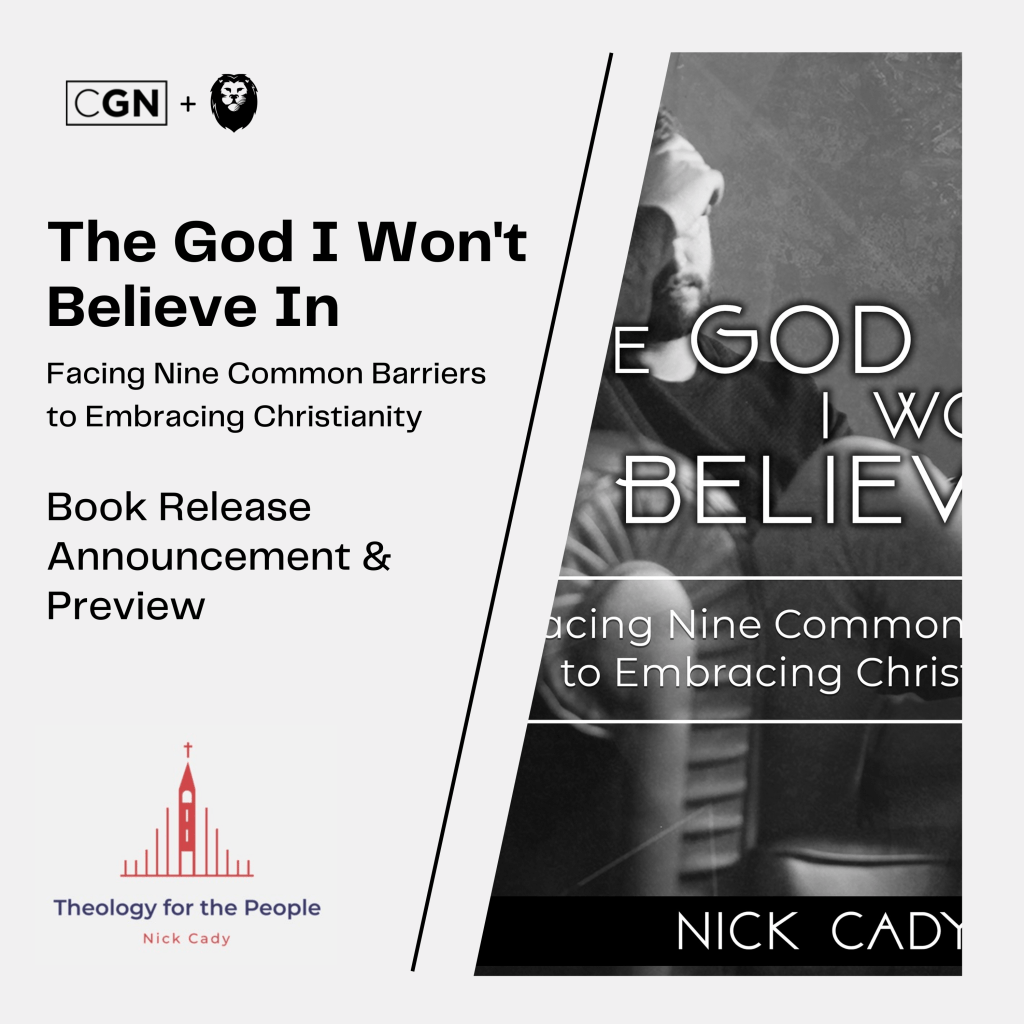
In this week’s episode of the Theology for the People podcast, I sit down with Michael Payne and Curt Fuller to discuss my forthcoming book, The God I Won’t Believe In: Facing Nine Common Barriers to Embracing Christianity. The book is scheduled to be released on March 6, 2022, and will be available for purchase online, as well as in our church’s bookstore. We are currently working on distribution, and getting it into other bookstores and book distributers as well.
In this episode, Michael interviews me and Curt, who edited the book, as we discuss the backstory behind how it came about, as well as the content of the chapters, and who this book is for.
I hope this book will be a great resource to help both those who are wrestling through facing these barriers to embracing Christianity, as well as those who seek to be equipped to help their family and friends move from doubt to belief.
I’d love it if you’d consider buying a copy of the book, and if you’d help spread the word about it online!
Book Release Announcement & Preview – The God I Won't Believe In: Facing Nine Common Barriers to Embracing Christianity –
Theology for the People
Nick wrote a book! It's coming out March 6, 2022 and is available for pre-order on Amazon here.
The book is titled, The God I Won't Believe In: Facing Nine Common Barriers to Embracing Christianity.
In this episode, Nick sits down with Michael Payne and Curt Fuller, who edited the book, the discuss how the book came about, who it's for, and what it's about.
Make sure to visit the Theology for the People blog at nickcady.org for more articles and content.







 Theology for the People