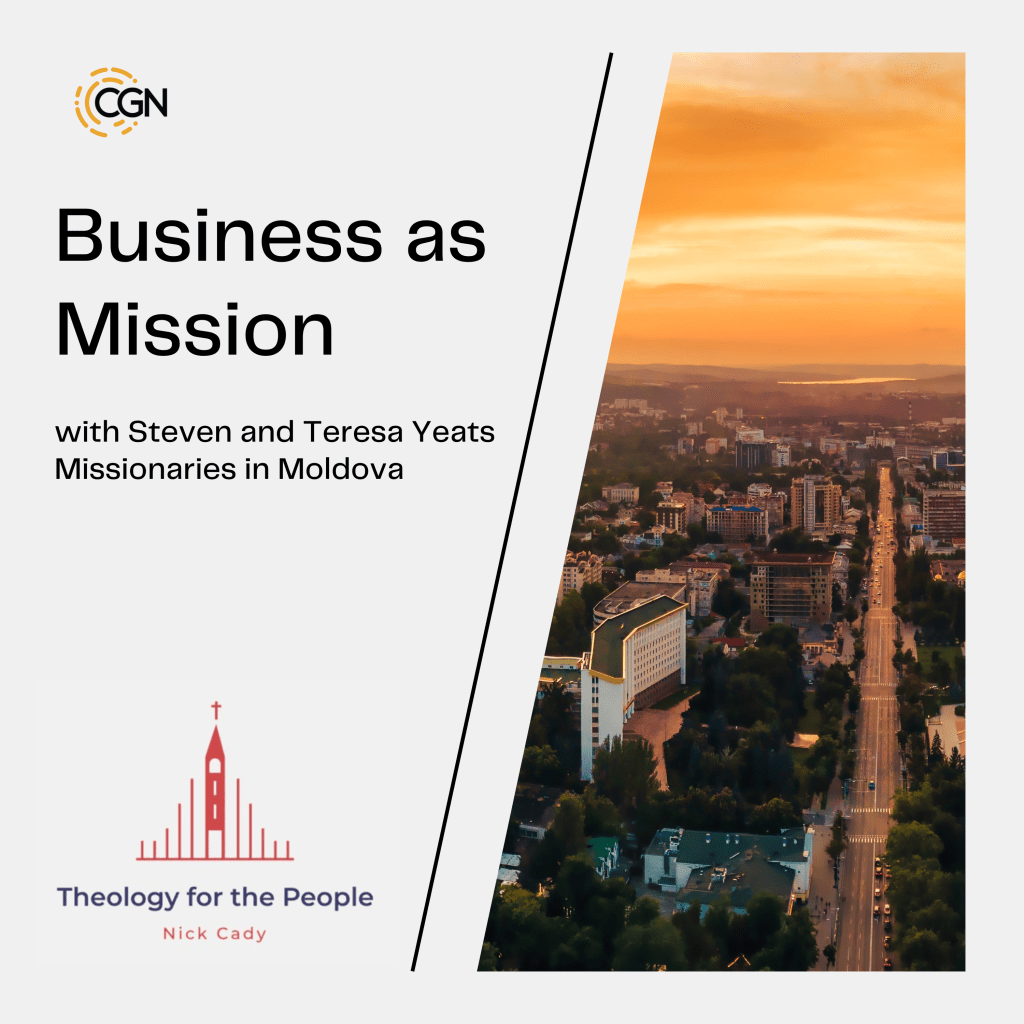
A few weeks ago, I had the pleasure of traveling to Chisinau, Moldova, to visit Steven and Teresa Yeats, friends of mine who have been missionaries in Eastern Europe for many years.
Steven is a pastor and a church planter, but a few years ago he started a business in Moldova, and in this episode of the Theology for the People podcast, he talks about the spirituality of money and the reasons for considering doing business as a form of mission.
We talk about sustainable church planting and unique needs that exist in the developing (majority) world for jobs to be created so that Christian people who want to be part of what God is doing in their home countries can stay without feeling the need to emigrate.
Additionally, Steven and Teresa share about how the war in Ukraine has affected their lives and their ministry, and how we can be praying for them and for the church in Moldova.
Business as Mission – with Steven and Teresa Yeats, Missionaries in Moldova –
Theology for the People
Steven and Teresa Yeats have been missionaries in Eastern Europe for many years. They currently live in Chisinau, Moldova. Steven is a pastor and a church planter, but a few years ago he started a business in Moldova, and in this episode he talks about the spirituality of money and the reasons for considering doing business as a form of mission. We talk about sustainable church planting and unique needs that exist in the developing (majority) world.
Additionally, Steven and Teresa share about how the war in Ukraine has affected their lives and their ministry in Moldova. Finally, they share how we can be praying for their ministry and the church in Moldova.
Make sure to check out the Theology for the People blog at nickcady.org
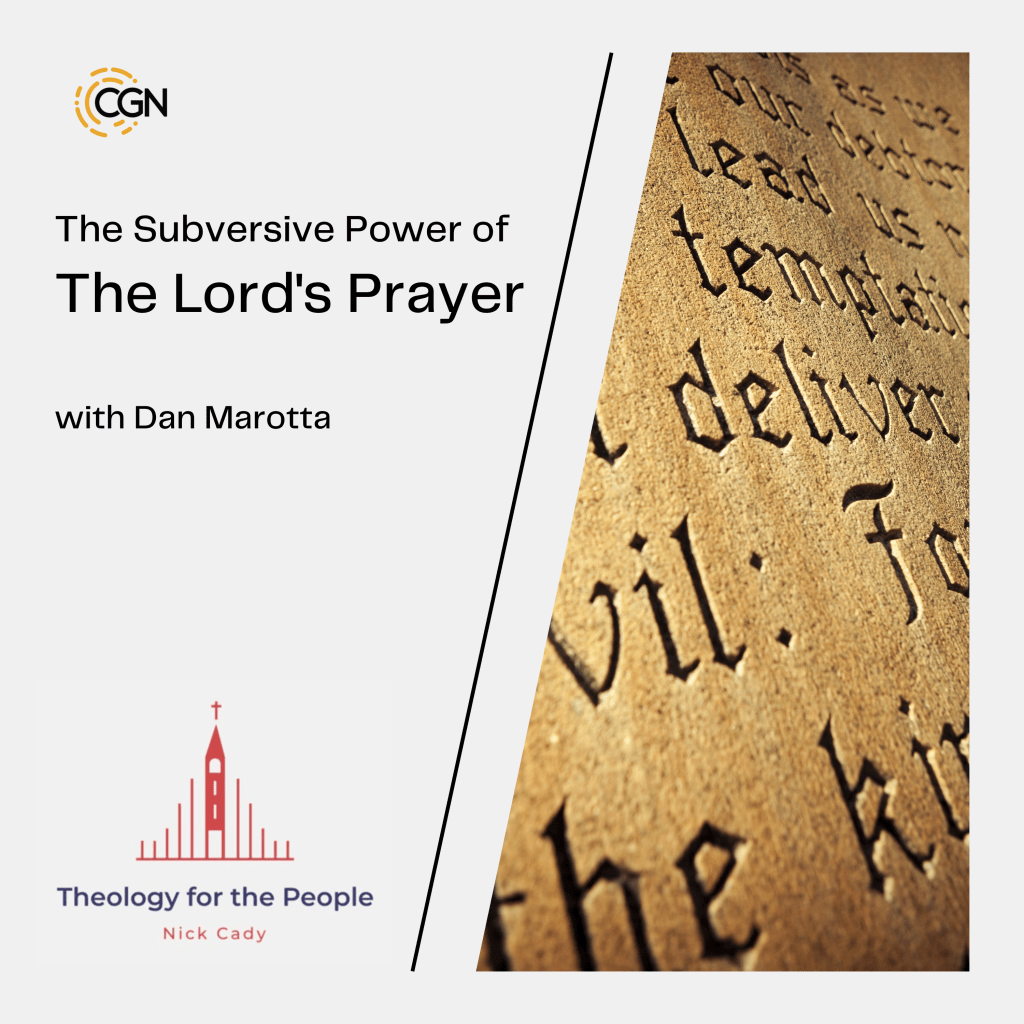
In this episode, we discuss the topic of prayer and the Lord’s Prayer specifically.
The Lord’s Prayer is a beautiful, subversive prayer given to the church by Jesus. It forms our imaginations and—given time—transforms us. Dan explains how what you pray shapes what you believe, which in turn shapes how you live.
What was Jesus’ intention in giving us this prayer? Was it to give us a model of how to pray, or was it intended to be given to us as what to pray? Dan and I discuss the historical usage of the Lord’s Prayer, as well as the value and dangers of both praying written prayers and praying extemporaneously.
Dan is a graduate of Denver Seminary, and we discuss some of the cultural uniquenesses of different parts of the United States, and how those affect the way we minister to others.
Dan Marotta is the founding Rector of Redeemer Anglican Church in Richmond, Virginia, and the author of Liturgy in the Wilderness: How the Lord's Prayer Shapes the Imagination of the Church in a Secular Age.
In this episode, we discuss the topic of prayer and the Lord's Prayer specifically.
The Lord’s Prayer is a beautiful, subversive passage of words given to the church by Jesus. It forms our imaginations and—given time—transforms us. Dan explains how what you pray shapes what you believe, which in turn shapes how you live.
Visit the Theology for the People blog at nickcady.org, where you can read articles and suggest topics for future episodes.
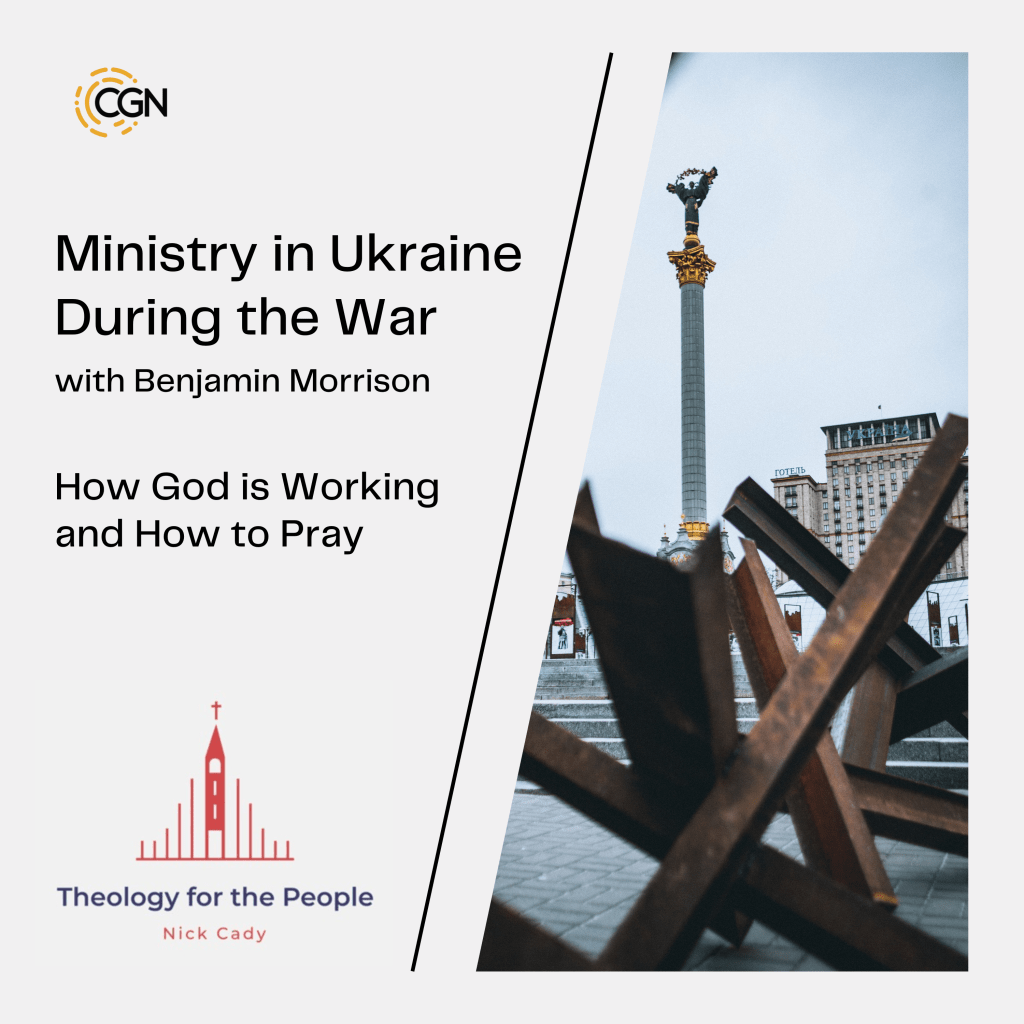
Benjamin Morrison is a missionary in Ukraine and the pastor of Calvary Chapel Svitlovodsk in Central Ukraine. He is also a leader with City to City in Europe and Ukraine.
Ben and I got to know each other when I was I pastoring in Hungary, and we have kept in touch over the years. I have had the opportunity to serve with him in Ukraine, and he has visited our church in Colorado many times as well.
When the war began in Ukraine last February, Ben and his family decided to stay in order and try to meet the needs of the many displaced people who were coming to the region where he lives seeking refuge and safety.
This safety is somewhat relative, as Ben’s city has also come under attack from Russia.
In this episode of the Theology for the People podcast, I speak with Ben about the significant humanitarian aid his church has been providing, as well as how the war has affected people’s view of God.
We also discuss other ethical and theological questions related to the war, including the conundrum faced by Christians in Russia regarding how to respond.
You can support Ben and the ministry he is doing by visiting bit.ly/give2ukraine
Benjamin Morrison is a missionary in Ukraine and the pastor of Calvary Chapel Svitlovodsk in Central Ukraine.
Ben is also a leader with City to City in Europe and Ukraine.
To support Ben and the ministry he is doing, visit bit.ly/give2ukraine
Visit the Theology for the People blog at nickcady.org to read articles, suggest topics, or ask questions.
This is something that I and my colleague, Curt Fuller, have been working on for many months, and it just went live today.
Additionally, Curt and I sat down recently to record a short podcast episode to talk about the other projects we have in the works, as well as to describe the process of writing and recording these books.
Curt Fuller is the Technical Director at White Fields Community Church. He was the editor of my first book, and he is the voice which reads the audiobook.
Prior to coming to work at White Fields, Curt was already in the audiobook publishing world and was involved doing voiceovers, so he was the right man for the job!
In addition to this audiobook, we have two other projects in the works: a group study guide for The God I Won’t Believe In, which is designed to be used in small groups, youth groups, or by families or individuals at home, and a new book tentatively titled, So That You May Believe, based on evidences for believing in Jesus found in the Gospel of John.
Curt Fuller is the Technical Director at White Fields Community Church in Longmont, Colorado.
Additionally, Curt is Nick's writing partner; he was the editor of Nick's first book: The God I Won't Believe In: Facing Nine Common Barriers to Embracing Christianity
The audiobook version of that book was published on February 1, 2023. In this episode, you can hear a preview of that book, and we discuss other projects currently in the works.
To read the Theology for the People blog, or to suggest a topic or ask a question, visit: nickcady.org
In this first episode of Season 3 of the Theology for the People podcast, I speak with Michael Payne about the biblical genre of lament and its role in the life of a believer today.
Michael Payne is the Worship Pastor at White Fields Community Church in Longmont, Colorado. Previously he served as a missionary and worship pastor in Hungary at Golgota Budapest. Prior to that, he served in the US Marine Corps.
How Long, O Lord? – The Biblical Genre of Lament and Its Role in Our Lives Today –
Theology for the People
Welcome to Season 3 of Theology for the People!
Michael Payne is the Worship Pastor at White Fields Community Church in Longmont, Colorado. Previously he served as a missionary and worship pastor in Hungary at Golgota Budapest. Prior to that, he served in the US Marine Corps.
Listen to Mike's original music on Spotify here, or see him in action on the White Fields Church YouTube page.
The books Mike recommends in this episode on the topic of the biblical genre of lament are:
Michael Card, A Sacred Sorrow: Reaching Out to God in the Lost Language of Lament
Mark Vroegop – Dark Clouds, Deep Mercy
Walter Brueggemann – The Message of the Psalms
For the Theology for the People blog, or to submit a question or suggest a topic, visit nickcady.org
The answer is: Yes, but not in the way that many people might think of the word “political.”
A King and a Kingdom. The City of God and the City of Man.
The fact is that the gospel is political because it has to do with a king (Jesus) and a kingdom (the Kingdom of God).
The word “politics” comes from the Greek term politiká, first used by Aristotle, which refers to “the affairs of a city (polis in Greek).”
The promise of the Messiah, through the Hebrew prophets, was the promise of a king, who would come, from the line of David. These promises of the Messiah being a savior-king go all the way back to Genesis 49, in the promise to Judah, that “the scepter would not depart from Judah until Shiloh comes.”
David then received a promise that this promised savior-king would come through his family line, and establish a kingdom which would have no end (2 Samuel 7).
Isaiah later made the promise that this son promised to David would actually be God himself, come to Earth to establish this eternal kingdom:
For to us a child is born, to us a son is given; and the government shall be upon his shoulder, and his name shall be called Wonderful Counselor, Mighty God, Everlasting Father, Prince of Peace. Of the increase of his government and of peace there will be no end, on the throne of David and over his kingdom, to establish it and to uphold it with justice and with righteousness from this time forth and forevermore. The zeal of the LORD of hosts will do this.
Isaiah 9:6-7
This is why the Gospels of Matthew and Luke begin with a genealogy, which shoes that Jesus is the rightful heir of King David. It’s the reason why the Magi came to pay homage to the new King of the Jews (Matthew 2), and why Herod the Great tried to kill Jesus as a baby.
However, Jesus made it clear in his Kingdom Parables (Matthew 13), for example, that His Kingdom was fundamentally different than a mere earthly kingdom – something he stated explicitly in John 18:36.
And yet, we are told that Jesus currently reigns from Heaven, where he is seated at the right hand of the Father.
What is the Kingdom of God?
A kingdom is a realm in which a king has authority and dominion. Thus, the Kingdom of God is the realm in which God is recognized and submitted to as king.
In this sense, Jesus rules and reigns from Heaven as King now, and he also reigns as King over the lives and areas here on Earth of those who recognize him as king and submit to him (see: Luke 17:20-21) – and the day is coming, when the Kingdom of God will come to Earth, and every knee will bow and every tongue confess that Jesus is Lord to the glory of God the Father (Philippians 2:11)
One day, the City of God will descend upon the City of Man – and the Heavenly City will come to Earth (see Revelation 21).
Jesus describes the “upside-down” values and culture of his kingdom in the Sermon on the Mount (Matthew 5-7).
Thus, the gospel is political – in that it is concerned with the affairs of a King, a City (the new Jerusalem) and the Kingdom (the Kingdom of God).
The Political Language of the Gospel
Interestingly, when Jesus told Pontius Pilate that His Kingdom was not of this world (John 18:36), the word he used for “kingdom” is the same word that was used in the Greek language to speak about the “Roman Empire.” In other words, Jesus was contrasting his kingdom with the kingdom of Rome.
Further, early Christians and the biblical writers – who were inspired by the Holy Spirit – used the same political vocabulary to describe their “politics” as Rome did.
For example, as Christians, we tend to think that the words gospel, Lord, Savior, and Son of God are “Christianese” buzzwords that are foreign to the popular culture. But in the first century, these terms were not unique to Christianity; they were also used by Rome to refer to its own king and kingdom.
Two common titles used for the Roman emperor were lord (kurios) and savior (soter). And since the emperors were viewed as divine, they were also called “son of god” or in some cases just plain “god.” These divine lords were believed to have brought unprecedented peace to the world, which they referred to in Latin as the Pax Romana, or “peace of Rome.” Rome was known for securing such peace and justice through warfare. And whenever Roman leaders returned home from another military victory, heralds were sent throughout the empire to announce the “gospel”—the good news—that Rome had been victorious.
All these terms were commonly used to praise the Caesars of Rome. Christians stole these titles and applied them to their Jewish Messiah, who was also killed by Rome because of the claims that he was king. Remember, this was the question that was asked of Jesus during his trial before his crucifixion: whether he was a king.
When the early Christians hailed Jesus as Lord and Savior, you need to hear a faint first-century echo: Caesar is not.
This is why, in Acts 17, when Paul proclaimed the gospel of Jesus in Thessalonica, the message created an uproar in the city – not because the people were offended at the thought of a new religion, but because they understood that the Christians were proclaiming a king other than Caesar!
“These men who have turned the world upside down have come here also…and they are all acting against the decrees of Caesar, saying that there is another king, Jesus.”
Acts 17:6-7
If Paul was merely preaching about a privatized religious experience, the authorities wouldn’t bat an eye. But Paul announces that Jesus is Lord and Savior. And this means that Caesar is not.
Imagine that in a town like Philippi, where the Roman flag waves high and stories of military victories are swapped in the streets, there was a small group of people who believe that a crucified Jew, rather than Nero, is the true Lord, Savior, and bringer of good news, justice, and peace. [1]
What This Means for Christians Today
As Christians, we still confess that Jesus is Lord and Savior – not any political leader or party today. Our primary citizenship is in Heaven, from which we await our Savior (Philippians 3:20).
And yet, like the people of God in exile in Babylon, we are called to engage in, bless. and pray for the place that we live in now (Jeremiah 29:4-7), that we may live godly and peaceable lives, and we are to pray for the salvation of the leaders and others around us (1 Timothy 2:1-4).
We are called to be salt and light, showing the world around us God’s love and truth through our actions and words (Matthew 5:13-16).
Our ultimate hope, therefore, is a political hope – but not in the sense of the politics of this world. Our hope is the cosmic politics of King Jesus, as we await the fullness of the coming of his Kingdom and its city: the New Jerusalem.
To the King of the ages, immortal, invisible, the only God, be honor and glory forever and ever. Amen.
Aaron Damiani is a pastor and the author of the book: Earth Filled with Heaven — Finding Life in Liturgy, Sacraments and other Ancient Practices of the Church.
In this episode, Aaron and I discuss some of the practices that Christians have traditionally done in their worship services, and how Christians today can benefit from incorporating some of those formative practices.
Additionally, we discussion some of the pitfalls or potential downsides of a liturgical approach to worship and discipleship, and some ways that High Church and Low Church Protestants can learn from each other in order to create an intentional order or service which helps develop healthy disciples of Jesus.
Aaron Damiani is a pastor and the author of the book: Earth Filled with Heaven — Finding Life in Liturgy, Sacraments and other Ancient Practices of the Church.
In this episode, Aaron and I discuss some of the practices that Christians have traditionally done in their worship services, and how Christians today can benefit from incorporating some of those formative practices.
Additionally, we discussion some of the pitfalls or potential downsides of a liturgical approach to worship and discipleship, and some ways that High Church and Low Church Protestants can learn from each other in order to create an intentional order or service which helps develop healthy disciples of Jesus.
If you benefited from this episode, please share it with others, and if you would like to help the podcast, the best way to do that is by leaving a rating or review on your podcast app.
Gluttony is one of the “Seven Deadly Sins” – but why is gluttony a sin? And what constitutes gluttony? Is calling gluttony a sin actually a form of “fat-shaming” – or it is actually a danger to your soul?
In this episode, Mike and I talk about the origin of the Seven Deadly Sins and what the Bible has to say about gluttony.
Gluttony is one of the "Seven Deadly Sins" – but why is gluttony a sin? And what constitutes gluttony? Is calling gluttony a sin actually a form of "fat-shaming" – or it is actually a danger to your soul?
In this episode I speak with Mike Neglia about the origin of the Seven Deadly Sins and what the Bible has to say about gluttony.
Mike is the Lead Pastor of Calvary Cork in Cork, Ireland. He is also the leader of Expositors Collective, and the host of the Expositors Collective Podcast.
For more articles and content, visit the Theology for the People blog at nickcady.org
The Hindu and Buddhist concept of Karma is the belief that good deeds create positive karma, and bad ones create negative karma. Positive karma, it is believed, will lead to good fortune, whereas negative karma will lead to misfortune and suffering.
Belief in karma is popular amongst modern western people, but curiously – in my observation – it is only referenced when either bad things happen to other people, or when good things happen to an individual themselves.
For example, people tend to attribute misfortune to karma when something negative happens to someone else whom they deem deserving of suffering because of their bad behavior, or when something positive happens to them. In both cases, people tend to reference karma as the reason why the person in question “got what they deserved.”
Co-opting Karma in Part, but Not in Full
It has been noted how people in the West have a tendency to co-opt certain aspects of Eastern Religions, such as Hinduism and Buddhism. An example of this is the way yoga has been co-opted and transformed into something very different in the West than what it originally was as a Hindu practice.
Similarly, when Western people talk about karma, they often only think of it in terms of either 1) them getting the good things they believe they have earned through their “meritorious behavior,” or 2) other people getting the suffering that the person in question believes they deserve.
What they are forgetting is that karma is essentially a system which exists to explain why bad things and/or good things happen to people in life, and it basically chalks it all up to earning or deserving.
The Shadow Side of Karma
The “shadow side” of karma is that it says that if something bad happens to you, it is because you have done something (either in this life or a previous one) to deserve it.
Just think about what a terrible concept this is when it comes to serious issues, such as abuse. If you are the sufferer of abuse, karma essentially says: “That happened to you because you did something to deserve it!” In the end, karma says that you have no one to blame for suffering in your life than yourself.
The Fairytale Twist of the Gospel
In contrast to the message of karma, that says that you deserve whatever happens to you in this life, the message of the gospel is just the opposite: That every blessing you receive in life is an unmerited gift from a benevolent God who loves you, and that the reason tragedy happens is because we live in a broken world in which evil exists.
Not only does evil exist “out there” in the world, but this evil has bound itself around our very hearts. Yet, the good news of the gospel is that God is gracious to sinners like us, extending grace and mercy to the undeserving!
As my friend Pete Nelson likes to say, “The message of the gospel is like the movie where the ugly guy gets the girl!”
Malcom Gladwell on The Fairytale Twist
Author Malcom Gladwell had an interesting episode of his Revisionist History podcast, in which he talked about different types of stories, and the effects they have on people. What he points out, is that there are certain types of stories which seem to resonate with people universally, even from a very young age.
You can listen to the entire episode here, but I’ll summarize the main points below:
The quest to revise The Little Mermaid continues. This week, we call in the experts. Part two of three. Learn more about your ad-choices at https://www.iheartpodcastnetwork.comSee omnystudio.com/listener for privacy information.
Malcom points out that most ancient fairy tales had an aspect in them which he calls “the fairytale twist,” in which good fortune befalls a person despite the fact that they are undeserving, or often straight up foolish. In these stories, good things happen to bad people who don’t deserve a good fate.
For example, he references a story in which a foolish girl wastes her family’s final money on trivial things, but then in a “fairytale twist,” her foolish decision ends up paying off and saving her family. The salvation of the family, in other words, wasn’t because of the girl’s intuition and good choices, but rather happened fortuitously, in spite of her foolish actions.
What made these stories attractive is that audiences wanted to believe that life could suddenly go from bad to good, regardless of a person’s worthiness.
The message of these stories was not just that there could be a sudden twist that could change everything, but that the twist would be unrelated to the disposition of the character in question. In other words, you don’t need to meet some qualification to be eligible for this sudden twist – rather, it could happen to anyone (even you!).
The Shift to Poetic Justice Stories
Malcom then identifies how a change took place in Western story telling in the 1700’s, when writer Charles Perot insisted that fairytales should teach the idea that good things only happen to good people, and bad things always happen to bad people. These are called “poetic justice” stories.
A good example of a poetic justice story is Disney’s version of Cinderella. In that story, Cinderella’s virtue is rewarded whereas the wickedness of the step-sisters and step-mother are punished. Everyone gets exactly what they deserved.
Measuring Visceral Responses to Different Kinds of Stories
Malcom points out that modern marketers have created a tool which can measure children’s reactions to different fairytale endings. Through their research, what they’ve found is that children prefer fairytale twist stories over poetic justice stories.
It’s not terribly hard to make sense of why this is: Every child, even at a young age, is aware of the fact that they have not always done the right thing, and that if what you get in life is determined by your actions, that is a losing proposition.
To put it in biblical terms, the point is that deep down inside, human beings are innately aware that we have all sinned and fallen short of the glory of God, i.e. the standard of what is right.
As the common trope goes, “Nobody’s perfect!” We all understand this deep down, even from a young age, and are aware that if we were to receive exactly what we deserve, we would all be in a heap of trouble.
What is hopeful, however, is the idea that somehow, people who are undeserving can receive good fortune, and not get the punishment or misfortune they might deserve.
The Hope of the Gospel is Engrained on Our Hearts
The message of the gospel is that, by God’s grace, good things can happen to bad people (like us!).
That hope is engrained in the heart of every human being. It’s the reason why we love fairytale endings, even from a young age. It’s the reason why “poetic justice” stories only make us feel good when the person receiving the poetic justice is someone else!
Deep down we all long for justice for wrongdoers and mercy and grace for ourselves.
The message of the gospel is that Jesus Christ received the justice of God, so that mercy and grace could be extended to the undeserving!
But that’s not all: along with the promise of mercy and grace, we also have the assurance that when we receive the gift of God’s grace, He will then begin a transforming work in our lives, called “sanctification” in which God begins to shape us into more virtuous, beautiful people, by the power of the Holy Spirit at work within us.
Karma or the Gospel?
Karma says that, whatever happens to a person, they essentially earned it and deserved it. In contrast, the gospel says that there is a sovereign, benevolent God who entered into the brokenness of this fallen world in order to redeem it and make all things new. He, the only truly good and deserving person who ever lived, took the judgment that we deserved upon Himself, so that through Him we might receive grace and mercy. It’s the ultimate “ugly guy gets the girl” story!
Karma is not your friend. The hope of the gospel is what your heart ultimately longs for, because it’s the true story of the world, and our only hope in life and death.