Resources for Studying the Prophets

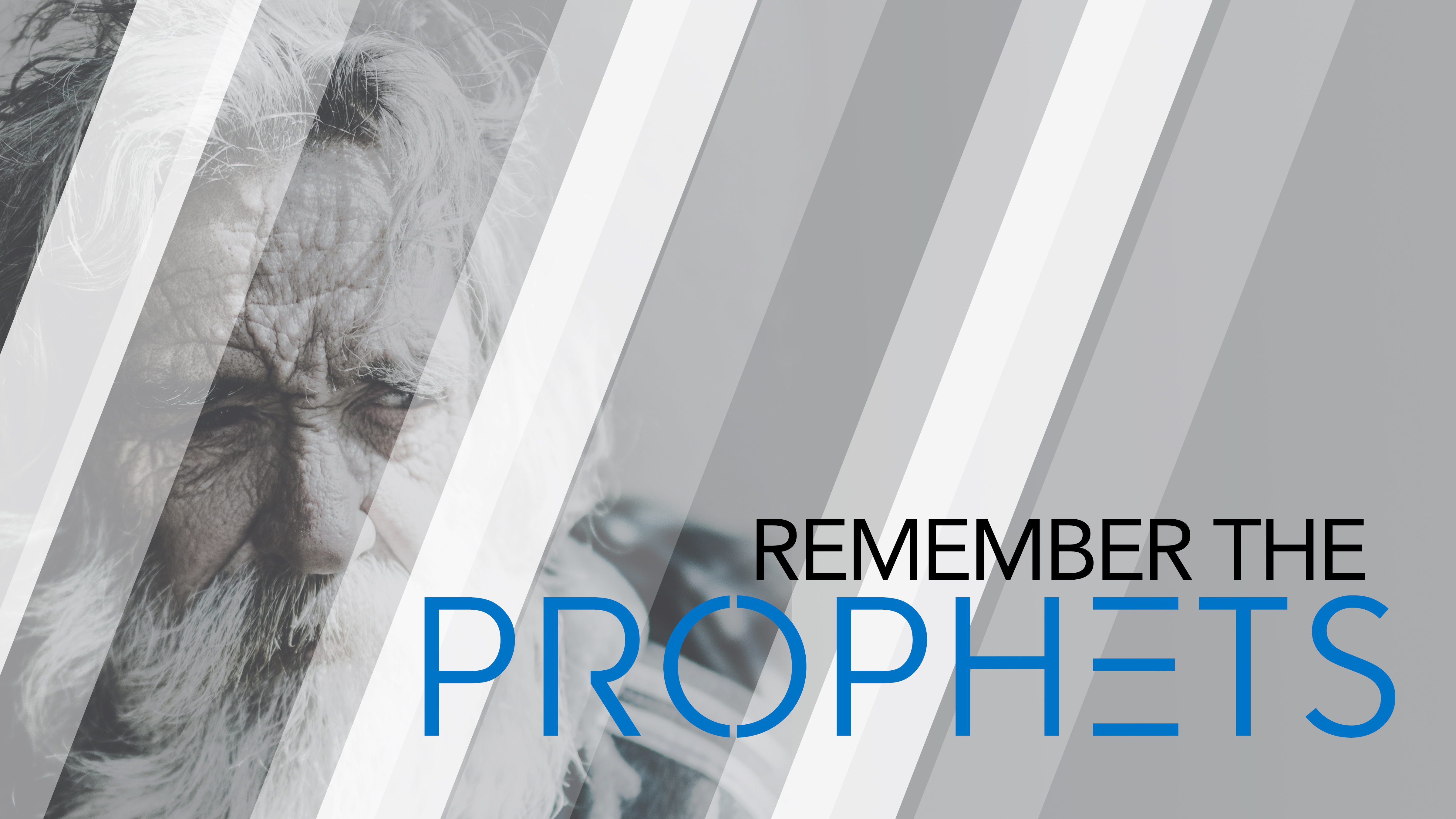
This past Sunday we began a new series at White Fields called “Remember the Prophets“.

The idea for the series comes from James 5:10, where James tells us to “remember the prophets who spoke in the name of the Lord. Take them as examples of patient endurance under suffering.”  In this series, we will be looking at a different Old Testament prophet each week, considering their lives and their messages and what we can learn from them.

remember the prophets main title 16x9

We are moving through them chronologically, and so began with Amos, an interesting person with an important message. Click here to listen to that message: Amos: Faith that Works

This Sunday we will continue the series by looking at Hosea, a gripping story of adultery and faithfulness which gives us insight into God’s heart.

Resources for Studying the Prophets

Generally speaking, the prophetic books are not well known by many people who even regularly read the Bible. Part of the reason for that is because of the negative tone of some of the books, as well as the feeling that without understanding the context of the books, they don’t make sense.

People have asked me at times what books or materials are good to use if they want to get to know the prophetic books better. Here are my top two recommendations:

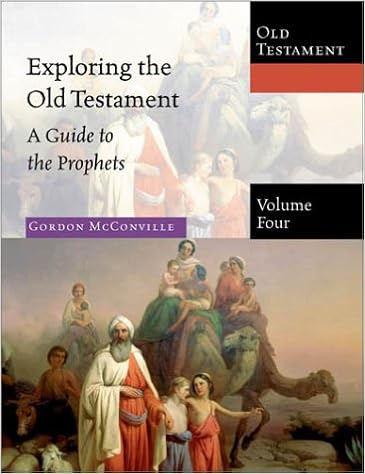
Exploring the Old Testament: A Guide to the Prophets, J. Gordon McConville

Image result for exploring the old testament a guide to the prophetsI had the pleasure of studying under Gordon McConville at the University of Gloucestershire in England, where he is professor of Old Testament theology. This was one of my text books, but is part of a great series from Inter-Varsity Press and is very accessible to the average reader and also scholarly at the same time.
On the scholarly side, this book tends to get a little bit into the weeds about theological discussions and debates, but the introductions and outlines of the books, their themes and their structures are very good. In other words, you can use it to go as deep as you’re ready to go.

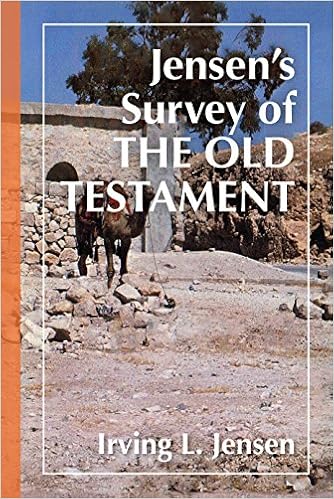
Jensen’s Survey of the Old Testament, Irving L. Jensen

When I first became a pastor, one of my mentors told me, “You’re going to need some books.” He then walked me into the book store at the church we were at and pulled Jensen’s surveys of the Old Testament and New Testament off the shelf and handed them to me.

The benefit to these books published by Moody Press is that rather than being a commentary that tells you information, they instead instruct you about how to ask the right questions. Thus, you are the one doing the exegetical work, or the inductive Bible study, rather than just passively receiving information. They do, however, give you important background information in order to get the context you need, but they also tell you where to go to get that context if it is found in other places in the Bible.

I hope these resources are helpful for you, as they have been for me!

How Can You “Count it All Joy” When Hardships Come Your Way?

In the month of December, we did a month-long series at White Fields on the topic of joy, and how Christianity gives a unique perspective on joy because it finds the source of joy in a unique place.

This past week, Mike and I sat down to discuss Christian joy and what it means when the Bible tells us to “count it all joy when you fall into various trials”, and what this means especially at the outset of the new year.

Here is a link to the Joy to the World series, where you can listen to those messages, and here is the video of our discussion:

(if you watch closely, I get a phone call in the 6th minute of the video!)

Making Resolutions is Not a Lack of Faith, It Can Be an Act of Faith

You know the drill: the parking lot at the gym is full on New Year’s Day, but by March it’s empty again. “Why bother making New Year’s resolutions,” some ask, “if I’m just going to break them anyway?”

Others, I have noticed, state that they do not make New Year’s resolutions because they choose instead to “trust in God” rather than “rely on themselves,” assuming that to make plans and set goals is antithetical to faith, trust and reliance on God.

But is it?

I might argue that not setting goals and making plans is what reflects a lack of faith.

Real Faith Manifests Itself in Actions

The theme for our ministry year at White Fields for 2019 is: “Faith in Motion”, and during this year, we will be studying the Epistle of James, as well as looking at the lives of some of the Old Testament Prophets, because James tells us to “remember the prophets who spoke in the name of the Lord. Take them as examples of patient endurance under suffering.” (James 5:10)

49124887_529821080863590_6906526974991138816_n

We will begin that series this Sunday by looking at Amos: a man who – in a time of “professional prophets” was a mere shepherd and fig-picker, but was given a calling and message from God, and he responded faithfully. In other words: his faith in God was reflected in his actions of obedience.

James famously tells us: “I will show you my faith by my works.” (James 2:18). The point is clear: real faith manifests itself in actions. If you really believe something is true, you will live – and plan – accordingly.

However, James also warns us against presumption in this. He says: ‘Come now, you who say, “Today or tomorrow we will go into such and such a town and spend a year there and trade and make a profit”— yet you do not know what tomorrow will bring. What is your life? For you are a mist that appears for a little time and then vanishes. Instead you ought to say, “If the Lord wills, we will live and do this or that.” (James 4:13-15)

The solution, James tells us, is NOT to not make any plans, but rather to still make plans, but submit those plans to God, and be flexible if God decides to take you in a different direction.

In other words: making resolutions (whether at the New Year or any other time of the year) can actually be an outworking of genuine faith. If you set goals which are in line with biblical and godly values, and make plans for how you are going to do those things, that is an act of stewardship.

A Matter of Stewardship

God has a LOT to say about stewardship in the Bible – starting with: Moreover, it is required of stewards that they be found faithful. (1 Corinthians 4:2). The point of stewardship is that you have been entrusted with certain things, and given a responsibility to use them according to the master’s wishes and purposes.

Jesus told his disciples: “I am the vine, you are the branches. Apart from me, you can do nothing.” (John 15:5) But to conclude that this means that we should then never attempt to do anything would be foolish and not at all what Jesus intended. It is not apart from Him that we attempt to accomplish anything, but with Him and by His power.

Paul the Apostle wrote this: “But by the grace of God I am what I am, and his grace toward me was not in vain. On the contrary, I worked harder than any of them (the other apostles), though it was not I, but the grace of God that is with me.” (1 Corinthians 15:10)

It is wrong to think that planning, effort and thoughtfulness are somehow opposed to spirituality. Rather these are faith in motion: the outworking of values which come as a result of seeking God and seeking to follow God – similar to Daniel, who “resolved in his heart not do defile himself” while in Babylon. (Daniel 1:8) That was a resolution based on a conviction, and an act of faith, not of self-reliance.

Challenging Goals Actually Make You More Dependent on God

One of the greatest benefits of setting attainable, yet challenging goals is that it also fuels my prayer life. If I set goals that I cannot achieve on my own, apart from the work of God, then I am in a position of being even more dependent on Him.

My Resolutions Annual Goals

I don’t set “New Years resolutions” per se, but what I do every year is set attainable, yet challenging goals for the year which serve as guides for me later on, when I’m not feeling motivated or when I lose steam or need to be reminded of what I should be working on or towards.

I’ve found that having goals keeps me focused and motivated over longer periods of time. I can look back at them and be reminded of the things which I believed at one time were important guides to keep me on track.

Some of my goals are family-related. Some are related to my work as a pastor. Many others are personal. I set goals for how many books I will read, and in which languages. I set goals for how many kilometers or miles I will run, and I set goals to accomplish certain projects.

I have been doing this for the last several years, to good effect. I haven’t always met all of my goals, but at least having the goals kept me moving in the right direction on the days when I am tired or begin to miss the forest for the trees – and lose sight of the big picture.

My Advice on Setting Goals: Make them Specific and Measurable

I encourage you to consider setting some goals here at the outset of the year. If you are a Christian, let biblical and godly values drive your goal setting. But don’t only set goals, also map out plans for actually attaining them. If you plan to run 500 miles, calculate how many miles you will need to run each week. If you plan to read through the Bible this year from cover to cover, figure out how much you need to read each day in order to do that.

Don’t make goals that are not specific; rather than saying “I want to get in shape” or “I want to be kinder”, set concrete, specific and measurable goals, so that you will be able to measure whether you succeeded in reaching those goals or not.

I wish you all the best in this new year! May it be a year in which you walk with God like never before!

Falling Through the Cracks, or Straying Sheep?

white and black animal standing on green grass

“It’s an all-too-common phenomenon in churches. A church member stops showing up on Sunday mornings. A few weeks pass, and then a few months, before someone notices.”

This past November, on our annual elders retreat, the elders of White Fields Community Church read Jeremie Rinne’s book Church Elders, which is part of the 9 Marks series. Jeremy brings up an interesting point:

‘People in my congregation refer to this phenomenon as “falling through the cracks.” They say things like: “Have you seen Sally around church lately? I hope she didn’t fall through the cracks.”

What if, instead of “falling through the cracks,” we use a different image: “straying from the flock.” That picture seems more fitting for at least two reasons. First, “straying” implies that a disconnected church member bears a personal responsibility to stay involved with the congregation. Sheep don’t ordinarily leave a flock by inadvertently plummeting into a void. They wander away over time through a series of choices.

Second, the image of straying sheep also suggests that someone should keep watch over the flock and take action when a sheep begins to meander away. Yes, each member has a personal responsibility not to roam, but all church members have a duty to watch out for one another. However, one group in particular has an obligation to be on the lookout for straying sheep: the elders.

Elders watch to make sure that no “wolves” infiltrate their congregations with false teaching. But elders also keep watch for unwanted movement in the other direction: members straying away from the flock and from the Lord. This is part of basic shepherding work. Shepherds feed the sheep, guard them from predators, and keep track of them.’

He goes on to point out something interesting from Ezekiel:

‘Ezekiel prophesied against Israel’s leaders by accusing them of negligent shepherding: “Woe to the shepherds of Israel, who have been feeding themselves! Shouldn’t the shepherds feed their flock?” (Ezek. 34:2). And what was one of the ways they failed to shepherd? “You have not . . . brought back the strays, or sought the lost” (v. 4). As a result, “My flock went astray on all the mountains and every high hill. They were scattered over the whole face of the earth, and there was no one searching or seeking for them” (v. 6).’

Jesus, in contrast, is the “good shepherd” who leaves the 99 to pursue the one wayward sheep, something which is indeed “reckless” from a business perspective (and this is exactly what the lyrics of Cory Ashbury’s song “Reckless Love” come from).

The difficult balance from a church leader’s perspective is how to be a good shepherd under Jesus, and being overbearing. May God give us wisdom and grace as we seek to do His work!

“They worshiped Him, but some doubted.”

adult art backlit boy

One of the most intriguing phrases to me in the Gospel of Matthew is found in Matthew 28:16. It says that after Jesus’ resurrection, the 11 disciples (Judas was gone now) went to Galilee, to the mountain where Jesus had directed them. And when they say him they worshiped, but some doubted.

“When they saw him they worshiped him, but some doubted.” (Matthew 28:16)

It would seem that it is possible to worship and have doubts – at the same time!

Doubt is Part of Having Faith

In fact, there is a sense in which doubt is an inherent part of faith.

Jude tells us to “have mercy on those who doubt” (Jude 1:22)

For more on doubt and faith, check out: The Role of Doubt in Faith

It has been said that “A faith without some doubts is like a human body without any antibodies in it.” 1

It is important that we ask the hard questions and wrestle through our doubts in order to make sure that what we believe is really true! Anselm of Canterbury famously defined the study of theology as, “Faith seeking understanding”.

So it would seem that is it possible to worship and have doubts – at the same time.

Why Did Matthew Include This Detail?

What is interesting is to consider why Matthew included this phrase in his gospel account. I believe it is because Matthew, with a heart of empathy and pastoral sensitivity, recorded this detail about doubt so that readers would be encouraged in their own struggles between worship and doubt.

This detail shows us that the disciples were not spiritual giants; Jesus gave the “great commission” to go out into all the world and carry on his work by making disciples of him – to an ordinary group of people like you and me.

What Should We Do With Our Doubts?

I was really encouraged this year by a podcast episode I heard this year about the importance of directly addressing the doubts that people have in regard to Christianity: not only for the sake of those who aren’t Christians, but also for the sake of those who are sitting in our churches, who are worshiping, yet they are struggling with doubts. By addressing some of the opposition to Christianity, you are speaking both to critics of Christianity, but also to those who want to believe, but are struggling to do some in some areas.

We did a series earlier this year, which has borne a lot of fruit – even residually. It was called: The Trouble Is… (link to sermon audio – and – link to YouTube follow-up videos). In this series we addressed some of the reasons why people commonly reject or doubt Christianity, including: Science, Hypocrisy, Hell, Suffering, and others.

We put that series onto pen-drives and have handed them out at community events here in Longmont, as well as made them available for free for people who come on Sunday mornings for church, and we have not been able to keep up with demand. We have handed out several hundred of these so far, as people take them to give to friends and co-workers. In fact, I had someone tell me the other day that they have been using the series to lead a group discussion at their workplace; every week they listen to one message and then watch the YouTube follow-up video, and then discuss it. Attending this group are people from all kinds of backgrounds, including agnostics, Buddhists, and lapsed Christians. Very cool to see God using it in this way!

What should we do with our doubts? We should press into them, and seek out answers, because if what the Bible says is true, then it will hold up under scrutiny, and our seeking will lead to finding, which will lead to the dispelling of doubts and the strengthening of faith. This is exactly what happened with the disciples themselves, who – though they doubted here in Matthew 28 – they were able to dispel their doubts and became so convinced of the reality of it, that all of them suffered for it, and all but one (John) gave their lives for it!

I Could Never Believe in a God Who…

As we look forward to the new year and plan our teaching schedule, we will be doing another series along these lines. Likely, this will become an annual thing for us.

This one will be called “I Could Never Believe in a God Who…” We will spend 6-7 weeks directly addressing the questions that people struggle with, such as: sexual orientation, genocide in the Old Testament, the historicity of the Bible, why “bad things happen to good people”, etc.

As I did previously, I will be posting a poll online to gather information and would love your feedback, so please keep an eye out for that.

In the mean time, don’t let your doubts stop you from worshiping! But don’t let your doubts derail you either. Press in, seek God, and seek the answers to the questions you have. You will be strengthened in the process, and you will also be equipped to help others.


If Jesus is God, Why is He Called the “Son of God” and “the Firstborn Over All Creation”?

man person people hand

In my recent post, Was it Necessary for Our Salvation that Jesus be God?I mentioned that one of the issues that some people struggle with is regard to the deity of Christ is that the New Testament calls him the “Son of God” and Colossians 1:15 says that he is “the firstborn over all creation.”

If Jesus is God, why is he called the “Son of God”? And if Jesus was not created, as Christians claim, then why is he called “the firstborn over all creation?”

Let’s look at these two questions one at a time:

Why is Jesus Called the Son of God?

The long and short of it is that “Son of God” is a Messianic title, which means that Jesus is the long-awaited, promised king of Israel whom God had promised to send to save the people and set them free in an eternal and ultimate way.

The most important text for understanding this is Psalm 2, which is a “coronation psalm,” meaning it would be read at the coronation of a king. 

It includes this line: I will tell of the decree: The Lord said to me, “You are my Son; today I have begotten you. (Psalm 2:7) This line is quoted and applied to Jesus in Acts 13:33 and Hebrews 1:5 & 5:5.

Most important is to understand the context of this phrase “Son of God” in reference to the king. In the Ancient Near East (ANE) kings were considered to have a special relationship with God. In many cases, like in Ancient Mesopotamia and Egypt, the king was considered to be deity themselves. Such an idea would be an abomination to the Jews and in complete contradiction to everything their Scriptures said about God. However, they too believed, as we see in Psalm 2 and other “royal psalms” that the king had a special relationship with God.

Thus, the term “son of God” spoke of the king’s special relationship with God, but throughout the Old Testament there is the hope of a true and better king, the one who will establish the throne of David forever and rule over an everlasting kingdom which will have no end (see: the Davidic Covenant in 2 Samuel 7). Then though there were many kings of Israel, none of them were the ideal, TRUE KING that God had promised and Israel waited for.

To call Jesus THE Son of God is a reference to him being THE king whom God promised to send to set the people free and save them ultimately and eternally, i.e.: the Messiah.

For more on the meaning of the term “Son of God” check out: What Does it Mean that Jesus is the Son of God?, or the related topic: If Jesus is the Son of God, Why Did He Call Himself “the Son of Man”? 

Why is Jesus called “the firstborn over all creation”?

Does Colossians 1:15 imply that Jesus was the first creature whom the uncreated God created? If Jesus is the uncreated God, then why is a term like “firstborn” used of him – I mean, it actually contains the word “born” in it, which implies coming-into-being, does it not?

The word firstborn (prototokos) is also applied to Jesus in Colossians 1:18, Romans 8:29Hebrews 1:6, and Revelation 1:5. In each and every case, when this word is used of Jesus, it refers to supremacy in rank.

All ancient culture had a practice called “primogeniture” – which meant that the firstborn son got all the wealth of the father and he got all the father’s status and power. From a legal standpoint, a firstborn son was equal with the father.

So when this title is used of Jesus, it in no way means that Jesus is less than God, or that he was created by God, rather it refers to supremacy of rank. To say that Jesus is the firstborn of all creation means that he holds the position of primacy over all of creation, i.e.: no one and nothing holds a candle to him; he has all the status and power of the Father and is equal to the Father, although still distinct from the Father. 

Interestingly, John Lightfoot cites Jewish rabbis who sometimes referred to God as “the firstborn of the world,” meaning that God was supreme over all of the world — that there is none higher than him.

How do we know this interpretation of Colossians 1:15 is the correct one? By looking at the verses which immediately follow, which declare Jesus to be the uncreated creator. 

Colossians 1:16-17 say: For by him (Jesus) all things were created, in heaven and on earth, visible and invisible, whether thrones or dominions or rulers or authorities—all things were created through him and for him. And he is before all things, and in him all things hold together.

The Bible begins by telling us that God created all things, and here it tells us that Jesus created all things. The clear message is that Jesus is God in the same way that the Father is God. He is beginning-less creator, equal to the Father in substance, status and power, and yet distinct from the Father.

Thus, rather than undercutting trinitarian theology, Colossians 1:15-17 undergirds the foundation of trinitarian belief.

Was It Necessary for Our Salvation that Jesus be God?

blur book stack books bookshelves

Advent is the time of year when we think and talk a lot about the incarnation, that event in which God took on human flesh and became one of us in order to save us.

Recently on the Calvary Live call-in show on GraceFM someone called in asking if it is necessary to believe that Jesus was fully God in order to be a Christian. He explained that he believes that Jesus was fully human, but not fully God.

Arianism: A Brief Background

Without knowing the name for it, he described his beliefs, which were basically Arianism: a belief popularized in the early 300’s by a man named Arius, who taught that – contrary to the generally-held Christian belief, Jesus was not fully God in the same way that the Father is God, but that he was a special created being, whom God created in order to bring about salvation for human beings. Arius was afraid that by saying that Jesus was God, Christians were slipping into polytheism, and that in Colossians where it says that Jesus is “the firstborn of all creation” (Colossians 1:15), it means that Jesus was the first creature whom the uncreated Father created.

Arius’ beliefs were condemned as unbiblical and incorrect at the Council of Nicaea, the first ecumenical council of the church, which gave birth to the Nicene Creed, asserting that Jesus was of one substance (ousia) with the Father and that Jesus is “very God of very God”, leaving no ambiguity whatsoever that Christians unanimously believe that Jesus is in fact God.

(For more on Arius, Nicaea and St. Nicholas of Myra, check out: Taking Back the Story of Saint Nicholas)

But still… why is it important that we believe Jesus is God?

Is it just because that’s who Jesus is and who God has revealed him to be (ontological/revelatory reason)?  – OR – was it actually necessary for our salvation that Jesus be God (soteriological reason)?

Nicaea dealt with the ontological and revelatory side of this question, but my caller on the radio show asked the latter question: is there a soteriological reason why Jesus had to be God in order to save us?

My immediate answer was to point him to Romans 8:1-4, which says that Jesus fulfilled all of God’s righteous requirements on our behalf. In other words: Jesus lived the perfect life that I should have lived, and the good news of the gospel is that he then offers his perfect record to me. Jesus, having been the only human not born of the seed of a man – other than Adam – becomes the “new Adam”, who then fully obeys God whereas Adam disobeyed and sinned (see Romans 5:12-21 or listen to Who is Your Champion?)

He then asked, “Couldn’t God have created a perfect being, without a sin nature, in order to do that work of fulfilling God’s righteous requirements on our behalf in order to save us?”

Here’s Why Jesus Had to Be “Very God of Very God” in Order to Save Us:

The Scots Confession of 1560 addressed this issue directly. The answer it gave is that the full reality of Christ’s deity is essential for salvation because salvation must be an act of God, or else it is not salvation. The deity of Christ tells us that the action of Jesus in the incarnation and on the cross is identical with God’s own action.

The deity of Christ tells us that the action of Jesus in the incarnation and on the cross is identical with God’s own action.

Karl Barth explained that the full deity of Christ is essential because it is only God who can forgive sins. He refers to Mark 2:7, ‘who can forgive sins but God alone?’ It is equally necessary for atonement, Barth pointed out, that the one who makes amends for sin is human. 

Salvation, in other words, is an act of God, but an act that must be done from within humanity – thus Jesus had to be fully God and fully man in order to save us.

The whole of our salvation depends on the fact that it is God in Christ who suffers and bears the sin of the world, and reconciles the world to himself.

T.F. Torrance discusses the terrible implications of denying the full deity of Christ:

If the deity of Christ is denied, then the cross becomes a terrible monstrosity. If Jesus Christ is man only and not also God then we lose faith in God, because how could we believe in a God who allows the best man that ever lived to be put to death on the cross? If you put Jesus Christ as a mere man on the cross and put God in Heaven like some distant god imprisoned in his own lonely abstract deity, such a god is monstrously unconcerned with our life as he does not lift a finger to help Jesus.

The validity of our salvation depends on the fact that he who died on the cross under divine judgement is also God the judge, so that he who forgives is also he who judges.

Thanks be to God for what He has done for us by becoming one of us!

What All Great Speeches Have in Common

maxresdefault

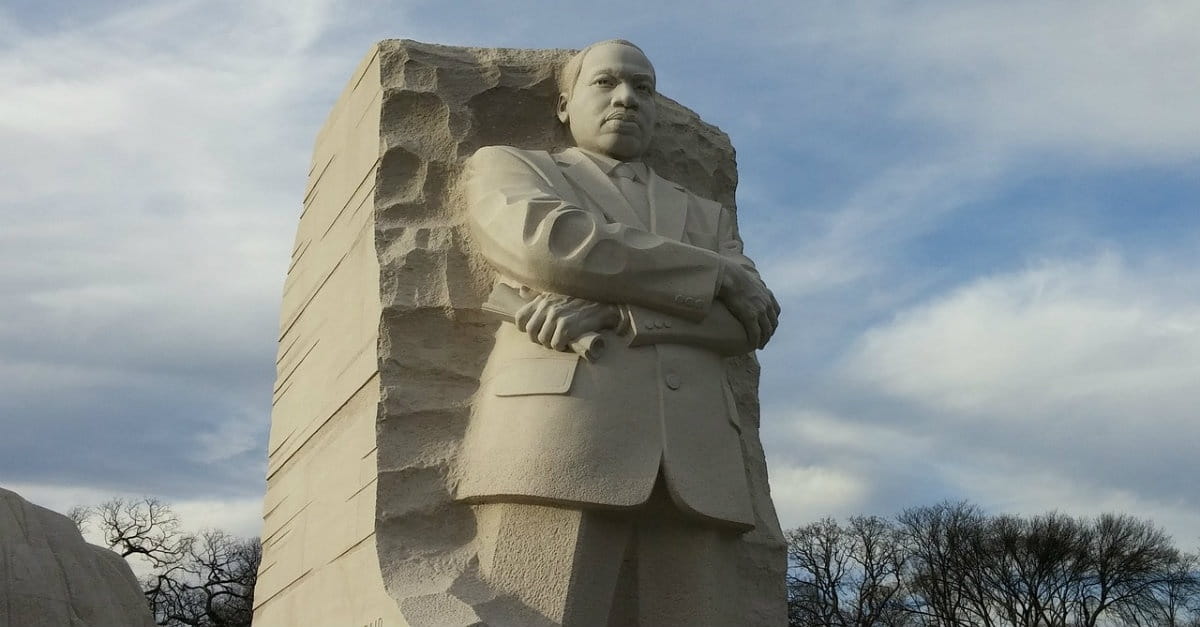
What do Jesus, Martin Luther King Jr., Steve Jobs and Adolf Hitler all have in common?

For better or for worse (in the case of Hitler), they were all incredible speakers, who were able to move people to action with their words.

I recently listened to a great podcast featuring Nancy Duarte, CEO of Duarte Inc., and co-author of the book Illuminate: Ignite Change Through Speeches, Stories, Ceremonies and Symbols

Having analyzed speeches, particularly those which are exponentially effective in connecting with people and inspiring them to action, Nancy claims that the best speeches, sermons and talks all follow a similar cadence. She describes the pattern as “pumpkin teeth” — having a sequence of lows and highs.

Contrasting the Status Quo with a Vision of a Different Future

Stories that connect, she says, follow this pattern: they build tension and then have cathartic release. Great speeches emphasize contrast between what is and what could be; the speaker goes back and forth between contrasting today’s current reality (status quo) with tomorrow’s possible future. They start with the way things are, and then give them a vision of a different, brighter future.

Nancy, who is a Christian and moved to Silicon Valley with her husband originally to plant a church, points out that Jesus was a master at this kind of communication. In the Sermon on the Mount, for example, Jesus is constantly contrasting the way things are now on Earth, with the way things are and will be different in the Kingdom of Heaven.

Jesus said things like, “You have heard it said… but I say to you…”, and things like “You know that the rulers of the Gentiles lord it over them, and their great ones exercise authority over them. It shall not be so among you. But whoever would be great among you must be your servant,” (Matthew 20:25-26). Note the contrast between what is, and a vision for what could be.

Steve Jobs did this with his keynote speeches at Apple for years. When he introduced the iPhone, he used a hockey analogy to tell people that unlike other tech companies, Apple would always skate to where the puck will be, not where it is – essentially giving them a vision of a brighter future in contrast to the mundane present.

Ending: the “New Bliss” and a Cautionary Tale

Great stories and speeches, Duarte explains, tend to end with two key elements:

  1. A description of the “new bliss”, a picture of the great future that will come about if you adopt the new idea the presenter is putting forth
  2. A cautionary tale, explaining that the danger of not adopting this idea, and what will happen if you ignore it.

A perfect example of this is found at the end of Jesus’ Sermon on the Mount, where Jesus says: Everyone then who hears these words of mine and does them will be like a wise man who built his house on the rock… And everyone who hears these words of mine and does not do them will be like a foolish man who built his house on the sand… (read the whole passage here: Matthew 7:24-27)

Case Study: “I Have a Dream”

Martin Luther King Jr. did this in a masterful way with his “I Have a Dream” speech. He ended with a vision of the world that could be. Take note of the cadence of his speech:

[Positive: the Ideal] Five score years ago, a great American, in whose symbolic shadow we stand today, signed the Emancipation Proclamation. This momentous decree came as a great beacon light of hope to millions of Negro slaves who had been seared in the flames of withering injustice. It came as a joyous daybreak to end the long night of their captivity.

[Negative: the Status Quo] But one hundred years later, the Negro still is not free. One hundred years later, the life of the Negro is still sadly crippled by the manacles of segregation and the chains of discrimination. One hundred years later, the Negro lives on a lonely island of poverty in the midst of a vast ocean of material prosperity. One hundred years later, the Negro is still languishing in the corners of American society and finds himself an exile in his own land. So we have come here today to dramatize a shameful condition.

[Cautionary Tale] It would be fatal for the nation to overlook the urgency of the moment.

[Enduring Bliss] I have a dream that one day this nation will rise up and live out the true meaning of its creed: “We hold these truths to be self-evident: that all men are created equal.”
I have a dream that one day on the red hills of Georgia the sons of former slaves and the sons of former slave owners will be able to sit down together at the table of brotherhood.
I have a dream that one day even the state of Mississippi, a state sweltering with the heat of injustice, sweltering with the heat of oppression, will be transformed into an oasis of freedom and justice.
I have a dream that my four little children will one day live in a nation where they will not be judged by the color of their skin but by the content of their character.
I have a dream that one day, down in Alabama, with its vicious racists… little black boys and black girls will be able to join hands with little white boys and white girls as sisters and brothers.

How this Applies to Homiletics and Preaching

If you want to move people to action, you have to make a clear differentiation between what is now, and the future you’re inviting them into. In order to be persuasive, you must have contrast in some form.

For those who preach or teach the Bible, this is important to keep in mind and take note of, because every time we open the Word of God, we do so with a telos (aim or objective) not only to instruct, but to move people to action and response; to move them away from some things, and towards another thing – faith, repentance, decision, etc.

Paul wrote to the Corinthians: Therefore, knowing the fear of the Lord, we seek to persuade others… God making his appeal through us: We implore you on behalf of Christ, be reconciled to God! (2 Corinthians 5:11,20)

It’s important to keep these things in mind, and see that Jesus himself was the master of this kind of effective communication.

The goal is to present the problem and the solution in a way that truly reveals to the recipient both the urgency of the peril and the beauty of what makes the “good news” of the gospel so glorious, that they might respond in faith and action.

Video

Here is a TED talk that Nancy gave on this topic:

Christian Truth is in the Service of Christian Love

In the introduction to his book First Theology: God, Scripture and Hermeneutics, Kevin Vanhoozer writes this, which is worthy of a devotional thought for today:

Christian truth is in the service of Christian love. If I speak in the tongues of Reformers and of professional theologians, and I have not personal faith in Christ, my theology is nothing but the noisy beating of a snare drum. And if I have analytic powers and the gift of creating coherent conceptual systems of theology, so as to remove liberal objections, and have not personal hope in God, I am nothing. And if I give myself to resolving the debate between supra and infralapsarianism, and to defending inerrancy, and to learning the Westminster Catechism, yea, even the larger one, so as to recite it by heart backwards and forwards, and have not love, I have gained nothing.

This one thing I know: there is no more vital task facing Christians today than responding faithfully to Scripture as God’s authoritative speech acts — not because the book is holy but because the Lord is, and because the Bible is his Word, the chief means we have of coming to know Jesus Christ.

Those who interpret the Bible rightly — those who look and live along the text, following the written words to the living Word — will have rightly ordered loves and rightly ordered lives. The apostle Paul leaves us in no doubt as to either his first theology or his first love: “I count everything as loss because of the surpassing worth of knowing Christ Jesus my Lord” (Philippians 3:8).

Kevin Vanhoozer, First Theology: God, Scripture, & Hermeneutics (IVP Academic, 2002), 40-41

What is Dual-Covenant Theology and What Does it Mean that “All Israel will be saved”?

Romans 11:26 makes an interesting statement, which has led to much confusion and debate:

“And in this way all Israel will be saved.” (Romans 11:26a)

Context

As we’ve been studying through Romans at White Fields on Sunday mornings, we have come to chapters 9-11, which deal with questions concerning Israel, such as: Has God forsaken Israel? Since the Old Testament contains many promises to the nation of Israel, are those promises no longer valid? How do we make sense of the fact that many Jews have  rejected Jesus as Messiah – and that most Christians are not ethnically Jewish?

In answering these questions, Paul is quick to assert that, No, God’s word has not failed in regard to Israel (Romans 9:6), nor has God forsaken Israel (Romans 11:1).

Paul explains Jewish unbelief in two important ways:

  1. The remnant argument: “Not all who are descended from Israel are Israel,” (Romans 9:4), & “And Isaiah cries out concerning Israel: ‘Though the number of the sons of Israel be as the sand of the sea, only a remnant of them will be saved'” (Romans 9:27).
    Additionally, it is understood that many who are not ethnically Jewish will be added to the “chosen people of God” – As indeed he says in Hosea, “Those who were not my people I will call ‘my people,’ and her who was not beloved I will call ‘beloved.’” “And in the very place where it was said to them, ‘You are not my people,’ there they will be called sons of the living God.’” (Romans 9:25-26)
  2. The responsibility argument: “But of Israel he says, “All day long I have held out my hands to a disobedient and contrary people.” (Romans 10:21)

Dual-Covenant Theology?

In an attempt to explain this idea that “all Israel will be saved”, some have adopted a dual-covenant theology, which basically says that the Jews are going to be saved under the old covenant (law), but Gentiles are saved under the new covenant (Jesus, grace).

The problem with dual-covenant theology is that it goes against everything Paul has been teaching in Romans, and what the rest of the Bible teaches: that Jesus is the only way of salvation for all people, both for Jews and Gentiles (i.e. everyone in the world).

John Stott writes this:

There is no hint of a special way of salvation for the Jews which dispenses with faith in Christ. It is understandable that since the holocaust Jews have demanded an end to Christian missionary activity among them, and that many Christians have felt embarrassed about continuing it. It is even mooted that Jewish evangelism is an unacceptable form of anti-Semitism. So some Christians have attempted to develop a theological basis for leaving Jews alone in their Judaism. Reminding us that God’s covenant with Abraham was an ‘everlasting covenant’, they maintain that it is still in force, and that therefore God saves Jewish people through their own covenant, without any necessity for them to believe in Jesus. This proposal is usually called a ‘two-covenant theology’.

Bishop Krister Stendahl was one of the first scholars to argue for it,47 namely that there are two different salvation ‘tracks’—the Christian track for the believing remnant and believing Gentiles, and the track for historical Israel which relies on God’s covenant with them. Professor Dunn is surely right to reject this as ‘a false and quite unnecessary antithesis’.

Romans 11 stands in clear opposition to this trend because of its insistence on the fact that there is only one olive tree, to which Jewish and Gentile believers both belong. Jewish people ‘will be grafted in’ again ‘if they do not persist in unbelief’. So faith in Jesus is essential for them. Whether or not Dr Tom Wright is correct in the notion of ‘a large-scale, last-minute salvation of ethnic Jews’, his emphasis on present evangelism (‘now’, three times in verses 30 and 31) is healthy: ‘Paul is envisaging a steady flow of Jews into the church, by grace through faith.’

The two-covenant theology also has the disastrous effect of perpetuating the distinction between Jews and Gentiles which Jesus Christ has abolished. ‘The irony of this’, writes Tom Wright, ‘is that the late twentieth century, in order to avoid anti-Semitism, has advocated a position (the non-evangelization of the Jews) which Paul regards precisely as anti-Semitic.’ ‘It would be quite intolerable to imagine a church at any period which was simply a Gentile phenomenon’ or ‘consisted only of Jews’.

Stott, John. The Message of Romans: God’s Good News for the World (The Bible Speaks Today Series) (pp. 304-305). InterVarsity Press.

If not dual-covenant theology, then how will “all Israel” be saved?

Since Paul has made it clear that “not all who are descended from Israel are Israel,” i.e. not every ethnically Jewish person is part of Israel, i.e. the remnant of God’s chosen people who will be saved – and that additionally, many non-ethnically Jewish people will be grafted into the “olive tree” (Israel) as “wild branches”, from which many “natural branches” have been cut off (Romans 11:17-24), it is in this way that we understand that “all Israel” (the remnant of believing Israel) will be saved, along with the “fullness of the Gentiles” (Romans 11:25) who will be “grafted in”.

Here’s a short video discussion we had about this topic this week: