Want to Join a Korean Doomsday Cult?

This past Sunday I received a message from someone who attends White Fields. She said that she was in Alta Park in Longmont when a couple approached her who were from the Worldwide Mission Society Church of God, seeking to evangelize her.

When she told them that she is a Christian, they questioned her salvation and told her that Jesus had claimed that he would come again as a man, give his church a new name, and that in order to be saved, one needs to be part of this church, and adhere to several “new covenant requirements” including keeping all of the feasts mentioned in the Book of Leviticus.

They mentioned that they belonged to a branch of this church which had recently started in Boulder, and that they were planning to start a Longmont branch soon as well.

I had never heard of this group before, so I looked them up. Turns out they have some pretty crazy doctrines, which, unsurprisingly, they kept quiet about in this interaction in the park.

Who are they and what do they believe?

The Worldwide Mission Society Church of God (WMSCOG) was founded by Ahn Sahng-Hong in South Korea in 1964. He was a long-time Seventh-day Adventist, until he split off to establish his own religion.

They believe in God the Father and God the Mother, and they believe that their founder, Ahn Sahng-Hong (deceased) was the reincarnation of Jesus Christ (this is what the people in Alta Park were talking about when they said Jesus came back as a man and gave his church a new name), and that his wife (still alive) is the incarnation of God the Mother.

Ahn Sahng-Hong’s wife, Jang Gil-ja, is not only considered to be divine as God the Mother, but she is also known as “The Bride of Christ” – because she was married to Ahn Sahng-Hong, whom they believe to be the reincarnation of Christ.

Along with referring to him as “Christ Ahn Sahng-Hong,” they also believe that he is the Holy Spirit and they baptize and pray in the name of the Father, Son and Ahn Sahng-Hong.

I just threw up a little bit in my mouth as I wrote that…

They teach that all people were originally created as angels in Heaven, but then sinned against God and were sent to Earth as a second chance to return to God. The only way for humans to be saved and return to heaven is by keeping the Levitical feasts and following the teachings of Ahn Sahng-Hong, which includes believing in God the Mother, AKA Jang Gil-ja, Ahn Sahng-Hong’s wife, who gives everlasting life.

When you lay it out like this, it’s pretty clear how crazy this is. Not only is it a cult of personality, it is a radical deviation from Biblical doctrine. It’s not surprising that they keep most of this stuff to themselves when they go out preaching in parks.

And yet, the WMSCOG is growing very rapidly. They boast of 450 churches in Korea and 3000 around the world.

The member of our church who met them concluded her message to me by saying that this whole experience made her realize how unprepared she was to explain and, if necessary, defend what she believes and why.

How should you respond if you are approached by the WMSCOG? Or by any other pseudo-Christian group that has their own heterodox interpretation of the Bible?

There is one thing which is common to every religion in the world, other than Christianity: they teach that salvation is something that you have to earn. The gospel message of Jesus Christ, on the other hand, teaches that salvation is something that Jesus earned for you, and which is given to you by God as a free gift.

Notice that the soteriology (doctrine of salvation) of the WMSCOG is one of salvation by works.

Here’s what the Bible has to say:

“for it is by grace that you have been saved, through faith; and that not of yourselves, it is the gift of God; not as a result of works, so that no one may boast,” (Ephesians 2:8-9).

On the matter of feasts and Sabbaths:

“Therefore no one is to act as your judge in regard to food or drink or in respect to a festival or a new moon or a Sabbath day— things which are a mere shadow of what is to come; but the substance belongs to Christ” (Colossians 2:16-17).

“But now that you have come to know God, or rather to be known by God, how is it that you turn back again to the weak and worthless elemental things, to which you desire to be enslaved all over again? You observe days and months and seasons and years. I fear for you, that perhaps I have labored over you in vain” (Galatians 4:9-11).

The gospel is not a call to celebrate feast days and Sabbaths in order to obtain salvation, it is the good news of who Jesus is and what He has done for you, in order to save you. Anyone who teaches that such things are necessary for salvation is not only wrong, they are creating a different gospel.

Jesus said that when he would return again, he would come to judge the living and the dead. The teachings of the WMSCOG are not only incorrect and dangerous, they are heretical; both in their deification of Ahn Sahng-Hong and Jang Gil-ja and in their teaching of salvation by works, which goes contrary to the clear teaching of the Bible that we are justified by God through faith in Christ and his finished work on the cross.

In the big picture, this is just another re-branding of an old, and widespread lie: that you can (and must) work your way to God. The good news of the gospel is that salvation is not earned by your performance being good enough, but on the sufficient sacrifice of Jesus on the cross. Rest in that, and be on guard against those who teach otherwise.

For more on the Worldwide Mission Society Church of God and sources for this article, check out these sites:

They Sold Themselves Into Slavery

lamb-slainUnitas Fratrum (Unity of the Brethren) is the formal name of the group often referred to as the Moravian Brethren or Moravian Church. They were one of the very first Protestant groups in the world, originating from Jan Hus and the Bohemian Reformation of the 15th century in what is now the Czech Republic.

Fleeing religious persecution, they fled to Saxony in 1722, and some of them were given permission to settle on the land of a nobleman named Count Nikolaus von Zinzendorf, a Lutheran Pietist who had a large estate outside of Berthelsdorf.

The Moravian Protestants who settled there, together with Zinzendorf, established a church and named their settlement Herrnhut (The Lord’s Watch). One characteristic of their new community was continuous prayer, done in shifts by different people. This continuous prayer at Herrnhut went on uninterrupted for 100 years.

What is particularly significant about the Moravian church at Herrnhut is that they were a missionary church. They were the first large-scale Protestant missionary group, and they were the pioneers of the modern missionary movement.

During the eighteenth century alone, the Moravians established mission outposts in the Virgin Islands (1732), Greenland (1733), North America (1734), Lapland and South America (1735), South Africa (1736), and Labrador (1771).

Their all-consuming purpose was to spread the gospel to the ends of the earth, a passion that was evident in their proportion of missionaries to laypeople, by some estimates a ratio of 1:60.

Some of the very first Moravian missionaries went to the Caribbean island of St Thomas. They went there in order to minister to the slaves on the island, even selling themselves as slaves in order to get access.

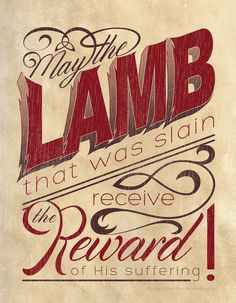
The Moravians had learned that the secret of loving the souls of men was found in loving the Savior of men. On October 8, 1732, a Dutch ship left the Copenhagen harbor bound for the Danish West Indies. On board were the two first Moravian missionaries; John Leonard Dober, a potter, and David Nitschman, a carpenter. Both were skilled speakers and ready to sell themselves into slavery to reach the slaves of the West Indies. As the ship slipped away, they lifted up a cry that would one day become the rallying call for all Moravian missionaries, “May the Lamb that was slain receive the reward of His suffering.” The Moravian’s passion for souls was surpassed only by their passion for the Lamb of God, Jesus Christ. (Source)

I don’t know about you, but it challenges me to see that these people were willing to sell themselves into slavery in order to minister to people they had never met before. That is radical love and radical self-sacrifice. It expresses true belief in the importance and urgency of people coming to know the good news of who Jesus is and what He has done.

This attitude is absolutely counter-cultural, not only in our day, with our extreme focus on self, but also in every generation, since humans are naturally inclined to self-centeredness. This radically different approach to life and others comes from having a Savior and a God who gave up everything to save enemies and rebels, out of love for us.

For while we were still weak, at the right time Christ died for the ungodly. For one will scarcely die for a righteous person—though perhaps for a good person one would dare even to die— but God shows his love for us in that while we were still sinners, Christ died for us.
For if while we were enemies we were reconciled to God by the death of his Son, much more, now that we are reconciled, shall we be saved by his life. (Romans 5:6-8,10)

To read more about the Moravians and their hearts for prayer and missions, you can check out the entire article this excerpt comes from.

I also recommend this book for those interested in the history of Christian missions: From Jerusalem to Irian Jaya: A Biographical History of Christian Missions.

What is Over-Realized Eschatology?

Oftentimes the word “eschatology” is thought of only in terms of the timeline of Jesus’ return. This is one aspect, but certainly not the full meaning of what eschatology is. “Eschatology” means the study of final or ultimate things. It comes from the word “eschaton,” which means “final event” or “culmination.”

The promise of the gospel is that because of what Jesus accomplished in his life, death and resurrection, ultimately, one day, God will wipe away every tear and sickness and death and all of the effects of the curse of sin will be eradicated forever (cf. Revelation 21:1-4 , among others), and that there will be a new heavens and new Earth, a renewed and restored and redeemed creation in which all things are the way that God designed them to be apart from the curse of sin and death. That is the “eschatological (final/ultimate) hope” of the Bible for those who are “in Christ.”

All of Christianity is Eschatological

In this sense, all of Christianity is eschatological, in that it hopes in and looks to a final culmination in which certain things will take place. Conversely, any form of “Christianity” that doesn’t have hold to this eschatological hope is arguably no longer true Christianity.

I recently read Randy Alcorn’s book, Heaven. I picked it up expecting it to be a tedious read full of sentimentality, but I was pleasantly surprised. Instead, it presents a systematic theology of heaven, which reveals that this eschatological hope is much more material and physical than many Christians commonly think. If you haven’t read the book, I recommend you check it out.

How we understand this eschatological hope and our place in relation to it today will inevitably shape our thinking and practice as Christians.

A Biblical Picture: Dawn

A picture the Bible uses to describe the place where we are at in history is: Dawn (2 Peter 1:19). Dawn is that in-between time after the first light of morning has broken the darkness of night – but before the sun has crested the horizon and driven out night’s darkness completely. During the dawn, light and dark are both present at the same time, yet neither are present in full force; the darkness is not as dark as it once was, and neither is the light as bright as it will be. The promise of dawn is that the shift from night to day will come; it has begun and will not regress. It’s full fruition is only a matter of time. Peter refers to Jesus as the “morning star,” i.e. the signifier of the dawn of a new day.

Another picture the Bible uses to help us understand the world and our place in it, in relation to the eschaton, is Jesus’ Parable of the Wheat and the Weeds, in which Jesus describes the world as a field in which God planted good seed, but an enemy came in and planted bad seed. The farmer then makes the surprising decision to allow the wheat and the weeds to grow together until the harvest, at which time they will be separated – the wheat brought into the storehouse and the weeds burned. This is a picture of the world we live in, where good and evil are both present, and God is fully committed to eradicating evil, but the day to do so has not yet come, thus these two “kingdoms” currently exist in the world at the same time, and yet the eschatological promise is that the kingdom of darkness and evil will be eradicated at the eschaton.

(Click here to listen to a sermon I preached on this parable)

Over-Realized Eschatology and the Prosperity Gospel

An “over-realized eschatology” is when someone expects that the eschatological hope of Christianity is already here and now. They might say, Well, if Jesus has come and the Kingdom has come, then there should no longer be evil in the world, everyone should be healed of sickness, there should be no poverty or suffering, and everything should be the way that God designed it to be NOW, and if you believe well enough, or have enough faith, you will experience it.

This leads to what is sometimes called a “prosperity gospel,” which is best understood as an over-realized eschatology which expects something which will ultimately happen for those who are in Christ to happen right now. One of the problems with it is that it places an incredible burden on people by telling them, “If you’re not healthy and wealthy, it must be because you are doing it wrong.” It fails to take into account the nature of the world and our time and place in God’s plan of redemption, not to mention the sovereignty of God.

Converesely, there is such a thing as an under-realized eschatology. This is one which does not recognize that with the coming of Jesus into the world, the Kingdom of God has come to this world, even if not yet in fullness.
Both over- and under- realized eschatology fails to take hold of the “already, but not yet” nature of our unique place in time: after Jesus’ death and resurrection and before the eschaton – which is illustrated by the picture of dawn and the Parable of the Wheat and the Weeds.

A Balanced, Biblical View of Eschatology Leads to Healthy Christian Living

This understanding helps us to make sense of the world we live in today in which sin, death and sickness are realities we still grapple with, without laying unnecessary burdens upon people that their illnesses and difficulties must be the result of their own lack of faith, while holding onto the glorious eschatological hope of the gospel which empowers us to have endurance in the face of whatever hardships come our way.

Here is a good explanation of this principle from John Piper. The whole video is good, but the last part addresses this specifically:

Why Martyn Lloyd-Jones Matters Today

mlj

Recently I have been reading a book about Martyn Lloyd-Jones and the influence of his preaching. What I find most interesting is how relevant his approach to preaching is to our day. Here are a excerpts from the book to help you see what I mean:

Martyn Lloyd-Jones began his ministry in a time when biblical preaching was considered irrelevant. The common thought of the day was that people are not interested in nor have the ability to handle anything but short “homilies” or “sermonettes”. Churches around the UK were in decline and it was thought that things such as clubs, activities and entertainment were needed to attract people to churches. Martyn Lloyd-Jones did not agree with this; he felt that the greatest need in the church was for strong, biblical, doctrinal preaching.

Peter Lewis writes,

“Amidst the spiritual decline in post WWII England, this gifted expositor stood virtually alone in his commitment to biblical preaching.”

Having grown up in church (Calvinist Methodist {I didn’t even know there was such a thing!}), Martyn Lloyd-Jones claimed that he was only truly converted at age 25. He later described this turning point in his life:

“For many years I thought I was a Christian, when in fact I was not. It was only later that I came to see that I had no inner Christian, and became one. What I needed was preaching that would convict me of sin, but I never heard this. The preaching we had was always based on the assumption that we were all Christians.”

This experience had a profound impact on the way he preached later on in his ministry; he was always doing the work of an evangelist, because he knew what it was to be in church but not be in Christ.

Martyn Lloyd-Jones’ definition of good preaching was: theology coming through a man who is on fire.

Preaching, he believed, was God’s method, the primary means by which scripture is to be made known.

In this way, Lloyd-Jones stood with the Reformers and Puritans who insisted that preaching is the chief means by which the grace of God is administered to the church.

Hughes Olifant Old, one of the foremost experts on the history of preaching, states,

“the greatest impact of Lloyd-Jones on the English-speaking pulpit of today is the recovery of expository preaching.”

The attitudes and trends which characterized the times in which Martyn Lloyd-Jones began his ministry seem very similar to those of today. Thus, he stands as an example of a different, and may I say: better way.

Author Steven J. Lawson concludes,

“The hour is upon us for faithful men of God to step into pulpits around the world and preach the Word. The need has never been greater. In a day that clamours for churches to captitulate to the spirit of the age and use entertainment in order to draw crowds, the primacy of biblical preaching must be restored wherever the people of God gather to worship. As it was the need in the time of Lloyd-Jones, so it remains the need today for preachers to herald the Word in the power of the Holy Spirit in order to feed the flock and evangelize.”

See also: Preaching While the Bombs Fell

When You Stand for Nothing…

My wife is a podcast addict. That’s also the name of the app she uses to listen to podcasts. There are certainly worse things a person could be addicted to, and she does listen to some pretty great podcasts as she is going about her day – stuff that makes this Longmont Pastor proud: D.A. Carson, the Gospel Coalition, Timothy Keller…

One podcast she listens to every day is The World and Everything In It by World News.

She played a recent episode for me which was reporting on the rapid decline of the PCUSA (Presbyterian Church in the USA) as opposed to the growth of the PCA (Presbyterian Church in America).

For those of you who aren’t familiar with these denominations, the PCUSA is the older of the two and the PCA split off from them in the 1970’s because of doctrinal differences – specifically that the PCUSA was moving steadily towards a much more liberal theology which no longer believed in divine inspiration of the Bible or in the unique saving work of Jesus.

These theological changes inevitably led to many changes in the PCUSA’s stance on moral issues, in which they succumbed to cultural pressure to affirm certain practices which the Bible asserts are sinful. When you no longer believe that the Bible is the inerrant Word of God, divinely inspired by Him, but just a product of an ancient culture, then none of the biblical injunctions regarding morality or conduct are considered binding – and at that point, you no longer have a rudder to guide your ship and you will be subject to the wind and the waves of your own culture to take you where they will.

I have embedded the audio of that message below. (Those of you who subscribe by email will probably need to click on the post to view it on the web in order to listen to it.)

I think what surprised me the most, amongst all of the moves the PCUSA has made, is that in 2011 they removed the requirement of fidelity in marriage for their clergy. 

Sure, the PCUSA and other historic mainline denominations have made a lot of shocking moves, which in my opinion fall under the category of what Isaiah the Prophet says in Isaiah 5:20:

Woe to those who call evil good
and good evil,
who put darkness for light
and light for darkness,

but this one blows my mind. Essentially that means that a pastor could cheat on their spouse and continue being a pastor. Not even atheists or agnostics would say that is acceptable, but yet this “church” is trying so hard to be like the world, that they would even affirm something as destructive and hurtful as infidelity in marriage – an institution which has concrete roots in the gospel (see Ephesians 5:22-33).

For me, the decline of the PCUSA and other such denominations, along with the growth of theologically conservative Christian movements, bears witness to the fact that when you stand for nothing and you believe in nothing, then you no longer have any reason to exist.

Just like sea fish spend their entire lives in salt water without becoming salty, it is the calling and mission of Christians to be in the world, but not of the world.

We are to be salt and light – having an impact and influence upon the world for Christ, not isolating ourselves from the world.  But if salt loses its saltiness, then it is good for nothing but to be cast out and trampled under foot… (Matthew 5:13)

Here’s that audio clip:

Fearfully and Wonderfully Made? What About Those Born Handicapped?

A few days ago I received a question from someone in our church:

Psalm 139 says: “For you formed my inward parts; you knitted me together in my mother’s womb. I praise you, for I am fearfully and wonderfully made.”

How is this true of those born with birth defects?

This past Sunday we started a class at White Fields called Christianity 101. The goal of the class is to teach people the core doctrines of Christianity over the course of 4 weeks. The first week covers the topic of: Who is God? To answer this question, we look at the various attributes of God and then consider: 1) the implications of that attribute for people in general, and 2) the application for you and your life in particular.

Before looking at the attributes of God, we begin with the question with which the Westminster Catechism begins: What is the chief end of man? Answer: To glorify God and enjoy Him forever.

What you find is that as you consider multiple attributes of God, the implications of these attributes compound together to answer questions like the one above.

For example, God is:

  • Sovereign (does what He wants, see: Psalm 115:3)
  • Omniscient (knows everything)
  • Omnipotent (can do anything)
  • Righteous (good)
  • Love
  • Immutable (having integrity, unchanging)

If all of these are true at the same time and all the time (that’s where the immutability comes in), then it helps us to determine an answer to many questions, including the one above.

The other factor to take into consideration is this: “the whole world lies under the power of the evil one” (1 John 5:19). We live in a fallen, broken world, which Jesus came to redeem, but as it stands now, “all of creation waits with eager longing…in hope that the creation itself will be set free from its bondage to corruption and obtain the freedom of the glory of the children of God. For…the whole creation has been groaning together in the pains of childbirth until now. And not only the creation, but we ourselves, who have the firstfruits of the Spirit, groan inwardly as we wait eagerly for…the redemption of our bodies.” (Romans 8:18-25)

In other words: We live in a broken world, where things are not the way that they “should be.” One day, everything will be made right, because of the redeeming work of Jesus. As it is now, God can do anything, and He does whatever He wants, but He doesn’t always do everything that we think He should do. We must remember though, that He knows more than we do, and that everything He does (or doesn’t do) is based on love, and is for our ultimate good and for his ultimate glory.

One of the verses in the Bible that I find most encouraging is Revelation 16:7. In this section, we are reading about the vision that God gave John about the future and how, in the end, God wins and defeats evil for good. In this particular section, John is having a vision of heaven, and many people standing before the throne, after believers have been killed for their faith. And this is the statement that is spoken in heaven: “Yes, O Lord God, the Almighty, true and righteous are Your judgments.”

In other words: there are a lot of things that happen here on Earth, about which we wonder: How is that fair? How can a good, loving God allow that to happen? But here is what this verse is telling us: that one day, when we get God’s perspective on things, the perspective that you can only have from heaven, you too will say: every judgment you made, O God, was right and true. You may not see it now, but you will. That’s the promise.

Regarding the omniscience of God, and that He has created us for His glory, it is like the time when Jesus’ disciples asked him about a man born blind:

As he passed by, he saw a man blind from birth. And his disciples asked him, “Rabbi, who sinned, this man or his parents, that he was born blind?” Jesus answered, “It was not that this man sinned, or his parents, but that the works of God might be displayed in him. (John 9:1-3)

God created us for His glory. That means that we are not the owners of our lives — we are tenants. (I will be talking about that subject this coming Sunday at White Fields as we study the Parable of the Tenants).

A few years ago, when our daughter was born, she suffered a severe oxygen deficiency which caused brain damage. She was in a coma for a week, and we were told she would be seriously handicapped for the rest of her life. During that time, my wife and I grieved, and we sought the Lord, both for our daughter’s healing, but also to give us the grace and strength to be able to handle whatever happened. We came to the conclusion, that no matter what happened, we wanted our daughter to be happy and to love God and know that He loved her. The fact is, that there are many mentally handicapped people who are happy and have a very pure love for God.
This week, I ran across this video about people with Down’s Syndrome being asked why they were so happy and why they love themselves and other people so much. It’s worth watching.

In the end, God healed our daughter. I’ve written about that story here if you’re interested in reading it: I Believe in Miracles. Here’s Why. If He hadn’t, we’d still love and trust Him, and our hearts do go out to those whose loved ones have not been healed…yet. That is the hope that we have in Jesus — that for those who are in Christ, it is only a matter of time before all is made right.

Maranatha. Come quickly Lord Jesus!

What Does it Mean that Jesus is the Son of God?

This week I’m hosting Calvary Live, a call-in radio show on GraceFM. One of the questions I received yesterday from a listener is a very common point of confusion:

If the Bible says Jesus is the Son of God, how is it that Christians say that he is God?

I answered this question on the air yesterday, but then got a follow-up question via email. Here are my responses; hopefully they will help others who have similar questions.

Understanding the Term “Son of God”

The term Son of God is used in reference to Jesus many times in the New Testament. In John 20:31, John says: “these are written so that you may believe that Jesus is the Christ, the Son of God, and that by believing you may have life in his name.” If believing that Jesus is the Son of God is so important, it is essential that we understand what that means.

“Son of Man” / “Son of God” / God the Son

Three different titles are often used of Jesus. Here’s what each of them refers to:

  1. Son of Man: This title is used 88 times in the New Testament, often by Jesus in reference to himself. It is a Messianic title which comes from the Old Testament book of Daniel: Daniel 7:13-14.
    By calling himself the “Son of Man,” Jesus is saying two things about himself: 1) He is the Messiah, 2) He is fully human. This is important, because there are those who are called monophysiteswho believe that Jesus only had one (mono) nature (physis), i.e. that he was either fully human or fully deity, but not both. This position is held by the Coptic (Egyptian) church, but is generally considered heterodox.
  2. Son of God: Refers to Jesus’ authority and deity. Thus by saying that Jesus is the Son of Man and the Son of God, the Bible is teaching that Jesus was at the same time: fully human, the Messiah, and fully God. More on this below.
  3. God the Son: Refers to Jesus as the second person of the Trinity. For great resources on the Trinity and the deity of Christ, click here.

“Son of God” refers to nature and authority, not to origin

Jesus is not the Son of God in the sense that he is God’s “offspring,” rather this term must be understood in light of how the term “Son of ______” was used in ancient, and specifically Hebrew, thinking/language.

One writer puts it this way:

The word “son” was employed among the Semites to signify not only filiation, but other close connexion or intimate relationship. Thus, “a son of strength” was a hero, a warrior, “son of wickedness” a wicked man, “sons of pride” wild beasts, “son of possession” a possessor, “son of pledging” a hostage, “son of lightning” a swift bird, “son of death” one doomed to death, “son of a bow” an arrow, “son of Belial” a wicked man, “sons of prophets” disciples of prophets etc. The title “son of God” was applied in the Old Testament to persons having any special relationship with God.
But the Messiah, the Chosen One, the Elect of God, was par excellence called the Son of God (Psalm 2:7)

So, to be THE Son of God was a title reserved for the Messiah (or Christ in Greek). This is very clear from several verses which equate the term “Son of God” with the Christ/Messiah.
For example: John 20:31 – …so that you may believe that Jesus is the Christ, the Son of God…  or Matthew 26:63 – the high priest said to him, “I adjure you by the living God, tell us if you are the Christ, the Son of God.”

However, when Jesus answers that question, affirming that he is the Son of God – he is accused of blasphemy and sentenced to death. Why would claiming to be the Son of God be considered blasphemy and worthy of a death sentence? It’s because the Jewish leaders understand exactly what the phrase “Son of God” meant: to be the Son of God meant to be of the same nature as God, in other words: to be God. That claim was considered blasphemy and according to Leviticus 24:15-16, a blasphemer was to be put to death.

We see this very clearly in an interaction between Jesus and a crowd in Jerusalem:

Jesus said… “I and the Father are one.”

Again his Jewish opponents picked up stones to stone him, but Jesus said to them, “I have shown you many good works from the Father. For which of these do you stone me?”

“We are not stoning you for any good work,” they replied, “but for blasphemy, because you, a mere man, claim to be God.” (John 10:30-33)

Hebrews 1:3 expresses this concept that the term “Son of God” refers to Jesus being of the exact nature as God, i.e. Jesus is God:

“The Son is the radiance of God’s glory and the exact representation of His being.” (Hebrews 1:3)

Not only did Jesus directly claim to be God – which was the very reason why the Jewish authorities demanded that he be executed, but Jesus made several other claims to the fact of his deity:

  1. Jesus invoked the ancient and sacred name of God (I am) in speaking of himself. For this reason, the Jewish people tried to stone him on more than one occasion, for example: John 8:58-59 – Jesus said to them, “Truly, truly, I say to you, before Abraham was, I am.” So they picked up stones to throw at him, but Jesus hid himself and went out of the temple.
  2. Jesus claimed to do things that only God could do, such as forgive sins (Matthew 9:1-8) and resurrect the dead (John 11:25)

So Son of God refers to Jesus nature and authority, not to his origin.

The opening verses of the Gospel of John makes it clear that Jesus did not come into being when he was born as a baby in Bethlehem, but that he had existed from eternity past, as he is indeed God made manifest in human flesh.

The understanding that the Messiah is in fact God himself, come to the world in human flesh, is found in the Old Testament

Perhaps the best, but certainly not the only example of this is found in Isaiah 9, where speaking of the Messiah, it says:

For to us a child is born, (a human child who will be born)
to us a son is given;
and the government shall be upon his shoulder,
and his name shall be called
Wonderful Counselor, Mighty God,
Everlasting Father, Prince of Peace.
Of the increase of his government and of peace
there will be no end, (eternal).   (Isaiah 9:6-7)

Does Isaiah 53:10 say that Jesus is God’s “offspring”?

The question I got from another listener in response to this answer was asking if Isaiah 53:10 doesn’t actually refer to Jesus as the “offspring” of God.

Yet it was the will of the Lord to crush him;
he has put him to grief;
when his soul makes an offering for guilt,
he shall see his offspring; he shall prolong his days;
the will of the Lord shall prosper in his hand.

The answer is very simple: the “offspring” referred to here is the offspring not of “the Lord,” but of the “suffering servant” (the one whose soul is made an offering for guilt).

What this is referring to is how, through Jesus’ death, many others would come to (spiritual) life.

This is actually referenced to by Jesus in John 12:24, but in order to see this, we have to understand that the word translated into English as “offspring” is literally the word “seed”.

Very truly I tell you, unless a kernel of wheat falls to the ground and dies, it remains only a single seed. But if it dies, it produces many seeds (offspring).”  (John 12:24)

Isaiah 53:10 therefore, is not referring to Jesus as God’s offspring, but referring to those who will come to new life as a result of Jesus’ sacrificial death.

I hope this helps make sense of these things! Thanks for reading; if you have any comments or further questions, please write them below.

Was Jesus in the Grave Three Days and Three Nights? Here’s How It Adds Up

In Matthew 12:38-41, we read about how some of the scribes and Pharisees asked Jesus for a sign that he really was who he said he was: the Messiah. Jesus responded that only one sign would be given to them: the “sign of the prophet Jonah.”

For just as Jonah was three days and three nights in the belly of the great fish, so will the Son of Man be three days and three nights in the heart of the Earth.

Here’s the problem: If Jesus died on Good Friday and rose on Easter Sunday, that doesn’t add up to 3 days and 3 nights. At most it adds up to 2.5 days and 2 nights.

So… does that mean that Jesus didn’t stay in the grave long enough to fulfill his own prophecy?

Nope. Jesus really was in the grave three days and three nights, which is why the early Christians also taught that he was raised on the third day (Acts 10:40, 1 Corinthians 15:4). Let me explain how it adds up, but be prepared: it’s going to change the way you think about “Good Friday.”

Some Basics to Start With

  1. The Jewish calendar is lunar (based on the cycles of the moon), whereas the Roman calendar (which we use) is solar (based on the rotation of the Earth around the Sun). As a result, they don’t always correspond, hence the reason why the date of Easter changes every year. Today in Western Christianity, Easter is celebrated on the Sunday following the Paschal Full Moon. For more on why the date of Easter changes each year, click here.
  2. We tend to think of the new day beginning when we wake up, but in the Jewish mindset, the new day begins at sunset. So, when the sun sets on Monday, it is not considered Monday evening, it is considered the beginning of Tuesday.
  3. We know that Jesus resurrected on a Sunday, “the first day of the week” (Matthew 28:1; Mark 16:2,9; Luke 24:1)

What is a “Sabbath”?

The word sabbath means “rest,” and it refers to a holy day when no work is to be done.

Every Saturday is a sabbath, but there are other sabbaths as well – also known as “special Sabbaths.” Some of these “special Sabbaths” are celebrated on a specific calendar date, no matter what day of the week that date falls on – kind of like how we in the USA celebrate Independence Day on the 4th of July, and we observe that holiday no matter what day of the week it falls on.

In John 19:31, we read this about the day when Jesus was crucified:

Now it was the day of Preparation, and the next day was to be a special Sabbath. Because the Jewish leaders did not want the bodies left on the crosses during the Sabbath, they asked Pilate to have the legs broken and the bodies taken down.

The special Sabbath referred to here was the Feast of Unleavened Bread, a holiday which is always observed on the 15th day of Nisan according to the Jewish calendar.

According to Leviticus 24:4-14, there are three special holidays in the month of Nisan: Passover (the 14th of Nisan), the Feast of Unleavened Bread (15-22 of Nisan) and the Feast of First Fruits which was held on the Sunday following the Passover.

Let’s Sum This Up

Jesus actually died on a Thursday. Friday and Saturday were both sabbaths: Friday was the first day of the Feast of Unleavened Bread, and Saturday was the weekly sabbath.

Jewish Month of Nisan

How can we be sure that this is what happened?

Several decades ago, the London Royal Observatory took on the challenge that since they could theoretically identify the position of the planets and start on any date in history, to figure out if around the time of Jesus there was such a time when Passover fell on a Thursday. Since the Jewish calendar is lunar, there is always a full moon on Passover, so this is pretty easy to figure out. Not surprisingly, there were several years around the time of Jesus when this took place. It’s really not that uncommon – just like how Christmas falls on a Tuesday every few years.

Even More Interesting…”Coincidences”?

According to Exodus 12:1-13, God told the Israelites that they were to select the Passover Lamb on the 10th day of Nisan. They were to examine it from the 11th to the 13th to make sure it was without blemish, and they were to sacrifice it on the 14th.

If the 14th was Thursday – and Jesus was crucified on “the day of Preparation” (Matthew 27:62, Mark 15:42, Luke 23:54, John 19:31) which was the day when Passover began and the celebration began with the eating of the Passover meal (Jesus and his disciples then would have eaten the last supper Passover meal on Wednesday evening). Then what this means is that when Jesus entered Jerusalem on Palm Sunday, that was on the 10th of Nisan – the day when the Passover lambs were to be selected!

Furthermore, remember that the Sunday after Passover was the Feast of First Fruits (Leviticus 23:9-11) – which means that Jesus resurrected on the Feast of First Fruits. This is what Paul the Apostle is making direct reference to in 1 Corinthians 15:20-23, where he says:

But in fact Christ has been raised from the dead, the firstfruits of those who have fallen asleep. For as by a man came death, by a man has come also the resurrection of the dead. For as in Adam all die, so also in Christ shall all be made alive. But each in his own order: Christ the firstfruits, then at his coming those who belong to Christ.

So there you have it:

Jesus was indeed in the grave for three days and three nights. It really wasn’t that much of an anomaly, but it resulted in two sabbaths back to back – something which regularly happens every few years.

So “Good Friday” was actually on Thursday, “Maundy Thursday” was actually on Wednesday, and “Holy Saturday” was actually two days long.

However, it is incredible to see how God orchestrated and prepared for this to happen as it did for thousands of years before it happened. In reality, the Bible tells us that God had planned this whole thing out from eternity past (see Revelation 13:8) – and all of it so that you may have life in His name by believing! (John 20:31)

Note: this post draws largely from the work of Jack Kelley, “Solving the Three Day Three Night Mystery” 

The Less Famous Days of Holy Week

holyweek

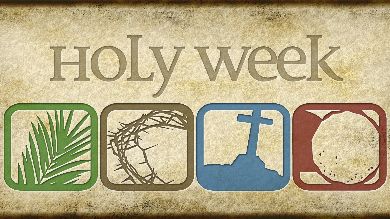
Good Friday and Easter Sunday get all the press, but there are other important days of Holy Week.

Maundy Thursday

What is a “maundy” anyway? It comes from the Middle English and Old French word Mandé, which comes from the Latin Mandatum – which means Mandate.

Maundy Thursday refers to the mandate that Jesus gave the night before his crucifixion, when he shared his last supper with his disciples. After Jesus had washed his disciples’ feet in an act of love and service, he then told them:

A new commandment (Latin: mandatum) I give to you, that you love one another: just as I have loved you, you also are to love one another. By this all people will know that you are my disciples, if you have love for one another. (John 13:34-35)

On Maundy Thursday we remember the events of the last supper, the institution of the sacrament of communion, the betrayal of Jesus by one of his closest friends, and the all night prayer vigil that Jesus had in the Garden of Gethsemane, where he sweat blood from the stress and anxiety he was experiencing as he looked forward to the physical and spiritual suffering that awaited him.

It was on this night that Jesus prayed three times: “My Father, if it be possible, let this cup pass from me; nevertheless, not as I will, but as you will.” (Matthew 26:39-44)

The fact that the Father did not remove this “cup” of suffering from Jesus reminds us that there was no other way for us to be saved, then for Jesus to go forward with taking our place in death and judgment so that we might be able to receive forgiveness and eternal life.

Holy Saturday

The day between Good Friday and Resurrection Sunday is known as Holy Saturday. For the disciples of Jesus this would have been a day a great darkness and uncertainty, when the effects of Jesus’ crucifixion were not yet understood by all, and even though it wasn’t the case – it seemed like all hope was lost. Little did they realize that Sunday was coming…

Max Lucado wrote an excellent post on “The Silence of Saturday” a few years ago:

Jesus is silent on Saturday.  The women have anointed his body and placed it in Joseph’s tomb.  The cadaver of Christ is as mute as the stone which guards it.  He spoke much on Friday. He will liberate the slaves of death on Sunday.  But on Saturday, Jesus is silent.

So is God.  He made himself heard on Friday.  He tore the curtains of the temple, opened the graves of the dead, rocked the earth, blocked the sun of the sky, and sacrificed the Son of Heaven.  Earth heard much of God on Friday.

Nothing on Saturday.  Jesus is silent.  God is silent.  Saturday is silent.

Easter weekend discussions tend to skip Saturday.  Friday and Sunday get the press.  The crucifixion and resurrection command our thoughts.  But don’t ignore Saturday.  You have them, too.

Silent Saturdays.  The day between the struggle and the solution; the question and the answer; the offered prayer and the answer thereof.

Saturday’s silence torments us.  Is God angry?  Did I disappoint him? God knows Jesus is in the tomb, why doesn’t He do something?  Or, in your case God knows your career is in the tank, your finances are in the pit, your marriage is in a mess. Why doesn’t He act?  What are you supposed to do until He does?

You do what Jesus did.  Lie still.  Stay silent.  Trust God.  Jesus died with this conviction: “You will not abandon me to the grave, nor will you let your Holy One see decay” (Acts 2:27 NIV).

Jesus knew God would not leave him alone in the grave.  You need to know, God will not leave you alone with your struggles.  His silence is not his absence, inactivity is never apathy.  Saturdays have their purpose. They let us feel the full force of God’s strength. Had God raised Jesus fifteen minutes after the death of His son, would we have appreciated the act? Were He to solve your problems the second they appear, would you appreciate His strength?

For His reasons, God inserts a Saturday between our Fridays and Sundays.  If today is one for you, be patient.  As one who endured the silent Saturday wrote:  “Be patient, brethren, until the coming of the Lord” (James 5:7 NKJV).

Good Friday: The Great Exchange

103 the crucifixion of christ-tintoretto

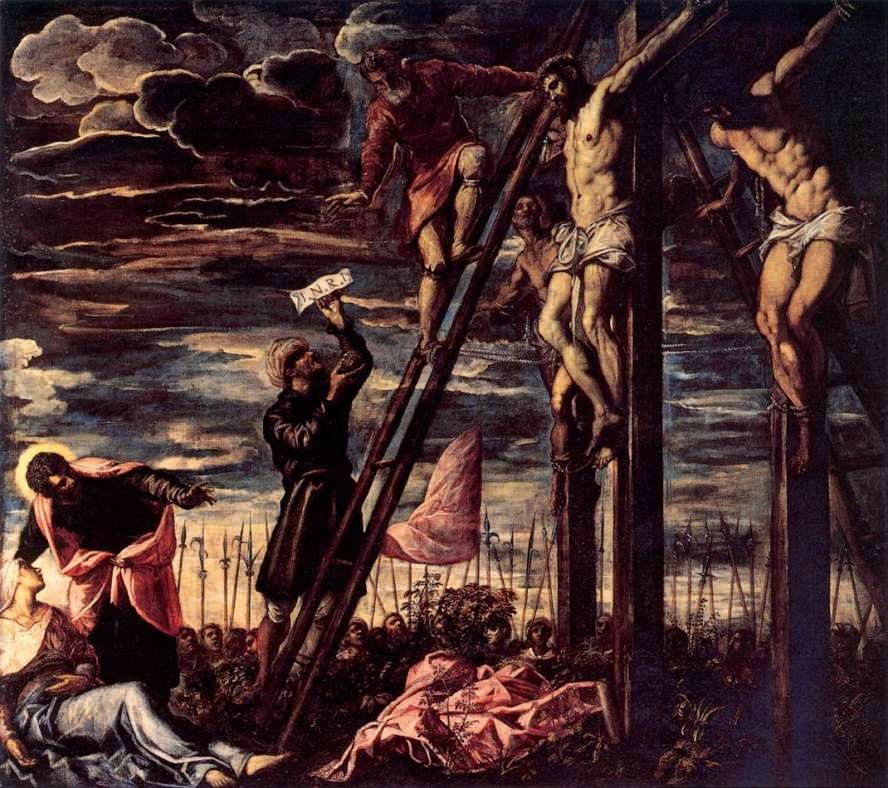
The good news of Good Friday is that “It is finished!” (John 19:30) Because of that, we can rest from our labors of trying to justify ourselves, and we can revel in hope, because not only were our sins imputed to Jesus, but his righteousness was imputed to us.

This is what it means when it says: “For our sake, He (God) made Him (Jesus), who knew no sin, to be sin on our behalf, so that we might become the righteousness of God in Him.” (2 Corinthians 5:21)

It’s the most astonishing exchange of all time: for those who receive Him (John 1:12), all of your sinfulness was placed on Him, and in return all of His righteousness was accounted to you.

Jürgen Moltmann puts it this way:

“When God becomes man in Jesus of Nazareth, he not only enters into the finitude of man, but in his death on the cross also enters into the situation of man’s godforsakenness. In Jesus he does not die the natural death of a finite being, but the violent death of the criminal on the cross, the death of complete abandonment by God. The suffering in the passion of Jesus is abandonment, rejection by God, his Father. God does not become a religion, so that man participates in him by corresponding religious thoughts and feelings. God does not become a law, so that man participates in him through obedience to a law. God does not become an ideal, so that man achieves community with him through constant striving. He humbles himself and takes upon himself the eternal death of the godless and the godforsaken, so that all the godless and the godforsaken can experience communion with him.” (from The Crucified God)

Moltmann goes on to say:

God weeps with us so that we may one day laugh with him.

May your Good Friday be filled with reflection upon, appreciation for and response to what Jesus did for you on Calvary, the ultimate expression of God’s love for you!