How is expository Bible teaching different than non-expository teaching?
David Jackman is the founder and director of the Cornhill Training Course, a UK-based initiative which teaches people how to teach the Bible expositorally.
David has served as a pastor and as president of Proclamation Trust, which exists to equip Bible teachers around the world.
In this episode, David explains the value of expository preaching, both in how it honors God’s Word, and in the ways it benefits those who hear it.
We discuss common pushbacks to expository preaching, such as that Jesus was not an expository preacher, and we get into the mechanics of effective Bible teaching, including how to include application, and more.
What is Expository Preaching and How Do We Do It Well? – with David Jackman –
Theology for the People
How is expository Bible teaching different than non-expository teaching?
David Jackman is the founder and director of the Cornhill Training Course, which teaches people how to teach the Bible expositorally. He has also served as a pastor and as president of Proclamation Trust, which exists to equip Bible teachers around the world.
In this episode, David explains the value of expository preaching, both in how it honors God’s Word, and in the ways it benefits those who hear it.
We discuss common pushbacks to expository preaching, such as that Jesus was not an expository preacher, and we get into the mechanics of effective Bible teaching, including how to include application, and more.
Check out David's recent book, Proclaiming the Word, as well as Expositors Collective.
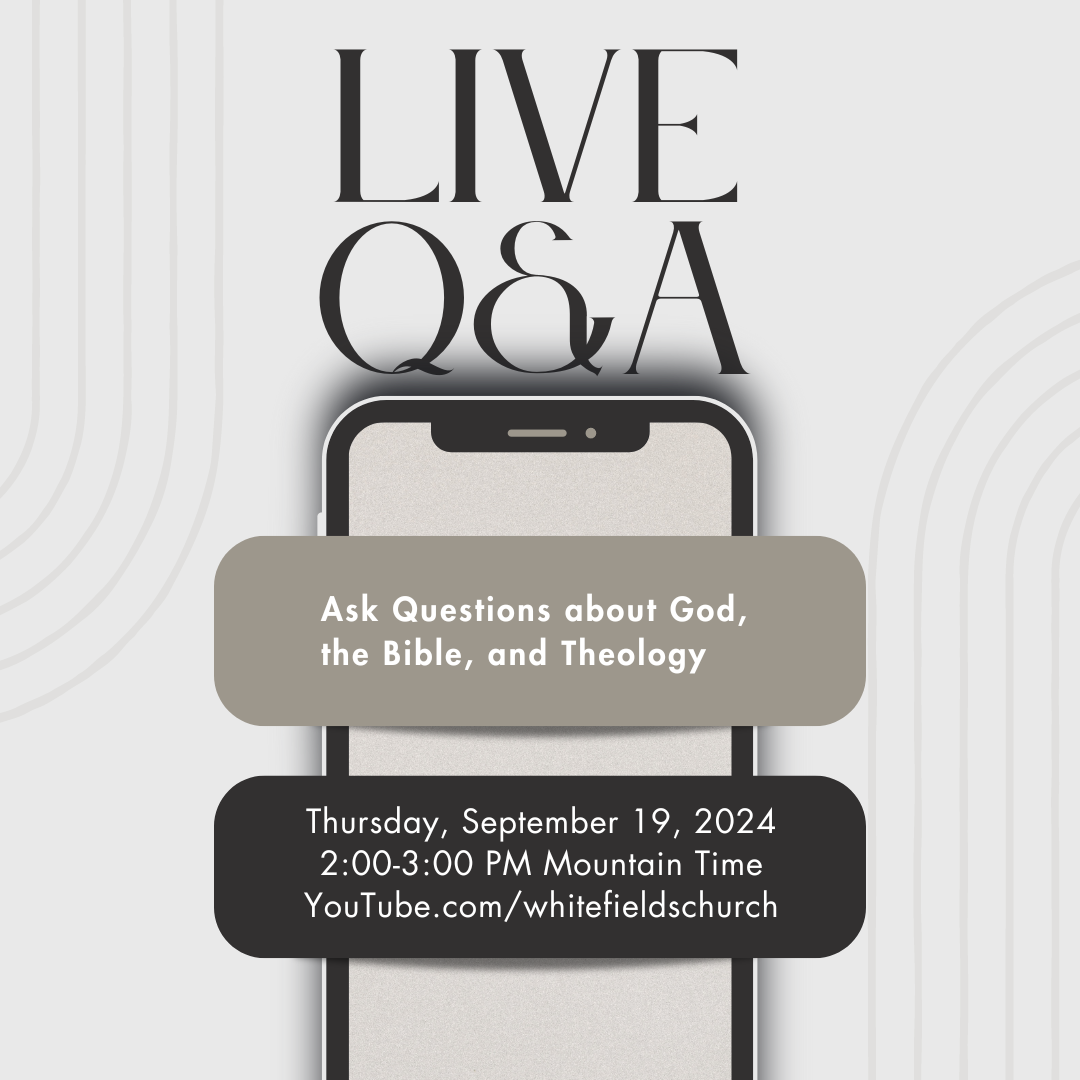
Last Thursday I hosted a YouTube LIVE Q&A for the first time, and it went better than I expected!
I answered questions about politics, the Holy Spirit, suicide, and demonic possession – and more people tuned in than I had anticipated!
Here’s the video of that recording if you’d like to watch back. If you turn on the comments, you can see people posting their questions and feedback.
We’re Doing It Again!
Since it went so well, we are going to be doing this more regularly; we’re currently aiming for doing it weekly on Thursdays – so please join us for that, and please help us spread the word about it, so more people can be part of it and ask their questions!
On this particular occasion, I will be going live from the clubhouse of a golf course because I already had a tee time scheduled before we decided to start doing these live Q&A videos! So please join me in praying that the wifi works well at the clubhouse! And if you want to see my golf attire, you’ll have to tune in!
Here’s the link for that scheduled video, and with this you’ll also be able to watch it (or re-watch it) afterwards:
This Weekend: Rhythm at Roosevelt + Live Q&A On Site!
This Saturday (September 21, 2024) is the Rhythm at Roosevelt festival in Longmont, at Roosevelt Park from 2-10 PM.
White Fields Church will have a booth there, so please come by if you attend. We will be handing out popcorn and free swag and hoping to connect with many people in the community.
As part of our time there, we will be doing a Live Q&A, which will be broadcasted on YouTube, and people will have the opportunity to ask questions in person as well.
Here’s the link for that YouTube event, if you can’t come out in person:
Golf Marathon for YoungLife in the St Vrain Valley
On Monday, Sept. 23rd I am participating in a fundraiser to support YoungLife in the St. Vrain Valley. To raise money, I will be playing a marathon of 45 holes of golf in one day!
My wife Rosemary volunteers with YoungLife and both my high schoolers attend their gatherings. YoungLife specializes in building relationships with teenagers, walking with them through the highs and lows of their teen years, and introducing them to Jesus. YoungLife establishes mentoring relationships between Christian adults and teens, many of whom have no connection to church.
Is baptism a requirement for salvation? There are some Christian groups who say that it is and others who say it isn’t.
In this episode of the Theology for the People Podcast, I am joined by Pastor Stephen Pomeroy of White Fields Community Church, and we look at the Bible verses and arguments which are central to the debate over “baptismal regeneration,” and aim to show you why we believe that every Christian should be baptized, but that, as Christians, we are saved by grace alone, through faith alone, in Christ alone.
Is baptism a requirement for salvation? There are some Christian groups who say that it is, and others who say it isn’t.
In this episode of Theology for the People, I am joined by Pastor Stephen Pomeroy from White Fields Community Church, and we look at the Bible verses and arguments which are central to the debate over “baptismal regeneration.”
We aim to show you why we believe every Christian should be baptized, but that, as Christians, we are saved by grace alone, through faith alone, in Christ alone.
Visit the Theology for the People website at nickcady.org
I first met Wendy and her husband Danny back when I lived in Hungary, and they were studying at Bible College. Since that time, they have moved to a city in Central Serbia called Kragujevac, and they have planted a church there. I recently got to visit Wendy and Danny and see their church, and I’m excited to introduce you to them, and for you to hear more about God’s work in Serbia, and in their lives.
Wendy recently wrote a book about her experiences of stepping into unknown, both in Serbia and in Central Asia, where she spent time earlier. The book is called: Hard Is Only Half the Story: Real Adventures from My Journey into the Unknown. In this book, Wendy talks about the important role that taking steps of faith plays in our spiritual growth, and our relationship with God.
In our conversation, we talk about what it’s like to live as a missionary in Serbia, what makes Serbia unique, and some of the ways that taking steps of faith in obedience to God shapes us and helps us grow.
Hard is Only Half the Story: The Role of Taking Steps of Faith in Spiritual Growth – with Wendy Zahorjanski –
Theology for the People
Taking a step into the unknown can be scary, and yet, when led by God, it can lead to incredible spiritual growth and benefits for your life.
Wendy Zahorjanski is a missionary in Serbia with her husband, Danny, in the city of Kragujevac, where they planted a church.
Wendy recently wrote a book about her experiences stepping into unknown, and she talks about the important role that taking steps of faith plays in our spiritual growth and relationship with God.
Randy grew up in a secular Jewish home, but through relationships with Christians, as well as through a series of personal events and realizations, he became a Christian. Randy is now a senior fellow for apologetics at the C.S. Lewis Institute, and over the past several decades he has talked with many individuals, and studied their journeys of coming to faith in Jesus.
In his recent book, “Questioning Faith” – he tells some of these stories, and looks at the factors in what he calls “indirect journeys of belief through terrains of doubt.”
In this episode, Randy and I speak about his story of coming to faith in Jesus, and we talk about some of the factors that Christians face today in sharing their faith, and how we can do that more effectively.
From Doubt to Belief: The Factors Involved in Journeys to Faith in Jesus – with Randy Newman –
Theology for the People
Randy Newman grew up in a secular Jewish home, but through relationships with Christians, as well as through a series of personal events and realizations, he became a Christian. Randy is now a senior fellow for apologetics at the C.S. Lewis Institute, and over the past several decades he has talked with many individuals, and studied their journeys of coming to faith in Jesus.
In his recent book, “Questioning Faith” – he tells some of these stories, and looks at the factors in what he calls “indirect journeys of belief through terrains of doubt.”
In this episode, Randy and I speak about his story of coming to faith in Jesus, and we talk about some of the factors that Christians face today in sharing their faith, and how we can do that more effectively.
Make sure to check out the Theology for the People website at nickcady.org
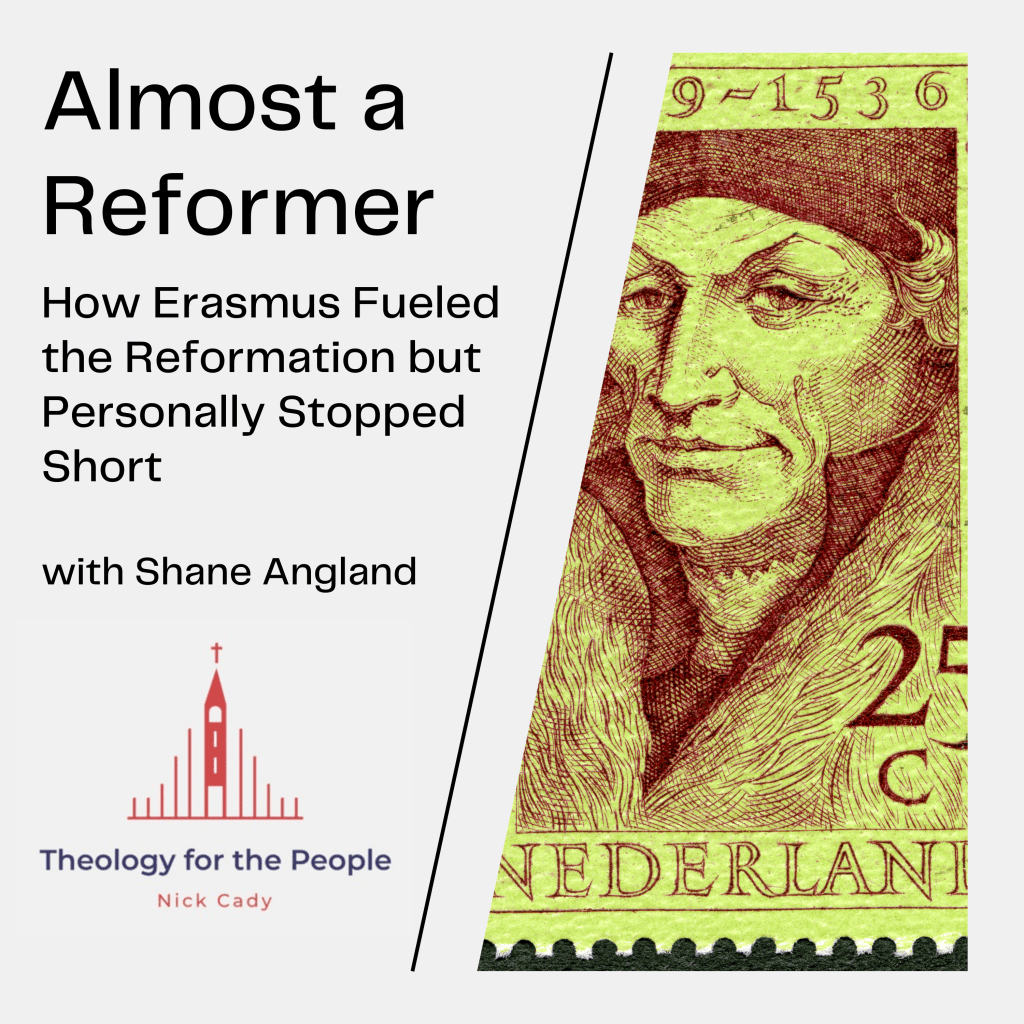
In this episode of the Theology for the People Podcast, I speak with Shane Angland. Shane has been a recurring guest on the podcast, and is excellent on the topic of historical theology.
In this episode, we discuss Desiderius Erasmus, one of the most important figures in the history of the Protestant Reformation. He was a key thinker, and the compiler of many of the manuscripts that were used in translating the Bible from Greek and Hebrew into languages of the people. He was also in communication with many of the key figures of the reformation, like Martin Luther.
And yet, Erasmus stopped short of being a Reformer. In this episode, Shane and I talk about this intriguing person, the contributions he made, and why he fell short.
Shane lives in Ennis, Ireland where he serves at Ennis Evangelical Church. He holds a Masters of Divinity from Dallas Theological Seminary, and has served as a missionary in Ukraine.
Almost a Reformer: How Erasmus of Rotterdam Fueled the Reformation but Personally Stopped Short – with Shane Angland –
Theology for the People
Desiderius Erasmus is one of the most important figures in the history of the Protestant Reformation. He was a key thinker, and the compiler of many of the manuscripts that were used in translating the Bible from Greek and Hebrew into languages of the people. He was also in communication with many of the key figures of the reformation, like Martin Luther.
And yet, Erasmus stopped short of being a Reformer. In this episode, I speak with Shane Angland about this intriguing person, what contributions he made, and why he fell short.
Shane Angland is from Ennis, Ireland and holds a Masters of Divinity from Dallas Theological Seminary.
Make sure to check out the Theology for the People website at nickcady.org
Jamie’s church is only a few blocks from the U.S. Capitol building, and Jamie discusses how their church has navigated some of the difficult social issues of the past few years by determining to be a “Christ alone” type of church.
In this episode, we discuss the goal of Christian unity in the midst of a divided society, and how to pursue it. Where do you draw the lines? How do you determine which issues are primary issues? And why is it important to love those who are different from you, in the Body of Christ?
Loving the Ones Who Drive You Crazy: How and Why Christians Should Pursue Unity in the Church – with Jamie Dunlop –
Theology for the People
Jamie Dunlop is an associate pastor at Capitol Hill Baptist Church, in Washington D.C. and the author of the book, Love the Ones Who Drive You Crazy: Eight Truths for Pursuing Unity in Your Church.
Jamie's church is only a few blocks from the U.S. Capitol building, and Jamie discusses how their church has navigated some of the difficult social issues of the past few years by determining to be a “Christ alone” type of church.
In this episode, we discuss the goal of Christian unity in the midst of a divided society, and how to pursue it. Where do you draw the lines? How do you determine which issues are primary issues? And why is it important to love those who are different from you, in the Body of Christ?
episodeleave a written review on Apple Podcasts or Spotify.
People
Earlier this year I met with the team from Expositors Collective in the mountains of Southern California for a few days of meetings and recording our content into a video series.
During our time, we recorded a discussion for the Expositors Collective podcast, which turned out surprisingly well! We started off talking about pet peeves, but finished with a strong discussion about creating a discipleship pathway for your church.
Sometimes when people hear the word “discipleship,” it invokes an image in their mind of one-on-one mentorship, studying through a book together. Certainly this is one method of making disciples, but to conceive of discipleship only in this way is incredibly reductionistic.
Discipleship is a multifaceted thing, and requires multiple inputs and opportunities for growth. Everything from attending worship services, serving, taking Communion, participating in small group Bible studies – just to name a few – are ways that people are equipped as disciples of Jesus.
In this episode, Dr. John Whittaker (check out johnwhittaker.net) mentions the importance of creating a discipleship pathway, and I join in with my thoughts on why it is important. Shortly after this trip, I went to Ukraine and Serbia, where I spoke a lot with church leaders there about the importance of creating discipleship pathways for their churches. Upon returning home, we discussed this at our staff meeting at White Fields Church, and our Executive Pastor, Jason, put together this great infographic to share with our church. Maybe it can be helpful for you as well, as you think about creating a discipleship pathway for your church.
October 3, 2023 marks 10 years since the passing and heavenly homecoming of Pastor Chuck Smith. Pastor Chuck was the man God used to start the Calvary Chapel Movement of churches.
For this anniversary, I wrote an article for CalvaryChapel.com about how Pastor Chuck impacted my life, and the lives of many other young people – including my pastor, Tom Stipe.
Additionally, I recorded a bonus episode of the Mission & Methods Podcast, in which I spoke with Pastor Brian Brodersen about Chuck’s approach to ministry, including some questions about how Chuck pastored personally, and what were the major influences that shaped Chuck’s theology, and his preaching.
Pastor Brian is uniquely qualified to speak to these questions, as he not only served alongside Pastor Chuck and eventually succeeded him as the Senior Pastor of Calvary Chapel of Costa Mesa — but he also shares close family ties to Pastor Chuck, as his son in law.
How God Used Chuck Smith To Empower A New Generation Of Pastors
When I was 18 years old, I boarded a plane bound for Hungary. Despite the fact that I had only been following Jesus for two years, my pastor, the late Tom Stipe, sent me out as a missionary. Three years later, when I was 21, Tom ordained me as I was going out to plant a church.
At the time, these actions didn’t strike me as abnormal or unusual, yet now, years later, I look back on them with a sense of surprise. Why was Tom willing to take a chance on me, as young as I was? Why did he trust that I could serve the Lord in those ways without any formal training?
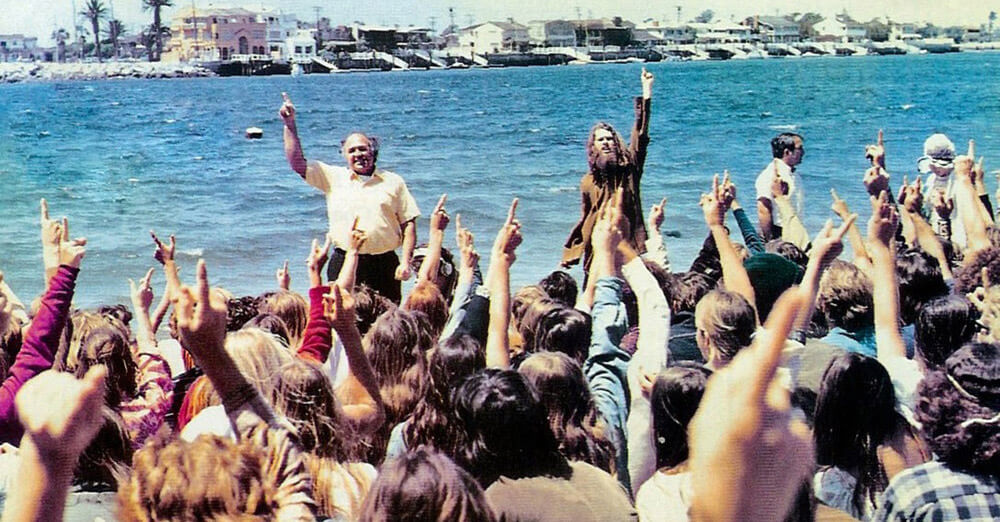
Later on, I came to realize that the reason was because that is what Chuck Smith had done for him when Tom was a young man: In 1976, Pastor Chuck sent Tom to Colorado to start a Calvary Chapel church here. In the movie, “Jesus Revolution,” millions of people saw the portrayal of how Chuck Smith empowered the young Greg Laurie to plant a church in Riverside, California. Still, the even more incredible reality is that Pastor Chuck did similar things with many young people over the years. Tom was doing for me what Chuck had modeled for him.
I remember sitting with Tom and listening to him tell stories of the early days of Calvary Chapel. One thing that Tom told me was that, in his opinion, the true genius of Chuck Smith was not his verse-by-verse teaching, as many people assume, and as masterful as that was. The true genius of Chuck Smith, Tom said, was that Chuck was willing, and even eager, to empower young people to serve the Lord in meaningful ways because he genuinely believed in the work of the Holy Spirit in and through people who were willing to make themselves available to God.
I finally got to meet Pastor Chuck in Austria, at the conference center that he had acquired for Calvary Chapel as a launching point for ministry in Eastern Europe. He asked about our ministry in Hungary and gave encouragement and affirmation. As I look back on that, I’m full of appreciation for him as a person who was more than just a good Bible teacher but an example of foresight and faith. Not only did Pastor Chuck want the Gospel to go forth into the whole world, but he understood that God wanted to use many other people to do that work. He was willing to support missionaries and church planters, including some of us who maybe wouldn’t have been empowered to do those things by anyone else who didn’t have the measure of faith he did!
Now, ten years after Pastor Chuck’s heavenly homecoming, I’m more inspired than ever to carry on his legacy of Bible teaching, evangelism, missions, and empowering people, especially young people, to serve the Lord.
Q&A On Chuck Smith’s Approach To Ministry – With Nick Cady And Brian Brodersen
September 8, 2023 marks one year since the death of Her Majesty Queen Elizabeth. The late Queen Elizabeth II was remarkable in many ways. She reigned for seventy long years as the sovereign of the United Kingdom and Commonwealth. One of the most well-known people in the world, Queen Elizabeth was popular because of her consistency and the way she fulfilled her role as a leader. What intrigued me about her, is the way she led. Elizabeth showed over her long reign, through her quiet and deliberate leadership, that she considered herself a servant to her people.
In a speech made on her 21st birthday, the Queen (then Princess Elizabeth) pledged her commitment to duty in these memorable words, “I declare before you all that my whole life, whether it be long or short, shall be devoted to your service.” She held true to that pledge over her seventy-year reign, which began when she was just 26 years old. Though she could not know what the future held, she dedicated to give her life in service for her people. And that she did. Instead of spending frivolous time on herself as queen or enjoying entertainment above duty, what was known about Queen Elizabeth II was how she worked hard traveling as a diplomat and acting as Head of state, Head of the armed forces, Head of the Commonwealth, and head of the Church of England.
The Queen lived 96 years, seeing the world change, seeing the United Kingdom change, and seeing her own family change. She began her reign over a large empire which stretched across the world, but at her death, the Commonwealth was much smaller. She allowed the monarchy to modernize and be televised, and even had a Twitter account by the end of her life. She realized that she must not resist change, lest she become unrelatable to the people she served and led. She allowed the public to have access to the royal family, letting them into her life to see what she was like as a person, where she lived, and how she fulfilled her duties. With all of the change Queen Elizabeth II saw in her seventy years as sovereign, she remained dedicated to service and true to who she was as a person. She did what was best to lead as Queen and be connected to the people.
In her family, the Queen had to navigate numerous scandals and make some difficult decisions. Of her four children, three divorced. Elizabeth decided to strip her own son of his titles due to his association with a convicted felon. Elizabeth’s deeply held Christian values were not embraced in the same way by her family members, and yet the Queen did not waver in her faith. Personally, I started paying closer attention to the Queen’s leadership at the time when she was facing these challenges. I paid attention when her home at Windsor Castle caught fire and the family ran out carrying art and heirlooms. I watched to see how the Queen would react as her grandson, Prince Harry, gave up his royal duties and moved to California.
I wanted to see each time which emotion the Queen would emote and how she would respond when Prince Harry and his wife gave public interviews about why they left royal duties and what they did not like about the royal family. To my surprise, the royal family did not respond immediately, and refused to answer questions directed at them by the media. The Queen later issued a response that was unemotional and kind, that she was “saddened” and that the family would privately discuss the accusations. In these days of outrage and arguments on social media, I was happy to see the restraint the Queen exhibited in such an emotionally-charged situation; she was not defensive or retaliatory when attacked.
In this way, Elizabeth was an example of how to conduct oneself in difficult situations. Queen Elizabeth’s quiet but strong leadership was shown in how, as a woman with cameras always on her, and with so much influence, she did not use many words. Although she held weekly audiences with the British Prime Minister, we will never know what they talked about. Her words were not disclosed by the Prime Ministers, though we can assume she had an influence over them, as her words held weight.
Quiet leadership can be profoundly powerful. Many leaders seem to exemplify the opposite of quiet leadership, and yet, the Queen’s influence was huge. She was the one people looked to for a response in times of tragedy or need. Yet it was not her words that made the greatest impact on people, but simply her presence, which conveyed strength and confidence. Her consistent, powerful presence will be missed. It requires meekness to be one of the most influential and popular people in the world, and to not say much, but keep smiling, waving, and appearing, in the midst of other duties.
The Queen had a unique perspective on her life of service, wanting to give her entire life to it, whether her life was long or short. I watched her celebrate her seventy year jubilee in amazement of her longevity in service. Elizabeth seemed to have kept her sense of humor. Despite the pomp and adoration she received, she had the humility and grace to never forget to smile, be kind, trust in God, and continue being a servant. The Queen knew that she would be in her role for a long time, and it gave her the perspective of playing the “long game.” She was committed to fulfilling her goal of a life of service. She endured challenges, family difficulty, and more, yet she continued to do what was right, knowing that those pains would eventually be in the past as she moved forward in duty.
The ability to restrain one’s tongue is addressed in Proverbs 17:9, “He who covers over an offense promotes love, but whoever repeats the matter separates close friends.” When there is a challenging situation in which someone has done wrong, a person who has restraint and a “long game” focus will protect the institution they lead. Retaliation or talking negatively about the person who committed the wrong is short-sighted and does not truly help the well-being of our church or relationships. These principles the Queen exemplified in her leadership of the United Kingdom are transferable to us who lead in the local church.
The Queen’s example of quiet leadership contains many qualities worth emulating. Showing up in time of need, being consistently present, and being slow to speak, are qualities which are worth employing in church leadership. What people may need most in times of tragedy man not be our words primarily, but our presence, reminding them that they are not alone, but that we are standing with them to show that they are cared for and loved. Our meek attitude can help them learn to lean on Christ as the one who cares for them and supplies all that they need.
Queen Elizabeth II was well-loved and respected as the longest-reigning British monarch. Britain changed tremendously during her seventy year reign, but we learned from her example that a leader can be faithful and continue in service while being a strength for the people by never changing focus. Her focus was to consider herself a servant to the people. Few will forget where they were when they heard of the passing of Queen Elizabeth II on September 8, 2022. She was an example in leadership for us all. As a woman in leadership in my local church, I will miss her, and I have been changed by her example.





 Theology for the People