We discuss the difference between interpreting the Bible “literally” and interpreting it “literarily,” i.e. according to the genre of a given passage. Kristie describes the 8 major literary genres found in the Bible, and their unique aspects. We give a few examples of how not taking genre into account can lead to misinterpretation and misapplication of particular texts.
Kristie is married to Pastor Thabiti Anyabwile and they serve at Anacostia River Church in Washington D.C. For more about Kristie, visit her website: kristieanyabwile.com.
Kristie also shares with us in this episode the meaning of her last name!
Also mentioned in this episode are two groups Kristie is involved with:
If you find this episode interesting or helpful, please share it with others and leave a rating and review on your podcast app, as that helps other people discover this podcast and its content.
How Does Understanding Biblical Genres Affect How We Interpret and Teach Passages in the Bible? –
Theology for the People
In this episode, I speak with Kristie Anyabwile, who recently wrote a book called, Literarily: How Understanding Bible Genres Transforms Bible Study.
We discuss the difference between interpreting the Bible "literally" and interpreting it "literarily," i.e. according to the genre of a given passage. Kristie describes the 8 major literary genres found in the Bible, and their unique aspects. We give a few examples of how not taking genre into account can lead to misinterpretation and misapplication of particular texts.
Kristie is married to Pastor Thabiti Anyabwile and they serve at Anacostia River Church in Washington D.C. For more about Kristie, visit her website: kristieanyabwile.com.
Also mentioned this episode are:
Charles Simeon Trust
The Pelican Project
If you find this episode interesting or helpful, please share it with others and leave a rating and review on your podcast app, as that helps other people discover this podcast and its content.
Make sure to visit the Theology for the People blog at nickcady.org
As part of the discussion, Aaron asked Mike and I about our worst Easter sermon ever. As I was telling about my worst Easter sermon, I remembered something that happened on our first Easter (also our first Sunday) planting a church in Eger, Hungary. It wasn’t something I did (or even saw), but it was something which probably made it the worst Easter service ever for those who attended 😂. Here’s the video of that part of our discussion:
Aaron broke up our discussion into sections and created a helpful article, with Mike and I discussing about Good Friday, how to support staff and volunteers amongst the busyness of Easter weekend, and how to keep Easter fresh.
On this week’s episode of the Theology for the People podcast, Aaron Salvato interviews me about hypocrisy can be a barrier to people embracing Christianity, and what the solution is to this problem.
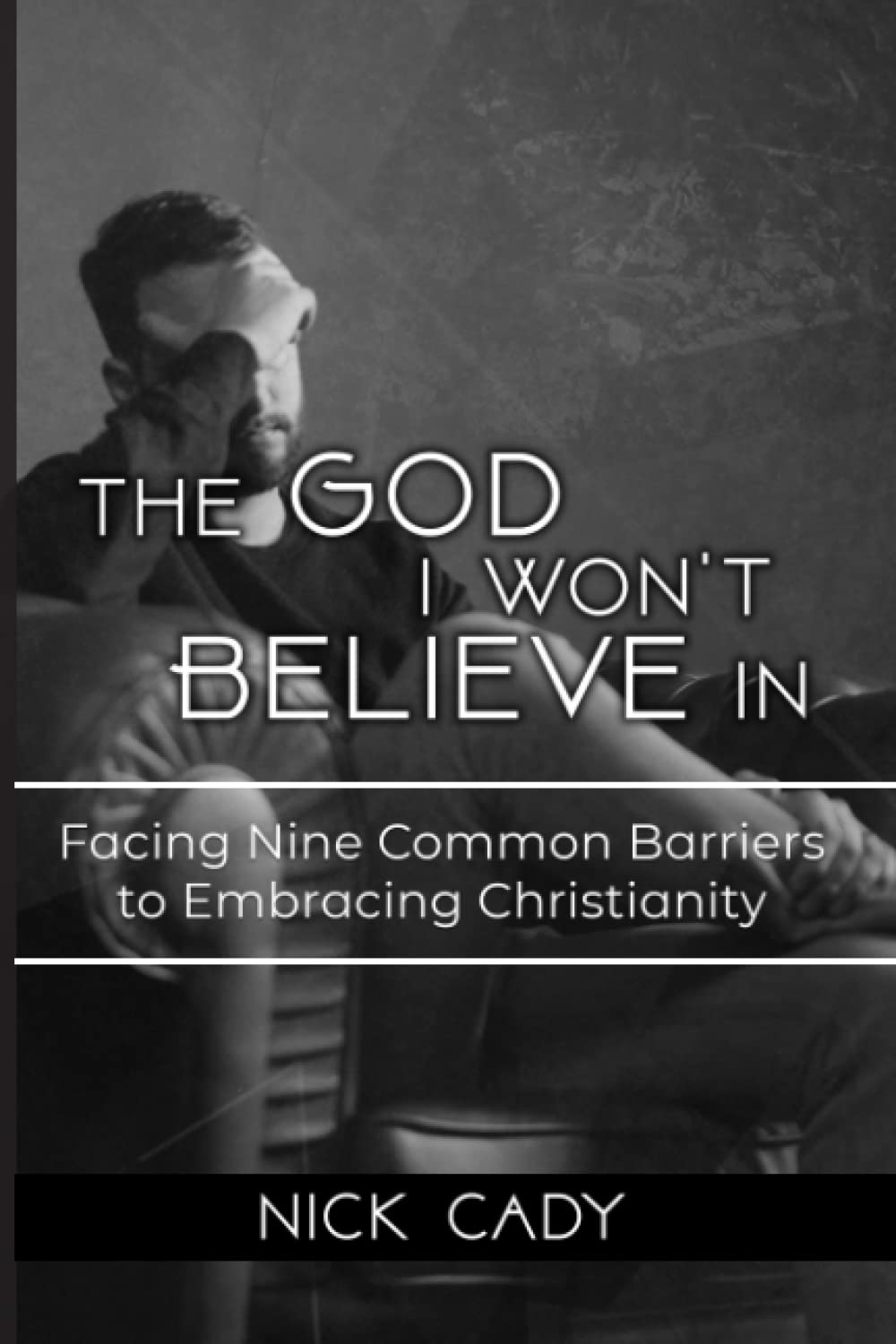
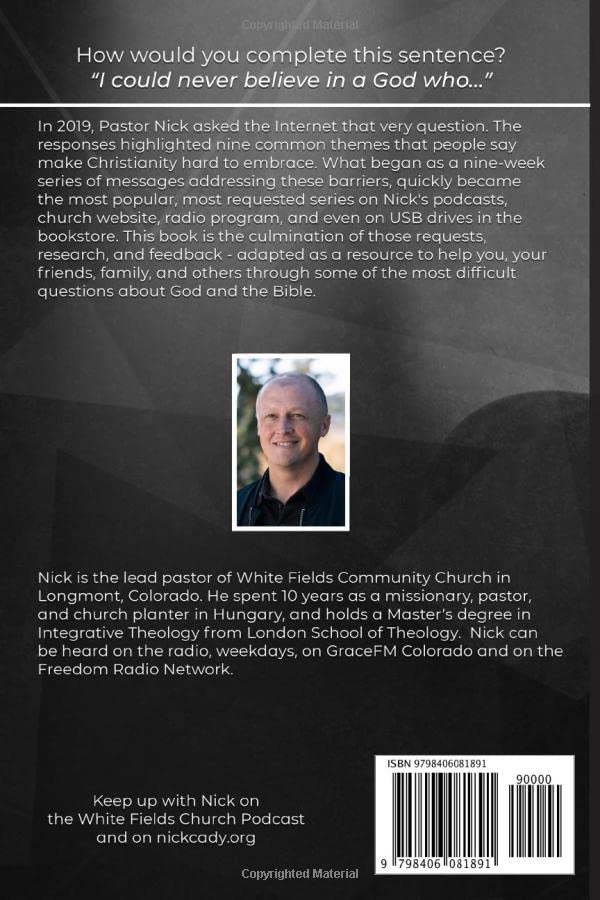
In my recent book, The God I Won’t Believe In: Facing Nine Common Barriers to Embracing Christianity, one of the chapters addresses the question of how Christianity can really be true if many of its adherents are hypocritical or hateful people. Can this problem be blamed on Christianity itself? Or is there another explanation? Either way, it certainly hurts Christian witness, so what, if anything, should or can be done about it?
If you find this episode interesting or helpful, please share it with others and leave a rating and review on your podcast app, as that helps other people discover this podcast and its content.
When someone is sick or dying, or when a loved one has passed away, it’s common for people to comfort each other by telling them that they will be reunited with that person in Heaven.
But does the Bible actually teach this, or do we just say it because it is a “sweet little lie” that makes us feel better?
Clearly the Bible does teach about Heaven and eternal life for those who believe, but does the Bible actually teach that we will be reunited with people we knew on Earth? Are there any passages in the Bible that teach that we will recognize each other and hang out in Heaven?
Reunited and It Feels So Good
In 2 Samuel 12, when David’s infant son was sick, David fasted and prayed. When his son then died, David’s servants were afraid to break the news to him, thinking that if he was so distraught over his son being sick, surely the news of his son’s death would send him over the edge…
When David saw his servants whispering, he realized his son had died. Rather than being distraught, David was at peace – much to the surprise of his servants.
David explained his response by pointing out that since his son was dead, there was now no more he could do; praying for his son’s recovery wouldn’t help at this point. Instead, David went to the house of the Lord and worshiped, explaining to his servants that he was at peace, since, he said, “I shall go to him, but he will not return to me.” (2 Samuel 12:23)
David clearly took comfort in the knowledge that he would be reunited with his son in the life to come.
But this begs a question: When David would see his son, who died in infancy, would that child be an infant perpetually, for all of eternity? That question finds answers in some other passages in the New Testament, which we will consider next.
Recognizing…But Not Right Away
The gospel accounts in Luke 24 and John 20 tell us that when Jesus resurrected, three days after his crucifixion, some of his disciples met with him, but they did not immediately recognize him. After they realized it was him, however, they did recognize him.
This is an important detail for several reasons. In 1 Corinthians 15:20, Paul the Apostle explains that Jesus was the “first fruits” of those resurrected from the dead to eternal life. Other people had been raised back to life, but those people all subsequently died again, that time for good. Jesus was the first to raise to never die again – the fate which awaits those who believe in Him.
As the “first fruits” of those raised from the dead to eternal life, Jesus’ resurrection body is a prototype of what our resurrection bodies will be like. So what was Jesus’ resurrection body like?
We know from John 20 and Luke 24, that Jesus’ body was physical, for he ate food and people touched him. Yet, his physical body also had properties which were different than our moral bodies; he entered a locked room without using a door, for example.
Furthermore, Jesus’ appearance was, on the one hand, recognizable, and on the other hand, different enough that his closest friends didn’t recognize him – until they did.
In 1 Corinthians 15, Paul the Apostle mentions that over 500 people saw Jesus at one point after his resurrection, and those people all recognized that it was Jesus. When Jesus appeared to Thomas, who doubted that he had actually risen from the dead, Thomas recognized him, touched him, talked with him, and believed.
For these reasons, we can conclude that our bodies, in the resurrection and eternal life will be:
Physical, yet with unique properties that our mortal bodies do not possess.
Recognizable, yet somewhat different than the way you look now. (It seems reasonable to assume that infants will not be infants forever, and that these new bodies will be free of infirmity or other limitations related to age). It will truly be you, and will be recognizable as you, but will not be identical to your current appearance.
In Luke 9, we read about Jesus’ transfiguration, when his closest disciples were allowed to see a glimpse of his divine glory. During the transfiguration, Moses and Elijah appeared with Jesus before their eyes, and it says that the disciples recognized them.
This is interesting, because the disciples had never seen Moses nor Elijah, since they died long before the disciples were born. The disciples were able to recognize them somehow, possibly by interacting or speaking with them, or though their personalities.
Either way, it’s an example of long-deceased people being recognized as who they were. The implication is that in the life to come, people will be recognizable, and interact with those who have passed away before them.
That Weird Story about the Prophet Samuel and the Witch of Endor
Another story in which we see an instance of a deceased person interacting with and being recognized by someone they previously knew in this life, is found in 1 Samuel 28:8-17, where King Saul asked a necromancer to summon Samuel the Prophet, so Samuel could give him advice.
In this story, it seems that the necromancer is genuinely surprised that Samuel actually appeared. Her usual practice, in other words, didn’t produce that result. It can be assumed she was a charlatan, and that the deceased do not usually interact with the living, yet on this occasion, God allowed an exception, in order to teach King Saul an important lesson.
Reunited in the Sky
In 1 Thessalonians 4, Paul encourages the Thessalonians, and us, regarding the fate of those believers who have died prior to the return of Jesus. For the first Christians, who expected Jesus to return in their lifetime, they were genuinely surprised by and confused about the death of other Christians who had died Jesus had returned.
Paul encourages them by telling them that when Jesus returns, those who died in faith will be resurrected, and we who are alive will be caught up and we will meet Jesus and those who passed away before us in the sky. Paul then tells us to encourage each other with these words.
The Rich Man, Lazarus, and Abraham
In Luke 16, Jesus tells a story about two men who died, and what happened to them after they died. One was an unnamed rich man, the other was a poor man named Lazarus.
The irony of the the reversal is poignant: a man who had “a name” on Earth, and a “nameless” beggar – yet in eternity, the beggar has a name and the rich man is nameless.
These men find themselves in Sheol, a place of waiting, which is divided into two parts, with an impassable chasm between them: Abraham’s Bosom – a place of waiting for the redemption promised in the Messiah, and Hades – a place of waiting for the ultimate judgment.
Interestingly, these two men not only recognize and interact with each other, but they recognize and interact with Abraham – yet another example of people in the afterlife interacting with and recognizing each other.
Eden Restored (and then some)
The Bible begins with God placing the man and woman he created in a garden paradise in Eden, and charging them to be fruitful and multiple. Sin, however, comes into the good creation, leading to death and destruction. God immediately announces his plan of redemption through a savior, but the effects of sin are pervasive.
In Revelation 21, we see that after God has redeemed the world and defeated evil, Satan, and death, that there will be a new Earth. In this new Earth, we see a scene strikingly similar to Eden; people dwell with God, and there is a special tree: the Tree of Life, which hasn’t been seen since the garden paradise of Eden back in the Book of Genesis.
There is a difference, however: whereas Eden was a garden, this new place is a garden city. This place, in other words, isn’t just Eden restored, it is Eden fulfilled: it is what Eden would have become if sin and death hadn’t entered into the world.
The reason this is important for our discussion, is because it shows that Heaven will not be an ethereal place where we will float on clouds, or live in mansions. (The word “mansions” in some English translations of John 14:2 is a poor translation. The word monai should rightly be translated “rooms.”) Heaven will be a physical place, similar to the world we currently live in, but – just like our resurrection bodies – with important differences, and free from entropy and decay.
Conclusion
With all these thoughts together, we can be fairly confident that for those who are “in Christ,” who have put their faith and trust in him, we will indeed be reunited with our loved ones in eternity.
On this week’s episode of the Theology for the People podcast, I speak with Michael Payne, worship pastor at White Fields Community Church, about Jesus’ ascension into Heaven.
Is the ascension simply something that happened, which we acknowledge, or did it actually accomplish something which could not have happened otherwise? How did the early Christians and the Church Fathers understand the ascension? What difference should the ascension make for our lives today?
In 2021, I asked Mike to teach on the Ascension, as part of our Eastertide series, “The Risen Life,” in which we looked at the appearances of Jesus in the Gospels after His resurrection. As Mike studied and prepared for that teaching, he found that the ascension really deserves more attention than it generally gets in most churches today.
In this episode, I speak with Michael about his discoveries, and he explains what the church has lost by not focusing enough on Jesus ascension, and he explains why Jesus’ ascension matters for the gospel and for us.
If you find this episode interesting or helpful, please share it with others and leave a rating and review on your podcast app, as that helps other people discover this podcast and its content.
Does the Ascension Deserve More Attention? – Why Does Jesus' Ascension Matter for the Gospel and for Us? –
Theology for the People
In this episode, Nick Cady and Michael Payne discuss Jesus' ascension into Heaven and why it matters for the gospel and for us.
Is the ascension simply something that happened, which we acknowledge, or did it actually accomplish something which could not have happened otherwise? How did the early Christians and the Church Fathers understand the ascension? What difference should the ascension make for our lives today?
If you find this episode interesting or helpful, please share it with others and leave a rating and review on your podcast app, as that helps other people discover this podcast and its content.
Make sure to visit the Theology for the People blog at nickcady.org
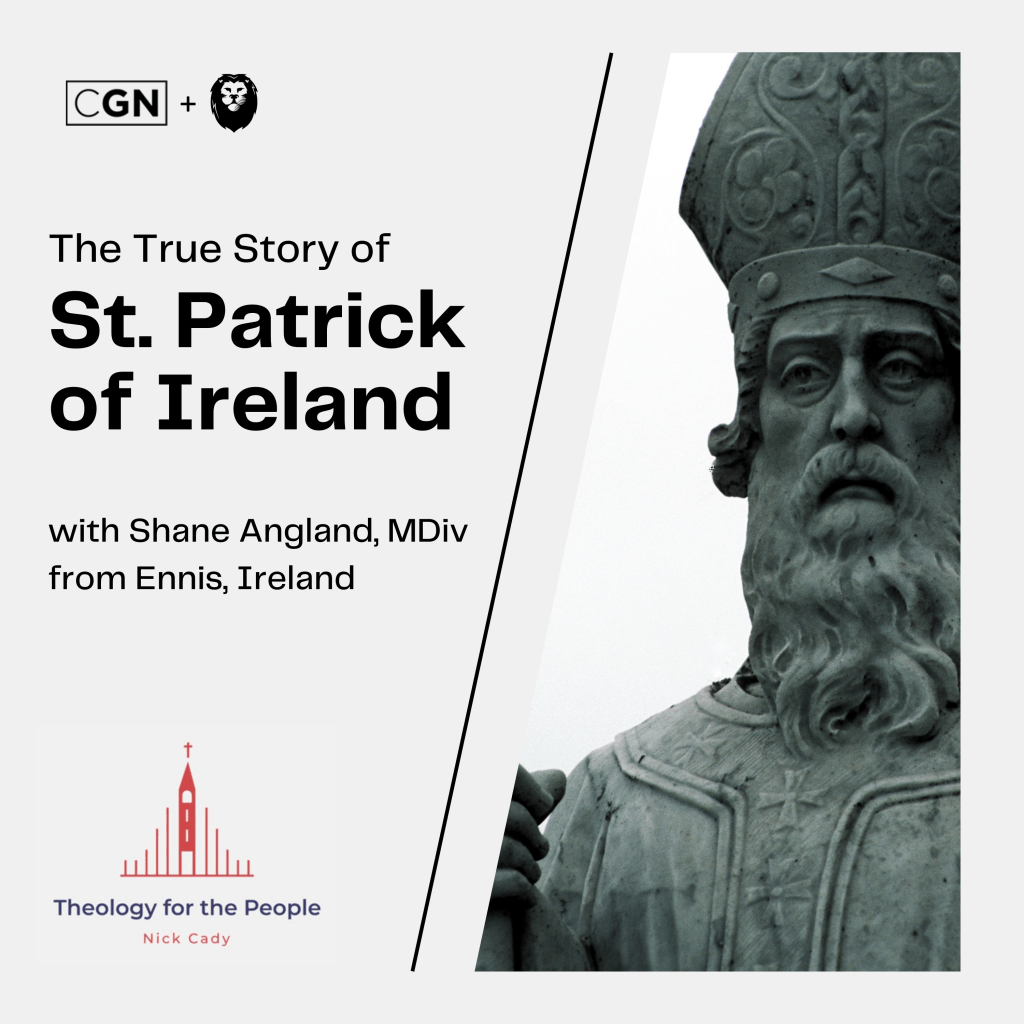
March 17 is St. Patrick’s Day, and on this week’s episode of the Theology for the People podcast I speak with Shane Angland (Mdiv, Dallas Theological Seminary) about the true story of St. Patrick, and how we can know the difference between what is myth and what is historically true when it comes to him.
Did Patrick really drive the snakes out of Ireland? Did he face off with druids? Did he use the shamrock as a teaching tool to explain the Trinity? Did you know that Patrick wasn’t actually Irish – and that he fought against human trafficking?
Shane explains how the true story of Patrick is actually much better than the legends, and that there are actually writings from Patrick which are available today. He also shares about the ongoing legacy of Patrick in Ireland and beyond.
If you find this episode interesting or helpful, please share it with others and leave a rating and review on your podcast app, as that helps other people discover this podcast and its content.
The True Story of Saint Patrick of Ireland – with Shane Angland, MDiv from Ennis, Ireland –
Theology for the People
March 17 is St. Patrick's Day. What is the true story of St. Patrick? Shane Angland (MDiv, Dallas Theological Seminary) joins the podcast today to help us know the difference between what is myth and what is historically true when it comes to St. Patrick.
Did Patrick really drive the snakes out of Ireland? Did he face off with druids? Did he use the shamrock as a teaching tool to explain the Trinity?
Shane explains how we can know the difference between what is true about Patrick and what is fable, and how the true story of Patrick is much better than the legends.
Here is a link to the article Shane wrote, which is mentioned in this episode: St. Patrick, Grey Wolves, and the Cimbid King
If you find this episode interesting or helpful, please share it with others and leave a rating and review on your podcast app, as that helps other people discover this podcast and its content.
Make sure to visit the Theology for the People blog at nickcady.org
We have paperback copies of the book for sale in our church’s bookstore, and it will be available in other churches and through book distributors soon.
If you would like to get copies for your church or group at bulk discount, contact us here.
Each chapter begins with the phrase: “I Could Never Believe in a God Who…”
A God Who Hasn’t Proven His Existence
A God Who Gave Us a Faulty Bible
A God Who Condoned Genocide in the Old Testament
A God Who Creates Hateful, Hypocritical Followers
A God Who Suppresses Women and Minorities
A God Who Sends People to Hell
A God Who Says Some Love is Wrong
A God Who Lets Bad Things Happen to Good People
A God Who Doesn’t Answer My Prayers
Book Signing This Sunday
For those who are within driving distance of Longmont, Colorado, this Sunday I will be signing copies of the book after each of our 3 services at White Fields Church. We will have copies for sale on site. If you can make it out, I’d love to see you there!
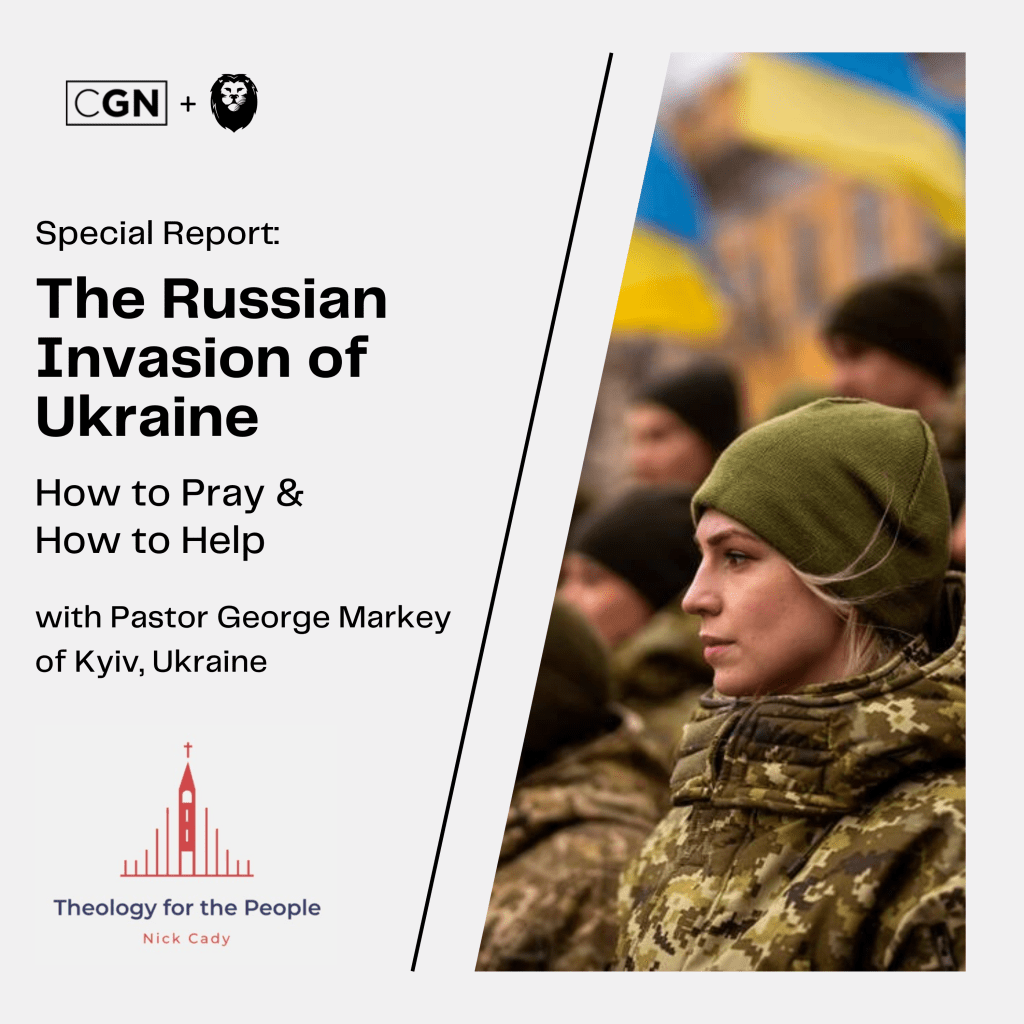
This week’s episode of the Theology for the People podcast is a discussion I recorded in Budapest, Hungary this week with Pastor George Markey of Kyiv, Ukraine.
This was originally recorded for KWAVE Radio in Southern California, but I am putting it out here as well, so more people can hear it.
George has lived in Ukraine for the past 30 years, and is the overseer for the Calvary Chapel churches in the country.
In this episode, George shares his perspective on what is going on as Russia is attacking Ukraine, as well as stories of how God is working in the midst of it. We also discuss needs, what is currently being done, and how you can get involved and help. Finally, George shares how he personally prays for Ukraine during this time.
The Russian Invasion of Ukraine: How to Help & How to Pray – with George Markey –
Theology for the People
Recorded in Budapest, Hungary this week with Pastor George Markey of Kyiv, Ukraine, originally for KWAVE Radio in Southern California. George has lived in Ukraine for the past 30 years, and is the overseer for Calvary Chapel churches in Ukraine.
In this episode, George shares his perspective on what is going on as Russia is attacking Ukraine, as well as stories of how God is working in the midst of it.
We also discuss needs, what is currently being done, and how you can get involved and help.
Finally, George shares how he personally prays for Ukraine right now.
Please share this episode with others, subscribe to the podcast, and check out the Theology for the People blog at nickcady.org
Many people assume that the Protestant Reformation was something that only affected the Western, or Roman Catholic Church, but in this week’s episode of the Theology for the People podcast, Shane Angland (Mdiv, Dallas Theological Seminary) shares the incredible story of how the Reformation reached the East.
Shane explains how Martin Luther actually referenced the Eastern Orthodox churches as examples of Christianity which were not subject to the dictates of Roman papal authority, and he tells the story of Cyril Lucaris, the Greek Orthodox theologian and patriarch of Constantinople, who was highly influenced by the Reformation and its principles.
Shane resides in Ennis, Ireland. He spent years working in Ukraine as a missionary with IFES and serving in a Calvary Chapel church in the city of Kharkiv, before going to Dallas for seminary.
Next month, Shane will be back on the podcast, sharing the true history of Saint Patrick of Ireland, explaining which parts of the commonly-told stories about Patrick are myth, and which parts of the story are often not told, but deserve to be. Stay tuned and keep an eye out for that!
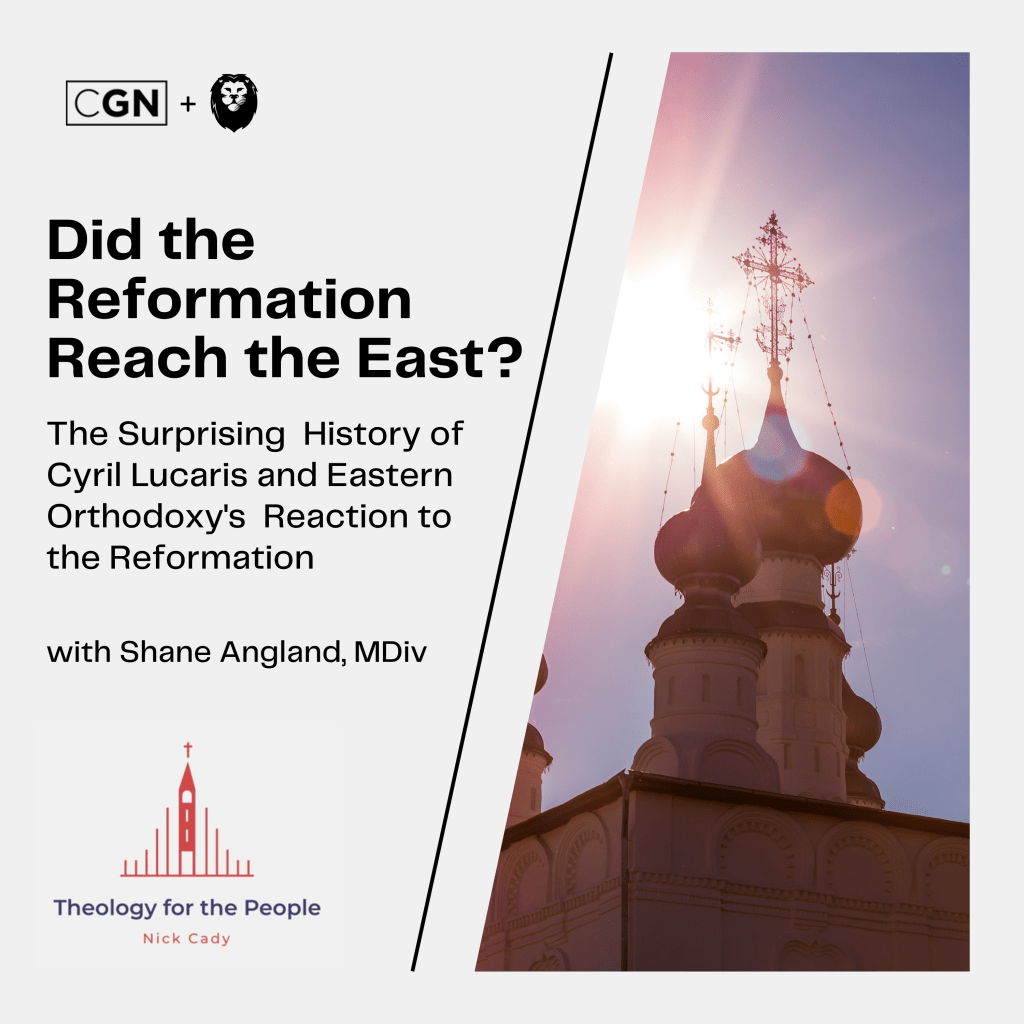
Did the Reformation Reach the East? The Surprising History of Cyril Lucaris and Eastern Orthodoxy's Reaction to the Reformation – with Shane Angland –
Theology for the People
Many people assume that the Protestant Reformation was something that only affected the Western, or Roman Catholic Church, but in this episode, Shane Angland (Mdiv, Dallas Theological Seminary) shares the incredible story of how the Reformation reached the East.
Shane explains how Martin Luther actually referred to the Eastern Orthodox churches as examples of Christianity which were not subject to the dictates of Roman papal authority, and he tells the story of Cyril Lucaris, the Greek Orthodox theologian and patriarch of Constantinople, who was highly influenced by the Reformation and its principles.
Shane Angland resides in Ennis, Ireland. He spent years working in Ukraine as a missionary with IFES and serving in a Calvary Chapel church in the city of Kharkiv, before going to Dallas for seminary.
At the end of the episode, listen for a preview of my forthcoming book, The God I Won't Believe In: Facing Nine Common Barriers to Embracing Christianity.
Visit the Theology for the People blog site for articles and more.
This coming Sunday, I was scheduled to fly to Kyiv, Ukraine, where I and some others were going to be speaking at a seminary and then leading a conference for Calvary Chapel pastors and leaders from all over the country.
We were notified this week that Lufthansa and KLM cancelled our flights to and from Kyiv because of the escalating tensions with Russia.
We are tentatively planning to reschedule the conference for later this year, in the spring, hoping that things will have calmed down by then.
I am grieved by Russia’s attacks against Ukraine, and what it means for the Ukrainian people. I long for the day when righteousness and the knowledge of God will cover the Earth like water covers the sea, and people will beat their weapons into plowshares and wage war no more. (Habakkuk 2:14, Isaiah 2:4)
I have many friends all over Ukraine, and our church supports several missionaries there.
Please join me in praying for the safety of the Ukrainian people in general, and for our friends and missionaries in particular, especially those in the city of Kharkiv, which is very close to the Russian border.
Pray for their churches to be havens that people flock to, for the believers to shine the light of the knowledge of Jesus in this dark time, and that they would be beacons of the hope of the resurrection and the good news of the gospel.







 Theology for the People