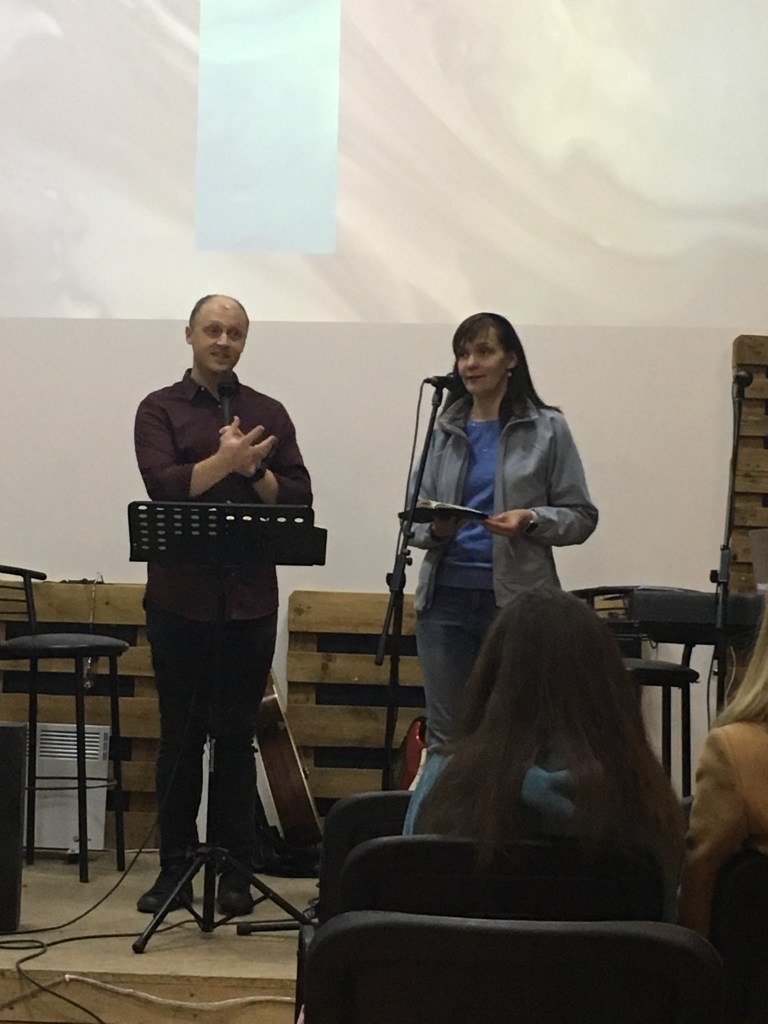
We’re Moving!

White Fields Community Church is moving! From our church’s beginning, we have met in the St. Vrain Memorial Building in downtown Longmont. It’s a large building, and has been a great place to start a church, but as we have grown, we have gotten to the point where it has been hindering more than helping us in fulfilling God’s mission for our church. For example, our Middle School class meets in a hallway, since we have maxed out all of the available spaces for NextGen classrooms.

We have pursued several properties over the past few years, and God has been faithful to lead us by shutting doors, which is exactly what we prayed He would do if those were not the right places for us.

Recently we heard that another church in Longmont was considering closing a second campus they had opened 2 years ago. After reaching out, we felt that God’s hand was in this for several reasons. One is that the day we reached out to them is the same day that they had their official vote to close the campus. One of their prayers that day was that God would bring another church to use the space, and they received a call from us on the way home, within an hour! The other reason is because we were able to work out a deal in which we acquire all of their furnishings – something we would have needed to purchase wherever we moved to, and we will be able to take them with us when we move in the future.

We don’t view this as our final destination as a church; we would still like to own our own building rather than lease, but this will be a good place to facilitate ministry for the next several years. The church is a family, and a building is like the family car: it’s a tool that we use for our family, and it helps to have one that is good and reliable, and in which we all fit!

This new space is going to be a big upgrade for our kids and our youth; there’s a large youth area. It is a place that our church will be able to use for ministry throughout the week, including being home to our Bible Learning Center. It will give us the chance to have special services, such as on Good Friday; something our church has never been able to do. We look forward to filling the space with Bible study, discipleship and worship all week long, as well as having a home for our media outreaches. Our offices will move here, as we have also outgrown our rented office space on Nelson Road.

Please be praying for this new season at White Fields!

Address

2950 Colorful Ave. Longmont, CO 80504

Timeline

Our last service at the Memorial Building will be on March 22, 2020 at 10:00 AM. After service we will move all our equipment over to the new location.

Our first service in the new location will be on March 29, 2020 at 10:00 AM.

We’re excited for what God has planned. If you’re in the Longmont area, come grow with us at White Fields in our new location!

Were the Apostles Aware that Their Letters Were Scripture?

In 2 Peter 3:2 Peter says something very interesting:

that you may be mindful of the words which were spoken before by the holy prophets, and of the commandment of us, the apostles of the Lord and Savior,

2 Peter 3:2

Here’s why this is interesting: Peter is putting the commandments of the Apostles on the same level as the word spoken by the “holy prophets.”

The “holy prophets” were those who wrote the Hebrew Scriptures (the Old Testament). The Apostles and their “commandments” came through the writings of the New Testament letters, or epistles.

We can be sure that this is the case, because later on in 2 Peter chapter 3, Peter refers to the teachers of the Apostle Paul in his letters – specifically in regard to the same topic which Peter is addressing in 2 Peter 3:2 where he refers to the “commandment” of the apostles, which is to be patient and diligent in waiting for the coming of the Lord.

And count the patience of our Lord as salvation, just as our beloved brother Paul also wrote to you according to the wisdom given him, as he does in all his letters when he speaks in them of these matters. There are some things in them that are hard to understand, which the ignorant and unstable twist to their own destruction, as they do the other Scriptures.

2 Peter 3:15-16

Did you catch that? Peter calls Paul’s writings “Scripture”!

2 Peter was written shortly before Peter’s death in Rome, and after Paul the Apostle’s death, also in Rome. Thus, at this time, all of Paul’s letters which we have in our New Testaments were already written, they were being distributed amongst the churches, and they were considered Holy Scripture – in the same way that these Jewish believers considered the Old Testament to be Holy Scripture!

This is all the more interesting when we consider what Peter wrote in the first chapter of this letter, in which he describes how Scripture is written and inspired by the Holy Spirit:

And we have the prophetic word more fully confirmed, to which you will do well to pay attention as to a lamp shining in a dark place, until the day dawns and the morning star rises in your hearts, knowing this first of all, that no prophecy of Scripture comes from someone’s own interpretation. For no prophecy was ever produced by the will of man, but men spoke from God as they were carried along by the Holy Spirit.

2 Peter 1:19-21

Were the Apostles aware that they were writing Scripture? Perhaps sometimes they were not, but it would seem that many times they were!

For a broader discussion of this topic, check out:

At What Point is a Different Interpretation of the Bible “False Teaching”?

In 2 Peter 1:20, Peter states, “knowing this first of all, that no prophecy of Scripture comes from someone’s own interpretation.” Then in 2 Peter 2, Peter addresses the issue of false prophets and false teachers who, like wolves, infiltrate, ingratiate, isolate, and then destroy by introducing “destructive heresies.”

At the same time, different Christian groups interpret some parts of the Bible differently, such as eschatology (things regarding the “end times”), pneumatology (things regarding the Holy Spirit), and ordinances or sacraments such as baptism and communion.

See: Is There Only One Correct Way to Interpret a Given Passage of Scripture?

And yet, the question is: at what point does a difference in interpretation of particular scriptural text or principle constitute “false teaching,” i.e. a “destructive heresy”?

I answered that question both in the video linked below, and in the sermon: Wolves in Sheep’s Clothing (2 Peter 2:1-22)

Reader Questions: Was Jesus Really Related to King David?

Last year I added a page on this site where readers can submit questions or suggest topics (click here for that page). Recently I received this question:

I have been watching an archaeologist/historian video series. She says Jesus could not have been of David’s bloodline because David was Judean from Judea. Any thoughts?

The claim that Jesus could not have been of David’s bloodline because David was a Judean from Judea fails to take into account the fact of the Babylonian captivity.

The Judeans were taken to Babylon for roughly 70 years (it’s “roughly 70 years” because they didn’t all return at once; they returned in waves). Upon return from the captivity, many settled in different places, such as the much more fertile north of Israel, which was also more highly populated and therefore had more work opportunities. Joseph was a builder (“carpenter“ implies wood work in English, but the term used in the Bible implies more that he was more generally a construction worker) and Nazareth was a Jewish settlement right outside of the large Hellenistic city of Sepphoris, where it seems that the Jews of Nazareth went to work every day as laborers.

The lush and fertile north of Israel

Despite their resettlement after the exile, the Jewish people would have kept track of their ancestral hometowns and villages. 70 years is not so long that you would lose connection with your past, especially for ancient people who were more inclined than modern people to keep track of that and value it.

The argument that Jesus could not have been descended from David since he grew up in Nazareth is the same argument made by Nathaniel in John 1. It was an argument which neglected to recognize the fact that while Jesus grew up in Nazareth, his family was originally from Bethlehem, hence the reason Mary and Joseph had to travel there for the census.

Matthew 2 tells us about how Mary and Joseph left Bethlehem because Herod the Great attempted to kill Jesus, fearing him as a threat to his throne. Mary and Joseph took baby Jesus to Egypt, and upon their return they moved to Nazareth in order to stay off the radar of the Herod family even after the death of Herod the Great.

Thanks for the question and God bless you!

You Are What You Do: and Six Other Lies About Work, Life, & Love, by Daniel Im

I recently finished reading Daniel Im’s latest book You Are What You Do: and Six Other Lies About Work, Life, & Love.

I have enjoyed Daniel’s work with Ed Stetzer on the New Churches podcast and the book Planting Missional Churches.

I also read Daniel’s first book, No Silver Bullets: Five Small Shifts that Will Transform Your Ministry, and gleaned some great principles from it, particularly the concept of moving from “the sage on the stage” to “the guide on the side.”

For more on that, see:

7 Lies

img_3819

In Daniel’s latest book, he explores 7 lies; commonly held beliefs regarding identity, value, and self-worth:

  • You are what you do
  • You are what you experience
  • You are who you know
  • You are what you know
  • You are what you own
  • You are who you raise
  • You are your past

Believing each of these lies will lead to disfunction, disappointment, emptiness, pain, and regret – Daniel says.

In the book, Daniel is very candid about his own struggles with these lies. His stories are so personal, that they draw you in and not only make for compelling reading material, but they help you understand that these are not just abstract ideas for Daniel, they are things about which he has deep, personal knowledge and experience.

Perhaps most compelling of all is the story of him taking a job at a mega-church in Seoul, South Korea, from which he was later fired. He shows the courage to honestly explore his true motivations for taking the job, and why he struggled so much with getting fired and then struggling to find a job upon returning home to Canada.

Using and Fear

These are issues that I can relate to myself. I recently shared at a pastors conference about a time when I was a new pastor, my wife and I had planted a church in Eger, Hungary – and I realized that I wasn’t just doing ministry and serving people, but I was using ministry and using people as a way to affirm myself and build my own sense of identity and self-worth: that I was a pastor, a church planter, and a missionary. However, at the same time I was motivated by fear, because if my ministry didn’t pan out, then I stood to lose not only my job but my entire identity and sense of self-worth!

For more on this, check out: Identity Issues: Function, Labels, Sin & Jesus – which includes a video in which Mike and I discuss times in our lives when we’ve struggled with matters of identity, function, and labels, and how we have discovered the only true, stable, and fulfilling source of identity and self-worth in Jesus.

You Can’t Just Rid Yourself of Lies, You Must Replace Lies with the Truth

There were points in this book where I wondered, “Okay, Daniel is making a great case for why these things don’t fulfill, but is he going to point us to what will fulfill and satisfy?”

And of course, he did. He perfectly wrapped up the issue in the final chapter of the book, and this quote is a good summary of his point:

There is a sense of freedom in knowing what and who you are not. But ridding yourself of these seven lies won’t fill you – it’ll just empty you. Unless you replace these lies with the truth of who you really are, you’ll just find another set of lies – even stronger and more destructive – to replace these with. (p. 172)

In Conclusion…

Daniel Im’s latest book is relevant and timely. It’s the kind of book I wish I would have read as a young man getting a start on life. I would highly recommend it for young adults.

However, this isn’t only a book for young adults, as no one in the world today is immune to these lies. This is a book for everyone.

Here is the one piece of advice I would give in regard to this book: make sure to read all the way to the end. The book is written as a unified whole, rather than a series of stand-alone chapters; there is one big thought and thesis to this book, and if you stop reading before the end, you will miss it.

I congratulate Daniel on writing this book. I hope it will get into the hands of many people and be used by God to not only set them free from lies, but to find the security and freedom of “being found in Christ.”

But whatever gain I had, I counted as loss for the sake of Christ. Indeed, I count everything as loss because of the surpassing worth of knowing Christ Jesus my Lord. For his sake I have suffered the loss of all things and count them as rubbish, in order that I may gain Christ and be found in him. (Philippians 3:7-9)

The Statistical Probability of Jesus Fulfilling the Messianic Prophecies

black and grey casio scientific calculator showing formula

With all the religions out there, how can you know that Christianity is true? How can you know whether the Bible actually gives the accurate and correct story of the world?

How do you know that Christianity isn’t just a fairy tale, made up by people to help them cope with hardship and death, and deal with life?

That’s the question which the Apostle Peter addresses in 2 Peter 1:16-21, which we studied this past Sunday at White Fields Church in the sermon titled, “Dawn is Coming” (2 Peter 1:16-21)

Peter essentially gives two evidences for why we can trust the Bible:

  1. Christianity is based on historical facts which had many eye-witnesses
  2. The record of Messianic prophecies which Jesus fulfilled

The Test & the Evidence

The Book of the Prophet Isaiah contains an incredible claim: the Lord God is contrasting himself with the pagan gods which many people worshiped in the form of idols, and God says, Here is how you will know that I am the one true God, and those so-called ‘gods’ are nothing: I will tell you the end from the beginning; I will tell you what will happen before it happens, and then when those things come to pass, that will be the proof to you that I alone am God. See: Isaiah 44:6-8; 46:9-10; 48:5-6

So God himself challenges us to put him to the test, and he goes on record predicting things about the future which will come to pass. Roughly 1/3 of the Bible is made up of prophecies, including many about the promised Messiah, which predicted various things about his identity and actions.

According to one calculation, there are 332 Messianic prophecies from the Hebrew Bible (Old Testament), which Jesus fulfilled.

This is why the Dead Sea Scrolls are such a big deal: they date back to about 100 years before the birth of Jesus, which shows us that the prophecies which Jesus fulfilled were indeed written before his birth, and were not later redactions or additions. See: Why the Dead Sea Scrolls Matter for Christians

Peter Stoner’s Calculations

Professor Peter W. Stoner was Chairman of the Departments of Mathematics and Astronomy at Pasadena City College and Chairman of the science division at Westmont College. In his book, Science SpeaksProfessor Stoner outlines the mathematical probability of one person in the first century fulfilling just eight of the most clear and straightforward Messianic prophecies.

Josh and Sean McDowell quote Stoner in their book, Evidence That Demands a Verdict:

We find that the chance that any man might have lived down to the present time and fulfilled all eight prophecies is 1 in 1017 (1 in 100,000,000,000,000,000).

In case you’re wondering, the Mega Millions had a $1.6 billon jackpot in October 2018, and the odds of winning it were merely 1 in 302,575,350. [1]

Stoner went on to calculate the probability of one person fulfilling 48 prophecies: 1 in 10157.

In case you’re questioning whether Professor Stoner’s math was wrong, H. Harold Hartzler, PhD, of the American Scientific Affiliation, Goshen College, writes in the forward of Stoner’s book:

The manuscript for Science Speaks has been carefully reviewed by a committee of the American Scientific Affiliation members and by the Executive Council of the same group and has been found, in general, to be dependable and accurate in regard to the scientific material presented. The mathematical analysis included is based upon principles of probability which are thoroughly sound and Professor Stoner has applied these principles in a proper and convincing way.

What Makes Christianity Unique

Along with eye-witness evidence of historical events (testimony for which people died, suffered imprisonment, torture, and the torture of their loved ones), and the prophetic record, something else that sets Christianity apart from all other religions and philosophies is the path of salvation it presents:

Whereas other religions offer ways to save yourself or endear yourself to God through doing actions, or keeping rules – the gospel message of the Bible is that you cannot save yourself, no matter how hard you try – but that God has done for you in Christ that which you could never do for yourself, in order to save you – because he already loves you.

That’s much better news, and a promise you can take to the bank.

What Does Peter Mean by Adding “Virtue” to Your Faith?

parthenon greece landmark

This past Sunday at White Fields we began our study of 2 Peter, as part of our “Pilgrim’s Progress” series. The sermon “Make Your Calling and Election Sure” looked at 2 Peter 1:1-15.

In 2 Peter 1:5-7, Peter urges his readers to make every effort to add to their faith virtue, knowledge, self-control, steadfastness, godliness, brotherly affection, and love.

All of those seem pretty straightforward, except perhaps one: Virtue.

How Does Peter Understand “Virtue”?

“Virtue” seems like a pretty broad term, and one that different people might define in different ways.

However, keep in mind that Peter is writing to people throughout Asia Minor (modern-day Turkey). This is stated explicitly in 1 Peter 1:1: “To those…in…Pontus, Galatia, Cappadocia, Asia, and Bithynia.” These are the historical regions of Asia Minor, which at this time was a predominately Greek-speaking, Hellenized region. Hellenization wasn’t only about the Greek language, it also included the proliferation of Greek social norms and philosophical ideas.

Greek philosophy included the thoughts and writings of Socrates, Plato, and Aristotle, and the most influential and prominent stream of Greek philosophy being Stoicism.

The Stoics were very focused on the idea of “virtue” and held that there are four “cardinal virtues”: Wisdom, Morality, Courage, and Moderation.

Keeping this historical and cultural setting in mind, it would seem that when Peter uses the word “virtue,” he does so with the expectation that his readers will associate that with the Greek philosophical teachings on virtue, particularly that of the Stoics.

Without Faith, Virtue Avails Nothing

It is significant that Peter speaks of “adding” or “supplementing” your faith with virtue. In other words, faith in Jesus and his finished work is the baseline upon which we are encouraged to add these virtues.

So, while Peter is affirming that the Stoics were right that these virtues are good, to have these virtues apart from faith in Jesus will avail you nothing before God. These virtues might help you in life and in relationship with other people, but they will not do anything to improve your standing before God.

CS Lewis on Virtue: the Bible vs. the Stoics

If you asked twenty good men today what they thought the highest of the virtues, nineteen of them would reply, Unselfishness.  But if you had asked almost any of the great Christians of old, he would have replied, Love. 

You see what has happened?  A negative term has been substituted for a positive, and this is of more than philological importance.  The negative idea of Unselfishness carries with it the suggestion not primarily of securing good things for others, but of going without them ourselves, as if our abstinence and not their happiness was the important point.  I do not thik this is the Christian virtue of Love. 

The New Testament has lots to say about self-denial, but not about self-denial as an end in itself.  We are told to deny ourselves and to take up our crosses in order that we may follow Christ; and nearly every description of what we shall ultimately find if we do so contains an appeal to desire.  If there lurks in most modern minds the notion that to desire our own good and earnestly to hope for the enjoyment of it is a bad thing, I submit that this notion has crept in from Kant and the Stoics and is no part of the Christian faith. 

Indeed, if we consider the unblushing promises of reward and the staggering nature of the rewards promised in the Gospels, it would seem that Our Lord finds our desires not too strong, but too weak.  We are half-hearted creatures, fooling about with drink and sex and ambition when infinite joy is offered us, like an ignorant child who wants to go on making mud pies in a slum because he cannot imagine what is meant by an offer of a holiday at the sea.  We are far too easily pleased.

CS Lewis, The Weight of Glory 

This week Mike and I sat down to discuss this question of what it means to add virtue to your faith for our weekly Sermon Extra video series:

How Do You Practically “Abide in Christ’s Love”?

82034485_2736402666395387_7737323707604926464_n
Abide and Bear Fruit is our theme for 2020 at White Fields Church

In my recent post, The Active Passive Actions of Relationship with God, I talked about how abiding in Christ (see John 15:1-11) may at first sound passive, but abiding actually requires action.

A Practical Guide to Abiding

Still, someone might ask: “How exactly do you abide in Christ though?

After all, in John 15:9, Jesus told his disciples:

As the Father has loved me, so have I loved you. Abide in my love.

But what does that mean? What does it look like on any given Wednesday, for example, for me to abide in the love of Christ?”

Thankfully, Jesus answered that question for us!

In John 15:10, here’s what Jesus said:

If you keep my commandments, you will abide in my love, just as I have kept my Father’s commandments and abide in his love.

So, the way to abide in Jesus’ love is to keep his commandments.

This is interesting, because just a few verses later Jesus says:

Greater love has no one than this, that someone lay down his life for his friends. You are my friends if you do what I command you. No longer do I call you servants, for the servant does not know what his master is doing; but I have called you friends, for all that I have heard from my Father I have made known to you. (John 15:13-15)

This is interesting because it tells us that there is a good and proper motivation for obeying God’s commandments: love for God and a desire to abide in his love.

Obeying God Matters, But It Also Matters Why You Obey God

Obeying God’s commandments matters. Consider what God told King Saul:

Has the Lord as great delight in burnt offerings and sacrifices,
as in obeying the voice of the Lord?
Behold, to obey is better than sacrifice,
and to listen than the fat of rams.
For rebellion is as the sin of divination,
and presumption is as iniquity and idolatry.  (1 Samuel 15:22-23)

But when it comes to obeying God, why you obey God also matters very much. It is possible to obey God for the wrong reasons. If your reason for obeying God is self-justification or self-glorification, you will find yourself in the position of being in opposition to God. As we are told in James 4:6,

God opposes the proud but gives grace to the humble.

On the other hand, if you love someone, and you want to express your love for them, if you want to experience the joy of fellowship with them, what do you do? You find out what they like, what they love, what makes them happy and brings them joy, and you do those things!

An Example: My Wife’s Birthday

My wife’s birthday is coming up. Knowing the things that she likes, what if I were to say: “I don’t have to do those things in order to win her love, since she already loves me. Therefore I will do nothing, because I don’t have to earn her love.”

Of course my wife will love me even if I don’t do anything for her birthday. However, because I love her and want to share a great experience with her (since intimacy is created through shared experiences), I want to do something for her that she will like. Thus, in my pursuit of her, in my desire to know her, one of my goals is to discover her likes and dislikes and do things she likes; not to earn her love, but as an expression of my love for her, and as a way of having fellowship with her.

In the same way, we can express love for God and experience fellowship with God by doing the things that we know He likes!

For more on this topic, see: “Oh, How I Love Your Law” – the Role of the Law in the Life of a Believer

May we be those who abide in Christ’s love, just as He abided in the love of the Father!

The Active Passive Actions of Relationship with God

82034485_2736402666395387_7737323707604926464_n.png
Abide and Bear Fruit is our theme this year at White Fields Church

The Bible uses a few terms to describe what a relationship with God looks like, and how it is to work in practice. Some of these terms imply movement, such as walking with God (Genesis 5:22, 6:9, 17:1; Luke 1:5).

There are other terms however, which at first glance appear passive. A further look into these terms reveals that they actually imply action:

Wait on the Lord

The word “wait” conjures up thoughts of waiting at government offices, hospital waiting rooms, or waiting for Christmas to come. All of these are passive actions: you have no control over the outcome, and many times these experiences of waiting sap our energy. Waiting for 2 hours at the DMV can be exhausting, even if you spend the whole time sitting in one place and not moving.

However, to “wait on the Lord” is not a completely passive action. The word “wait” in Hebrew is the word Qavah which means “to hope” or “to expect.” It can also be translated “to bind up,” or “gather together.”

While on the one hand, the outcome is out of your control, you are not completely passive nor inactive; you are doing something because you know the God who controls the outcome.

It is in this way that Isaiah the Prophet could say,

“Even youths shall faint and be weary,
and young men shall fall exhausted;
but they who wait upon the Lord shall renew their strength;
they shall mount up with wings like eagles;
they shall run and not be weary;
they shall walk and not faint. (Isaiah 40:30-31)

Whereas in many cases waiting can be an exhausting and energy-sapping experience, waiting on the Lord, Isaiah tells us, actually renews your strength and invigorates!

It is in this sense that the Psalm-writer says, “I wait for the Lord, my soul waits, and in His word I hope.” (Psalm 130:5)  This is not the waiting of passive inaction, but the hopeful expectation of trusting in God’s word and God’s promises.

Abide in Christ

At the Last Supper, Jesus told his disciples:

I am the vine; you are the branches. Whoever abides in me and I in him, he it is that bears much fruit, for apart from me you can do nothing.

By this my Father is glorified, that you bear much fruit and so prove to be my disciples.

As the Father has loved me, so have I loved you. Abide in my love.   (John 15:5,8-9)

To abide means “to remain, to dwell.” In the picture of a vine and its branches, the branch has to merely stay attached to the vine.

Yet, while on the outside it may not appear that there is any movement involved in the branch abiding in the vine, under the surface there is movement of nutrients from one to the other, providing life, health, and growth, which is seen by the fact that this abiding produces something: fruit.

For us to abide in Christ, on the one hand, involves not moving away from Christ, but the actions of abiding are anything but passive. Another definition of abide is to adhere to a pattern of life. Practically speaking, abiding in Christ requires intentional action to pursue fellowship with God.

These intentional actions by which you abide in Christ are also referred to by the term spiritual disciplines, things like prayer, studying the Scriptures, fellowship with other believers, generosity and giving, and more.

Click here for articles on spiritual disciples and spiritual formation.

In 2 Peter chapter 1, Peter urges the believers to “make every effort” to add to their faith: virtue, knowledge, self-control, steadfastness, godliness, brotherly affection, and love (2 Peter 1:5), stating that these things help us not to fall, and they help us to “grow in the grace and knowledge of our Lord and Savior Jesus Christ.” (2 Peter 3:18)

The outcome may ultimately be the Lord’s work in us, but we are invited to participate in working out what God has worked into us, and we get to participate in cultivating our own spiritual growth.

May we be those who trust in, wait up, and abide in the Lord Jesus, not passively – but actively. May we be those who work out our own salvation, knowing that it is God who works in us to will and do to His good pleasure. (Philippians 2:12-13)

For sermons from 2 Peter, click here: Pilgrim’s Progress: a Study Through 1 & 2 Peter

Upcoming Expositors Collective Training Weekends: Las Vegas, Budapest – and More

lasvegas.png

The Expositors Collective is a growing network of pastors, leaders, and laypeople which exists to equip, encourage, and mentor the next generation of Christ-centered preachers through two-day interactive training seminars, a weekly podcast, and ongoing mentoring relationships.

Our training weekends are open to men and women ages 18-34 who want to grow in teaching and preaching the Word of God.

These are regional events which many people fly in for, so even if you don’t live in area where an event is being held, consider joining us for a weekend. We always have discounted hotel rates for those who attend.

Las Vegas, Nevada: February 21-22, 2020

Our next event will be in Las Vegas, Nevada on February 21-22, 2020 at Calvary Chapel Las Vegas.

Click here for more information and registration.

Budapest, Hungary: March 7, 2020

This event will be a little bit different from what we usually do; it will be a one-day event, and will be bilingual: English and Hungarian.

For more information and to register, click here.

Upcoming Events in 2020

If you can’t make it to Las Vegas or Budapest, consider joining us later this year at one of these events:

  • May 8-9, 2020 – Seattle, Washington
  • October 2020 – Honolulu, Hawaii