My friends and co-laborers, Ted Leavenworth and Rob Salvato, both pastors in Southern California, started a new podcast called Leadership Collective, in which they curate helpful conversations with church leaders about relevant topics.
I had the pleasure of being a guest on the podcast along with Dr. Mark Foreman. Our discussion was about the nuts and bolts of how we develop, cast, and implement “vision” in our churches. Mark pastors a mega-church in Southern California, and I pastor a medium sized church on the Front Range of Colorado, so there are some pretty big differences in how we go about this process, but many similarities as well.
Earlier in my ministry I used to hate the word “vision” because it seemed so nebulous and abstract. However, since then I have come to understand that “vision” can simply be defined as: “a desired outcome.” Putting it in those terms, the question of “vision” becomes much more manageable. Beginning with a desired outcome, you can then begin thinking about the way to achieve that outcome, and break it down into a process with steps, depending on the given time-frame.
Not only is it imperative that we have vision as leaders, it’s also important for us to communicate it. What I have learned is that most leaders unwittingly under-communicate vision, and it’s very rare for people to feel that leaders over-communicate vision. The point is, for most of us, we need to communicate vision more than we currently are, and more than we think we need to.
Pastor Mark Foreman of North Coast Calvary in Carlsbad, California joins Pastor Nick Cady of White Fields Community Church in Longmont, Colorado to discuss the topic of vision.
—-
North Coast Calvary Chapel — northcoastcalvary.org
White Fields Community Church — whitefieldschurch.com
Why is it that in the Bible, sometimes God punishes certain people severely for their sins, but other people receive no punishment for similar actions?
Why does God bring judgment upon some sinful people, yet others who do much worse things remain healthy, prosperous, and well? In some cases they even seem to be getting God’s approval or at least not His punishment for the same sins as those who receive judgment. Examples of this would be Michal (David’s wife) and Uzzah in 2 Samuel 6, and the story of the two prophets in 1 Kings 13.
This is a good question, and is related to a question that David asked in the Psalms about why God allows wicked people to prosper and righteous people to suffer. This question, from David, was not an abstract query, but one that was deeply person to his lived experience.
We can see this dynamic at work in the world today as well, where some people do evil things and seem to suffer no consequences, and in some cases succeed as a result, whereas many who endeavor to lead a godly life don’t succeed or even suffer.
I responded to this question with a podcast episode which is embedded and linked below. In this episode, I give three important considerations which help us to understand this dynamic.
There’s a song that my wife and I often sing to our kids when we put them to bed at night. It goes like this:
The nails in your hands, the nail in your feet, they tell me how much you love me. The thorns on your brow, they tell me how, you bore so much shame to love me.
And when the heavens pass away, all your scars will still remain, and forever they will say, how much you love me.
Forever my love, Forever my heart, Forever my life, it’s yours.
Forever (The Nails In Your Hands)
The person who wrote that song is Richard Cimino. He’s the pastor of a church in Roseville, California (near Sacramento) called Metro Calvary.
This weekend (April 23-25, 2021), we’re excited to have Richard visiting White Fields Church here in Longmont.
Pastor Richard Cimino
He will be teaching at a Pastors Breakfast we are hosting for pastors in our Calvary Network, as well as other like-minded churches, and he will join us on Sunday morning as well.
Please pray for the pastors who attend on Friday, that they will be encouraged and blessed by this time of fellowship and prayer, and that God would speak to them through what Richard has to share!
Loved your teaching about 2 Corinthians 12 and the context why Paul wrote this. Can you direct me to the verses that show the criticism he took for always having trouble and not having visions so he was not spiritual enough so Paul writes chapter 12. Thanks
I’m guessing you probably heard this message on our radio program: Be Set Free. We recently started podcasting the radio program, which means that you can subscribe to the podcast and never miss a broadcast; each day’s message will be delivered directly to your phone. And as of just recently, that podcast is available on Apple Podcasts as well – check it out here: Be Set Free Radio on Apple Podcasts
The Answer
Here is a good summary of the issue with links to many of the relevant verses:
In addition to calling into question Paul’s motives in organizing a collection for believers in Judea (8:20–21; cf. 2:17; 12:14–18) and questioning his personal courage (10:10–11; 11:21), Paul’s opponents had argued that Paul suffered too much to be a Spirit-filled apostle of the risen Christ. Paul argues that his weakness as an apostle is the very means by which believers are comforted (1:3–11) and God in Christ is made known in the world (2:14–17; 4:7–12; 6:3–10; 11:23b–33). Paul’s sufferings embody the cross of Christ, while his endurance amid adversity, with thanksgiving and contentment, manifests the resurrection power of the Spirit (12:7–10). Paul’s suffering as an apostle is thus the very means God uses to reveal his glory (1:3–4, 11, 20; 4:15; 9:11–15; 10:17–18).
ESV Study Bible, Introduction to 2 Corinthians
What this summary doesn’t give is the verses which talk about the criticisms Paul was receiving. Those criticisms are addressed in 2 Corinthians chapters 10-12, in which Paul defends his ministry.
In these chapters it is very clear that Paul feels uncomfortable defending himself, but he does so because he feels that it is necessary to counter the narrative being spread by the “super apostles”: a term Paul uses sarcastically to describe certain people who had come around or rose up within the Corinthian church and were promoting themselves as spiritual authorities, which included trying to tear down Paul as an authority figure in the minds of the Corinthian Christians. This is particularly sad in light of the fact that Paul was the one who founded the church in Corinth.
Based on the ways in which Paul defends himself and his ministry, we become aware of what their criticisms must have been. It becomes clear that they taught some form of the “prosperity gospel” which states that the proof of spiritual maturity is triumphalism: i.e. that a person will not suffer physical, psychological, or financial difficulties. If someone does suffer such difficulties, it is assumed that there must be something wrong with them. This is the same accusation that was leveled against Job in the Book of Job.
Apparently the “super apostles”, whom Paul identifies as false apostles in Chapter 11, accused Paul of being weak, and said that his sufferings were proof that he was not as spiritual or did not have the authority or blessing of God upon his ministry, like they did. Paul instead chooses to boast in his weaknesses, because through them God receives glory through his life, rather than him. The triumphalist “super apostles” – in other words, sought to bring glory and attention to themselves rather than to God.
In chapter 12, Paul reluctantly shares about a vision he had of Heaven. The reason Paul shares this vision, which until now he had kept to himself, was to prove to the Corinthians that he did have spiritual visions and experiences. The only impetus for this must have been that the “super apostles” claimed that Paul didn’t have supernatural visions, which they apparently claimed was proof of their superior spirituality. Paul responds by saying, “No, what they’re saying about me is not true, and here’s an example – but I don’t go around boasting about these things, rather the only thing I want to boast in is Christ; I want to bring attention and glory to Him rather than to myself.”
Thanks for the question! 2 Corinthians is one of my favorite books of the Bible, and I look forward to teaching through it at some point in the future at White Fields.
Ask a Question or Suggest a Topic
If you have a question or would like to suggest a topic for me to address here on the blog, click here: Ask a Question or Suggest a Topic
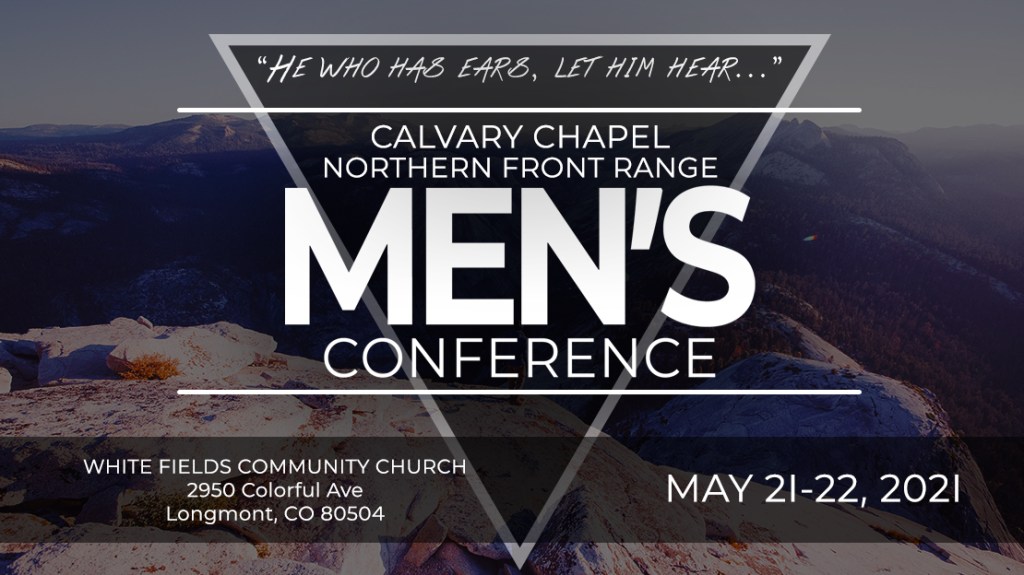
We are excited to host this conference at our church this year on May 21-22. This is a conference which has been going on for years in Cheyenne, WY – but this year the organizers had the idea to invite men from other churches in the region.
Speakers include Shaun Sells (Calvary Chapel Cheyenne), Michael Payne (White Fields Community Church), and Jeff Figgs (Calvary Chapel Greeley).
The theme and messages come from Revelation 2-3 and the letters to the 7 churches.
This will be a great time of fellowship, prayer, and study, culminating with a steak lunch on Saturday, May 22.
In the latest episode of the Theology for the People podcast, Mike and I discuss the question of whether God hates religion.
Is religion opposed to relationship with Jesus? What is “religion” anyway – and is Christianity a religion or not?
In this episode we look at uses of the word “religion” in the Bible (there are 5 of them!), as well as passages like Isaiah 1 and Amos 5 where God talks about despising the religious practices of Israel; the very practices which He himself commanded them to do earlier in the Bible…
We also examine Jefferson Bethke’s spoken word YouTube video: “Why I Hate Religion but Love Jesus,” as well as a New York Times article about popular views on religion and biblical examples from Jesus, the apostles, and the New Testament church.
In this episode Nick and Mike discuss what the Bible has to say about religion and how God feels about it. Is religion opposed to relationship with Jesus? What is "religion" anyway – and is Christianity a religion or not?
We look at uses of the word "religion" in the Bible, as well as passages like Isaiah 1 and Amos 5. We also examine Jefferson Bethke's spoken word YouTube video: "Why I hate religion but love Jesus," as well as a New York Times article about popular views on religion – along with biblical examples from Jesus, the apostles, and the New Testament church.
Recently a reader of this site reached out asking for my thoughts about this question:
If Jesus came to save sinners, then why didn’t he come before the flood in the time of Noah?
It’s an interesting question. If God so loved the world that he sent Jesus to save sinners, then why did he wait so long? Could more people have been saved if God had sent Jesus sooner – and if so, then why did He wait as along as He did to send Jesus?
The Nature of Justice and Mercy
First of all, it is important to remember the nature of justice and mercy. Justice means giving someone exactly what they deserve: no more, no less. Mercy, on the other hand, means not giving someone the judgment they deserve for the wrong things they’ve done.
In his book, The Cross of Christ, John Stott explains that God not only must do justice because He is God and is obligated to do justice, but that God desires to do justice because it brings Him satisfaction to act justly, and that acting justly is part of His glory, goodness, and righteousness.
However, God also desires to show mercy. The difference between justice and mercy, however, is that mercy is not owed to anyone.
Showing mercy to those to whom He chooses to show mercy is God’s prerogative (Romans 9:15, Exodus 33:19). He is not obligated to give it to anyone. If God were to give us what we deserve, the result would be judgment.
God Did Not Leave Himself Without Witness
In the time of Noah, though many people perished in the flood, it is important to remember that those people had a chance to repent and be saved from the flood.
2 Peter 2:5 tells us that Noah was a preacher of righteousness, and 1 Peter 3 tells us that Jesus preached through Noah to those who were disobedient in his time. As Noah built the ark, which took a very long time, he was apparently preaching a message of righteousness and repentance. However, it would seem that no one heeded his warning.
In other words, the people who died in the time of Noah did not perish for lack of opportunity to be saved from the flood, but because they were in knowing rebellion against God, and they refused to accept the offer of salvation which was extended to them via repentance and heeding the warnings of Noah.
Biblical Anthropology
It is helpful to be reminded of a biblical view of anthropology here: contrary to the modern assumption that people began as animists (worshipers of nature), who over time then began worshiping a pantheon of abstract deities, and eventually “evolved” into monotheism – the biblical view of anthropology is different. According to the Bible, people didn’t discover God, rather: from the beginning people knew God and walked with God, until they knowingly turned away from God.
The Bible begins with a description of the first humans as monotheists, who knew God. Polytheism and animism then came about as a result of the devolution of sin. As Paul explains in his letter to the Romans:
For although they knew God, they did not honor him as God or give thanks to him, but they became futile in their thinking, and their foolish hearts were darkened. Claiming to be wise, they became fools, and exchanged the glory of the immortal God for images resembling mortal man and birds and animals and creeping things.
Romans 1:21-23
Here’s what’s really interesting: Genesis 5 tells us that there were people alive at the time of Noah who had lived at the same time as Adam! Namely: Jared and Methuselah, if you run the numbers, were alive when Adam was still alive. Because of the length of the lives of early people, the people at the time of Noah’s flood were either contemporaries of Adam, or were only removed from him by one or two generations. This means that they could have heard first-hand accounts from him.
Could People Go to Heaven Prior to Jesus’ Death and Resurrection?
Simply put, prior to Jesus’ death and resurrection, those who died in faith went to a place called Abraham’s bosom: a place of comfort for those who died in faith while they awaited the fulfillment of their redemption by the Messiah. The way to receive this salvation and redemption was to humble oneself before God, cast yourself on His mercy, and put your faith in His promise to bring salvation through the promised Savior (as opposed to saving yourself by your good works).
Paul tells us in Galatians 4:4 that “in the fullness of time, God sent His Son.” That phrase “in the fullness of time” implies that it happened “at just the right time.”
Conclusion
Those who lived in the time of Noah did not perish for lack of information, nor for lack of opportunity, but because they “suppressed the truth in unrighteousness,” “loved darkness more than light,” and rejected God’s calls to them (through Noah) to repent and be saved. Perhaps it is for this very reason that the people in the time of Noah are mentioned several times in the New Testament, so that modern people would be warned not to follow in their footsteps.
What is the benefit of attending church? A person is demanded to surrender personal faith in Jesus and personal relationship with Jesus Christ to become a Borg in a socialist swamp. It’s great for becoming robotized, lobotomized, Romanized, and institutionalized.
But its pointless for knowing Jesus Christ personally.
Don’t go. Jesus isn’t welcome there. Conformity is King. Not Jesus.
I was tempted to ignore the comment, but I think this view of church is actually pretty widespread, even amongst professing Christians, that it warranted a response. And since I’ve recently started the Theology for the People Podcast, I figured this would be a good topic to discuss in more detail there.
In this episode Nick and Mike discuss a comment that came in to the Theology for the People blog claiming that church is only good for "becoming robotized, lobotomized, Romanized, and institutionalized," and is "pointless for knowing Jesus Christ personally." This comment represents a not-uncommon attitude to "organized religion" in general and church in particular.
This episode includes discussions about the Bible, Jesus, American history, and Henry David Thoreau.
The book recommended in this episode is The Bible in America: Essays in Cultural History
Our radio ministry has been expanding and we felt this was a good time for some rebranding. As of April 1, 2021, “Life in the Field” has become “Be Set Free”
Our program airs Monday-Friday at 9:30 AM and 2:30 PM, and Sundays at 1:00 PM on GraceFM: 89.7 FM along the Northern Front Range (Cheyenne, WY – Castle Rock, CO) and 101.7 in Colorado Springs, CO. We can also be heard online at gracefm.com and on the GraceFM app.
Along with this rebranding, we have started a dedicated webpage for Be Set Free, where you can find each day’s message from the radio: besetfreeradio.com. You can even sign up on the site to have those messages delivered directly to your inbox.
You can also subscribe to the Be Set Free Podcast, and every day you will get that day’s episode delivered directly to your podcast app. Go to: Be Set Free Podcast
Be Set Free is a listener-supported ministry, and if you would like to contribute to helping to spread the gospel over the airwaves through clear, relevant expository Bible teaching, you can donate here.
Date: 2024 April 11
Hebrews 12:1-13 Fixing our eyes on Jesus as the cure for enduring hardship. Understanding the role of the Father's discipline in our lives
From our series: Hebrews: An Anchor for the Soul
I was reading in John, and during Jesus’s discussion with Nicodemus, Jesus makes a statement that gave me pause, “No one has ascended into heaven except he who descended from heaven, the Son of Man” (John 3:13)
Immediately I thought, “Wait, what about Elijah, or potentially Enoch?” They may not have descended in the same way as Jesus, or had a special nature as he did, but they ascended physically and yet seem to be ignored in this exclusive statement.
Great observation! Here are some important things to consider, which can bring clarity to this statement from Jesus:
Which Heaven is Jesus Referring To?
In ancient thinking, the word “heaven” was used in three ways (and it often used in these same three ways in our modern vernacular as well).
The “first” heaven = the sky, or the atmosphere, i.e. the place where birds and planes fly.
The “second” heaven = outer space, or the stratosphere: the place beyond Earth’s atmosphere, where stars and other planets are located.
The “third” heaven = the abstract use of the word, which designates not a geographical location, but the spiritual plane in which God and other invisible spirits dwell.
Paul the Apostle speaks of being caught up to the third heaven, in what was either a vision or perhaps even a near-death experience, in 2 Corinthians 12:2. Paul also speaks of the “heavenly places” in Ephesians as the place where Jesus is seated with the Father.
And yet, we know can surmise from different passages in the Bible, such as Luke 16 and others, that those who died in faith prior to the death and resurrection of Jesus did not go to “heaven” in the sense of the immediate presence of God, rather they went to Sheol, the dwelling place of the dead, where they awaited either the completion of their redemption or the final judgment of God.
In this case, it would seem that when 2 Kings 2:11 says “And Elijah went up by a whirlwind into heaven,” it means that his body was caught up into the sky, not that his soul was taken to the immediate presence of God.
This would make sense in light of the rest of the text in 2 Kings, in which the “sons of the prophets” who witnessed this take place insist that they go and recover the body of Elijah that was picked up in this whirlwind. With Elijah and Enoch, though their souls were taken from this Earth, they would have gone to “Abraham’s bosom” (the part of Sheol reserved for those who died in faith – see article linked above).
Jesus’ point in John 3:13 is that Nicodemus should listen to what he has to say about Heaven since no human person has ever gone to heaven, yet he (Jesus) is the only person who has come from Heaven to Earth, and is therefore uniquely qualified to give accurate insight and explanation into Heavenly realities.
“Ascended” versus “Taken Up”
Another possible explanation is that when Jesus says that he is the first who will “ascend” into Heaven, he is correct in the sense that he will ascend by his own power and volition, whereas Enoch and Elijah were “taken up” by God, not by their own power or will.
Hopefully these explanations helped. If you see anything I missed, please leave a comment – and keep on studying God’s Word and asking questions as you go!