
You Never Outgrow the Gospel

asphalt dark dawn endless

Martyn Lloyd-Jones tells the story of how the church he grew up in began with a great revival, but slowly died over time. When he inquired about what had led to this decline, an older man attributed it to the fact that when the revival had taken place, the gospel was being heralded regularly and powerfully, but over time it became assumed that such gospel proclamation was no longer necessary, since those who attended the church were already Christians.

Lloyd-Jones determined that he would always preach the gospel, no matter who he was preaching to. Not only did he consider it a “fatal assumption” to think that just because someone attends church, they must be a Christian, he also believed that Christians never outgrow the need to hear the gospel. [1]

The gospel is not good advice about what you ought to do for God, it’s the good news about what God has done for you in Christ. Paul says that the gospel is “the power of God for salvation to all who believe” (Romans 1:16). Paul told the Ephesians that it was when they heard the gospel of their salvation and believed in Jesus that they were saved (Ephesians 1:13)

Clearly those who do not yet believe need to hear the gospel, so they can know who Jesus is and what he has done for them, so that they can believe and be saved. What about those who already believe; what do they need? Biblical instruction? Absolutely. But do you know what else believers need in order to grow in their faith and relationship with God? They need to hear the gospel.

The Gospel is Not Just the Starting Point of Christianity, It is the Beating Heart of Christianity

In his letter to the Galatians, Paul wrote to a group of Christians who, even though they were committed followers of Jesus, they were still trying to be justified before God by their own works. Paul wrote to these believers to remind them of the gospel and instruct them about the gospel: what Jesus had accomplished for them, and what it meant for their lives.

Are you so foolish? Having begun by the Spirit, are you now being perfected by the flesh? (Galatians 3:3)

Even though they were already believers, they still needed to be hear the gospel.

An Apostolic Pattern

This is not unique to Paul’s letter to the Galatians; it is a pattern that is seen throughout the apostolic letters in the New Testament. When the apostles wrote to the early Christians, they did not merely tell them how they ought to live now that they were followers of Jesus, rather they reminded them of the gospel, and encouraged them to respond to the gospel in every area of their lives.

The apostles’ pattern was to remind believers of the gospel, as the motivation and the pattern for the Christian life.

What this means is that you never outgrow the gospel. No matter how long someone has been a Christian, they will never get to the place where they no longer need to hear the gospel.

It means that the gospel is not just the means by which people become Christians, it is also the means by which we grow as Christians, as we believe, embrace and apply the gospel to every area of our lives.

When Paul instructed the Ephesians about marriage, he didn’t tell husbands and wives to love and respect each other because it is “the right thing to do,” rather he instructed them about marriage on the basis of the gospel (Ephesians 5:22-33)

When Paul wrote the Corinthians about generosity, he didn’t tell them that this is what they have to do because they are Christians, rather he appealed to them on the basis of the gospel, saying, “For you know the grace of our Lord Jesus Christ, that though he was rich, yet for your sake he became poor, so that you by his poverty might become rich.” (2 Corinthians 8:9)

This is motivation on the basis of the gospel of God’s grace. Whereas laws can control behavior, they do not affect the heart. Conversely, when the heart is changed by the love and grace of God, actions will follow.

The apostolic pattern in the New Testament is to preach the gospel both to unbelievers and believers, and to show how the gospel speaks to every area of life. May we be those who follow this pattern by applying the gospel to all of life, and faithfully proclaiming it whenever we teach or preach, no matter who our audience.

Why Should Christians Visit Israel?

I have been in Israel for the past week with a group from White Fields and Calvary Chapel Brighton.

IMG_0823.jpeg

We spent the beginning of our trip on the coast, visiting Joppa and Caesarea, both important sites in the Book of Acts, and then headed up to the region of Galilee, where Jesus did the majority of his ministry. Then we drove to Jerusalem, following the Jordan River, and passing places such as Gilgal (see Joshua 4) and the site of Jesus’ baptism and the wilderness where he was tempted directly afterwards.

After seeing some important places in Jerusalem, including the Mount of Olives, the Garden of Gethsemane, the southern steps of the Temple and the Western Wall, we spent a day at the Dead Sea, visiting the place where Jesus was baptized in the Jordan River, seeing En Gedi where David hid from Saul in 1 Samuel 24, and going to Qumran where the Dead Sea scrolls were found and where John the Baptist was likely connected.

IMG_1177.jpeg
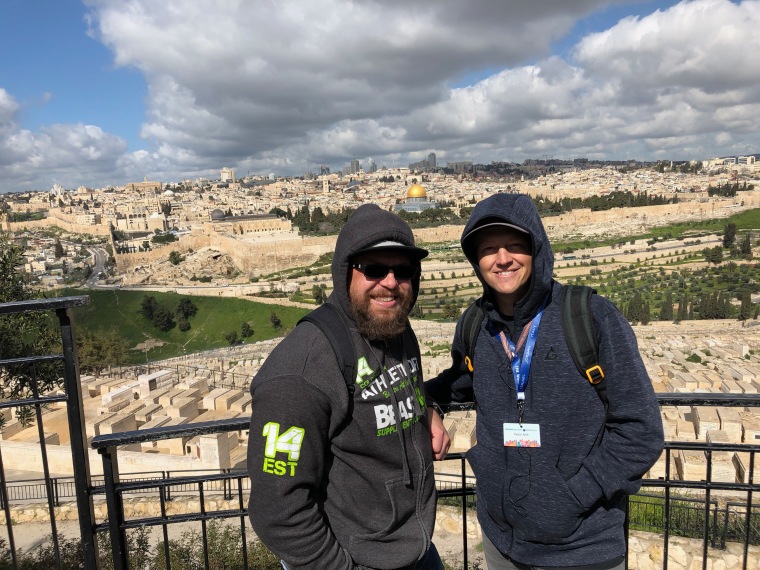
Jerusalem from the Mount of Olives, looking over the Kidron Valley

We will conclude the trip by visiting the Pool of Bethesda (John 5), following the way of the cross to Golgotha and seeing the garden tomb.

The trip has been incredible. I have particularly enjoyed getting the lay of the land and realizing the distances between places, and what they look like. Praying in the Garden of Gethsemane and standing where the church was born on Pentecost have been incredible experiences.

Why Should Christians Visit Israel?

Someone jokingly suggested that the benefit of visiting Jerusalem is that you can get the “before and after effect”: when the New Jerusalem comes (see Revelation 21), you will be able to compare it with the Old Jerusalem and see how much it’s improved! (Personally, I hope they clean up the Muslim Quarter a little bit…)

Interestingly, there is a neighborhood in Jerusalem called “New Jerusalem”. I went there, and it was nice, but not “streets of gold” nice. I’m looking forward to the real thing 🙂

All joking aside, there is one key reason why it is beneficial for Christians to visit Israel: Because, out of all world religions, what makes Christianity unique is that our faith is not based on abstract concepts, but on historical events which either happened or they didn’t.

What you learn from a tour of Israel, is that the New Testament accounts stand up to scrutiny. The New Testament talks about real places and real people and real events which had many witnesses, and which have been verified by archaeologists and historians. As Paul the Apostle said: “These things were not done in a corner!” (Acts 26:26)

In fact, because archaeology is a relatively young science, archaeologists are uncovering new findings all the time, and their findings corroborate rather than contradict New Testament accounts.

A visit to Israel is helpful for Christians, because it builds your faith in the historical events upon which Christian faith is based. This has been my first trip to Israel, but I expect it won’t be my last.

IMG_1205.jpeg
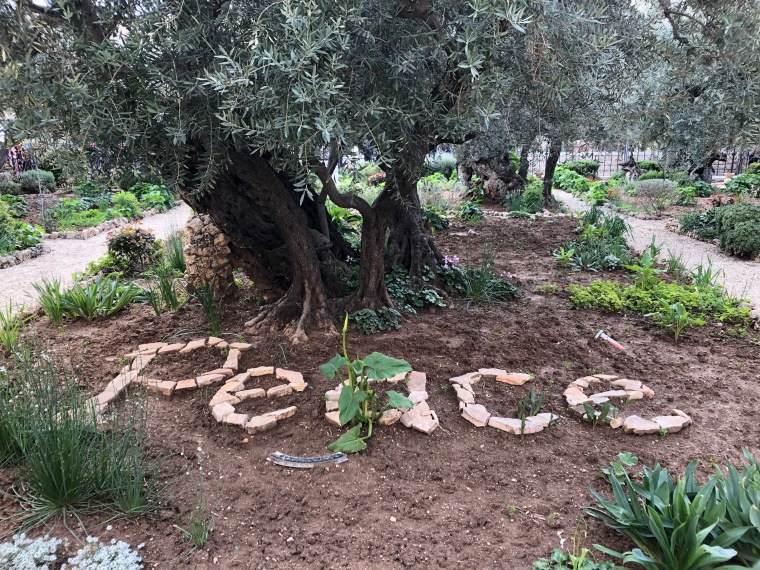
Olive Trees in the Garden of Gethsemane. Some are over 2000 years old. #eyewitnesses

My Recent Poll: Here’s What I’ve Learned So Far

chart close up data desk

A few weeks ago, I posted an anonymous poll here on the site, in which I asked the question: How would you, or others you know, finish this sentence: “I could never believe in a God who ________”?  (click here for that post)

If you haven’t filled out that poll yet, you can access it here.

I got a good number of answers, but the bigger the sample size, the better for this sort of thing, so I would love it if you would go over and fill out the poll and send it to others who wouldn’t mind giving their voice.

This poll was done in preparation for a sermon series we will do at White Fields starting April 28, the week after Easter.

Here’s what the poll results have shown so far:

Theodicy is the biggest issue for those who took our poll

The top two responses were: “I could never believe in a God who:”

  • Sends people to Hell
  • Allows bad things to happen to good people

There were several write in answers which were related to these two, such as: “I could never believe in a God who:”

  • Can heal, but doesn’t heal all
  • Allows good people to die, but lets awful people live
  • Allowed the Sandy Hook massacre
  • Allows miscarriages
  • Chooses some and not others

These issues all fall under the category of Theodicy, which essentially means “the defence of God’s goodness”

The Trilemma of Theodicy

Very famous in this regard is what is called the trilemma of theodicy. A trilemma is like a dilemma, only instead of two issues (di) that are at odds with each other, in a trilemma there are three (tri).

The trilemma of theodicy states that there are three things the Bible states are true about God, which cannot all be true at the same time:

  1. God is loving
  2. God is all-powerful
  3. Evil exists

The argument goes that since evil exists, either: God must not really be loving, or God must not really be all-powerful. Either God is incapable of stopping evil, even though he’d like to – in which case he is not all-powerful, or God is capable of stopping evil, but chooses not to, in which case he must not be truly loving.

The logical flaw in the trilemma

The big flaw in this thinking is that it takes into account only two of God’s attributes: his love and his power.

But does God have only two attributes? Certainly not! God has a myriad of attributes, including that he is: all-knowing, providential, eternal, etc. Simply adding another attribute of God to the equation changes it fundamentally, and removes the “lemma” out of the tri-lemma!

For example, if we say that God is not only loving and all-powerful, but also all-knowing and/or providential, it changes things completely. It means that it is possible for God to allow bad things and use them for good purposes, and even for our ultimate benefit. The fact that God is eternal reminds us that comfort in this life is not the pinnacle of existence, therefore it is also possible for an eternal God to allow temporal hardship in order to work an eternal good purpose. The Bible says this explicitly in 2 Corinthians 4:17 – For this light momentary affliction is preparing for us an eternal weight of glory beyond all comparison.

An Unloving God Who Creates Unloving Followers?

Following closely behind in popularity were: “I could never believe in a God who:”

  • Doesn’t affirm some people’s sexuality
  • Creates hateful and hypocritical followers

Surprising Lesser-Issues

To my surprise, the questions which seem to not be major issues in people’s minds are were:

  • The reliability of the Bible
  • Proof of the existence of God

I wonder if this is the result of much effort put into these areas by Christian apologists, including CS Lewis with Mere Christianity and Timothy Keller with The Reason for God, or if, on the other hand, Christians are putting a lot of effort into questions which people don’t currently perceive to be pressing questions which cause them to be skeptical of Christianity. Either way, these issues are certainly fundamental to Christian faith and belief, and speaking into them can hardly be said to be in vain.

Other lesser-issues, which I expected would receive more responses were:

  • Apparent genocides in the Old Testament
  • Suppression and subjugation of women and minorities

I wonder if the reason for this is because there are very well-known evidences that Christianity and the Bible have done more to encourage the uplifting of women and minorities around the world, evidenced by the fact that wherever Christianity has gone in the world, women and minorities have been empowered and there has been movement towards equal rights, equal pay, etc. Surely there is room for improvement in these areas, but the point is that the Bible provides the theology which empowers women and promotes equality for people of all races. How it is implemented is a human issue.

More to Come

I will write more on some of these issues in the weeks to come, and will address them in the upcoming sermon series.

If you haven’t filled out the poll yet, I’d love it if you would: click here to access it.

Poll: “I Could Never Believe in a God Who…”

Starting April 28, the Sunday after Easter, we will be doing a series at White Fields called “I Could Never Believe in a God Who…”, in which we will be addressing some of the common struggles and objections that people have about God, the Bible, and Christianity.

You can help me by taking a second to fill out this quick anonymous poll to let me know what are some of the biggest hurdles to faith that you have experienced yourself or encountered in other people. Thanks!

Please also share this with others; I’d like to get as many responses as possible to get a clear picture of the things people are really struggling with.

(email subscribers can click here to access the poll)

Atul Gawande’s ‘Being Mortal’ and the Need for Hope

Image result for being mortal atul

I recently finished Atul Gawande’s book Being Mortal. It was given to me by a friend from church who recommended I read it, and I’m glad I did.

The Author and his beliefs

Atul Gawande is an American medical doctor, the son of two doctors who immigrated to the U.S. from India. He was raised nominally Hindu, but by his own admission he is functionally secular and non-religious, and the focus of his book is not at all on giving hope beyond this life, only on dealing with the death from a clinical perspective.

However, I would argue that whatever you believe about the future invariably affects the way you interpret the meaning and purpose of life, as well as how you cope with mortality, and this does come through in some of his conclusions.

Content and Highlights

The book begins with a description of physical changes that happen as people age, beginning at age 35.

Dying Well

Next, Atul Gawande gives a brief history of nursing homes. I found this part very interesting. About 50% of Americans die in nursing homes. Some might say this is very sad, which in some ways it is – however, understanding the way that most people died in the past makes you see that this is actually a great improvement over 100 years ago, when many people died in state-funded “poor houses” which even at their best had awful conditions.

He then goes on to describe the development of “assisted living” facilities, and how many have now deviated from their original purpose and design. He also tells stories of people who have sought to improve these facilities through innovation, such as bringing living things, e.g. plants, animals and children into these homes to improve residents’ quality of life.

While the author does say that the older model of a multi-generational home in which elderly people are cared for at home until they die has some benefits, he also shows its limits and downsides, using his own grandfather as an example.

Palliative Care

Atul also describes the benefits of palliative care for elderly people, which is focused on improving a person’s quality of life rather than on invasive treatments which may reduce a dying person’s quality of life even though they have little to no chance of curing them or significantly prolonging their life.

Even though palliative care has been shown to help improve and often prolong a person’s life, one of the sad things Gawande points out is that many insurance providers have stopped paying for palliative care, but they continue paying for invasive treatments, even if they are unnecessary or unhelpful to patients. This perpetuates a cycle of doing everything possible for patients, even if those treatments are not likely to lengthen their life and will probably make their quality of life worse.

The Big Point

Atul Gawande’s main point is summed up in this statement:

“Over and over, we in medicine inflict deep gouges at the end of people’s lives and then stand oblivious to the harm done.”

He argues that as people live longer and more die of old age, we should be focused on helping people stay in control of their lives as long as possible, achieve their goals, and die with dignity.

A Reason for Living

It is impossible to talk about dying without some sort of existential discussion about what gives life meaning and purpose.

At one point, Atul Gawande references the Harvard philosopher Josiah Royce, who said that “simply existing – merely being housed and fed and safe and alive – seems empty and meaningless to us.” He goes on to explain that we all seek a cause beyond ourselves, and it is in ascribing value to the cause and seeing it as worth sacrificing for, that gives our lives meaning.

Royce said that this reason for living was the opposite of individualism. An individualist puts self-interest first, seeing his or her own pain, pleasure and existence as their greatest concern. For the individualist, self-sacrifice makes no sense, but since their own self is the highest cause for which they live, their life has no meaning other than to make themselves happy. Ironically, it is for this reason that happiness and satisfaction will always elude them. For the individualist death is meaningless and ultimately terrifying.

It is for this reason, Gawande explains, that we all need something beyond ourselves and outside of ourselves to live for, and this is why elderly people who have pets, for example, tend to live longer lives.

The problem with Gawande’s search for meaning

The problem with Gawande’s search for meaning, is that he has identified a real need, and yet he basically says in the end that since he doesn’t believe there is anything beyond this life, therefore it is better to give someone the illusion that their life has meaning and purpose and value beyond themselves, even though no such thing really exists.

He does mention that people want their lives to make a difference after they are gone, but what he fails to answer is: to what end?  Why should anyone care about what happens after they are gone, if life is actually meaningless, and after this light burns out there is only darkness? From this same logic, a totally selfish existentialism could also be argued for – such as that of the Epicureans: “Let us eat and drink, for tomorrow we die!” – in other words #YOLO – since we only live once, who cares what destruction we leave in our wake for others to deal with?! It’ll be their problem, not ours!

The solution which only the gospel gives

In this search for meaning and purpose, I would argue that it is only the gospel message of Jesus Christ which gives a satisfactory answer to humankind’s search for meaning and hope beyond this life.

It is only the gospel which gives us real hope beyond this life, and a real mission in this life which has more than just illusionary results. In the gospel we have hope for life beyond this one, and the effects of our mission are eternal in nature.

As CS Lewis put it at the end of the Chronicles of Narnia:

“For us, this is the end of all the stories…but for them it was only the beginning of the real story. All their life in this world and all their adventures in Narnia had only been the cover and the title page: now at last they were beginning Chapter One of the Great Story which no one on earth has read: which goes on for ever: in which every chapter is better than the one before.” – CS Lewis, The Last Battle

In order to truly “die well”, what we need is not just dignity, but HOPE. And this is found only and ultimately in the gospel message of Jesus Christ.

Should you read it?

I would recommend Atul Gawande’s Being Mortal. It was full of important thoughts about the process of dying in Western society today. However, I recommend reading the book with an eye to its one glaring shortcoming: it fails to address the need for and the source of HOPE both for this life and the one to come.

Trust Your Instruments

two pilot inside aircraft

This winter our church has been partnering with Agape Family Services, a Longmont-based non-profit which helps people who have been homeless to transition to independence. Agape provides shelter, food, help with overcoming addiction and assistance in finding jobs and a place to live during their 6 month program.

White Fields partners with Agape by teaching a Tuesday morning Bible study for those in the program. It has been great seeing Agape’s work, the effectiveness of the program, and how the people are progressing. One man, for example, who comes to Bible study every week and reads his Bible avidly has, with Agape’s help, gotten sober, found a job, married his girlfriend and is working on finding a place to live when he graduates from the program in the spring. It has been great to witness his progress over the past few months, and to see his completion and countenance improve each week.

This past Tuesday, a man from White Fields named Brad led the Bible study. Brad used to fly corporate jets for a living, and he used an example from that world to illustrate what it means to live and walk by faith:

When Trusting Your Feelings Will Kill You

Brad said that pilots often experience “spacial disorientation”, which means that even if the plane is flying perfectly level, they will feel like they are tilted to one side, and that the plane isn’t going straight, when it actually is.

The danger with this is that if the plane is actually tilted, it will pick up momentum and spiral out of control. So this feeling of “spacial disorientation” triggers panic in your mind and body which tells you that you need to straighten out the plane or else you’re going to spiral out of control – except, if the pilot follows that feeling and “corrects” the plane, they will actually be tilting the plane which can result in entering into a “death spiral” from which they can’t pull out.

The pilot needs to know that what their body and mind are telling them might be incorrect, and rather than relying on those feelings, what they need to do is trust their instruments.

On the instrument panel, a pilot has multiple gyros (in case one fails), which tell them whether they are level. It is an act of faith to trust your instruments rather than your feelings, but if you don’t, you (and your passengers) will experience disaster and tragedy.

Slow Down and Think

I recently finished reading Malcom Gladwell’s book Blink: The Power of Thinking Without Thinkingin which he talks about rapid cognition and intuition. In the book, he discusses this same issue: that generally our minds are very powerful and our rapid cognition is trustworthy, but sometimes it’s not, and we must slow down in order to make the right decision.

He used the example of police brutality in the cases of Rodney King and other incidents, and how rather than being caused primarily by racism, they are caused by officers being in a heightened state of arousal (high heart rate) as a result of a chase, which causes their minds to shut off, and they begin acting without thinking. As a result of research, police departments have gone to great lengths to slow down procedures in order to create more “white space” for officers to be able to think before acting, knowing that sometimes their instincts will lead them to do things in an instant which they wouldn’t have done had they had time to think.

Landing the Plane

Similarly, as Christians, we know that our hearts can be deceitful (Jeremiah 17:19). Proverbs 14:12 tells us that ‘There is a way that seems right to a man, but its end is the way to death.’

So rather than “following our hearts” or doing what feels good in the moment, it is important to think before we act, and trust our instruments, i.e. what God’s Word says is true, not just what we might feel in the moment.

This applies to how we think about ourselves, how we assess our situations and circumstances, and how we react to others.

In our recent study of Habakkuk, we saw that Habakkuk was a man who was struggling to understand why God was allowing certain things to happen, and why God had chosen a course of action which, to Habakkuk, seemed wrong and unfair. God’s response was to remind Habakkuk to “trust the instruments” in those instances when things seemed to be spiraling out of control; he was to remember who God is (e.g. sovereign, good, just), and then look at his circumstances through that lens, trusting that God was working out a plan, even if Habakkuk couldn’t see the whole thing just yet.

You can listen to that study of Habakkuk here: Habakkuk: The Righteous Shall Live by Faith

May we be those who trust the instruments God has given us, lest we end up off-course or in a death spiral – so we reach our final destination.

What Does It Mean to Live “Coram Deo”?

Image result for coram deo

What does it mean to be “in the presence of God”?

This past Sunday at White Fields we studied Isaiah 6 as part of our series, Remember the Prophets

You can listen to the audio of the message here: A Vision of God

In Isaiah chapter 6, Isaiah gives an account of his call to ministry, which took place through a vision he had of God. In our community groups, one of the discussion questions had to do with what it means to be in the “presence” of God.

Coram Deo

Coram Deo is a Latin phrase which literally means “before God”. For Christians, throughout history, the phrase has been used to describe a life that is lived before God, i.e. in constant awareness of His presence, and seeking to experience communion with Him – not just at church or in dedicated times of prayer (although those are not to be neglected!), but as you go throughout your day.

An Uber Driver and a Stay-at-Home Mom

This past week I had two conversations which illustrated the importance of this:

The first was with a lady in community group who drives Uber several hours a day. She described how, sitting in her car, she is able to commune with God; she listens to sermons and even as she’s driving, she converses with God in her soul.

The second was a stay-at-home mom who called in to Calvary Live, the weekly call-in radio show I host on Mondays on GraceFM. She described how she struggles to find time to pray because she is so busy with her toddler, so she has developed a system where she will set timers throughout the day, and when they go off she will pray for 3 minutes uninterrupted. I suggested that perhaps it would be helpful for her to learn instead the practice of “Coram Deo”: living your whole life before the face of God, and conversing with Him throughout the day, not only in dedicated stints.

Pray Without Ceasing & The Practice of the Presence of God

Paul the Apostle wrote to the Thessalonians that they ought to pray without ceasing (1 Thessalonians 5:17). It was in heeding this call that some throughout history were drawn to monastic movements: they became monks and nuns, went away to Bible colleges and the like, so they could truly pray without ceasing. But how can you do that if you have a job or a toddler? For most of the population, retreating from the duties and responsibilities of life in order to pray without ceasing is not feasible, and we must ask the question: even if it were feasible, would it actually be the right thing to do? I would say, No! God has given us a mission in this world, and in order to fulfill that mission, we are not called to retreat from the world, otherwise we cannot be salt and light; a city on a hill is not meant to be hidden (cf. Matthew 5:13-16)

A famous book written in the 17th Century by a monk who called himself Brother Lawrence, is: The Practice of the Presence of God. In it, Brother Lawrence describes his practice of ongoing conversation with God as he went about the duties of his day, which included dishwashing and other chores. Throughout his day, he was living Coram Deo: before the face of God.

An Integrated, Rather than Compartmentalized Life

The principle of Coram Deo is important, because it reminds us that our lives as the people of God are to be integrated, not compartmentalized. In other words: it isn’t that our lives are compartmentalized into different areas: work, family, faith, etc… – but that our faith is integrated into every aspect of our lives: we do our work before the face of God, and unto God’s glory! Our family life is lived before the face of God, and unto His glory!

In other words, to live Coram Deo means to seek to be constantly aware of God’s presence (which is there whether you realize it or not), seeking to live in constant communion with God, and integrating your relationship with God into every aspect of your life.

This means that you don’t have to be a monk or a nun in order to pray without ceasing. It means that you don’t have to be in vocational ministry (working for a church or Christian organization) in order to serve God through your work!

For more on this, read: Vocation and Calling According to the Reformers

I invite you to join me in seeking to live Coram Deo today and everyday moving forward!

For more on Isaiah’s vision of God, check out this video discussion I had with Worship Pastor Mike Payne:

Martin Luther King Jr. On Christianity and the Gospel

31 Powerful Quotes by Dr. Martin Luther King, Jr.

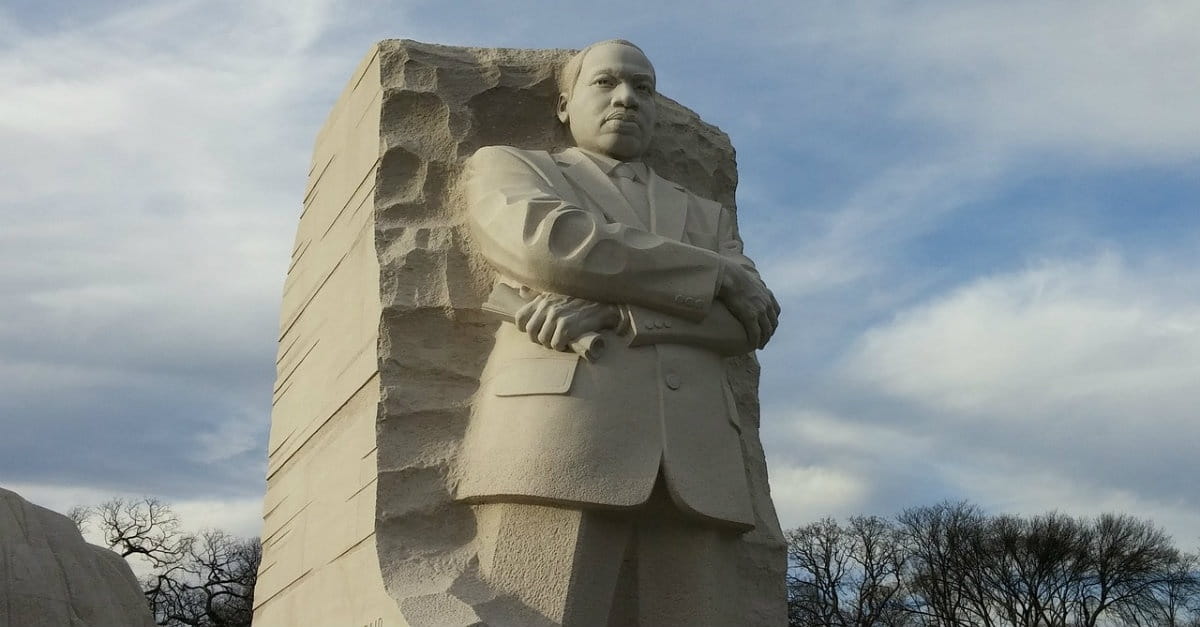
Today is Martin Luther King Jr. Day in the United States, the day when we commemorate the civil rights leader, who was also an ordained Baptist pastor.

I’ve written before about MLK Jr.’s letter to fellow pastors from his jail cell in Birmingham, and about his most famous speech.

Here are a few things he said about Christianity and the gospel:

1. “The end of life is not to be happy, nor to achieve pleasure and avoid pain, but to do the will of God, come what may.”

2. “There is so much frustration in the world because we have relied on gods rather than God. We have worshiped the god of pleasure only to discover that thrills play out and sensations are short-lived.”

3. “The early Christians rejoiced when they were deemed worthy to suffer for what they believed. In those days the Church was not merely a thermometer that recorded the ideas and principles of popular opinion; it was a thermostat that transformed the mores of society.”

4. “If any earthly institution or custom conflicts with God’s will, it is your Christian duty to oppose it.”

5. “We need to recapture the gospel glow of the early Christians who were nonconformists in the truest sense of the word . . . Their powerful gospel put an end to such barbaric evils as infanticide and bloody gladiatorial contests.”

6. “Faith is taking the first step even when you don’t see the whole staircase.”


Making Resolutions is Not a Lack of Faith, It Can Be an Act of Faith

You know the drill: the parking lot at the gym is full on New Year’s Day, but by March it’s empty again. “Why bother making New Year’s resolutions,” some ask, “if I’m just going to break them anyway?”

Others, I have noticed, state that they do not make New Year’s resolutions because they choose instead to “trust in God” rather than “rely on themselves,” assuming that to make plans and set goals is antithetical to faith, trust and reliance on God.

But is it?

I might argue that not setting goals and making plans is what reflects a lack of faith.

Real Faith Manifests Itself in Actions

The theme for our ministry year at White Fields for 2019 is: “Faith in Motion”, and during this year, we will be studying the Epistle of James, as well as looking at the lives of some of the Old Testament Prophets, because James tells us to “remember the prophets who spoke in the name of the Lord. Take them as examples of patient endurance under suffering.” (James 5:10)

49124887_529821080863590_6906526974991138816_n

We will begin that series this Sunday by looking at Amos: a man who – in a time of “professional prophets” was a mere shepherd and fig-picker, but was given a calling and message from God, and he responded faithfully. In other words: his faith in God was reflected in his actions of obedience.

James famously tells us: “I will show you my faith by my works.” (James 2:18). The point is clear: real faith manifests itself in actions. If you really believe something is true, you will live – and plan – accordingly.

However, James also warns us against presumption in this. He says: ‘Come now, you who say, “Today or tomorrow we will go into such and such a town and spend a year there and trade and make a profit”— yet you do not know what tomorrow will bring. What is your life? For you are a mist that appears for a little time and then vanishes. Instead you ought to say, “If the Lord wills, we will live and do this or that.” (James 4:13-15)

The solution, James tells us, is NOT to not make any plans, but rather to still make plans, but submit those plans to God, and be flexible if God decides to take you in a different direction.

In other words: making resolutions (whether at the New Year or any other time of the year) can actually be an outworking of genuine faith. If you set goals which are in line with biblical and godly values, and make plans for how you are going to do those things, that is an act of stewardship.

A Matter of Stewardship

God has a LOT to say about stewardship in the Bible – starting with: Moreover, it is required of stewards that they be found faithful. (1 Corinthians 4:2). The point of stewardship is that you have been entrusted with certain things, and given a responsibility to use them according to the master’s wishes and purposes.

Jesus told his disciples: “I am the vine, you are the branches. Apart from me, you can do nothing.” (John 15:5) But to conclude that this means that we should then never attempt to do anything would be foolish and not at all what Jesus intended. It is not apart from Him that we attempt to accomplish anything, but with Him and by His power.

Paul the Apostle wrote this: “But by the grace of God I am what I am, and his grace toward me was not in vain. On the contrary, I worked harder than any of them (the other apostles), though it was not I, but the grace of God that is with me.” (1 Corinthians 15:10)

It is wrong to think that planning, effort and thoughtfulness are somehow opposed to spirituality. Rather these are faith in motion: the outworking of values which come as a result of seeking God and seeking to follow God – similar to Daniel, who “resolved in his heart not do defile himself” while in Babylon. (Daniel 1:8) That was a resolution based on a conviction, and an act of faith, not of self-reliance.

Challenging Goals Actually Make You More Dependent on God

One of the greatest benefits of setting attainable, yet challenging goals is that it also fuels my prayer life. If I set goals that I cannot achieve on my own, apart from the work of God, then I am in a position of being even more dependent on Him.

My Resolutions Annual Goals

I don’t set “New Years resolutions” per se, but what I do every year is set attainable, yet challenging goals for the year which serve as guides for me later on, when I’m not feeling motivated or when I lose steam or need to be reminded of what I should be working on or towards.

I’ve found that having goals keeps me focused and motivated over longer periods of time. I can look back at them and be reminded of the things which I believed at one time were important guides to keep me on track.

Some of my goals are family-related. Some are related to my work as a pastor. Many others are personal. I set goals for how many books I will read, and in which languages. I set goals for how many kilometers or miles I will run, and I set goals to accomplish certain projects.

I have been doing this for the last several years, to good effect. I haven’t always met all of my goals, but at least having the goals kept me moving in the right direction on the days when I am tired or begin to miss the forest for the trees – and lose sight of the big picture.

My Advice on Setting Goals: Make them Specific and Measurable

I encourage you to consider setting some goals here at the outset of the year. If you are a Christian, let biblical and godly values drive your goal setting. But don’t only set goals, also map out plans for actually attaining them. If you plan to run 500 miles, calculate how many miles you will need to run each week. If you plan to read through the Bible this year from cover to cover, figure out how much you need to read each day in order to do that.

Don’t make goals that are not specific; rather than saying “I want to get in shape” or “I want to be kinder”, set concrete, specific and measurable goals, so that you will be able to measure whether you succeeded in reaching those goals or not.

I wish you all the best in this new year! May it be a year in which you walk with God like never before!

“They worshiped Him, but some doubted.”

adult art backlit boy

One of the most intriguing phrases to me in the Gospel of Matthew is found in Matthew 28:16. It says that after Jesus’ resurrection, the 11 disciples (Judas was gone now) went to Galilee, to the mountain where Jesus had directed them. And when they say him they worshiped, but some doubted.

“When they saw him they worshiped him, but some doubted.” (Matthew 28:16)

It would seem that it is possible to worship and have doubts – at the same time!

Doubt is Part of Having Faith

In fact, there is a sense in which doubt is an inherent part of faith.

Jude tells us to “have mercy on those who doubt” (Jude 1:22)

For more on doubt and faith, check out: The Role of Doubt in Faith

It has been said that “A faith without some doubts is like a human body without any antibodies in it.” 1

It is important that we ask the hard questions and wrestle through our doubts in order to make sure that what we believe is really true! Anselm of Canterbury famously defined the study of theology as, “Faith seeking understanding”.

So it would seem that is it possible to worship and have doubts – at the same time.

Why Did Matthew Include This Detail?

What is interesting is to consider why Matthew included this phrase in his gospel account. I believe it is because Matthew, with a heart of empathy and pastoral sensitivity, recorded this detail about doubt so that readers would be encouraged in their own struggles between worship and doubt.

This detail shows us that the disciples were not spiritual giants; Jesus gave the “great commission” to go out into all the world and carry on his work by making disciples of him – to an ordinary group of people like you and me.

What Should We Do With Our Doubts?

I was really encouraged this year by a podcast episode I heard this year about the importance of directly addressing the doubts that people have in regard to Christianity: not only for the sake of those who aren’t Christians, but also for the sake of those who are sitting in our churches, who are worshiping, yet they are struggling with doubts. By addressing some of the opposition to Christianity, you are speaking both to critics of Christianity, but also to those who want to believe, but are struggling to do some in some areas.

We did a series earlier this year, which has borne a lot of fruit – even residually. It was called: The Trouble Is… (link to sermon audio – and – link to YouTube follow-up videos). In this series we addressed some of the reasons why people commonly reject or doubt Christianity, including: Science, Hypocrisy, Hell, Suffering, and others.

We put that series onto pen-drives and have handed them out at community events here in Longmont, as well as made them available for free for people who come on Sunday mornings for church, and we have not been able to keep up with demand. We have handed out several hundred of these so far, as people take them to give to friends and co-workers. In fact, I had someone tell me the other day that they have been using the series to lead a group discussion at their workplace; every week they listen to one message and then watch the YouTube follow-up video, and then discuss it. Attending this group are people from all kinds of backgrounds, including agnostics, Buddhists, and lapsed Christians. Very cool to see God using it in this way!

What should we do with our doubts? We should press into them, and seek out answers, because if what the Bible says is true, then it will hold up under scrutiny, and our seeking will lead to finding, which will lead to the dispelling of doubts and the strengthening of faith. This is exactly what happened with the disciples themselves, who – though they doubted here in Matthew 28 – they were able to dispel their doubts and became so convinced of the reality of it, that all of them suffered for it, and all but one (John) gave their lives for it!

I Could Never Believe in a God Who…

As we look forward to the new year and plan our teaching schedule, we will be doing another series along these lines. Likely, this will become an annual thing for us.

This one will be called “I Could Never Believe in a God Who…” We will spend 6-7 weeks directly addressing the questions that people struggle with, such as: sexual orientation, genocide in the Old Testament, the historicity of the Bible, why “bad things happen to good people”, etc.

As I did previously, I will be posting a poll online to gather information and would love your feedback, so please keep an eye out for that.

In the mean time, don’t let your doubts stop you from worshiping! But don’t let your doubts derail you either. Press in, seek God, and seek the answers to the questions you have. You will be strengthened in the process, and you will also be equipped to help others.