As a young Christian, by God’s providence, I ended up in a church which had been founded as a result of the “Jesus Movement” of the 1960’s and 70’s, which many people have said was the last great revival of our recent times.
My pastor, Tom Stipe, was a big part of the Jesus Movement and the famous stories of “the tent” at Calvary Chapel in Costa Mesa, CA – which was the temporary sanctuary the church used while their new building was being built. During those times, Tom oversaw the Saturday night outreaches with Christian bands, and then he would share the gospel with those who had gathered to hear the bands. Tom went on to found Maranatha! Music before moving to Colorado to plant a church in Boulder, which later moved to Denver – and which I joined early in early 2000.
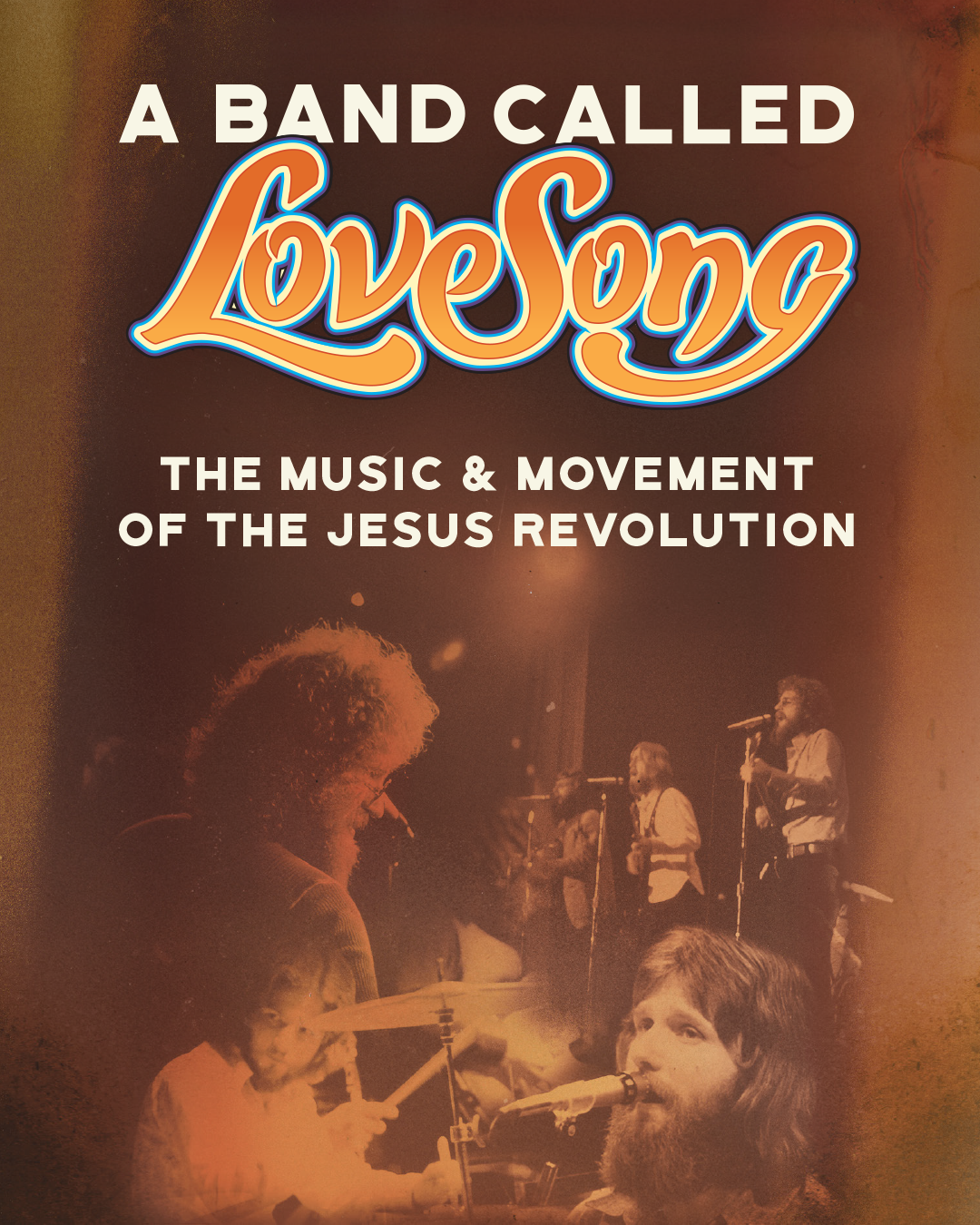
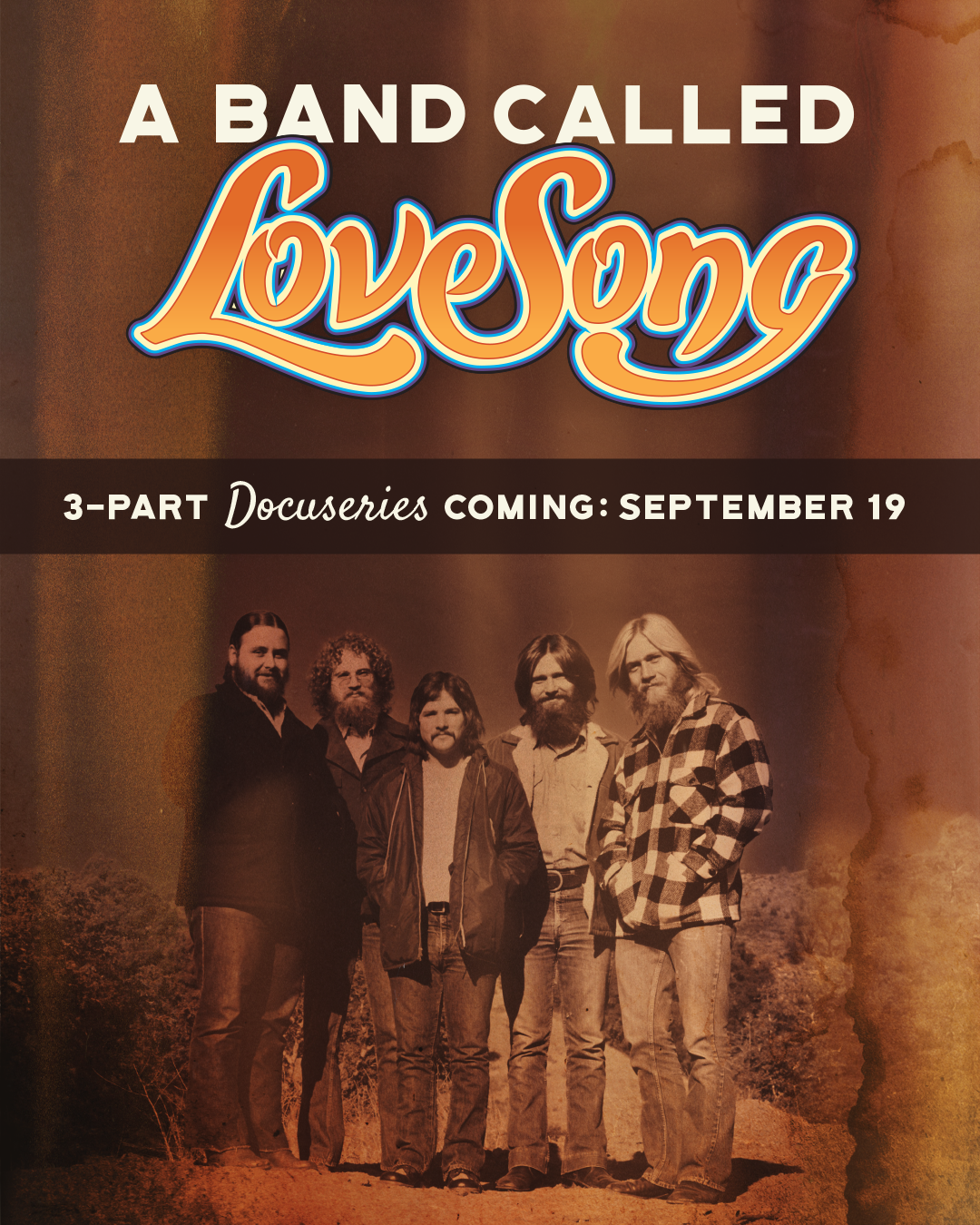
Recently a new documentary series came out about the music of the Jesus Movement, focused on one of the great bands from the era called LoveSong. The docuseries is out now on Amazon Prime Video and on SalemNOW. You can also find more information about it by visiting the aBandCalledLoveSong.com.
This documentary tells the story of the Jesus Movement through the eyes of the band, including their famous audition with Pastor Chuck Smith, and the birth of Contemporary Christian Music.
This docuseries reflects the essence and identity of the Calvary Chapel movement and the ongoing legacy of its ministry. I recommend that you check it out!
When we talk about “the Early Church” many people’s minds immediately go to the first generation of Christianity, recorded in the Book of Acts and addressed in the New Testament. But what happened after that, and why does it matter for Christians living today?
Matt Pursley is the Executive Pastor at Park Hill Church in San Diego, California. He has a Masters in Christian History, and in this episode, Matt and I discuss the First Council of Nicaea: what led to it and what it produced.
We address many of the common misconceptions about Nicaea, and we discuss the early heresies of Marcionism, Gnosticism, and Arianism, and why it’s important for Christians today to understand those heresies, and why they were rejected.
Along the way we also talk about Jordan Peterson, who Matt says is a modern Marcionite, and how the errors of both liberalism and fundamentalism have a similar origin.
The First Council of Nicaea: What Actually Happened & Why Does It Matter for Us Today? –
Theology for the People
When we talk about “the Early Church” many people’s minds immediately go to the first generation of Christianity, recorded in the Book of Acts and addressed in the New Testament. But what happened after that, and why does it matter for Christians living today?
Matt Pursley is the Executive Pastor at Park Hill Church in San Diego, California. He has a Masters in Christian History, and in this episode, Matt and I discuss the First Council of Nicaea: what led to it and what it produced.
We address many of the common misconceptions about Nicaea, and we discuss the early heresies of Marcionism, Gnosticism, and Arianism, and why it’s important for Christians today to understand those heresies, and why they were rejected.
Along the way we also talk about Jordan Peterson, who Matt says is a modern Marcionite, and how the errors of both liberalism and fundamentalism have a similar origin.
Visit the Theology for the People website at nickcady.org
We discuss who the Magi were and why they came to Jerusalem at the exact time they did, when Jesus was born, and how it ties into the book of Daniel and other Old Testament passages.
Additionally, we talk about the history of why the church has celebrated the birth of Jesus on December 25, and whether that has any ties to paganism or not.
500 Year Journey: How the Magi Knew When Jesus Would be Born – with Cory Piper –
Theology for the People
Cory Piper is a teacher who specializes in the Old Testament, theology, and history. He recently wrote a book called 500 Year Journey: How the Magi Knew When Jesus Would be Born
We discuss who the Magi were and why they came to Jerusalem at the exact time they did, when Jesus was born, and how it ties into the book of Daniel and other Old Testament passages.
Additionally, we talk about the history of why the church has celebrated the birth of Jesus on December 25, and whether that has any ties to paganism or not.
Visit the Theology for the People website at nickcady.org
In this episode of the Theology for the People podcast, Nick Cady and Jason Cralley respond to the best arguments for Biblical Unitarianism, which is the a non-Trinitarian interpretation of biblical texts about who God, Jesus, and the Holy Spirit are.
In doing this, we look at the history of Arianism and Trinitarian formulations of who God is, including a discussion about Constantine and the First Council of Nicaea, and the Nicene Creed.
Further, we look into the arguments put forth regarding certain Biblical passages that Unitarians point to as evidence of God’s non-trinitarian, or unitarian nature, and give a defense for trinitarian beliefs.
Below, you can find a link to the video mentioned in the episode about Bad Trinitarian Analogies.
What is Biblical Unitarianism? – Considering the Best Arguments For and Against It –
Theology for the People
In this episode, Nick Cady and Jason Cralley respond to the best arguments for Biblical Unitarianism, the a non-Trinitarian interpretation of biblical texts about who God, Jesus, and the Holy Spirit are.
In doing this, they look at the history of Arianism and Trinitarian formulations of who God is, including a discussion about Constantine and the First Council of Nicaea, and the Nicene Creed.
Further, they look into the arguments put forth regarding certain Biblical passages that Unitarians point to as evidence of God's non-trinitarian, or unitarian nature, and give a defense for trinitarian beliefs.
Make sure to visit the Theology for the People website at nickcady.org
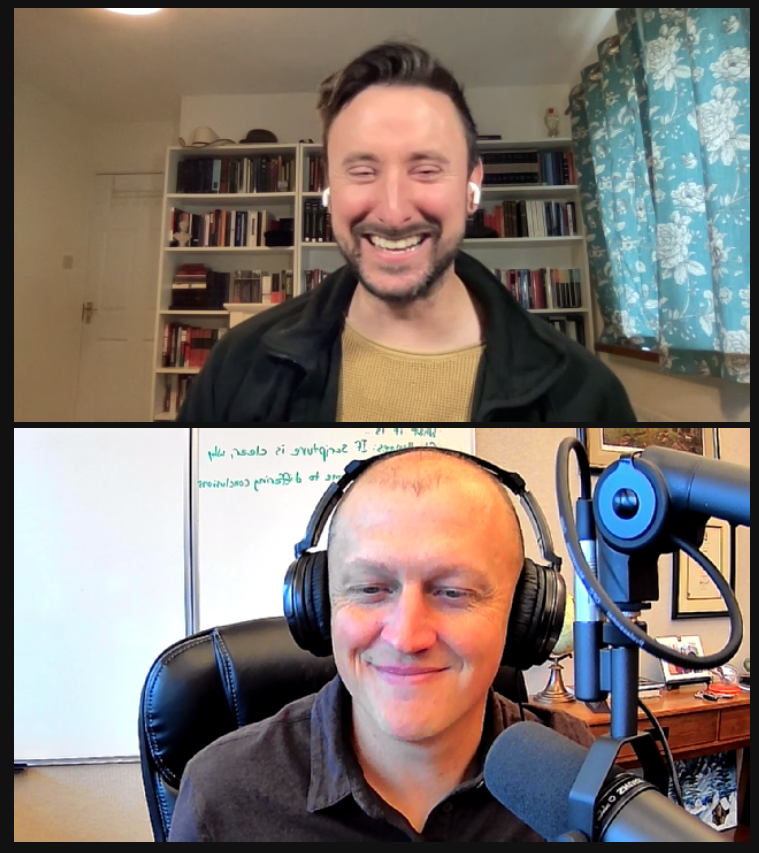
Shane Angland (MA Theology, Dallas Theological Seminary), joins the podcast this week to talk about Bible translations and what makes some translations better than others.
Shane is the lead preaching elder at Ennis Evangelical Church in Ennis, Ireland. A native of the west coast of Ireland, Shane served as a missionary in Ukraine with the International Fellowship of Evangelical Students, and later earned a Masters Degree from Dallas Theological Seminary, where the focus of his studies was on Textual Criticism.
In this episode, Shane explains what Textual Criticism is (and is not), and explains the important elements involved in Bible translation, such as translation philosophy and source documents. He also dispels some common misconceptions about Bible translations, such as that newer translations remove content from the Bible, or that they are less accurate than older translations.
Shane and I have some common friends in Ireland and Ukraine, and it was great getting to know him and listening to him share his knowledge on this subject.
See also the series of articles on Bible translation I posted here years ago:
Shane Angland (MA Theology, Dallas Theological Seminary), joins the podcast to talk about Bible translations and what makes some translations better than others.
Shane is the lead preaching elder at Ennis Evangelical Church in Ennis, Ireland. A native of the west coast of Ireland, Shane served as a missionary in Ukraine with the International Fellowship of Evangelical Students, and later earned a Masters Degree from Dallas Theological Seminary, where the focus of his studies was on Textual Criticism.
In this episode, Shane explains what Textual Criticism is (and is not), and explains the important elements involved in Bible translation, such as translation philosophy and source documents. He also dispels some common misconceptions about Bible translations, such as that newer translations remove content from the Bible, or that they are less accurate than older translations.
If you’ve benefited from this episode, please share it online, and leave a rating and review for this podcast in the Apple Podcast store. Also, visit the Theology for the People Blog at nickcady.org.
Do you not know that you are God’s temple and that God’s Spirit dwells in you? If anyone destroys God’s temple, God will destroy him. For God’s temple is holy, and you are that temple.
This text has been used, particularly by the Roman Catholic Church to say that if a person commits suicide, they go directly to Hell – no passing Go, no collecting $200.
“Mortal Sins” and “Venial Sins”
Using these verses as justification, the Roman Catholic Church labels suicide a “mortal sin,” for which no atonement can be made, as opposed to “venial sins” which a person may be cleansed of through paying for them via suffering in purgatory.
First of all, the entire idea of mortal and venial sins goes contrary to the clear teaching of Scripture, which states that there is only one unforgivable sin, which is the blasphemy of the Holy Spirit (click here for an explanation of the blasphemy of the Holy Spirit). Furthermore, it is only Jesus who atones for our sins, we cannot atone for any of our sins, and to claim that we can “pay” for our own sins through our sufferings is to negate and minimize the work of Jesus on the cross, and say that Jesus suffered and died in vain.
In 1 Corinthians 3:16-17, Paul uses the plural form of “you” – in other words, he is saying: “All y’all (together) are the temple of God.”
What’s important to remember about this passage, is that Paul the Apostle is writing to the Corinthian church about their church. Some in the church were harming and tearing apart the church with their divisive attitudes and actions, and Paul is giving them a stern warning that if anyone destroys the temple of God (the Church which He loves), God will take that personally and not let is slide.
Later in 1 Corinthians, in chapter 6, Paul once again speaks of the Temple of God in relation to the indwelling of the Holy Spirit, but there he does so in regard to the individual believer. This passage in 1 Corinthians 3, however, is not written to or about the individual believer, but to the church about the church. So the point of the passage is not about suicide at all, but it is a warning to those who would harm and tear apart the church with their words and actions.
When Christians Were Killing Themselves
Until the Edict of Milan, AKA the Edict of Tolleration was issued in 313 AD, Christianity’s status in the Roman Empire was that of religio illicita, an “illicit” or illegal religion (as opposed to Judaism, which held the status of religio licita). During this time, Christians throughout the Roman Empire experienced waves of persecution, usually dependent on the attitudes of local authorities, although there were times when persecution was the official policy of the entire empire – such as during the reigns of Nero and Diocletian. Christians also faced persecution outside the Roman Empire.
During this period, many Christians were martyred, and martyrs were highly regarded and respected as those who had been willing to pay the ultimate price for their faith. In fact, martyrdom was so highly regarded, that people began to seek it out and desire it, as a way of expressing their devotion to Jesus. Ignatius of Antioch, for example, wrote about his desire to die as a martyr.
But some people took it even further. Jerome writes about a young woman named Belsilla who flagellated herself so much that she died from her self-imposed injuries. Another woman, Agathonike, upon witnessing the execution of a bishop by burning, also threw herself onto the fire, declaring “this is the meal that has been prepared for me.” She died in the flames, even though she had not been arrested nor charged. There are other accounts of Christians volunteering to be martyred even though they were not even being sought by the authorities. [1]
The Donatists, who considered themselves particularly hard core and dedicated (and looked down on those they considered less-committed, even to the point of questioning their salvation), greatly desired to show their devotion by being martyred. Some Donatists even went to the point of simply killing themselves to show how spiritual they were, i.e. how much they were not attached to this life and how much they desired to depart this world and be with Christ.
The Response of the Church
Seeking martyrdom and committing suicide became such a big issue with the Donatists in particular that it threatened the credibility, and even the existence of the church in their area of North Africa.
Judaism had always considered suicide to be sinful, whereas in pagan Roman culture it was considered an acceptable way to exit this life, and was practiced mostly by the wealthy, in part because slaves were not allowed to commit suicide since their lives did not belong to them, but rather to their masters.
It was Augustine of Hippo, a native of North Africa himself, who took up the challenge of addressing this issue and clarifying Christian thinking on this subject. In his book ‘The City of God’, Augustine considered what the Bible has to say about suicide and weighed various arguments for and against suicide. His conclusion was that suicide is always wrong as it is a violation of the sixth commandment (“Thou shall not murder”), and is never justified even in extreme circumstances. This became the official position of the church. [2]
And yet…
Just because 1 Corinthians 3:16-17 isn’t talking about suicide, it must be noted that suicide is clearly a sin and is never the answer.
Help is available for those who are struggling. You can contact me directly here, or call the U.S. National Suicide Prevention Hotline if you need someone to talk to immediately: 1-800-273-8255.
When I was a missionary in Hungary, we used to visit a refugee camp populated with thousands of people from muslim-majority countries, with whom we didn’t have a common language. Everyone in the camp got by with a mix of English, Russian, and sometimes German words that formed a special form of refugee pidgin. But this was insufficient for deeper conversations, such as those about God, Jesus, and salvation.
So, with the help of the International Bible Society, we were able to get New Testaments in Urdu, Dari, Farsi, and other languages, and we handed these out along with humanitarian aid, telling those we met to read them, and then we would follow up. For many of them, this was their first time ever having access to the New Testament in their own language, and by God’s grace, we did see many of them become followers of Jesus.
But this approach to ministry was based on an underlying assumption: that anyone with average reading comprehension skills can sufficiently understand the meaning of the Bible when it comes to what it says about who Jesus is and how salvation is possible through Him.
This assumption is known as belief in the “perspicuity,” or clarity of Scripture.
Not everyone embraces the idea that Scripture is perspicuous, notably the Roman Catholic Church and Eastern Orthodox churches – as well as fringe groups including the Mormons (AKA Latter Day Saints) and the Jehovah’s Witnesses.
It was after a friend of mine converted to Roman Catholicism based on claims he had heard about Scripture not being perspicuous that I was intrigued by this topic and wanted to research it further. I ended up writing my Masters dissertation on the topic – specifically looking at the question of whether the concept of the perspicuity of Scripture was novel to the Reformation, or if it is also found in the writings of the early Church Fathers – which would mean that the insistence on the perspicuity of Scripture in the Reformation period was actually a return to the way the early Christians understood and viewed Scripture.
In this week’s episode of the Theology for People Podcast, Mike asks me questions about the perspicuity of Scripture; what it is and why it matters, and what is at stake when it comes to this issue.
The Perspicuity of Scripture: Is the Bible Clear? Can Everyone Understand It? –
Theology for the People
Can anyone pick up the Bible, read it and understand it? Is Scripture "clear," and if it is: about what and for whom is it clear?
I wrote my Masters dissertation on the topic of the perspicuity, or clarity, of Scripture. This is an important topic, because whether or not we view Scripture as clear affects how we handle and use the Bible and how we relate to church traditions, and how we view the world in the midst of a culture in which many long-held beliefs and assumptions are being challenged.
In this episode, Nick and Mike discuss the concept of the perspicuity of Scripture, looking at the history of this concept and what is at stake in this debate.
For more articles and content, make sure to check out the Theology for the People website.
In Part 2 of this two-part series, Mike and I discuss the process through which the New Testament was recognized as Holy Scripture.
At what point were the books of the New Testament recognized as Scripture? Who was involved in that process, or who made that determination? What about the disputed books, and why was the Gospel of Thomas kept out of the Bible?
We answer these questions and more in this episode. (Click here to listen to Part 1.)
The Formation of the New Testament Canon: Part 2 – Recognition, Disputes & the Gospel of Thomas –
Theology for the People
In Part 2 of this two-part series, Nick and Mike discuss the process through which the New Testament was recognized as Holy Scripture.
At what point were the books of the New Testament recognized as Scripture? Who was involved in that process, or who made that determination? What about the disputed books, and why was the Gospel of Thomas kept out of the Bible?
We answer these questions and more in this episode.
Make sure to check out the Theology for the People blog as well.
The Formation of the New Testament Canon: Part 1 – Nicaea, Constantine, & Conspiracy Theories –
Theology for the People
In Part 1 of this two-part episode, Nick and Mike discuss some common misnomers and conspiracy theories regarding the formation of the New Testament canon.
What happened in Nicaea? Did Constantine play a role in the formation of the New Testament canon? If so, is there anything we should be concerned about?
Check out the Theology for the People blog as well.
Should Christians be “ambitious”? Is “ambition” the opposite of humility?
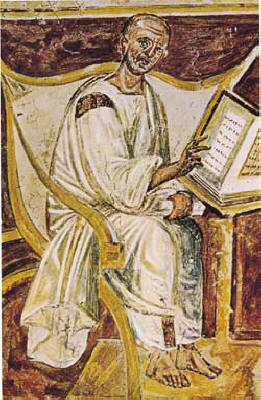
Augustine of Hippo, the African bishop from the 4th and 5th Century has a take on ambition which might surprise you.
The Opposite of Ambition is Not Humility
According to Augustine, “the opposite of ambition is not humility, it is sloth, passivity, timidity, and complacency.”
We sometimes like to comfort ourselves by imagining that the ambitious are prideful and arrogant so that those of us who never wish and never aspire, who never launch out into the deep, get to wear the moralizing mantle of humility, but this is just a thin cover for a lack of courage, even laziness.
Interestingly, Augustine’s view on ambition is that “playing it safe” and not taking risks is not actually an expression of humility like many may assume, but is often based in pride and a fear of other people thinking less of you if you were to fail.
In James K.A. Smith‘s recent book, On the Road with Saint Augustine,he tells the story of Augustine’s journey from provincial North Africa to Carthage, and from there to Rome and Milan, originally as a rhetoric teacher, not as a priest. It was Augustine’s ambition which originally led him from his birthplace to these places, but in Milan his friendship with Ambrose, bishop of Milan, changed his life and led him to pursue a relationship with God which led to him stepping into vocational ministry for the rest of his life.
Smith argues that Augustine never stopped being ambition after giving his life to the Lord. What changed was his goal, the aim of his ambition.
The Ultimate Ambition
According to Smith, the Augustinian question when it comes to ambition is: “Whom and what do I love when I am being ambitious?”
The goal, he would argue, is not to be devoid of ambition, but rather to live a life which has “friendship with God” as its supreme ambition.
This is the only ambition, Smith points out, which comes with a guarantee of success and ultimate security! (“Draw near to God, and he will draw near to you.” James 4:8)
Solomon and the True End of Ambition
Augustine challenges us to ask, What if buried in your ambition to succeed in business, academics, sports, and other pursuits, is a desire for something else, something more – which is found in God himself?
Currently at White Fields we are studying through the life of Solomon in 1 Kings. Solomon was an ambitious person; he asked God for wisdom so that he could govern the nation well, and he succeeded both in making the nation wealthy and powerful, but also in becoming wealthy and powerful himself.
In the Book of Ecclesiastes, Solomon tells the story of his ambition; he acquired many lovers, much money, incredible power, extensive knowledge, as well as exotic animals, parties and entertainment. And yet, in the end, he found all of it to be empty and ultimately unfulfilling. None of it did for him what he had expected it would.
In the end, Solomon comes to the realization that buried in his ambition was ultimately the desire for God himself, and what could only God can give.
Solomon’s conclusion at the end of Ecclesiastes is a cliff-hanger, because Solomon says that the chief end of humanity is to keep God’s commandments (in order to be in relationship with Him). The only problem of course, is that Solomon failed to keep God’s commandments — and so have we! What is needed therefore, is one who can reconcile us to God by somehow bridging the gap created by our shortcomings and sins. The good news of the gospel is that this person has come, and his name is Jesus!
Because of Jesus, our ambition can find its ultimate desire, and can be redirected into areas which are secure and eternally meaningful: relationship with God, and participation in His mission to bring the truth of his love and grace to the world!
May God help us to avoid the false humility which is based in fear and pride, and be ambitious for Him!



 Theology for the People