
How Effective was Government Persecution of Orthodox Churches in Russia During the Communist Period?

I have been toying with the idea of posting some of the articles I’ve written for seminary up on this blog for people to read and discuss. A few friends mentioned they would be interested in this one in particular. The following is an article I wrote for a class on Twentieth-Century Church History. Feel free to chime in and leave a comment below. (Just a heads-up that it’s written in UK English; those aren’t misspellings!)

The twentieth century, along with being a time of great technological development, was a period of some of the most intense persecution of Christianity the world has ever seen. Multiple sources have estimated that more Christians were killed for their faith in the twentieth century than in all other centuries combined. Much of this persecution happened under the rule of communist regimes in Eastern Europe and Asia. Not least among the persecuted churches was the Orthodox church in Russia. However, the Orthodox church did not cease to exist, and now enjoys a constitutionally privileged position in Russia. Tertullian famously wrote, ‘the blood of Christians is seed’; the implication being that persecution, rather than causing the extermination of Christianity, actually causes it to become stronger and to spread. Was this the case in regard to Orthodox Christianity in Russia during the communist period, or did the persecution ultimately reach its objective?

First of all, we must consider what the objectives of the government persecution were. As the largest and most influential religious organisation in Russia, the persecution of the Orthodox church by the Soviet government was both ideologically and politically motivated. Ideologically, one of the ultimate objectives of Marxism was the elimination of all religion. Politically, the Orthodox church had been very closely tied to the ruling houses of Imperial Russia, and thus, in the minds of the communists, was part of the old system which they were trying to overthrow. The fact that during the Russian civil war many prominent Orthodox supporters fought on the side of the ‘Whites’ certainly contributed to the persecution of the church once the ‘Reds’ eventually triumphed. Although all religions and Christian groups suffered persecution during the communist period, the Orthodox church was often treated uniquely; there were times when non-Orthodox were allowed greater freedom in the hope that their growth would weaken the Orthodox church, and there were times when the government sought to work through the Orthodox church as it did through its puppet regimes, to influence people or gain popular support for its agendas.

Some historical context is helpful for understanding the place of the Orthodox church in Russia prior to the communists coming to power. The official christianisation of the Russian people is recognised as having taken place in 988, when Vladimir I led the citizens of Kyiv to the Dnieper river for baptism. One of the factors in Vladimir pronouncing Christianity to be the official national religion was that he believed it would be a means of unifying his divided people by giving them a common sense of identity. Vladimir aligned his people with Constantinople, the ‘second Rome.’ Vassily III was the first Russian ruler to take the title of ‘tsar’, which comes from the Latin ‘caesar’. In 1589, the Patriarchate of Moscow was established; the Patriarch of Constantinople recognised Russia as the political but not ecclesiastical successor to Constantinople, and the tsar was acknowledged as successor to the Byzantine Emperors, but Moscow was not acknowledged as the ‘third Rome’, though its form of Christendom and church-state relations followed that model. Russian history after this point was marked by a struggle for authority between church and state; at some points church leaders claimed supreme authority, while at others the church was reduced to a department of the state and the clergy as state servants. At the beginning of the eighteenth century, Peter the Great suppressed the Moscow Patriarchate in favour of a synod which ran the church as a department of the state, limiting its freedom. Thus, in Russia there was a tradition of autocracy reaching back several centuries, in which the Orthodox church, while enjoying considerable privileges, was subjected to the state. When the communist regime made the churches answerable to a government department, this was nothing new to the Orthodox church. The traditional patterns of church-state relationship in Russia meant that the Orthodox church was surprisingly able to adapt to life under communism, where they found themselves once again in a struggle with the state for authority and once again subjugated to the state. In some ways the situation the Orthodox church found itself in under communism was one they were well-prepared to cope with because it was more familiar to them than, for example, Western-style pluralistic democracy would have been.

The Orthodox church suffered great losses during the communist period, but they also received some surprising benefits. After the Bolsheviks took power, a prolonged period of repression began, rising steadily throughout the 1920’s and 1930’s. The Orthodox church was virtually ‘decapitated’; between 1918 and 1926, over 100 bishops were executed and thrown in prison, along with tens of thousands of priests—85,000 clergy were put to death in 1937 alone. Stalin, a dropout from an Orthodox seminary, continued Lenin’s policy of persecution. During the first decades of Soviet control, the number of functioning Orthodox churches was reduced from around 55,000 to about 500, and the number of monasteries was reduced from 1,025 to 0. The Orthodox church, at least on the surface, ceased to exist; it was forced underground, with believers being led by clergy who took up ordinary occupations to mask their religious activity and to support themselves. We are only left to wonder if the Orthodox church in Russia would have survived at all had this level of persecution continued, because in 1943, Stalin introduced a reversal in policy and allowed the Orthodox church a limited amount of freedom in exchange for their support of the war effort. Such changes in policy happened a number of times during the communist period, with bursts of persecution and moments of reprieve, but it was always generally suppressive, and it was clear that the view of the future held by the communist powers was one which did not include religious groups of any kind, much less the Orthodox church. However, the Soviets were not opposed to using the church in the short term as a mechanism for influencing and controlling people in their empire, as Stalin had in 1943. Furthermore, it was easier to control centralised institutions than underground bodies. Thus, from 1940 the Uniate churches of Ukraine and Central Europe were forcibly united with the Russian Orthodox church and the jurisdiction of the Moscow Patriarchate was extended after 1945 to include Orthodox churches in Bulgaria and Romania as they came under Soviet political domination. The Russian Orthodox church had a history of attempting to extend its influence, and ironically, it was the Soviet regime who helped them to do so during the communist period.

The way the communist government of the Soviet Union approached the Orthodox church in Russia differed from policy of the communist government in China towards Christianity. The main reason for this is because communist social thought did not have to undo Christian cultural influence in China as it did in Russia, which had been shaped by centuries of Christian allegiance. In China the Christian community had always been a minority; it was smaller, less influential, and closely associated with foreign influence. Russia, on the other hand, had experienced centuries of Christendom, in which the Orthodox church, far from being considered a foreign entity, was part of the historical and national identity of Russia and the Russian people. This is precisely what Soviet policy sought to undo, as well as the reason why this was as incredibly difficult task, which they never fully succeeded to accomplish. It seems that this was ultimately accepted by the Soviet government, who in 1988, at the millennium of the christianising of Russia, not only allowed, but even participated in the commemoration by minting a gold coin. In the newfound liberty after the end of communism, the Orthodox church rushed in to fill the void in national identity left by the collapse of the Soviet Union. Symbols and paraphernalia of Orthodox worship began to reappear and the remains of Tsar Nicholas II and his family were disinterred and reburied in an Orthodox cathedral in Saint Petersburg. In 1997 a new law in Russia put the Orthodox church in a constitutionally privileged position and limited the freedom of other religious groups. Orthodox priests have been seen blessing Russian army recruits going off to war in breakaway provinces. It would seem that these are signs of a return to Christendom and the failure of the decades-long Soviet policy of persecution.

Statistics, however, suggest that the government persecution of the Orthodox church was not without effect. It is estimated that by 2000 there were around 80 million self-identified Orthodox Christians in Russia—about half the population. The other believers of all religions made up roughly 15 million, leaving approximately 65 million Russians professedly without any religious belief—an astonishingly high proportion compared with countries outside the former communist lands. Of that 80 million, somewhere between 3-15 million actually attend church even once a year. This disparity between practice and professed identity has led some to suggest that Russia is in fact one of the most secularised societies in the world.

Since the breakup of the Soviet Union, one of the greatest challenges that Orthodoxy has faced is how to cope with Western-style pluralistic democracy. The collapse of the Soviet state, while allowing the church far greater freedom than it had had at any time since 1917-1918, came at the expense of its ability to influence many of the churches once under the Soviet sway. One of the great legacies of communism has been internal church division. The reappearance of the Uniate churches and the formation of the Ukrainian Orthodox Church as well as schismatic Orthodox churches in Russia, Ukraine and abroad have significantly weakened the Moscow Patriarchate. Whereas the Orthodox church in Russia, for many centuries under tsarist rule and then still under communist rule was one, unified, ‘national’ church—Orthodoxy in Russia and its former areas of influence is now splintered and divided. Thus, it seems that the vision of a renewed Christendom is something which can never again exist in the same way it did during Russia’s imperial period. The legacy of the communist era is that it forced Russia out of Christendom in an irreversible way.

How effective was the government persecution of the Orthodox church in Russia during the communist period? On the one hand, in the wake of the communist era, an astonishingly high number of Russians profess no religious belief and the once-united Orthodox church is now splintered, divided and weakened. In this sense, the persecution was effective. On the other hand though, it failed to accomplish its ultimate objectives of destroying the church and its role in society. Although there is evidence that church attendance was in decline during this period, it was also in decline in the West; state persecution did not make much difference. In fact, in some ways, Soviet policy helped to strengthen the church by keeping it united and by increasing its sphere of influence. Considering the rapid decline of Christianity in Western Europe—and even more recently in countries like Poland, which remained extremely loyal to the Roman Catholic Church throughout the communist period, but has seen decline in that area since it has become more of a Western-style democratic society—one is left to wonder what would have happened if the communist authorities would have not persecuted the Orthodox church, but had treated it as irrelevant and quietly excluded it from public life, as the democracies of Western Europe did as they transitioned out of Christendom. If the Soviets would have done that, I expect that Orthodox faith in Russia would have gone the way of Lutheranism in Sweden and Anglicanism in England—and maybe it is now, but the transition would have been, I believe, quicker and easier. Forbidden fruit is always sweeter; persecution only strengthens the resolve of the faithful. The real way to kill a religion is not through persecution, but by making it appear irrelevant and making its adherents complacent and uninterested in it.

Bibliography

  • Ferguson, S.B., D.F. Wright and J.I. Packer, eds, New Dictionary of Theology (Leicester: Inter-Varsity Press, 1988)
  • Grass, T., THY305 Twentieth-Century Church History (Cheltenham: University of Gloucestershire, 2013)
  • Graves, D., “Tertullian’s Defence”, Christian History Institute, <https://www.christianhistoryinstitute.org/study/module/tertullian/> [accessed 06/12/13]
  • Jackson, E. and T. Grass, THY206 The Early Church to the Enlightenment, ed. by J. McKeown (Cheltenham: University of Gloucestershire, 2011)
  • Morris, J. N., The Church in the Modern Age (London: I.B. Tauris, 2006)
  • Noll, M.A., Turning Points: Decisive Moments in the History of Christianity, 2nd edn (Grand Rapids, Michigan: Baker Academic, 1997)
  • Norris, F.W., Christianity: A Short Global History (Oxford: Oneworld, 2002)
  • Pell, G., “Persecution of Christians is still rife today”, The Telegraph, 24 August, 2013 <http://www.dailytelegraph.com.au/news/opinion/persecution-of-christians-is-still-rife-today/story-fni0cwl5-1226703406943> [accessed 06/12/13]
  • Vos, H.F., Exploring Church History, Nelson’s Christian Cornerstone Series (Nashville, Tennessee: Thomas Nelson Publishers, 1994)
  • Walters, P.M., ‘Russian Orthodox Theology’ in New Dictionary of Theology, ed. by S.B. Ferguson, D.F. Wright and J.I. Packer (Leicester: Inter-Varsity Press, 1988), pp. 599-605
Phil Robertson Suspended From “Duck Dynasty” for Sharing His Opinion

Phil Robertson Suspended From “Duck Dynasty” for Sharing His Opinion

This article gives all the details about what Phil Robertson, an outspoken Christian, said to GQ magazine regarding his opinions about homosexuality. Those opinions got him indefinitely suspended from the hit A&E show “Duck Dynasty”.

For the past several years pastors in North America and Western Europe have been wondering when the time will come when teaching biblical passages which label homosexual activity as sin will be constituted as “hate speech” and be punishable by law. I’ve heard that such laws are already in place in France and Canada. It is a slippery slope we are on. One of the reasons why the founding fathers of the United States wanted the separation of church and state was to protect the integrity of the church from government involvement. This isn’t quite that bad, A&E is a private company dealing with an employee, but as a pastor, I can’t help but see this as a sign of what is to come.

A Message from Ukraine

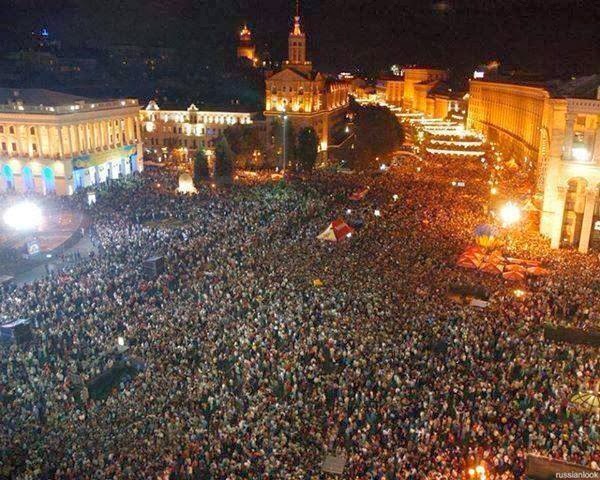
Maybe you have heard about what’s happening in Ukraine – where upwards of 25,000 people have taken to the streets in anti-government protests. 

Image

A friend of mine who is a pastor in Ukraine spoke at our church here in Longmont a few months ago (click here to watch that video), and today I asked him to write a brief synopsis on what is going on in Ukraine and how we can be praying for them. Here is what he wrote:

“And if one member suffers, all the members suffer with it…” 1 Cor. 12:26

You may have seen in the news recently that Ukraine, a former Soviet republic sandwiched between Russia and the European Union, is in the middle of massive street protests.  These protests were originally in reaction to the president breaking his promise to sign an association agreement with the EU.  People were angry and began to protest on the main square of the capital, Kiev.  After a few days on Nov. 30th, the president tried to end the protest with a massive show of violence, sending out special forces and riot police to beat peaceful protesters with batons.  They struck in the middle of the night when the fewest number of protesters were there to resist.  They beat both men and women indiscriminately and savagely, though the protesters posed no threat.  The president hoped that he would be able to put a stop to the people calling him to accountability for his broken promises.  He was wrong.  The reaction was the opposite and the next day many more people joined the protest.  This became no longer primarily a question of economics or which countries to build alliances with, but an outcry against human rights abuses, violence and oppression.  
Last night the president sent in troops and police again to try to clear the main square, though with more restraint as far as violence goes.  They attack began around 1:30am local time, again when there were less protesters to resist.  Many believers across Ukraine began praying.  We called each other, sent texts, waking one another up to stand before our mighty God and Savior and ask for Him to intervene.  It looked like this was the end of the protest and there was a thin line of protesters holding back a flood of riot police.  But then little by little people flocked to the square from all over Kiev in the middle of the night.  Soon the numbers were even.  Then the protesters were the majority.  By a miracle of the grace of God and in response to the prayers of His people, the protesters endured through the night and are still there.  The morning found a renewed protest and masses flocked to rebuild the barricades the police and special forces had torn down during the night.  
But the conflict is not over.  Tonight promises to be an important and difficult night on Independence Square in Kiev.  The protesters are more organized now, talking about organizing shifts for the night watch, but even then it will not be easy.  Also, the temperatures dipped down to almost 5F during the night last night.  Many of our brothers and sisters in Christ, including many pastors, are on the main square and will spend the night there ministering to the people and praying for God’s protection and peace and that His justice would triumph.  Near the beginning of the protests, some pastors set up an inter-denominational prayer tent on the square and people are coming to pray and even receiving Christ during this difficult time!  
The Word of God calls us to stand in unity and solidarity with both our brothers and sisters in Christ and with the oppressed and weak.  In this case, there is great overlap in those two categories.  I would beg you to stand together with the church in Ukraine before God and intercede at this pivotal moment in the nation’s history.  

Please pray for the following points:
1. Not against any party or person per se, but for the nation of Ukraine, that God would pour out His blessing and mercy on this people.

2. That God, who is not a God of disorder, but of peace (1 Cor 14:33) would establish His peace, order and justice in this land.

3. That God, who hates the hands that shed innocent blood (Pr. 6:17) would protect the people from violence and bloodshed, regardless of political affiliation.

4. That God would bless those currently in power by bringing them to repentance and the knowledge of Him and that they would rule in submission to God and turn from their wickedness, that we might live quietly and peaceably. (2 Tim. 2:2)

5. That the people would not be cursed in turning their hope to yet another man or political party in this time of trouble, but would be blessed by putting their hope in the Lord. (Jer. 17:5-7)

6. That the true enemy of man, Satan, who desires to steal, kill and destroy, would be cast down and that his plots would not prevail. (Eph. 6:12)

7. That, as our Lord Himself taught us to pray, the kingdom of God would come and His will be done on earth as in heaven. (Mt. 6:10)

Thank you for standing together as one body with your brothers and sisters in Ukraine.  God bless you and God bless the people of Ukraine!

Son of God: New movie about Jesus

The story the world can’t get enough of…

When we worked with refugees in Hungary, we used to show them the Jesus film, which follows the Gospel of Luke. I love the Gospel of Luke, but I have to say – that was one very boring depiction of it.

After watching this trailer, I have to say that this new movie looks hopeful, that it might be the best Jesus movie yet.
We’ll have to wait and see how biblical it is and if/where they decide to take liberties.

I saw Mel Gibson’s “The Passion of the Christ” – but there was something that irked me about it. Not sure what it was – although it might have been the part where Jesus is credited with inventing the chair…

I’m looking forward to this movie though. How about you?

Busyness: The Enemy of the Soul

“How have you been?” “Busy!”
“Haven’t seen you much lately. What have you been up to?” “Oh, I’ve just been really busy.”
“We should really get together sometime.” “Yeah, I’d love to. Things are just really busy right now.”

We live in a culture that is chronically busy. Many of us, myself included, are busy doing a lot of really great things – but if we don’t watch out, our busyness with all these great things can destroy us.

What legacy will you have to show for all your running around?

Recently I’ve been listening to some audiobooks given to me by a friend. One of them is about how to get out of debt – a topic I’m very interested in. And what I see is that there is a parallel between how our culture handles money and time.

You see – because of technological developments of everything from cars to the internet, we now have more time on our hands, which frees us up to many more possibilities! We can go more places and do more things and connect with more people than ever before. In the same way – money and products are also readily available, perhaps like no other time before. Even if you have no money, there are a myriad of ways to finance purchases, which you can leverage to buy GOOD things, like houses and cars, you couldn’t have before. But, if you are always spending your money on every good thing that comes your way – after a while, you end up with very little to show for your years of hard work. The statistics on how much money passes through the average middle-class home in America are astounding.

Similarly, with busyness – if we stay busy doing a lot of really good things, we can easily find ourselves BUSY, but then looking back we have very little to show for it. Sure we might accomplish a few things along the way and spend time with some people – but what legacy will we have to show for all of our running around?

On a website I recently read about how the difference between chronically broke people and those who have financial security is found not in income, but in habits. One defining factor is that a much higher percentage of those who attain financial security set out concrete goals for themselves to work towards, whereas many chronically broke people never set out goals to work towards; they go through life living day to day.

The same principle can and should be applied to time-management. What are the goals that you would like to attain with your time? Who is the person you would like to be? What is the big-picture thing you hope to accomplish? What has God called you to do? If you are a spouse or a parent, that is a calling. If you are a Christian, by definition, you have a calling on your life – because to be a Christian is to be one who has been commissioned by Jesus Christ to join Him in His mission.

What do you want your legacy to be?  Do you want to raise a Christian family?  Do you want to have a closer walk with the Lord?  Do you want to be used by God for His purposes in the world? 

Once you have identified what you want to attain, what you are shooting for – then THAT will dictate how you spend your time, it will prioritize your options. Otherwise, you will be just like everyone else: running around like crazy, but with very little to show for it. In fact, being super busy with no purpose and direction – well that will quickly kill your creativity, and it will quickly kill relationships – with people and with God.

Guess what the first thing is that many God-fearing people cut out when they are feeling too busy:  Church. Time with spouse and kids. Bible study. Devotions.  “Oh, I’ll do those things when I am not so busy.”  But if you let your calling in life and the end goals that you hope to attain dictate your priorities, then seeking the Lord and being in fellowship with other believers is always a priority.

Certainly there are many things which might be dialed back in a busy schedule – but figuring out which ones you should dial back is the result of evaluating your goals and focusing yourself on attaining them.

Don’t wind up a victim of your own busyness! Figure out what it is that God has called you to do – and what it is that you hope to attain, and let those things dictate how you spend your time.

Project Greatest Gift – A Longmont Initiative to Help Children in Foster Care

One of the great outreaches we do here at White Fields church in Longmont is a home-grown initiative called Project Greatest Gift, which is our ministry at Christmastime to children in foster care.

Project Greatest Gift has been a tradition at White Fields since the beginning of our church, but in the past it was limited in the number of families we were able bless. After looking at ways to broaden its impact on the community and considering alternative programs such as Operation Christmas Child, we decided to attempt to bless the “orphans” of Northern Colorado. Since no orphanages existed in this area, God led us to reach out to local foster families. A couple in the church was heavily involved in the foster system and they offered to make contacts within that system to find families in need. Beginning in 2009, as a result of God’s provision and their efforts, we were able to begin blessing the foster families in Weld and Adams counties through the generous gifts of the congregation at White Fields.  Over the years, we have continued to see God’s great provision for us so we are able to continue to share His abundance with others.

In past years, our church family has provided gifts for around 40 to 60 kids. This year we have had a great outpouring of generosity, and people from our congregation have signed up to provide gifts for 90 children in Adams and Weld counties!

For those of you unfamiliar with the purpose of foster care, it is safe homes, loving caregivers and other family members who take in and provide for children whose living situation is unsafe.  Unfortunately, through no fault of their own, many children live in homes with parents addicted to drugs, who are neglectful or abusive, or who do not know how to care for children appropriately.  So foster homes are critical to meet the needs of these children while birth parents work to recover and learn to parent.  Sometimes, foster homes are also where children’s needs are met while they await a forever home through adoption.  Children in foster care experience grief and loss.  Even when their living situation was unsafe, children mourn its loss, as that is all they had ever known.  Foster parents serve not only as loving caretakers, but often also as counselors as they help the children in their care through this grief and loss.  We are so thankful that we can in some way bless these foster families too by helping provide gifts at Christmastime.

In addition to the blessing of Christmas gifts, please pray for these children that they would soon have a forever family, and more importantly, that they would come to know Jesus Christ as their savior, and God as their Heavenly Daddy.

Atheist Mega-churches: What they mean and what we can learn from them

Image
Sunday Assembly in Los Angeles

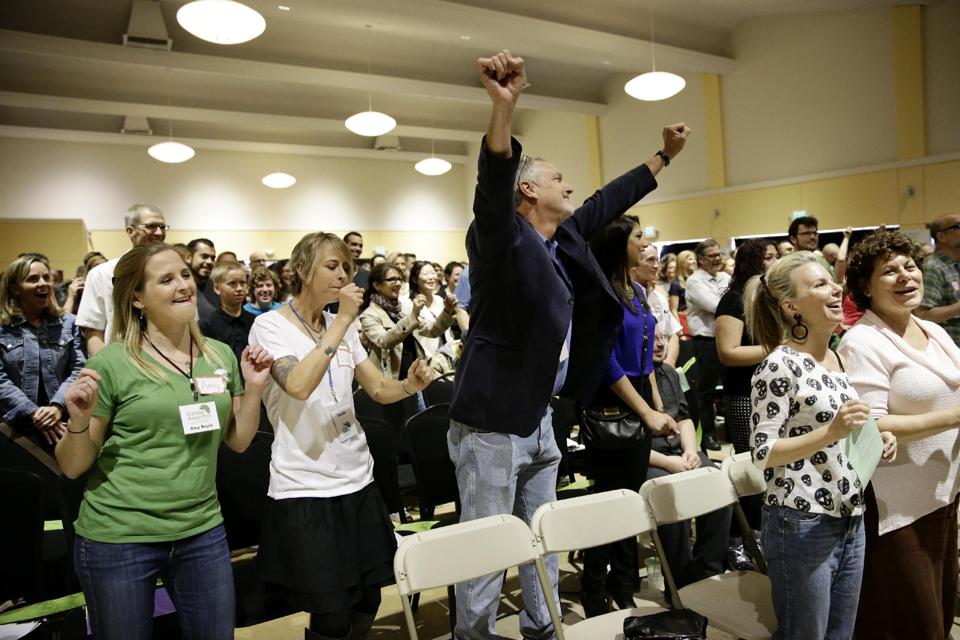
Recently a new movement has been getting a lot of publicity. Dubbed “atheist mega-churches” – the movement is being spearheaded by two British comedians. They call their meetings “sunday assemblies,” and they have all of the look and feel of a contemporary Christian church service, without one key factor: God.

Co-founders, Sanderson Jones and Pippa Evans have stated that their goal is to export the original concept, first started in London, around the world. They are currently on tour visiting 40 major cities; right now they are in the US, going from New York to Los Angeles, trying to establish Sunday Assemblies and propagating their message of humanist community gatherings.

At these Sunday assemblies, they do everything that your average Christian church does: they sing songs, they drink tea and coffee and chat in the lobby, they raise money for humanitarian causes – they take offerings, and they have a sermon each week! In an interview, Sanderson Jones answered the obvious question of what they preach on if they don’t have the Bible or another “sacred text”. His answer was astounding and something that should cause Christians everywhere some serious consideration. He said that ‘preaching without God isn’t hard at all – after all, most preaching in churches these days is basically tips and strategies about how to be a kinder, more balanced, well-rounded person; we embrace that whole heartedly, and we don’t believe we need God to do that.’

‘preaching without God isn’t hard at all – after all, most preaching in churches these days is basically tips and strategies about how to be a kinder, more balanced, well-rounded person; we embrace that whole heartedly, and we don’t believe we need God to do that.’

Here are my thoughts on these “atheist mega-churches”:

1. Mega-churches? Hardly.

Although they have been dubbed “mega-churches” by the media, if you look at the pictures, you will notice that if this were a Christian church, it would not be qualify as a “mega-church”. Furthermore, let’s not forget that the gatherings getting the most press are the ones in which Jones and Evans are present and leading the meetings – two British celebrities, who have been getting a lot of press attention lately for these Sunday Assemblies. This is a special event, not a church – not a committed community of people, and certainly not a mega-church. Even the original Sunday Assembly is not all that big. I understand that “mega-church” pops out on a page – but let’s make sure we’re not blowing this all out of proportion.

2. Novelty = Media Hype

“Atheist Mega-church” is a novelty of a phrase that grabs people’s attention. Perfect for the media. Is there much substance to it? Will we see this as a growing movement for years to come? I don’t think so. I don’t believe it is sustainable. In fact, if it hadn’t been started by two celebrities, I don’t think it would have ever gotten off the ground. I see this fizzling out in the weeks, months and years to come as media hype wears off and moves on to the next amusing story. The reason why “Christian music and movies” are never as good as the original is simply this: they are not original – they are trying to copy someone else’s idea and put a Christian twist on it. It is often second-rate as a result. This smacks of the same thing, only more so.

3. A Very Important Critique

The quote from Sanderson Jones above is a VERY important critique for Christians, and particularly church leaders. Because here’s the deal: ANYBODY can “do church”! And Sanderson is right – you don’t need God to just get together, drink some bad coffee, sing a few songs and hear an inspiring talk about 10 ways to have your best life now. YOU DON’T NEED GOD FOR THAT! He’s right!

ALL that we have as Christians is the Gospel of Jesus Christ. If we get away from that, then we have become nothing more than a community gathering – in which it doesn’t matter if God is there or not.

Recently I had someone come to our church, and they told me that they had been attending another church previously, but came to realize that the sermons that were being preached could have easily been speeches given at a high school graduation or by a politician. God’s name was mentioned, but if it hadn’t been, it wouldn’t have changed the substance of the message. In other words: it didn’t matter if God was there or not. They were giving tips and strategies for how to be a kinder, more-balanced, well-rounded person – and the fact is, that you don’t need God to do that.

The Gospel of Jesus Christ and the Word of God are what we have as Christians. They are what we should major on, and never neglect in an effort to give practical advice. The Gospel is life-changing and transforming, and we must crank it up rather than water it down. Only then will people really be transformed.

What do you think of these atheist mega-churches and my estimation of them?  Are they just a flash in the pan, or are they here to stay?  And what does this mean for Christianity and society in general?

Marijuana Legalization and the Effect on Kids

One of my most popular posts on this blog so far was one I wrote about marijuana legalization and Christianity.

In that post, I mentioned that one of the greatest concerns I have with legalizing marijuana is NOT that I want to legislate Christian moral values on people who aren’t Christians (read more about that issue here) – but that it will make it more accessible to children, something that no one on either side of the discussion wants.

It seems that my concern is legitimate, and that this is already happening. The Denver Post published an article this week titled: “Pot problems in Colorado schools increase with legalization”. Here are some quotes from that article:

  • [Mike] Dillon… a school resource officer with the Mesa County Sheriff’s Department, said he is seeing more and younger kids bringing marijuana to schools, in sometimes-surprising quantities.
  • school officials believe the jump is linked to the message that legalization (even though it is still prohibited for anyone under 21) is sending to kids: that marijuana is a medicine and a safe and accepted recreational activity. It is also believed to be more available.
  • “Kids are smoking before school and during lunch breaks. They come into school reeking of pot,” “They are being much more brazen.”
  • when school officials were asked to identify the reason for students’ expulsions. Marijuana came in first. It was listed as being a reason for 32 percent of expulsions.
  • National statistics also point to marijuana being more prevalent in schools. The National Institute of Drug Abuse found that marijuana use has climbed among 10th- and 12th-graders nationally, while the use of other drugs and alcohol has held steady or declined.
  • “They need to know how destructive it is to the adolescent brain,”

I remember when I was in high school, kids brought pot to school and smoked it at school. I certainly don’t want my kids doing it though, and it seems to me that legalization will only make it more accessible – the facts show that is already happening.

What do you think? Is this something we should be concerned about?

A “Christian Nation” and the End of an Era

Have you ever heard the term “Christendom”? I have often heard it used to refer to the “invisible community of Christians everywhere” – kind of along the lines of the term “blogosphere”.

While that use of Christendom isn’t wrong – it isn’t the historical use of the word either. Historically, Christendom referred to the “Christian nations.” It was a way of dividing up the globe, into “Christendom” and “heathendom”.

One of my professors from seminary, Llyod Pietersen, recently wrote a book titled Reading the Bible After Christendom.

In the book he includes two lists: the first is a list characterizing Constantinian Christianity and culture, and the second characterizes the shift away from it. They are particularly interesting in regard to thinking of the United States or the United Kingdom (or any country for that matter) in our modern era as a “Christian nation.”  Whether or not our founders were God-fearing people, or whether we have a history of movements of God in our country – we need to assess the reality of the modern situation. Sweden, for example, like a number of other European countries, is still technically a Christian nation, whilst practically they shifted away from Christendom long ago.

The other thing you realize from these lists is that maybe Christendom wasn’t actually as great as people think it was. One of the great downfalls of a “Christian nation” is that you give people a false sense of security in their salvation – simply because they were born into a “Christian” culture or society. At least in a pluralistic society (which is what we are in – but was also the situation Paul the Apostle and the Christians in the Book of Acts were in!) people realize the immediate and pressing need for them to make a choice to follow Jesus, and the radical implications that come with it!

Rather than bemoaning the end of Christendom, I believe that Christians are faced with a great new opportunity in pluralistic society – the opportunity to bring to bear on all people the challenges of the Gospel and the call to follow Jesus Christ, because being a Christian is no longer a “given”.

Here are those lists:

Characteristics of the shift to Christendom:

  • The adoption of Christianity as the official religion of city, state, or empire.
  • Movement of the church from the margins to the center of society.
  • The creation and progressive development of a Christian culture or civilization.
  • The assumption that all citizens (except Jews) were Christian by birth.
  • The development of a “sacral society,” corpus Christianum, where there was no freedom of religion and political power was divinely authenticated.
  • The definition of “orthodoxy” as the belief all shared, determined by powerful church leaders with state support.
  • Imposition, by legislation and custom, of a supposedly Christian morality on the entire society (though normally Old Testament morality was applied).
  • Infant baptism as the symbol of obligatory incorporation into Christian society.
  • The defense of Christianity by legal sanctions to restrain heresy, immorality, and schism.
  • A hierarchical ecclesiastical system based on a diocesan and parish arrangement, analogous to the state hierarchy and buttressed by state support.
  • A generic distinction between clergy and laity, and relegation of laity to a largely passive role.
  • Two-tier ethics, with higher standards of discipleship (“evangelical counsels”) expected of clergy and those in religious orders.
  • Sunday as an official holiday and obligatory church attendance, with penalties for non-compliance.
  • The requirement of oaths of allegiance and oaths in law court to encourage truth telling.
  • The construction of massive and ornate church buildings and the formation of huge congregations.
  • Increased wealth of the church and obligatory tithes to fund the system.
  • Division of the globe in “Christendom” and “heathendom” and wars waged in the name of Christ and the church.
  • Use of political and military force to impose Christianity, regardless of personal conviction.
  • Reliance on the Old Testament, rather than the New, to justify these changes.

Characteristics of the shift into post-Christendom:

  • The Christian story and churches have moved from the center to the margins.
  • Christians are now a minority.
  • Christians therefore no longer feel at home in the dominant culture.
  • Christians no longer enjoy automatic privileges but find themselves as one community among many in a plural society.
  • The church no longer exercises control over society but instead Christians can exercise influence only through faithful witness to the Christian story and its implications.
  • The emphasis is now no longer on maintaining the status quo but on mission in an contested environment.
  • Churches can no longer operate mainly in institutional mode, but must learn to operate once again as part of a movement.


What do you think?  Are there any Christian nations these days?  Do we really want to be one?

Jesus didn’t live in a Christian nation, neither did Paul. And I don’t think they thought our goal as Christians was to establish them either.

Longmont Church Officials Face Charges In Assault Case

What happened at VineLife is grievous, and the worst kind of offense. In a place where people, especially youth, should be safe, an offense like this is especially terrible.
What makes it worse in this case is that pastors and elders were involved in covering up the situation and not reporting it to police.
There is biblical precedent for dealing with things internally rather than going to court, but I believe this regards civil disputes rather than crimes, especially felonies.
The other thing this story brings to awareness for pastors and church leaders is the fact that pastors, like teachers, are mandatory reporters. A friend of mine who works at a school was recently held responsible before the law because he heard a rumor, investigated it himself, was convinced that nothing had happened – yet did not report it to police. That’s against the law. Pastors in America need to keep that in mind – and we must never cover up crimes. This all falls under the category of respecting the authorities that God has placed over us and the laws of the land in which we live (Romans 13).