Project Greatest Gift – A Longmont Initiative to Help Children in Foster Care

One of the great outreaches we do here at White Fields church in Longmont is a home-grown initiative called Project Greatest Gift, which is our ministry at Christmastime to children in foster care.

Project Greatest Gift has been a tradition at White Fields since the beginning of our church, but in the past it was limited in the number of families we were able bless. After looking at ways to broaden its impact on the community and considering alternative programs such as Operation Christmas Child, we decided to attempt to bless the “orphans” of Northern Colorado. Since no orphanages existed in this area, God led us to reach out to local foster families. A couple in the church was heavily involved in the foster system and they offered to make contacts within that system to find families in need. Beginning in 2009, as a result of God’s provision and their efforts, we were able to begin blessing the foster families in Weld and Adams counties through the generous gifts of the congregation at White Fields.  Over the years, we have continued to see God’s great provision for us so we are able to continue to share His abundance with others.

In past years, our church family has provided gifts for around 40 to 60 kids. This year we have had a great outpouring of generosity, and people from our congregation have signed up to provide gifts for 90 children in Adams and Weld counties!

For those of you unfamiliar with the purpose of foster care, it is safe homes, loving caregivers and other family members who take in and provide for children whose living situation is unsafe.  Unfortunately, through no fault of their own, many children live in homes with parents addicted to drugs, who are neglectful or abusive, or who do not know how to care for children appropriately.  So foster homes are critical to meet the needs of these children while birth parents work to recover and learn to parent.  Sometimes, foster homes are also where children’s needs are met while they await a forever home through adoption.  Children in foster care experience grief and loss.  Even when their living situation was unsafe, children mourn its loss, as that is all they had ever known.  Foster parents serve not only as loving caretakers, but often also as counselors as they help the children in their care through this grief and loss.  We are so thankful that we can in some way bless these foster families too by helping provide gifts at Christmastime.

In addition to the blessing of Christmas gifts, please pray for these children that they would soon have a forever family, and more importantly, that they would come to know Jesus Christ as their savior, and God as their Heavenly Daddy.

Atheist Mega-churches: What they mean and what we can learn from them

Image
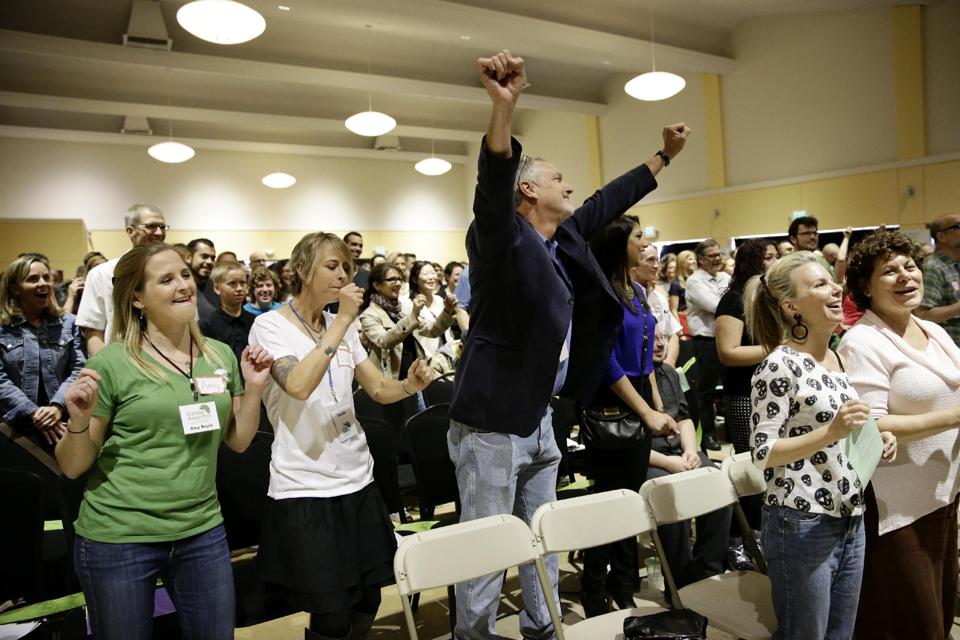
Sunday Assembly in Los Angeles

Recently a new movement has been getting a lot of publicity. Dubbed “atheist mega-churches” – the movement is being spearheaded by two British comedians. They call their meetings “sunday assemblies,” and they have all of the look and feel of a contemporary Christian church service, without one key factor: God.

Co-founders, Sanderson Jones and Pippa Evans have stated that their goal is to export the original concept, first started in London, around the world. They are currently on tour visiting 40 major cities; right now they are in the US, going from New York to Los Angeles, trying to establish Sunday Assemblies and propagating their message of humanist community gatherings.

At these Sunday assemblies, they do everything that your average Christian church does: they sing songs, they drink tea and coffee and chat in the lobby, they raise money for humanitarian causes – they take offerings, and they have a sermon each week! In an interview, Sanderson Jones answered the obvious question of what they preach on if they don’t have the Bible or another “sacred text”. His answer was astounding and something that should cause Christians everywhere some serious consideration. He said that ‘preaching without God isn’t hard at all – after all, most preaching in churches these days is basically tips and strategies about how to be a kinder, more balanced, well-rounded person; we embrace that whole heartedly, and we don’t believe we need God to do that.’

‘preaching without God isn’t hard at all – after all, most preaching in churches these days is basically tips and strategies about how to be a kinder, more balanced, well-rounded person; we embrace that whole heartedly, and we don’t believe we need God to do that.’

Here are my thoughts on these “atheist mega-churches”:

1. Mega-churches? Hardly.

Although they have been dubbed “mega-churches” by the media, if you look at the pictures, you will notice that if this were a Christian church, it would not be qualify as a “mega-church”. Furthermore, let’s not forget that the gatherings getting the most press are the ones in which Jones and Evans are present and leading the meetings – two British celebrities, who have been getting a lot of press attention lately for these Sunday Assemblies. This is a special event, not a church – not a committed community of people, and certainly not a mega-church. Even the original Sunday Assembly is not all that big. I understand that “mega-church” pops out on a page – but let’s make sure we’re not blowing this all out of proportion.

2. Novelty = Media Hype

“Atheist Mega-church” is a novelty of a phrase that grabs people’s attention. Perfect for the media. Is there much substance to it? Will we see this as a growing movement for years to come? I don’t think so. I don’t believe it is sustainable. In fact, if it hadn’t been started by two celebrities, I don’t think it would have ever gotten off the ground. I see this fizzling out in the weeks, months and years to come as media hype wears off and moves on to the next amusing story. The reason why “Christian music and movies” are never as good as the original is simply this: they are not original – they are trying to copy someone else’s idea and put a Christian twist on it. It is often second-rate as a result. This smacks of the same thing, only more so.

3. A Very Important Critique

The quote from Sanderson Jones above is a VERY important critique for Christians, and particularly church leaders. Because here’s the deal: ANYBODY can “do church”! And Sanderson is right – you don’t need God to just get together, drink some bad coffee, sing a few songs and hear an inspiring talk about 10 ways to have your best life now. YOU DON’T NEED GOD FOR THAT! He’s right!

ALL that we have as Christians is the Gospel of Jesus Christ. If we get away from that, then we have become nothing more than a community gathering – in which it doesn’t matter if God is there or not.

Recently I had someone come to our church, and they told me that they had been attending another church previously, but came to realize that the sermons that were being preached could have easily been speeches given at a high school graduation or by a politician. God’s name was mentioned, but if it hadn’t been, it wouldn’t have changed the substance of the message. In other words: it didn’t matter if God was there or not. They were giving tips and strategies for how to be a kinder, more-balanced, well-rounded person – and the fact is, that you don’t need God to do that.

The Gospel of Jesus Christ and the Word of God are what we have as Christians. They are what we should major on, and never neglect in an effort to give practical advice. The Gospel is life-changing and transforming, and we must crank it up rather than water it down. Only then will people really be transformed.

What do you think of these atheist mega-churches and my estimation of them?  Are they just a flash in the pan, or are they here to stay?  And what does this mean for Christianity and society in general?

Marijuana Legalization and the Effect on Kids

One of my most popular posts on this blog so far was one I wrote about marijuana legalization and Christianity.

In that post, I mentioned that one of the greatest concerns I have with legalizing marijuana is NOT that I want to legislate Christian moral values on people who aren’t Christians (read more about that issue here) – but that it will make it more accessible to children, something that no one on either side of the discussion wants.

It seems that my concern is legitimate, and that this is already happening. The Denver Post published an article this week titled: “Pot problems in Colorado schools increase with legalization”. Here are some quotes from that article:

  • [Mike] Dillon… a school resource officer with the Mesa County Sheriff’s Department, said he is seeing more and younger kids bringing marijuana to schools, in sometimes-surprising quantities.
  • school officials believe the jump is linked to the message that legalization (even though it is still prohibited for anyone under 21) is sending to kids: that marijuana is a medicine and a safe and accepted recreational activity. It is also believed to be more available.
  • “Kids are smoking before school and during lunch breaks. They come into school reeking of pot,” “They are being much more brazen.”
  • when school officials were asked to identify the reason for students’ expulsions. Marijuana came in first. It was listed as being a reason for 32 percent of expulsions.
  • National statistics also point to marijuana being more prevalent in schools. The National Institute of Drug Abuse found that marijuana use has climbed among 10th- and 12th-graders nationally, while the use of other drugs and alcohol has held steady or declined.
  • “They need to know how destructive it is to the adolescent brain,”

I remember when I was in high school, kids brought pot to school and smoked it at school. I certainly don’t want my kids doing it though, and it seems to me that legalization will only make it more accessible – the facts show that is already happening.

What do you think? Is this something we should be concerned about?

A “Christian Nation” and the End of an Era

Have you ever heard the term “Christendom”? I have often heard it used to refer to the “invisible community of Christians everywhere” – kind of along the lines of the term “blogosphere”.

While that use of Christendom isn’t wrong – it isn’t the historical use of the word either. Historically, Christendom referred to the “Christian nations.” It was a way of dividing up the globe, into “Christendom” and “heathendom”.

One of my professors from seminary, Llyod Pietersen, recently wrote a book titled Reading the Bible After Christendom.

In the book he includes two lists: the first is a list characterizing Constantinian Christianity and culture, and the second characterizes the shift away from it. They are particularly interesting in regard to thinking of the United States or the United Kingdom (or any country for that matter) in our modern era as a “Christian nation.”  Whether or not our founders were God-fearing people, or whether we have a history of movements of God in our country – we need to assess the reality of the modern situation. Sweden, for example, like a number of other European countries, is still technically a Christian nation, whilst practically they shifted away from Christendom long ago.

The other thing you realize from these lists is that maybe Christendom wasn’t actually as great as people think it was. One of the great downfalls of a “Christian nation” is that you give people a false sense of security in their salvation – simply because they were born into a “Christian” culture or society. At least in a pluralistic society (which is what we are in – but was also the situation Paul the Apostle and the Christians in the Book of Acts were in!) people realize the immediate and pressing need for them to make a choice to follow Jesus, and the radical implications that come with it!

Rather than bemoaning the end of Christendom, I believe that Christians are faced with a great new opportunity in pluralistic society – the opportunity to bring to bear on all people the challenges of the Gospel and the call to follow Jesus Christ, because being a Christian is no longer a “given”.

Here are those lists:

Characteristics of the shift to Christendom:

  • The adoption of Christianity as the official religion of city, state, or empire.
  • Movement of the church from the margins to the center of society.
  • The creation and progressive development of a Christian culture or civilization.
  • The assumption that all citizens (except Jews) were Christian by birth.
  • The development of a “sacral society,” corpus Christianum, where there was no freedom of religion and political power was divinely authenticated.
  • The definition of “orthodoxy” as the belief all shared, determined by powerful church leaders with state support.
  • Imposition, by legislation and custom, of a supposedly Christian morality on the entire society (though normally Old Testament morality was applied).
  • Infant baptism as the symbol of obligatory incorporation into Christian society.
  • The defense of Christianity by legal sanctions to restrain heresy, immorality, and schism.
  • A hierarchical ecclesiastical system based on a diocesan and parish arrangement, analogous to the state hierarchy and buttressed by state support.
  • A generic distinction between clergy and laity, and relegation of laity to a largely passive role.
  • Two-tier ethics, with higher standards of discipleship (“evangelical counsels”) expected of clergy and those in religious orders.
  • Sunday as an official holiday and obligatory church attendance, with penalties for non-compliance.
  • The requirement of oaths of allegiance and oaths in law court to encourage truth telling.
  • The construction of massive and ornate church buildings and the formation of huge congregations.
  • Increased wealth of the church and obligatory tithes to fund the system.
  • Division of the globe in “Christendom” and “heathendom” and wars waged in the name of Christ and the church.
  • Use of political and military force to impose Christianity, regardless of personal conviction.
  • Reliance on the Old Testament, rather than the New, to justify these changes.

Characteristics of the shift into post-Christendom:

  • The Christian story and churches have moved from the center to the margins.
  • Christians are now a minority.
  • Christians therefore no longer feel at home in the dominant culture.
  • Christians no longer enjoy automatic privileges but find themselves as one community among many in a plural society.
  • The church no longer exercises control over society but instead Christians can exercise influence only through faithful witness to the Christian story and its implications.
  • The emphasis is now no longer on maintaining the status quo but on mission in an contested environment.
  • Churches can no longer operate mainly in institutional mode, but must learn to operate once again as part of a movement.


What do you think?  Are there any Christian nations these days?  Do we really want to be one?

Jesus didn’t live in a Christian nation, neither did Paul. And I don’t think they thought our goal as Christians was to establish them either.

Longmont Church Officials Face Charges In Assault Case

What happened at VineLife is grievous, and the worst kind of offense. In a place where people, especially youth, should be safe, an offense like this is especially terrible.
What makes it worse in this case is that pastors and elders were involved in covering up the situation and not reporting it to police.
There is biblical precedent for dealing with things internally rather than going to court, but I believe this regards civil disputes rather than crimes, especially felonies.
The other thing this story brings to awareness for pastors and church leaders is the fact that pastors, like teachers, are mandatory reporters. A friend of mine who works at a school was recently held responsible before the law because he heard a rumor, investigated it himself, was convinced that nothing had happened – yet did not report it to police. That’s against the law. Pastors in America need to keep that in mind – and we must never cover up crimes. This all falls under the category of respecting the authorities that God has placed over us and the laws of the land in which we live (Romans 13).

Please Turn With Me in Your Phones… – Smart Phones and Tablets in Church

One of the first changes we made to the bulletins at White Fields when we redesigned them last year, was to get rid of a chunk of text which said: “Please turn off cell phones and pagers during service”.  First of all: pagers are only found in museums, so I don’t think we’ll have a big problem with those being on in service, and second: I don’t want people to turn off their phones in church. That’s right – you read that correctly. I don’t want them answering phone calls or sending texts – but I’d say that our technology culture has developed enough of an etiquette by now, that that goes without saying for most people.

Christianity Today published an article last week about a Barna poll which had shown how millennials use technology in their faith life. The title of the article was: “Watch Out, Pastors: Millennials are Fact-Checking Your Sermons”. First, let me say, that I think we make too much of a big deal over the term “Millennial” – to the point that we seem like we are studying a wild animal rather than dealing with individuals. The reality is, that it isn’t only young people who are connected; nowadays, everyone is connected. Some of the most tech-savvy people I know are in their 60’s. This week SNL’s Weekend Update reported on how Facebook’s stock share prices dropped because of a report that less and less teenagers are using the site. ‘”Really? I think Facebook is great” said moms.’ That’s right – moms are all over Facebook, and every other kind of social media. Because being connected to the internet is the new way to be human. And this isn’t just the case in the United States – reports show that the most connected countries in the world are outside of the United States – places like the Philippines. My experiences is that Hungarians are way more connected to Facebook than Americans. The internet, in many ways, serves as a great equalizer.

Being connected to the internet is the new way to be human.

And that brings us back to the point of the internet and church. The article I mentioned above warned pastors against fibbing, because some of the young people in their congregations might be on their phones fact-checking you as you speak. Here’s what I think: If you are fibbing or exaggerating, then you deserve to be found out! How dare anyone stand up and speak in God’s name and use half-truths and lies or non-credible information to bolster a point they are trying to make? That is an utter lack of respect for God and for the people you minister to. If you are going to teach something, then it better be true!

Pastors: If you are fibbing or exaggerating in your sermons, you deserve to be found out!

For example: earlier today, my cousin, who recently declared himself an outspoken atheist, jumped into a conversation I was having about something my son said about Jesus’ crucifixion, to ask if there are any non-Christian credible sources from antiquity that spoke of Jesus as a historical figure and a man who performed miracles. I was able to immediately send him an article which contained a collection of those writings, which he obviously assumed did not exist. Here’s the point: I am not afraid of the truth – because if what I believe is not true, then I don’t want to believe it!  And if what I believe is true, then I don’t need to be afraid of people investigating its veracity.

So here’s what I say: I WANT you to use your phone during my sermon! Don’t be texting people, don’t be surfing the web – be engaging and connecting with what we’re studying.  I WANT you to be posting to Facebook during my sermons; I WANT you to be tweeting – as long as you are posting and tweeting as a form of engagement. I love it when I come home from church on a Sunday afternoon, and I see that members of our church were tweeting out or Facebooking quotes from my sermon during the message!  That means that the words of my sermon will have a greater reach than they would have otherwise, because they get sent out to hundreds of thousands of people on those social networks.

For over two years now, I have preached from a tablet rather than printed out notes. At White Fields I don’t have a pulpit – I have a mic stand with an iKlip on it. On my iPad I have about 10 versions of the Bible available at my fingertips, and I read from them as I teach. For this reason, for quite a while, I didn’t bring a Bible with me up to the “pulpit” – since I would read the scriptures off of my iPad. Recently though, I did take an old-school paper Bible up with me and read from it, and I got comments right away about how people were happy to see that. So, ever since, I’ve started doing that again. I’ve also started carrying a paper Bible with me to counseling and discipleship meetings, whereas I previously only took my iPad and read scriptures from it. The reason I’ve made this change is because I realize the incredible symbolic value of the Bible as a book. Everyone carries an iPad or a smart phone, but not everyone carries a Bible. When I read my Bible in a coffee shop, people know what I’m reading – whereas they don’t when I read from an iPad.

What about you?  Do you read the Bible on your phone or tablet at church? Do you engage with the sermon while it’s being preached?

The danger of it of course is that if someone lacks self-control, they could easily be distracted from the sermon rather than engage with it on their device.

What do you think? How do we leverage getting greater engagement via smart phones and tablets without people getting distracted  by them? Is it possible?  Leave me a comment below about your experience.

The Holiday America Forgot

Today is October 31st. That means that today, all across America, neighborhood children are going to come knocking at your door to try to coerce you into giving them candy by threatening retribution if you don’t comply. We call it Halloween, and yes, in its modern form, it’s innocent enough. In fact, as I wrote in this post earlier this week, Halloween is a great opportunity for Christians to think missionally,  as it is the only day of the year when most of your neighbors will come knocking on your door.

However, October 31st is a much more historical and significant day in the history of the world. Before anyone considered dressing up as a superhero or a robot, October 31st was celebrated for a different reason: It is the day when in 1517, Martin Luther nailed his 95 Theses to the door of the All Saints Church (ironically on the eve of All Saints Day) in Wittenburg, Germany. This event is generally regarded as the catalyst of the Protestant Reformation, thus – for centuries before Americans came along and capitalized on Halloween and commercialized it, October 31st was celebrated amongst Protestant Christians as Reformation Day.

These days, Reformation Day is still a big deal in Germany and other parts of Europe, but in America it is only celebrated by a handful of Lutherans, Reformed Christians and other protestants – albeit, most of them celebrate it as a Halloween alternative, and still get dressed up and hand out candy to kids. If you really want to make a splash at one of these events, here’s a tip: dress up as Martin Luther. You’ll probably be the only one (no you won’t; I was being facetious). If you really want to wow all your Lutheran friends at the Reformation Day party, then you should actually dress up like Johann Tetzel – you will be the hit of the party (not really). By the way – I’m allowed to make Lutheran jokes; I went to Lutheran school growing up – Missouri Synod baby. That’s right.

Anyway, obscure Lutheran references aside – I am thankful for the work of the reformers. Men like Luther and Calvin, and Hus and Wycliff before them. I’m thankful that we have been given the freedom to read the Bible for ourselves, in our own languages – and consider for ourselves what God says to us in the scriptures. I am thankful for the return to Biblical theology that these men worked for.

I used to speak at an annual Reformation Day gathering in Hungary, and what was always said at those meetings was that we must remember that the reformation of the church is never over; it is a continual need, that we come and examine every practice and every doctrine according to the Word of God, even in our protestant churches. The Word of God must always remain our standard and our guide in all things.

I hope you have a great October 31st, and remember today that the fact you can have a Bible in your own language, that you can read any time you want, and have God speak to you personally through it – that’s not something to be taken for granted! The teaching of grace that you (hopefully) hear in church – that’s not something to be taken for granted. These things were fought for – and we reap the benefits. Keep that in mind while you eat “fun size” candy bars for the next several weeks, and give thanks to God for what happened on October 31st, 1517.

Halloween: A Conundrum

Halloween is a conundrum for many Christians. Is it only a weird fashion show for candy, or is it something more sinister? Should Christians allow their kids to dress up in innocent costumes and go knock on their neighbors doors begging for sweets, or should we forsake participation in this whole thing altogether?

This week I read this post about Halloween by a Christian woman, which I found very insightful. She points out one very important thing: This is the only day of the year, when most of your neighbors are going to come knocking on your door. The only day.

So, what are you going to do?  Are you going to go to a church event far away from your neighbors?  Will you turn off the lights and refuse to answer the door? OR, are you going to use this unique opportunity to reach out to your neighbors?

Being missional means being intentional about being incarnational.

Being incarnational means meeting people where they are at in order to bring the love of God to them. That’s what Jesus did. (For more on what it means to be incarnational, click here)

If you look in the Bible, at the nation of Israel, you find that they constantly fell in one of two ditches: On the one hand they had a tendency to conform to the nations around them: to take on their ungodly customs, and to worship their gods. They were called to be set-apart and different, but they oftentimes just wanted to be like everyone around them, and it got them in trouble. On the other hand, the other ditch they fell in was – like the Pharisees in the time of Jesus – they viewed themselves as superior to those around them and avoided contact with people who were not like them, lest they be defiled by them.

We as Christians need to avoid these two ditches as well, and make sure that we remember our calling to bring God’s light to all the nations, including those who live on our block and on our street. So many people are eager to do mission work somewhere else! But let us not neglect the neighborhoods that God has placed us in.

I’m not asking you to celebrate Halloween. I’m not asking you to compromise anything. I’m only asking you to consider how you can use this opportunity to be missional and incarnational, to build relationships through which you can share the love of God and the Gospel. Every year at Easter, White Fields church puts on an Easter egg hunt outreach in the Roosevelt Park in Longmont. We’re not condoning Easter traditions that take attention away from the resurrection of Jesus – what we are trying to do is meet people where they are at, so that we can have the chance to speak to them about Jesus. That’s a very important difference, both at Easter and this week at Halloween.

One thing I will be doing is passing out White Fields stickers. Kids love stickers – and these ones have our church’s website on them. Another thing I will be doing is trying to get to know my neighbors. We might put our fire pit out front to give people a place to get warm. We might provide coffee for parents. We’re still thinking through it – but here’s the point: we want to reach out.

I love this quote from the blog post I mentioned above:

If Jesus can go straight to hell, stare death and devil in the face, win and come back alive, why can’t we open our doors to the 6 year old in a Batman costume and his shivering mom?

What do you think? What’s the best way for Christians to respond to Halloween?

Marijuana Legalization and Christianity

This week a Gallup poll came out which showed that for the first time, a majority of Americans favor legalizing marijuana. In fact, in the past year, the support for marijuana legalization surged from 48% to 58% of those polled. Here in Colorado, we live in a state that has had medical marijuana legal for years and which voted last November to legalize its recreational use as well. Not to mention that here in Boulder County, whether it’s legal or not, people in this area have been smoking a lot of pot for a long time and will continue to do so. A friend of mine who just moved to BoCo wrote this about how prevalent marijuana use is just in his daily commute. Just the other day I was talking to someone about Lyons High School (thinking ahead for our kids); they said it’s a good school – but that it’s known for the kids there smoking a ton of weed.

Marijuana is here to stay. It’s already been legalized in this state, and will soon be regulated. Interestingly enough though, I have heard almost NOTHING from Christian leaders on this topic. I have, however, heard a lot of people talking about it – including Christians, saying things like: If marijuana becomes legal and readily available in the same way that alcohol is, then is there anything wrong with trying it out? If you can buy it in a shop and it becomes socially acceptable, then is there any reason to not occasionally indulge?

Up until now, pastors have been telling people they shouldn’t smoke pot because it’s illegal, and the Bible instructs us to honor the laws of the land we live in (Romans 13). But now – guess what: game changer! Marijuana is no longer illegal! Drinking alcohol in moderation is more or less acceptable in most Christian circles these days – so if marijuana gets put in the same legal category, then is it okay to treat it the same way?

These are real questions that people – including Christians – are considering. If Christian leaders aren’t talking about what people are actually thinking about and talking about, then we have become irrelevant and are not engaging people and bringing God’s word to bear on the time and place we live in, as we are called to do.

So, what should be the Christian response to the legalization of marijuana?

What does the Bible say?

The Bible doesn’t say anything about marijuana – just like it doesn’t say anything about tobacco or chemical weapons or genetically modified food. But there are principles the Bible lays down which apply.

The “don’t do it because it’s illegal” argument is soon to be off the table, so what should our position be towards recreational marijuana use? The Bible doesn’t say anything about marijuana in particular, but it does speak about mind-altering drugs – in Greek: farmakeia – which were used recreationally rather than medicinally.

Also, the Bible tells us not to be drunk, but to be filled with the Holy Spirit – i.e.: Don’t be under the influence of substances, but be under the influence of God’s Spirit.

The differences between marijuana and alcohol

More and more people are speaking up about how much safer marijuana is than alcohol. You never hear about people committing violent acts because they are stoned. Marijuana has also not been shown to cause long-term brain damage as alcohol has.

But the difference between marijuana and alcohol are that you can drink alcohol without getting intoxicated. It’s possible to drink wine (like Jesus did) or beer with a meal to enjoy the flavor without getting drunk. No one smokes marijuana just for the flavor – the very point of smoking it is mood alteration.

Will marijuana legalization change anything?

It’s clear by now that adults are going to smoke marijuana whether it is legal or not – which is why more and more people are saying, ‘why not tax it and regulate it then?’. It has been estimated that up to $40 million dollars in tax revenue could come in from recreational marijuana sales in Colorado, which would be earmarked for schools. Regulating marijuana, they point out, could also kill at least part of the black market for it, which inevitably leads to violent crime.

Certainly marijuana use would increase once it’s legalized – as people who were once worried about doing something illegal would no longer have to worry about that. Also, and this is a concern for me – it would make it more accessible to kids, because they would no longer need to find a dealer, they will just have to find a friend with an older brother who is willing to buy it for them – just like with alcohol and tobacco.

I smoked pot when I was a teenager, before I gave my life to the Lord when I was 16. I have family members who smoke pot regularly, and I don’t want my kids to smoke pot. I don’t want them to check out or get intoxicated to cope with life or to have fun – whether with alcohol or marijuana or any other substance.

Legislating morality and the real issue

There are plenty of things the Bible instructs us not to do that are legal in our society, such as adultery, fornication, drunkenness, sorcery, etc. Christian maturity means being able to discern and choose for yourself, from a heart-felt response to God’s grace rather than needing to have someone hold your hand and dictate to you what to do.

There are plenty of ways to harm yourself which are completely legal. You can go buy some glue and sniff it and get high – legally. There are also ways to harm yourself, however, which are illegal, such as chemical food additives, cocaine, certain medications, meth, etc. which we consider detrimental to society and harmful to people, which we have banned and we don’t give people legal avenues to indulge in.

For us as Christians, the point is clear: marijuana is intoxicating. We should not be intoxicated or controlled by substances, but by the Holy Spirit. It’s pretty cut and dry.

For society in general, it’s a question of whether or not it would be helpful or harmful to have more intoxicated people everywhere and to make a mind-altering drug more accessible to children than it already is.

The Cost of Community

“If you love deeply you're going to get hurt badly. But it's still worth it.” – CS Lewis

One of the things that my wife and I liked about Longmont when we were first moving here last year was that it wasn't a suburb of Denver or Boulder, but a stand-alone community. Whenever possible we choose to spend our money at local businesses and restaurants rather than at chains. Last year we had some friends visiting from California, and we took them out to eat on a Saturday night in downtown Longmont, where we walked around for a while trying to find a place to eat where we wouldn't have to wait an hour for to be seated. At one point this friend of ours asked us, “Don't you guys have any chain restaurants around here? I haven't seen any!” I think people in this area pride themselves on supporting the local community. That's why people here love Oscar Blues and Left Hand Brewing, because they are local businesses that love this community and pour back out into it. 'Community' is an increasingly popular concept all over America – just as it is here in Longmont. Its a good thing to be a local and to be a part of your community – which means knowing and being known, it means relationships and mutual support.

And community is at the heart of Christianity. The whole of the Bible centers not around isolated individuals who know God, but around families and nations – people living out a relationship with God in community. What we learn from the Bible is that community is essential to growing in the knowledge of God and living out your faith. The radically individualistic American culture has tried to take Christianity and make it into a private, personal thing that you can do on your own without any ties to anyone but God – but that's not what it was ever meant to be.

There has been an increasing resurgence of value for community in Christian circles in recent decades – with lots of books being written on the topic and books like Bonhoeffer's “Life Together” becoming popular. But the thing is: when you actually do it, you realize that there's a cost to community. And the reason there's a cost is because real life is messy and people are imperfect. So if you get close to people and you really, actually “do life” with them, and enter into their lives and allow them to enter in to the reality of your life, sooner or later you are going to see their mess and they will see yours. It's a lot easier and cleaner to keep people at arm's-length, and keep relationships superficial. That's what social media is great at: we are able to always put our best face forward and only show people what we want them to see about us. But that's not reality and that's not real community. In fact, neither is simply knowing your neighbors and shopping at the local store and gardening at the community garden.

The word the Bible uses is the über-Christianese word “fellowship”, but the original Greek word for it is super rich: Koinonea, which means 'sharing' or 'having in common' – the root word of 'community'. It says in Acts 2 that the early Christians had all things in common. They were dedicated to fellowship and they met in the temple daily and then met in each other's homes and ate together. This is the life of a community. Knowing and being known. Sharing and partaking. Life together.

And life together can be a rich and fulfilling experience – but the flip-side of that is that there is risk involved. Any time you choose to share your life with someone and get close to them and love them, you make yourself vulnerable – vulnerable to the pain of losing that relationship, vulnerable to the hurt of being betrayed by that person, which, the closer they are to you, the more it hurts. You make yourself vulnerable to their junk affecting your life and messing it up.

If true community has a cost and risk involved, then the question is: is it worth it? Why not just isolate yourself, keep your relationships superficial and your life private? You can still know your neighbors and shop local, but you don't have to get involved in other peoples lives nor will they get close enough to hurt you or cause you grief. The reason is, because the more you love, the greater your capacity for joy. It also increases your vulnerability to be hurt, but you can't get great returns without taking great risk. It's like having a child; there is a great amount of risk involved: your kids could turn out to be terrible people who hate your guts and ruin the world. But if you never take that chance, you'll never experience the depths of joy that kids can bring. Or like marriage: that one's a huge risk statistically! If you get married, there's a huge chance you could go through a painful and expensive divorce. But if you don't get married out of fear of those things, you will miss out on the depths of intimacy and fulfillment and joy that marriage can bring.

So, here's my 2 cents: let's not just like the idea of community – let's actually live life together. You'll be richer for it. Because those other people have something to give to you and to receive from you. There is a cost to community, and it can be substantial! When someone is close, their junk can affect you. But the risk is worth it, because it raises the ceiling on how much joy and growth you can experience.