Returning to Give Thanks: Learning from the Grateful Leper

This article was originally published on CalvaryChapel.com.

“Thou that hast giv’n so much to me,
Give one thing more, a gratefull heart:
. . . . . . . . . . . . . . . . . . . . . . . . . . . . . . . . .
Not thankfull when it pleaseth me,
As if Thy blessings had spare days;
But such a heart whose pulse may be
Thy praise.“
(George Herbert, “Gratefulnesse,” 1633)

There is a tendency I have noticed in myself: I am quick to pray and ask God for things that I need. In fact, if I were to categorize my prayers, the majority are requests. There is nothing inherently wrong with this; Jesus encouraged us to ask the Father for what we need (e.g., Matthew 7:7-11). When we ask God to do things that are beyond our capabilities, we honor Him because it shows that we believe in his power and ability, and it expresses our reliance on Him. I often encourage our church to honor the Lord by praying for big and great things rather than assuming that such things are “too big” for Him.

However, the tendency I have noticed in myself is that I often fail to stop, reflect, and thank God for the things that He has done, and the prayers He has answered. I am quick to move on to the next need or the next task without stopping to praise God for His provision and His faithfulness.

A Lesson from the Lepers (Luke 17:11-12)

In the Gospel of Luke, we read about a time when Jesus passed between Samaria and Galilee. As He entered a certain village, He was met by ten lepers, who stood at a distance and cried out to Jesus, saying, “Jesus, Master, have mercy on us.”

These lepers were helpless, and they were hopeless. Their incurable disease not only destroyed their bodies but also made them outcasts from society. Cut off from their families, communities, and places of worship, their lives were characterized by isolation and suffering.

Leprosy is often recognized as a type, or a picture, of sin and what sin does in our lives. Like leprosy, sin leads to a hardening of the heart, a loss of feeling; it causes a person to lose parts of themselves, and it ultimately ruins them and leads to death. Because there was no cure for leprosy, the fact that Jesus healed lepers was a sign that He was the Messiah (Matthew 11:2-5).

Hearing their cries for help, Jesus had mercy on these ten lepers, and He healed them. He told them to go and show themselves to the priests so that the priests could inspect them according to the Law of Moses (Leviticus 13-14), to verify that they had been healed and pronounce them as clean so they could be restored to society.

Quickly, the ten lepers ran off, overjoyed and eager to have their cleansing verified by the priests — but one of them stopped and turned back. While the others ran off ahead, this one returned and “praising God in a loud voice, he fell on his face at Jesus’ feet, giving thanks” (Luke 17:15-16).

To make the story even more surprising, Jesus points out that the one who returned to give thanks was a Samaritan, a group whom many Jews considered themselves superior to. Jesus then expressed His consternation that, whereas ten were healed, only one returned to give thanks and praise God for what he had received.

Pausing to Praise and Give Thanks

This story challenges us to consider our own actions: When God hears your prayers, how do you respond?

Like those lepers, those whose faith is in Jesus have been cleansed from an incurable condition; we have been saved from death and destruction and given a new destiny. Additionally, we have experienced God’s faithfulness through His provision. God hears our prayers and has provided for our needs. How ought we to respond to this?

There is nothing wrong with making requests of God; not only does He invite us to do it, but we honor Him by doing so. However, what we see from this passage is the importance of returning to the Lord, acknowledging what He has done, and thanking Him and praising Him for His faithfulness and goodness.

For those who are celebrating Thanksgiving this week, we have the opportunity to do just that. May this Thanksgiving holiday be a reminder to us to stop and give thanks, and may it spark a habit of thanksgiving in our hearts that lasts throughout the year.
Is Praying in the Spirit Speaking in Tongues?

Recently at White Fields Church, we studied the Epistle of Jude, which contains a phrase which is also used in elsewhere the Bible: “Praying in the Holy Spirit”.

In this Sermon Extra video, Pastor Michael Payne and I discuss whether praying in the Spirit is the same thing as speaking in tongues, what speaking in tongues is, and what it means to pray in the Spirit.

Bible Study in the Dark Ages: The Irish Monastic Approach and What It Can Teach Us Today

Shane Angland is a teaching elder at Ennis Evangelical Church in County Clare, Ireland. He is a graduate of Dallas Theological Seminary (Th.M.) and holds a B.A. in History and Politics from the University of Limerick. Shane also served for several years as a missionary in Kharkiv, Ukraine.

On this episode of the Theology for the People podcast, Shane shares some of his research about the Irish monastic approach to Bible study in the “Dark Ages” and what made it unique, as well as what we today can learn from their practices.

Check out Shane’s blog here: anglandicus.blogspot.com

Click here to listen to the episode, or listen in the embedded player below.

Bible Study in the Dark Ages: The Irish Monastic Approach and What It Can Teach Us Today – with Shane Angland Theology for the People

Shane Angland is a teaching elder at Ennis Evangelical Church in County Clare, Ireland. He is a graduate of Dallas Theological Seminary (Th.M.) and holds a BA in History and Politics from the University of Limerick. Shane also served for several years as a missionary in Kharkiv, Ukraine. On this episode, Shane shares some of his research about the Irish monastic approach to Bible study in the "Dark Ages" and what made it unique, as well as what we today can learn from their practices. Check out Shane's blog here: http://anglandicus.blogspot.com/ Visit the Theology for the People blog at nickcady.org, where you can read articles and suggest topics for future episodes.

Do Miracles Create Faith?

In his 1986 book, Power Evangelism, John Wimber suggested that when people see miracles, they are more inclined to believe in Jesus and embrace the gospel.

But is that true? Is that actually what we see in the Bible?

There are verses like John 2:11, where it says that Jesus’ disciples, having seen the first of his signs by which he manifested his glory, believed in him. Furthermore, at the end of the Gospel of John, John says that he has told us about these particular signs that Jesus performed, so that we may believe in him.

However, another common theme in the Gospel of John is that many people in Jesus’ time saw him perform miracles, and although they were fascinated with and captivated by seeing miracles, it did not translate into genuine faith and devotion to Jesus.

Regarding the disciples and the verse in John 2:11 that they believed in Him after they saw the sign he performed, it should be remembered that at this point they were already his disciples – which means they already believed in him. What this miracle did was cause them to believe in a deeper way. It solidified their belief, in other words.

Something that always strikes me, is the fact that Jesus fed over 5000 people (on two occasions!), thousands of others saw him perform miracles, yet on the Day of Pentecost, there were only 120 committed followers in the upper room.

The question that must be asked is: WHY did Jesus perform miracles? Was it an evangelistic strategy (as Wimber supposes), or was it because those miracles were signs, pointing to something beyond themselves (as John tells us in his gospel)?

It would seem that if miracles were Jesus’ evangelistic strategy, they weren’t very effective in producing lasting, genuine faith. A good example is found in John 4, where there is a contrast made between the Samaritans, who believed in Jesus because of his word (John 4:41) – even though they never saw a miracle, and the Galileans, whom Jesus chastised because they were only willing to believe if they saw signs and wonders (John 4:48).

The message is that faith, rather than coming from seeing miracles, comes from hearing the Word of God and believing. This same message is repeated at the end of John’s Gospel in John 20:29, where Jesus tells Thomas: “Have you believed because you have seen? Blessed are those who have not seen and yet have believed.”

In a recent Sermon Extra, Michael and I discussed signs and wonders, whether miracles produce genuine faith:

Can You Fast From Things Other Than Food?

In a recent podcast episode, I spoke with Conor Berry on the topic of fasting. You can listen to that episode here: The Purpose and Power of Fasting

In response to that episode, we received a few follow-up questions.

Conor and I sat down to discuss some of these more nuanced points on the topic of fasting. You can hear the recording of our conversation here (or in the embedded player below), but here is one of the questions we received:

Can you fast from things beside food?

Nick: My initial assumption had been that the answer is, Yes – you can probably fast from things other than food. This came from my background growing up with the practice of Lent, where you often hear people say things like, “I’m fasting from chocolate, I’m fasting from Netflix, I’m fasting from, running,” (and then it turns out that they weren’t actually a runner to begin with!).

But now, having looked into it, I’ve actually come to the conclusion that abstaining from things other than food may be a good thing to do, but fasting itself is actually a practice which is specific to abstaining from food for a set period of time.

Conor: Yeah, it’s interesting: We categorize fasting as a spiritual discipline, and when we think of the word discipline, we think of how Paul talks about disciplining my body so that I wouldn’t be under the power or the authority of anything, except the sovereignty of God.

And so we can say, “For the 40 days of Lent, I’m not going to eat chocolate, or I’m going to stay off of social media or Netflix, etc.” Yet, if we say that we only have Scripture as our defining cause for the topic of fasting, Scripture only shows that fasting has to do with not eating food or water for a specific period of time.

Once again, bringing the definition from Scot McKnight, that fasting is the natural response to a grievous or sacred moment, we choose not to eat as a means of inducing hunger. And so, my perspective on this is that to say, “I don’t want to eat chocolate, or I want to put social media aside to focus on God,” while that’s a wonderful thing, I would consider that to be under the category of “abstinence,” but not true, scriptural fasting.

Nick: One verse that comes to mind is in 1 Corinthians 7:5, where it says that a husband and wife should not withhold sex from their spouse, except for a time, for the purpose of prayer and fasting. That’s interesting because it doesn’t say that abstaining from sex is a form of fasting, rather it’s distinct from fasting. It’s not called “fasting from sexual intercourse,” it’s called abstaining from it – so that you can fast and pray.

Conor: I agree with you, it’s distinct from the discipline or act of fasting, but it has great application for our desire for holiness and intimacy with God.

All throughout church history, there have been ascetics, people who have devoted their lives to asceticism in order to find transcendence with God, and the act itself sometimes becomes the identity of the person rather than Christ. People are in awe of their discipline and assume the holiness of the person based upon the act, but that sometimes becomes the person’s identity, and not Christ. So there’s a danger to this as well.

Nick: Do you think there’s something unique about food that makes it the focus of this spiritual discipline?

Conor: Absolutely. Because the experience of food and the enjoyment of feasting is something that we’ve enjoyed even before the fall. When we think of Adam and Eve in the Garden of Eden, the Lord said, “This whole place is for you and for your pleasure,” so it’s not just for nourishment, it’s also for taste. And food plays an essential role, not only in our vitality and nourishment, but in our pleasure with God. Even taking the two elements of Communion, we’re using effectually food given by God as a means of worship and thankfulness to him. So yeah, food holds a particular significance.

Nick: When it comes to the idea of abstinence, someone might say, “I have. Improper relationship with this thing I’m doing, so I need to abstain from it, maybe for the purpose of breaking the control this habit or this practice has over me.” But with food, although overeating can certainly go to that extent, and that’s what we call gluttony, it’s also possible to have a healthy relationship with food, and it’s the regularity of eating and its necessity for our existence which makes it unique.

Conclusion

So, in summary: there are times when it would be right and good and advisable to abstain from something if you feel like maybe it’s gotten its claws into your heart, and you want to dedicate more time to seeking the Lord – but don’t call it fasting. Call it abstinence or abstaining, and let fasting be fasting.

Conor: I completely agree. In our previous episode, we looked at church history and the different motives people have had for fasting, and one was to individually fight against temptation. Augustine said that it’s good to fast as a means of developing a hunger for God that would be sovereign over the hunger for some of the temptations in your life.

Should you abstain from social media if it becomes an addiction? Absolutely, but I would be so bold as to say that you can abstain from it along with a time of fasting to say, “I’m abstaining against the temptation, and I’m fasting for more of a hunger for God at the same time.”

Stay Tuned for the Next Question: Eating Disorders and Fasting

In my next post, I will share our discussion on the question of whether it is advisable for someone with past or present struggles with eating disorders to participate in the practice of fasting. Are they disqualified from participating in this practice? What advice can we give to people struggling with this question?

That post is up next, so stay tuned.

Listen to the Discussion Here

Fasting Q&A Podcast Episode

Fasting Q&A: Eating Disorders & Alternative Forms of Fasting Theology for the People

In this Bonus Episode, Conor Berry and I discuss some questions we received regarding our previous episode on fasting: Can you fast from things other than food? What about people who have present or past eating disorders? Can they, or should they fast? Conor also mentions another resource in this episode on the topic of feasting: The Supper of the Lamb by Robert Capon If you find this episode interesting or helpful, please share it with others and leave a rating and review on your podcast app, as that helps other people discover this podcast and its content. Make sure to visit the Theology for the People blog at nickcady.org 

How Does Understanding Biblical Genres Affect How We Interpret & Teach Passages in the Bible?

On this week’s episode of the Theology for the People podcast, I speak with Kristie Anyabwile, who recently wrote a book called, Literarily: How Understanding Bible Genres Transforms Bible Study

We discuss the difference between interpreting the Bible “literally” and interpreting it “literarily,” i.e. according to the genre of a given passage. Kristie describes the 8 major literary genres found in the Bible, and their unique aspects. We give a few examples of how not taking genre into account can lead to misinterpretation and misapplication of particular texts.

Kristie is married to Pastor Thabiti Anyabwile and they serve at Anacostia River Church in Washington D.C. For more about Kristie, visit her website: kristieanyabwile.com.

Kristie also shares with us in this episode the meaning of her last name!

Also mentioned in this episode are two groups Kristie is involved with:

If you find this episode interesting or helpful, please share it with others and leave a rating and review on your podcast app, as that helps other people discover this podcast and its content.

Click here to listen to the episode, or listen in the embedded player below.

How Does Understanding Biblical Genres Affect How We Interpret and Teach Passages in the Bible? Theology for the People

In this episode, I speak with Kristie Anyabwile, who recently wrote a book called, Literarily: How Understanding Bible Genres Transforms Bible Study.  We discuss the difference between interpreting the Bible "literally" and interpreting it "literarily," i.e. according to the genre of a given passage. Kristie describes the 8 major literary genres found in the Bible, and their unique aspects. We give a few examples of how not taking genre into account can lead to misinterpretation and misapplication of particular texts. Kristie is married to Pastor Thabiti Anyabwile and they serve at Anacostia River Church in Washington D.C. For more about Kristie, visit her website: kristieanyabwile.com. Also mentioned this episode are: Charles Simeon Trust The Pelican Project If you find this episode interesting or helpful, please share it with others and leave a rating and review on your podcast app, as that helps other people discover this podcast and its content. Make sure to visit the Theology for the People blog at nickcady.org

What Did Jesus Mean When He Said “You Must Eat My Body and Drink My Blood”?

Currently playing episode

Recently I had the opportunity to be a guest on the Basics of Life Podcast with Rob Salvato.

The Basics of Life is not only Rob’s podcast, but the episodes are broadcast on KWVE Christian radio in Southern California.

Rob is currently doing a series on that podcast on “the hard sayings of Jesus,” and he asked me to tackle John 6:52-55, which says:

The Jews then disputed among themselves, saying, “How can this man give us his flesh to eat?” So Jesus said to them, “Truly, truly, I say to you, unless you eat the flesh of the Son of Man and drink his blood, you have no life in you. Whoever feeds on my flesh and drinks my blood has eternal life, and I will raise him up on the last day. For my flesh is true food, and my blood is true drink.

John 6:52-55

Not Cannibalism Nor Communion

When people originally heard Jesus say these words, they thought he was talking about cannibalism – but he most certainly wasn’t!

Many readers since that time have assumed that Jesus is talking about communion, i.e. the Lord’s Supper or Eucharist. This assumption is understandable in light of the fact that Jesus called the elements for the Lord’s Supper his “body” and “blood” – and yet, that is not what he is talking about here either.

What Jesus is talking about here can be understood by reading the passages which come before and after (context is king!). I share what Jesus is talking about in the conversation with Rob, which is linked below.

Why Be Cryptic?

And yet, even if it can clearly be derived from the context what Jesus was referring to, the question remains: Why did Jesus speak in a way that was cryptic or hard to understand? Didn’t he want people to understand what he was saying? Why would he speak in a way that people could misunderstand, and perhaps even choose to not follow him because of their misunderstanding?

I answer this question in the podcast episode linked below, but this is something we see Jesus did on more than one occasion! For example, we see this from Jesus in John 9 and Matthew 13, where Jesus speaks in a way that those who want to understand will lean in and seek to understand, but those who weren’t willing to lean in and seek the truth could misunderstand or easily miss.

Clearly Jesus is communicating that a desire to understand is a prerequisite for spiritual understanding.

Listen to the Episode Here

Listen to the episode in the embedded player below or by clicking this link: The Basics of Life Conversations: Nick Cady | Jesus said to “Drink His Blood”?

Nick Cady | Jesus said to "Drink His Blood"? The Basics of Life Conversations

Pastor Nick Cady joins Pastor Rob Salvato to talk about what Jesus meant when He thinned out the crowds after the feeding of the five thousand. 

Rob Salvato

Pastor Rob is the lead pastor of Calvary Vista, in San Diego County, California. Calvary Vista is my wife Rosemary’s home church, which sent her out as a missionary to Hungary years ago. Later, after Rosemary and I met in Hungary and got married, Calvary Vista became our home base and one of our main supporting churches. We love Rob and his wife Denise, and he has been a faithful pastor over that wonderful congregation for many years. Right now the church is experiencing a time of growth and a real move of God. Pray for them during this exciting time!

The Offense of the Cross: Cicero, the Early Christians, and Us

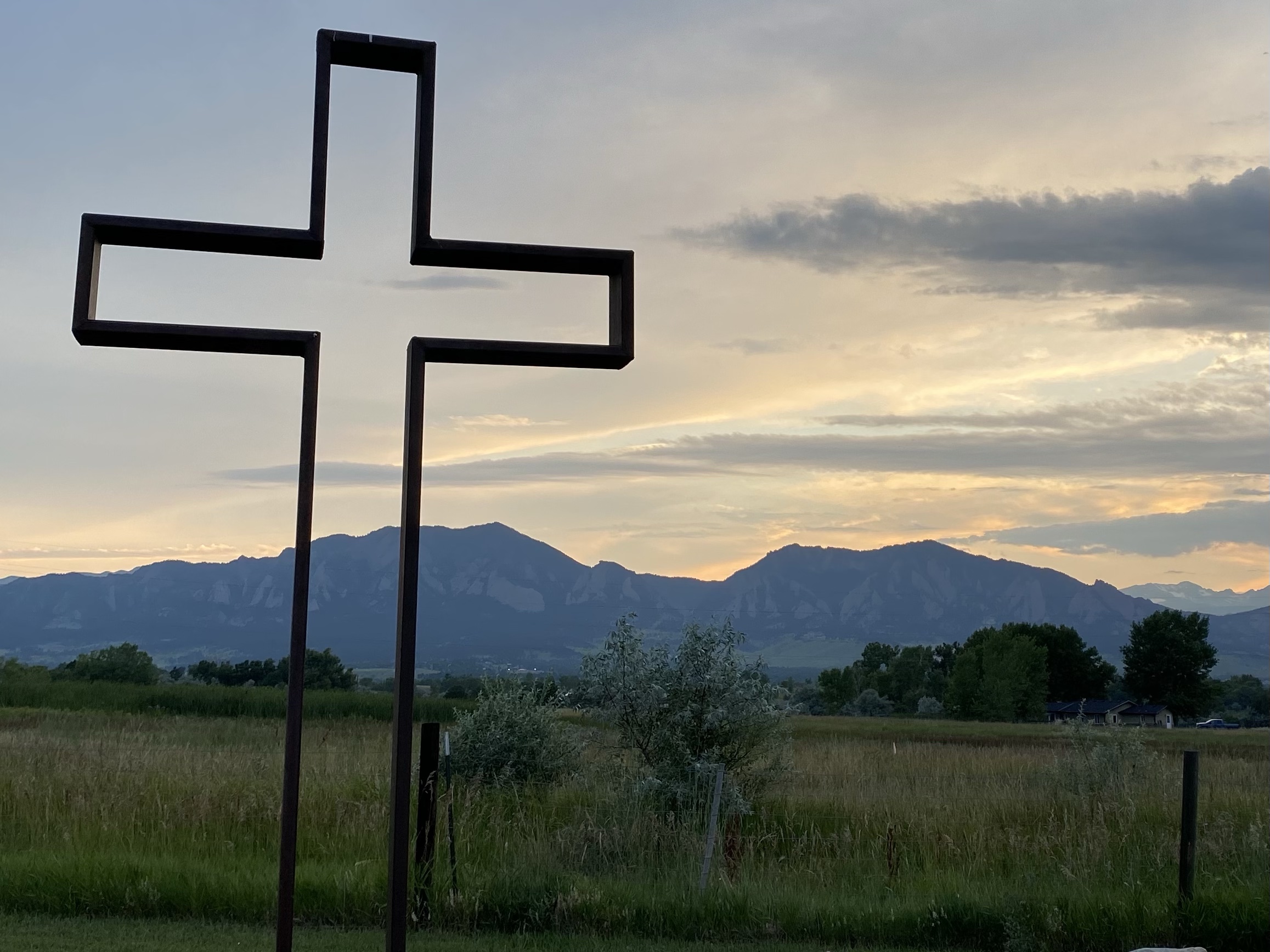
Boulder County & the Flatirons

The symbol of the cross is universally recognized today as the symbol of Christianity; for many in the Western world it is familiar and welcome. However, in the ancient world, in the first century AD, when this symbol was first used by early Christians, it was downright scandalous.

Paul the Apostle refers to the message of the cross as foolishness to the Greeks, a stumbling block to the Jews, and an offense to all. (1 Corinthians 1:22-23, Galatians 5:11)

The reason is because, for people in the ancient world, the cross was a terrible instrument of torture and execution. 

The thing that made crucifixion so terrible is that it didn’t kill you right away; it was designed to make a person suffer as much as possible, for as long as possible. And for this reason, crucifixion was reserved for only the very worst kinds of criminals.

Because of how terrible crucifixion was, the Romans did not allow their own citizens to be killed by crucifixion, no matter how dastardly their crimes; only slaves and those without rights were allowed to be crucified, since it was exceedingly inhumane. 

Cicero, the Roman statesman and philosopher said that crucifixion was so horrible, that the word “cross” should never be mentioned in polite society.

Let the very word ‘cross,’ be far removed from not only the bodies of Roman citizens, but even from their thoughts, their eyes, and their ears.

Cicero, 106-43BC, Pro Rabirio Postump 16

For the Jewish people in particular — to be crucified on a cross was considered a fate worse than death, because according to the Jewish Scriptures, anyone who was killed by being hanged upon a tree was considered “accursed”. (Deuteronomy 21:22-23)

And so, just imagine if you told someone back then that you were a follower of Jesus — a man who had been crucified… That person would have thought: “Whoa… Even if he was innocent, that’s probably something you should keep to yourself! That’s not something you want to go around advertising, because: that’s humiliating!”

But: here’s what’s interesting: for the early Christians, the fact that Jesus had been killed upon a cross was not something they tried to hide. Instead, the symbol of the cross became the main symbol they used to identify themselves – which is surprising, because the cross was generally consider to be the ultimate symbol of humiliation and defeat.

Furthermore, the message that the early Christians embraced and wanted to share with the world was what they called, “the message of the cross,” and “the good news of Christ, and him crucified.”

Paul the Apostle knew that the message of the cross was difficult for many people to accept. For the Jews, the idea of a crucified Messiah was a stumbling block. For Greeks, the idea that you could be saved through the death of an executed Jew seemed ridiculous. The idea that God would come to Earth and allow himself to be beaten, mocked, rejected and crucified, seemed completely unreasonable. They couldn’t wrap their heads around it. The Greek gods made humans serve them; they didn’t serve people – and they would never sacrifice themselves to save guilty people. 

Just as the message of the cross ran contrary to popular thinking back then, the message of the cross also runs contrary to popular thinking today.

The message of the Cross requires you to admit that you have sinned and fallen short of the glory of God and that you are powerless to save yourself. This is why Paul talks about “the offense of the cross” (Galatians 5:11)

The message of the cross offends our sensibilities and our pride by telling us that we are sinners who need a Savior, and that we cannot save ourselves. In order to receive this salvation, you have to humble yourself before God.

Another part of the offense of the Cross is that the message of the gospel is exceedingly simple. Many people in Corinth seemed to believe that in order to “find God,” you had to be really smart, or exceedingly “good.” And yet, God chose to bring salvation to the world in a way that was so simple that even  even a child could understand it, and in a way that it was available to people who had lived immoral lives. 

Another part of the “offense of the cross” is that God says that His reason for saving you was not because you are better than other people. Salvation is simply an act of God’s grace: completely undeserved and totally unearned. You can’t take credit for it. The message of the cross leaves no room for pride or arrogance.

And when you really embrace the message of the cross, on the one hand it forces you to be incredibly humble, but on the other hand it fills you with an incredible sense of confidence – because the message of the Cross is that God loves you, and He has acted to redeem you, and if you have put your faith in what Jesus did for you, then God has sealed you and made you His own: He has adopted you as His Child, and placed His Spirit inside of you — and therefore you can be incredibly confident, knowing that you have nothing to fear in life or in death because God has promised that He will cause all things to work together for your ultimate good and for His ultimate glory.

For more on the message of the cross, see this sermon titled, “The Message of the Cross & the Power of God”

The Spirit-Filled Life: New Series Starting This Sunday on Pentecost

This past Sunday we concluded our Eastertide (the 50 days following Easter) series called The Risen Life, in which we studied the post-resurrection appearances of Jesus from the perspective of what His risen life shows us about what it means for us to live as people who have died with Christ and been risen to new life.

You can watch and listen to that series here.

This Sunday is Pentecost Sunday, and we are taking this opportunity to kick off a 5-week series, looking at the person and work of the Holy Spirit.

Schedule

  1. May 23, 2021 (Pentecost): The Promised Helper
    1. The person and work of the Holy Spirit
  2. May 30, 2021: The Work of the Spirit in the Life of a Believer
    1. The Spirit of adoption
    2. The indwelling and empowering of the Spirit
    3. Grieving and blasphemy of the Spirit
  3. June 6, 2021: Walking In the Spirit
    1. The leading of the Spirit
    2. Walking in the Spirit vs. walking in the flesh
  4. June 13, 2021: The Fruit of the Spirit
  5. June 20, 2021 (Fathers Day): The Gifts of the Spirit

In-Person and Online

You can join us for this series either in person at our physical location in Longmont, Colorado: 2950 Colorful Ave. Longmont, CO 80504 – at 8:00, 9:30, & 11:00 AM on Sunday mornings, or online at 9:30 & 11:00 AM on our website, YouTube channel, and Facebook page. You can also keep up with us by subscribing to our podcast.

I hope these messages will be a blessing to you!

Satan’s Authority & “Divine Child Abuse”

In the Bible, Satan is referred to as “the ruler of this world,” (John 12:31, 14:30) and even “the god of this world” (2 Corinthians 4:4). 1 John 5:19 says that the whole world lies under the power of the evil one.

How then can Jesus say that “all authority in Heaven and on Earth” has been given to him (Matthew 28:18)?

In this week’s Sermon Extra, Pastor Mike and I discuss the authority of Satan, and what the Bible has to say about it: Did Adam and Eve hand over “regency” of the Earth to Satan in the Garden of Eden? And how does this relate to the scroll that only Jesus can open in Revelation 5?

Furthermore, we discuss the claim of Richard Dawkins and others, who say that Jesus’ death on the cross was “divine child abuse,” since the innocent Son of God was sacrificed by the Father – and how the deity of Christ changes everything when it comes to understanding the meaning of the cross.

Check out the video of that Sermon Extra here:

Recommended Further Resources: