Grandparenting as Ministry: A Vision for the Church (Guest Post by Pastor Robb Dunham)

Psalm 145:4 says “One generation will commend Your works to another, they will tell of Your mighty acts…” It’s a perfect picture of the church at its best: every generation, from the youngest to the oldest, gathered together in worship, learning, and service.

The modern church often struggles to engage all ages together. We divide our congregations into age-based groups—children, youth, adults—leading to what some call “silo ministries:” a church ministry that operates independently or with limited interaction or collaboration with other ministries. While there are valid reasons for these divisions, we may be missing something essential: the richness of intergenerational ministry, where different generations not only coexist but also interact and learn from one another. This is where grandparenting comes in.

The Difference Between Multi- and Inter-Generational Ministry

Many churches are multigenerational, meaning they have members from various age groups. But multigenerational doesn’t necessarily mean intergenerational. A church can have people of all ages without those generations ever truly interacting. Picture a busy city street: people of all ages are rushing by, maybe even bumping into each other, but rarely connecting.

In contrast, intergenerational ministry is about intentional connection. It’s about creating spaces where people from different generations engage with one another, build relationships, and serve together. Healthy churches should strive to be both multigenerational and intergenerational.

Why Grandparenting is the Ultimate Intergenerational Ministry

Grandparenting might be the most natural way to create intergenerational connections in the church. Here’s why:

  1. Demographics
    Grandparents span a wide age range, from their late 30s into their 90s. The average first-time grandparent in the U.S. is just 47 years old, meaning grandparents are often still in the workforce, active in their communities, and highly involved in church life. In fact, approximately 25% of people attending church in the U.S. are grandparents. They represent a significant portion of the church population, and they’re often some of the most faithful attendees. 25% of children going to American churches are brought by their grandparents.
    According to the MetLife report on Grandparents, the numbers of U.S. grandparents are at record highs, and growing faster than the general population. In 2020, they represented nearly 1-in-3 adults. Approximately 70-80% of adults eventually become grandparents.
  2. Influence
    Grandparents play a crucial role in passing on the faith to future generations. The phrase “Generations to come” appears 37 times in the Bible. Psalm 78:4-6 says, “We will not hide [God’s works] from their descendants; we will tell the next generation the praiseworthy deeds of the Lord…”
    Grandparents are uniquely positioned to impact not only their children and grandchildren but also great-grandchildren; in fact, Psalm 78 describes grandparents’ godly influence to the fourth generation: well beyond our lifetimes. Additionally, Psalm 78:5 indicates that this is a command from God!
    Through prayer, storytelling, and modeling faith, grandparents can leave a spiritual legacy that spans multiple generations.

Reimagining Grandparenting as Ministry

Too often, the church overlooks the potential of grandparents in ministry. But what if we reimagined grandparenting as a vital part of the church’s mission? Here are a few ways to begin:

  • Encourage Intergenerational Prayer
    Invite grandparents to pray with and for children and youth. Grandparents can play a powerful role in the spiritual development of younger generations by praying together with them and over them.
  • Plan Intergenerational Events
    Host gatherings where all generations can participate. This could be a Family Sunday service, an intergenerational worship night, or a grandparent and grandchild service project. The key is to create opportunities for meaningful interaction.
  • Create Spiritual Grandparenting Programs
    In this model, grandparents “adopt” teens or younger children in the church, building relationships, praying for them, and attending events together. This type of spiritual mentoring can have a profound impact on both the grandparent and the younger person.

Why Intergenerational Ministry Matters

When generations work together, everyone benefits. Here are just a few reasons why an intergenerational model strengthens the church:

  • Unity
    When all ages worship and serve together, the church functions more like a true family, reflecting the diversity of God’s people.
  • Wisdom
    Older generations have experience and knowledge that can guide younger believers. Conversely, younger generations bring fresh energy and ideas that invigorate the whole church.
  • Legacy
    By passing on faith intentionally, we fulfill the biblical mandate to make disciples of all nations and generations. Grandparents, in particular, are instrumental in ensuring the faith is passed down.
  • Connection
    In an increasingly isolated society, intergenerational relationships provide much-needed connection and community. These relationships foster a sense of belonging for every age group.

Starting an Intergenerational Ministry

Moving toward an intergenerational ministry doesn’t require a massive overhaul. It starts with small, intentional steps. Gather leaders from different age groups to pray together and brainstorm ways to connect the generations. Plan quarterly services that include children, teens, and seniors in visible roles. Host events that encourage interaction between the age groups, such as intergenerational prayer meetings, service projects, or fellowship events.

A Call to Action

Imagine the impact if millions of Christian grandparents were equipped and encouraged to disciple their grandchildren. What if our churches empowered these grandparents to take the lead in intergenerational ministry, passing on their faith and wisdom to younger generations?

This is a vision worth pursuing. It’s time to mobilize the grandparents in our churches, not just as attendees, but as active, vital members of the church’s mission to make disciples of all nations—and all generations.

For More Information and to Contact Robb

Visit these websites for more information on a vision for grand parenting as a ministry:

If you would like to contact Robb, fill out the contact form and ask to be put in touch, and we will put you in touch with him via email.

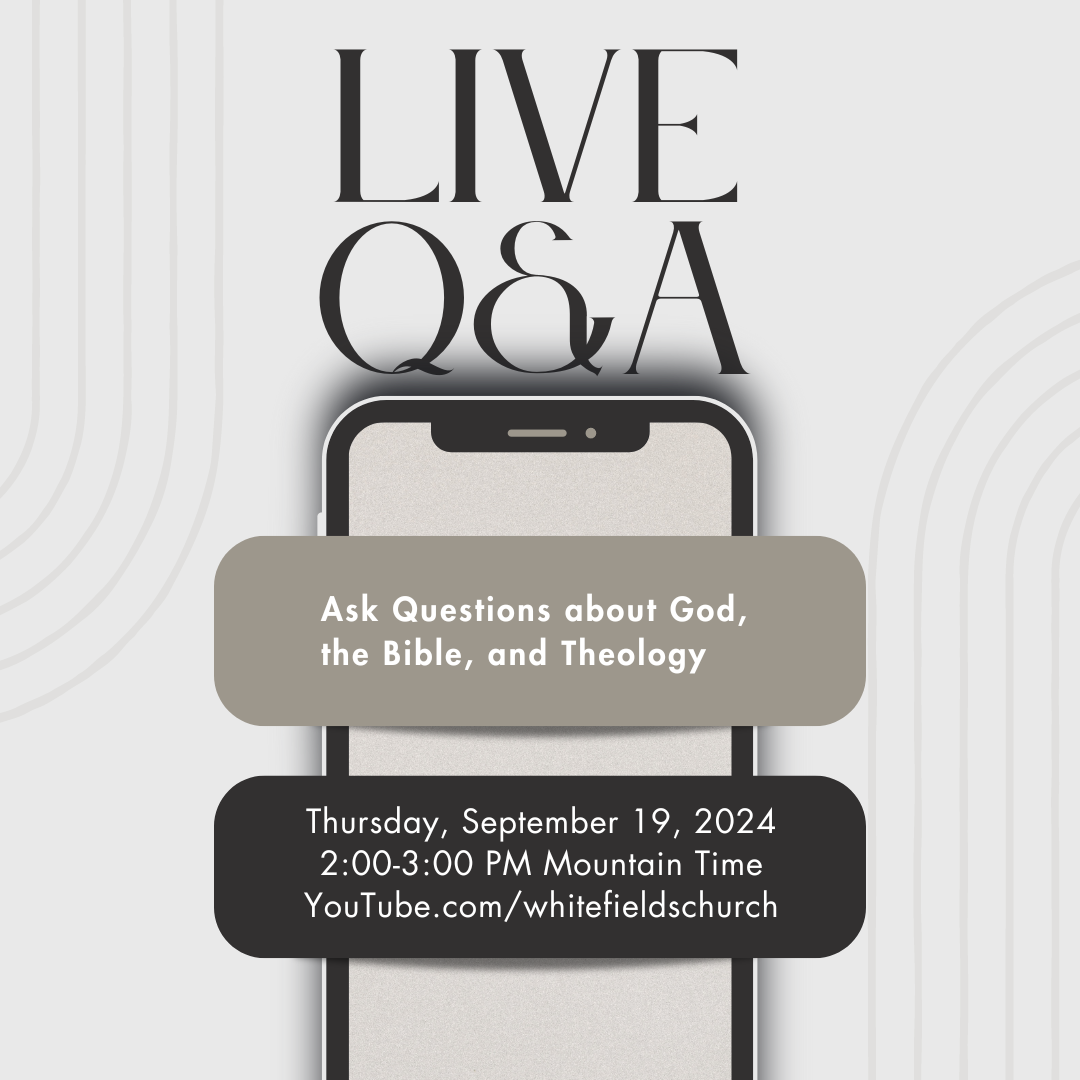
Join Me on Thursday for a Live Q&A on YouTube!

This Thursday I will be doing something new for the first time: a live Q&A session on YouTube!

I have received a lot of questions through the “Ask a Question” page on this site. I will be answering those questions, while giving priority to questions that people write in live during the recording.

Tune in to YouTube.com/whitefieldschurch on Thursday, September 12, 2024 from 2:00-3:00 PM Mountain Time to join us, or click the link below to go directly to the recording. If you click it now, you can set up a notification, which will remind you when we go live to join us.

Feel free to send me your questions in advance through the “Ask a Question” page, or as a comment on this post.

Hope to see you there!

Project Back to School 2024

Did you know that children in the foster system form an at-risk people group within our own communities?

In almost every case, the reason these children end up in foster care care is because of an unsuitable home environment, which may involve violence, neglect, drugs, crime, etc. These environments not only result in trauma many times, but they also tend to result in or be associated with poverty. Many foster care situations are kinship care, which means the child is cared for by a relative, which can create a financial burden.

Poverty has a profound impact on a child’s mental and physical well-being. Children living in poverty have higher rates of absenteeism from school. Students who come from low income families are six times more likely to drop out of high school.  Adults without a high school diploma are 4 times more likely to be unemployed and live in poverty, which means raising their children in poverty, perpetuating a cycle of poverty which may persist for generations: poverty affects education which affects poverty. (source 1source 2)

One of the ways that we can help kids break out of this cycle of poverty is by encouraging them to stay in school – and one of the ways we can do that is by helping them have the things they need to be confident and excited about going to school, so they can succeed!

Our church, White Fields Community Church, has a history of ministering to children in the foster system, and six years ago we began a new ministry: Project Back to School.

We are working with Weld County Department of Human Services, and this year they have identified over 100 at-risk kids who need help with school supplies, clothes, and shoes. They have provided us with a list of needed items, which we will share with those who sign up to help.

We are trusting that God will raise up people to bless these families in the name of Jesus. It’s a way for us to love not only in words and in speech, but in action as well (1 John 3:18).

We will be taking sign-ups beginning Sunday, July 7 and are asking for items to be returned by Sunday, July 28.

How to Get Involved and Make a Difference

1. Sign up in-person

If you live in or near Longmont, visit White Fields Church on a Sunday morning this July and sign up to sponsor one or more children.

2. Sign up online

If you can’t make it on a Sunday morning, but are still local and could drop off items to us for delivery, leave a comment below, or contact the church here.

3. Contribute Financially

All monies that come in designated for Project Back to School will go directly towards buying school supplies for at risk children. You can make a tax-deductible donation on our church’s website here: www.whitefieldschurch.com/give (choose Project Back to School on the drop-down menu).

Join us in praying for these kids, and that God uses this initiative to bless them!

A Biblical Theology of Spiritual Growth, & Creating a Discipleship Pathway – with John Whittaker

What is a discipleship pathway, and how do you go about creating one? What is the process by which people grow spiritually, and how do we help them do that?

Dr. John Whittaker has served as a pastor and theologian for many years, in different capacities. He is the author of The Listener’s Commentary, an audio commentary of the Bible, that is available online. He is also the host of the Bible in Life Podcast

About half-way through the conversation, I show John our church’s discipleship pathway, and he gives his raw, unscripted feedback on it, so make sure to listen until then, to see if our discipleship pathway passed his test!

Click here to listen to the episode, or listen in the embedded player below.

A Biblical Theology of Spiritual Growth, & Creating a Discipleship Pathway – with John Whittaker Theology for the People

What is a discipleship pathway, and how do you go about creating one? What is the process by which people grow spiritually, and how do we help them do that? Dr. John Whittaker has served as a pastor and theologian for many years, in different capacities. He is the author of The Listener’s Commentary, an audio commentary of the Bible, that is available online. He is also the host of the Bible in Life Podcast.  About half-way through the conversation, I show John our church’s discipleship pathway, and he gives his raw, unscripted feedback on it, so make sure to listen until then, to see if our discipleship pathway passed his test! Visit the Theology for the People website at nickcady.org

A Biblical Vision for Leadership – with John Currie

Leadership is a very popular topic in modern business discussions, but what does the Bible have to say about leadership? And is there a difference between the vision for leadership given in the Bible versus that which comes from the world?

In this episode of the Theology for the People Podcast, I speak with John Currie, who is professor of pastoral theology at Westminster Theological Seminary in Philadelphia, Pennsylvania. He has also served as a pastor in different churches and denominations, and in these roles, he has seen that sometimes pastors thrive in preaching, but struggle with leadership, or vice versa.

In his recent book, The Pastor as Leader: Principles and Practices for Connecting Preaching and Leadership, John gives a biblical vision for a uniquely Christian approach to leadership.

Click here to listen to the episode, or listen in the embedded player below.

A Biblical Vision for Leadership – with John Currie Theology for the People

Leadership is a very popular topic in modern business discussions, but what does the Bible have to say about leadership? And is there a difference between the vision for leadership given in the Bible versus that which comes from the world? John Currie is professor of pastoral theology at Westminster Theological Seminary in Philadelphia, Pennsylvania. He has also served as a pastor in different churches and denominations, and in these roles, he has seen that sometimes pastors thrive in preaching, but struggle with leadership, or vice versa. In his recent book, The Pastor as Leader: Principles and Practices for Connecting Preaching and Leadership, John gives a biblical vision for a uniquely Christian approach to leadership.

Cultivating a Heavenward Mindset in an Epicurean World – with Cameron Cole

Cameron Cole experienced every parent’s worst nightmare: they put their son to bed one night, and in the morning they awoke to find that he had died in his sleep. However, the message of the Gospel, is that their son did indeed wake up — in a greater and more profound way: he awoke to eternal life with Jesus, his Savior.

In the wake of his son’s death, Cameron did a deep dive into the passages in the New Testament where Paul the Apostle writes about Heaven and eternal life. That study gave birth to his recent book, Heavenward: How Eternity Can Change Your Life on Earth.

In this episode of the Theology for the People Podcast, I speak with Cameron about what he learned through this experience, and how it made him more heavenly minded. Cameron also shares about how to the hope of eternal life ought to shape the way we live here and now.

Cameron’s ministry, Rooted, seeks to equip parents and churches to disciple children and students towards lifelong faith in Jesus Christ.

Click here to listen to the episode, or listen in the embedded player below.

Cultivating a Heavenward Mindset in an Epicurean World – with Cameron Cole Theology for the People

Cameron Cole experienced every parent’s worst nightmare: they put their son to bed one night, and in the morning they awoke to find that he had died in his sleep. However, the message of the Gospel, is that their son did indeed wake up in a greater and more profound way: he awoke to eternal life with Jesus, his Savior. In the wake of his son’s death, Cameron did a deep dive into the passages in the New Testament where Paul the Apostle writes about Heaven and Eternal Life. That study gave birth to his recent book, Heavenward: How Eternity Can Change Your Life on Earth. In our discussion, Cameron shares what he learned through this experience, and how it made him more heavenly minded. Cameron also shares about how to the hope of eternal life ought to shape the way we live here and now. Check out Cameron’s ministry: Rooted, which seeks to equip parents and churches to disciple children and students towards lifelong faith in Jesus Christ. Visit the Theology for the People website at nickcady.org

Does Baptism Play a Role in Salvation? – with Stephen Pomeroy

Is baptism a requirement for salvation? There are some Christian groups who say that it is and others who say it isn’t. 

In this episode of the Theology for the People Podcast, I am joined by Pastor Stephen Pomeroy of White Fields Community Church, and we look at the Bible verses and arguments which are central to the debate over “baptismal regeneration,” and aim to show you why we believe that every Christian should be baptized, but that, as Christians, we are saved by grace alone, through faith alone, in Christ alone.

Click here to listen to the episode, or listen in the embedded player below.

Does Baptism Play a Role in Salvation? – with Stephen Pomeroy Theology for the People

Is baptism a requirement for salvation? There are some Christian groups who say that it is, and others who say it isn’t.  In this episode of Theology for the People, I am joined by Pastor Stephen Pomeroy from White Fields Community Church, and we look at the Bible verses and arguments which are central to the debate over “baptismal regeneration.” We aim to show you why we believe every Christian should be baptized, but that, as Christians, we are saved by grace alone, through faith alone, in Christ alone. Visit the Theology for the People website at nickcady.org

Theological Anthropology: What is It, and How Does It Shape Our Understanding of Ourselves & Others? – with Michael Payne

Do you know what sex robots, racism, and gender identity all have in common? In addition to being topics that are discussed in this episode of the Theology for the People Podcast, these topics are all related to the subject of Theological (or Biblical) Anthropology.

My guest in this episode is Michael Payne. Mike is the Worship Pastor at White Fields Community Church, and he is a graduate student at Western Seminary, where he is pursing a Masters in Theology.

In this episode we talk about what Biblical Anthropology is and how it shapes the way we understand ourselves and others, as well as how our view of anthropology shapes the way we live and interact in the world. 

Check out Michael’s music on Spotify here.

Click here to listen to the episode, or listen in the embedded player below.

Theological Anthropology: What is It, and How Does It Shape Our Understanding of Ourselves & Others? – with Michael Payne Theology for the People

Do you know what sex robots, racism, and gender identity all have in common? In addition to being topics that are discussed in this episode, these topics are all related to the subject of Theological (or Biblical) Anthropology. My guest in this episode is Michael Payne. Mike is the Worship Pastor at White Fields Community Church, and he is a graduate student at Western Seminary, where he is pursing a Masters in Theology. In this episode we talk about what Biblical Anthropology is and how it shapes the way we understand ourselves and others, as well as how our view of anthropology shapes the way we live and interact in the world.  Check out Michael's music on Spotify here. Visit the Theology for the People website at nickcady.org

Clarity is Kindness: Why Creeds and Confessions are Helpful in Transmitting & Protecting the Faith – with Carl Trueman

What role should creeds and confessions play in the life of a Christian or of a church? If we have the Bible, then why are creeds and confessions necessary at all?

In this episode of the Theology for the People Podcast, I speak with Dr. Carl Trueman. Dr. Trueman is the professor of biblical and religious studies at Grove City College. He is an esteemed church historian, and a fellow at the Ethics and Public Policy Center.

Dr. Trueman’s recent book Crisis of Confidence: Reclaiming the Historic Faith in a Culture Consumed with Individualism and Identity addresses the claim that we, as Christians, need no creed but the Bible, and makes an appeal from history, reason, and Scripture for what he calls “confessional evangelicalism.”

Click here to listen to the episode, or listen in the embedded player below.

Clarity is Kindness: Why Creeds and Confessions are Helpful for Transmitting and Protecting the Faith – with Carl Trueman Theology for the People

What role should creeds and confessions play in the life of a Christian or of a church? If we have the Bible, then why are creeds and confessions necessary at all? Dr. Carl Trueman is the professor of biblical and religious studies at Grove City College. He is an esteemed church historian, and a fellow at the Ethics and Public Policy Center. Dr. Trueman’s recent book Crisis of Confidence: Reclaiming the Historic Faith in a Culture Consumed with Individualism and Identity addresses the claim that we, as Christians, need no creed but the Bible, and makes an appeal from history, reason, and Scripture for what he calls “confessional evangelicalism.” Visit the Theology for the People website at nickcady.org

Habits of Grace which Lead to Growth: the Benefits of Journaling and Other Spiritual Disciplines – with Mike Neglia

Spiritual disciplines are intentional, repeated practices which help you to grow in relationship with God.

In this episode of the Theology for the People Podcast, I speak with my friend and colleague, Mike Neglia about his practice of journaling, and how it has benefited him spiritually.

Almost 6 years ago, Mike handed me a Field Notes notebook at a coffee shop in Estes Park. He told me to keep it in my pocket, and he said it would change my life. It took me an entire year to use up that first notebook, but since then writing and journaling in notebooks has become a regular part of my everyday life, and Mike was right: it has changed my life!

In this episode, Mike and I talk about the practice of taking notes in church, the value of different types of notebooks, and other tactile things we can do, which will help us grow in our faith.

Mike is the pastor of Calvary Cork, in Cork City, Ireland, and he is the host of the very popular: Expositors Collective Podcast

Together, Mike and I serve on the Executive Team of Calvary Global Network, and we are both leaders in the Expositors Collective initiative to raise up the next generation of Christ-Centered Expository Bible Teachers.

Expositors Collective will be offering an in-person two-day training weekend in the Bay Area of California on May 24-25, 2024. You can find more information and register here.

Click here to listen to the episode, or listen in the embedded player below.

Habits of Grace which Lead to Growth: the Benefits of Journaling & Other Spiritual Disciplines – with Mike Neglia Theology for the People

Spiritual disciplines are intentional, repeated practices which help you to grow in relationship with God. In this episode, I speak with my friend and colleague, Mike Neglia about his practice of journaling, and how it has benefited him spiritually. We also talk about the practice of taking notes in church, the value of different types of notebooks, and other tactile things we can do, which will help us grow in our faith. Mike is the pastor of Calvary Cork, in Cork City, Ireland, and he is the host of the very popular Expositors Collective Podcast. Together, Mike and I serve on the Executive Team of Calvary Global Network, and we are both leaders in the Expositors Collective initiative to raise up the next generation of Christ-centered expository Bible teachers. Visit the Theology for the People website at nickcady.org

Mike also recently spoke at White Fields Church, and you can watch his message here: