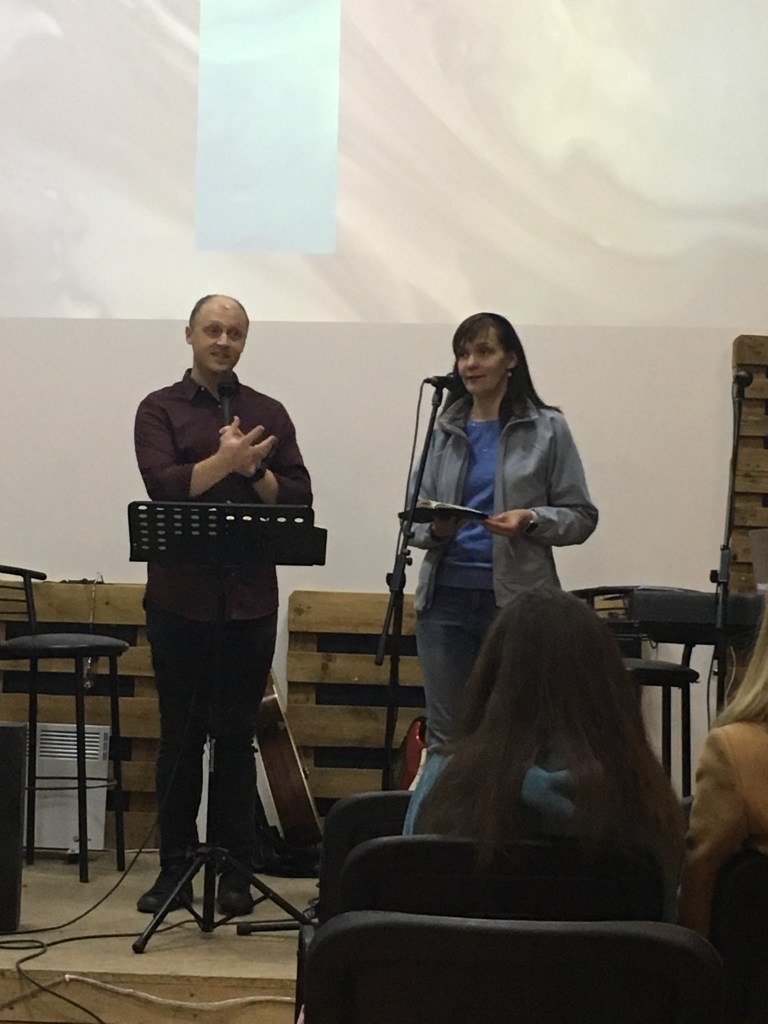
COVID-19 (Coronavirus) Update from Pastor Nick

The following is a message I sent out to our church today regarding the current situation with COVID-19:

The situation with COVID-19 is developing quickly. I am glad that our authorities are taking this so seriously; a virus that threatens the most vulnerable in our society is something we should all care about deeply. 

Confidence and Love

As Christians in these times, we are motivated by two things: confidence in the gospel, and love for our neighbors. In Jesus, we have confidence and security; we do not fear, because we know that even if our bodies are destroyed, we have a heavenly dwelling that awaits us because of what Jesus accomplished for us. Hebrews 2:14-15 tells us that because Jesus defeated death and the devil, we are free to no longer live in the fear of death.

Although we do not fear death, it is important that we love our neighbors by doing what we can to slow down the spread of this disease which is affecting vulnerable people, particularly the elderly and those whose immune systems are compromised. 

Doing your part to minimize the spread of COVID-19 is not an act of fear, but of love for our neighbors.

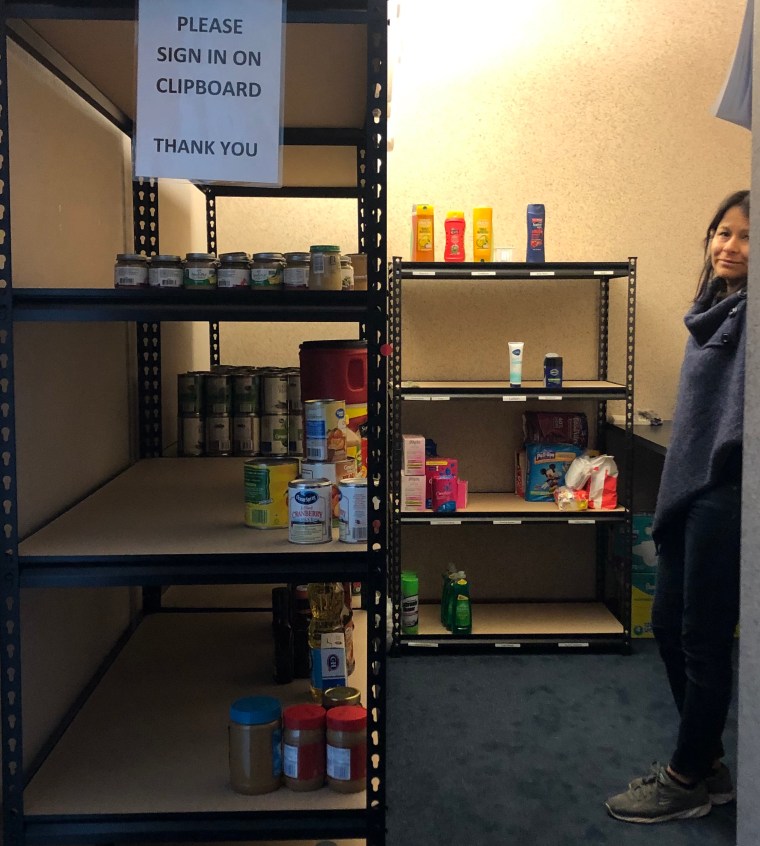
If you, or anyone you know, needs help with shopping or errands, particularly if you/they are elderly, we want to help you with that so you don’t have to put yourself at risk. E-mail info@whitefieldschurch.com with any needs, and we will make sure it gets done in a safe manner.

Practical Matters

In this spirit of love, we ask that you respect the recommendations of the CDC and refrain from unnecessary gatherings and contact with others, until the risk goes down. If possible, please consider working from home. 

Community Groups

Whereas last week, we recommended that Community Groups continue meeting, we are now leaving it up to individual groups to decide if you should meet, or consider a video chat instead. Shelby will be posting more information on possible ways to do that soon.

Sunday Church Services

For this Sunday, we will pre-record a video with worship and a Bible teaching, which we will then post on YouTube and Facebook for you and those in your household or family to watch together. On Sunday at 10:00 AM we will start a “watch party” on Facebook for those of you who use that platform. If you haven’t yet subscribed to our YouTube channel or followed us on Facebook, now is a good time to do that, and you will be alerted whenever we post a video or go live.

We are working on setting up the video system in our new building, so we can use that to film and broadcast our services, and we expect that to be ready soon. We are also working on a Church Online platform that we can use during this time. 

We are waiting until it is safe and advisable for us to have physical gatherings before announcing our official Grand Opening in the new building.

Children’s Ministry

Michelle Pearl, our NextGen Director, will be posting the weekly lesson so that you can go through them with your children at home on Sundays.

Giving

As we often say, giving financially to God’s work through the local church is an act of worship. Since in-person giving will not be possible until we can gather physically again as a church, we ask that you give online. That can be done on our website here, or on Realm.

Blog Posts and Devotional Thoughts

During this time, I will be posting more frequently on my blog with devotional thoughts and Bible studies. That might be one more way for you to engage with our community and grow in the grace and knowledge of our Lord Jesus Christ. Here’s the website: Longmont Pastor – and you can subscribe in order to get email updates of new posts.

Update on Pastors Nick and Mike

I just arrived back from Ukraine, where Pastor Mike and I were visiting our missionaries and teaching at a leadership conference. When we left, there was no recommendation against travel to Hungary or Ukraine, and there were no COVID-19 cases. When I arrived back in the US today, I was screened and tested for COVID-19 and the test came back negative. However, we are more than happy to comply with the protocol and self-quarantine for 14 days out of love for others and respect to the authorities.

In one of our recent studies from the Vision series, we looked at developing God’s vision for your situation – part of which is understanding that every situation presents us with opportunities to respond to the gospel and love our neighbors. That is true in this situation as well! Here is the link to that message: A Vision for Your Situation
It is important that we stick together in this time, as a community of people who love Jesus and love our neighbors. We want to continue growing in faith and looking for ways to serve those around us in Jesus’ name.

Much love,

Pastor Nick

Christian Responses to Plagues and Threats in the Past

A virus that affects the vulnerable, the elderly and those with compromised immune systems, is a threat that we should take seriously.

As we consider how to respond to COVID-19, it is worth considering some of the responses to plagues and threats by Christians in the past.

The Plague in Rome

Jesse Lusko posted recently:

In 250 AD the plague wiped out 1/3 of the population of Rome. There was hysteria and most Romans abandoned the weak and the sickly and fled. Pagan historians record how Christians instead sacrificially cared for the sick and faced death with joy and confidence. Cyprian writes “In contrast to the prevailing despair, the Christians seemed to carry their dead in triumph.”

The Atomic Age

C. S. Lewis wrote these words in 1948 after the dawn of the atomic age:

In one way we think a great deal too much of the atomic bomb. “How are we to live in an atomic age?” I am tempted to reply: “Why, as you would have lived in the sixteenth century when the plague visited London almost every year, or as you would have lived in a Viking age when raiders from Scandinavia might land and cut your throat any night; or indeed, as you are already living in an age of cancer, an age of syphilis, an age of paralysis, an age of air raids, an age of railway accidents, an age of motor accidents.”

In other words, do not let us begin by exaggerating the novelty of our situation. Believe me, dear sir or madam, you and all whom you love were already sentenced to death before the atomic bomb was invented: and quite a high percentage of us were going to die in unpleasant ways. We had, indeed, one very great advantage over our ancestors—anesthetics; but we have that still. It is perfectly ridiculous to go about whimpering and drawing long faces because the scientists have added one more chance of painful and premature death to a world which already bristled with such chances and in which death itself was not a chance at all, but a certainty.

This is the first point to be made: and the first action to be taken is to pull ourselves together. If we are all going to be destroyed by an atomic bomb, let that bomb when it comes find us doing sensible and human things—praying, working, teaching, reading, listening to music, bathing the children, playing tennis, chatting to our friends over a pint and a game of darts—not huddled together like frightened sheep and thinking about bombs. They may break our bodies (a microbe can do that) but they need not dominate our minds.

“On Living in an Atomic Age” (1948) in Present Concerns: Journalistic Essays

Luther and the Plague in Wittenberg

The Bubonic Plague ravaged Europe in the 14th century, but what many people don’t realize is that it continued to pop up at times afterwards for centuries.

In August 1527 the plague showed up in Wittenberg, leading to the closure of the university and other social institutions. People began fleeing the city in panic, and many people did get sick. In fact, the mortality rate of those who contracted the plague was 70%.

Martin Luther and his wife believed that they were called to serve the sick rather than to flee their city. They opened up their home and treated many sick people.

No one should dare leave his neighbor unless there are others who will take care of the sick in their stead and nurse them. In such cases we must respect the word of Christ, “I was sick and you did not visit me …” [Matt. 25:41–46]. According to this passage we are bound to each other in such a way that no one may forsake the other in his distress but is obliged to assist and help him as he himself would like to be helped.

In other words, Martin Luther believed there was an obligation to help those who contracted the plague, but so long as they were helped, it was a matter of conscience if one remained to aide in this great task.

He argued that it would be better for hospitals with trained staff to care for the sick, yet if one were not to be found, “…we must give hospital care and be nurses for one another.

For more on this, see: Martin Luther and His Incredible Response to the Black Plague

Conclusion for Today

As the people of God, it is important that we respond to the current situation in prayer, in faith, in service, and in generosity. We are called to look out for the weak and vulnerable among us, to be the body of Christ in the world, and to speak with a prophetic voice – proclaiming God’s words of life and the message of eternal hope in Jesus.

Sunday Services at the Memorial Building Cancelled

The City of Longmont has closed the St. Vrain Memorial Building for the time being, which means that we will not be able to hold services there for the next two Sundays (which would have been our final two Sundays in the building anyway).

The elders of White Fields Community Church are currently working on a plan to possibly hold a gathering in the parking lot, or even inside our new facility for those who would like to gather and worship and pray together.

This is a time for faith and confidence in the gospel alongside precaution. 

We are also working on an online church option Sunday morning via Facebook Live. We will have more information to come on this; please stay tuned for updates on those things.

Blessings,

Pastor Nick

Coronavirus (COVID-19) Update From Pastor Nick

Psalm 112:7 (NLT) “They do not fear bad news; they confidently trust the Lord to care for them.”

With the heightened awareness and deep public concerns regarding the spread of the coronavirus (COVID-19), I want to let you know that we are carefully monitoring the situation, CDC updates, and government response and recommendations.

We are continuing to take precautions at our services and gatherings. We have prepackaged, single use communion cups and wafers available, as well as hand sanitizer. We ask that everyone please wash your hands thoroughly, even more than usual, as this is this most effective way of preventing transmission. We are committed to being as proactive as possible to create safe and clean environments for us to worship in. We’ve always been very intentional in this commitment and are now, more than ever.

Currently we are not planning on canceling any of our church services or Bible studies.

We have made the decision to cancel our Easter Outreach at the recommendation of Boulder County, which is asking that large public gatherings and festivals be cancelled. We want to be good neighbors and honor the authorities God has put in place.

Some of you have asked about whether Pastor Mike and I will be affected by the travel ban. We will not be affected by it, as we are US citizens. We will be home soon. Thank you for your concern.

Let us be ready and looking for opportunities to love our neighbors in this time. Let’s be respectful of people’s concerns and ready to reach out in love, faith, and compassion – being full of the confidence and courage that comes from the hope of the gospel.

Much love,

Pastor Nick

New Series: By Faith / They are Bread for Us

As we make the move into our own building (see: We’re Moving!), we will be doing a special series on the topic of faith, from March 22-April 5, 2020.

This move is going to be a stretch for our church; it takes faith to give up what you have (in our case: in the Memorial Building) for the sake of what can be, but it’s worth it.

I was recently talking with a pastor friend who has led his church through some big steps of faith, and he told me that he is a bit envious of the position we are in the right now of taking this step of faith and stretching ourselves in order to open up new opportunities for ministry, because every time he and his church have done that, it has led to so much spiritual growth and vitality in their lives.

They are Bread for Us

In Numbers 14, when the people of Israel were supposed to enter the Promised Land, but 10 of the 12 spies convinced the people not to go because it was too hard, because there were giants in the land – it was Joshua who spoke up and said,

If the Lord delights in us, he will bring us into this land and give it to us, a land that flows with milk and honey. Only do not rebel against the Lord. And do not fear the people of the land, for they are bread for us.

Numbers 14:8-9a

What did Joshua mean that “they are bread for us”? Joshua understood that: just as we need food to sustain our bodies and keep us healthy, we need challenges and steps of faith in our walk with God in order to stay healthy!

Give me the land with the giants…

Later on, in Joshua 14, the people have entered into the Promised Land – Joshua and Caleb being the only ones from the original generation who were allowed to enter in because they were the faithful spies who were willing to obey and follow God by faith despite the challenges of the task.

In Joshua 14, we read about how Joshua divided up the dwelling places of the tribes of Israel in the Promised Land, and he gave first dibs to Caleb to choose any portion of the land he would like for himself. Here was Caleb’s response:

And now, behold, the Lord has kept me alive, just as he said, these forty-five years since the time that the Lord spoke this word to Moses, while Israel walked in the wilderness. And now, behold, I am this day eighty-five years old. I am still as strong today as I was in the day that Moses sent me; my strength now is as my strength was then, for war and for going and coming. So now give me this hill country of which the Lord spoke on that day, for you heard on that day how the Anakim were there, with great fortified cities. It may be that the Lord will be with me, and I shall drive them out just as the Lord said.”
Then Joshua blessed him, and he gave Hebron to Caleb the son of Jephunneh for an inheritance. Therefore Hebron became the inheritance of Caleb the son of Jephunneh the Kenizzite to this day, because he wholly followed the Lord, the God of Israel.

Joshua 14:10-14

At 80 years old, Caleb wasn’t interested in “taking his foot off the gas” and spending the rest of his years relaxing. Rather, he wanted to live in a beautiful place, where he could continue to fight giants.

Why? Because Caleb understood that following God by faith and taking steps of faith that challenge us, these things are bread to us.

Faith is like a muscle; it needs to be stretched and used and tested in order to remain healthy and grow.

We have such an opportunity as a church in moving into this new facility. May God use it in our lives and in our region for the benefit of many!

We’re Moving!

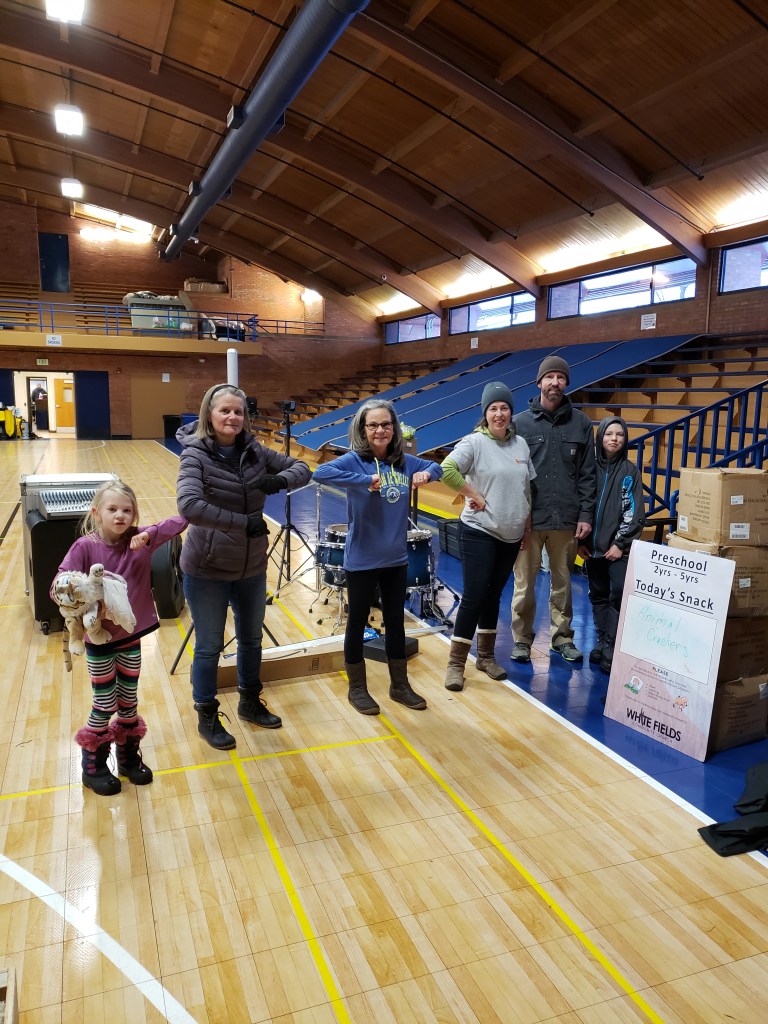
White Fields Community Church is moving! From our church’s beginning, we have met in the St. Vrain Memorial Building in downtown Longmont. It’s a large building, and has been a great place to start a church, but as we have grown, we have gotten to the point where it has been hindering more than helping us in fulfilling God’s mission for our church. For example, our Middle School class meets in a hallway, since we have maxed out all of the available spaces for NextGen classrooms.

We have pursued several properties over the past few years, and God has been faithful to lead us by shutting doors, which is exactly what we prayed He would do if those were not the right places for us.

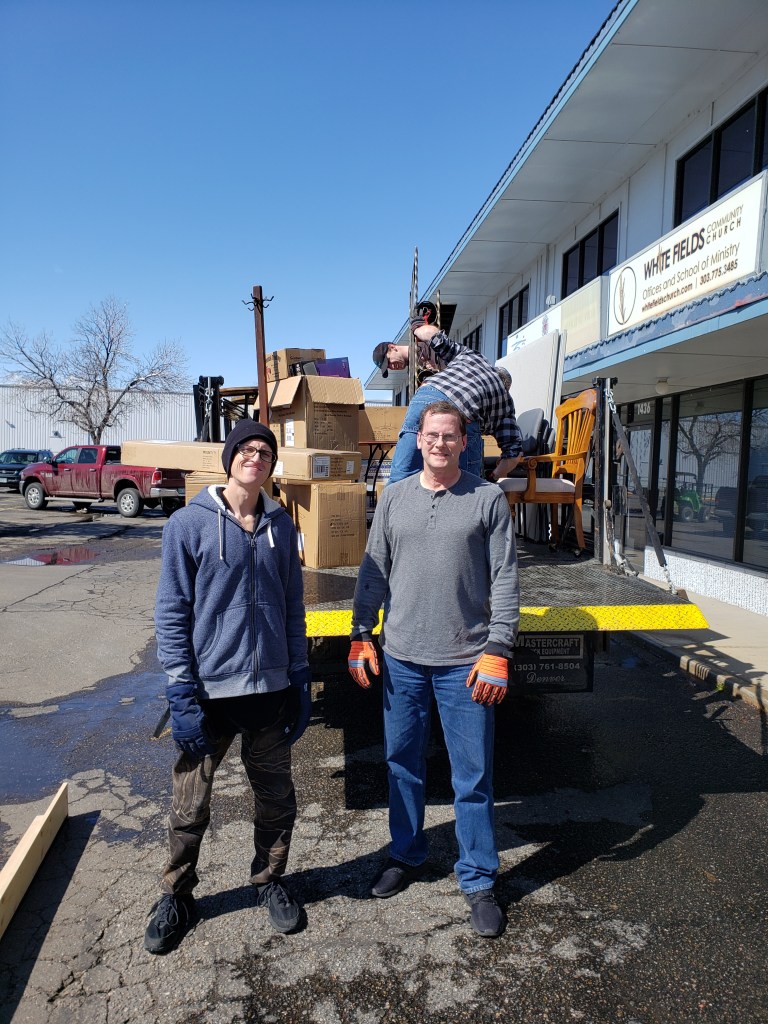
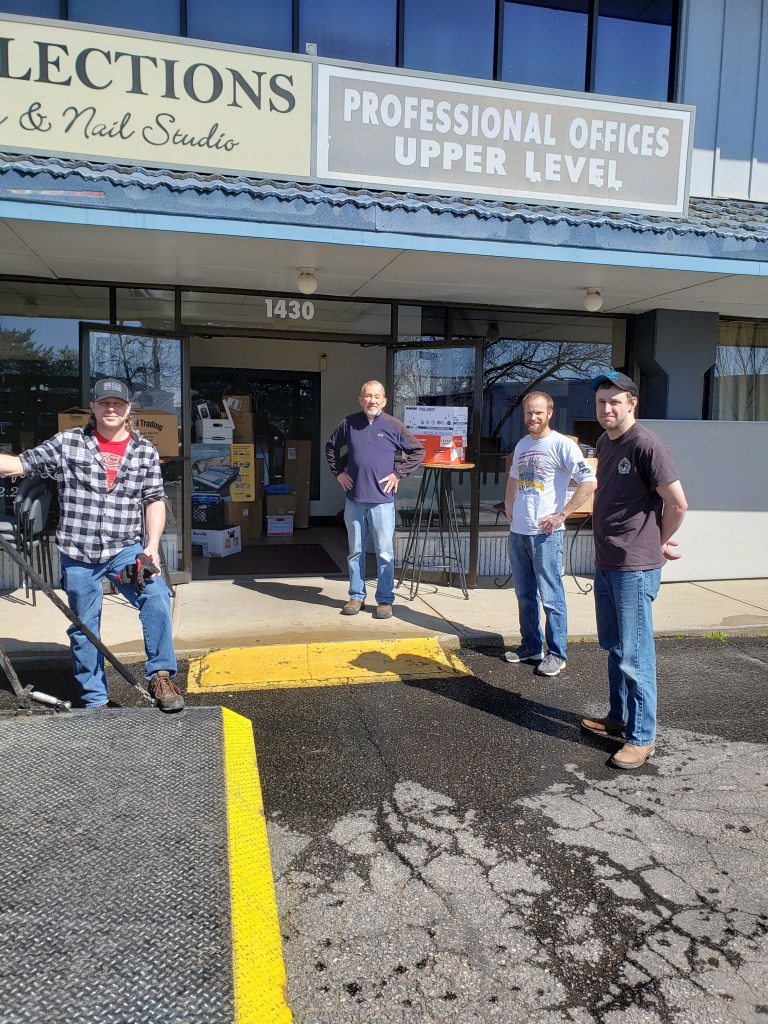
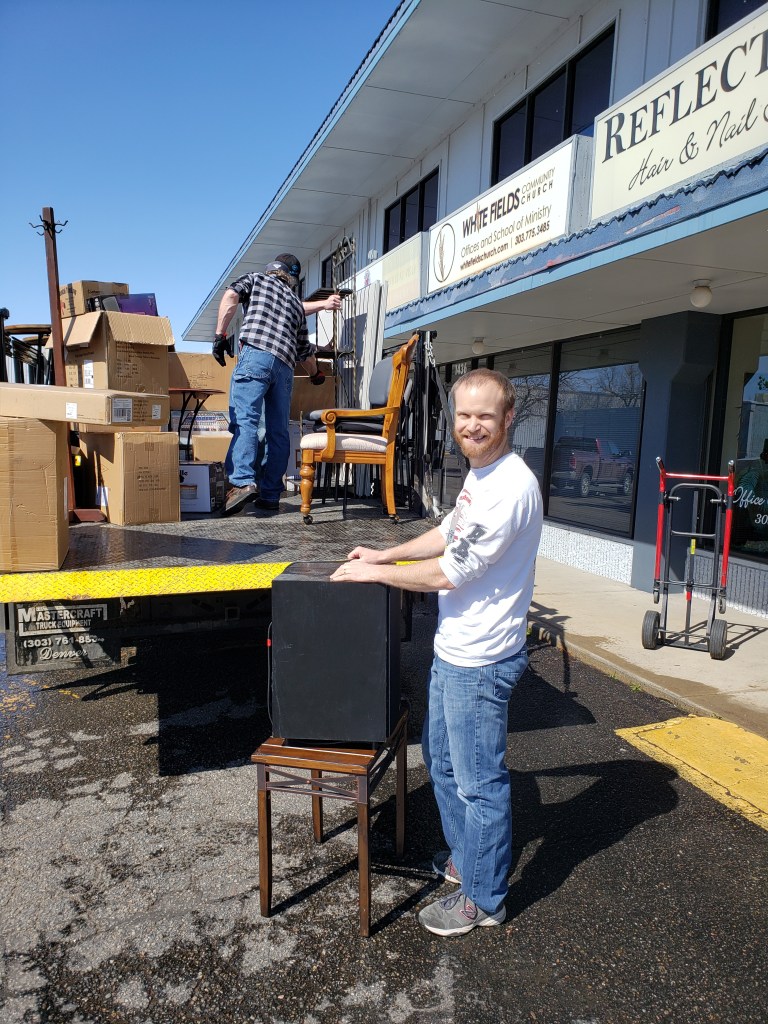
Recently we heard that another church in Longmont was considering closing a second campus they had opened 2 years ago. After reaching out, we felt that God’s hand was in this for several reasons. One is that the day we reached out to them is the same day that they had their official vote to close the campus. One of their prayers that day was that God would bring another church to use the space, and they received a call from us on the way home, within an hour! The other reason is because we were able to work out a deal in which we acquire all of their furnishings – something we would have needed to purchase wherever we moved to, and we will be able to take them with us when we move in the future.

We don’t view this as our final destination as a church; we would still like to own our own building rather than lease, but this will be a good place to facilitate ministry for the next several years. The church is a family, and a building is like the family car: it’s a tool that we use for our family, and it helps to have one that is good and reliable, and in which we all fit!

This new space is going to be a big upgrade for our kids and our youth; there’s a large youth area. It is a place that our church will be able to use for ministry throughout the week, including being home to our Bible Learning Center. It will give us the chance to have special services, such as on Good Friday; something our church has never been able to do. We look forward to filling the space with Bible study, discipleship and worship all week long, as well as having a home for our media outreaches. Our offices will move here, as we have also outgrown our rented office space on Nelson Road.

Please be praying for this new season at White Fields!

Address

2950 Colorful Ave. Longmont, CO 80504

Timeline

Our last service at the Memorial Building will be on March 22, 2020 at 10:00 AM. After service we will move all our equipment over to the new location.

Our first service in the new location will be on March 29, 2020 at 10:00 AM.

We’re excited for what God has planned. If you’re in the Longmont area, come grow with us at White Fields in our new location!

Were the Apostles Aware that Their Letters Were Scripture?

In 2 Peter 3:2 Peter says something very interesting:

that you may be mindful of the words which were spoken before by the holy prophets, and of the commandment of us, the apostles of the Lord and Savior,

2 Peter 3:2

Here’s why this is interesting: Peter is putting the commandments of the Apostles on the same level as the word spoken by the “holy prophets.”

The “holy prophets” were those who wrote the Hebrew Scriptures (the Old Testament). The Apostles and their “commandments” came through the writings of the New Testament letters, or epistles.

We can be sure that this is the case, because later on in 2 Peter chapter 3, Peter refers to the teachers of the Apostle Paul in his letters – specifically in regard to the same topic which Peter is addressing in 2 Peter 3:2 where he refers to the “commandment” of the apostles, which is to be patient and diligent in waiting for the coming of the Lord.

And count the patience of our Lord as salvation, just as our beloved brother Paul also wrote to you according to the wisdom given him, as he does in all his letters when he speaks in them of these matters. There are some things in them that are hard to understand, which the ignorant and unstable twist to their own destruction, as they do the other Scriptures.

2 Peter 3:15-16

Did you catch that? Peter calls Paul’s writings “Scripture”!

2 Peter was written shortly before Peter’s death in Rome, and after Paul the Apostle’s death, also in Rome. Thus, at this time, all of Paul’s letters which we have in our New Testaments were already written, they were being distributed amongst the churches, and they were considered Holy Scripture – in the same way that these Jewish believers considered the Old Testament to be Holy Scripture!

This is all the more interesting when we consider what Peter wrote in the first chapter of this letter, in which he describes how Scripture is written and inspired by the Holy Spirit:

And we have the prophetic word more fully confirmed, to which you will do well to pay attention as to a lamp shining in a dark place, until the day dawns and the morning star rises in your hearts, knowing this first of all, that no prophecy of Scripture comes from someone’s own interpretation. For no prophecy was ever produced by the will of man, but men spoke from God as they were carried along by the Holy Spirit.

2 Peter 1:19-21

Were the Apostles aware that they were writing Scripture? Perhaps sometimes they were not, but it would seem that many times they were!

For a broader discussion of this topic, check out:

At What Point is a Different Interpretation of the Bible “False Teaching”?

In 2 Peter 1:20, Peter states, “knowing this first of all, that no prophecy of Scripture comes from someone’s own interpretation.” Then in 2 Peter 2, Peter addresses the issue of false prophets and false teachers who, like wolves, infiltrate, ingratiate, isolate, and then destroy by introducing “destructive heresies.”

At the same time, different Christian groups interpret some parts of the Bible differently, such as eschatology (things regarding the “end times”), pneumatology (things regarding the Holy Spirit), and ordinances or sacraments such as baptism and communion.

See: Is There Only One Correct Way to Interpret a Given Passage of Scripture?

And yet, the question is: at what point does a difference in interpretation of particular scriptural text or principle constitute “false teaching,” i.e. a “destructive heresy”?

I answered that question both in the video linked below, and in the sermon: Wolves in Sheep’s Clothing (2 Peter 2:1-22)

Reader Questions: Was Jesus Really Related to King David?

Last year I added a page on this site where readers can submit questions or suggest topics (click here for that page). Recently I received this question:

I have been watching an archaeologist/historian video series. She says Jesus could not have been of David’s bloodline because David was Judean from Judea. Any thoughts?

The claim that Jesus could not have been of David’s bloodline because David was a Judean from Judea fails to take into account the fact of the Babylonian captivity.

The Judeans were taken to Babylon for roughly 70 years (it’s “roughly 70 years” because they didn’t all return at once; they returned in waves). Upon return from the captivity, many settled in different places, such as the much more fertile north of Israel, which was also more highly populated and therefore had more work opportunities. Joseph was a builder (“carpenter“ implies wood work in English, but the term used in the Bible implies more that he was more generally a construction worker) and Nazareth was a Jewish settlement right outside of the large Hellenistic city of Sepphoris, where it seems that the Jews of Nazareth went to work every day as laborers.

The lush and fertile north of Israel

Despite their resettlement after the exile, the Jewish people would have kept track of their ancestral hometowns and villages. 70 years is not so long that you would lose connection with your past, especially for ancient people who were more inclined than modern people to keep track of that and value it.

The argument that Jesus could not have been descended from David since he grew up in Nazareth is the same argument made by Nathaniel in John 1. It was an argument which neglected to recognize the fact that while Jesus grew up in Nazareth, his family was originally from Bethlehem, hence the reason Mary and Joseph had to travel there for the census.

Matthew 2 tells us about how Mary and Joseph left Bethlehem because Herod the Great attempted to kill Jesus, fearing him as a threat to his throne. Mary and Joseph took baby Jesus to Egypt, and upon their return they moved to Nazareth in order to stay off the radar of the Herod family even after the death of Herod the Great.

Thanks for the question and God bless you!

You Are What You Do: and Six Other Lies About Work, Life, & Love, by Daniel Im

I recently finished reading Daniel Im’s latest book You Are What You Do: and Six Other Lies About Work, Life, & Love.

I have enjoyed Daniel’s work with Ed Stetzer on the New Churches podcast and the book Planting Missional Churches.

I also read Daniel’s first book, No Silver Bullets: Five Small Shifts that Will Transform Your Ministry, and gleaned some great principles from it, particularly the concept of moving from “the sage on the stage” to “the guide on the side.”

For more on that, see:

7 Lies

img_3819

In Daniel’s latest book, he explores 7 lies; commonly held beliefs regarding identity, value, and self-worth:

  • You are what you do
  • You are what you experience
  • You are who you know
  • You are what you know
  • You are what you own
  • You are who you raise
  • You are your past

Believing each of these lies will lead to disfunction, disappointment, emptiness, pain, and regret – Daniel says.

In the book, Daniel is very candid about his own struggles with these lies. His stories are so personal, that they draw you in and not only make for compelling reading material, but they help you understand that these are not just abstract ideas for Daniel, they are things about which he has deep, personal knowledge and experience.

Perhaps most compelling of all is the story of him taking a job at a mega-church in Seoul, South Korea, from which he was later fired. He shows the courage to honestly explore his true motivations for taking the job, and why he struggled so much with getting fired and then struggling to find a job upon returning home to Canada.

Using and Fear

These are issues that I can relate to myself. I recently shared at a pastors conference about a time when I was a new pastor, my wife and I had planted a church in Eger, Hungary – and I realized that I wasn’t just doing ministry and serving people, but I was using ministry and using people as a way to affirm myself and build my own sense of identity and self-worth: that I was a pastor, a church planter, and a missionary. However, at the same time I was motivated by fear, because if my ministry didn’t pan out, then I stood to lose not only my job but my entire identity and sense of self-worth!

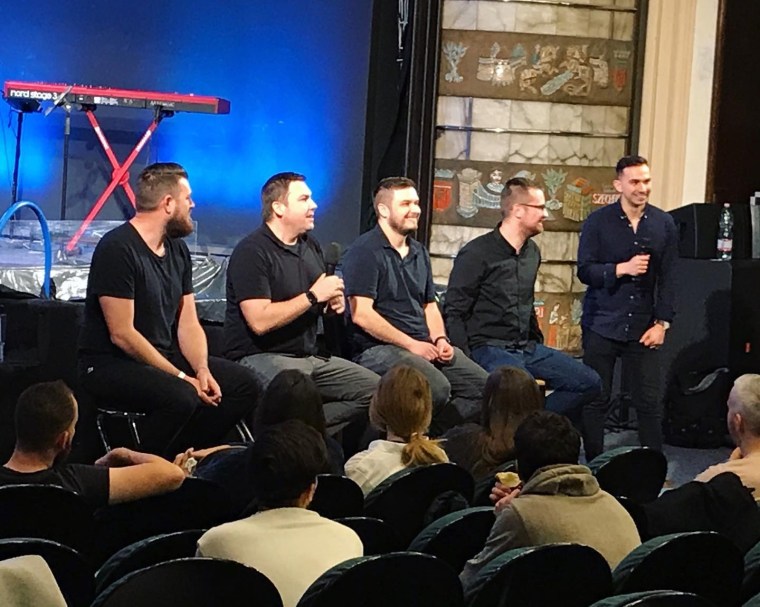
For more on this, check out: Identity Issues: Function, Labels, Sin & Jesus – which includes a video in which Mike and I discuss times in our lives when we’ve struggled with matters of identity, function, and labels, and how we have discovered the only true, stable, and fulfilling source of identity and self-worth in Jesus.

You Can’t Just Rid Yourself of Lies, You Must Replace Lies with the Truth

There were points in this book where I wondered, “Okay, Daniel is making a great case for why these things don’t fulfill, but is he going to point us to what will fulfill and satisfy?”

And of course, he did. He perfectly wrapped up the issue in the final chapter of the book, and this quote is a good summary of his point:

There is a sense of freedom in knowing what and who you are not. But ridding yourself of these seven lies won’t fill you – it’ll just empty you. Unless you replace these lies with the truth of who you really are, you’ll just find another set of lies – even stronger and more destructive – to replace these with. (p. 172)

In Conclusion…

Daniel Im’s latest book is relevant and timely. It’s the kind of book I wish I would have read as a young man getting a start on life. I would highly recommend it for young adults.

However, this isn’t only a book for young adults, as no one in the world today is immune to these lies. This is a book for everyone.

Here is the one piece of advice I would give in regard to this book: make sure to read all the way to the end. The book is written as a unified whole, rather than a series of stand-alone chapters; there is one big thought and thesis to this book, and if you stop reading before the end, you will miss it.

I congratulate Daniel on writing this book. I hope it will get into the hands of many people and be used by God to not only set them free from lies, but to find the security and freedom of “being found in Christ.”

But whatever gain I had, I counted as loss for the sake of Christ. Indeed, I count everything as loss because of the surpassing worth of knowing Christ Jesus my Lord. For his sake I have suffered the loss of all things and count them as rubbish, in order that I may gain Christ and be found in him. (Philippians 3:7-9)