
Ministry in French Canada: A Pastor’s Journey from ShowBiz to the Secular City – with Sébastien Frappier

In this episode of the Theology for the People Podcast, I speak with Sébastien Frappier his incredible journey from a professional acting career to planting a church in the highly secular city of Montreal, Quebec.

Sebastian shares how a moment of spiritual emptiness led him to encounter Jesus through a Gideon Bible on Guadalupe Mountain in Texas. He reflects on his 12-year journey of preparation, the unique challenges of ministry in a post-Christian culture, and how his acting background informs his preaching and evangelism.

The conversation also covers the unique cultural and spiritual aspects of Quebec, effective evangelism strategies in Montreal, and the importance of discipleship in a context where biblical knowledge is minimal.

Sebastian offers practical advice for church planters in secular urban settings and shares how listeners can support Calvary Montreal’s mission.

Key Topics:

• Sebastian’s Journey to Faith: From a successful acting career in Montreal to a transformative encounter with Jesus while reading the Sermon on the Mount in Texas.

• Ministry in Montreal: The challenges of pastoring in a highly secular, post-Christian city with less than 0.3% evangelical Christians.

• Acting and Preaching: How Sebastian’s training in method acting and the Meisner technique shapes his passionate, authentic approach to teaching the Bible.

• Cultural Context of Quebec: The impact of the Quiet Revolution, the decline of Catholicism, and the rise of humanism in Quebec’s spiritual landscape.

• Evangelism Strategies: The effectiveness of street and subway evangelism in Montreal, emphasizing authenticity and genuine relationships over large-scale events.

• Discipleship in a Secular Context: Focusing on basic biblical teachings and one-on-one discipleship due to limited biblical literacy among new believers.

• Challenges and Encouragement: Sebastian’s experience with a recent church split, the financial struggles of ministry in Quebec, and the joy of seeing individual souls saved.

• Call to Action: How listeners can pray for, support, or participate in short-term mission trips to support Calvary Montreal.

• Calvary Montreal Website: calvarymontreal.com – Find information on the church, how to get involved, and support their mission.

Click here to listen to the episode, or listen in the embedded player below.

Ministry in French Canada: Church Planting in Montreal, Quebec – with Sebastien Frappier – Theology for the People

In this episode, Nick Cady in joined by Sebastian Frappier, to discuss his incredible journey from a professional acting career to planting a church in the highly secular city of Montreal, Quebec. Sebastian shares how a moment of spiritual emptiness led him to encounter Jesus through a Gideon Bible on Guadalupe Mountain in Texas. He reflects on his 12-year journey of preparation, the unique challenges of ministry in a post-Christian culture, and how his acting background informs his preaching and evangelism. The conversation also covers the unique cultural and spiritual aspects of Quebec, effective evangelism strategies in Montreal, and the importance of discipleship in a context where biblical knowledge is minimal. Sebastian offers practical advice for church planters in secular urban settings and shares how listeners can support Calvary Montreal’s mission.Sebastian’s Journey to Faith: From a successful acting career in Montreal to a transformative encounter with Jesus while reading the Sermon on the Mount in Texas.Ministry in Montreal: The challenges of pastoring in a highly secular, post-Christian city with less than 0.3% evangelical Christians.Acting and Preaching: How Sebastian’s training in method acting and the Meisner technique shapes his passionate, authentic approach to teaching the Bible.Cultural Context of Quebec: The impact of the Quiet Revolution, the decline of Catholicism, and the rise of humanism in Quebec’s spiritual landscape.Evangelism Strategies: The effectiveness of street and subway evangelism in Montreal, emphasizing authenticity and genuine relationships over large-scale events.Discipleship in a Secular Context: Focusing on basic biblical teachings and one-on-one discipleship due to limited biblical literacy among new believers.Challenges and Encouragement: Sebastian’s experience with a recent church split, the financial struggles of ministry in Quebec, and the joy of seeing individual souls saved.Call to Action: How listeners can pray for, support, or participate in short-term mission trips to support Calvary Montreal.Calvary Montreal Website: calvarymontreal.com – Find information on the church, how to get involved, and support their mission.Subscribe to Theology for the People for more inspiring conversations about faith and ministry.Share this episode with friends or your church community to raise awareness about the mission in Montreal.Visit the Theology for the People website at theologyforthepeople.com

A New Way to Listen to the Theology for the People Podcast: Now on YouTube

YouTube recently introduced a Podcast feature, and so I went ahead and created a Theology for the People YouTube Channel.

With YouTube now hosting podcasts, I might be motivated to post more video podcasts in the future.

Subscribe to Theology for the People on YouTube here, or for those of you on a desktop browser, you can listen to the embedded playlist below:

Seeing Jesus in the Psalms through Hebrews – with Daniel Stevens

In this episode of the Theology for the People Podcast, I speak with Daniel Stevens, who is Assistant Professor of New Testament Interpretation at Boyce College (the undergraduate college of Southern Seminary) and author of Songs of the Son: Reading the Psalms with the Author of Hebrews. 

In this episode, Daniel shares how his accidental dive into Hebrews sparked a decade-long passion, revealing how the Psalms prophetically point to Jesus. 
We talk about the question of who wrote Hebrews, and why it matters — and we talk about how reading the Psalms through the lens of Hebrews can deepen our worship and appreciation of Jesus.

Notable Quotes:
• Daniel on Hebrews’ Use of Psalms: “When the author to the Hebrews wanted to make an argument about Jesus, one of the most common places that he goes is to the Psalms.”
• On Christological Reading: “It’s not reading something into it, it’s reading what’s there and reasoning from it.”
• On Hebrews’ Argument: “It’s not comparing bad to good… it’s good to better.”
• For Believers: “If these Psalms aren’t first about us, but about a thing that Jesus has done for us… we can worship Him in finding them.”

More Resources: Follow Daniel on X

Click here to listen to the episode, or listen in the embedded player below.
Seeing Jesus in the Psalms through Hebrews – with Daniel Stevens – Theology for the People

Daniel Stevens is Assistant Professor of New Testament Interpretation at Boyce College and author of Songs of the Son: Reading the Psalms with the Author of Hebrews. In this episode, Daniel shares how his accidental dive into Hebrews sparked a decade-long passion, revealing how the Psalms prophetically point to Jesus. We talk about the question of who wrote Hebrews, and why it matters — and we talk about how reading the Psalms through the lens of Hebrews can deepen our worship and appreciation of Jesus.Notable QuotesDaniel on Hebrews’ Use of Psalms: “When the author to the Hebrews wanted to make an argument about Jesus, one of the most common places that he goes is to the Psalms.”On Christological Reading: “It’s not reading something into it, it’s reading what’s there and reasoning from it.”On Hebrews’ Argument: “It’s not comparing bad to good… it’s good to better.”For Believers: “If these Psalms aren’t first about us, but about a thing that Jesus has done for us… we can worship Him in finding them.”More Resources: Follow Daniel on XConnect with Us:Subscribe to Theology for the People for more episodes.Visit the Theology for the People website and blog

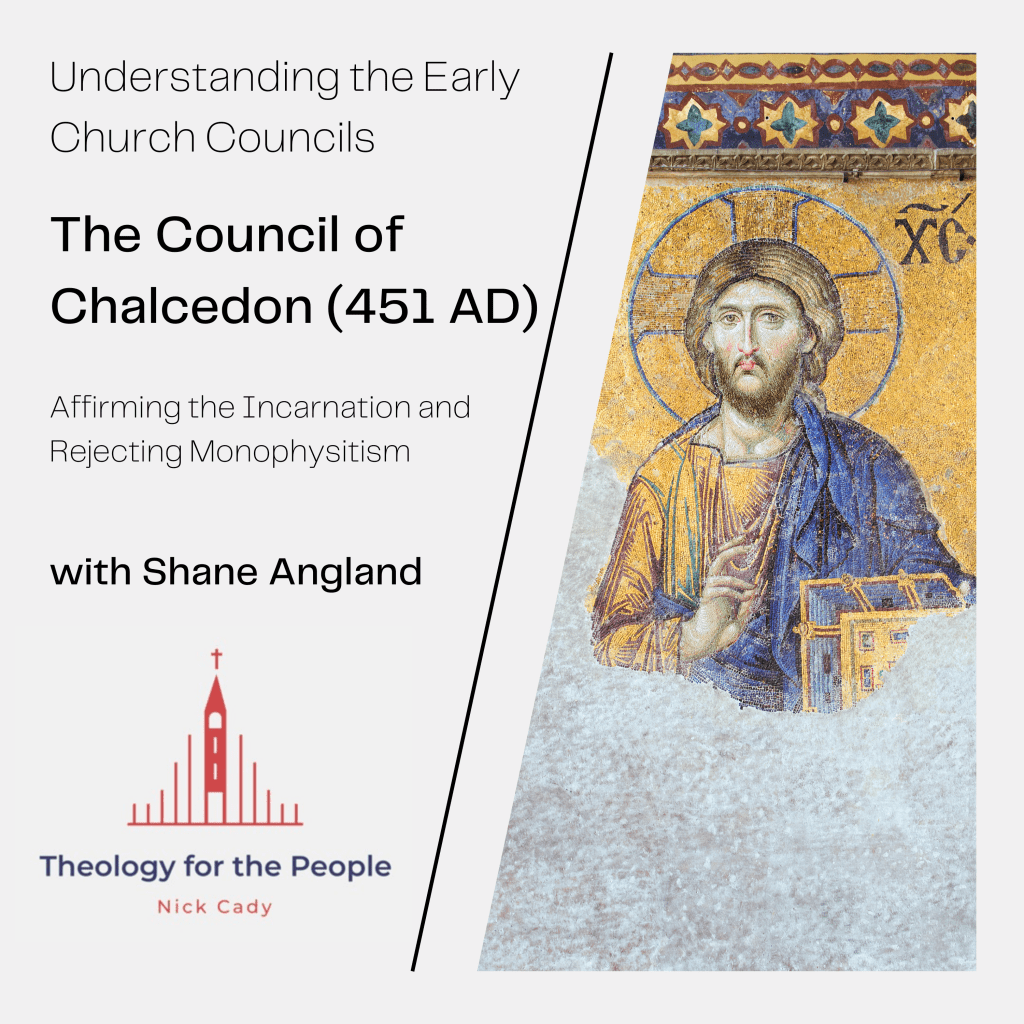
The Council of Chalcedon (451 AD) – with Shane Angland

In this episode of the Theology for the People Podcast, I sit down with returning guest Shane to explore the Council of Chalcedon (AD 451), the fourth ecumenical council of the early church.

Recorded live in Colorado during an Expositors Collective training weekend, this conversation traces the events leading up to Chalcedon, its theological breakthroughs, and its messy aftermath.

From the fallout of the Council of Ephesus, to the clash between the Alexandrian and Antiochian schools of Christology, and the mess of Ephesus II, Shane breaks down the stakes: how do we understand the two natures of Christ—human and divine—in one person?

The episode also tackles the political power plays, the deposition of bishops, and the schisms that followed, including the rise of the Oriental Orthodox churches. Plus, hear why Shane sees Chalcedon as both a triumph and a tragedy—and what it still teaches us today.

Resources Mentioned:

Click here to listen to the episode, or listen in the embedded player below.
The Council of Chalcedon (451 AD) – with Shane Angland – Theology for the People

In this episode, Nick sits down in person with returning guest Shane to explore the Council of Chalcedon (AD 451), the fourth ecumenical council of the early church. Recorded live in Colorado during an Expositors Collective training weekend, this conversation traces the events leading up to Chalcedon, its theological breakthroughs, and its messy aftermath. From the fallout of the Council of Ephesus to the clash between the Alexandrian and Antiochian schools of Christology, Shane breaks down the stakes: how do we understand the two natures of Christ—human and divine—in one person? The episode also tackles the political power plays, the deposition of bishops, and the schisms that followed, including the rise of the Oriental Orthodox churches. Plus, hear why Shane sees Chalcedon as both a triumph and a tragedy—and what it still teaches us today.Resources Mentioned:The Definition of Chalcedon (available online for further reading).Bruce Shelley’s Church History in Plain Language (Fifth Edition).Augustine’s The Unity of the Church on the role and limits of councils.Visit TheologyforthePeople.com

The Council of Ephesus (431 AD) – with Matthew Pursely

In this episode of the Theology for the People Podcast, we continue our series on the first four ecumenical councils of the early church, diving into the Council of Ephesus (431 AD).

Matthew Pursely, Executive Pastor at Park Hill Church in San Diego, CA, joins us again to explore the theological debates surrounding Nestorius, the nature of Christ, and the implications of the hypostatic union—Jesus being fully God and fully man.

We discuss how this council addressed Nestorianism, affirmed Mary as the “Theotokos” (God-bearer), and shaped Christian understanding of communion and humanity’s connection to Christ.

Click here to listen to the episode, or listen in the embedded player below.
The Council of Ephesus (431 AD): Hypostatic Union, Nestorianism, & Theotokos – with Matt Pursely – Theology for the People

In this episode, we continue our series on the first four ecumenical councils of the early church, diving into the Council of Ephesus (431 AD). Matthew Pursely joins us again to explore the theological debates surrounding Nestorius, the nature of Christ, and the implications of the hypostatic union—Jesus being fully God and fully man. We discuss how this council addressed Nestorianism, affirmed Mary as the "Theotokos" (God-bearer), and shaped Christian understanding of communion and humanity’s connection to Christ.Recommended ResourcesFor those wanting to dive deeper into the councils and related theology:Edward Siecienski – The Filioque: History of a Doctrinal ControversyAdonis Vidu – Exploring the Doctrine of Divine InseparabilityJohn Behr – The Nicene Faith (2 volumes) and John the Theologian and the Mystery of ChristKallistos Anatolios – Retrieving NicaeaJohn Henry Newman – Arians of the Fourth CenturyWilliam Bright – Notes on the Canons of the First Four General CouncilsTodd Miles – Superheroes Can’t Save You: Epic Examples of Historic Heresies (compares heresies to superhero archetypes—highly recommended entry-level read).Connect with Us:Subscribe to the Theology for the People podcastVisit the Theology for the People website at theologyforthepeople.com

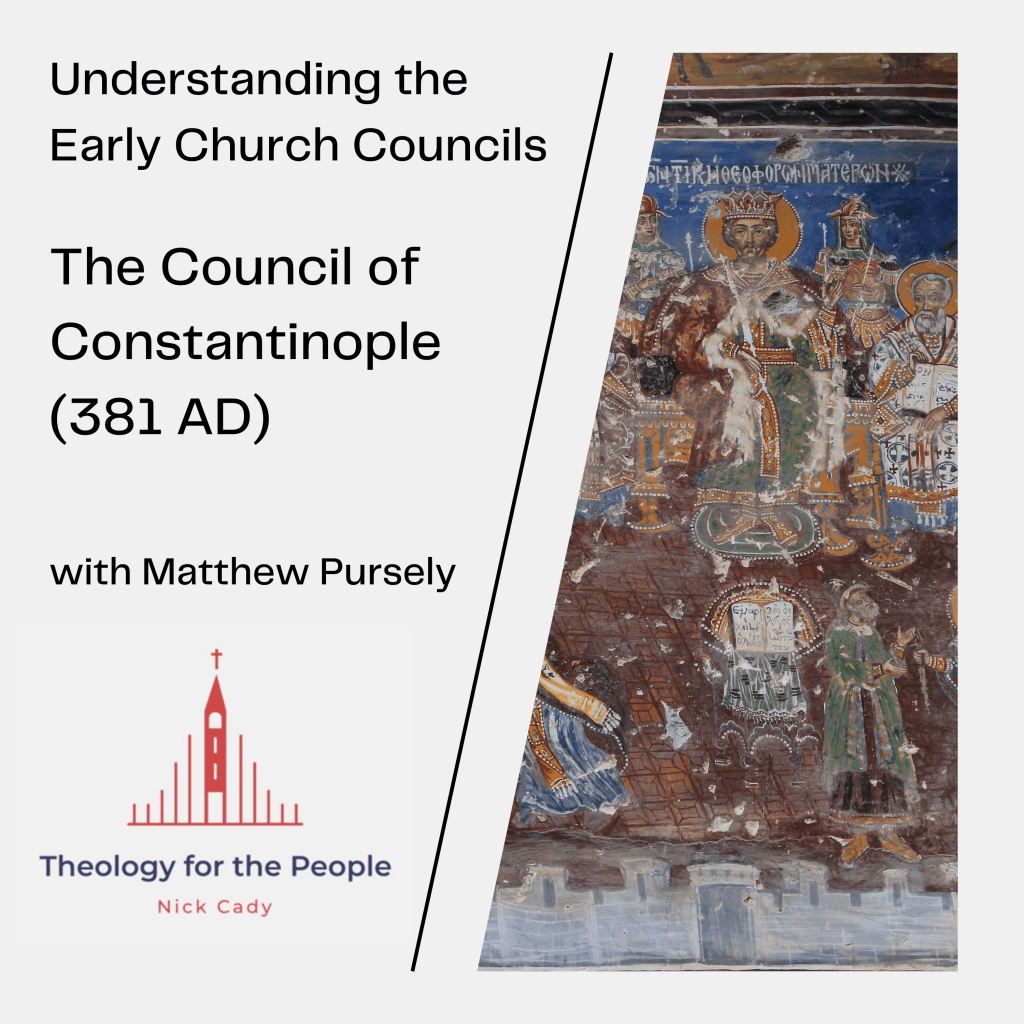
The Council of Constantinople – with Matthew Pursely

How did the early church come to a clear understanding of who Jesus is and how the Holy Spirit relates to the Father and the Son? And why did it take more than one council to settle these questions?

In this episode, I’m joined again by Matthew Pursley, Executive Pastor at Park Hill Church in San Diego, CA, and an expert in historical theology. Last time, we discussed the Council of Nicaea, and in this episode, we continue the conversation by diving into the Second Ecumenical Council—Constantinople (381 AD).

We discuss why the Council of Constantinople was necessary even after Nicaea, the role of the Cappadocian Fathers in defining the Trinity, the Filioque controversy, and how this council still shapes our faith to this day.

Click here to listen to the episode, or listen in the embedded player below.
The Council of Constantinople (381 AD) – with Matthew Pursely – Theology for the People

How did the early church come to a clear understanding of who Jesus is and how the Holy Spirit relates to the Father and the Son? And why did it take more than one council to settle these questions?In this episode, I'm joined again by Matt Pursley, Executive Pastor at Park Hill Church in San Diego, CA, and an expert in historical theology. Last time, we discussed the Council of Nicaea, and in this episode, we continue the conversation by diving into the Second Ecumenical Council—Constantinople (381 AD).We discuss why the Council of Constantinople was necessary even after Nicaea, the role of the Cappadocian Fathers in defining the Trinity, the Filioque controversy, and how this council still shapes our faith to this day. Make sure to visit the Theology for the People website.

Experiencing the Steadfast Love of God – with Sam Storm

The Theology for the People Podcast is back for a new season!

Season 5 began last week with an initial episode about the Using AI in Christian Ministry, in which Pastor Mike Neglia and I discuss the ethics, dangers, and best practices of using AI for Christian ministry.

In the latest episode, I speak with theologian, author, and pastor Sam Storms about what it truly means to experience the love of God.

In a culture where love is often redefined and misunderstood, how can we anchor ourselves in the steadfast love that Scripture proclaims? We discuss how culture has distorted the meaning of love, the biblical concept of God’s covenantal and unshakable love, and why love is meant to be more than just a doctrine we affirm—it’s meant to be a reality we feel.

Sam and I also explore how God’s love transforms us, the tension between love and truth in our world today, and practical steps for keeping ourselves in the love of God.

Resources Mentioned:
• Sam’s new book: The Steadfast Love of the Lord 
• Sam Storms’ website: www.samstorms.org

Click here to listen to the episode, or listen in the embedded player below.
Experiencing the Steadfast Love of God – with Sam Storms – Theology for the People

What does it truly mean to experience the love of God? In a culture where love is often redefined and misunderstood, how can we anchor ourselves in the steadfast love that Scripture proclaims?In this episode, I sit down with theologian, author, and pastor Sam Storms to talk about his latest book, The Steadfast Love of the Lord. We discuss how culture has distorted the meaning of love, the biblical concept of God's covenantal and unshakable love, and why love is meant to be more than just a doctrine we affirm—it’s meant to be a reality we feel.We also explore how God's love transforms us, the tension between love and truth in our world today, and practical steps for keeping ourselves in the love of God.Resources Mentioned:The Steadfast Love of the Lord Sam Storms' website: www.samstorms.orgExpositors Collective Training WeekendVisit TheologyForThePeople.com

Faith Under Pressure: How Wrestling Through Your Doubts Can Lead to Deeper Faith – with Dr. Philip Ryken

Have you ever wrestled with doubts about your faith? If so, then you are in good company. The Bible contains several stories of men and women of faith who also had seasons in which they struggled with doubts.

⁠Dr. Philip Ryken⁠ is the President of ⁠Wheaton College⁠ in Wheaton, Illinois. He has a Doctorate in Philosophy from Oxford University, and he is the author of over 50 books. His latest book is called ⁠I Have My Doubts: How God Can Use Your Uncertainty to Reawaken Your Faith⁠.

In this episode Dr. Ryken shares advice for those currently struggling with doubts, with the goal of also helping others to be equipped to help those around them to come to greater confidence in Jesus and a more vibrant faith.

Listen to Dr. Ryken’s previous episode on Theology for the People: ⁠The Role of Beauty in Theology⁠

Click here to listen to the episode, or listen in the embedded player below.

Faith Under Pressure: How Wrestling Through Your Doubts Can Lead to Deeper Faith – with Dr. Philip Ryken – Theology for the People

Have you ever wrestled with doubts about your faith? If so, then you are in good company. The Bible contains several stories of men and women of faith who also had seasons in which they struggled with doubts. ⁠Dr. Philip Ryken⁠ is the President of ⁠Wheaton College⁠ in Wheaton, Illinois. He has a Doctorate in Philosophy from Oxford University, and he is the author of over 50 books. His latest book is called ⁠I Have My Doubts: How God Can Use Your Uncertainty to Reawaken Your Faith⁠. In this episode Dr. Ryken shares advice for those currently struggling with doubts, with the goal of also helping others to be equipped to help those around them to come to greater confidence in Jesus and a more vibrant faith. Listen to Dr. Ryken's previous episode on Theology for the People: ⁠The Role of Beauty in Theology⁠ Visit the ⁠Theology for the People website at nickcady.org⁠

What is Expository Preaching and How Do We Do It Well? – with David Jackman

How is expository Bible teaching different than non-expository teaching?

David Jackman is the founder and director of the Cornhill Training Course, a UK-based initiative which teaches people how to teach the Bible expositorally.

David has served as a pastor and as president of Proclamation Trust, which exists to equip Bible teachers around the world.

In this episode, David explains the value of expository preaching, both in how it honors God’s Word, and in the ways it benefits those who hear it.

We discuss common pushbacks to expository preaching, such as that Jesus was not an expository preacher, and we get into the mechanics of effective Bible teaching, including how to include application, and more.

Check out David’s recent book, Proclaiming the Word, as well as Expositors Collective.

Click here to listen to the episode, or listen in the embedded player below.
What is Expository Preaching and How Do We Do It Well? – with David Jackman – Theology for the People

How is expository Bible teaching different than non-expository teaching? David Jackman is the founder and director of the Cornhill Training Course, which teaches people how to teach the Bible expositorally. He has also served as a pastor and as president of Proclamation Trust, which exists to equip Bible teachers around the world. In this episode, David explains the value of expository preaching, both in how it honors God’s Word, and in the ways it benefits those who hear it. We discuss common pushbacks to expository preaching, such as that Jesus was not an expository preacher, and we get into the mechanics of effective Bible teaching, including how to include application, and more. Check out David's recent book, Proclaiming the Word, as well as Expositors Collective.

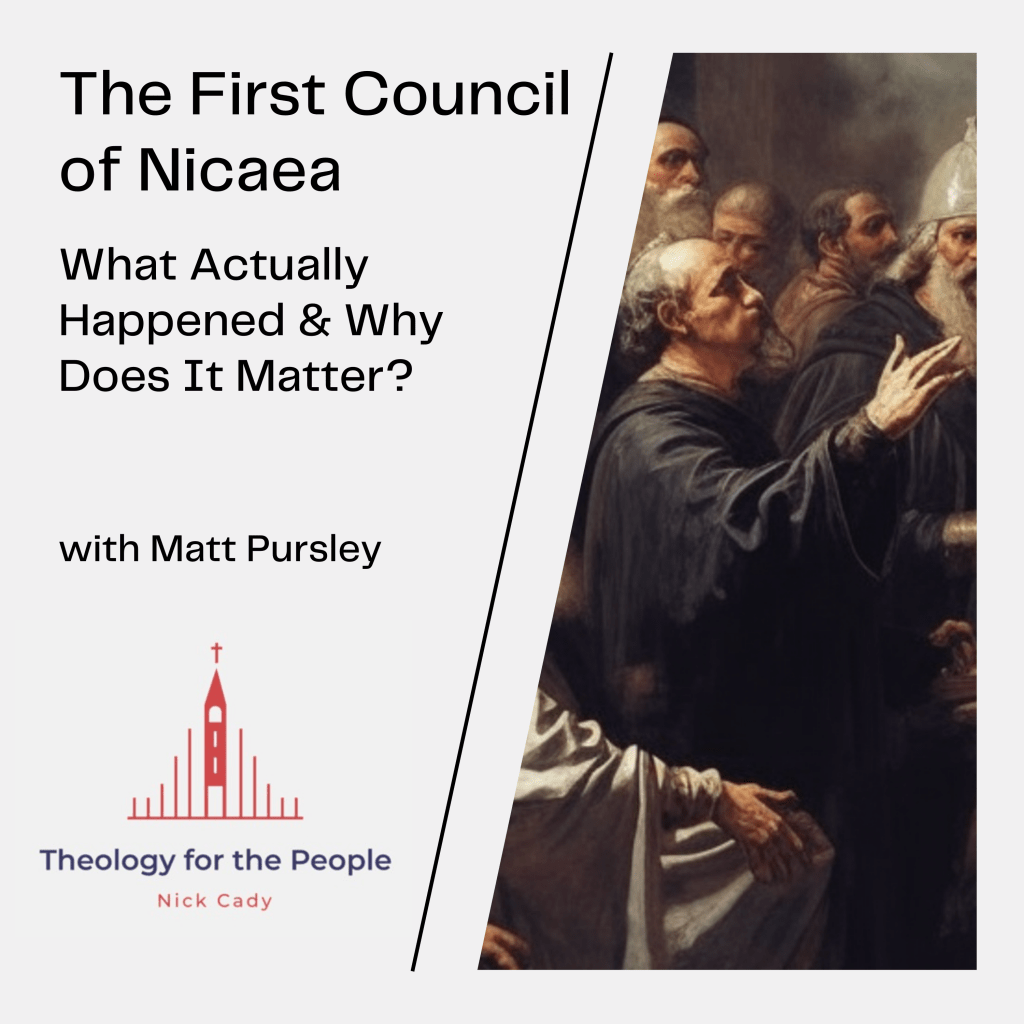
The First Council of Nicaea: What Actually Happened & Why Does It Matter?

When we talk about “the Early Church” many people’s minds immediately go to the first generation of Christianity, recorded in the Book of Acts and addressed in the New Testament. But what happened after that, and why does it matter for Christians living today?

Matt Pursley is the Executive Pastor at Park Hill Church in San Diego, California. He has a Masters in Christian History, and in this episode, Matt and I discuss the First Council of Nicaea: what led to it and what it produced.

We address many of the common misconceptions about Nicaea, and we discuss the early heresies of Marcionism, Gnosticism, and Arianism, and why it’s important for Christians today to understand those heresies, and why they were rejected.

Along the way we also talk about Jordan Peterson, who Matt says is a modern Marcionite, and how the errors of both liberalism and fundamentalism have a similar origin.

Click here to listen to the episode, or listen in the embedded player below.
The First Council of Nicaea: What Actually Happened & Why Does It Matter for Us Today? – Theology for the People

When we talk about “the Early Church” many people’s minds immediately go to the first generation of Christianity, recorded in the Book of Acts and addressed in the New Testament. But what happened after that, and why does it matter for Christians living today? Matt Pursley is the Executive Pastor at Park Hill Church in San Diego, California. He has a Masters in Christian History, and in this episode, Matt and I discuss the First Council of Nicaea: what led to it and what it produced. We address many of the common misconceptions about Nicaea, and we discuss the early heresies of Marcionism, Gnosticism, and Arianism, and why it’s important for Christians today to understand those heresies, and why they were rejected. Along the way we also talk about Jordan Peterson, who Matt says is a modern Marcionite, and how the errors of both liberalism and fundamentalism have a similar origin. Visit the Theology for the People website at nickcady.org