Worship and Music: Nine Healthy Biblical Tensions – with Michael Payne

In this episode of the Theology for the People Podcast, I speak with Michael Payne, Worship Pastor at White Fields Community Church, to talk about what makes worship in the church both biblical and healthy.

Drawing from the insights of Worship Matters by Bob Kauflin, they explore 9 essential tensions that every church must navigate when it comes to worship and music.

What does it look like to be:

  • Spirit-led and Scripture-rooted?
  • Emotionally expressive and doctrinally grounded?
  • Skilled and sincere?

Rather than choosing one side or the other, healthy worship holds these tensions together in a way that honors God and serves the church.

Whether you’re a pastor, worship leader, musician, or church member, this conversation will help you think more clearly about what worship is—and what it’s for.

👉 Topics include:

  • The purpose of music in gathered worship
  • Balancing excellence and authenticity
  • Choosing songs that shape theology
  • Leading people, not just performing for them
  • Why tension is not a problem—but a necessity

If you care about Christ-centered, congregational worship, this episode is for you.

Watch or Listen to the Episode Here:

Follow Theology for the People on YouTube⁠https://www.youtube.com/@theologyforthepeople

Click here to listen to the episode, or listen in the embedded player below.

Worship and Music: Nine Healthy Biblical Tensions Theology for the People

In this episode of Theology for the People, host Nick Cady sits down with Michael Payne, Worship Pastor at White Fields Community Church, to talk about what makes worship in the church both biblical and healthy.Drawing from the insights of "Worship Matters" by Bob Kauflin, they explore 9 essential tensions that every church must navigate when it comes to worship and music.What does it look like to be:Spirit-led and Scripture-rooted?Emotionally expressive and doctrinally grounded?Skilled and sincere?Rather than choosing one side or the other, healthy worship holds these tensions together in a way that honors God and serves the church.Whether you're a pastor, worship leader, musician, or church member, this conversation will help you think more clearly about what worship is—and what it’s for.👉 Topics include:The purpose of music in gathered worshipBalancing excellence and authenticityChoosing songs that shape theologyLeading people, not just performing for themWhy tension is not a problem—but a necessityIf you care about Christ-centered, congregational worship, this episode is for you.

This episode is audio only for the safety of the people to whom Matt ministers, but the audio can be found on YouTube here:

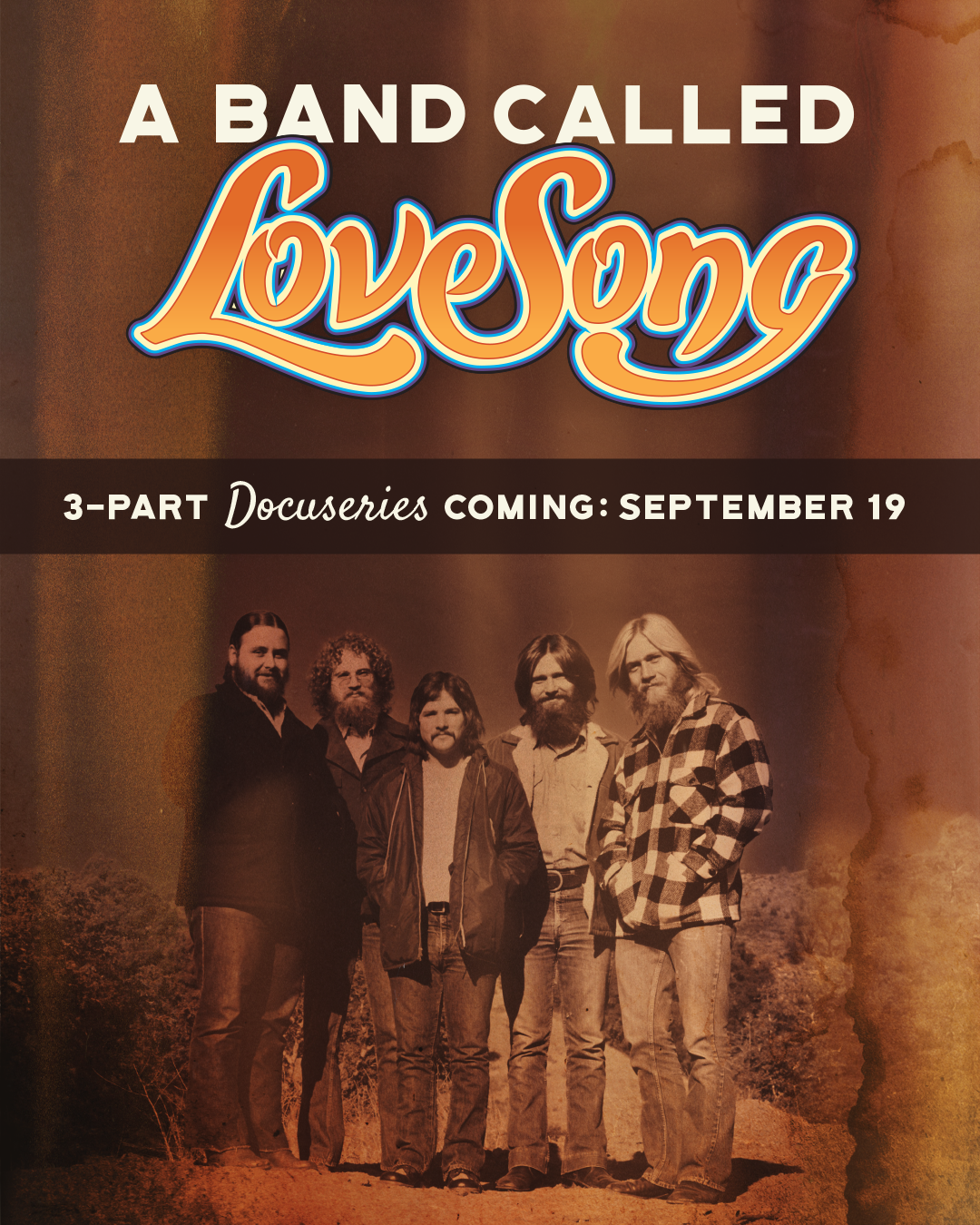
A Band Called LoveSong – Docuseries Out Now

As a young Christian, by God’s providence, I ended up in a church which had been founded as a result of the “Jesus Movement” of the 1960’s and 70’s, which many people have said was the last great revival of our recent times.

My pastor, Tom Stipe, was a big part of the Jesus Movement and the famous stories of “the tent” at Calvary Chapel in Costa Mesa, CA – which was the temporary sanctuary the church used while their new building was being built. During those times, Tom oversaw the Saturday night outreaches with Christian bands, and then he would share the gospel with those who had gathered to hear the bands. Tom went on to found Maranatha! Music before moving to Colorado to plant a church in Boulder, which later moved to Denver – and which I joined early in early 2000.

Recently a new documentary series came out about the music of the Jesus Movement, focused on one of the great bands from the era called LoveSong. The docuseries is out now on Amazon Prime Video and on SalemNOW. You can also find more information about it by visiting the aBandCalledLoveSong.com.

This documentary tells the story of the Jesus Movement through the eyes of the band, including their famous audition with Pastor Chuck Smith, and the birth of Contemporary Christian Music.

This docuseries reflects the essence and identity of the Calvary Chapel movement and the ongoing legacy of its ministry. I recommend that you check it out!

What Has Athens to Do with Jerusalem?: How Should Christians Relate to Ideas and Practices Which Originate Outside of Christianity?

In this episode of the Theology for the People Podcast, Michael and I discuss the topic about which I wrote my BA dissertation: How should Christians relate to ideas and practices in our culture and society which have their origin outside of Christianity?

Some good examples would be:

  • Can Christians practice yoga? (Origins in Hinduism)
  • How about martial arts?
  • What about Christmas? (December 25 was originally a pagan solstice festival which Christians “took over,” detached it from its pagan origins, and infused it with new meaning and made it all about Jesus)
  • What about psychology?
  • How about certain instruments, like drums?
  • What about rock music and electric guitars?

This discussion of how Christians should relate to ideas and practices which originate outside of Christianity can be traced all the way back to a historical argument between Tertullian and Justin Martyr, early Christian apologists and theologians, and can be summarized by Tertullian’s classic question: “What Has Athens to Do with Jerusalem?”

In this episode, Michael and I discuss the relevant principles from the Bible we should follow as guides in navigating these matters.

How does the redemptive narrative arc of Scripture affect how we relate to these practices? How about what Paul says about meat sacrificed to idols in 1 Corinthians 8-10 and Romans 14?

Check out our discussion in the embedded player below, or by clicking here: What Has Athens to Do with Jerusalem?: How Should Christians Relate to Ideas and Practices Which Originate Outside of Christianity?

What Has Athens to Do with Jerusalem?: How Should Christians Relate to Ideas and Practices Which Originate Outside of Christianity? Theology for the People

In this episode Nick Cady and Michael Payne speak about how Christians should relate to things which originate outside of Christianity, such as yoga, psychology, Christmas, drums, or rock music.  This discussion can be traced all the way back to a historical argument between Tertullian and Justin Martyr which can be summarized by Tertullian's classic question: "What Has Athens to Do with Jerusalem?" Visit the Theology for the People blog site at nickcady.org – where you can ask questions or submit suggestions for future episodes.

A Theology of Music: Discussion with Jon Markey and Michael Payne

Jon Markey and Michael Payne are accomplished musicians, songwriters, and producers, and in the latest episode of the Theology for the People podcast, I sat down with them to talk about the theology of music.

Michael is the Worship Pastor at White Fields Community Church in Longmont, Colorado. Prior to coming to Longmont, he spent 21 years as a worship leader and missionary in Hungary, and prior to that he served in the US Marine Corps.

Jon is a pastor and missionary in Ternopil, Ukraine. He moved to Kiev, Ukraine with his family in the 1990’s, when he was 5 years old, and earned a masters degree from the Ukrainian National Tchaikovsky Academy of Music.

Jon has been a guest on the podcast before, in fact his episode is the most-listened to episode on the podcast to date: If “It’s All Gonna Burn” Then What’s the Point? – How the Resurrection Gives Meaning to Work & Art

We recently had the pleasure of having Jon and his family visit Longmont and lead worship at our church, and while he was here, I got to sit down with him and Mike to discuss what the Bible has to say about music: its purpose, uses, and significance – including the “song of creation,” and how it serves to counteract pagan origin narratives, as well as Jubal: the first human musician, mentioned in Genesis 4, as well as other practical discussions which have modern application.

Check out Jon’s ministry: Room for More music on YouTube and his church: Calvary Chapel Ternopil (Ukraine)

Check out Michael on Spotify: Michael Payne and you can watch him on the White Fields Community Church YouTube page.

The book mentioned in this episode is Scribbling in the Sand: Christ and Creativity by Michael Card

A Theology of Music: with Jon Markey & Michael Payne Theology for the People

Michael Payne and Jon Markey are accomplished musicians, songwriters, and producers, and in this episode they talk with Nick about the theology of music. Listen in to this discussion of what the Bible has to say about music: its purpose, uses, and significance – including the "song of creation," Jubal, and practical discussions for today. Check out Jon's ministry: Room for More music on YouTube and his church: Calvary Chapel Ternopil (Ukraine) Check out Michael on Spotify: Michael Payne and you can watch him on the White Fields Community Church YouTube page. The book mentioned in this episode is Scribbling in the Sand: Christ and Creativity by Michael Card Visit the Theology for the People blog.

If “It’s All Gonna Burn” Then What’s the Point? – How the Resurrection Gives Meaning to Work & Art

In this episode I’m joined by Pastor Jon Markey from Ternopil, Ukraine. Along with being a pastor and missionary, Jon is a musician and producer. We discuss how the resurrection infuses our lives, including our work and art, with meaning and purpose.

Sometimes people have the idea that if the world is going to burn anyway, then there is no point in trying to invest time and energy into work or art in this world; it would simply be akin to hanging curtains in a house that is on fire. However, as Jon and I discuss, Jesus’ resurrection changes that story in a big way.

Check out Jon and Steffie’s work at Room for More on Instagram and YouTube.

Click here to listen to the episode, or listen in the embedded player below:

If "It's All Gonna Burn" Then What's the Point? – How the Resurrection Gives Meaning to Work & Art Theology for the People

In this episode I'm joined by Pastor Jon Markey from Ternopil, Ukraine. Along with being a pastor and missionary, Jon is a musician and producer. We discuss how the resurrection infuses our lives, including our work and art, with meaning and purpose. Sometimes people have the idea that if the world is going to burn anyway, then there is no point in trying to invest time and energy into work or art in this world; it would simply be akin to hanging curtains in a house that is on fire. However, as Jon and I discuss, Jesus' resurrection changes that story in a big way. Check out Jon and Steffie's work at Room for More: Instagram YouTube 

Global Prayer & Local Music Videos

Prayer Around the World Extended for another week

For the past 2 weeks Calvary Global Network leaders around the world have been leading live prayer on the Calvary Chapel Facebook page. The idea is that you can log on at any time and join in prayer as well as submit prayer requests.

I have been leading prayer from 1:00-2:00 PM Mountain Time each day, and it has been encouraging to see God use it. I have had people ask to pray to receive salvation, I’ve had several times when we prayed for something and then received a report within a few minutes that God had answered that prayer, and I had someone say that God has used these prayer times to change their life!

It would be great to have you join me for these times of prayer; it has certainly been good for me to spend an hour in prayer each day for all that’s going on. I’m sure God would use it in your life as well.

Music from Good Friday & Easter

One of the benefits of having our facility is that we are able to do more with music and video. We have a great worship ministry, and we look forward to having them lead us in worship together once the current crisis subsides.

Here are two songs they did: one for Good Friday and the other for Resurrection Sunday:

This Isn’t About Kanye

Kanye West Jesus is King

“I’m my favorite rapper.” What Kanye West lacks in subtlety, he makes up for in honesty.

Kanye’s conversion to Christianity and his release of an album which reflects that faith, titled “Jesus is King”, is big news right now.

But to look at this and only see Kanye, is to miss the bigger picture.

Christianity is Not Collapsing in America

There has been much talk recently about the decline of Christianity in the United States. However, reports of decline are overstated. I have explained why the numbers alone do not tell the whole story in these posts:

The New York Times published an article this past week about why claims about the “collapse” of Christianity in America are grossly overstated.

On his new album, Kanye is joined by Kenny G, who has also attended his Sunday Service events. Christian rapper NF was recently the best selling musician in the entire US.

Let’s put it this way: Christianity is much more widespread and influential than many would have you believe, and it is not going away any time soon.

Christianity is Thriving Amongst Minority Communities

Why are there fewer Christians were I live, near Boulder, Colorado, than there are in the American South? At least one reason is probably because of the relative homogeny of the  population in this area, compared with the number of people of color in the South.

The type of person most likely to be an atheist in America – and in the entire world – are white males. According to Pew Research Group, 78% of atheists in America are white, and 68% are men, even though white males only make up just over 30% of the US population.

According to one study, for example, at historically black universities 85.2% of students identified as Christian, and 11.2% identified as atheist, agnostic, or none. This is contrasted with a national average in all universities of 60.2% of students identifying as Christian, and 30.9% identifying as atheist, agnostic, or none.

As the major Western countries, including the United States, continue to become more ethnically diverse, it is predicted that we will see the number of atheists and agnostics decline, not increase – due to the fact that atheism and agnosticism are overrepresented by white males. For more on this topic, read: Projections for Belief & Secularization Around the World

If you look at Kanye’s Sunday Services, you will notice many people of color. Christianity is not, nor ever has been, a white, Western religion. African American communities have a rich heritage of Christianity, including Christian music, and it should come as no surprise to see African American people making music with gospel themes; it’s nothing new.

Speaking of the gospel and gospel music, I loved this episode of Carpool Karaoke with James Corden and Kanye West – both what Kanye said, and the music the choir sang:

Of course one of the big topics of discussion has been whether Kanye’s conversion is for real. I really appreciated Greg Laurie’s comments on this:

Furthermore, Kellen Criswell wrote a great article for Calvarychapel.com: Eight Things I Would Say to Kanye If I Could

For what it’s worth, here is my favorite song from “Jesus is King”:

To echo Greg Laurie’s words: I am glad for any person who makes a movement toward God, and I think it’s great that he is using his platform to get people talking about Jesus.

This isn’t about Kanye, but I’m glad Kanye is making it about Jesus.


Original Music by Michael Payne: My Times

Michael Payne, who serves as worship pastor at White Fields Community Church in Longmont, just released an original song called “My Times”. Check it out on YouTube here:

Here’s what Mike wrote about the song:

The story of this song starts back in 1996 when I arrived in Debrecen, Hungary with my backpack and guitar. It comes from Psalms 73 and 31 and encapsulated the start of my journey as a missionary. This song would become a mainstay for our Monday night English language Bible study with the medical students. But then I left the song behind in Debrecen as we moved to Budapest where I felt God call me to invest in Hungarian songwriters and song-writing. Since our move to the States 21 years later, this song has taken on new meaning as my family declares this same endless truth to God again – “My times are in Your hands”, stepping out into a new chapter in life.
Music is not only about the song itself, but who you play it with and it was a great joy to record this with great friends.
I hope the story and the words of this song resonate with you wherever you are in your walk with God.

Mike is going to be featured in the Longmont Times-Call’s 100 People of the St. Vrain Valley feature, in which they highlight notable people from the area.

You can also listen to Mike’s music on Spotify: Michael Payne on Spotify

The Christmas Song Which Isn’t Actually About Christmas

One of the most characteristic songs of the Christmas season is Joy to the World. It’s sung by carolers and played in instrumental pieces all over the world, and wherever its famous tune rings, it sets the tone of Christmas.

Except… this quintessential Christmas hymn isn’t actually about Christmas.

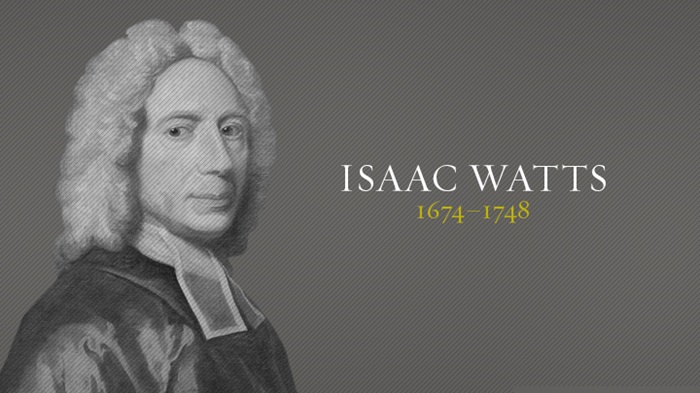
67460Written by Isaac Watts and first published in 1719, Joy to the World was a hymn Watts wrote based on Psalm 98, which describes the eternal kingdom which God promised to one day bring about via the Messiah.
Watts, in writing this hymn, considered Psalm 98 along with the New Testament writings about Jesus’ second coming, and wrote this song – which is all about what the world will be like when Jesus comes again.

In this sense, we can say that Joy to the World is an Advent hymn, even if it is not necessarily a Christmas hymn.

Advent is the four weeks leading up until Christmas, during which Christians have historically focused their hearts and mind’s on Jesus’ coming. The word Advent comes from the Latin phrase Adventus Domini, which means: ‘the coming of the Lord.’

During the Advent season we do two things:

  1. We look BACK to Jesus’ first coming and the incarnation (Christmas) – that act in which God took on human flesh in order to save us.
  2. We look FORWARD to Jesus’ second coming, when he will come again according to his promise, to judge the nations and rule over his eternal kingdom.

And so it is in this latter sense that Joy to the World is absolutely an Advent hymn, as it looks forward to the second coming of Christ, when nature will sing and Jesus will rule as King over all.

Another thing you may not know about the hymn Joy to the World is that it was originally set to a different tune than the iconic one that we associate with it today.

Over 100 years after Isaac Watts originally wrote the song, a composer named Lowell Mason, inspired by Handel’s Messiah, wrote the melody which we know today. He titled this musical piece Antioch, but it didn’t have any words to go with it.

For three years Mason searched for the right words to fit his melody, finally settling on Isaac Watts’ lyrics for Joy to the World, and the rest is history.

Joy to the World: An Advent Series

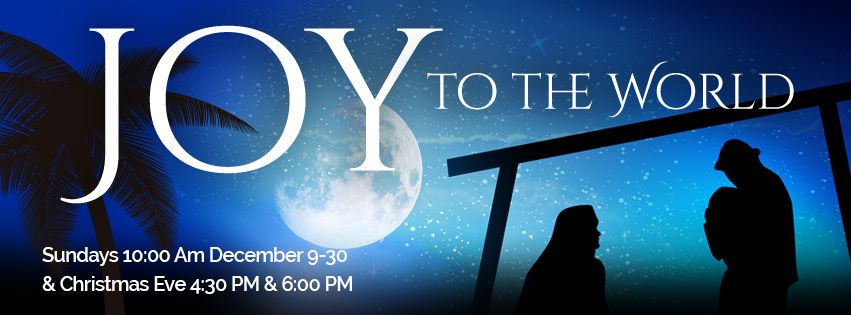
This Advent at White Fields Church in Longmont we are doing a series for the month of December, including Christmas Eve, called Joy to the World, in which we will be looking at how the gospel brings lasting, powerful joy into our lives which overcomes sorrow and cannot be taken away.

Yesterday was our first message in that series, which came from the Gospel of John chapter 16 and was titled “Your Sorrow Will Turn Into Joy.” For the audio of that message, click here.

47579721_2049642181725446_1581936317401399296_n

We’d love to have you and your friends and family join us at White Fields this Advent and on Christmas Eve. Our services will be at 4:30 & 6:00pm at the St. Vrain Memorial Building at 700 Longs Peak Avenue in Longmont, Colorado. For more information and directions, click here.


Bad Christmas Songs

One of the ways you can tell it’s Christmastime is because of the music. However, not all Christmas music is created equal.

Every year around Christmas, my wife likes to put on Christmas music and decorate the house with the kids. A few years ago, she put on a children’s Christmas music album. It wasn’t long before my four year old daughter came into the kitchen with a concerned look on her face and asked, “Why was mommy kissing Santa Claus?”

She had heard the song on the kids album and was understandably concerned, because, as a child, she didn’t understand the basic premise of the song which makes it cute and fun: that “Santa” is actually the kid’s dad dressed up in a Santa outfit, and the kissing is therefore completely appropriate.

Without that piece of the puzzle, this song is quite confusing and disturbing! Think about it: it’s the story of a young child, excited about Christmas, who comes out of his room late at night to discover that his mom is making out with Santa! How incredibly traumatic! Not only is his mother being unfaithful to his father, but on Christmas?! And with Santa?! Talk about disillusionment! Where’s dad? And Mom is seriously doing this behind dad’s back, in his own house?! And Santa… he’s a monster who is ripping apart our family! You can keep the presents Santa; I just want my family back, and I want mom to stop doing things like this to dad!

Or how about Rudolf the Red-nosed Reindeer? It’s essentially the story of a reindeer who gets bullied by the other reindeer, and the only time they want him around is when they need him to do something for them. So basically, they treat him terribly and then use him when it’s convenient to them…

Furthermore, if Santa apparently “sees you when you’re sleeping” and “sees when you’re awake”, and “he knows if you’ve been bad or good” — and he keeps a list of who’s been naughty and who’s been nice… well then that means that Santa knew that Rudolf was getting bullied, but he didn’t do anything about it!

Rather than judging him by the content of his character, they were judging him by the color of his nose…

There are some really good Christmas songs out there though; songs written by people for whom the Christmas message completely changed their lives and transformed them at their very core, and there is nothing they can do to stop themselves from erupting in song as a result of it.

They say things like: Joy to the World, the Lord has Come! Joy to the World, the Savior reigns! No more will sins and sorrows grow, nor thorns infest the ground: he comes to make his blessings flow – as far as the curse is found!

They sang rich theology and wonderful truths: Veiled in flesh the Godhead see, Hail the incarnate Deity! Born that man no more may die! — Born to raise the sons of Earth, Born to give us second birth!

That’s a song written by somebody who had something to sing about!

The very first Christmas carol was sung by Mary, the mother of Jesus, and it is known as “The Magnificat” because it begins with the words: My soul magnifies the Lord.

The occasion for this song was the Annunciation: the announcement to Mary that she was going to have a baby, who would be the long-awaited Savior of the World. It was Mary’s response to the news that for a reason based only on God’s sovereign choice, God had chosen to place his favor on her and chose her to be the one to bear, to care for, to raise the Messiah… Jesus.

Here’s what she sang:

My soul magnifies the Lord,
and my spirit rejoices in God my Savior,
for he has looked on the humble estate of his servant.
For behold, from now on all generations will call me blessed;
for he who is mighty has done great things for me,
and holy is his name.
And his mercy is for those who fear him
from generation to generation.
He has shown strength with his arm;
he has scattered the proud in the thoughts of their hearts;
he has brought down the mighty from their thrones
and exalted those of humble estate;
he has filled the hungry with good things,
and the rich he has sent away empty.
He has helped his servant Israel,
in remembrance of his mercy,
as he spoke to our fathers,
to Abraham and to his offspring forever.” (Luke 1:46-55)

In this song, Mary sings about God’s attributes, God’s purposes in history, and God’s incredible work of opposing the proud but exalting the humble.

May we humble ourselves before Him today, see what He has done for us, and receive His grace: the unmerited favor which He has shown us.

Then you’ll really have something to sing about this Christmas!