What is a discipleship pathway, and how do you go about creating one? What is the process by which people grow spiritually, and how do we help them do that?
Dr. John Whittaker has served as a pastor and theologian for many years, in different capacities. He is the author of The Listener’s Commentary, an audio commentary of the Bible, that is available online. He is also the host of the Bible in Life Podcast.
About half-way through the conversation, I show John our church’s discipleship pathway, and he gives his raw, unscripted feedback on it, so make sure to listen until then, to see if our discipleship pathway passed his test!
A Biblical Theology of Spiritual Growth, & Creating a Discipleship Pathway – with John Whittaker –
Theology for the People
What is a discipleship pathway, and how do you go about creating one? What is the process by which people grow spiritually, and how do we help them do that?
Dr. John Whittaker has served as a pastor and theologian for many years, in different capacities. He is the author of The Listener’s Commentary, an audio commentary of the Bible, that is available online. He is also the host of the Bible in Life Podcast.
About half-way through the conversation, I show John our church’s discipleship pathway, and he gives his raw, unscripted feedback on it, so make sure to listen until then, to see if our discipleship pathway passed his test!
Visit the Theology for the People website at nickcady.org
Leadership is a very popular topic in modern business discussions, but what does the Bible have to say about leadership? And is there a difference between the vision for leadership given in the Bible versus that which comes from the world?
In this episode of the Theology for the People Podcast, I speak with John Currie, who is professor of pastoral theology at Westminster Theological Seminary in Philadelphia, Pennsylvania. He has also served as a pastor in different churches and denominations, and in these roles, he has seen that sometimes pastors thrive in preaching, but struggle with leadership, or vice versa.
Leadership is a very popular topic in modern business discussions, but what does the Bible have to say about leadership? And is there a difference between the vision for leadership given in the Bible versus that which comes from the world?
John Currie is professor of pastoral theology at Westminster Theological Seminary in Philadelphia, Pennsylvania. He has also served as a pastor in different churches and denominations, and in these roles, he has seen that sometimes pastors thrive in preaching, but struggle with leadership, or vice versa.
In his recent book, The Pastor as Leader: Principles and Practices for Connecting Preaching and Leadership, John gives a biblical vision for a uniquely Christian approach to leadership.
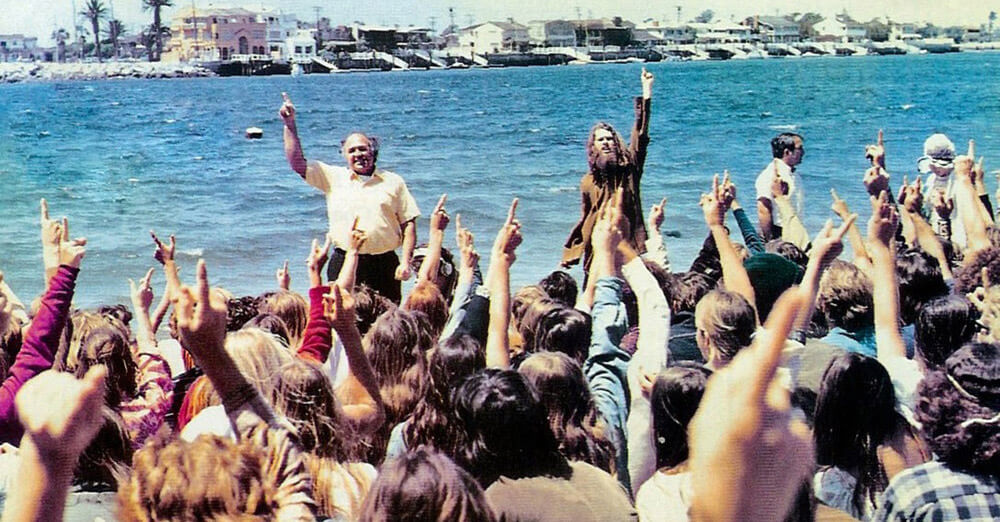
October 3, 2023 marks 10 years since the passing and heavenly homecoming of Pastor Chuck Smith. Pastor Chuck was the man God used to start the Calvary Chapel Movement of churches.
For this anniversary, I wrote an article for CalvaryChapel.com about how Pastor Chuck impacted my life, and the lives of many other young people – including my pastor, Tom Stipe.
Additionally, I recorded a bonus episode of the Mission & Methods Podcast, in which I spoke with Pastor Brian Brodersen about Chuck’s approach to ministry, including some questions about how Chuck pastored personally, and what were the major influences that shaped Chuck’s theology, and his preaching.
Pastor Brian is uniquely qualified to speak to these questions, as he not only served alongside Pastor Chuck and eventually succeeded him as the Senior Pastor of Calvary Chapel of Costa Mesa — but he also shares close family ties to Pastor Chuck, as his son in law.
How God Used Chuck Smith To Empower A New Generation Of Pastors
When I was 18 years old, I boarded a plane bound for Hungary. Despite the fact that I had only been following Jesus for two years, my pastor, the late Tom Stipe, sent me out as a missionary. Three years later, when I was 21, Tom ordained me as I was going out to plant a church.
At the time, these actions didn’t strike me as abnormal or unusual, yet now, years later, I look back on them with a sense of surprise. Why was Tom willing to take a chance on me, as young as I was? Why did he trust that I could serve the Lord in those ways without any formal training?
Later on, I came to realize that the reason was because that is what Chuck Smith had done for him when Tom was a young man: In 1976, Pastor Chuck sent Tom to Colorado to start a Calvary Chapel church here. In the movie, “Jesus Revolution,” millions of people saw the portrayal of how Chuck Smith empowered the young Greg Laurie to plant a church in Riverside, California. Still, the even more incredible reality is that Pastor Chuck did similar things with many young people over the years. Tom was doing for me what Chuck had modeled for him.
I remember sitting with Tom and listening to him tell stories of the early days of Calvary Chapel. One thing that Tom told me was that, in his opinion, the true genius of Chuck Smith was not his verse-by-verse teaching, as many people assume, and as masterful as that was. The true genius of Chuck Smith, Tom said, was that Chuck was willing, and even eager, to empower young people to serve the Lord in meaningful ways because he genuinely believed in the work of the Holy Spirit in and through people who were willing to make themselves available to God.
I finally got to meet Pastor Chuck in Austria, at the conference center that he had acquired for Calvary Chapel as a launching point for ministry in Eastern Europe. He asked about our ministry in Hungary and gave encouragement and affirmation. As I look back on that, I’m full of appreciation for him as a person who was more than just a good Bible teacher but an example of foresight and faith. Not only did Pastor Chuck want the Gospel to go forth into the whole world, but he understood that God wanted to use many other people to do that work. He was willing to support missionaries and church planters, including some of us who maybe wouldn’t have been empowered to do those things by anyone else who didn’t have the measure of faith he did!
Now, ten years after Pastor Chuck’s heavenly homecoming, I’m more inspired than ever to carry on his legacy of Bible teaching, evangelism, missions, and empowering people, especially young people, to serve the Lord.
Q&A On Chuck Smith’s Approach To Ministry – With Nick Cady And Brian Brodersen
September 8, 2023 marks one year since the death of Her Majesty Queen Elizabeth. The late Queen Elizabeth II was remarkable in many ways. She reigned for seventy long years as the sovereign of the United Kingdom and Commonwealth. One of the most well-known people in the world, Queen Elizabeth was popular because of her consistency and the way she fulfilled her role as a leader. What intrigued me about her, is the way she led. Elizabeth showed over her long reign, through her quiet and deliberate leadership, that she considered herself a servant to her people.
In a speech made on her 21st birthday, the Queen (then Princess Elizabeth) pledged her commitment to duty in these memorable words, “I declare before you all that my whole life, whether it be long or short, shall be devoted to your service.” She held true to that pledge over her seventy-year reign, which began when she was just 26 years old. Though she could not know what the future held, she dedicated to give her life in service for her people. And that she did. Instead of spending frivolous time on herself as queen or enjoying entertainment above duty, what was known about Queen Elizabeth II was how she worked hard traveling as a diplomat and acting as Head of state, Head of the armed forces, Head of the Commonwealth, and head of the Church of England.
The Queen lived 96 years, seeing the world change, seeing the United Kingdom change, and seeing her own family change. She began her reign over a large empire which stretched across the world, but at her death, the Commonwealth was much smaller. She allowed the monarchy to modernize and be televised, and even had a Twitter account by the end of her life. She realized that she must not resist change, lest she become unrelatable to the people she served and led. She allowed the public to have access to the royal family, letting them into her life to see what she was like as a person, where she lived, and how she fulfilled her duties. With all of the change Queen Elizabeth II saw in her seventy years as sovereign, she remained dedicated to service and true to who she was as a person. She did what was best to lead as Queen and be connected to the people.
In her family, the Queen had to navigate numerous scandals and make some difficult decisions. Of her four children, three divorced. Elizabeth decided to strip her own son of his titles due to his association with a convicted felon. Elizabeth’s deeply held Christian values were not embraced in the same way by her family members, and yet the Queen did not waver in her faith. Personally, I started paying closer attention to the Queen’s leadership at the time when she was facing these challenges. I paid attention when her home at Windsor Castle caught fire and the family ran out carrying art and heirlooms. I watched to see how the Queen would react as her grandson, Prince Harry, gave up his royal duties and moved to California.
I wanted to see each time which emotion the Queen would emote and how she would respond when Prince Harry and his wife gave public interviews about why they left royal duties and what they did not like about the royal family. To my surprise, the royal family did not respond immediately, and refused to answer questions directed at them by the media. The Queen later issued a response that was unemotional and kind, that she was “saddened” and that the family would privately discuss the accusations. In these days of outrage and arguments on social media, I was happy to see the restraint the Queen exhibited in such an emotionally-charged situation; she was not defensive or retaliatory when attacked.
In this way, Elizabeth was an example of how to conduct oneself in difficult situations. Queen Elizabeth’s quiet but strong leadership was shown in how, as a woman with cameras always on her, and with so much influence, she did not use many words. Although she held weekly audiences with the British Prime Minister, we will never know what they talked about. Her words were not disclosed by the Prime Ministers, though we can assume she had an influence over them, as her words held weight.
Quiet leadership can be profoundly powerful. Many leaders seem to exemplify the opposite of quiet leadership, and yet, the Queen’s influence was huge. She was the one people looked to for a response in times of tragedy or need. Yet it was not her words that made the greatest impact on people, but simply her presence, which conveyed strength and confidence. Her consistent, powerful presence will be missed. It requires meekness to be one of the most influential and popular people in the world, and to not say much, but keep smiling, waving, and appearing, in the midst of other duties.
The Queen had a unique perspective on her life of service, wanting to give her entire life to it, whether her life was long or short. I watched her celebrate her seventy year jubilee in amazement of her longevity in service. Elizabeth seemed to have kept her sense of humor. Despite the pomp and adoration she received, she had the humility and grace to never forget to smile, be kind, trust in God, and continue being a servant. The Queen knew that she would be in her role for a long time, and it gave her the perspective of playing the “long game.” She was committed to fulfilling her goal of a life of service. She endured challenges, family difficulty, and more, yet she continued to do what was right, knowing that those pains would eventually be in the past as she moved forward in duty.
The ability to restrain one’s tongue is addressed in Proverbs 17:9, “He who covers over an offense promotes love, but whoever repeats the matter separates close friends.” When there is a challenging situation in which someone has done wrong, a person who has restraint and a “long game” focus will protect the institution they lead. Retaliation or talking negatively about the person who committed the wrong is short-sighted and does not truly help the well-being of our church or relationships. These principles the Queen exemplified in her leadership of the United Kingdom are transferable to us who lead in the local church.
The Queen’s example of quiet leadership contains many qualities worth emulating. Showing up in time of need, being consistently present, and being slow to speak, are qualities which are worth employing in church leadership. What people may need most in times of tragedy man not be our words primarily, but our presence, reminding them that they are not alone, but that we are standing with them to show that they are cared for and loved. Our meek attitude can help them learn to lean on Christ as the one who cares for them and supplies all that they need.
Queen Elizabeth II was well-loved and respected as the longest-reigning British monarch. Britain changed tremendously during her seventy year reign, but we learned from her example that a leader can be faithful and continue in service while being a strength for the people by never changing focus. Her focus was to consider herself a servant to the people. Few will forget where they were when they heard of the passing of Queen Elizabeth II on September 8, 2022. She was an example in leadership for us all. As a woman in leadership in my local church, I will miss her, and I have been changed by her example.
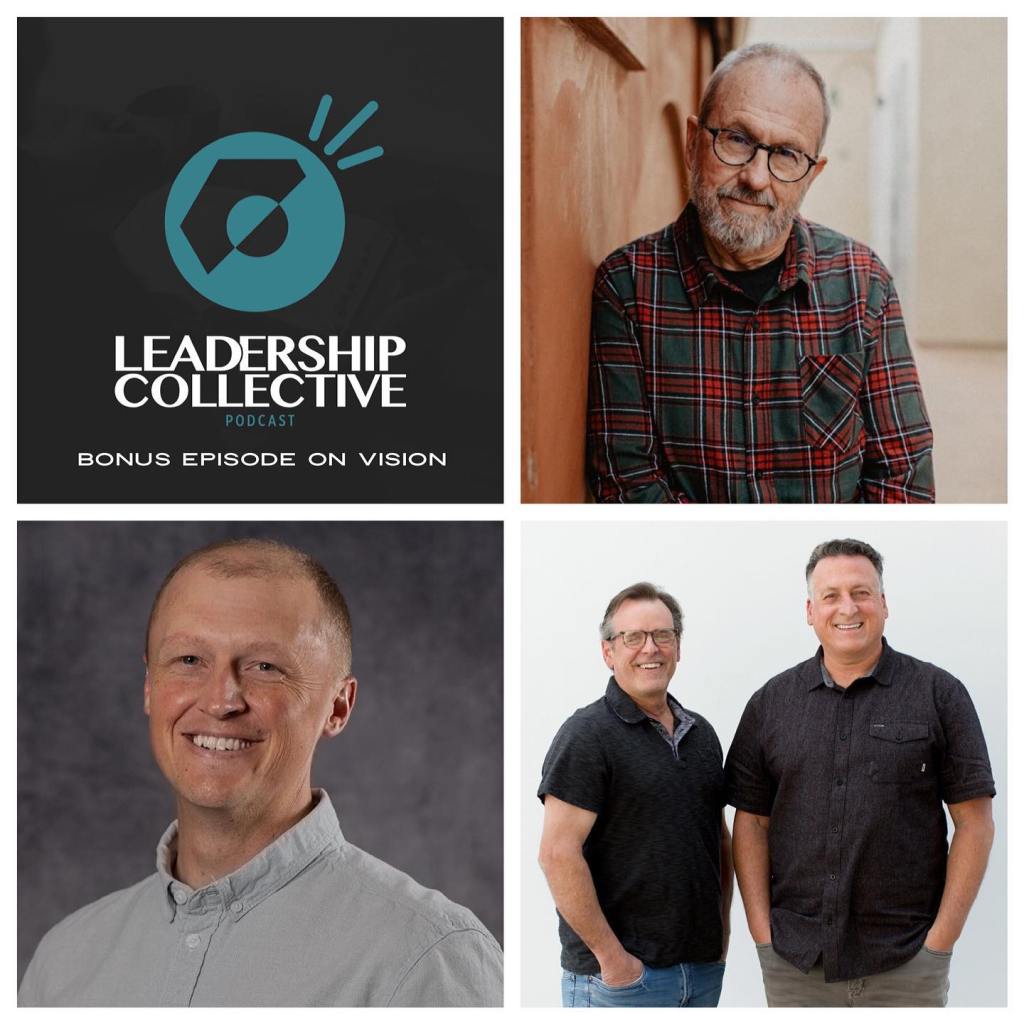
My friends and co-laborers, Ted Leavenworth and Rob Salvato, both pastors in Southern California, started a new podcast called Leadership Collective, in which they curate helpful conversations with church leaders about relevant topics.
I had the pleasure of being a guest on the podcast along with Dr. Mark Foreman. Our discussion was about the nuts and bolts of how we develop, cast, and implement “vision” in our churches. Mark pastors a mega-church in Southern California, and I pastor a medium sized church on the Front Range of Colorado, so there are some pretty big differences in how we go about this process, but many similarities as well.
Earlier in my ministry I used to hate the word “vision” because it seemed so nebulous and abstract. However, since then I have come to understand that “vision” can simply be defined as: “a desired outcome.” Putting it in those terms, the question of “vision” becomes much more manageable. Beginning with a desired outcome, you can then begin thinking about the way to achieve that outcome, and break it down into a process with steps, depending on the given time-frame.
Not only is it imperative that we have vision as leaders, it’s also important for us to communicate it. What I have learned is that most leaders unwittingly under-communicate vision, and it’s very rare for people to feel that leaders over-communicate vision. The point is, for most of us, we need to communicate vision more than we currently are, and more than we think we need to.
Pastor Mark Foreman of North Coast Calvary in Carlsbad, California joins Pastor Nick Cady of White Fields Community Church in Longmont, Colorado to discuss the topic of vision.
—-
North Coast Calvary Chapel — northcoastcalvary.org
White Fields Community Church — whitefieldschurch.com
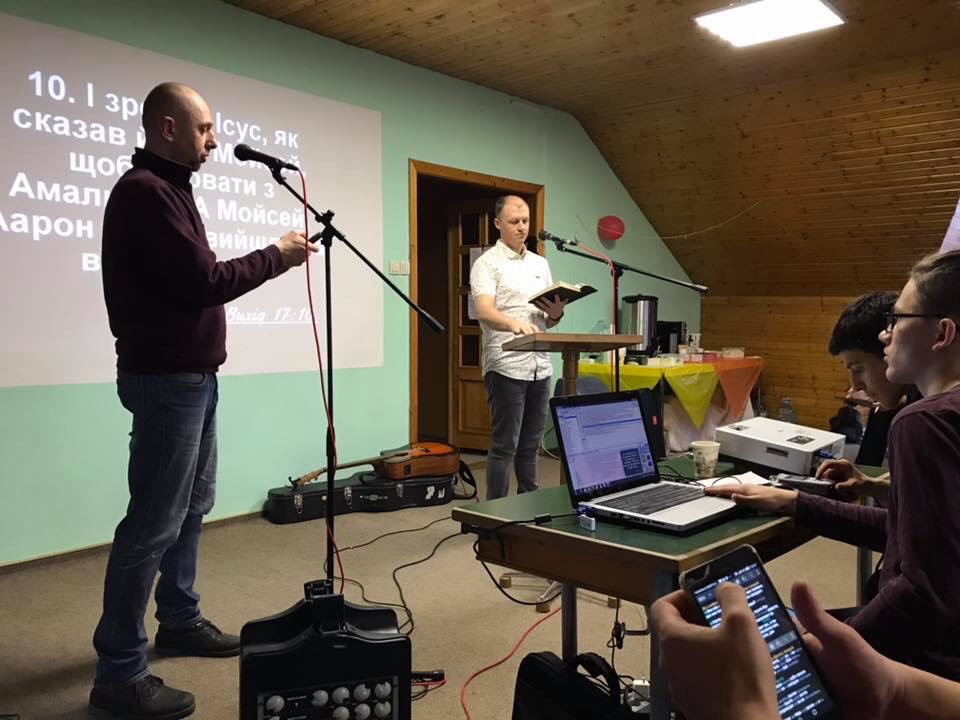
For the past week I have been in Ukraine to work with Calvary Chapel churches here. On Friday and Saturday Mike Payne and I spoke at the CC Ukraine leaders conference in Irpin, near Kyiv.
I taught on discipleship pathways and leadership pipelines, and Mike spoke on leading in a supporting role. There were also a few Q&A sessions where leaders from different churches were able to ask questions about things they are facing or are curious about.
On Saturday evening, after the conference, Mike went to Ternopil in western Ukraine, while I took a train to Kharkiv in eastern Ukraine, and we both spoke at churches in these cities on Sunday.
The pastor of Calvary Chapel in Kharkiv, Victor, contracted measles and got very sick, to the point where his life may have been in danger. He is doing better now, but is still under quarantine. I spent the weekend with the assistant pastor, Nate, who also leads a ministry called Fostering Hope, which provides a home and family for several children. To find out more about Fostering Hope Ukraine, click here.
I am currently on my way back to Kyiv for a series of meetings tomorrow, and after that I will head to Budapest on Wednesday, where I will speak at Golgota Budapest and then spend a day in Eger, where my wife and I lived for 7 years and planted a church. On Friday I will be heading back to the US, just in time to preach on Sunday at White Fields.
God is continuing to do a great work here in Ukraine through these churches. Pray for them as they plan to plant new churches in Kyiv and develop a Leaders Training Program in Kharkiv.
“It’s an all-too-common phenomenon in churches. A church member stops showing up on Sunday mornings. A few weeks pass, and then a few months, before someone notices.”
‘People in my congregation refer to this phenomenon as “falling through the cracks.” They say things like: “Have you seen Sally around church lately? I hope she didn’t fall through the cracks.”
What if, instead of “falling through the cracks,” we use a different image: “straying from the flock.” That picture seems more fitting for at least two reasons. First, “straying” implies that a disconnected church member bears a personal responsibility to stay involved with the congregation. Sheep don’t ordinarily leave a flock by inadvertently plummeting into a void. They wander away over time through a series of choices.
Second, the image of straying sheep also suggests that someone should keep watch over the flock and take action when a sheep begins to meander away. Yes, each member has a personal responsibility not to roam, but all church members have a duty to watch out for one another. However, one group in particular has an obligation to be on the lookout for straying sheep: the elders.
Elders watch to make sure that no “wolves” infiltrate their congregations with false teaching. But elders also keep watch for unwanted movement in the other direction: members straying away from the flock and from the Lord. This is part of basic shepherding work. Shepherds feed the sheep, guard them from predators, and keep track of them.’
He goes on to point out something interesting from Ezekiel:
‘Ezekiel prophesied against Israel’s leaders by accusing them of negligent shepherding: “Woe to the shepherds of Israel, who have been feeding themselves! Shouldn’t the shepherds feed their flock?” (Ezek. 34:2). And what was one of the ways they failed to shepherd? “You have not . . . brought back the strays, or sought the lost” (v. 4). As a result, “My flock went astray on all the mountains and every high hill. They were scattered over the whole face of the earth, and there was no one searching or seeking for them” (v. 6).’
Jesus, in contrast, is the “good shepherd” who leaves the 99 to pursue the one wayward sheep, something which is indeed “reckless” from a business perspective (and this is exactly what the lyrics of Cory Ashbury’s song “Reckless Love” come from).
The difficult balance from a church leader’s perspective is how to be a good shepherd under Jesus, and being overbearing. May God give us wisdom and grace as we seek to do His work!
On my way home from church on Sunday I saw a Facebook message saying that the pastor of the largest church in the movement I’ve long been associated with had resigned due to moral failure.
I hate hearing this kind of stuff.
Over the last several days I have seen tons of posts on social media from other pastors about this pastor’s fall. I understand that they want to address what’s going on. I understand that they are upset and want to talk about it. I’m not sure if we should be posting that kind of news everywhere though. At what point is it just gossip? Gossip is still gossip if you present it as a “prayer request”. Isn’t it spreading sensational news about someone else’s junk that really has no bearing on us personally?
I opened the CNN app on my iPad on Monday, only to see an article on the front page about this pastor’s moral failure and resignation. Great – more fuel for those who are always looking for fodder against Christianity and the Church.
I’m upset that someone in that man’s position would risk his legacy, his family and the reputation of the Church of Jesus Christ for some fleeting moments of pleasure.
I am sad for his wife and kids who have to go through all of this in the public eye. I am concerned for that church, and pray that the people who attend there will have the maturity to walk through this process as a body, faithful to the heart and will of God.
I am glad to see that high moral standards are upheld, and exceptions aren’t made for someone because they are gifted, talented and popular. Personally, I loved listening to that man teach. He is truly a gifted communicator. I heard someone put it this way: “David kills Goliath no matter how you read the story, but some teachers are able to make the story come alive – whereas other teachers make you wish someone would hit you in the head with a stone and put you out of your misery.” This man is a great teacher. But I am glad that his skill and celebrity were not used as an excuse for making an exception to the rules for him when it comes to moral standards for those who will serve as leaders in the God’s church.
This situation is one more sober warning for Christians, and especially for those of us in leadership and ministry, that we must watch over our hearts with all dilligence, because it is from the overflow of our hearts that our actions proceed.
Here are some quotes from Nelson Mandela, who died today at age 95.
It is better to lead from behind and to put others in front, especially when you celebrate victory, when nice things occur. You take the front line when there is danger. Then people will appreciate your leadership.
There is no passion to be found playing small – in settling for a life that is less than the one you are capable of living.







 Theology for the People