

A Word for Christians in a Politically Divided Culture

The COVID-19 crisis has been a major disruption worldwide, affecting the lives of nearly every person on the planet. Movement has been restricted, jobs have been furloughed or ended, businesses have suffered, not to mention the emotional stress it has put on the population. Almost universally, church gatherings have been limited in an effort to slow the spread of the virus and protect the vulnerable.

As the crisis has continued and stay-at-home orders have been extended, the situation has become increasingly divisive, and since the responses in different areas are determined by local authorities, it has also become political.

The discourse has also shifted from simply questioning the actions of authorities, business owners, and other civilians, to questioning their motives and accusing them of everything from indifference to malice.

Christians have not been exempt from this. Differing views on the motives of everyone from government authorities to church leaders have led some Christians to view each other with suspicion or even contempt. In a highly politicized and media-heavy world it is very easy for Christians to get caught up in social and political divisions to the point where their views on these issues become their primary source of identity, and they begin to view those with whom they disagree with enmity.

The Apostle Paul’s words to the Ephesians are particularly important for Christians to hear and take to heart in these times:

Therefore I, the prisoner of the Lord, implore you to walk in a manner worthy of the calling with which you have been called, with all humility and gentleness, with patience, showing tolerance for one another in love, being diligent to preserve the unity of the Spirit in the bond of peace.

Ephesians 4:1-3 NASB

Paul later warns the Ephesians not to “give the devil any opportunity” (Ephesians 4:27 NASB). As David Guzik explains,

The devil’s work is to accuse and divide the family of God, and to sow discord among them. When we harbor anger in our heart, we do the devil’s work for him.

Enduring Word commentary, Ephesians 4

As Christians our identity is found not in our opinions about politics or current events, but in Christ who gave his life for us to make us new people individually and “the people of God” collectively. A powerful example of this can be seen in the example of the people Jesus called to become his closest disciples.

Disciples from Opposite Ends of the Political Spectrum

In Matthew 10:1-4 we have a list of the 12 disciples. Two names in the list are particularly interesting: Matthew the tax collector and Simon the Zealot.

Tax collectors were Jewish people who worked with and for the occupying Roman government to collect taxes from their fellow countrymen, which not only took money away from individuals, but was used to support the Roman occupation and its military. For this reason, tax collectors were seen as sell-outs and traitors by more nationalistically minded Jews, who despised them.

The Zealots were a political action group of far-right nationalists who were willing to use violence in resistance to the Roman occupying forces. Zealots reportedly carried hooked knives under their cloaks with which they would seek to wound or assassinate Roman officials and their collaborators as they walked in public places.

Political divisions are nothing new; they existed in Jesus’ time as well. Simon the Zealot was someone who would have killed someone like Matthew the tax collector because of their differing political and social views.

However, Jesus called both these men, from opposite ends of the political spectrum, to follow him and become his disciples. He gave their lives a new direction and a new purpose. In Jesus, they received a new identity and a new community.

Apart from Jesus these men would have been enemies, but because of Jesus they became brothers, and they set aside their differences for a higher calling and a greater allegiance: not Rome, not Israel, but the Kingdom of God.

As Christians today in this politically divided climate, may we be those who are “diligent to preserve the unity of the Spirit in the bond of peace,” “showing tolerance for one another in love,” as we have been called together in one body and given a new identity and purpose in Christ.
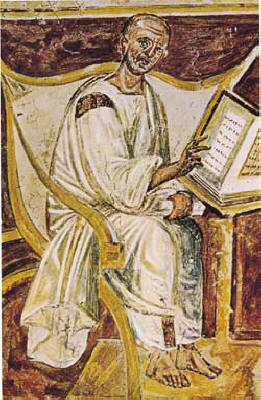

Augustine on Ambition

Should Christians be “ambitious”? Is “ambition” the opposite of humility?

Augustine of Hippo, the African bishop from the 4th and 5th Century has a take on ambition which might surprise you.

The Opposite of Ambition is Not Humility

According to Augustine, “the opposite of ambition is not humility, it is sloth, passivity, timidity, and complacency.”

We sometimes like to comfort ourselves by imagining that the ambitious are prideful and arrogant so that those of us who never wish and never aspire, who never launch out into the deep, get to wear the moralizing mantle of humility, but this is just a thin cover for a lack of courage, even laziness.

James K.A. Smith, On the Road with Saint Augustine

Interestingly, Augustine’s view on ambition is that “playing it safe” and not taking risks is not actually an expression of humility like many may assume, but is often based in pride and a fear of other people thinking less of you if you were to fail.

In James K.A. Smith‘s recent book, On the Road with Saint Augustine, he tells the story of Augustine’s journey from provincial North Africa to Carthage, and from there to Rome and Milan, originally as a rhetoric teacher, not as a priest. It was Augustine’s ambition which originally led him from his birthplace to these places, but in Milan his friendship with Ambrose, bishop of Milan, changed his life and led him to pursue a relationship with God which led to him stepping into vocational ministry for the rest of his life.

See also: Book Review: On the Road with Saint Augustine

Smith argues that Augustine never stopped being ambition after giving his life to the Lord. What changed was his goal, the aim of his ambition.

The Ultimate Ambition

According to Smith, the Augustinian question when it comes to ambition is: “Whom and what do I love when I am being ambitious?”

The goal, he would argue, is not to be devoid of ambition, but rather to live a life which has “friendship with God” as its supreme ambition.

This is the only ambition, Smith points out, which comes with a guarantee of success and ultimate security! (“Draw near to God, and he will draw near to you.” James 4:8)

Solomon and the True End of Ambition

Augustine challenges us to ask, What if buried in your ambition to succeed in business, academics, sports, and other pursuits, is a desire for something else, something more – which is found in God himself?

Currently at White Fields we are studying through the life of Solomon in 1 Kings. Solomon was an ambitious person; he asked God for wisdom so that he could govern the nation well, and he succeeded both in making the nation wealthy and powerful, but also in becoming wealthy and powerful himself.

In the Book of Ecclesiastes, Solomon tells the story of his ambition; he acquired many lovers, much money, incredible power, extensive knowledge, as well as exotic animals, parties and entertainment. And yet, in the end, he found all of it to be empty and ultimately unfulfilling. None of it did for him what he had expected it would.

In the end, Solomon comes to the realization that buried in his ambition was ultimately the desire for God himself, and what could only God can give.

Solomon’s conclusion at the end of Ecclesiastes is a cliff-hanger, because Solomon says that the chief end of humanity is to keep God’s commandments (in order to be in relationship with Him). The only problem of course, is that Solomon failed to keep God’s commandments — and so have we! What is needed therefore, is one who can reconcile us to God by somehow bridging the gap created by our shortcomings and sins. The good news of the gospel is that this person has come, and his name is Jesus!

Because of Jesus, our ambition can find its ultimate desire, and can be redirected into areas which are secure and eternally meaningful: relationship with God, and participation in His mission to bring the truth of his love and grace to the world!

May God help us to avoid the false humility which is based in fear and pride, and be ambitious for Him!

New Sermon Series: Desiring the Kingdom

For a long time I have wanted to study the books of 1 & 2 Kings with our church.

These are historical books which tell the history of the nation of Israel after the time of King David, beginning with the “Golden Age” of King Solomon, and following the downward spiral that began with his apostasy, followed by the division of the people into two rival kingdoms, and their subsequent apostasies and exiles in Assyria and Babylon.

This history is, on the one hand tragic, and on the other hand full of hope. One of the great “narrative plot lines” that runs throughout the Bible is that of the desire for a king and a kingdom.

While on the one hand these books show us how even the best people are merely people at best, we are constantly reminded of and pointed to the promised Eternal Kingdom and its coming King: the Messiah, Jesus Christ. He alone remains as the sole hero of the stories in these books!

Through the failed kings of Israel and Judah, we are reminded of our desire for a kingdom and a king, and the ever-increasing realization that what we desire will be fulfilled in Jesus and His Kingdom.

I invite you to join us on this journey through 1-2 Kings online on the White Fields YouTube channel and Facebook page, as well as on our website: whitefieldschurch.com

What Happened on Holy Saturday?

Holy Saturday is the name given to the day in between Good Friday and Resurrection Sunday.

For more on the timeline of Jesus’ death and resurrection, see: Was Jesus in the Grave Three Days and Three Nights? Here’s How It Adds Up. But what happened during that time when Jesus was in the grave?

He Descended to the Dead

The Apostles’ Creed, one of the oldest Christian creeds – in continual existence since at least the 4th Century A.D. – contains a line which many people have found intriguing: it declares that Jesus “descended to the dead.”

Older translations of the original text into English sometimes translate this phrase as saying that Jesus “descended into Hell.”

Looking at the creed in ancient languages is interesting as the Greek text says: κατελθόντα εἰς τὰ κατώτατα, which means: “descended to the bottom” – and the Latin text says: descendit ad inferos, the word inferos being translated as “Hell.”

More recent translations into English have chosen to say “descended to the dead” rather than “descended into Hell” as “the dead” would be more accurate biblically and theologically than “Hell.” The reason for this is based on a particular understanding of “Sheol” in the Old Testament and the Jewish mind, which was the dwelling place of all souls, being divided (according to Luke 16:19-31) into two parts: Abraham’s Bosom and Hades, AKA: Hell.

Abraham’s Bosom, we are told in Luke 16, was a place of comfort for those who died in faith, i.e. the “Old Testament saints,” such as those described in Hebrews 11, who died prior to the redemptive actions of Jesus, but died in faith that they would be “raised up to a better life” (Hebrews 11:35)

He Proclaimed What He Had Done, and Led Captives in His Train

In 1 Peter 3:19 and 4:6, Peter tells us that Jesus’ spirit went to Sheol after his death on the cross but prior to his resurrection, and declared to the souls of the deceased there what he had accomplished in his life and death. This message would have been:

  1. A message of redemption and release from Sheol for those who were kept in Abraham’s Bosom awaiting the redemptive work of the Messiah (“He led captives in his train” – Ephesians 4:8)
  2. A message of condemnation for those held in the Hades/Hell portion of Sheol.

God Often Does His Greatest Work in the Dark

For the disciples, that first “Holy Saturday” would have seemed much less than holy. It would have felt like defeat and been perhaps the lowest point in their lives. Many of them, having left everything to follow Jesus, would have been wondering, “Now what am I going to do with my life?” – not to mention the fact that they were afraid that they would be next: that the Romans and Jewish leaders would likely come be coming to arrest and execute them as well.

And yet, in the awful silence of that day, God was doing a great work of redemption!

Remember: with God, silence is not absence. Sometimes when God seems most distant to us, is when He is accomplishing his most profound work.

That is the reminder of Holy Saturday: we can’t always see what God is doing.

May God bless you and give you rest in your soul this Holy Saturday!

See also:

COVID-19 (Coronavirus) Update from Pastor Nick

The following is a message I sent out to our church today regarding the current situation with COVID-19:

The situation with COVID-19 is developing quickly. I am glad that our authorities are taking this so seriously; a virus that threatens the most vulnerable in our society is something we should all care about deeply. 

Confidence and Love

As Christians in these times, we are motivated by two things: confidence in the gospel, and love for our neighbors. In Jesus, we have confidence and security; we do not fear, because we know that even if our bodies are destroyed, we have a heavenly dwelling that awaits us because of what Jesus accomplished for us. Hebrews 2:14-15 tells us that because Jesus defeated death and the devil, we are free to no longer live in the fear of death.

Although we do not fear death, it is important that we love our neighbors by doing what we can to slow down the spread of this disease which is affecting vulnerable people, particularly the elderly and those whose immune systems are compromised. 

Doing your part to minimize the spread of COVID-19 is not an act of fear, but of love for our neighbors.

If you, or anyone you know, needs help with shopping or errands, particularly if you/they are elderly, we want to help you with that so you don’t have to put yourself at risk. E-mail info@whitefieldschurch.com with any needs, and we will make sure it gets done in a safe manner.

Practical Matters

In this spirit of love, we ask that you respect the recommendations of the CDC and refrain from unnecessary gatherings and contact with others, until the risk goes down. If possible, please consider working from home. 

Community Groups

Whereas last week, we recommended that Community Groups continue meeting, we are now leaving it up to individual groups to decide if you should meet, or consider a video chat instead. Shelby will be posting more information on possible ways to do that soon.

Sunday Church Services

For this Sunday, we will pre-record a video with worship and a Bible teaching, which we will then post on YouTube and Facebook for you and those in your household or family to watch together. On Sunday at 10:00 AM we will start a “watch party” on Facebook for those of you who use that platform. If you haven’t yet subscribed to our YouTube channel or followed us on Facebook, now is a good time to do that, and you will be alerted whenever we post a video or go live.

We are working on setting up the video system in our new building, so we can use that to film and broadcast our services, and we expect that to be ready soon. We are also working on a Church Online platform that we can use during this time. 

We are waiting until it is safe and advisable for us to have physical gatherings before announcing our official Grand Opening in the new building.

Children’s Ministry

Michelle Pearl, our NextGen Director, will be posting the weekly lesson so that you can go through them with your children at home on Sundays.

Giving

As we often say, giving financially to God’s work through the local church is an act of worship. Since in-person giving will not be possible until we can gather physically again as a church, we ask that you give online. That can be done on our website here, or on Realm.

Blog Posts and Devotional Thoughts

During this time, I will be posting more frequently on my blog with devotional thoughts and Bible studies. That might be one more way for you to engage with our community and grow in the grace and knowledge of our Lord Jesus Christ. Here’s the website: Longmont Pastor – and you can subscribe in order to get email updates of new posts.

Update on Pastors Nick and Mike

I just arrived back from Ukraine, where Pastor Mike and I were visiting our missionaries and teaching at a leadership conference. When we left, there was no recommendation against travel to Hungary or Ukraine, and there were no COVID-19 cases. When I arrived back in the US today, I was screened and tested for COVID-19 and the test came back negative. However, we are more than happy to comply with the protocol and self-quarantine for 14 days out of love for others and respect to the authorities.

In one of our recent studies from the Vision series, we looked at developing God’s vision for your situation – part of which is understanding that every situation presents us with opportunities to respond to the gospel and love our neighbors. That is true in this situation as well! Here is the link to that message: A Vision for Your Situation
It is important that we stick together in this time, as a community of people who love Jesus and love our neighbors. We want to continue growing in faith and looking for ways to serve those around us in Jesus’ name.

Much love,

Pastor Nick

Reader Questions: Was Jesus Really Related to King David?

Last year I added a page on this site where readers can submit questions or suggest topics (click here for that page). Recently I received this question:

I have been watching an archaeologist/historian video series. She says Jesus could not have been of David’s bloodline because David was Judean from Judea. Any thoughts?

The claim that Jesus could not have been of David’s bloodline because David was a Judean from Judea fails to take into account the fact of the Babylonian captivity.

The Judeans were taken to Babylon for roughly 70 years (it’s “roughly 70 years” because they didn’t all return at once; they returned in waves). Upon return from the captivity, many settled in different places, such as the much more fertile north of Israel, which was also more highly populated and therefore had more work opportunities. Joseph was a builder (“carpenter“ implies wood work in English, but the term used in the Bible implies more that he was more generally a construction worker) and Nazareth was a Jewish settlement right outside of the large Hellenistic city of Sepphoris, where it seems that the Jews of Nazareth went to work every day as laborers.

The lush and fertile north of Israel

Despite their resettlement after the exile, the Jewish people would have kept track of their ancestral hometowns and villages. 70 years is not so long that you would lose connection with your past, especially for ancient people who were more inclined than modern people to keep track of that and value it.

The argument that Jesus could not have been descended from David since he grew up in Nazareth is the same argument made by Nathaniel in John 1. It was an argument which neglected to recognize the fact that while Jesus grew up in Nazareth, his family was originally from Bethlehem, hence the reason Mary and Joseph had to travel there for the census.

Matthew 2 tells us about how Mary and Joseph left Bethlehem because Herod the Great attempted to kill Jesus, fearing him as a threat to his throne. Mary and Joseph took baby Jesus to Egypt, and upon their return they moved to Nazareth in order to stay off the radar of the Herod family even after the death of Herod the Great.

Thanks for the question and God bless you!

The Statistical Probability of Jesus Fulfilling the Messianic Prophecies

black and grey casio scientific calculator showing formula

With all the religions out there, how can you know that Christianity is true? How can you know whether the Bible actually gives the accurate and correct story of the world?

How do you know that Christianity isn’t just a fairy tale, made up by people to help them cope with hardship and death, and deal with life?

That’s the question which the Apostle Peter addresses in 2 Peter 1:16-21, which we studied this past Sunday at White Fields Church in the sermon titled, “Dawn is Coming” (2 Peter 1:16-21)

Peter essentially gives two evidences for why we can trust the Bible:

  1. Christianity is based on historical facts which had many eye-witnesses
  2. The record of Messianic prophecies which Jesus fulfilled

The Test & the Evidence

The Book of the Prophet Isaiah contains an incredible claim: the Lord God is contrasting himself with the pagan gods which many people worshiped in the form of idols, and God says, Here is how you will know that I am the one true God, and those so-called ‘gods’ are nothing: I will tell you the end from the beginning; I will tell you what will happen before it happens, and then when those things come to pass, that will be the proof to you that I alone am God. See: Isaiah 44:6-8; 46:9-10; 48:5-6

So God himself challenges us to put him to the test, and he goes on record predicting things about the future which will come to pass. Roughly 1/3 of the Bible is made up of prophecies, including many about the promised Messiah, which predicted various things about his identity and actions.

According to one calculation, there are 332 Messianic prophecies from the Hebrew Bible (Old Testament), which Jesus fulfilled.

This is why the Dead Sea Scrolls are such a big deal: they date back to about 100 years before the birth of Jesus, which shows us that the prophecies which Jesus fulfilled were indeed written before his birth, and were not later redactions or additions. See: Why the Dead Sea Scrolls Matter for Christians

Peter Stoner’s Calculations

Professor Peter W. Stoner was Chairman of the Departments of Mathematics and Astronomy at Pasadena City College and Chairman of the science division at Westmont College. In his book, Science SpeaksProfessor Stoner outlines the mathematical probability of one person in the first century fulfilling just eight of the most clear and straightforward Messianic prophecies.

Josh and Sean McDowell quote Stoner in their book, Evidence That Demands a Verdict:

We find that the chance that any man might have lived down to the present time and fulfilled all eight prophecies is 1 in 1017 (1 in 100,000,000,000,000,000).

In case you’re wondering, the Mega Millions had a $1.6 billon jackpot in October 2018, and the odds of winning it were merely 1 in 302,575,350. [1]

Stoner went on to calculate the probability of one person fulfilling 48 prophecies: 1 in 10157.

In case you’re questioning whether Professor Stoner’s math was wrong, H. Harold Hartzler, PhD, of the American Scientific Affiliation, Goshen College, writes in the forward of Stoner’s book:

The manuscript for Science Speaks has been carefully reviewed by a committee of the American Scientific Affiliation members and by the Executive Council of the same group and has been found, in general, to be dependable and accurate in regard to the scientific material presented. The mathematical analysis included is based upon principles of probability which are thoroughly sound and Professor Stoner has applied these principles in a proper and convincing way.

What Makes Christianity Unique

Along with eye-witness evidence of historical events (testimony for which people died, suffered imprisonment, torture, and the torture of their loved ones), and the prophetic record, something else that sets Christianity apart from all other religions and philosophies is the path of salvation it presents:

Whereas other religions offer ways to save yourself or endear yourself to God through doing actions, or keeping rules – the gospel message of the Bible is that you cannot save yourself, no matter how hard you try – but that God has done for you in Christ that which you could never do for yourself, in order to save you – because he already loves you.

That’s much better news, and a promise you can take to the bank.

What Does Peter Mean by Adding “Virtue” to Your Faith?

parthenon greece landmark

This past Sunday at White Fields we began our study of 2 Peter, as part of our “Pilgrim’s Progress” series. The sermon “Make Your Calling and Election Sure” looked at 2 Peter 1:1-15.

In 2 Peter 1:5-7, Peter urges his readers to make every effort to add to their faith virtue, knowledge, self-control, steadfastness, godliness, brotherly affection, and love.

All of those seem pretty straightforward, except perhaps one: Virtue.

How Does Peter Understand “Virtue”?

“Virtue” seems like a pretty broad term, and one that different people might define in different ways.

However, keep in mind that Peter is writing to people throughout Asia Minor (modern-day Turkey). This is stated explicitly in 1 Peter 1:1: “To those…in…Pontus, Galatia, Cappadocia, Asia, and Bithynia.” These are the historical regions of Asia Minor, which at this time was a predominately Greek-speaking, Hellenized region. Hellenization wasn’t only about the Greek language, it also included the proliferation of Greek social norms and philosophical ideas.

Greek philosophy included the thoughts and writings of Socrates, Plato, and Aristotle, and the most influential and prominent stream of Greek philosophy being Stoicism.

The Stoics were very focused on the idea of “virtue” and held that there are four “cardinal virtues”: Wisdom, Morality, Courage, and Moderation.

Keeping this historical and cultural setting in mind, it would seem that when Peter uses the word “virtue,” he does so with the expectation that his readers will associate that with the Greek philosophical teachings on virtue, particularly that of the Stoics.

Without Faith, Virtue Avails Nothing

It is significant that Peter speaks of “adding” or “supplementing” your faith with virtue. In other words, faith in Jesus and his finished work is the baseline upon which we are encouraged to add these virtues.

So, while Peter is affirming that the Stoics were right that these virtues are good, to have these virtues apart from faith in Jesus will avail you nothing before God. These virtues might help you in life and in relationship with other people, but they will not do anything to improve your standing before God.

CS Lewis on Virtue: the Bible vs. the Stoics

If you asked twenty good men today what they thought the highest of the virtues, nineteen of them would reply, Unselfishness.  But if you had asked almost any of the great Christians of old, he would have replied, Love. 

You see what has happened?  A negative term has been substituted for a positive, and this is of more than philological importance.  The negative idea of Unselfishness carries with it the suggestion not primarily of securing good things for others, but of going without them ourselves, as if our abstinence and not their happiness was the important point.  I do not thik this is the Christian virtue of Love. 

The New Testament has lots to say about self-denial, but not about self-denial as an end in itself.  We are told to deny ourselves and to take up our crosses in order that we may follow Christ; and nearly every description of what we shall ultimately find if we do so contains an appeal to desire.  If there lurks in most modern minds the notion that to desire our own good and earnestly to hope for the enjoyment of it is a bad thing, I submit that this notion has crept in from Kant and the Stoics and is no part of the Christian faith. 

Indeed, if we consider the unblushing promises of reward and the staggering nature of the rewards promised in the Gospels, it would seem that Our Lord finds our desires not too strong, but too weak.  We are half-hearted creatures, fooling about with drink and sex and ambition when infinite joy is offered us, like an ignorant child who wants to go on making mud pies in a slum because he cannot imagine what is meant by an offer of a holiday at the sea.  We are far too easily pleased.

CS Lewis, The Weight of Glory 

This week Mike and I sat down to discuss this question of what it means to add virtue to your faith for our weekly Sermon Extra video series:

How Do You Practically “Abide in Christ’s Love”?

82034485_2736402666395387_7737323707604926464_n
Abide and Bear Fruit is our theme for 2020 at White Fields Church

In my recent post, The Active Passive Actions of Relationship with God, I talked about how abiding in Christ (see John 15:1-11) may at first sound passive, but abiding actually requires action.

A Practical Guide to Abiding

Still, someone might ask: “How exactly do you abide in Christ though?

After all, in John 15:9, Jesus told his disciples:

As the Father has loved me, so have I loved you. Abide in my love.

But what does that mean? What does it look like on any given Wednesday, for example, for me to abide in the love of Christ?”

Thankfully, Jesus answered that question for us!

In John 15:10, here’s what Jesus said:

If you keep my commandments, you will abide in my love, just as I have kept my Father’s commandments and abide in his love.

So, the way to abide in Jesus’ love is to keep his commandments.

This is interesting, because just a few verses later Jesus says:

Greater love has no one than this, that someone lay down his life for his friends. You are my friends if you do what I command you. No longer do I call you servants, for the servant does not know what his master is doing; but I have called you friends, for all that I have heard from my Father I have made known to you. (John 15:13-15)

This is interesting because it tells us that there is a good and proper motivation for obeying God’s commandments: love for God and a desire to abide in his love.

Obeying God Matters, But It Also Matters Why You Obey God

Obeying God’s commandments matters. Consider what God told King Saul:

Has the Lord as great delight in burnt offerings and sacrifices,
as in obeying the voice of the Lord?
Behold, to obey is better than sacrifice,
and to listen than the fat of rams.
For rebellion is as the sin of divination,
and presumption is as iniquity and idolatry.  (1 Samuel 15:22-23)

But when it comes to obeying God, why you obey God also matters very much. It is possible to obey God for the wrong reasons. If your reason for obeying God is self-justification or self-glorification, you will find yourself in the position of being in opposition to God. As we are told in James 4:6,

God opposes the proud but gives grace to the humble.

On the other hand, if you love someone, and you want to express your love for them, if you want to experience the joy of fellowship with them, what do you do? You find out what they like, what they love, what makes them happy and brings them joy, and you do those things!

An Example: My Wife’s Birthday

My wife’s birthday is coming up. Knowing the things that she likes, what if I were to say: “I don’t have to do those things in order to win her love, since she already loves me. Therefore I will do nothing, because I don’t have to earn her love.”

Of course my wife will love me even if I don’t do anything for her birthday. However, because I love her and want to share a great experience with her (since intimacy is created through shared experiences), I want to do something for her that she will like. Thus, in my pursuit of her, in my desire to know her, one of my goals is to discover her likes and dislikes and do things she likes; not to earn her love, but as an expression of my love for her, and as a way of having fellowship with her.

In the same way, we can express love for God and experience fellowship with God by doing the things that we know He likes!

For more on this topic, see: “Oh, How I Love Your Law” – the Role of the Law in the Life of a Believer

May we be those who abide in Christ’s love, just as He abided in the love of the Father!

The Active Passive Actions of Relationship with God

82034485_2736402666395387_7737323707604926464_n.png
Abide and Bear Fruit is our theme this year at White Fields Church

The Bible uses a few terms to describe what a relationship with God looks like, and how it is to work in practice. Some of these terms imply movement, such as walking with God (Genesis 5:22, 6:9, 17:1; Luke 1:5).

There are other terms however, which at first glance appear passive. A further look into these terms reveals that they actually imply action:

Wait on the Lord

The word “wait” conjures up thoughts of waiting at government offices, hospital waiting rooms, or waiting for Christmas to come. All of these are passive actions: you have no control over the outcome, and many times these experiences of waiting sap our energy. Waiting for 2 hours at the DMV can be exhausting, even if you spend the whole time sitting in one place and not moving.

However, to “wait on the Lord” is not a completely passive action. The word “wait” in Hebrew is the word Qavah which means “to hope” or “to expect.” It can also be translated “to bind up,” or “gather together.”

While on the one hand, the outcome is out of your control, you are not completely passive nor inactive; you are doing something because you know the God who controls the outcome.

It is in this way that Isaiah the Prophet could say,

“Even youths shall faint and be weary,
and young men shall fall exhausted;
but they who wait upon the Lord shall renew their strength;
they shall mount up with wings like eagles;
they shall run and not be weary;
they shall walk and not faint. (Isaiah 40:30-31)

Whereas in many cases waiting can be an exhausting and energy-sapping experience, waiting on the Lord, Isaiah tells us, actually renews your strength and invigorates!

It is in this sense that the Psalm-writer says, “I wait for the Lord, my soul waits, and in His word I hope.” (Psalm 130:5)  This is not the waiting of passive inaction, but the hopeful expectation of trusting in God’s word and God’s promises.

Abide in Christ

At the Last Supper, Jesus told his disciples:

I am the vine; you are the branches. Whoever abides in me and I in him, he it is that bears much fruit, for apart from me you can do nothing.

By this my Father is glorified, that you bear much fruit and so prove to be my disciples.

As the Father has loved me, so have I loved you. Abide in my love.   (John 15:5,8-9)

To abide means “to remain, to dwell.” In the picture of a vine and its branches, the branch has to merely stay attached to the vine.

Yet, while on the outside it may not appear that there is any movement involved in the branch abiding in the vine, under the surface there is movement of nutrients from one to the other, providing life, health, and growth, which is seen by the fact that this abiding produces something: fruit.

For us to abide in Christ, on the one hand, involves not moving away from Christ, but the actions of abiding are anything but passive. Another definition of abide is to adhere to a pattern of life. Practically speaking, abiding in Christ requires intentional action to pursue fellowship with God.

These intentional actions by which you abide in Christ are also referred to by the term spiritual disciplines, things like prayer, studying the Scriptures, fellowship with other believers, generosity and giving, and more.

Click here for articles on spiritual disciples and spiritual formation.

In 2 Peter chapter 1, Peter urges the believers to “make every effort” to add to their faith: virtue, knowledge, self-control, steadfastness, godliness, brotherly affection, and love (2 Peter 1:5), stating that these things help us not to fall, and they help us to “grow in the grace and knowledge of our Lord and Savior Jesus Christ.” (2 Peter 3:18)

The outcome may ultimately be the Lord’s work in us, but we are invited to participate in working out what God has worked into us, and we get to participate in cultivating our own spiritual growth.

May we be those who trust in, wait up, and abide in the Lord Jesus, not passively – but actively. May we be those who work out our own salvation, knowing that it is God who works in us to will and do to His good pleasure. (Philippians 2:12-13)

For sermons from 2 Peter, click here: Pilgrim’s Progress: a Study Through 1 & 2 Peter