It has been said that there are two men who did more to shape the American psyche and culture than anyone else:
#1: Roger Williams, Founder of Rhode Island
Roger Williams moved from England to Boston in the 1600’s to be part of the Puritan colony of Massachusetts
The Puritans’ goal was to create a pure church, free from politics, corruption, and compromise.
Roger Williams loved this idea… the only thing was: after a while he noticed some things in the church there in Boston that he didn’t really like. Things such as how baptisms were carried out, and how the church was managed.
So, do you know what he did? He left.
Roger moved down south of Boston and established his own colony, with its own church, in what is now Providence, Rhode Island.
But then, guess what happened… After a while, Roger found some things he didn’t like about this new church, and some of the people there (the very church he himself had founded!). And so, Roger Williams left that church as well, and established another church nearby.
And then he left that church too…
Every church he started, he eventually left – because he found things he didn’t like… and they never completely matched his vision for what a perfect church should be, which is particularly interesting since he was the leader of these churches.
Roger Williams ended up alone, still having faith, but completely withdrawn from Christian community.
#2: Henry David Thoreau
Thoreau was a writer, who famously encouraged us to “march to the beat of our own drum.”
He lived in a hut, next to Walden Pond, and would write about going for walks in the forest alone.
Thoreau expressed a very powerful theme for Americans: we take care of ourselves, we work for ourselves, we answer to ourselves — and when it comes to church, we do that for ourselves too.
Thoreau shaped American culture by putting the self at the heart of the American psyche.
His biographer put it this way: Henry David Thoreau “stands as the most powerful example…of the American mentality of: self-trust, self-reverence, or self-reliance.”
But here’s the thing: if you look at Thoreau’s life, you don’t find a happy person. He struggled to engage in long-term, meaningful relationships with others, and at the end of his life he had no friends.
Rugged Individualism + Personal Religion = Selling Us Short
The “rugged individualism” of Thoreau plus the “personal religion” of Roger Williams shapes American culture to this day.
Like fish in water, it is hard for us to imagine things any other way, but thankfully God’s Word gives us God’s vision for what the Body of Christ, the gathered, redeemed People of God, AKA: the Church is intended to be and called to be. And when understood, it becomes clear that our culture of rugged individualism + personal religion is selling us short. God has something better for us!
I love this quote from Scottish theologian Sinclair Ferguson:
We are not saved individually and then choose to join the church as if it were some club or support group. Christ died for his people, and we are saved when by faith we become part of the people for whom Christ died.
This Sunday at White Fields Church in Longmont, we will continue our Vision series by looking at God’s vision for the church. If you are in the area, we would love to have you join us!
In Homer’s classic epic, The Odyssey, tells the story of Odysseus, the King of Ithaca, and his perilous journey home after the Trojan War. Along the way, Homer faces many dangers, but perhaps the greatest danger of all are the Sirens.
A Picture of Temptation
The Sirens are seductive, and they sing a beautiful song that sailors cannot resist. However, the Sirens’ song is deadly: when sailors are enticed by it and steer their ships towards it, they are lured to their death, as they crash their boats into the rocks.
The Sirens’ song is a picture of temptation. People are not tempted by things which are grotesque and terrible, but by the allure of something which is desirable and attractive. However, there are things in life which draw us in with a promise that is not only empty, but which will lead to your demise and the shipwrecking of your life.
Two Approaches to Resisting Temptation
In his book, Your Future Self Will Thank You: Secrets to Self-Control from the Bible and Brain Science, Drew Dyke points out that the Sirens are not only used by Homer in The Odyssey as a picture of temptation (and how to resist it), but they were also used by Apollonius Rhodius in his epic, Argonautica, which was written about 500 years after The Odyssey. Interestingly, Rhodius mentioned the Sirens in order to offer a different approach to resisting temptation.
Approach #1: The Odyssey
Odysseus knows about the danger of the Sirens and he is aware of his own weakness. Rather than assuming that he will be strong enough to resist the Sirens’ song, Odysseus makes plans in order to protect himself and his men from lure of the Sirens: he orders his men to tie him to the mast, and tells them not to untie him no matter how much he pleads with them. To make sure the sailors aren’t seduced, he has them stuff their ears with beeswax so they won’t hear the Sirens’ song.
When Odysseus hears the Sirens’ song, he tries to escape the ropes and begs his sailors to free him, but they ignore him and continue sailing. Odysseus’ plan to overcome temptation works and they survive the danger of the Sirens’ song.
The approach to temptation laid out in The Odyssey is akin to asking others to keep you accountable and taking steps to prevent yourself from coming in contact with things that tempt you.
This approach is wise in that it recognizes human weakness. We need more than just good advice, we need help. If all we needed was good advice, no one would be overweight or broke or in experience conflict in their relationships, since a myriad of good advice on these topics is readily available for free. The fact that people still struggle with these things is proof that what we need is more than just good advice: we need help to overcome our weaknesses and do what is right, not only towards others, but even for our own best interests.
In Argonautica, the Argonauts have to sail past the same Sirens, but they take a different approach to overcoming temptation:
On board their ship is a musician named Orpheus. When they hear the Sirens’ song, rather than stuffing their ears with wax and tying themselves up to avoid the allure of the song, they rather have Orpheus get out his lyre and play a louder and more beautiful song. Because of Orpheus’ “sweeter song,” the sailors are able to resist the temptation of the Sirens’ song, and they pass by securely.
This approach to temptation does not merely restrain the hand, but seeks to capture the heart.
Dyke points out that while it is wise to recognize your own weaknesses and set up safeguards to protect yourself, the best way to resist temptation and the most powerful means of self-control is to listen to a “sweeter song.”
A Sweeter Song
Augustine of Hippo explained that what defines a person most is what they love. Therefore, in order to change who a person is, we should seek to change what they love.
How do we do that? By showing them a better story and a sweeter song.
That better story and sweeter song is found in Jesus. Ultimately all people are seeking the same things: joy and happiness, relief from suffering and pain, love and acceptance, overcoming the limitations of this physical world, adventure and discovery… the list could go on. However, the ways and the places in which many people seek these things will not only leave them unfulfilled but will dash them against rocks and shipwreck their lives. It is only in Jesus that our deepest longings will be fully and ultimately satisfied.
Jesus and the salvation He gives is the sweeter song. May we help others to see that! There may be times when it is wise to take practical measures to prevent ourselves from giving in to temptation, but ultimately we need our hearts to be won over by the sweeter song. May we listen to it loudly and often, that our hearts may know it and not accept any lesser, competing songs!
If you read the narratives about Jesus’ birth, you notice that two very different groups of people came to celebrate the event: the magi and the shepherds.
These groups could not have been more different.
The magi were “wise men from the East,” whereas the shepherds were local.
The magi who educated whereas shepherds were uneducated.
The magi were trained in astronomy: a practice common amongst social elites at that time. The shepherds were illiterate.
The magi were wealthy. The shepherds were the poorest of the poor.
The magi were elites: they easily got an audience with the king. The shepherds were outcasts: dirty, smelly, and looked-down upon by others.
The wise men were the 1%-ers. The shepherds were the undesirables.
Honored yet Disgraced
Then there’s Mary. When the angel came to her to tell her that God had chosen her to be the one through whom the promised Savior would come into the world, her response was:“Me? Really?” Later on she says that God had “looked upon her lowly estate” (Luke 1:48).
Mary was a young woman and she was poor. She was engaged to a blue-collar construction worker. We know that together they were poor because when they dedicated Jesus as a baby in the temple, they gave an offering of two turtledoves (pigeons), which was the sacrifice that the poorest of the poor were allowed to make (the wealthy were required to sacrifice a lamb, but this allowance was for those who couldn’t afford to buy a lamb). Truly: he was was rich became poor… (2 Corinthians 8:9)
Furthermore, since God’s plan necessitated that the Messiah, the promised savior, be born of a virgin (Genesis 3:15, Isaiah 7:14, Matthew 1:22-23), that necessitated that whoever would be chosen to bear the Messiah would become a social pariah by doing so, because they would become pregnant outside of wedlock.
Mary had to be content with knowing who she was in God’s eyes, because in the eyes of those in her community she was disgraced. In fact, John’s Gospel tells us that Jesus had to deal with insults and people calling him a bastard because of his mother’s assumed impropriety (John 8:41). Scholars also note that when Mark’s Gospel reports that Jesus was called “the son of Mary” rather than the common way of referring to a child as the son of their father, i.e. “the son of Joseph” – that this was a slight, insinuating that Jesus was the product of Mary’s adultery.
Hope for “Those People”
Sometimes people look at Christianity and say, “the problem with Christianity is that it is so narrow and exclusive,” because Christianity says that if Jesus is God, if Jesus is the Savior, then you have to put your trust in Him and follow Him in order to be saved.
But here’s what’s interesting:I have met many people who say: “All you have to do to be saved is: be a good and moral person.”
Most people don’t believe that all people will be saved. They fully expect that Hitler and Stalin and Pol Pot will go to hell, as well as those who hurt children or the weak. They believe that those who are cruel and mean, and those who do bad things and hurt others deserve Hell rather than Heaven.
In fact, many people find it scandalous that by just believing in Jesus, a person like Jeffery Dahmer, who has done truly terribly things, could be forgiven of their sins and still go to heaven. People even go so far as to say things like, “If someone like that is in Heaven, then I would rather not be there.” The assumption is that for God to forgive someone like that would be a grave act of injustice.
The problem, though, with saying that “All moral and decent people will go to Heaven,” or “If you live a good life, then you will be saved,” is that not all of us are moral! Not all of us have lived good lives! Some of us are failures. Some of us are broken. All of us have done things that we’re not proud of. We have all done things that hurt other people.
To say that “good and moral people” will be saved, or that in order to be saved you must “live a good life” is narrow and exclusive, because it puts “those people” on the outside. The gospel, on the other hand, offers hope to “those people” because it says that anyone who comes to Jesus will be welcomed, received, forgiven, and transformed.
The message of the gospel is good news for all people – for the elites and the outcasts. For the decent and the indecent. For the good and the bad (see Matthew 22:10 – both “the good and the bad” were invited to the wedding feast). The gospel is scandalously open to all people who will come and receive the free gift of redemption through Jesus. That’s good news for “those people” like me and you!
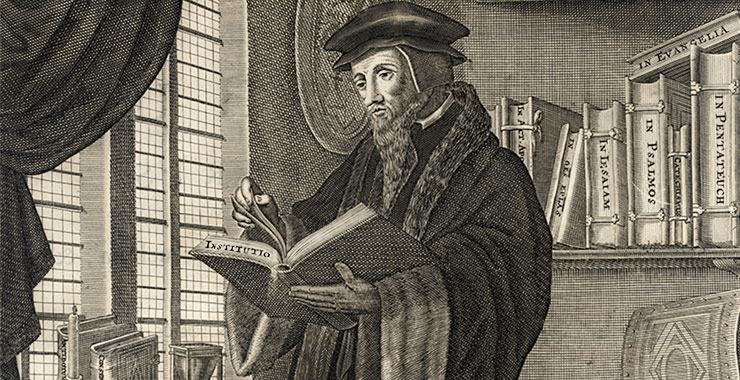
In a recent post titled If Satan Has Been Defeated, Why Is He Still “Prowling Around”?, we looked at how Satan is not God’s counterpart, and certainly not his equal. How then can someone like John Calvin, who has a high view of God’s sovereignty and power, say that “Satan has his miracles too?
Calvin was referring to Matthew 24:24 – where, in his Olivet Discourse, Jesus states that during a time to come of great tribulation, “false messiahs and false prophets will arise and perform great signs and wonders, so as to lead astray, if possible, even the elect.”
The Context of Calvin’s Statement: A Response to Roman Catholic Criticisms About a Lack of Miracles in the Reformation
This statement is only part of a bigger statement by John Calvin. It is found in the “Prefatory Address to the King of France,” at the beginning of Institutes of the Christian Religion. In this section, Calvin is responding to Roman Catholic criticisms of the Reformation, one of which was that the Reformation lacked miracles, which they said proved that the Reformation was not a legitimate, apostolic, work of God.
In his response, Calvin said that the immediate purpose of a miracle like healing was to bring relief to the individual, but the ultimate purpose was to prove that the apostolic preaching was true. Calvin then argues that the Reformation is not a new revelation, but rather the reaffirmation of the original apostolic preaching, therefore it does not necessitate miracles to confirm its validity.
Calvin then takes it one step further by suggesting that many of the supposed miracles reported by the Roman Catholic Church may not be from God, but may instead be of the sort talked about by Jesus in Matthew 24:24, i.e. performed by false prophets by the power of Satan to lead people astray and deceive them.
Interestingly however, Calvin does not disavow miracles entirely, but suggests that there were actually miracles that accompanied the Reformation. He then makes the concluding point that the test of miracles should be what they cause you to worship and trust in. Any miracle which causes you to trust in false doctrines or turn away from the Word of God, he says, are suspect in their origin.
This final point is a good one; you might remember that in Exodus, Pharaoh’s sorcerers were able to do replicate some of the miracles which Moses performed. The effect of these miracles was to cause people not to listen to God and repent, but to trust in false gods. I have witnessed a similar phenomenon amongst people in some circles today who seek signs and wonders; sometimes the signs they seek cause them to trust in things other than God, His Word, and the gospel.
You can read a larger excerpt of what Calvin wrote here, but here are some highlights:
In demanding miracles from us, they act dishonestly; for we have not coined some new gospel, but retain the very one the truth of which is confirmed by all the miracles which Christ and the apostles ever wrought.
But the mark of sound doctrine given by our Savior himself is its tendency to promote the glory not of men, but of God (John 7:18; 8:50). Our Savior having declared this to be test of doctrine, we are in error if we regard as miraculous, works which are used for any other purpose than to magnify the name of God.
And it becomes us to remember that Satan has his miracles, which, although they are tricks rather than true wonders, are still such as to delude the ignorant and unwary. Magicians and enchanters have always been famous for miracles, and miracles of an astonishing description have given support to idolatry: these, however, do not make us converts to the superstitions either of magicians or idolaters.
But our opponents tell us that their miracles are wrought not by idols, not by sorcerers, not by false prophets, but by saints: as if we did not know it to be one of Satan’s wiles to transform himself “into an angel of light” (2 Cor. 11:14).
We, then, have no lack of miracles, sure miracles, that cannot be gainsaid; but those to which our opponents lay claim are mere delusions of Satan, inasmuch as they draw off the people from the true worship of God to vanity.
December 6 is Saint Nicholas Day, or the Feast of Saint Nicholas.
Whereas Americans tend to say that Santa Claus comes on Christmas Eve to deliver presents, for Europeans Saint Nick brings chocolate and some gifts on December 6.
“The Real Santa is Dead”
One of my American friends once told me that they don’t do Santa Claus, because they like to keep fairy tales out of their faith. That’s a fair point. However, when it comes to Saint Nicholas, we would do well to not lose the legacy of the historical person as we throw out the proverbial bath water.
To that end, my wife and I have always taken the approach with our kids of telling them about the real Saint Nick: the pastor and theologian who loved and cared for the poor in his community.
We explain to them that the reason there are so many Santas in malls and at events is because Saint Nicholas was such a wonderful person that people want to keep his memory and legacy alive, and they do that by dressing up in that red costume with the beard.
This led to a funny episode once, when we were waiting in line to have our picture taken with a mall Santa, and my son – 5 years old at the time – started talking to another kid in line and told him, “Did you know that the real Santa is dead?!” Needless to say, the kid was surprised and concerned to hear this news!
The Real Saint Nick
Saint Nicholas was born in the 3rd century in the village of Patara, in what is now southern Turkey, into a wealthy family. That’s right: no North Pole nor reindeer for the real Santa, but palm trees and white sand beaches.
His parents died when he was young, and he was taken in and raised by a local priest. Following Jesus’ call to the Rich Young Ruler (Mark 10:21) to “sell what you own and give the money to the poor,” Nicholas dedicated his entire inheritance to assisting the sick, needy and suffering.
He became a pastor, and was later made Bishop of Myra. He became famous for his generosity and love for children.
Nicholas suffered persecution and imprisonment for his Christian faith during the Great Persecution (303-311) under Roman emperor Diocletian.
As a bishop, he attended the Council of Nicaea (325), at which he affirmed the doctrine of the deity of Christ against the Arian heresy.
Homoousios or Homoiousios
The discussion at the Council of Nicaea was summarized by which word to use in describing Jesus’ nature: whether he was homoousios (of the “same substance” as God) or homoiousios (of a “similar substance” as God).
At the the Council of Nicaea, bishops from all over the world gathered to study the scriptures and address the Arian controversy which advocated for the term homoiousios, denying Jesus’ full deity. This view, which is also held today by the Jehovah’s Witnesses, was deemed heretical by the council of bishops based on examination of the Scriptures, which teach that Jesus is Immanuel (God with us), and is true God of true God.
The debate got very heated, and at one point Nicholas reportedly got so upset with he deemed to be blasphemy, that he slapped an Arian.
This is the real Saint Nick: Palm trees and white sand beaches, defender of the faith, and slapper of heretics.
Nicholas died in 343 in Myra. The anniversary of his death became a day of celebration, the Feast of St. Nicholas on December 6.
Where the Tradition of Gift Giving Comes From
Many stories are told about St. Nicholas’ life and deeds. Perhaps the most famous story is that of a poor man who had three daughters of marrying age. Because the man was poor, he was unable to provide a dowry for his daughters, which meant that they would not be able to find a descent husband and would either be married into further poverty or would have to become slaves.
After Nicholas found out about this family’s situation, he visited the family’s house at night, leaving them three anonymous gifts: bags of gold, which he tossed through an open window while the family was sleeping.
The story goes that they found the gold in their shoes when they awoke, which is the reason for the tradition in Europe that Saint Nicholas leaves chocolate in children’s shoes. Nicholas provided for these poor girls to help them break out of the cycle of poverty.
Rather than trying to make Christmas Santa-free, let’s take back the true story of Saint Nicholas and take hold of this opportunity to talk about a Christian man who loved Jesus, championed good theology, and exemplified Christ through compassion and generosity to the needy.
I’ve read the letter many times, but it’s my first time preaching through it. Doing so has caused me to see a few things in the letter which I hadn’t noticed before:
Peter Reflects Paul
Many scholars date this letter to 64 AD, the time when the great persecution of Rome began under Caesar Nero in the wake of the great fire of Rome. It was also during this time that Paul the Apostle was put to death.
One theory is that Peter wrote this letter in the wake of Paul’s death, to speak to the church in Asia Minor (see 1 Peter 1:1), the area where Paul did a great deal of his ministry and church planting, and to whom he wrote several letters (Ephesians, Galatians, Colossians). Peter was writing to warn them and prepare them for the flood of persecution that was radiating out from Rome to the rest of the empire, and to fill the gap to some degree since the Apostle Paul was now dead.
Throughout the letter, Peter can be seen reflecting on many of the same topics and themes which were found in Paul’s letters (especially Ephesians) and sometimes uses very similar language, although clearly Peter’s writing follows a different pattern than Paul’s. Interestingly, in 2 Peter, Peter mentions Paul’s writings, even calling them Scripture.
It seems that Peter was intimately familiar with Paul’s letters, and perhaps those letters influenced him in the writing of his own letter.
A Call to Missional Living
A major theme of 1 Peter is that as Christians we are sojourners and pilgrims, strangers in this world. As Christians, our citizenship is in Heaven, which is also where our ultimate hope lies; not on this Earth.
Considering that this letter was written to people who were suffering greatly, this message is not surprising. Indeed, the promise of the gospel is that one day those who are children of God will be brought home by their Father to be with Him in security and fullness of joy, free from the pain and suffering caused by sin.
However, if we see Peter’s letter as primarily being about the hope of escaping this cruel world and going to Heaven, we’ve missed the main thrust of his letter. The main thrust of the letter is actually about missional living.
The hope of Heaven makes us bold and courageous so that we can live this life on mission with God. Peter wants us to think of ourselves as sojourners on a mission.
There are several ways in which you can be a foreigner in a foreign land:
A Tourist – Puts down no roots. They come to a place to take what they can and enjoy what they can, but they don’t invest deeply in that place or worry much about building relationships with the people there, because they are living out of a suitcase in a rented hotel room, as they await their flight out to go home.
A Prisoner of War – Is in that foreign land against their will, and therefore they bide their time until they can get out.
A Missionary – A missionary is intentional about their time and resources, knowing that they are in that place for a purpose; they are on assignment.
Peter, in this letter, focuses more on living in this world than escaping from this world, and encourages us to take the posture not of a tourist, nor of a prisoner of war, but rather that of a missionary.
Missional Humility
In this letter, Peter has a lot to say about humility. Throughout the gospels, it is apparent that Jesus’ disciples had an issue with being competitive. There are John’s comments about beating Peter in a footrace to Jesus’ grave on Easter Sunday, and the multiple times Jesus caught his disciples debating which of them was the greatest.
Peter himself, as a younger man, had pridefully told Jesus that even if everyone else fell away, he would remain faithful to the end. Jesus then informed Peter that before that very night was over, Peter would deny him three times.
Jesus graciously restored him, but Peter was unquestionably humbled by that experience. Furthermore, some 30 years had passed by this time since Jesus’ resurrection and ascension. Peter is older, and his word for younger people is: humble yourself, so that God doesn’t have to do it for you – because God resists the proud, but gives grace to the humble.
For Peter, humility is not only a way of relating to God, it’s also an important aspect of what it means to live missionally. Peter talks about living humbly in this world, and treating unbelievers with respect and gentleness (see 1 Peter 3:15). In order to engage in God’s mission effectively in this world, it’s not just what you say that matters, but how you say it, and how you live.
May we be those who hear the message of Peter:
May we love the Word of God, so that it sinks into us, and permeates our thoughts and speech.
May the promise of Heaven cause us to engage rather than disengage with the world around us in a missional way,
and may we take a posture of humility towards others and before God as we do so.
Come back in time with me, all the way back to the magical year of 2007. I had a beautiful, thick head of hair… My wife was pregnant with our first child. I was living in Eger, Hungary, where we had planted a church which I was pastoring, and I had just gotten broadband internet hooked up in our flat. There was this new thing around at that time called YouTube, we weren’t sure if it was going to catch on or not… I mean, who wants to watch videos on their computer???
There on YouTube, I came across this video called Zeitgeist, which is basically a big conspiracy theory that says that everything you’ve ever been told about everything is a lie, conjured up by people who want to control you. Overall, I didn’t take the movie seriously, but… the beginning of the movie made some pretty serious claims about Jesus and the Bible that gave me pause when I first heard them…
The Claims
For example, the video claimed that 3000 years before Jesus, the Egyptians had a god named Horus who was:
Born on December 25
Born of a virgin
His birth was marked by a star in the East
He was adored by 3 kings
He was a teacher at age 12
He was baptized and began his ministry at age 30
He had 12 disciples
Sound like anyone else you’ve heard of before? They went on…
Stills from video
The basic premise of their claims is that all the stuff the Bible says about Jesus was just ripped off and plagiarized from other ancient religions. For a moment, these claims surprised me and shook me, because I had never heard this before, and I realized that if these claims were true, then Christianity is just a myth and is not true…
The Reality: the “Christ Myth Hypothesis” is a misinformation campaign
I figured it was pretty important to find out whether the things this video claimed were true, so I immediately went and did some research.
Here’s what I found: these claims are nothing new, they have been around for hundreds of years AND they have been disproven and are not taken seriously by anyone who knows anything about history because their claims are false.
Several books and films have been produced by “evangelical atheists” such as Richard Dawkins, Bill Maher, and Tim Harper which promote these claims as the basis for why people should abandon belief in the Bible.
Not only are the claims of the “Christ Myth Hypothesis” not true, but they are intentionally misleading, which is even worse. This is no mere misunderstanding, this is a misinformation campaign aimed at swaying people’s opinions using underhanded and dishonest means.
The Reality: Historical Facts Disprove the Christ Myth Hypothesis
One of the big claims of those who promote the Christ myth is that Jesus never actually existed.
How Do We Know that Jesus Really Existed?
Edwin Yamauchi, Professor of History at the University of Miami says this: “Any argument that challenges the claim of a historical Jesus is so ridiculous in the scholarly community, it is relegated only to the world of footnotes.”
Why? There are at least 10 sources, other than the Bible, that talk about Jesus as a historical person. Here are 2 examples:
Tacitus (Roman official): “Nero fastened the guilt . . . (for a great fire that happened in Rome) on a class hated for their abominations, called Christians by the populace.Christus, from whom the name had its origin, suffered the extreme penalty during the reign of Tiberius at the hands of the procurator Pontius Pilatus.” (Tacitus, Annals, 15.44)
Josephus: “About this time there lived Jesus, a wise man, if indeed one ought to call him a man. For he . . . wrought surprising feats. . . . He was the Christ. When Pilate condemned him to be crucified, those who had come to love him did not give up their affection for him.On the third day he appeared . . . restored to life . . . and the tribe of Christians . . . has not disappeared.” (Josephus, Antiquities, 18.63–64)
Bart Ehrman is not a Christian, and yet he explains, “There is more evidence for the existence of Jesus Christ than there is for nearly any other person from antiquity,” and “Mythicists as a group, and as individuals, are not taken seriously by scholars,” because “the idea that Jesus did not exist is a modern notion. It has no ancient precedents. It was made up in the eighteenth century. One might as well call it a modern myth, the myth of the mythical Jesus.”
Another reason we can be sure that Jesus really existed is because of the rise of the early Christian church.
The rise of early Christianity doesn’t make any sense if Jesus never actually existed. It was a movement of people who claimed to have known, lived with, and witnessed the life, death and resurrection of this man, and as a result they willingly suffered persecution and death, including the torture and murder of their wives and children. Not even the leaders reaped any personal benefit from these claims at all. The history of early Christianity makes no sense apart from the fact that these people actually saw their leader crucified and then rise again.
Examining the Claims of the Christ Myth Hypothesis
Problem #1: Lack of Primary Sources
Problem #2:Gets basic facts about the Bible wrong
Let’s look at some of the specific claims, starting with the most popular: Horus.
Born on December 25 I hope I’m not ruining your Christmas, butJesus wasn’t born on December 25th. Nowhere in the Bible does it say when Jesus was born, in fact it is most likely it was not in winter, but in fall because it says in the Gospels that the shepherds were sleeping outside with their sheep – which they don’t do in Israel in December because it’s too cold.
It was around 400 AD, when Pope Julius I changed when the day when Christians celebrated the birth of Jesus, to December 25th — in order to subvert a pagan holiday which was celebrated on the Winter Solstice.
Christians have never actually believed that Jesus was born on Dec. 25th — that’s just the day we chose to celebrated it.If you want to celebrate it in August, go for it!So, December 25 is not an actual parallel.
Born of a Virgin
Here’s how Horus was conceived: His mom was a goddess named Isis — his dad was a god named Osiris. Osiris got into a fight with another god and lost (it’s such a bummer when your god loses…) The other god cut Osiris up and chopped him into pieces, and thenHorus’ mom came along and found Osiris’ severed phallus — and yada, yada, yada — she got pregnant, and that’s how Horus was conceived.
I’m pretty sure that doesn’t count as a virgin birth, and it’s certainly not a parallel to Jesus.
Star in the East — Attended by 3 Kings
Again, I don’t want to ruin your Christmas — but the Bible doesn’t say that 3 kings followed a star and arrived at the birth of Jesus. The only people who came at the birth of Jesus were the shepherds from the nearby fields.
In the Gospel of Matthew — it says that a group of magi came from the East, when Jesus was about 2 years old, but nowhere does it says they were kings… “Magi” were magicians, sorcerers, practitioners of Zoroastrianism (Persian traditional religion).
Furthermore, nowhere does it say that there were 3 of them. It says that they brought 3 gifts, gold, frankincense and myrrh —but there were probably more than 3 of them. There could have been 15 or 20 or 100.So, again: this isn’t a parallel.
Teacher at 12 and Baptized at 30
There aren’t any references to any of these things in ancient writings regarding Horus.
12 Disciples
The Hieroglyphics show that Horus actually had 4 disciples — and they were: a turtle, a bear, a lion and a tiger. Also not a parallel
Some people say that Horus was crucified and then resurrected on the 3rd day. However, crucifixion didn’t exist in Egypt — it was invented by the Romans thousands of years later. Furthermore, in most stories of Horus, he didn’t die. In one story, he was killed and cut up into pieces, then thrown into a swamp, in which the pieces turned into a crocodile – and THAT is claimed to be a resurrection which was supposedly copied by the Gospels!
Mithra: Born of a Virgin
Mithra, legend says, was actually born fully-formed, out of a rock. That’s not exactly a virgin birth.
Other “Parallels”
Another resurrection parallel that is sometimes claimed is the Greek god Attis, but if you look at his story, here’s how it goes:Attis gets killed by his father, then his father asks Zeus to resurrect him from the dead, and Zeus said: “No. But, here’s what I’ll do: I’ll make Attis’ pinky finger move eternally, and his hair will grow forever.”
Again that’s not resurrection, and there’s no parallel at all with Jesus.
Conclusion & Further Resources
It’s probably not a great idea to get historical information from YouTube videos and blatant propaganda materials, and yet many people do.
What makes Christianity unique is that it is not based on abstract ideas, feelings, or concepts, but it is based on historical events which either happened or they didn’t. The good news is that because of this, the claims of Christianity can be studied and researched from a historical perspective. Actual scholarly research and material refutes the claims of the Christ Myth Hypothesis and corroborates the claims of the gospel.
In my previous post on Gilgamesh, Richard Dawkins and the “new atheism”, I mentioned how some people have made the claim that the Bible borrowed, copied, or stole certain stories from other Ancient Near East mythology. This argument essentially says that the Bible should therefore not be taken as an accurate historical account, but merely as “Jewish mythology.”
What is the Epic of Gilgamesh?
Considered one of the earliest works of literature, the Epic of Gilgamesh is a Sumerian epic poem which tells the story of a cataclysmic flood, and the salvation of a righteous man on a boat. Portions of the story have been found, which archaeologists date back to 2100 BC. A full version of the poem was unearthed in the mid-19th century, dating back to 650 BC.
Similarities between the two stories
There are many similarities between the Epic of Gilgamesh and the story of Noah and the flood in the Old Testament. The story goes that the god Ea, the creator of the Earth, decided to end all life on Earth with a great flood. Ea selected Ut-Napishtim (or Utnapishtim) to construct a six-story square ark and save himself and a few others.
Further similarities:
God, or several gods, decided to destroy humankind because of wickedness.
A righteous man was chosen to build a boat in order to be saved, along with some animals.
Both end with a divine promise not to destroy the Earth again by a flood.
Differences between the stories
In the Epic of Gilgamesh, the flood only lasts 6 days and 7 nights, whereas in the Bible it lasts 40 days and 40 nights.
The Bible says that water didn’t only fall from the sky, but came up from beneath the surface of the Earth.
In the Epic of Gilgamesh, the boat come to rest on a mountain called Nisir, whereas in the Bible the ark came to rest on Mount Ararat. The two are about 300 miles apart.
In the Epic of Gilgamesh, Utnapishtim received eternal life, whereas Noah died.
Other Flood Accounts
Hundreds of flood traditions have been preserved all over the world, with examples being found in Europe, Asia, Africa, and Australia, as well as both of the Americas, and most share similarities with the Genesis account.
About 95% describe a global cataclysmic flood, 88% tell of a family of humans saved from drowning to reestablish the human race after the flood, 66% say the family was forewarned, 66% blame the wickedness of man for the flood, and 70% record a boat as being the means by which the family (and animals) survived the flood. More than one third of these traditions mention birds being sent out from the boat. [1]
Who Copied Whom?
If, as ALL these stories purport, we all descended from the one family that survived this world-wide cataclysmic flood, then it would make sense that this story would be passed on and re-told in people groups around the world. Thus, accounts like the Epic of Gilgamesh and others which tell the story of a flood only serve to reenforce the idea that such a flood did take place. Interpretation of why it took place, it could also be expected, would differ as each culture would run it through the framework of their particular religious beliefs.
The biggest question is: which account should be considered the authoritative one, which correctly conveys the facts and meaning of the flood?
For the answer, we would do well to consider the nature of the different texts, and this historicity of other Old Testament writings.
On my trip to Israel earlier this year, I was able to witness firsthand how archaeology is consistently proving that the Bible accurately portrays history. (See: Why Should Christians Visit Israel?) In other words: the Bible purports to tell history (not mythology), and it has a proven track record of doing so accurately.
Given the Jews’ reputation for passing down information scrupulously from one generation to another and maintaining a consistent reporting of events, Genesis is considered by historians and archaeologists to be far more historical than the Epic of Gilgamesh, which is regarded as mythological because of its numerous gods and their interrelationships and intrigues in deciding the fate of humankind. [2]
Thus, we can be confident of two things: that a flood did happen, and that the Bible not only purports to tell history, but has been proven to do so accurately.
Does the Epic of Gilgamesh undermine our trust in the Bible? No. If anything it bolsters our trust in the historicity of the flood.
Earlier this year I added a page on this site where readers can submit questions or suggest topics. Recently I’ve received some questions both on that page and on Calvary Live regarding the Epic of Gilgamesh, an ancient Near East text which contains a flood narrative.
Some people claim that this text proves that the biblical story of Noah and the flood is just borrowed, or stolen, from other ancient Near Eastern mythology, and is not to be taken literally. This is part of a larger conspiracy theory which claims that much of Christianity is actually borrowed, or stolen, from other ancient Near Eastern mythologies, e.g. that Jesus was just borrowed from the Egyptian story of Horus and Isis.
Over the course of the next several posts, I will address various aspects of this conspiracy, and show why no real scholars believe this is true. The reason? Because it is simply not factual. It requires building a narrative which only sounds plausible until its claims are checked, at which time it becomes clear that they are not based on actual facts, research, or history.
Richard Dawkins & the Folk Religion of the New Atheism
Richard Dawkins is what you might call an “evangelical atheist”, which means that he isn’t content with just being an atheist himself, he is on a mission to convert the world to his views.
In his recent book, which is aimed specifically at converting children and young people to his brand of atheism, he claims that the Old Testament story of Noah comes from a Babylonian myth, the legend of Utnapishtim, which in turn was taken from the Sumerian Epic of Gilgamesh.
This claim caught the attention of George Heath-Whyte, a researcher at Cambridge who specializes in Assyriology and Near East history. Heath-Whyte then took to Twitter and wrote a scathing thread of tweets exposing the slew of factual errors in Dawkins’ book.
Dawkins' primary concern is apparently for The Truth. I’ve only read 60 pages of the book so far, but he keeps on demonstrating to me that, if you’re primary concern is also for The Truth, then he's not the person to listen to.
‘Well let’s start with “The Utnapishtim story … comes from the Sumerian Epic of Gilgamesh.” WHAT. The version of the Gilgamesh story that contains the flood narrative of Utnapishtim is NOT written in Sumerian, but Babylonian (Akkadian).
‘There are older Sumerian stories about the character Gilgamesh, none of which contain a flood story. There is even a Sumerian flood story too, but it’s not the flood story he’s talking about.
‘It seems he’s talking about a weird mix of one Babylonian flood story about a guy called Atrahasis and another Babylonian flood story about Utnapishtim (the latter being a part of the Babylonian epic of Gilgamesh)…
‘… but come on Dawkins, even Wikipedia could have told you that neither of these were written in Sumerian.’
That’s pretty embarrassing for a man who had just told Krishnan Guru-Murthy that he wants ‘to rid the world of all claims that are not evidence-based’. But Heath-Whyte was just getting into his stride.
‘Problem no. 2: “Arguably the world’s oldest work of literature, [Gilgamesh] was written two thousand years earlier than the Noah story.”
‘So he’s just stated that Genesis was written “during the Babylonian captivity” (sixth century BC), and now he’s stated that (what we assume he means to be) the epic of Atrahasis, or the Babylonian Epic of Gilgamesh, was written 2,000 years earlier – so roughly 2600-2500 BC.
‘Most likely Atrahasis was written less than 1,300 years before the Babylonian captivity, and the version of Gilgamesh that included a flood story was probably finished less than 1,000 years before the Babylonian captivity, and likely quite a few centuries less than a thousand.
From the above-linked article:
Other mistakes identified by Heath-Whyte: Dawkins mixes up the animals in the Gilgamash and Genesis flood stories, and claims that the Sumerian flood legend, like the story of Noah’s Ark, ends with a rainbow.
‘There’s no rainbow mentioned in any Mesopotamian flood story. Anywhere. There just isn’t,’ says Heath-Whyte, adding that in any case the former Oxford professor for the Public Understanding of Science has misidentified a Sumerian god.
I think we can take Heath-Whyte’s word for it. Not only can he read the cuneiform in which Gilgamesh is written, but he can also write it.
If These Claims Are Not Historically Accurate, Where Do They Come From?
Continuing from the above-mentioned article:
Just when Dawkins must be wishing that a non-existent God would send a flood to cover his embarrassment, he delivers the killer blow. As he says, even Wikipedia would have put the professor right on these matters. So what was his source? ‘A quick Google search suggests that Dawkins’ source for a lot of this stuff may be a cute little website called HistoryWiz.’
I checked, and he’s right: this is the version of the Gilgamesh as mangled by HistoryWiz, which invites you to ‘step into the past… Let the wizard take you to a different time’.
Alas, it looks as if you really do have to step into the past in order to consult the wizard. The site is ‘copyright 1998-2008’, there are loads of broken links and the design, c. 2000, is quaintly rudimentary.
It seems clear that Richard Dawkins and others who make these claims about Gilgamesh are so committed to the conclusion they already religiously believe, that they are not concerned with real scholarship when it comes to creating their narrative.
The “New Atheism,” we might say, is a kind of folk religion which has its own shared beliefs, stories, and mythos, which are not actually based on fact or history.
In my next article I will explain what the Epic of Gilgamesh and Utnapishtim character are, and how we should understand them in relation to the Bible.
Following that, I will discuss the “Jesus Myth” and the theory that what the New Testament says about Jesus is borrowed from ancient Egyptian and Near East mythology. What I hope to show in the end, is that these theories do not hold up to even the most basic fact-checking scrutiny, and are part of a mythos created by New Atheists and other who would try to discredit the Bible and erode faith in it.
A further question which follows from this is: Why are some people opposed to Christianity and the Bible? – a question which I plan to address as well.
If – as the Bible teaches – when a believer dies, their soul goes to be with God, where there is no longer any suffering, pain or sickness, then why would we not want to speed up the process a little bit? After all, as Paul the Apostle wrote to the Philippians, “My desire is to depart and be with Christ, for that is far better” (Philippians 1:23). Why not take up smoking, stop using sunscreen, and give up wearing seatbelts? Or, to take it even further, why not just go all the way and end your life now, so you can leave this harsh world behind and go to Heaven?
If that sounds preposterous, keep in mind that this was something that actually happened in early Christian history: there was a time when committing suicide became fashionable among Christians, and the church had to respond and try to end this tragic fad.
When Christians Were Killing Themselves
Until the Edict of Milan, AKA the Edict of Tolleration was issued in 313 AD, Christianity’s status in the Roman Empire was that of religio illicita, an “illicit” or illegal religion (as opposed to Judaism, which held the status of religio licita). During this time, Christians throughout the Roman Empire experienced waves of persecution, usually dependent on the attitudes of local authorities, although there were times when persecution was the official policy of the entire empire – such as during the reigns of Nero and Diocletian. Christians also faced persecution outside the Roman Empire.
During this period, many Christians were martyred, and martyrs were highly regarded and respected as those who had been willing to pay the ultimate price for their faith. In fact, martyrdom was so highly regarded, that people began to seek it out and desire it, as a way of expressing their devotion to Jesus. Ignatius of Antioch, for example, wrote about his desire to die as a martyr.
But some people took it even further. Jerome writes about a young woman named Belsilla who flagellated herself so much that she died from her self-imposed injuries. Another woman, Agathonike, upon witnessing the execution of a bishop by burning, also threw herself onto the fire, declaring “this is the meal that has been prepared for me.” She died in the flames, even though she had not been arrested nor charged. There are other accounts of Christians volunteering to be martyred even though they were not even being sought by the authorities. [1]
The Donatists, who considered themselves particularly hard core and dedicated, greatly desired to show their devotion by being martyred, some even going to the point of simply killing themselves to show how spiritual they were, i.e. how much they were not attached to this life and how much they desired to depart this world and be with Christ.
The Response of the Church
Seeking martyrdom and committing suicide became such a big issue with the Donatists in particular that it threatened the credibility, and even the existence of the church in their area of North Africa.
Judaism had always considered suicide to be sinful, whereas in pagan Roman culture it was considered an acceptable way to exit this life, and was practiced mostly by the wealthy, in part because slaves were not allowed to commit suicide since their lives did not belong to them, but rather to their masters.
It was Augustine of Hippo, a native of North Africa himself, who took up the challenge of addressing this issue and clarifying Christian thinking on this subject. In his book ‘The City of God’, Augustine considered what the Bible has to say about suicide and weighed various arguments for and against suicide. His conclusion was that suicide is always wrong as it is a violation of the sixth commandment (“Thou shall not murder”), and is never justified even in extreme circumstances. This became the official position of the church. [2]
The Meaning of Life
This whole issue touches on something which is core to Christian belief, and which sets Christianity apart from other worldviews and religions.
Many world religions view the world negatively, as a place of chaos, pain, and suffering – where the goal is to escape. This is the goal of transcendence and Nirvana in Eastern philosophies and religions, for example.
Christianity on the other hand, views this world positively. Rather than seeing the origin of the world as having come about through conflict or chaos, it is described as the thoughtful and good creation of a loving God. It is described as a garden paradise, given to us as a gift by our loving creator.
Although this good creation has been corrupted by sin and world currently “lies under the power of the evil one” (1 John 5:19), the world still retains its fundamental goodness, and God has promised that one day He will redeem His creation.
The purpose of our lives, according to the Bible, is not to escape this world, but to steward this world (Genesis 1:28), as well as our lives and everything we’ve been given, to the glory of God and for the benefit and salvation of others. In other words: the people of God have been given a mission which can only be carried out in this life, and therefore this life matters greatly. Rather than escaping this world, His desire for us is to be about His business as long as we live.
It is an unbiblical an anemic theology of life and the world which leads to the attitude that the most spiritual thing to do is to bide your time as you wait to get out of this world to be with God. True spirituality is rather to value this life and the unique opportunities it affords to do the work of God, and be involved in his saving and redeeming work.
As Paul wrote to the Thessalonians: For God has not destined us for wrath, but to obtain salvation through our Lord Jesus Christ, who died for us so that whether we are awake or asleep we might live with him. (1 Thessalonians 5:19)
Between now and the end of our lives, there is a whole space that is significant. How you live it matters greatly to God. There are things he wants you to do with that time (cf. Ephesians 2:10). The Christian life, in other words, is not simply waiting to die so you can go to Heaven. God has given you this life for a purpose and He wants to use you to advance His Kingdom and to touch lives. He values our lives, and so should we!










 Theology for the People