A Modern Myth

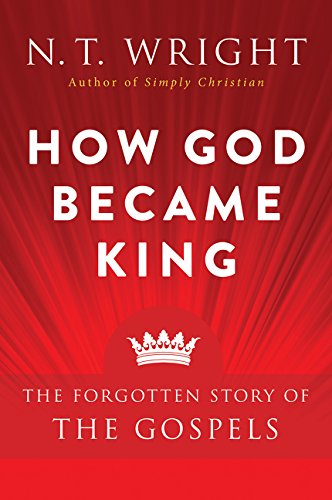
51vrjuzftllI just finished reading N.T. Wright’s How God Became King: The Forgotten Story of the Gospels. He is a great thinker and while I may not agree with him on everything, I do appreciate his writing. Here’s a quote from How God Became King which I found particularly insightful and encouraging regarding the “modern myth” of the failure of Christianity and the attempts to relegate it to the realm of private religion rather than the revolutionary message it truly is.

“The failure of Christianity is a modern myth, and we shouldn’t be ashamed of telling the proper story of church history, which of course has plenty of muddle and wickedness, but also far more than we normally imagine of love and creativity and beauty and justice and healing and education and hope. To imagine a world without the gospel of Jesus is to imagine a pretty bleak place.

Of course the reason the Enlightenment has taught us to trash our own history, to say that Christianity is part of the problem, is that it has had a rival eschatology to promote. It couldn’t allow Christianity to claim that world history turned its great corner when Jesus of Nazareth died and rose again, because it wanted to claim that world history turned its great corner in Europe in the 18th century. “All that went before,” it says, “is superstition and mumbo-jumbo. We have now seen the great light, and our modern science, technology, philosophy and politics have ushered in the new order of the ages.”

That was believed and expounded in America and France, and it has soaked into our popular culture and imagination. So, of course, Christianity is reduced from an eschatology (” this is where history was meant to be going, despite appearances!”) To a religion (“here is a way of being spiritual”), because world history can’t have two great turning points.

If the enlightenment is the great, dramatic, all-important corner of world history, Jesus can’t have been. He is still wanted on board, of course, as a figure through whom people can try to approach the incomprehensible mystery of the”divine” as a teacher of moral truths that might, if applied, actually strengthen the fabric of the brave new post-Enlightenment society. But when Christianity is made “just a religion,” it first muzzles and then silences altogether the message the Gospels were eager to get across.

When that happens, the Gospel message is substantially neutralized as a force in the world beyond the realm of private spirituality and an escapist heaven. That indeed, was the intention. And the churches have, by and large, going along for the ride.”

(N.T. Wright, How God Became King: The Forgotten Story of the Gospels, HarperOne: 2016, pp.163-164)

Want Your Marriage to Succeed? Harvard Study Shows What Can Help

Wedding cake visual metaphor with figurine cake toppers

A recent study by Tyler VanderWeele, a professor at the Harvard School of Public Health, on the topic of the relationship between religion and health, shows that there is a direct link between church attendance and lower rates of divorce.

The study shows that married couples who regularly attend religious services together are 47% more likely to not get divorced, than couples who don’t go to church.

You can read Tyler’s thesis here.

Want your marriage to succeed? Attend church regularly.

A few months ago I wrote about some of the “bad church statistics” that go around, one of them being that the divorce rate amongst evangelical Christians is just as high as amongst people who are not Christians (roughly 50%). The conclusion that is often drawn based on this incorrect statistic is that being a Christian really makes no practical difference in the way people live. This statistic is, however, incorrect. As this new study out of Harvard shows, the more a couple attends church the less likely they are to see their marriage end in divorce.

Not only is it good for your marriage, but it’s also good for your kids. The more a couple attends church, the more likely their kids are to have faith of their own when they grow up. (Those statistics and more on this topic here)

VanderWeele’s study also linked church attendance to lower rates of depression and suicide.

In an interview with the Christian Post, VanderWeele said,

“Religion is, of course, not principally about promoting physical health or decreasing the likelihood of divorce, but about communion with God. However, it turns out that the pursuit of this goal also has profound implications for numerous other aspects of life, including health and marriage.”

“religion is about both communion with God and the restoration of all people to their intended state of complete wholeness and well-being. The evidence suggests that it can indeed accomplish both,”

“The religious community provides social support, a constant reinforcement and reminder of the religious teachings, family programs, and a communal worship and experience of God.”

On a personal note, I believe in the Church. I believe in it not only for practical reasons, but for theological reasons. Even if I were not a pastor, I would be committed to church; in fact, it was my belief in and commitment to and service in local churches which led me to become a pastor – a path which I had never sought after or imagined for myself.

I believe in the church because I see in the Bible that it is something which was ordained by Jesus, built by Jesus, and commissioned by Jesus, not only to spread the gospel, but also to start more churches!

It isn’t because church “works” that church is true, it is because church is true that it works.

An Important Perspective on the Difficult and Mudane

beofpp

A while back a friend shared an interesting concept with me, which I have come to see applies to many areas of life. We were on our way to meet with a ministry that our church supports and we knew that there would be some hard conversations that needed to be had – some behaviors and attitudes which needed to be confronted and challenged, some practices that needed to be critiqued.

What my friend told me is that things like this are hard in the moment, but when you zoom way out, and you take the big picture view of what is going on, they are actually beautiful – and if you can keep that perspective, it helps you to do those things which are difficult in the moment.

The example he used was his family: if you look at any given moment up close, it probably doesn’t look that beautiful: dad is frustrated and scolding the kids for not doing their chores, mom is complaining that someone left their shoes in the middle of the floor, siblings are bickering with each other, the dog is barking and scratching up the glass door…  It’s all terrible, right?

Except it’s not. If you zoom out from the details of the moment and take the 30,00o foot view, where you see what is happening there as a whole, what you see is something beautiful: you see a group of people who are living together, who love each other and are committed to each other. And 20 years from now, it’s not going to be the siblings bickering that you’ll remember, it’s the big picture of the family that was together.

The point is: Even if in the moment it isn’t glorious and beautiful, in the big picture it is.

I think this can be applied to many areas in life. In general, creating things and building things is an inglorious process, but the big picture of the process itself, not only the finished product, can be a beautiful thing.

I know someone who felt a calling to move his family to a certain city a few years ago to plant a church. They were excited, they felt that they loved the culture of this city, that it would be a great fit for their family, and they expected that God would use them to birth a new church. After arriving in town and getting established, they set up the church’s website, affiliated with a group of churches, and announced a weekly meeting. They were prepared that it might be slow-going getting started, but they were excited when someone they had invited showed up for their Bible study. However, little encouragements like this became more and more rare. For two years they did everything they could think of to get this church started, the whole family was involved, and the husband worked also worked a full time job to pay the bills. After two years, they shut it down and moved back to where they had come from, disappointed and confused: had they not discerned God’s will correctly that this is what they were supposed to do?  Or was it possible that God had led them out there on purpose, knowing that the church plant would not succeed, in order to teach them something?

If you would have looked at any given moment, you might have seen intense discouragement. You might have seen kids complaining that their parents had taken them away from their friends back home to move to this place, and for what? To have a Bible study in their house that was poorly attended? You might have seen a marriage that was struggling under the stress and sadness of a dream that was not materializing. Nothing beautiful. Nothing glorious.

But when you take a step back and look at the big picture, you do see something that is beautiful. You see something that is downright glorious. You see a family together, taking a step of faith and following God; working together and serving together, praying together for God to work in a city and call people to new life. You see a man and a woman who are seeking God for direction, and asking Him to speak to them. You see a group of kids who have a mom and dad who are setting an amazing example for them of values which really matter… That is beautiful. That is glorious.

That isn’t to say that everything people do is glorious in the big picture. There are plenty of things which are not. But doing things that matter often consists of doing many things which aren’t glorious or pretty or fun. Sometimes they are messy or painful or even just super boring. This is true of business, school, relationships, marriage, and just about anything else that matters.

Keep that perspective in mind this week: try to see the big picture in the difficult moments, and let that encourage you to continue on working for things that matter.

2 Thoughts for U.S. Christians in the Wake of the Election

forecast-grid

Someone needs to take 2016’s keys away, because it’s not acting normal.

The Denver Broncos won the Super Bowl without an offense. Brexit happened. The Chicago Cubs won the World Series. And now Donald Trump just won the presidential election. What kind of bizarro world are we living in?

Here are 2 thoughts for Christians to consider in light of the election:

1. Our country is divided and we are called to be peacemakers

Here in Boulder County, voters overwhelmingly voted Democrat. 71% voted for Hillary Clinton. The majority of the City of Longmont went for Hillary. Republicans took control of the House and Senate nationally, but Democratic candidates won almost every seat they ran for here in this area.

Nationally, as of right now Hillary Clinton won the popular vote. Right before the election 61% of people said that they considered Donald Trump unfit to hold the office of president, which means that most people in our country are deeply concerned with the results, including some of the people who voted for Trump themselves.

Furthermore, this election was very divisive. I read a post on social media from a young woman today that said, “Every vote for Trump was a direct assault against me, my friends and my loved ones. I will not forget it.”

For Christians, no matter what your political stance, I think we must avoid the “us and them” mentality. Such a mentality encourages people to make value judgments about other people which are often not fair, such as “Liberals think that __________” or “Trump supporters condone __________.” Those generalizations are often, if not usually, untrue, and the reason for a person’s decision for how they vote is usually much more nuanced than people on the other side make it out to be.

I liked what President Obama said during his speech today, “This was an intramural scrimmage; we are all on the same team.”

Jesus taught his disciples, “Blessed (literally: “Happy”) are the peacemakers, for they will be called sons of God” (Matthew 5:9). Helping people make peace with God is at the core of what it means to be a follower of Jesus. An “us and them” mentality which divides people over political issues will only hinder that from happening.

Whoever loves God must also love his brother. – 1 John 4:21

Furthermore, resentment towards others hinders people from having a relationship with God. 1 John 4:20-21 says: If anyone says, “I love God,” and hates his brother, he is a liar; for he who does not love his brother whom he has seen cannot love God whom he has not seen. And this commandment we have from him: whoever loves God must also love his brother. Yes, even someone who holds different political views than you.

We are called to be peacemakers, between God and people and between people and people. Let us not be those who perpetuate divisions, but those who encourage reconciliation.

2. Getting caught up in politics can hinder your true mission

President Obama said to the nation today, “Whether you are a Democrat or a Republican, we are all Americans first.” As Christians, we go one very big step beyond that: We are not Americans first, we are Christians first.

As Christians, we have a calling to be ministers of the gospel. Jesus said to his disciples, “Just as the Father sent me, so I also send you.” (John 20:21) When people think of Christians, we don’t want them to associate us with a politician or a political affiliation or party, we want them to associate us with Jesus and the gospel message of the love and grace of God.

In a country as divided as ours is right now, it is very possible for politics to become a stumbling block and a hindrance to people being willing to hear the message of the gospel from those they disagree with politically. We can’t allow that. Our mission is so much more important.

Christians need to strive to be known not for alignment with a particular party or stances on economic policy or gun rights, but for our concentrated focus on the mission of God and the message of the gospel. This is not to say that Christians should not have opinions on such matters, it is to say that we must not allow these things to be associated with what it means to be a Christian.

May God bless our nation and help us who call ourselves Christians to faithfully follow Jesus, communicate his heart and carry out his mission.

If then you have been raised with Christ, seek the things that are above, where Christ is, seated at the right hand of God. Set your minds on things that are above, not on things that are on earth. For you have died, and your life is hidden with Christ in God. When Christ who is your life appears, then you also will appear with him in glory. (Colossians 3:1-4)

In Longmont We Met a Refugee from a Muslim Country. Here’s Her Story.

Pew Research Center reports that the United States admitted a record number of Muslim refugees in 2016. 38,901 Muslim refugees entered the U.S. in fiscal year 2016, making up almost half (46%) of the nearly 85,000 refugees who entered the country in that period, based on data from the State Department’s Refugee Processing Center.

In a previous post, I mentioned what I would do if refugees moved into our neighborhood. This past week, we met someone who lives in our neighborhood who came to the United States as a refugee from a muslim country.

Last Friday, our kids were invited to 2 birthday parties on the same night. I took one kid to the one party, my wife took the others to the other party.

binladen_mosque_kosovo
Kosovo

At the party my wife went to, she got to talking with one of the parents and came to find out that she was born into a muslim family from a muslim country, who had come to the US as refugees. The country? Kosovo.

After growing up in New York City, this woman married an American man, and together, the two of them became Christians.

This woman’s parents, at that point, refused to speak to her, but once she had children, her parents started coming around more often.

This woman and her husband now live in Longmont and they are involved in supporting various Christian ministries, churches and missionaries in Kosovo and travel there from time to time.

Here’s the point: this is what happens to good number of muslims who come to the United States: they meet Christians, they hear the Gospel, they become Christians, and then they begin to reach out and support Christian missions in their country of origin.

08-21-14_the_green_prince_mainIf you haven’t yet, check out the movie The Green Prince. It’son Netflix. It’s about Mosab Hassan Yousef, a Palestinian and the eldest son of Sheik Hassan Yousef, one of the founders of Hamas. The Green Prince, is the film adaption of the book, Son of Hamas: A Gripping Account of Terror, Betrayal, Political Intrigue, and Unthinkable Choices, tells the true story of how Mosab was recruited by Israeli intelligence to work against Hamas.

But what is particularly interesting about Mosab’s story, as is documented in the book and the movie, is how in 2007, Mosab left the West Bank and came to the United States. Living in San Diego, he was invited by some acquaintances to come visit their church. There he heard the gospel, the message of God’s love, and he met Christian people who embraced him. In 2008, Mosab publicly announced his conversion to Christianity, putting himself at risk by doing so.

Now guess what he does: He reaches out to Arabic speakers with the message of the gospel. Talk about legit: a son of Hamas speaking in Arabic about Jesus and the hope of the Gospel. That’s powerful for people in that culture, and in ours as well.

“Religion steals freedom, kills creativity, turns us into slaves and against one another. Religion can’t save mankind. Only Jesus could save mankind through his death and resurrection. And Jesus is the only way to God.” – Mosab Hassan Yousef

With all of these refugees from muslim countries coming to the United States, there is an incredible opportunity: for the first time, many of these people will be able to hear the Gospel, to meet and be embraced by Christian believers, and to choose for themselves what they will believe.

May we who call ourselves Christians be found faithful to act towards them as Jesus would, and may we be used by God to help them find love, liberty and salvation in Christ. Lives and destinies will be changed, and maybe even the world as we know it.

The US Election and Some Reasons to be Hopeful

This past weekend I went with the elders of White Fields Church to Allenspark, where we had a marathon of meetings, but in such a beautiful spot that we could also enjoy some hiking and the natural beauty of the Rocky Mountains.

wp-1478360242646.jpg
Sunrise on Mt. Meeker
wp-1478360321019.jpg
We happened upon this mama bear and her 2 cubs in a tree near Lyons

We had a great time together, but I was surprised how exhausted I felt at the end of it. However, I feel very encouraged about where our church is at and where we are going.

Speaking of exhaustion and encouragement: the US election is coming up in 3 days.

I’m exhausted by the campaigns, by the division it causes, I’m exhausted because both of the major party candidates have major character flaws and neither of them are someone I can be excited to vote for.

However, I am also hopeful. Yesterday I ran across an article by Carey Nieuwhof that was a breath of fresh air. True, he’s a Canadian, so he doesn’t really have any skin in the game, but then on the other hand, they have Justin Trudeau and pretty much all of the things conservative Americans are concerned about happening in the US have already happened in Canada – so maybe a Canadian is the exact person who can speak into our situation.

Here’s the article: Despairing about the US Presidential election? 5 predictions that point toward hope.

Here are the 5 predictions he gives:

  1. There will be renewed interest in the sovereignty of God
  2. The church will look to Christ more and to the state less
  3. Living out your values will become more important than ever
  4. The tone of public discourse will get worse…or better
  5. The work of the local church will be more important than ever

Carey expounds on each of these in his post – it’s worth reading, but the tone of what he is saying is something I have found curiously lacking from Christian leaders during this election season.

I, for one, cannot lose hope – because as a Christian I know that 1) God is sovereign and 2) the best is yet to come.

The Problem with Facades

In Exodus 34, we read an interesting story: when Moses went to meet with God on the mountain to receive the tablets of the 10 Commandments, it caused Moses’ face to glow.

It says that when he came down from the mountain, the people were frightened to see his face glowing. In another place we are told that they couldn’t look upon it, because the glow was so bright.

behind-the-veilBut then an interesting thing happens; if you read the text it says that Moses would first let the people look at his face (or at least see that his face was glowing), then he would cover his face with a veil (supposedly for their sake), and then whenever he would go in before the Lord, he would remove the veil, get “charged up,” then come back, let the people see that his face was glowing again, and then put the veil back over his face.

Now, think about it: If the reason Moses covered his face was for the sake of the people, so as not to blind them by the glow on his face, then why let them look at his face first, and only then cover it up until the next time he went in before the Lord?

There is something implied there which is made explicit in another place in the Bible: in 2 Corinthians 3, Paul tells us that the reason Moses covered his face was because he didn’t want the people to know that the glow was fading away…

In other words, Moses hid behind the veil in order to keep up an appearance before the people, that wasn’t really true. Moses didn’t want people to know that he was just like them. He liked having people look up to him and be in awe of him, so he hid his face, lest everyone see that the glory was fading.

It was a facade.

That’s what a veil is: it’s something you hide behind. It’s a kind of mask that you use to cover up your blemishes, lest people see the real things about you that might change their image of you.

As a pastor, I see this a lot.

There are many examples of this today, in our own culture. Oftentimes people are willing to help other people deal with their “messiness,” but they don’t want anyone to know about the messy things in their lives. People tend to be quick to offer help, but reticent to admitting that they need help, or accepting help when it’s offered. They’d rather keep up a facade that they’ve got their stuff together, that their face glows with the glory of the Lord, even when that’s not the case.

In other words: “Life is messy, and that’s okay – as long as it’s not my mess.” “Community is about serving each other, and that’s great, as long as it’s me serving others and not me being served.”

Veils hinder true fellowship and community. Facades can hinder people from getting help when they need it. If your curtains are on fire, but you don’t want to call the fire department, lest your neighbors see that there was a problem at your house, then the fire will spread until the entire house burns down. All too often, that’s exactly what happens.

If your curtains are on fire, but you don’t want to call the fire department, lest your neighbors see that there was a problem at your house, then the fire will spread until the entire house burns down.

Furthermore, when leaders put up a facade, like Moses did, that things are better than they actually are, or that they are more spiritual than they actually are, it creates a culture which encourages people to not be honest about where they are really at. I believe that people deserve to have leaders they can look up to, and that they should expect more from leaders: to be a leader means to be out in front; after all, how can you follow someone, unless they are a few steps ahead of you? However, it should be authentic and not contrived. What Moses did was contrived.

In Genesis 3, we read about the first time people tried to cover up their shame: Adam and Eve had been naked and unashamed until they rebelled against God, but when sin came into the world, they were overcome with a sense of shame, and they tried to hide it by covering themselves with leaves. Leaves are good for a lot of things, but they made terrible coverings. They’re itchy. They’re drafty.

adam_and_eve_hide

Here’s what God did: he said, “I will make a covering for you,” and he made them coverings of animal skins. Do you know how you get animal skins? By killing an animal. In other words: because of their sin, an innocent creature had to die, in order to cover their shame.

Are you picking up what the story is putting down? The only way for us to be covered, is by the death of another. That other, the ultimate covering for our sin and shame, was Jesus – the “lamb of God.”

Any of your attempts to cover yourself will be not only uncomfortable and drafty, they will be insufficient and unhelpful. Facades create unnecessary barriers which hinder fellowship and growth. Embrace the covering of Jesus, and pursue authenticity rather than facades in your relationships and in your spirituality!

A Refugee Story of Our Own

60 years ago this week, the Hungarian people rose up against the Stalinist government of Hungary and the Soviet occupation.

3dfd560222c03cb9179a1e3b159afcd2
Toppled Statue of Stalin in Budapest

The revolution ultimately failed, and in the wake of it, my wife’s father, Ferenc, fled Hungary along with some 200,000 people, and became a refugee. Ferenc was able to escape across the border into Austria along with a friend thanks to the help of a local villager who helped them navigate the minefield at the border. Unfortunately they later received news that this man had been caught and executed.

1101570107_400

Those who fought and those who fled were known as 56-ers (Ötvenhatosok).

Time magazine named the Hungarian Freedom Fighter the Man of the Year in 1956.

The revolution began on October 23, 1956 with rallies and protests. When the  ÁVH (Hungarian secret police) fired into the crowd of protesters in front of the parliament building, people formed militias, armed only with rocks and molotov cocktails, but were later able to break into military weapon storage and get guns. The revolution spread throughout the country, and on Oct 28, 1956 Soviet troops withdrew from Budapest. The Hungarians thought they were free, and began to establish a new government, but on Nov 4, in the middle of the night, the Soviet army rolled into Budapest and crushed the revolution completely and finally.

One of the saddest parts of the story of the revolution, was that the United States had been broadcasting into the Eastern Block via Radio Free Europe, telling people there that if they were to rise up against the Soviets, the US would support them. Unfortunately, that didn’t happen, because at the exact time when the Hungarians did rise up, the US was in the middle of negotiations about the Suez Canal and needed the support of the Soviet Union, and they weren’t prepared to turn the Cold War into World War III.

My father-in-law, Ferenc, was able to get refugee status in Austria and petitioned for asylum in the United States, and was among those who were accepted. The United States said they would accept 100 young men who were willing to work. They took them on a B-52 Liberator, and after a stop-over somewhere in Africa, they were brought to a military base in New Jersey. Asked where they wanted to live in the United States, they chose Chicago, because it was the only American city they had heard of.

maxwell_b-24
B-52 Liberator, the plane Ferenc and other refugees were brought to the US in

Ferenc later gained US citizenship, got married and had 2 kids. He went to college and worked in the tech industry. He loved Hungary, but understood he couldn’t go back. He also loved America, because of the opportunities and the freedoms he enjoyed here.

It was also in the United States that Ferenc heard the Gospel of Jesus Christ and became a Christian. He was born in Hungary during World War II and raised in the Stalinist era of communist Hungary, which meant that although he identified as Roman Catholic, he never practiced it. Upon coming to the US, Ferenc began attending Catholic mass, but the real turning point in his life came when his son, my brother-in-law, was invited as a teenager to a church by some friends. My wife and her brother had gone to Catholic church growing up with their parents, but as they got older they had stopped attending. Tony, my brother in law embraced the gospel message of who Jesus was and what he did: the Divine Son, dying in our place, for our sins, so we could be forgiven, justified and redeemed; rising from the dead that we might have eternal life through him.

Tony invited Rosemary, my wife, to come to church with him, and she did. He also invited his mom and dad, who were much more hesitant to come because of the charismatic nature of this particular church.

Ferenc, however, listened to what Tony said about Jesus, and so Ferenc looked for a church where he felt comfortable going and learning more. He ended up finding Calvary Chapel in Vista, CA – and Rosemary began attending with him.

Rosemary remembers the time when her dad really understood the gospel for the first time. She says that he was emotional, having been touched deeply by the love and the grace of God towards him, and at the same time somewhat angry, saying: “I went to church for years…but I never heard the gospel!   Why did they never tell me that I needed to repent of my sins and put my faith in Jesus, and that God extends grace and mercy and eternal life to those who will receive it?” 

I went to church for years…but I never heard the gospel!   Why did they never tell me…? – Ferenc Kovács

Ferenc attended Calvary Chapel in Vista for years. While he attended there he met another man, István, who was also a 56-er. About this time, the great changes were taking place in Eastern Europe which led to the end of Communism in those countries. Calvary Vista led the way in sending teams to preach the gospel and to plant churches, first in Yugoslavia and then in Hungary.

Ferenc was so excited to see what God was doing, and he wanted so badly to go to Hungary and tell his fellow countrymen the good news of the gospel, and the message that God loved them and that Jesus had died for them. Unfortunately, he never got that opportunity. Ferenc suffered from Juvenile Parkinson’s Disease, a devastating condition for a man who had formerly been an avid athlete and soccer player. Ferenc died from complications from Parkinson’s in 1996, at the age of 59, but not before seeing his daughter go on mission trips to Hungary. His friend István did go to Hungary and spent years working with Calvary Chapel in Budapest.

We ended up working together in, of all places, a refugee camp

In 1998, Rosemary moved to Hungary to work with Calvary Chapel, spreading the gospel and planting churches. It was there that I met Rosemary in 2001. We ended up working together in, of all places, a refugee camp, in Debrecen, Hungary where we ministered several times a week to people mostly from muslim countries, who had never heard the gospel of Jesus Christ. We provided for them materially through donations, and we also offered them Bibles and held Bible studies, translated into several languages. Over this period of time, we saw people from Kosovo, Iran, Afghanistan and several African countries become Christians after hearing the gospel clearly presented for the first time in their lives and having the opportunity to read the Scriptures for themselves.

Today, we have a modern-day refugee crisis. We’ve been told that they are a “Trojan Horse” – and maybe some of that rhetoric has some truth to it, but I also know that people were sceptical of people like Ferenc, my father-in-law, who came from a Communist country – and guess what: during the Cold War, some spies and people with bad intentions against America did come to the US pretending to be refugees. It doesn’t change the fact of Ferenc and many other refugees’ stories of escaping oppressive regimes and not only finding freedom, but also having the opportunity for the first time in their lives to hear the life-transforming message of the gospel.

I see the current refugee situation through this lens: the lens of my wife, her brother and my late father-in-law. I see it through the lens of the many people who became Christians in the refugee camp I worked in, who had never had the opportunity to hear the gospel or the freedom to become Christians in their home countries. I see it through the lens of the Iranian refugees I met in Budapest last year, whom White Fields church bought Bibles for, because they were hearing about Jesus and getting baptized, changing their names and evangelising other refugees.

I’m not afraid of refugees – my father-in-law was one. The mass exodus of people from Syria is a difficult and messy situation, but here’s what I’m going to do if Syrian refugees move into my neighborhood: I’m going to befriend them, love them, show them kindness and seek to share with them the life-changing message of the gospel, a message which they likely have never heard before. I hope you’ll do the same.


A Culture of Loneliness and What to Do About It 

loneliness

I’ve noticed something: a lot of people are lonely.

I don’t know if it’s particular to Colorado, or even to the United States. I would guess that it isn’t.

In my conversations with people, this is a recurring theme: they are lonely, they wish they had more friends, they find it difficult to connect with people.

From a quick search on the internet, it seems that this is a widespread problem. This article mentions major media coverage of this problem, and there are some interesting causes which they point to: one of them is the Internet, another is the decline in church membership and attendance in recent generations. This article from the New York Times talks about how research has shown that even in social situations where people are surrounded by others, loneliness can be contagious.

It seems clear that people long for deep, meaningful relationships, but struggle to create them.

What’s at the root of this?    Here are a few things I can see:

1. “Rugged Individualism” Leads to Loneliness

I moved to Hungary when I was 18, spent 10 years there and moved back to the US when I was 28, having spent ALL of my adult life in that cultural setting. When I moved back to the US, even though I grew up here, I had never really lived as an adult here, and so I experienced a good deal of culture shock.

The 2 characteristics of American society, particularly here in Colorado and the West, are what I call: “Rugged Individualism” and “A Pervasive Sense of Loneliness”.  These 2 go hand in hand: the rugged individualism leads to the pervasive sense of loneliness.

In the US, individualism is considered not only a virtue, but one of the supreme virtues. However, in other cultures, individualism can even be considered a vice, whereas being part of the group is considered a virtue. This comes out in our politics: perennially, there are calls for “an outsider” to come in and “shake things up”. Our culture places value on not needing or depending on anyone but yourself, and looking out for your own needs first above those of the community. It’s an every-man/woman-for-him/herself type of mentality. The result of this mentality is an undervaluing of other virtues such as loyalty and self-sacrifice for others outside of your immediate “tribe” (usually a nuclear family). When people do meet up with other people, they tend to be very careful to put their best face forward, showing their strength rather than being vulnerable. Americans tend to be very generous, which is good, but sometimes the motive behind generosity can be a way of showing strength: that “you are weak, and I am helping you, because I am strong”.

2. Isolation is one of the results of “the Fall”

The Book of Genesis begins by presenting the “ideal”:  God and humankind, in relationship with each other, in a world where death and sickness, malice and sin do not exist. However, when humans decided to rebel against God, not only was the natural harmony ruined, but the results were: shame, fear and isolation.

The results of “the Fall” were: shame, fear and isolation.

This isolation was not only isolation from God, but it also involves isolation from each other. People fear intimacy, often in large part because they are afraid to really be known, lest their shame be revealed or discovered. Isolation and the breakdown of community is one of the results and repurcussions of sin in the world.


3. A Culture of Fear and an Obsession with Privacy

One thing that stuck out to me when I moved back from Europe, was the degree to which people here in the US are concerned about their privacy. People tend to be very cautious with who they give their address or phone number to, who knows where they live, how much they let people know about themselves. For a people who pride ourselves on being “free” – we are particularly captive to fear in many areas of our lives, and quite obsessed with privacy.

My take on it personally, is: if someone is watching my every move, 1) they are going to be very bored, and 2) they are going to see me live a Christian life, and hopefully hear a lot about Jesus.  I always think of the Proverb: the righteous is as bold as a young lion, but the unrighteous runs even when no one is pursuing (Proverbs 28:1)

Being obsessed with privacy leads to being afraid of intimacy in relationships – which hinders friendships from developing. People are afraid of sharing too much about themselves, afraid of inviting others into their homes, etc.

Okay…but now what?

Here are a few thoughts on how to combat this pervasive sense of loneliness:

Begin with the Assumption, that Everyone Else is Lonely Too

…because the great majority are. Most people I talk to are lonely, yet they assume that everyone else has tons of friends, and that their loneliness is unique to them. It’s not. Reach out to others, because most of them are lonely too.

Embrace the Gospel

Many people believe that they can be either fully known or fully loved, but not both – because if someone was ever to really know everything about them, they could not possibly love them. The message of the gospel though, is that God knows you better than you even know yourself, and yet, he loves you more than you can even imagine; so much so that he was willing to suffer and even die for you.

That love, perfect love, the Bible says, casts out fear (1 John 4:18). If you know that you are fully loved and fully accepted, and that you have nothing to fear, neither in life nor in death, then you are truly free. With a God who is both sovereign and wholly committed to our good, Christians should be the most bold, fearless people in the world, as they allow the gospel to address each and every fear that they have.

Live Out Redeemed Community Life

Furthermore, Jesus told us that the real life that we desire is found not in seeking our own fulfillment, but in laying down our lives – as he did – for the sake of something greater than ourselves: e.g. God’s mission, and the good of other people.  In other words: what most of us are looking for is something which can only be found indirectly: it is not in seeking friends that we find friends, but in serving others. I’ve found that when you pour our your lives for others, you find yourself surrounded by people, and paradoxically, it is in pouring yourself out that you become full, rather than empty.

When you embrace the gospel, you become a changed person. And as changed people, we are to live out the principles of God’s Kingdom together as a new community, that doesn’t function on the same basic principles of community at large.


How about you? Do you feel this “pervasive sense of loneliness”?  What causes do you see – and what solutions?  Feel free to share your thoughts below.


How Much Should Parents Disclose to Their Kids About Their Past Struggles and Mistakes?

Last week my wife and I went on a hike with another couple from White Fields Church. We hiked up Glacier Gorge in Rocky Mountain National Park. It’s the perfect time of the year for that hike, and the fall colors were out in full force. It was great.

wp-1475190618723.jpg

On the way home we were having a conversation about raising kids, and the question came up of how much parents should disclose to their kids about things that they did when they were a younger – whether it be inappropriate sexual relationships or alcohol abuse or drug use, or that time I got expelled from school, or that time I lit a trash can on fire or tried to take up smoking when I was in 8th grade…

The fear on the one hand, is that if you tell your kids that you did those things when you were their age, that they will feel justified in doing it themselves, because they will say, Dad/Mom did it, and he/she turned out okay… 

We didn’t really come to any definitive conclusion about the matter that day. Today I came across this text in a book I am reading: Cary Nieuwhof’s Lasting Impact. He was referring to some research that has been done on the topic of what contributes to kids who are raised in Christian homes abandoning or keeping the faith they were raised in:

How transparent should parents be with their kids about their own struggles? The Sticky Faith research suggests parents could foster more authentic dialogue by opening up with their children and being honest about some of their own mistakes, whether those mistakes were made in the past or even more recently. Even if it’s just apologizing for losing it in the moment, being open and saying you make mistakes can go a long way in creating a meaningful dialogue. The honesty can start when your kids are young, too. “It is never too early to start implementing some of these principles and to make your home a safe place to talk about mistakes,” Kara said. It’s also never too early to have faith conversations with your kids and talk to them about your own faith. Many parents are afraid to open up out of fear they’re not far enough along in their own faith journey to lead their kids. Kara noted, “Our research isn’t saying you need to be more spiritual than you already are; our research is saying to share with your kids the spirituality you already have.” The fact that they see the faith you have trumps any worry about them seeing any faith you don’t (yet) have.

It would seem that what matters isn’t only telling your kids about some of the mistakes you made in the past, but explaining to them why those things were mistakes, what the repercussions of them were, and why you wouldn’t want them to make those mistakes themselves.

A further aspect, which cannot be neglected, is that we must show our children the gospel. That means helping them to realize that the fulfillment of their deepest desires is found in nothing less than the redemption and new life offered to us in Christ.

I read this great quote from Paul Tripp this week:

Your job as a Christian parent is to do everything within your power, as an instrument in the hands of the Redeemer who has employed you, to woo, encourage, call, and train your children to willingly and joyfully live as disciples of the Lord Jesus Christ.
(article here)