
Are some parts of the Bible more inspired by God than others?

48556-bible-table-unsplash-800w-tn

Are some parts of the Bible more the “Word of God” than other parts of the Bible? For example: are the gospels (and within them the words of Jesus) more inspired by God than the Psalms or the historical books or the Apostolic epistles?

A related question is: Are some parts of the Bible more important than others?

A Canon Within the Canon

The word canon means the “measuring rod”, the “standard” by which other things are measured. This is the word the church has used to describe the collection of 66 books which are considered authoritative because they are uniquely inspired by God and are treated as “holy scripture.”

In 2 Timothy 3:16, we are told: All Scripture is breathed out by God and profitable for teaching, for reproof, for correction, and for training in righteousness.
(For a discussion of which Scriptures Paul was referring to here, see: Did the New Testament Writers Know They Were Writing Scripture?)

Although the Christian church as a whole officially recognizes this written canon, every denomination, local church and individual Christian has their theology shaped by greater reliance on some parts of the canon than others. This creates, in practice, a “canon within the canon”; certain parts of the Bible which are considered more authoritative, or even more inspired by God, than other parts of the Bible.

While this is very common, we must challenge ourselves by asking whether this is appropriate, and whether it is congruent with our understanding of what it means that the Bible is “inspired” or “breathed out” by God.

How was the Bible “Inspired”?

When it comes to understanding what it means that Scripture is God-breathed, on the one end of the spectrum are those who believe that God dictated the Bible word for word in Hebrew, Aramaic and Greek, and the writers were simply secretaries who recorded those words. At the other end of spectrum are those who believe that God inspired the writers in the way that an artist, musician or author feels “inspired” by a sunset or something else which “inspires” them to create a masterpiece.

The problem with the “dictation” view of inspiration is that the writing styles of the various human authors are very apparent in what they wrote. Paul’s very long complicated sentences are very different than the short simple sentences of 1 John or the Gospel of Mark. The Gospel of John recounts the life of Jesus in a very different way and from a very different point of view than that of Matthew or Luke. Furthermore, many of the Psalms are cries of imperfect people who are voicing their complaints to God – or expressing sentiments which are not God’s heart.

The problem with the artistic view of inspiration is that the Bible clearly tells us that Scripture is not just a great human book, but the “Word of God”; a message which has been conveyed from God to us. 2 Peter 1:21 puts it this way: “For no prophecy was ever produced by the will of man, but men spoke from God as they were carried along by the Holy Spirit,” and Romans 15:4 says that “everything that was written in the past was written to teach us.”

So, what is the correct understanding of Biblical “inspiration”?

Dynamic Verbal Plenary Inspiration

Dynamic

The biblical writers conveyed God’s message in terms of their own personalities and historical circumstances, and yet they transmitted the message fully and exactly as God desired.

Verbal

As opposed to the idea that God only inspired the thoughts of the writers, or gave them the “big ideas,” which they then wrote down in their own words, we know that God’s inspiration of Scripture extends even to the words that were used.

For example, in Galatians 3:16 Paul wrote, “the promises were made to Abraham and to his offspring. It does not say, “And to offsprings,” referring to many, but referring to one, “And to your offspring,” who is Christ.” By making this distinction about the significance of the particular word that was used in the Scriptures, he is making the point that God’s inspiration of Scripture is to be understood as “verbal,” i.e. that God inspired certain words to be used instead of other words in order to convey His particular message.

In Matthew 5:17-18, Jesus said, “Do not think that I have come to abolish the Law or the Prophets; I have not come to abolish them but to fulfill them. For truly, I say to you, until heaven and earth pass away, not an iota, not a dot, will pass from the Law until all is accomplished.” Jesus is here affirming that the smallest details of the Scriptures are inspired by God. If the punctuation is inspired, how much more so the very words?

Plenary

Plenary means “complete or full,” and when used to describe the inspiration of the Scriptures, it means that all parts of the Bible are equally of divine origin and equally authoritative.

Dynamic Verbal Plenary Inspiration acknowledges that the Bible is both a human book and a divine book. To put it simply: The Holy Spirit so guided the writers of Scripture so that they gave us, in their own unique manner, exactly the message God intended.

This begs one final question: Just because all parts of the Bible are equally authoritative, does that mean that all parts of the Bible are equally important?

Are all parts of the Bible equally important?

While all parts of the Bible are divinely authoritative, there are some parts of Scripture which we can say are more important, or at least more relevant, than other parts.

The progressive nature of revelation

Hebrews 1:1-2 says: “Long ago, at many times and in many ways, God spoke to our fathers by the prophets, but in these last days he has spoken to us by his Son, whom he appointed the heir of all things, through whom also he created the world.”

God’s revelation has had a progressive nature throughout history, culminating in Jesus’ coming, his teachings and his life, death and resurrection, along with his explanations of the significance of these things (see Luke 24:13-49).

Therefore, books like Romans and Hebrews contain a later and fuller revelation of the gospel, the core message of the Bible, than do books like Ecclesiastes, for example. Ecclesiastes, I would argue, can only be fully understood in light of Jesus and the significance of his life, death and resurrection.

Thus, while all parts of the Bible are to be understood as authoritative and of divine origin (this, by the way, was the criteria for the solidifying of the canon at the early church councils), we understand that the progressive nature of revelation means that some books will be more relevant than others, or that some earlier books must be understood in light of what is revealed in later books.

Conclusion

The Bible is God’s gift to humanity; our guide for life and eternity. It is the only book that is “God-breathed,” and it is important that we be careful to avoid creating a “canon within the canon.”

Further Reading:

Did the New Testament Writers Know They Were Writing Scripture?

2 Timothy 3:16 says: All Scripture is breathed out by God and profitable for teaching, for reproof, for correction, and for training in righteousness

What Scriptures are being referred to here?

Obviously it is referring to the Old Testament scriptures, but interestingly, this comes from 2 Timothy, the last letter which Paul wrote, at the end of his life. By this time — almost all of the books that we have in our New Testaments had already been written, and were being distributed amongst the Christians, to be read and studied in their churches.

So, when Paul says, “All Scripture” — he’s not just talking about the Old Testament, he’s also talking about the New Testament!

In the New Testament, what you find is that the Apostles understood that God was using them in their time to bring about a New Testament of Holy Scriptures, by the inspiration of the Holy Spirit.

Here are a few examples:

  • In 2 Peter 3:15-16, Peter refers to the writings of Paul as “Scriptures”
  • In 2 Thessalonians 2:13, Paul referred to his own message as “the word of God”
  • In 1 Timothy 5:18, Paul takes a quotation from the Gospel of Luke – and he calls it “Scripture” (Luke 10:7)
  • In some of his letters, Paul instructs the recipients to distribute his letters and have them read in the churches. (Colossians 4:16, 1 Thessalonians 5:27)

What Paul is telling Timothy in this text is to stick to the Scriptures, because they come from God, not from man.

The Bible is not only inspired in the sense that it is like a great work of art that we might say is “inspired” – but it is inspired in the greater sense, that the words it contains were breathed by God Himself!

What that means is that the Bible is no ordinary book — it is the very word of God to us, and therefore it alone is worthy to be the highest authority in our lives.

Is the Book of Esther Fictional? Does it Really Belong in the Bible?

esther1185a

Did you know that the Book of Esther never mentions God?

Did you know that whereas almost every Old Testament book is quoted in the New Testament, the Book of Esther is not?

Did you know that the Dead Sea Scrolls contained copies of every Old Testament book except the Book of Esther? (for more on the Dead Sea Scrolls, see: Why the Dead Sea Scrolls Matter for Christians)

The Book of Esther tells the story of a Jewish girl in Persia who becomes a queen and uses her position to save the Jewish people from an attempted genocide. This story is the basis for the Jewish holiday of Purim, a holiday which is not prescribed in the Law of Moses.

These facts, along with the lack of corresponding historical records which corroborate the events talked about in the book have led many people to question not only whether Esther is historical, but whether it belongs in the Bible at all.

Martin Luther, for example, criticized the Book of Esther, accusing it of being too aggressively nationalistic and containing no gospel content.

It isn’t only Christians who are divided over the Book of Esther; Jewish congregations are also divided over whether Esther is a true story or a fable, and whether it belongs in the canon of Scripture (e.g. the Orthodox Union considers it historical and canonical, whereas the Assembly of True Israel considers it neither historical nor canonical).

Let’s consider the relevant questions:

Is Esther Historical?

The Book of Esther focuses on a ten year period (483-473 B.C.) in the Persian Empire during the reign of Ahasuerus, also known as Xerxes.

The book contains several historical, chronological and cultural details, which would lead us to believe that it is intended to be read as actual history, rather than as a parable. As in the case of Jonah (see: Is Jonah a Historical Account or an Allegory?), specific historical and geographical details are characteristic of historical narratives and not of allegorical stories (e.g. the Good Samaritan or the Prodigal Son).

In Esther 1:1 we read an accurate description of the extent of Xerxes’ empire, in 1:2 we read about the location of the seat of the Persian government, and in 1:3-4, we read that in the third year of his reign, Xerxes gave a banquet for all his officials and servants, including the army of Persia and Media. The reason this is important is that it coincides with the accounts of the historian Herodotus which tell us that Xerxes’ second invasion of Greece took place from 480 to 479 B.C., which means that this great gathering mentioned in Esther 1:3-4, which verse 4 says lasted 180 days, is likely describing the preparation for that military invasion of Greece.

According to Herodotus, Xerxes began his return to Persia after his defeat by the Greek navy at Salamis at the end of 480 B.C. The dismissal of Queen Vashti, described in Esther chapter 1, would correspond to this timeline, having happened just before Xerxes departure to Greece, and his encounter with Esther would have happened just after his return. Herodotus claims that Xerxes “sought consolation in his harem after his defeat at Salamis,” which corresponds with what the Book of Esther describes and the time when Esther would have become queen.

Despite the clear historical setting, no outside sources exist which tell us about Esther becoming queen or about the killing of 75,000 Persians. However, it seems that the author’s intent is to relay historical events, and while corroborating sources do not exist, the same is also true of other historical accounts, including those of Herodotus.

Thus, there doesn’t seem to be any evidence which would lead us to believe that Esther is not a historical account, and where historical accounts from this period do exist, they line up with the historical, cultural and geographical details that Esther gives.

Why is Esther in the Bible if it doesn’t mention God?

Esther was recognized as scripture by the Jews before the time of Christ. Josephus, the Jewish historian, says that the Jewish Scriptures were written from the time of Moses “until Artaxerxes,” whom Josephus identifies as the “Ahasuerus” in the book of Esther (Against Apion 1.40-41 & Jewish Antiquities 11.184). Therefore, Josephus understood Esther to be the last book to be written in the Jewish canon.

In the Christian church, Esther was listed among the books of the Old Testament canon at the Council of Carthage in A.D. 397, but was widely accepted by Christians as canonical long before that because of its inclusion in the Jewish Old Testament canon.

Although God is not named in the book, God is not absent from the story. Like in the story of Joseph, Esther is a story which highlights the providence, or the “invisible hand of God” at work in the world, ordering and ordaining events to happen according to His divine plan.

Many scholars believe that the absence of the word “God” from Esther was not a mistake, but was an intentional literary device, aimed at focusing attention on the importance of human initiative and divine providence. The sheer number of “coincidences” in the Book of Esther beg the reader to take notice of the invisible hand of God at work to bring about salvation and justice.

Does Esther contain any gospel content?

Contrary to Martin Luther’s claim that Esther does not contain any gospel content, the story actually contains very many foreshadowings of the salvation which Jesus will bring. Consider, for example the basic elements of the story:

There is an enemy of the people who wants to kill and destroy them. God raises up a savior at just the right time, who uniquely has access to the throne of the great king, who alone can save the people from this impending doom. This savior, at risk to herself, enters into the throne-room of the king and intercedes on behalf of her people, thus securing their salvation. The evil-doers, who throughout the story seemed to act unencumbered, receive the pronouncement of judgment from the king.

Furthermore, we see how the evil Haman desired to be treated as royalty even though he was not. In this we have a contrast with the one who was indeed royalty, but set aside his privileges in order to become a servant so that He might save us (see Philippians 2:3-11 and Matthew 20:28).

Finally, we see in Esther an example of God’s faithfulness to His covenant people.

Conclusion

Because of the scarcity of historical accounts and the lack of thoroughness of those which exist, it would be unwise for us to assume that this story is not historical just because we have not yet found other accounts which corroborate certain aspects of this story. The fact that some parts of the story do have corroborating historical evidence and accounts should give us confidence that Esther is a historical story about actual events – which ultimately are part of the picture and foreshadowing of the Great Savior who has now come: Jesus Christ, who entered into the throne room of God to make intercession for us, that through Him we might be saved from the great enemies of our souls.

Is Jonah a Historical Account or an Allegory?

1920px-pieter_lastman_-_jonah_and_the_whale_-_google_art_project

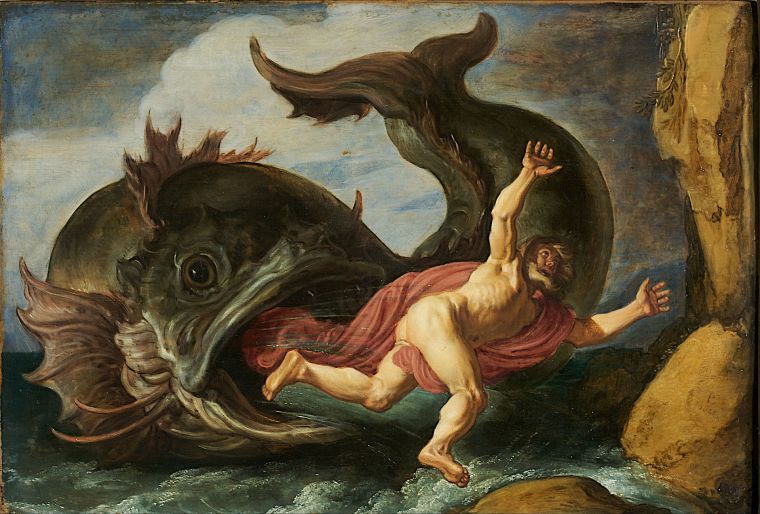
The story of Jonah is a fantastical story about a rebellious prophet who runs away from his calling, then tries to kill himself and gets swallowed by a giant fish who transports him back to where he started and barfs him up on the beach. Then he walks into a large city, preaches the worst sermon ever, and the whole city repents – much to Jonah’s dismay.

The key literary device used in the Book of Jonah is: satire, defined as: the exposure of human vice of folly through the use of humor and irony. In other words, the story of Jonah is intended to make you laugh…and then cry – as you realize that you are actually a lot like Jonah yourself.

Is Jonah an Allegory?

For these reasons, many people have questioned whether Jonah should be understood as an allegory instead of an historical account. As an allegory, Jonah represents Israel: a nation who has not shared the heart of God for lost people and has run away from their calling to be God’s light to the nations. The fish would represent Israel’s (at that present time: current) captivity, which would mean that the calling to go to Nineveh represents the implied proper behavior or response that Israel should have once their captivity is over.

Aside from the miraculous (fish) and fantastical (all of Nineveh repenting) nature of the story, another reason people have argued that Jonah is meant to be understood as an allegory or parable is because there is no historical record outside of the Bible that corroborates the repentance of Nineveh at the preaching of Jonah.

Why Most Bible Scholars Believe Jonah is a Historical Account

1. Jonah is a historical figure

2 Kings 14:25 speaks of a prophet named Jonah who lived in the 8th Century BC. This lines up with the timeline of the events of the Book of Jonah, and it would line up with the Assyrian Empire being powerful at this time.

2. The story presents itself as a historical narrative

The book is presented as a historical, not a fictional narrative. Specific historical and geographical details are characteristic of historical narratives and not of allegorical stories (e.g. the Good Samaritan or the Prodigal Son, allegorical stories which are given no historical or geographical anchoring). See: Jonah 1:1-3; 3:2-10; 4:11.

Furthermore, the story of Jonah has all the marks of a prophetic narrative, such as those about Elijah and Elisha in 1 Kings, which also set out to report actual historical events.

Therefore a simple reading of the text would lead us to believe that this is a historical narrative.

3. There is no strong evidence against it being historical

For those who would argue that the miraculous element of the story is not possible, that would lead to bigger questions about the ability of God and the nature of the world. This assumption, of course, would have implications for how one reads most of the Bible, not just the Book of Jonah. If, on the other hand, God is capable of doing miracles, this should not be considered a major issue.

The lack of historical account from Nineveh about Jonah’s coming and the subsequent repentance of the entire city is not considered strong evidence against Jonah’s historicity either, since 1) records were not kept in ancient society as they are now, and 2) whatever records did exist were regularly and intentionally destroyed by each successive ruling party or civiliazation. Historians would not consider the lack of corroborating historical accounts from Assyria to be evidence against the historicity of the Book of Jonah – whether they believe the story to be true or not.

The question of whether an entire city would repent is not really a problem either considering the communal nature of ancient and Eastern societies. A look at the history of the spread of different religions shows that entire nations have often converted after the command of their king or ruler. Such a response, therefore, would not be unprecedented or even unusual.

4. Jesus spoke of the story as having historical and future relevance

In Matthew 12:40-41, Jesus declared that “the men of Nineveh will rise up at the judgment with this generation and condemn it, for they repented at the preaching of Jonah.”

Conclusion

Therefore, my conclusion is with the majority of scholars who believe Jonah to be a historical account. Certainly we should acknowledge though, that it is not history for history’s sake, but that there is a particular didactic (teaching) intention in the way the story is told. May we learn from it!

For more on Jonah, check out this study I did at White Fields Community Church: Jonah: God’s Mission in the World

David Foster Wallace on Atheism and Worship

In 2008, at the time of his untimely death, the Los Angeles Times declared that David Foster Wallace was “one of the most influential writers of the last twenty years.”[1] He was an award-winning, bestselling postmodern novelist, who loved to push boundaries in his storytelling.

Although Wallace was an agnostic, he made some profound statements about atheism and worship in his now famous commencement speech, which he gave to the graduating class of Kenyon College in 2005.

Here’s what he said:

webdavidfosterwallaceYou get to choose what to worship. Because here’s something else that’s weird but true: in the day-to day trenches of adult life, there is actually no such thing as atheism. There is no such thing as not worshipping. Everybody worships. The only choice we get is what to worship.

And the compelling reason for maybe choosing some sort of god … to worship … is that pretty much anything else you worship will eat you alive.

If you worship money and things, if they are where you tap real meaning in life, then you will never have enough, never feel you have enough. It’s the truth. Worship your body and beauty and sexual allure and you will always feel ugly. And when time and age start showing, you will die a million deaths before they finally plant you.

Worship power, and you will end up feeling weak and afraid, and you will need ever more power over others to numb you to your own fear. Worship your intellect, being seen as smart, you will end up feeling stupid, a fraud, always on the verge of being found out.

Look, the insidious thing about these forms of worship is not that they are evil or sinful; it is that they’re unconscious. They are default settings. They are the kind of worship you just gradually slip into day after day … without ever being fully aware that that’s what you’re doing. [2]

Wallace, although not a Christian, understood and communicated a very profound and very biblical truth: everyone worships, but anything you worship other than God will “eat you alive.”

Romans 6:16 tells us that there is no such thing as not worshiping, and that anything we worship other than God will enslave us.

Rebecca Manley Pippert puts it this way:

“Whatever controls us in our lord. The person who seeks power is controlled by power. The person who seeks acceptance is controlled by it. We do not control ourselves. We are controlled by the lord of our lives. (Pippert, Out of the Saltshaker, p. 53)

Whether we call ourselves religious or not, all of us have a lord, a master, and we are all worshipers.

The only way to be free, is by having a lord and a master who will not crush you, but who will liberate you – and in Jesus we have exactly that: one who came not to crush us, but to liberate us from all that enslaves us and to fulfill our deepest longings.

Jesus answered her, “If you knew the gift of God, and who it is that is saying to you, ‘Give me a drink,’ you would have asked him, and he would have given you living water.”
“Everyone who drinks of this water will be thirsty again, but whoever drinks of the water that I will give him will never be thirsty again. The water that I will give him will become in him a spring of water welling up to eternal life.” (John 4:10,13)

What a tragedy it would be to know this truth and not come to the fountain of living water and drink in order to be liberated and fulfilled!

Here is a recording of Wallace’s speech. The part about worship begins at 17:50.

The Hijacked Mind (and How to Be Free)

I don’t usually feel much sympathy for cockroaches, but I recently found out about a strange parasite that attacks beetles, grasshoppers and cockroaches.

250px-spinochordodes_in_meconema

Spinochordodes tellinii (S.T.) is a parasitic worm. Once it enters its host, it lives quietly and peacefully inside of them as it develops and grows. Once the S.T. has grown into maturity, it hijacks the mind of its host and causes them to commit suicide by compelling them to find water and cast themselves into it and drown.

The S.T., which by this point has grown to be larger than the host when stretched out, emerges, leaving their host dead in the water, and swims away to find a mate and reproduce.

You can read more about it here: Parasites Brainwash Grasshoppers into Death Dive

The way this parasite functions is similar to the way that sin works in our lives.

We have been studying the Epistle to the Romans on Sunday Mornings at White Fields. (Click here to see those messages) This Sunday we will be looking at Romans chapter 6, which tells us that sin is not something we can merely dabble in, but that our sins actually enslave us.

The only way to be free, we are told, is paradoxically by becoming “slaves of God.”

The paradox of freedom is that freedom from God enslaves us, but serving God frees us.

This is why, when God told Pharaoh through Moses to let his people go, he didn’t merely say, “Let my people go,” (as Charlton Heston incorrectly portrayed), the message was always actually, “Let my people go that they may serve me.” (For more on this, check out: The Setting for Salvation, a study of Exodus chapter 1)

In other words: freedom from the slavery they were in was not found in just coming out of slavery and then doing whatever they wanted. Why? Because it only would have been a matter of time before they would have been captured and enslaved by someone else. The only way for them to experience true freedom was for them to serve a new master who could, and would, truly liberate them and cause them to thrive.

As Bob Dylan sang, “You’re gonna have to serve somebody. It may be the devil or it may be the Lord, but you’re gonna have to serve somebody.”

In Romans 6, we are told that we will either be slaves to sin or slaves to righteousness. The thing about sin is that it acts a lot like the Spinochordodes tellinii: it seems innocuous at first, but as it grows and matures, it will enslave you and ultimately destroy you.
The good news is: there is one who is greater than the greatest parasite: Jesus Christ, who took our sin and conquered the great enemy, so that we might be free. He sets us free from the great hijacker of our minds, hearts and souls.

Jesus told his disciples: “Greater love has no one than this, that someone lay down his life for his friends. You are my friends if you do what I command you. No longer do I call you servants, for the servant does not know what his master is doing; but I have called you friends, for all that I have heard from my Father I have made known to you.” (John 15:13-15)

And yet, the followers of Jesus would refer to themselves as “bondservants of Jesus.” A bondservant was a slave by choice; it was a slave who had been granted their freedom, and yet chose to serve their master, because of their love for their master and desire to remain with them. (See: Free to Be a Slave)

To be a Christian is to be set free from bondage to sin, and to become a bondservant of God, because of Jesus.

I appeal to you therefore, brothers, by the mercies of God, to present your bodies as a living sacrifice, holy and acceptable to God, which is your spiritual worship. Do not be conformed to this world, but be transformed by the renewal of your mind, that by testing you may discern what is the will of God, what is good and acceptable and perfect. (Romans 12:1-2)

Who’s Holding Whom?

Screen Shot 2018-07-06 at 1.26.01 PM

I have a two-year old daughter whom I love with my whole heart. At this age, she is learning and growing so fast, especially in her speech.

Lately, every day she looks up at me and says, “Can I hold you?”

That’s her way of asking me to pick her up. Last night I was holding her, and she asked me, “Can I hold mommy?”

When we pick her up, she holds on tight. I’m not sure if she’s just mixing up her words, and really means to say, “Can you hold me?”, or if she really thinks of it as her holding us when we pick her up. Certainly she is holding on, but at the end of the day, our grip on her is much stronger than her grip on us.

I can’t help but think of this in regard to a believer’s relationship with God.

We are told by the writer of Hebrews that we are to “hold fast” to the gospel (Hebrews 3:14, 4:14, 10:23). We should love Him, seek Him, and cling to Him.

But here’s the good news: if and when you fail to do so, if and when you feel weak, confused and exhausted to the point where you are struggling to hold onto Him – He will still be holding on to you.

My daughter thinks she is holding onto me. But the truth is: I’m holding onto her much more firmly than she’s holding onto me, and I’m much stronger than she is.

2 Timothy 2:13, most likely quoting from an early Christian creed or song, says: if we are faithless, he remains faithful—for he cannot deny himself.

At the church where I served my first few years in Hungary, the pastor would read this passage at the end of every service:

Now unto him who is able to keep you from falling, and to present you faultless before the presence of his glory with exceeding joy,
To the only wise God our Savior, be glory and majesty, dominion and power, both now and ever. Amen. (Jude 24-25)

Find security in knowing this today: If you are His child, then as much as you might be clinging to Him (and you should be), He is clinging to you much more tightly, and He is infinitely stronger!

Discipleship is a Direction

24-770x468

Recently I posted some things I had learned from a book I read called No Silver Bullets by Daniel Im. (Read that post here: “Inputs and Outputs for Growth and Maturity”)

Last week I was in California attending the CGN Pastors and Leaders Conference at Calvary Chapel in Costa Mesa, and Daniel Im was there speaking about some of the topics covered in his book.

By the way, recordings of the messages and panel discussions from the conference are available here. I thought the panel discussion on current issues in theology was particularly good.

One of the things Daniel wrote about in his book and talked about at the conference is the idea that discipleship is a direction, rather than a destination. While there is an ultimate destination to our discipleship: experiencing the glory of God in the fullness of His Kingdom forever, as long as we are here on this Earth, being a disciple of Jesus is about direction, not destination.

  • A destination is a place you can arrive at. Once you’re there, then you’ve arrived.
  • A direction implies active and sustained movement towards something.

What is the measure of maturity?

What is it that makes a Christian disciple “mature”?

Consider this: in the Bible, we read about many people who encountered Jesus, from ultra-religious pharisees to prostitutes, extortioners and even thieves.

If the measure of spiritual maturity is simply knowledge or religious observance, then it’s no question: the pharisees were more mature. They knew more about the Bible and their record of religious observance was spotless. The only problem was: the pharisees were far from God in their hearts. (Mark 7:6 – “These people honor me with their lips, but their heart is far from me).

On the other hand, you have people like Zacchaeus (Luke 19:1-10), an extortioner who hasn’t got everything in his life sorted out, but he’s changed directions and is moving towards Jesus even though he’s just now at the beginning of his journey.

Who is the greater disciple? The answer is: Zacchaeus, because he is moving towards Jesus, as opposed to the pharisee who isn’t.

The implications of viewing discipleship in this way

Viewing discipleship as direction rather than a destination has profound implications. It means that you don’t become a disciple by successfully learning a block of material or completing a discipleship workbook or 4-part class. Rather discipleship is an ongoing process.

Unlike justification, which is an outside, definitive, unchanging status that is bestowed on a believer by God, discipleship by definition implies sustained movement. So, if at one point in your life you were passionately seeking God and following Jesus, but are not currently doing so, your past discipleship doesn’t make up for your current posture. Knowledge, longevity nor familiarity equate to having “arrived” as a disciple, in other words. Discipleship is about direction.

A Case Study: the Cussing Christian

When I was pastoring in Hungary, we had a young woman come to our church. She had grown up in an atheist family and her father was a musician. She was a bohemian herself. At our church, she heard the gospel, and she received it – and immediately she began to grow and change. She was at every Bible study, taking copious notes, so hungry to know God and understand His Word and His will for her life. She was all-in, whole-heartedly following Jesus and asked to be baptized.

She also cussed like a sailor. My wife and I learned some new Hungarian words from her… You see, we were fluent in Hungarian, but being in church settings, there were certain “colorful” words, which we had never been exposed to. That all changed when this woman came around. Every Wednesday, after Bible study, there was a time for people to ask questions and then we would pray together. She would often have questions or comments, a praise report or a prayer request – and as she would speak, we’d hear her say some words which didn’t recognize, and then we’d watch as the others in the group grimaced from the words she chose to use. Quickly, we learned what those words meant.

Although we didn’t love the fact that she was using this language, we were happy to see the change in her heart and in her life and her obvious love for Jesus. This was how she had talked before she came to know the Lord, and we trusted that the Holy Spirit would do the work of sanctification, and as she followed Jesus, she would be transformed in every area, including this one.

One day a middle-aged woman from the church approached me. She was angry that we allowed this woman to come to our church and be baptized, considering that she used foul language. This middle-aged woman had been raised in a Christian home, but had a penchant for gossiping about others and slandering them. Unlike with the young woman, I had not witnessed any of the fruits of the spirit in this middle-aged woman’s life, but instead had distinctly seen judgmental and legalistic tendencies.

Which of these two women was the greater disciple? Clearly the older woman knew more about the Bible and had been a Christian longer, but if discipleship is a direction, then the answer is: the younger woman.

What direction are you moving in?

If discipleship is about active, sustained direction, what direction are you moving in? Have you perhaps stagnated?

The good news is, you can change direction. That’s what the word “repentance” means: to change direction.

That was, after all, the first message Jesus preached: “repent, for the Kingdom of Heaven is at hand.” Change directions, whatever you’ve been pursuing, running after – instead, change directions and follow me.

Making Sense of Different Bible Translations – Part 3: Gender-Inclusive Language and the NIV

niv_137392956

In this mini-series on Making Sense of Different Bible Translations, in Part 1 we looked first at translation theory in general and some basic guidelines for choosing a translation, and in Part 2 we looked at the King James Version specifically. Here in Part 3, we will be looking at the question of gender inclusive language and how it relates to the New International Version.

The “Nearly Inspired Version”?

During my undergraduate studies, I had to learn Koine Greek, the language of the New Testament, and our final project was to translate 1 John and then analyze other translations based on our reading and translation of the Greek text. For my analysis, I chose the NKJV, the NIV and the Message.

I had heard people joke that the NIV stood for “Nearly Inspired Version” or the “New Inferior Version,” so I was curious to see how it stood up under scrutiny. Much to my surprise, the NIV was much more literal and accurate than I had expected. The Message, however, does not qualify as a translation at all, in my opinion, but is rather a commentary – as in it, one person (Eugene Peterson) gives his interpretation of what he deems the text to mean, not what it says.

Side note: any translation that is made by one person should be suspect, especially when that person is pushing a particular agenda, as in the case of the Passion Translation.

A Case Study: Hebrews 11:6

Some of the main criticisms that are leveled at the NIV, are that it waters down the meaning of the text, and that it imposes gender inclusive language on the text. This week on Calvary Live, the call-in radio show that I host on Mondays, one caller pointed out Hebrews 11:6 as an example of this. Let’s take this as a case study to see if there’s any validity to it.

  • NIV: And without faith it is impossible to please God, because anyone who comes to him must believe that he exists and that he rewards those who earnestly seek him.
  • KJV: But without faith it is impossible to please him: for he that cometh to God must believe that he is, and that he is a rewarder of them that diligently seek him.
  • Greek: χωρὶς δὲ πίστεως ἀδύνατον εὐαρεστῆσαι, πιστεῦσαι γὰρ δεῖ τὸν προσερχόμενον τῷ θεῷ ὅτι ἔστιν καὶ τοῖς ἐκζητοῦσιν αὐτὸν μισθαποδότης γίνεται.

Here’s my hyper-literal translation of the Greek text:

Without but faith impossible to please (a direct object), believe (a direct object) because must he who comes to God that (object) exists and those who seek him [he] rewards.

So, which translation is more accurate? Both are good translations which convey not only what the words say, but what they mean.

Gender-Inclusive Language

As can be seen in the example above, the NIV tries to use gender-inclusive language when possible. The word προσερχόμενον – means “he who comes” and is in the male singular accusative case. Yet the NIV translates this with the gender-neutral “anyone who comes.”

The question is whether this accurately reflects the meaning of the text or whether it is imposing a modern bias towards gender inclusivity upon the text.

In academic writing today, gender-inclusive language is required whenever possible, including moving away from terms like “mankind” in favor of “humankind,” and “every man” to “everyone.”

In some cases, this is warranted and more accurately reflects the author’s intent. For example: Colossians 1:28 in the NASB says: “We proclaim Him, admonishing every man and teaching every man with all wisdom, so that we may present every man complete in Christ.”
Paul is clearly speaking about “every human being,” not only about males. So most modern translations translate it: “He is the one we proclaim, admonishing and teaching everyone with all wisdom, so that we may present everyone fully mature in Christ.”
In this case, gender-inclusive language more clearly communicates what Paul was saying.

Another example worth considering is Leviticus 24:15. NASB: “If anyone curses his God, then he will bear his sin,” versus the NIV: “Anyone who curses their God will be held responsible.”
In this case, it is not only gender-inclusive language, but a removal of the concept of “bearing one’s sins” being rephrased as “being held responsible.” While the latter may justifiably be called a “watering down” of the text, since the word “sin” is in the original text, the gender-inclusive language could be justified in the sense that this law did not only apply to men but to men and women.

The NIV does not go as far as some other translations when it comes to gender-inclusive language, like the Holman Christian Standard Bible which replaces the often-used “Brethren” with “Brothers and sisters.” Again, it could be argued that this is still appropriate in that it conveys the fact that the people being addressed are both men and women.

However, there are other examples of gender-inclusive language which do actually have theological implications, and therefore are inappropriate impositions on the text. Examples of this would be replacing the masculine “Father” with “Parent”, or “sons of God” with “children of God.” In the case of “sons” versus “children,” there were very specific differences in the way that sons specifically were treated in ancient society regarding rights and inheritance. Whether this was fair or not, that understanding is built into the use of the term “son” as opposed to children in general, and therefore has direct theological implications. The same is true of the masculine pronouns and terms used consistently throughout the Bible for God. To change these is actually to change the meaning of God’s revelation of Himself in the Scriptures.

To those who may feel that it is odd for a female to consider herself a “son of God,” it should be noted that men are similarly included in the feminine term “bride of Christ.” These terms paint pictures by making allusions and parallels to things which are diminished by disregarding the gender-specificity of “son” and “bride”.

There and Back Again

The NIV has dabbled in varying levels of gender-inclusive language, including a 1997 Inclusive Language Edition, which was only released in the UK, but quickly discontinued.  In the early 2000’s, the TNIV (Today’s New International Version) was released, which included changes such as “children of God” instead of “sons of God.” However, the TNIV was also discontinued, and the most recent update to the NIV (2011) actually reinstated some of the gender-specific language which had been removed in the TNIV, because of recognition of the theological importance of the gender-specifity of those terms.

Conclusion

While I don’t think the NIV is the best translation available, I don’t think it’s the worst either. As we have seen, some gender-inclusive language may be justified and warranted. The question is whether gender-inclusive language is being introduced because of cultural pressure or by a desire to accurately translate and convey the meaning of a text.

Even the best translation, however, won’t benefit you if you don’t read it. So, go do that!

Anthony Bourdain, Suicide & the Bible

anthony-bourdain-3

We woke up to the news that Anthony Bourdain of CNN’s Parts Unknown committed suicide at age 61. He was wealthy, successful, famous and got to travel the world doing what he loved – the kinds of things that many people aspire to, but may never get to experience. And yet, he chose to end his own life.

According to the Center for Disease Control and Prevention, since 1999, suicide rates have increased in nearly every US state, with 25 states having increases of more than 30 percent.

The most at-risk group for suicide according to their study is middle-aged white men.

Factors contributing to the suicide epidemic are:

  • Access to firearms.
  • Isolation, which contributes to mental health problems.  Read: Toxic Loneliness and How to Break Out
  • A sense of hopelessness and despair, resulting from:
    • family instability
    • lack of job prospects
  • Poor physical health

If you or someone you know is at risk of suicide, the National Suicide Prevention Lifeline can be contacted at: 1-800-273-8255.

In the Bible we read about several heroes of the faith who struggled with what seem to have been depression and suicidal thoughts:

Many heroes of the faith, expressed that they reached such a point of despair that they wanted to die:

  • Moses had a death wish (see Numbers 11:13-15)
  • Job sought death as a comfort, a way to end his suffering
  • David had times when he wanted to die
  • Jonah sought his own death first to atone for his own sins and then because of frustration with his circumstances

Another notable example is the prophet Elijah. In 1 Kings 19:4, we read:

“[Elijah] sat down under a solitary broom tree and prayed that he might die. “I have had enough, Lord,” he said. “Take my life, for I am no better than my ancestors who have already died.”

Here’s what’s surprising: right before this, Elijah had experienced unprecedented success in his ministry. Only a few hours before this:

  • Elijah prayed for rain, and it came, ending a 7-year drought.
  • Elijah had singlehandedly won a showdown against some 850 pagan priests, when God sent fire from heaven in response to Elijah’s prayers.
  • As a result of these things, many people in Israel had turned back to God – which was the goal of Elijah’s ministry.

And yet, like with so many people: in spite of experiencing great success, Elijah was depressed and wanted to die.

Isolation

“Then he went on alone into the wilderness, traveling all day. He sat down under a solitary broom tree” – 1 Kings 19:4

Despite having a huge crowd of supporters after the showdown on Mount Carmel, Elijah chose to isolate and cut himself off from the community.

Isolation is a common practice of people who are struggling with depression, but it is one of the worst things a person can do. Statistics show that isolation causes and exasperates mental health issues.

Physical Exhaustion

Even though it was a successful day, it was a long and exhausting day. I have found that the times when I am particularly worn out, I tend to be more susceptible to negative thoughts and feelings which are not from God.

Notice what happens next: Elijah gets some rest. He goes to sleep. While he’s asleep, God sends an angel to cook him a meal. The angel wakes Elijah up, feeds him, gives him something to drink – and then sends him back to bed to sleep some more! Then, the angel wakes him up again, feeds him another meal, and then sends him on his way to continue his ministry.

In other words: Elijah’s depression, while certainly a spiritual attack, was related to and exasperated by his physical exhaustion. Rather than giving him a lecture, God sent him a companion, some good meals and some well-needed rest.

Rather than giving him a lecture, God sent Elijah a companion, some good meals and some well-needed rest.

As noted above, the CDC mentions poor physical health as a contributing factor to the suicide epidemic. Taking care of your body is important for your mental health, and the Bible encourages us to see that.

Hope

Finally, this messenger from God tells Elijah to rise up and go on his way – and Elijah does. Rather than stay down, alone, sleeping under this tree in the wilderness – God reminds Elijah that He has a purpose and calling upon his life, and Elijah responds by getting up and moving forward into that calling.

The gospel gives us more hope, affirmation and purpose than anything else ever can. It give us hope because of the promise of redemption. It gives you a community; not only community with God, but to become a Christian is to be brought into the “People of God.”

The gospel gives us affirmation and purpose; Jesus gave his life for you, which means that even though God knowns everything about you, He still wants you. He still loves you and He still has a purpose for your life.

God’s purpose for your life goes beyond living for yourself; it is to use you in His mission: for His glory and for the good of people in the world. It is in giving your life for that mission that you will find true life. For more on this, check out: Mission and Mental Health

Let’s do what we can to recognize the signs and help people who are struggling before it’s too late.