You Never Outgrow the Gospel

asphalt dark dawn endless

Martyn Lloyd-Jones tells the story of how the church he grew up in began with a great revival, but slowly died over time. When he inquired about what had led to this decline, an older man attributed it to the fact that when the revival had taken place, the gospel was being heralded regularly and powerfully, but over time it became assumed that such gospel proclamation was no longer necessary, since those who attended the church were already Christians.

Lloyd-Jones determined that he would always preach the gospel, no matter who he was preaching to. Not only did he consider it a “fatal assumption” to think that just because someone attends church, they must be a Christian, he also believed that Christians never outgrow the need to hear the gospel. [1]

The gospel is not good advice about what you ought to do for God, it’s the good news about what God has done for you in Christ. Paul says that the gospel is “the power of God for salvation to all who believe” (Romans 1:16). Paul told the Ephesians that it was when they heard the gospel of their salvation and believed in Jesus that they were saved (Ephesians 1:13)

Clearly those who do not yet believe need to hear the gospel, so they can know who Jesus is and what he has done for them, so that they can believe and be saved. What about those who already believe; what do they need? Biblical instruction? Absolutely. But do you know what else believers need in order to grow in their faith and relationship with God? They need to hear the gospel.

The Gospel is Not Just the Starting Point of Christianity, It is the Beating Heart of Christianity

In his letter to the Galatians, Paul wrote to a group of Christians who, even though they were committed followers of Jesus, they were still trying to be justified before God by their own works. Paul wrote to these believers to remind them of the gospel and instruct them about the gospel: what Jesus had accomplished for them, and what it meant for their lives.

Are you so foolish? Having begun by the Spirit, are you now being perfected by the flesh? (Galatians 3:3)

Even though they were already believers, they still needed to be hear the gospel.

An Apostolic Pattern

This is not unique to Paul’s letter to the Galatians; it is a pattern that is seen throughout the apostolic letters in the New Testament. When the apostles wrote to the early Christians, they did not merely tell them how they ought to live now that they were followers of Jesus, rather they reminded them of the gospel, and encouraged them to respond to the gospel in every area of their lives.

The apostles’ pattern was to remind believers of the gospel, as the motivation and the pattern for the Christian life.

What this means is that you never outgrow the gospel. No matter how long someone has been a Christian, they will never get to the place where they no longer need to hear the gospel.

It means that the gospel is not just the means by which people become Christians, it is also the means by which we grow as Christians, as we believe, embrace and apply the gospel to every area of our lives.

When Paul instructed the Ephesians about marriage, he didn’t tell husbands and wives to love and respect each other because it is “the right thing to do,” rather he instructed them about marriage on the basis of the gospel (Ephesians 5:22-33)

When Paul wrote the Corinthians about generosity, he didn’t tell them that this is what they have to do because they are Christians, rather he appealed to them on the basis of the gospel, saying, “For you know the grace of our Lord Jesus Christ, that though he was rich, yet for your sake he became poor, so that you by his poverty might become rich.” (2 Corinthians 8:9)

This is motivation on the basis of the gospel of God’s grace. Whereas laws can control behavior, they do not affect the heart. Conversely, when the heart is changed by the love and grace of God, actions will follow.

The apostolic pattern in the New Testament is to preach the gospel both to unbelievers and believers, and to show how the gospel speaks to every area of life. May we be those who follow this pattern by applying the gospel to all of life, and faithfully proclaiming it whenever we teach or preach, no matter who our audience.

Sri Lanka & the Hope of the Resurrection

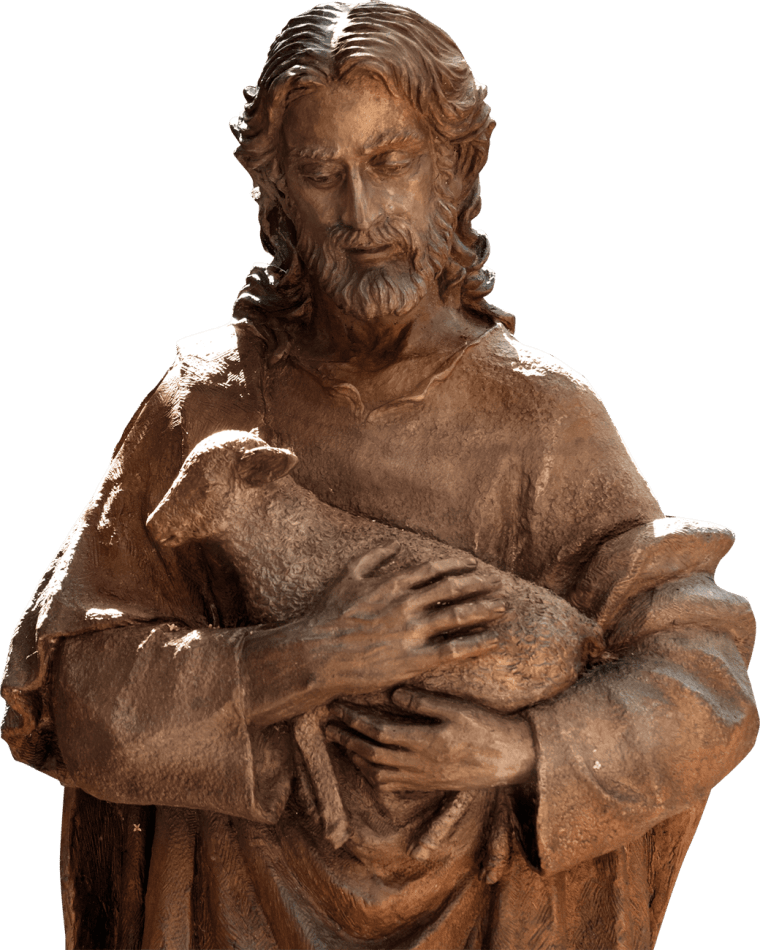
Image result for sri lanka jesus statue covered in blood
Church in Negombo, Sri Lanka after the attack on Easter Sunday

Jesus said, “I am the resurrection and the life. Whoever believes in me, though he die, yet shall he live.” (John 11:25)

Yesterday, as people around the world gathered to celebrate the resurrection of Jesus, terrorists attacked three churches in Sri Lanka, killing nearly 300 and injuring over 500. [source]

The irony of the situation is profound: The goal of terrorism is to incite fear by taking lives, but they carried out their attacks on the day when Christians revel in the fact that we can live without fear because of the hope that we have in eternal life.

What Jesus’ resurrection means for Christians, is that not only did Jesus die to forgive our sins, but he rose from the grave to conquer over death forever, so that we can have eternal life.

1 Corinthians 15 tells us that Jesus is the “first fruits” of those who are going to be resurrected to eternal life, and because that is true, death has lost its sting! Death will not have the final word.

As a result of this great truth, we who have this hope of eternal lives are free to live without fear. We are free to be courageous and generous, because we have nothing to lose – and the greatest gain is already ours!

Paul the Apostle put it this way: “If the dead are not raised, then we should just eat and drink for tomorrow we die.” (1 Corinthians 15:32) The idea is that, if this life is all we’ve got, then it would make sense for us to be selfish and short-sighted with the time we’ve got, since this is all we have. However, if Jesus did indeed rise from the dead, and we will too – then “to live is Christ, and to die is gain!” (Philippians 1:21)

If you have the hope of eternal life, then this life isn’t as good as it will ever get for you, rather, this life is as bad as it will ever be for you. If you know that you’ve got a thousand, million, billion years ahead of you, in which you will experience joy, security, adventure and love, then you are truly free to use the little window of time you’ve got here on Earth in the service of others, and in the service of God.

If you have the hope of eternal life, you are free to love sacrificially, and to give without holding back!

In other words: Jesus’ resurrection makes us brave, because it gives us hope.

Jesus’ disciples who saw him after his resurrection were so transformed by it, that they went from being timid and fearful to being bold, to the point where they came out of hiding and publicly proclaimed their faith, unwaveringly – even in the face of violence towards them and their families. As Paul says in Acts 13:31, they became “witnesses to the people”; rather than fearing for their lives, they boldly carried out a mission.

Our hearts break, and our prayers go out for those who are suffering from injuries, as well as for the families who were affected by this horrible act of violence. Our hearts ache as we look around and see the brokenness in the world, manifesting itself in hatred and violence. But as Christians, we must refuse to live in fear.

Instead, we set our hearts and minds all the more on the fact that we are pilgrims in this world, and our purpose here is not comfort or security. The time for comfort and security will come – fully and forever! But our time here on Earth is to be dedicated to courageously doing the will of God and carrying out His mission in the world, to bring to others the love of God and the good news of Jesus: the light of the world, who conquered death, and through whom we can have eternal life.

Are Easter Eggs and the Easter Bunny Pagan in Origin?

In this latest installment of the Longmont Pastor Video Blog, Mike and I discuss the origin of Easter Eggs and the Easter Bunny.

Many Christians are under the impression that Easter eggs and the Easter bunny – and even the word Easter itself are pagan in origin. Is that true? Where do these practices come from, and is it bad for Christians to participate in them?

We answer these questions in this video:

For more on this topic, check out: Does Easter Come From Ishtar?

Augustine & Disordered Loves

man holding sheep statuette

At age 19, Augustine Aurelius – later to be known as Augustine of Hippo – read a dialogue by the Roman philosopher Cicero in which Cicero stated that every person sets out to be happy, but the majority are thoroughly wretched. Truly, no one dreams as a child of one day growing up to be miserable, and yet many people’s lives are characterized by conflict, frustration and unfulfilled longings.

Augustine set out to discover why it is that most people are so discontent in life. His conclusion was that for most of us, our lives are “out of order”; we have disordered loves.

Augustine was convinced that what defines a person more than anything is what they love. He said that when we ask if someone is a “good” person, what we are asking is not what they believe or what they hope for, but rather what they love. He stated that what we consider human virtues, e.g. courage, honesty, etc. are essentially forms of love. Courage is loving your neighbor’s well-being more than your own safety. Honesty is loving someone enough to tell them the truth even if it may put you at a disadvantage. [1]

Sin, Augustine said, is ultimately a lack of love, either for God or for your neighbor. He famously stated that “The essence of sin is disordered love.”

Disordered loves means that we often love less-important things more, and more-important things less than we ought to, and this wrong prioritization leads to unhappiness and disorder in our lives.

This is essentially what James says in his epistle:

What causes quarrels and what causes fights among you? Is it not this, that your passions are at war within you? You desire and do not have, so you murder. You covet and cannot obtain, so you fight and quarrel. You do not have, because you do not ask. You ask and do not receive, because you ask wrongly, to spend it on your passions. (James 4:1-3)

James is saying that what makes people miserable is not their circumstances, but that they are chasing after the wrong things, for the wrong reasons. The things they love are out of order.

Many times we view people as a means to an end, using them rather than loving them. Oftentimes we seek God primarily because we find him useful, rather than seeking him because we find him beautiful. We relate to him as useful to us, to help us achieve our selfish goals, rather than seeking his agenda for our lives.

The problem, James tells us, is actually even bigger than we might have thought… because not only does this kind of disordered love lead to misery, it actually pits us at odds with God.

Therefore it says, “God opposes the proud but gives grace to the humble.” (James 4:6)

Thankfully, James doesn’t just show us the problem, he also points us to the solution. If we proudly seek our own agenda, we will find ourselves in opposition with God. However, if we humble ourselves before God, we will receive grace.

James goes on to tell us that if you humble yourself before the Lord, he will exalt you. (James 4:10)

The way out of misery and into joy begins with humbling ourselves before God and submitting our lives – and our loves – to him.

Martyn Lloyd-Jones on the Benefits of Studying Church History

adult blur books close up

In his book, Preaching and Preachers, Martyn Lloyd-Jones discusses the following benefits of studying church history:

Church History Guards Us Against Error

Most of the theological discussions that people have today, as well as most heresies that exist today, were already discussed, debated and settled within the first 500 years of Christian history. For example, Jehovah’s Witnesses are basically neo-arians, and their view of Jesus is the same one which led to the Council of Nicaea and the Nicene Creed. The modern heresies of today are really just rebranding and recycling older ideas which the church has already spent a lot of time addressing.

For more on Arius and Arianism, check out: Was It Necessary for Our Salvation that Jesus be God? 

Lloyd-Jones says this:

The way to safeguard yourself…is to learn something about heresies—how they arose in the past generally through very good and conscientious men. History shows how subtle it all is, and how many a man lacking balance, or by failing to maintain the proportion of faith, and the interrelationship of the various parts of the whole message, has been pressed by the devil to put too much emphasis on one particular aspect, and eventually pressed so far as to be in a position in which he is really contradicting the Truth and has become a heretic. So Church history is invaluable… It is not the preserve of the academics. I would say that Church history is one of the most essential studies for the [believer] were it merely to show him this terrible danger of slipping into heresy, or into error, without realising that anything has happened to him.

Lloyd-Jones, D. Martyn. Preaching and Preachers (pp. 128-129).

Church History is a Source of Encouragement

Some people think about studying church history as being kind of like a visit to a sausage factory: the finished product might be great, but the way it was made wasn’t pretty. On the contrary, I would say that church history should cause us to be filled with wonder and amazement that in spite of human folly, errors, and mistakes, God has providentially guided and protected His Bride, because He loves her and is devoted to her.

Lloyd-Jones says this:

I know of nothing, in my own experience, that has been more exhilarating and helpful, and that has acted more frequently as a tonic to me, than the history of Revivals.

Take the time we are living in. What discouraging days they are, so discouraging that even a man with an open Bible which he believes, and with the Spirit in him, may at times be discouraged and cast down almost to the depths of despair. There is no better tonic in such a condition than to familiarise yourselves with previous eras in the history of the Church which have been similar, and how God has dealt with them.

The French novelist Anatole France used to say, whenever he felt tired and jaded with a tendency to be depressed and downcast, ‘I never go into the country for a change of air and a holiday, I always go instead into the eighteenth century.’ I have often said exactly the same thing, but not in the same sense in which he meant it, of course. When I get discouraged and over-tired and weary I also invariably go to the eighteenth century. I have never found George Whitefield to fail me. Go to the eighteenth century! In other words read the stories of the great tides and movements of the Spirit experienced in that century. It is the most exhilarating experience, the finest tonic you will ever know.

For a preacher it is absolutely invaluable; there is nothing to compare with it. The more he learns in this way about the history of the Church the better preacher he will be. At the same time let him, of course, during this training become familiar with the stories of the great men of the past, the great saints and preachers. It will not only act as a wonderful tonic to him in times of depression, it will keep him humble when tempted to pride and a spirit of elation.

Lloyd-Jones, D. Martyn. Preaching and Preachers (p. 129).

Where to Begin?

There are a lot of really great books on church history. If you know a good one, please feel free to post it in the comments section.

I think a great place to start, with a book that is accessible, substantial, and enjoyable to read, is From Jerusalem to Irian Jaya by Ruth Tucker.

Also check out this great free online lecture series on church history from David Guzik at Enduring Word.

Another great resource is Christian Theology: An Introduction by Alister McGrath, which doesn’t sound like a church history book by the title, but approaches theology by looking at it through the development of Christian beliefs over the course of history.

We also offer a class at White Fields on church history. Check out our School of Ministry page, and if you’re interested in the class, shoot us an email at the address listed on that page, and we’ll keep you posted on when we will be hosting that class again.

Why Should Christians Visit Israel?

I have been in Israel for the past week with a group from White Fields and Calvary Chapel Brighton.

IMG_0823.jpeg

We spent the beginning of our trip on the coast, visiting Joppa and Caesarea, both important sites in the Book of Acts, and then headed up to the region of Galilee, where Jesus did the majority of his ministry. Then we drove to Jerusalem, following the Jordan River, and passing places such as Gilgal (see Joshua 4) and the site of Jesus’ baptism and the wilderness where he was tempted directly afterwards.

After seeing some important places in Jerusalem, including the Mount of Olives, the Garden of Gethsemane, the southern steps of the Temple and the Western Wall, we spent a day at the Dead Sea, visiting the place where Jesus was baptized in the Jordan River, seeing En Gedi where David hid from Saul in 1 Samuel 24, and going to Qumran where the Dead Sea scrolls were found and where John the Baptist was likely connected.

IMG_1177.jpeg
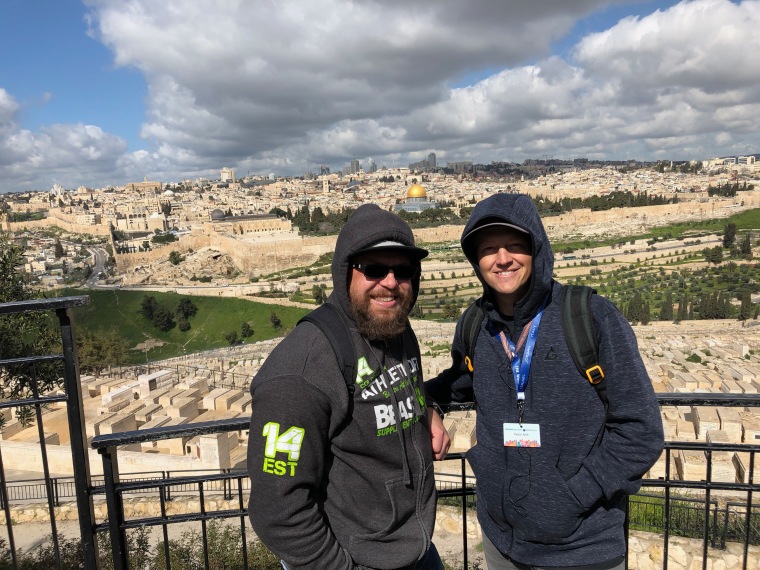
Jerusalem from the Mount of Olives, looking over the Kidron Valley

We will conclude the trip by visiting the Pool of Bethesda (John 5), following the way of the cross to Golgotha and seeing the garden tomb.

The trip has been incredible. I have particularly enjoyed getting the lay of the land and realizing the distances between places, and what they look like. Praying in the Garden of Gethsemane and standing where the church was born on Pentecost have been incredible experiences.

Why Should Christians Visit Israel?

Someone jokingly suggested that the benefit of visiting Jerusalem is that you can get the “before and after effect”: when the New Jerusalem comes (see Revelation 21), you will be able to compare it with the Old Jerusalem and see how much it’s improved! (Personally, I hope they clean up the Muslim Quarter a little bit…)

Interestingly, there is a neighborhood in Jerusalem called “New Jerusalem”. I went there, and it was nice, but not “streets of gold” nice. I’m looking forward to the real thing 🙂

All joking aside, there is one key reason why it is beneficial for Christians to visit Israel: Because, out of all world religions, what makes Christianity unique is that our faith is not based on abstract concepts, but on historical events which either happened or they didn’t.

What you learn from a tour of Israel, is that the New Testament accounts stand up to scrutiny. The New Testament talks about real places and real people and real events which had many witnesses, and which have been verified by archaeologists and historians. As Paul the Apostle said: “These things were not done in a corner!” (Acts 26:26)

In fact, because archaeology is a relatively young science, archaeologists are uncovering new findings all the time, and their findings corroborate rather than contradict New Testament accounts.

A visit to Israel is helpful for Christians, because it builds your faith in the historical events upon which Christian faith is based. This has been my first trip to Israel, but I expect it won’t be my last.

IMG_1205.jpeg
Olive Trees in the Garden of Gethsemane. Some are over 2000 years old. #eyewitnesses

New Zealand, Nigeria & New York: Religious Violence, Refugees & Reporting

This past Friday, the world was rightly horrified by an attack on muslim worshipers in Christchurch, New Zealand by an anti-Muslim white supremacist.

In another part of the world, 280 Nigerian Christians have been killed in the past two months by Fulani militants and Boko Haram terrorists. Nigeria has now been declared to be the most dangerous country in the world to be a Christian.

Why Such Little Reporting on Nigeria?

The instances in New Zealand and Nigeria are both examples of violence and hatred directed towards people based on their religion, yet the attacks in New Zealand have gotten much more press coverage than those in Nigeria, the latter of which has prompted questions from British MP Kate Hoey as to why there is so little coverage of these events in the media.

Why such unbalanced reporting?

Is it because the one took place in a developed Western country, whereas the other is taking place in a developing country in Africa? Is it because the one was a one-time incident, whereas the other is an ongoing campaign of terror?

If so, what does the lack of media attention communicate? Hopefully not that the lives of those in the developing world matter less than the lives of those in developed countries. Hopefully not that ongoing violence is less worthy of our attention and outrage than isolated events.

Nigerian Refugees in the News

I was encouraged today when I came across this article from the New York Times, highlighting an 8 year old Nigerian refugee in New York City.

As the article details, Tanitoluwa Adewumi lives in a homeless shelter with his family. The article mentions that Tani’s family is from northern Nigeria, and that they fled their homes because of Boko Haram terrorists who are targeting Christians such as themselves in their homeland. In New York, they were helped by a local pastor to get temporary housing in the shelter, as they wait for their asylum case to be processed.

As Tani began attending public school in NYC, he was introduced to chess, and over the past year, he has become a chess prodigy, winning his age group, and impressing coaches. “He went undefeated at the state tournament last weekend, outwitting children from elite private schools with private chess tutors.”

A GoFundMe account set up for those who want to help Tani and his family: https://www.gofundme.com/just-tani

Created in the Image of God

One of the fundamental teachings of the Bible about humanity is that we, uniquely out of all created things, are created in the image of God. As a result, we believe that all humans have dignity and are equal in value, no matter their race, gender, socio-economic situation, or physical ability or disability.

There is an ongoing situation in Nigeria right now which deserves the world’s attention. Good on the New York Times for talking about it. More is needed.

My Recent Poll: Here’s What I’ve Learned So Far

chart close up data desk

A few weeks ago, I posted an anonymous poll here on the site, in which I asked the question: How would you, or others you know, finish this sentence: “I could never believe in a God who ________”?  (click here for that post)

If you haven’t filled out that poll yet, you can access it here.

I got a good number of answers, but the bigger the sample size, the better for this sort of thing, so I would love it if you would go over and fill out the poll and send it to others who wouldn’t mind giving their voice.

This poll was done in preparation for a sermon series we will do at White Fields starting April 28, the week after Easter.

Here’s what the poll results have shown so far:

Theodicy is the biggest issue for those who took our poll

The top two responses were: “I could never believe in a God who:”

  • Sends people to Hell
  • Allows bad things to happen to good people

There were several write in answers which were related to these two, such as: “I could never believe in a God who:”

  • Can heal, but doesn’t heal all
  • Allows good people to die, but lets awful people live
  • Allowed the Sandy Hook massacre
  • Allows miscarriages
  • Chooses some and not others

These issues all fall under the category of Theodicy, which essentially means “the defence of God’s goodness”

The Trilemma of Theodicy

Very famous in this regard is what is called the trilemma of theodicy. A trilemma is like a dilemma, only instead of two issues (di) that are at odds with each other, in a trilemma there are three (tri).

The trilemma of theodicy states that there are three things the Bible states are true about God, which cannot all be true at the same time:

  1. God is loving
  2. God is all-powerful
  3. Evil exists

The argument goes that since evil exists, either: God must not really be loving, or God must not really be all-powerful. Either God is incapable of stopping evil, even though he’d like to – in which case he is not all-powerful, or God is capable of stopping evil, but chooses not to, in which case he must not be truly loving.

The logical flaw in the trilemma

The big flaw in this thinking is that it takes into account only two of God’s attributes: his love and his power.

But does God have only two attributes? Certainly not! God has a myriad of attributes, including that he is: all-knowing, providential, eternal, etc. Simply adding another attribute of God to the equation changes it fundamentally, and removes the “lemma” out of the tri-lemma!

For example, if we say that God is not only loving and all-powerful, but also all-knowing and/or providential, it changes things completely. It means that it is possible for God to allow bad things and use them for good purposes, and even for our ultimate benefit. The fact that God is eternal reminds us that comfort in this life is not the pinnacle of existence, therefore it is also possible for an eternal God to allow temporal hardship in order to work an eternal good purpose. The Bible says this explicitly in 2 Corinthians 4:17 – For this light momentary affliction is preparing for us an eternal weight of glory beyond all comparison.

An Unloving God Who Creates Unloving Followers?

Following closely behind in popularity were: “I could never believe in a God who:”

  • Doesn’t affirm some people’s sexuality
  • Creates hateful and hypocritical followers

Surprising Lesser-Issues

To my surprise, the questions which seem to not be major issues in people’s minds are were:

  • The reliability of the Bible
  • Proof of the existence of God

I wonder if this is the result of much effort put into these areas by Christian apologists, including CS Lewis with Mere Christianity and Timothy Keller with The Reason for God, or if, on the other hand, Christians are putting a lot of effort into questions which people don’t currently perceive to be pressing questions which cause them to be skeptical of Christianity. Either way, these issues are certainly fundamental to Christian faith and belief, and speaking into them can hardly be said to be in vain.

Other lesser-issues, which I expected would receive more responses were:

  • Apparent genocides in the Old Testament
  • Suppression and subjugation of women and minorities

I wonder if the reason for this is because there are very well-known evidences that Christianity and the Bible have done more to encourage the uplifting of women and minorities around the world, evidenced by the fact that wherever Christianity has gone in the world, women and minorities have been empowered and there has been movement towards equal rights, equal pay, etc. Surely there is room for improvement in these areas, but the point is that the Bible provides the theology which empowers women and promotes equality for people of all races. How it is implemented is a human issue.

More to Come

I will write more on some of these issues in the weeks to come, and will address them in the upcoming sermon series.

If you haven’t filled out the poll yet, I’d love it if you would: click here to access it.

Poll: “I Could Never Believe in a God Who…”

Starting April 28, the Sunday after Easter, we will be doing a series at White Fields called “I Could Never Believe in a God Who…”, in which we will be addressing some of the common struggles and objections that people have about God, the Bible, and Christianity.

You can help me by taking a second to fill out this quick anonymous poll to let me know what are some of the biggest hurdles to faith that you have experienced yourself or encountered in other people. Thanks!

Please also share this with others; I’d like to get as many responses as possible to get a clear picture of the things people are really struggling with.

(email subscribers can click here to access the poll)

Did People Go to Heaven Before Jesus’ Death & Resurrection?

Nick Cady Podcast

A reader recently sent in this question:

In John 3:13, Jesus says“No one has ever gone into heaven except the one who came from heaven-the Son of Man,”

  • Is this saying that people didn’t go to Heaven before Jesus’ death and resurrection?
  • Where had everyone who died gone before Jesus died and rose?
  • Did this change after his death and resurrection?
  • What verses can you share with me about this?

Let me answer each of those questions in order:

Is this saying that people didn’t go to Heaven before Jesus’ death and resurrection?

Yes, I believe so.

Where had everyone who died gone before Jesus died and rose?

The Old Testament talks a lot about “Sheol” which is the dwelling place of the dead. Psalm 139:7-8, for example, says: “Where shall I go from your Spirit? Or where shall I flee from your presence? If I ascend to heaven, you are there! If I make my bed in Sheol, you are there!”

Is this saying that God is present in Hell? No. It’s saying He is present in Sheol. 

It would seem (I’ll give Scriptural justification for this below) that Sheol was divided into two sections: Abraham’s Bosom and Hades.

Abraham’s Bosom was a place of comfort for those who died in faith. Since they had not yet been redeemed through the death and resurrection of Jesus, they could not go to Heaven, so this was a sort of holding place, or waiting room for the souls of the Old Testament believers who died in faith, trusting not in their own works or performance to garner them favor before God, but casting themselves on God’s mercy and grace to save them through the Messiah who was to come.

Hades, on the other hand, was a place of torment for those who died apart from awareness of their shortcomings and apart from faith and trust in God’s mercy and grace. Hades, like Abraham’s Bosom, was/is a holding place or waiting room for the souls of those who have died apart from faith, and though those in Hades suffer torment presently, one day Hades will be emptied into the Lake of Fire, meaning that Hades is not the final destination for those who have died apart from faith.

Did this change after Jesus’ death and resurrection?

It seems that in the time between Jesus’ death and resurrection, Jesus descended into Sheol and released those from Abraham’s Bosom and led them to Heaven. Those who die now in faith in Jesus go to Heaven, i.e. the presence of God.

Hades, on the other hand, remains in tact, and those who die apart from faith still go there.

What verses can you share with me about this?

Luke 16:19-31: The Rich Man and Lazarus

Luke 16:19-31 gives us insight to this through the story of the rich man and Lazarus: Lazarus, a poor man who died in faith, is taken to Abraham’s bosom, whereas the rich man who died apart from faith is taken to Hades. Between the two parts of Sheol, the story tells us, is an uncrossable chasm, and there is no escape.

The rich man desperately wants someone to go and speak to his family members, and plead with them lest they end up in Hades as well, but the man is told that his family members have been given Moses and the Prophets (i.e. the Scriptures), and they should listen to them.

Ephesians 4:8-10: He Led Captives in His Train

In Ephesians 4:8-10 we read this: Therefore it says, “When he ascended on high he led a host of captives (in his train), and he gave gifts to men.” (In saying, “He ascended,” what does it mean but that he had also descended into the lower regions, the earth? He who descended is the one who also ascended far above all the heavens, that he might fill all things.)

The Apostles Creed, one of the oldest Christian creeds, includes this phrase:

He suffered under Pontius Pilate,
was crucified, died, and was buried;
he descended to hell.
The third day he rose again from the dead.

Going back to Jesus’ apostles, who spoke with him after his resurrection, there seems to have been an understanding that Jesus descended into Sheol, and did two things:

  1. Released those “captives” from Abraham’s Bosom and led them to the immediate presence of God (Heaven). (Ephesians 4:8)
  2. Preached to the spirits in prison (1 Peter 3:19-20)

The latter of these was not evangelism, but a pronouncement of judgment upon those spirits in Hades. We know this because of the qualifying text in 1 Peter 3:20.

“Today you will be with me in Paradise”

2 Corinthians 5:8Luke 23:43  & Philippians 1:23 tell us that when a believer dies today, they are taken to the direct presence of God, AKA “paradise”.

Hades will be cast into the Lake of Fire

Revelation 20:11-15 describes how, after the judgement of the living and the dead at the end of all things, Hades will be cast into the Lake of Fire.

And the sea gave up the dead who were in it, Death and Hades gave up the dead who were in them, and they were judged, each one of them, according to what they had done. Then Death and Hades were thrown into the lake of fire. This is the second death, the lake of fire. And if anyone’s name was not found written in the book of life, he was thrown into the lake of fire.  (Revelation 20:13-15)

A New Heavens and a New Earth

Heaven, as it is now experienced, is different than what will be after the final judgment, where Revelation 21 tells us that there will be a new heavens and a new Earth, for the first heaven and the first Earth will have passed away, and will be no more. (Revelation 21:1)

Jesus said in Matthew 24:35 that Heaven and Earth will pass away, but his words never will.

2 Peter 3:7 says, But by the same word the heavens and earth that now exist are stored up for fire, being kept until the day of judgment and destruction of the ungodly. 

And 2 Peter 3:10 says, But the day of the Lord will come like a thief, and then the heavens will pass away with a roar, and the heavenly bodies will be burned up and dissolved, and the earth and the works that are done on it will be exposed.

Thus, after the final judgment, there will be a new heavens and a new Earth, which will be not only the restoration of Eden, but the fulfillment of what Eden would have been had sin not entered in.

In the New Jerusalem, once again, we see humankind together with God, with no sin nor shame, nor any of the destructive effects of sin (i.e. sickness, pain), and that the Tree of Life is there. Whereas Eden was a garden, the New Jerusalem will be a garden city.

Submit Your Questions!

Thanks for these great questions! Keep studying the Word, and feel free to send more questions to me by filling out this form.