Matt shares about his ministry journey, why Tim Keller’s legacy is still so valuable for the church today, and what he discovered while sifting through Keller’s sermons, books, and endnotes. They discuss Keller’s approach to contextualization, evangelism, friendship, and what it means to taste and see that the Lord is good.
Whether you’re a long-time fan of Keller’s work or just curious about his influence, this conversation will deepen your appreciation for how the gospel changes everything.
Show Notes:
Matt’s background in missions and church planting
Responding to recent critiques of Keller’s ministry
How Keller’s focus on gospel clarity shaped his preaching
What surprised Matt most in Keller’s work
Lessons for pastors, leaders, and everyday believers
In this episode host Nick Cady talks with Matt Smethurst about his new book Tim Keller on the Christian Life. Matt shares about his ministry journey, why Tim Keller’s legacy is still so valuable for the church today, and what he discovered while sifting through Keller’s sermons, books, and endnotes. They discuss Keller’s approach to contextualization, evangelism, friendship, and what it means to taste and see that the Lord is good. Whether you’re a long-time fan of Keller’s work or just curious about his influence, this conversation will deepen your appreciation for how the gospel changes everything.Show Notes:Matt’s background in missions and church plantingResponding to recent critiques of Keller’s ministryHow Keller’s focus on gospel clarity shaped his preachingWhat surprised Matt most in Keller’s workLessons for pastors, leaders, and everyday believers📚 Check out Matt’s books:Tim Keller on the Christian LifeBefore You Open Your BibleBefore You Share Your FaithDeacons: How They Serve and Strengthen the ChurchVisit theologyforthepeople.com for articles and more content.
I have recently started posting more on the Theology for the People YouTube channel. You can watch this interview on video here:
I thought this might be of interest to my readers, so check it out and feel free to share thoughts in the comments.
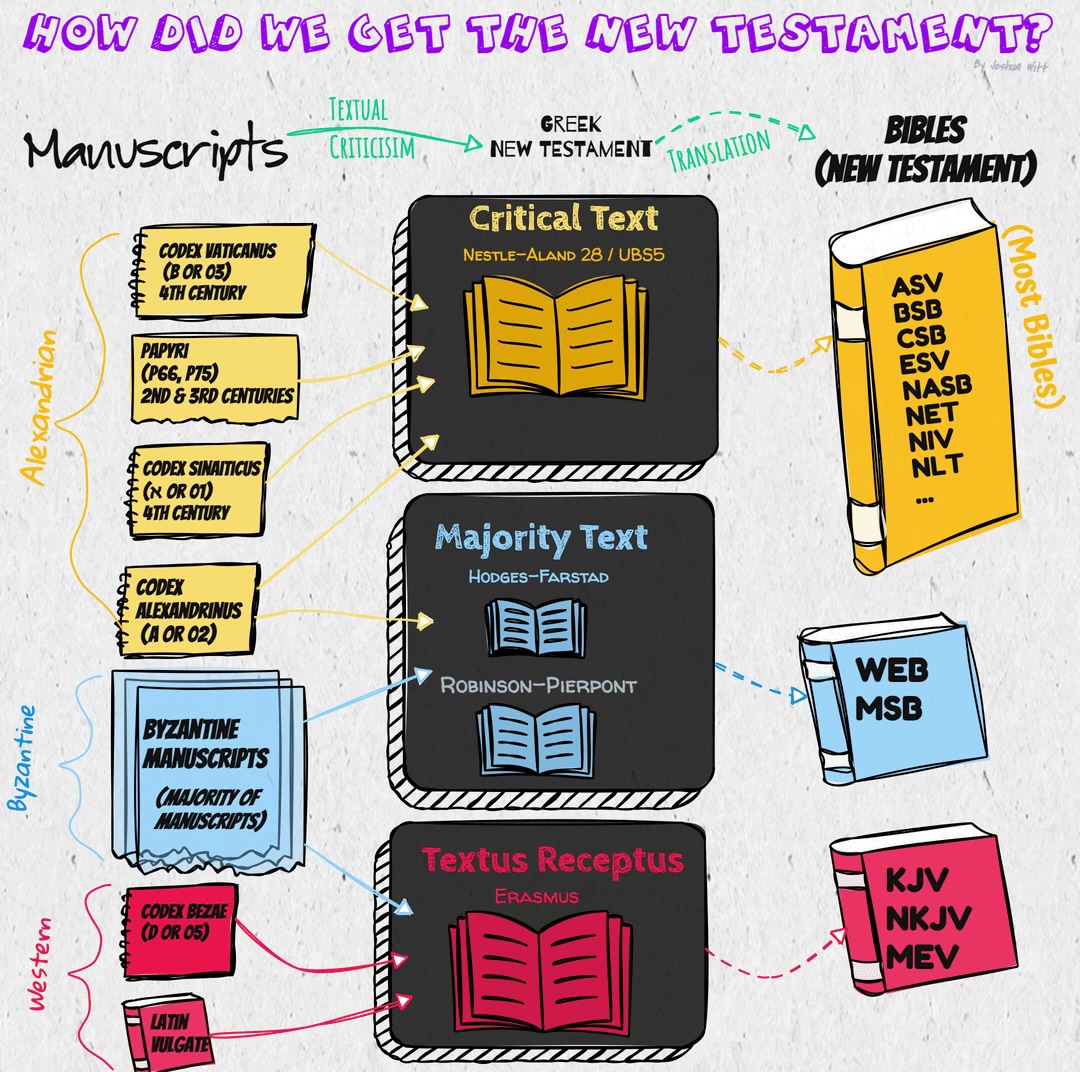
Many people may not realize that differences in verse inclusions across Bible translations often arise from the Greek New Testament edition chosen by the translators.
For instance, NIV translators didn’t “remove” verses present in the KJV; they were simply translating from different underlying manuscripts. These manuscripts have been compiled into two slightly different Greek New Testament editions.
Translation and textual criticism (determining which text is closest to the original) are related but distinct fields. Translation committees generally rely on the textual decisions made by textual critics who compile the Greek New Testaments used for translation.
Most Bible translations today are based on either the Textus Receptus (TR, or “Received Text”) or the Critical Text (CT, like the Nestle-Aland 28th Edition or United Bible Society 5th Edition). The KJV, NKJV, and MEV use the Textus Receptus, while the majority of other translations (such as the ESV, NIV, NASB, NLT, NET, and CSB) use the Critical Text.
Some translations, like the WEB and MSB, use a third option, the Majority Text (MT), which is less commonly known. Bible translations also vary in the number of textual footnotes they provide. For example, the NASB often includes fewer footnotes, while the NKJV has more than average, and the CSB, BSB, and WEB offer extensive notes (they’re the only translations I’ve seen with a note on the variant in Matthew 6:1).
A great resource for studying textual differences is the Text-Critical English New Testament: Byzantine Text Version, which shows the percentage of manuscripts supporting each reading. Sunday’s example was fascinating: most modern translations omit Matthew 17:21 (“But this kind does not go out except by prayer and fasting”) based on the Critical Text. However, a significant majority (87.7%) of Greek manuscripts do include this verse, whereas only a small fraction (0.6%) omit it.
While simply counting manuscripts isn’t necessarily the best way to determine authenticity, referring to 87.7% as merely “some” rather than “many” or “most” seems misleading.
It’s also unfortunate that the Majority Text and its close counterpart, the Byzantine Text, are so rarely discussed. God has blessed us with a rich manuscript tradition, and I think it’s important to consider the majority of these texts as part of faithfully stewarding this blessing.
Finally, I want to emphasize that I view all major modern evangelical translations as wonderful, reliable gifts from God. I use and recommend them all.
Randy grew up in a secular Jewish home, but through relationships with Christians, as well as through a series of personal events and realizations, he became a Christian. Randy is now a senior fellow for apologetics at the C.S. Lewis Institute, and over the past several decades he has talked with many individuals, and studied their journeys of coming to faith in Jesus.
In his recent book, “Questioning Faith” – he tells some of these stories, and looks at the factors in what he calls “indirect journeys of belief through terrains of doubt.”
In this episode, Randy and I speak about his story of coming to faith in Jesus, and we talk about some of the factors that Christians face today in sharing their faith, and how we can do that more effectively.
From Doubt to Belief: The Factors Involved in Journeys to Faith in Jesus – with Randy Newman –
Theology for the People
Randy Newman grew up in a secular Jewish home, but through relationships with Christians, as well as through a series of personal events and realizations, he became a Christian. Randy is now a senior fellow for apologetics at the C.S. Lewis Institute, and over the past several decades he has talked with many individuals, and studied their journeys of coming to faith in Jesus.
In his recent book, “Questioning Faith” – he tells some of these stories, and looks at the factors in what he calls “indirect journeys of belief through terrains of doubt.”
In this episode, Randy and I speak about his story of coming to faith in Jesus, and we talk about some of the factors that Christians face today in sharing their faith, and how we can do that more effectively.
Make sure to check out the Theology for the People website at nickcady.org
I’m excited to be heading out to Kansas City in November to speak at a church which used the book as the basis for their community groups this fall. A Christian school in the Bay Area of California used it as the basis of an apologetics class for their students this semester. I have heard several other stories of churches using it in similar ways, and I’m glad it continues to be a helpful resource!
Spanish Translation Coming Out in November 2023
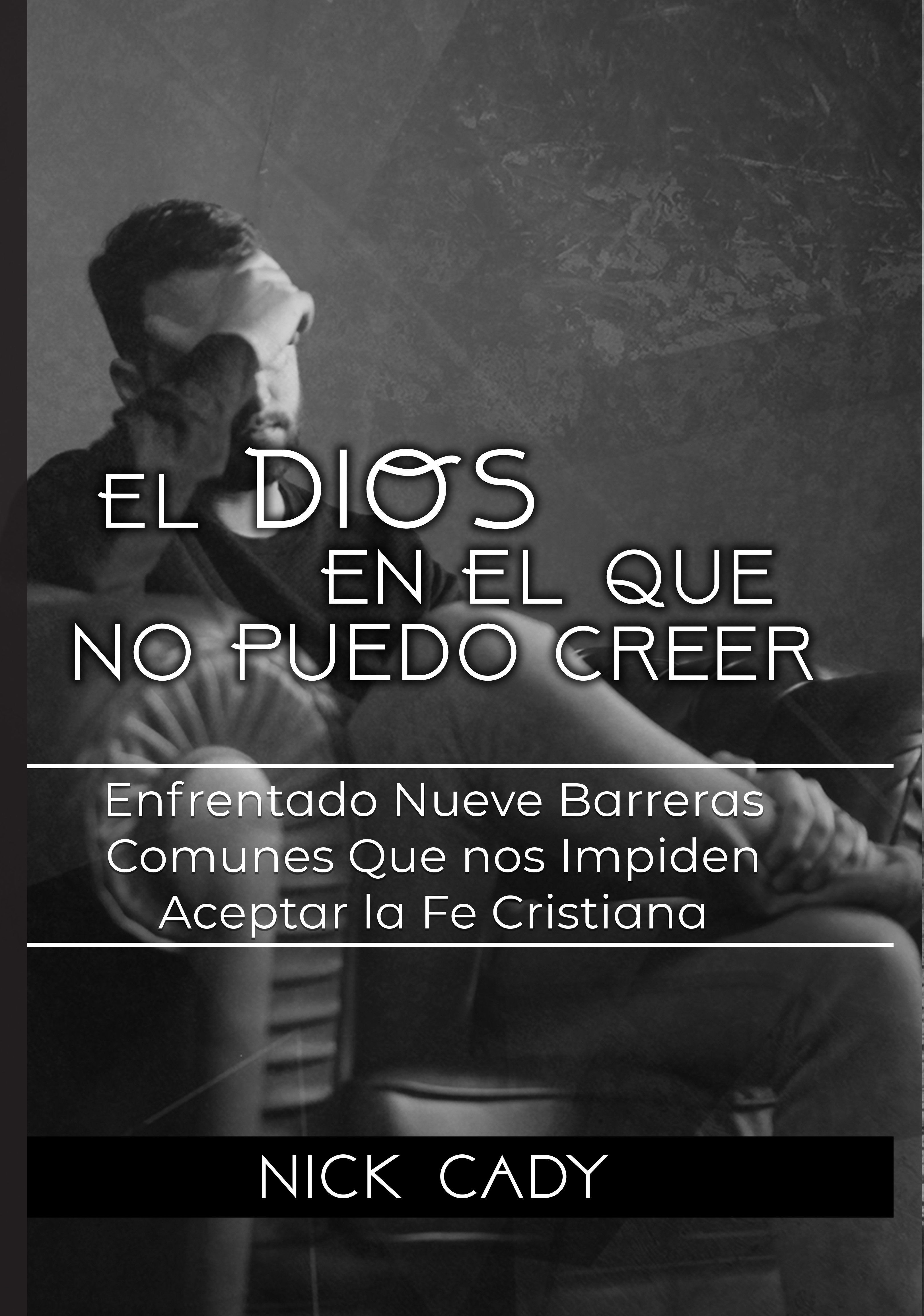
There are several translations of The God I Won’t Believe In currently in process, but I am excited that the Spanish translation is complete! My friend Jonathan Cuesta is a great translator, and did a great job.
The title of the Spanish version is: El Dios En El Que No Puedo Creer: Enfrentando Nueve Barreras Comunes Que nos Impiden Aceptar la Fe Cristiana.
It will be released mid-November once we get cover art and a few formatting things worked out. Then it will be sold on Amazon and hopefully in several Christian book shops in both the US and abroad. If you have Spanish speaking friends or family, please consider getting a copy for them and helping us promote when the time for that comes.
Study Guide Coming Soon
To help those who want to use the book for group studies, I am currently writing a Group Study Guide resource to be a companion to the book. This was originally scheduled to come out earlier this year, but my injury set me back.
When the guide comes out, each session will include a group activity, a synopsis, and several study questions which correspond to the content of each chapter. Additionally, we are planning to create a series of videos which can be watched along with the study guide, for groups to use.
New book – So That You May Believe: a Study of the Seven Signs and Seven “I am” Statements in the Gospel of John
I have been preparing the content for a new book, which will be a follow-up or companion to my first book. This book will show people the evidence for Jesus as Messiah and God our Savior which are presented by John in his gospel. The details and nuances of these evidences can easily be lost on modern readers, and I look forward to drawing them out for people to see.
Part of the impetus for writing this book is the fact that, when preparing a sermon series on the Gospel of John a few years ago, I noticed that many scholars and commentators point out the structure of John’s Gospel as being built upon seven signs and seven “I am” statements, but there were very few, if any, good short volume books on these subjects. I hope my book can fill that niche, as I’ve heard the need for a book on this topic confirmed by many of my pastor friends.
Last week, I spent the week teaching the content which will make up the book at Ravencrest Chalet Bible College (Torchbearers International) in Estes Park, Colorado. I got great feedback on the study from the students, which encouraged me in continuing the project.
I hope to be able to release that book by Spring of 2024.
In this episode of the Theology for the People podcast, Nick Cady and Jason Cralley respond to the best arguments for Biblical Unitarianism, which is the a non-Trinitarian interpretation of biblical texts about who God, Jesus, and the Holy Spirit are.
In doing this, we look at the history of Arianism and Trinitarian formulations of who God is, including a discussion about Constantine and the First Council of Nicaea, and the Nicene Creed.
Further, we look into the arguments put forth regarding certain Biblical passages that Unitarians point to as evidence of God’s non-trinitarian, or unitarian nature, and give a defense for trinitarian beliefs.
Below, you can find a link to the video mentioned in the episode about Bad Trinitarian Analogies.
What is Biblical Unitarianism? – Considering the Best Arguments For and Against It –
Theology for the People
In this episode, Nick Cady and Jason Cralley respond to the best arguments for Biblical Unitarianism, the a non-Trinitarian interpretation of biblical texts about who God, Jesus, and the Holy Spirit are.
In doing this, they look at the history of Arianism and Trinitarian formulations of who God is, including a discussion about Constantine and the First Council of Nicaea, and the Nicene Creed.
Further, they look into the arguments put forth regarding certain Biblical passages that Unitarians point to as evidence of God's non-trinitarian, or unitarian nature, and give a defense for trinitarian beliefs.
Make sure to visit the Theology for the People website at nickcady.org
On this episode of the Theology for the People podcast, Michael Payne and I discuss what is at stake in regard to Jesus’ resurrection, as well as some alternative explanations for Jesus’ missing body that have been proposed. Finally, we share some of the strongest evidences for why Christians believe that Jesus did in fact rise from the grave.
In this episode, Nick Cady and Michael Payne discuss what is at stake in regard to Jesus' resurrection, as well as some alternative explanations for Jesus' missing body that have been proposed. Finally, they share some of the strongest evidences for why Christians believe that Jesus did in fact rise from the grave.
For more from Nick and Mike, check out the White Fields Church Podcast, whitefieldschurch.com, or the White Fields YouTube channel.
Make sure to visit the Theology for the People blog at nickcady.org for more articles and content.
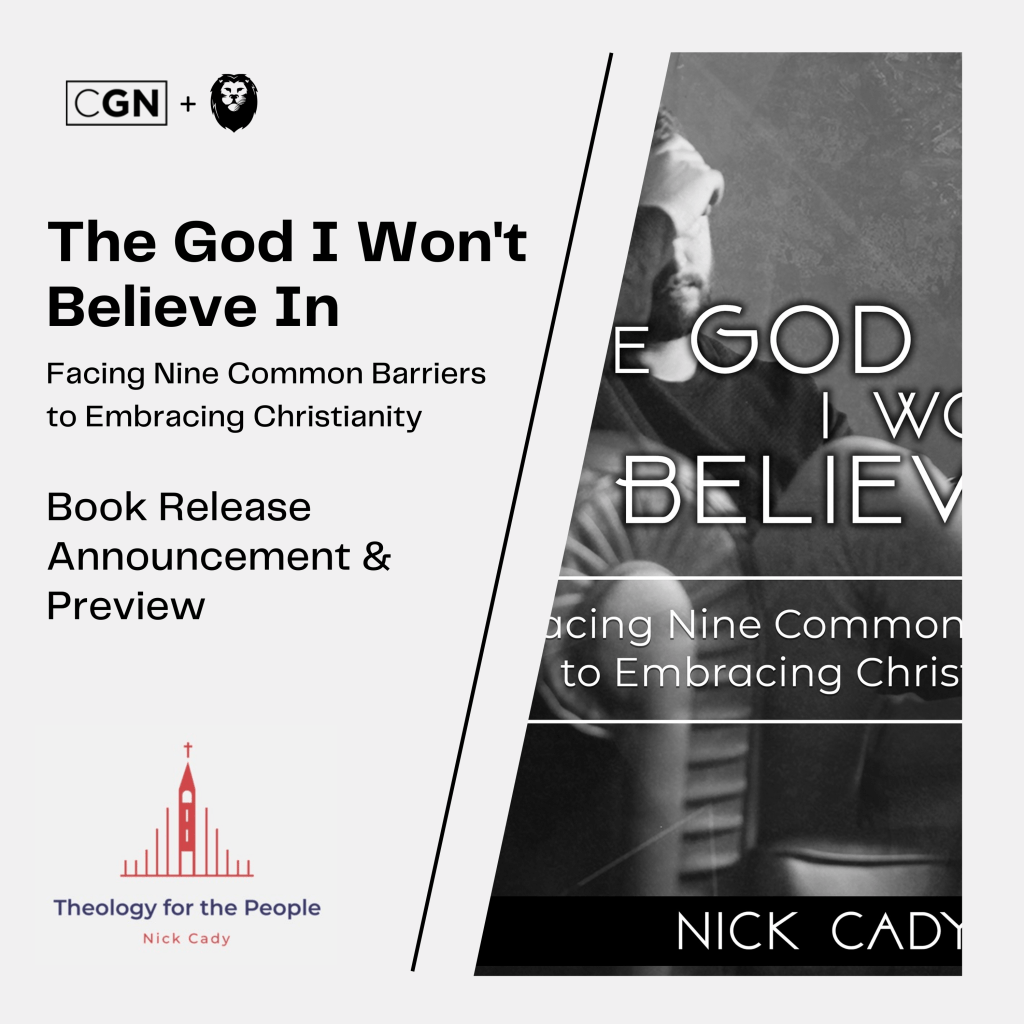
In this week’s episode of the Theology for the People podcast, I sit down with Michael Payne and Curt Fuller to discuss my forthcoming book, The God I Won’t Believe In: Facing Nine Common Barriers to Embracing Christianity. The book is scheduled to be released on March 6, 2022, and will be available for purchase online, as well as in our church’s bookstore. We are currently working on distribution, and getting it into other bookstores and book distributers as well.
In this episode, Michael interviews me and Curt, who edited the book, as we discuss the backstory behind how it came about, as well as the content of the chapters, and who this book is for.
I hope this book will be a great resource to help both those who are wrestling through facing these barriers to embracing Christianity, as well as those who seek to be equipped to help their family and friends move from doubt to belief.
I’d love it if you’d consider buying a copy of the book, and if you’d help spread the word about it online!
Book Release Announcement & Preview – The God I Won't Believe In: Facing Nine Common Barriers to Embracing Christianity –
Theology for the People
Nick wrote a book! It's coming out March 6, 2022 and is available for pre-order on Amazon here.
The book is titled, The God I Won't Believe In: Facing Nine Common Barriers to Embracing Christianity.
In this episode, Nick sits down with Michael Payne and Curt Fuller, who edited the book, the discuss how the book came about, who it's for, and what it's about.
Make sure to visit the Theology for the People blog at nickcady.org for more articles and content.
A question I am frequently asked is if there is a difference between the “baptism” of the Holy Spirit, and being “filled” with the Holy Spirit. Are they two different words which describe the same thing? The answer is: in some cases ‘Yes,’ and in other cases ‘No.’
Let me explain:
Understanding the Three Relationships the Holy Spirit Has with People
Throughout the Bible, we can see three distinct relationships which the Holy Spirit has with people. I would say that there are no less than these three, and no more than these three.
However, there are various terms and phrases which are used by the biblical authors to describe these relationships, and here’s what leads to confusion: some of the biblical authors use the same words to describe different relationships!
And yet, by looking at the context and the meaning of what the authors are describing (by the inspiration of the Spirit), we can see that three distinct relationships with the Holy Spirit are described in the Bible.
These three relationships can be easily remembered by connecting them to three simple prepositions: With, Upon, and In.
With – Conviction. (All People)
The Holy Spirit is WITH all people, bringing conviction about 3 things: sin, righteousness, and judgment.
In the Gospel of John chapters 14 &16, Jesus tells his disciples (at the Last Supper) that he is going away, but he will send the Spirit. Then he tells them about the person and work of the Holy Spirit.
And I will ask the Father, and he will give you another Helper, to be with you forever, even the Spirit of truth… You know him, for he dwells with you and will be in you.
John 14:16-17
Jesus then tells them that the work of the Spirit with people is that he brings conviction about sin, righteousness, and judgment. The Spirit speaks to people, to bring conviction that they have sinned, that God is righteous (and they have fallen short of his righteousness), and that a day is coming when God will judge the world, i.e. they will have to stand before him in judgment because they have fallen short.
In other words: the work of the Holy Spirit in the world with all people, is that he is bringing conviction of sin and the need for a Savior.
In Genesis 6, God says that his Spirit will not always strive with humankind. In other words, the Spirit is striving with people, to bring about conviction of sin which will lead to repentance in some cases, or a hardening of hearts in other cases.
What this means is that God’s Spirit is speaking to people’s hearts in the deepest jungles, in closed countries, as well as to the hearts of your loved ones. It is possible to harden your heart to the voice of the Spirit, as we are told in Hebrews 4:7, among other places.
The ultimate rejection of the work of the Spirit in this way is what constitutes the blasphemy of the Holy Spirit: rejecting the work of the Spirit to bring conviction leading to repentance and embracing the Savior.
Upon – Empowerment. (Some People)
Throughout the Old Testament and the New Testament, we see a second relationship with the Holy Spirit, in which the Holy Spirit empowers people to fulfill particular callings that God has put on their lives.
Sometimes this empowerment manifests itself in supernatural gifts, such as with Saul in 1 Samuel 10, or with the charismatic gifts in 1 Corinthians 12 & 14.
This empowerment is often described by the term “upon” in the Old Testament, and in some places in the New Testament:
“And the Spirit of the LORD rushed upon [Samson]” (Judges 14:9)
And behold, I am sending the promise of my Father upon you. But stay in the city until you are clothed with power from on high.” (Luke 24:49)
But you will receive power when the Holy Spirit has come upon you, and you will be my witnesses in Jerusalem and in all Judea and Samaria, and to the end of the earth.” (Acts 1:8)
This empowering relationship was described by the anointing with oil of priests, kings, and prophets in the Old Testament. The oil symbolized the empowering of God to fulfill a calling he has put upon our lives.
It seems that this empowering is sometimes given by God to people who are not believers, and who do not have saving faith. Example of this might be King Saul in 1 Samuel 10, or the high priest Caiaphas in John 11:49-52, who prophesied that Jesus would be killed in order to die for the nation. Furthermore, talking about the supernatural gifts of the Spirit, Paul seems to imply in 1 Corinthians 13 that it is possible to exercise spiritual gifts and not be a Christian! Jesus himself says that some people who cast out demons will not go to heaven (Matthew 7:22-23)
Furthermore, the word Messiah (anointed one) carries with it the connotation that the Spirit is upon this one, to empower him to carry out a unique mission from God: to atone for sin and bring salvation to the world. This is why Isaiah 61, which Jesus quoted in Luke 4 in Nazareth when he announced that he was Messiah, says:
The Spirit of the Lord GOD is upon me, because the LORD has anointed me to bring good news to the poor; he has sent me to bind up the brokenhearted, to proclaim liberty to the captives, and the opening of the prison to those who are bound
Isaiah 61:1-2, quoted in Luke 4 by Jesus and applied to himself
This is an important distinction from the next relationship with the Holy Spirit, and I will explain why it is so important as we go on.
In – Indwelling. (Those who have been born again through faith in Jesus)
Jesus told his disciples at the Last Supper that the Holy Spirit had been with them, but would soon be in them (John 14:16-17).
This indwelling of the Holy Spirit was something which was prophesied and predicted, but which never happened until after Jesus had died and risen from the grave.
In Ezekiel 37, God spoke through the prophet Ezekiel, telling the people about a future day when he would place his Spirit inside of his people.
Paul tells us in Ephesians 1:13-14 & 4:30, and 2 Corinthians 1:22 & 5:5 that when we put our faith in Jesus, and believe the gospel, we are sealed with the Holy Spirit as a guarantee that we have been redeemed by God, and he see us through until our redemption is complete.
The Spirit within us sanctifies us, guides us, teaches us, reminds us of the words of Jesus (John 16:13-15).
It is incorrect to say, as some do, that “God is within all of us.” What the Bible teaches is that God’s Spirit is only within those who have placed their faith in Jesus and been redeemed by Him.
Where these distinctions bring clarity
These distinctions bring clarity to some things, for example: in Psalm 51, David, having sinned with Bathsheeba, prays: “Do not take your Holy Spirit from me.”
Without making these clear distinctions in relationship, we might draw the conclusion that if we sin, we are in danger of God removing his Holy Spirit from us who are believers. And since Romans 8:9 says:
You, however, are not in the flesh but in the Spirit, if in fact the Spirit of God dwells in you. Anyone who does not have the Spirit of Christ does not belong to him.
Romans 8:9
We might then conclude that we are in danger of losing our salvation if we sin, since God might remove his Spirit from us. However, it is important to remember that David had the Spirit with him (bringing conviction), and he had the Spirit upon him (as King to fulfill his calling).
David was not, therefore, worried about losing the indwelling of God’s Spirit, but rather the convicting and comforting presence of the Spirit, and/or the empowering power of the Spirit in his life.
Furthermore, it helps us understand how people like Saul, in the Old Testament, were able to do things by the Spirit of God upon them, and yet it seems that they were not amongst those Old Testament saints who died in saving faith (cf. Hebrews 11).
Where it gets confusing: Luke and Paul use the same words to mean different things
Here’s where it gets interesting and here is the source of some of the confusion on this topic: Luke and Paul use the same terms to mean different things in their respective writings!
Luke, in his writings (Gospel of Luke & Acts of the Apostles), talks a lot about the Spirit, but he does so exclusively in regard to the empowering of the Holy Spirit. Seriously, look into it: there is no direct reference to the indwelling of the Holy Spirit in Luke or Acts.
Paul, on the other hand, focuses mostly on the indwelling of the Holy Spirit.
So, when Luke talks about the disciples being filled with the Spirit of God in Acts, he is talking about empowerment, not indwelling. This is clear from the context, but it is also clear from other clues. A great example of this is how it says in Luke 1 that John the Baptist would be “filled with the Spirit” from birth. This filling cannot be understood as the indwelling of the Spirit, since: 1) John could not have trusted in the gospel before hearing it and understanding it (see Ephesians 1:13), and 2) since Jesus had not yet accomplished his saving work through his life, death, and resurrection.
Furthermore, it is important to note that in John 20, after his resurrection but prior to his ascension, Jesus imparted the Holy Spirit to his disciples:
And when he had said this, he breathed on them and said to them, “Receive the Holy Spirit.”
John 20:22
And yet (and this is important!), prior to his ascension, he told those same disciples to wait in Jerusalem until the Holy Spirit had come upon them to cloth them with power from on high, to empower them to carry out the mission he had given them (Luke 24:49, Acts 1:8).
The Holy Spirit then came upon them on the day of Pentecost, 10 days after Jesus’ ascension.
So we see that the imparting of the Holy Spirit by Jesus in John 20 prior to his ascension was for them to receive the Spirit indwelling them, but the coming upon of the Spirit in Acts 2 was a separate event for the purpose of empowering them.
For these empowering events, Luke uses the terms “filled with the Holy Spirit” and “baptized with the Holy Spirit” interchangeably. Paul, on the other hand, uses the term “filled” with the Holy Spirit to speak of the indwelling work of the Spirit. The meanings of the two uses of the word “filled” are clear from their contexts and what they describe the Spirit doing in each case.
It is in this way, therefore, that Luke can describe believers being filled with, or baptized with, the Holy Spirit multiple times, such as in Acts 4, where people who are already believers receive a fresh filling of the Spirit, leading to even more boldness. The key here is that while they already have the Holy Spirit indwelling them, there is apparently need for fresh fillings of the Spirit for empowerment. Thus, to sing songs in which we ask for the Holy Spirit to fill us is acceptable and right, as long as we understand that we are asking for empowerment from God’s Spirit, not sealing by God’s Spirit.
Hopefully this explanation helps you as you read the Bible, seek the Lord, pray, worship, and serve!




 Theology for the People