You know the drill: the parking lot at the gym is full on New Year’s Day, but by March it’s empty again. “Why bother making New Year’s resolutions,” some ask, “if I’m just going to break them anyway?”
Others, I have noticed, state that they do not make New Year’s resolutions because they choose instead to “trust in God” rather than “rely on themselves,” assuming that to make plans and set goals is antithetical to faith, trust and reliance on God.
But is it?
I might argue that not setting goals and making plans is what reflects a lack of faith.
Real Faith Manifests Itself in Actions
The theme for our ministry year at White Fields for 2019 is: “Faith in Motion”, and during this year, we will be studying the Epistle of James, as well as looking at the lives of some of the Old Testament Prophets, because James tells us to “remember the prophets who spoke in the name of the Lord. Take them as examples of patient endurance under suffering.” (James 5:10)

We will begin that series this Sunday by looking at Amos: a man who – in a time of “professional prophets” was a mere shepherd and fig-picker, but was given a calling and message from God, and he responded faithfully. In other words: his faith in God was reflected in his actions of obedience.
James famously tells us: “I will show you my faith by my works.” (James 2:18). The point is clear: real faith manifests itself in actions. If you really believe something is true, you will live – and plan – accordingly.
However, James also warns us against presumption in this. He says: ‘Come now, you who say, “Today or tomorrow we will go into such and such a town and spend a year there and trade and make a profit”— yet you do not know what tomorrow will bring. What is your life? For you are a mist that appears for a little time and then vanishes. Instead you ought to say, “If the Lord wills, we will live and do this or that.”‘ (James 4:13-15)
The solution, James tells us, is NOT to not make any plans, but rather to still make plans, but submit those plans to God, and be flexible if God decides to take you in a different direction.
In other words: making resolutions (whether at the New Year or any other time of the year) can actually be an outworking of genuine faith. If you set goals which are in line with biblical and godly values, and make plans for how you are going to do those things, that is an act of stewardship.
A Matter of Stewardship
God has a LOT to say about stewardship in the Bible – starting with: Moreover, it is required of stewards that they be found faithful. (1 Corinthians 4:2). The point of stewardship is that you have been entrusted with certain things, and given a responsibility to use them according to the master’s wishes and purposes.
Jesus told his disciples: “I am the vine, you are the branches. Apart from me, you can do nothing.” (John 15:5) But to conclude that this means that we should then never attempt to do anything would be foolish and not at all what Jesus intended. It is not apart from Him that we attempt to accomplish anything, but with Him and by His power.
Paul the Apostle wrote this: “But by the grace of God I am what I am, and his grace toward me was not in vain. On the contrary, I worked harder than any of them (the other apostles), though it was not I, but the grace of God that is with me.” (1 Corinthians 15:10)
It is wrong to think that planning, effort and thoughtfulness are somehow opposed to spirituality. Rather these are faith in motion: the outworking of values which come as a result of seeking God and seeking to follow God – similar to Daniel, who “resolved in his heart not do defile himself” while in Babylon. (Daniel 1:8) That was a resolution based on a conviction, and an act of faith, not of self-reliance.
Challenging Goals Actually Make You More Dependent on God
One of the greatest benefits of setting attainable, yet challenging goals is that it also fuels my prayer life. If I set goals that I cannot achieve on my own, apart from the work of God, then I am in a position of being even more dependent on Him.
My Resolutions Annual Goals
I don’t set “New Years resolutions” per se, but what I do every year is set attainable, yet challenging goals for the year which serve as guides for me later on, when I’m not feeling motivated or when I lose steam or need to be reminded of what I should be working on or towards.
I’ve found that having goals keeps me focused and motivated over longer periods of time. I can look back at them and be reminded of the things which I believed at one time were important guides to keep me on track.
Some of my goals are family-related. Some are related to my work as a pastor. Many others are personal. I set goals for how many books I will read, and in which languages. I set goals for how many kilometers or miles I will run, and I set goals to accomplish certain projects.
I have been doing this for the last several years, to good effect. I haven’t always met all of my goals, but at least having the goals kept me moving in the right direction on the days when I am tired or begin to miss the forest for the trees – and lose sight of the big picture.
My Advice on Setting Goals: Make them Specific and Measurable
I encourage you to consider setting some goals here at the outset of the year. If you are a Christian, let biblical and godly values drive your goal setting. But don’t only set goals, also map out plans for actually attaining them. If you plan to run 500 miles, calculate how many miles you will need to run each week. If you plan to read through the Bible this year from cover to cover, figure out how much you need to read each day in order to do that.
Don’t make goals that are not specific; rather than saying “I want to get in shape” or “I want to be kinder”, set concrete, specific and measurable goals, so that you will be able to measure whether you succeeded in reaching those goals or not.
I wish you all the best in this new year! May it be a year in which you walk with God like never before!


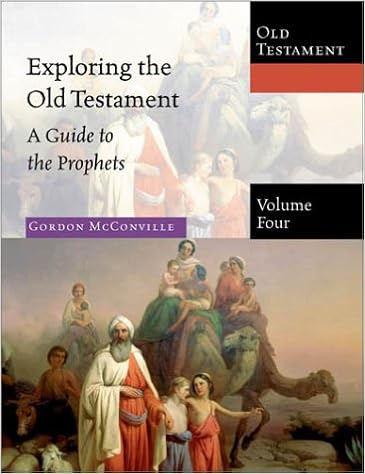 I had the pleasure of studying under Gordon McConville at the University of Gloucestershire in England, where he is professor of Old Testament theology. This was one of my text books, but is part of a great series from Inter-Varsity Press and is very accessible to the average reader and also scholarly at the same time.
 When I first became a pastor, one of my mentors told me, “You’re going to need some books.” He then walked me into the book store at the church we were at and pulled Jensen’s surveys of the Old Testament and New Testament off the shelf and handed them to me.
 Theology for the People