In this episode of the Theology for the People Podcast, I speak with Shane Angland to explore a question that I have thought about for a long time: Did the early church fathers view Scripture the way Protestants do today—or is the Protestant view of the Bible a Reformation novelty?
Shane and I walk through patristic theology and discuss how figures like Irenaeus, Athanasius, Chrysostom, Jerome, and Augustine spoke about the inspiration, authority, sufficiency, and clarity of Scripture. We also examine the “rule of faith” and whether it functioned like a controlling magisterium—or more like a summary of Scripture’s core teaching that guided interpretation.
Along the way, we discuss:
What “patristics” are, and where the patristic era generally begins and ends
Whether the fathers believed Scripture could contain errors
How early Christians handled difficult passages (textual issues, translation, and humility)
The unity of Scripture and the Christ-centered reading of the whole Bible
The Reformation’s claims about Sola Scriptura and the perspicuity (clarity) of Scripture
Augustine’s On Christian Doctrine and why it’s really about how to interpret the Bible
Whether the church creates Scripture’s authority or recognizes it
How medieval developments changed the relationship between Scripture and tradition
If you’ve ever wondered whether the Reformation recovered an earlier Christian approach to the Bible—or introduced something new—this conversation is for you.
The Bible in Patristic Thought: Authority, Clarity, and the Rule of Faith – with Shane Angland –
Theology for the People
In this episode of Theology for the People, Nick Cady is joined by recurring guest Shane Angland to explore the question: Did the early church fathers view Scripture the way Protestants do today—or is the Protestant view of the Bible a Reformation novelty?Nick and Shane walk through patristic theology and discuss how figures like Irenaeus, Athanasius, Chrysostom, Jerome, and Augustine spoke about the inspiration, authority, sufficiency, and clarity of Scripture. They also examine the “rule of faith” and whether it functioned like a controlling magisterium—or more like a summary of Scripture’s core teaching that guided interpretation.Along the way, they discuss:What “patristics” are, and where the patristic era generally begins and endsWhether the fathers believed Scripture could contain errorsHow early Christians handled difficult passages (textual issues, translation, and humility)The unity of Scripture and the Christ-centered reading of the whole BibleThe Reformation’s claims about sola Scriptura and the perspicuity (clarity) of ScriptureAugustine’s On Christian Doctrine and why it’s really about how to interpret the BibleWhether the church creates Scripture’s authority or recognizes itHow medieval developments changed the relationship between Scripture and traditionIf you’ve ever wondered whether the Reformation recovered an earlier Christian approach to the Bible—or introduced something new—this conversation is for you.
I have recently started posting more on the Theology for the People YouTube channel. You can watch this interview on video here:
In this episode of the Theology for the People Podcast, I speak with Shane Angland. Shane has been a recurring guest on the podcast, and is excellent on the topic of historical theology.
In this episode, we discuss Desiderius Erasmus, one of the most important figures in the history of the Protestant Reformation. He was a key thinker, and the compiler of many of the manuscripts that were used in translating the Bible from Greek and Hebrew into languages of the people. He was also in communication with many of the key figures of the reformation, like Martin Luther.
And yet, Erasmus stopped short of being a Reformer. In this episode, Shane and I talk about this intriguing person, the contributions he made, and why he fell short.
Shane lives in Ennis, Ireland where he serves at Ennis Evangelical Church. He holds a Masters of Divinity from Dallas Theological Seminary, and has served as a missionary in Ukraine.
Almost a Reformer: How Erasmus of Rotterdam Fueled the Reformation but Personally Stopped Short – with Shane Angland –
Theology for the People
Desiderius Erasmus is one of the most important figures in the history of the Protestant Reformation. He was a key thinker, and the compiler of many of the manuscripts that were used in translating the Bible from Greek and Hebrew into languages of the people. He was also in communication with many of the key figures of the reformation, like Martin Luther.
And yet, Erasmus stopped short of being a Reformer. In this episode, I speak with Shane Angland about this intriguing person, what contributions he made, and why he fell short.
Shane Angland is from Ennis, Ireland and holds a Masters of Divinity from Dallas Theological Seminary.
Make sure to check out the Theology for the People website at nickcady.org
If you read the Bible in English, you may not realize all of the drama and sacrifices that went into getting the Bible translated into the English language.
In this episode of the Theology for the People Podcast, I speak with Shane Angland of Ennis Evangelical Church in County Clare, Ireland. Shane holds a Master of Divinity degree from Dallas Theological Seminary, and specializes in historical theology.
Shane and I speak about William Tyndale: an English biblical scholar and linguist who became a leading figure in the Protestant Reformation, until he was executed for his beliefs. Tyndale created the first English translation of the New Testament from the original Greek text and was working on translating the Old Testament from Hebrew. Much of his work can still be seen in the way the Bible is translated into English to this day.
If you read the Bible in English, you may not realize all of the drama and sacrifices that went into getting the Bible translated into the English language.
William Tyndale was an English biblical scholar and linguist who became a leading figure in the Protestant Reformation, until he was executed for his beliefs. Tyndale created the first English translation of the New Testament from the original Greek text and was working on translating the Old Testament from Hebrew. Much of his work can still be seen in the way the Bible is translated into English to this day.
In this episode, my guest is Shane Angland of Ennis Evangelical Church in County Clare, Ireland. Shane holds a Masters of Divinity from Dallas Theological Seminary, and specializes in historical theology.
Have we over-emphasized the value of rest and Sabbath to the neglect of the biblical teaching on diligence and hard work?
On this episode of the Theology for the People Podcast, I am joined by Tyler Fuss and Mike Neglia to discuss what the Bible has to say about the importance of diligence, the danger of sluggardliness, and how to know the difference between hard work and over-work.
Tyler is a member of White Fields Community Church; he studied theology at Denver Seminary and is now a business owner in Colorado. Mike is the lead pastor of Calvary Cork in Cork, Ireland and a student at Western Seminary. Mike also leads Expositors Collective, an initiative which seeks to raise up the next generation of expository Bible teachers, and he hosts the Expositors Collective Podcast.
With All Your Might: Exploring Biblical Teaching about Diligence, Hard Work, Sabbath, and Sloth –
Theology for the People
Have we over-emphasized the value of rest and Sabbath to the neglect of the biblical teaching on diligence and hard work?
On this episode, Nick Cady is joined by Tyler Fuss and Mike Neglia to discuss what the Bible has to say about the importance of diligence, the danger of sluggardliness, and how to know the difference between hard work and over-work.
Tyler studied theology at Denver Seminary and is now a business owner in Colorado. Mike is the lead pastor of Calvary Cork in Cork, Ireland and a student at Western Seminary. Mike also leads Expositors Collective, an initiative which seeks to raise up the next generation of expository Bible teachers, and he hosts the Expositors Collective Podcast.
Resources mentioned in this episode:
Zeal Without Burnout (Book)
Don't Waste Your Life (Book)
You Have One Life, Don't Waste It (John Piper YouTube video)
Overcoming Apathy and Slothfulness – Uche Anzior (Podcast Episode)
On this episode of the Theology for the People Podcast, I speak with Shane Angland about the Radical Reformers of the 16th Century, and how the ideas of the Radical Reformation, though they were initially met with opposition, have had an incredible impact on Christianity as we know it today, including how the church relates to the government and society as a whole. Furthermore, we discuss some of the lessons we can learn today from the mistakes and missteps of the Radical Reformers.
Shane is a Teaching Elder at Ennis Evangelical Church in County Clare, Ireland. He spent several years as a missionary in Ukraine, and is a graduate of Dallas Theological Seminary.
On this episode I speak with Shane Angland about the Radical Reformers of the 16th Century, and how the ideas of the Radical Reformation, though they were initially met with opposition — they have had an incredible impact on Christianity as we know it today, including how the church relates to the government and society as a whole. Furthermore, we discuss some of the lessons we can learn today from the mistakes and missteps of the radical reformers, as well.
Shane Angland is a Teaching Elder at Ennis Evangelical Church in County Clare, Ireland. He spent several years as a missionary in Ukraine, and is a graduate of Dallas Theological Seminary.
Many people assume that the Protestant Reformation was something that only affected the Western, or Roman Catholic Church, but in this week’s episode of the Theology for the People podcast, Shane Angland (Mdiv, Dallas Theological Seminary) shares the incredible story of how the Reformation reached the East.
Shane explains how Martin Luther actually referenced the Eastern Orthodox churches as examples of Christianity which were not subject to the dictates of Roman papal authority, and he tells the story of Cyril Lucaris, the Greek Orthodox theologian and patriarch of Constantinople, who was highly influenced by the Reformation and its principles.
Shane resides in Ennis, Ireland. He spent years working in Ukraine as a missionary with IFES and serving in a Calvary Chapel church in the city of Kharkiv, before going to Dallas for seminary.
Next month, Shane will be back on the podcast, sharing the true history of Saint Patrick of Ireland, explaining which parts of the commonly-told stories about Patrick are myth, and which parts of the story are often not told, but deserve to be. Stay tuned and keep an eye out for that!
Did the Reformation Reach the East? The Surprising History of Cyril Lucaris and Eastern Orthodoxy's Reaction to the Reformation – with Shane Angland –
Theology for the People
Many people assume that the Protestant Reformation was something that only affected the Western, or Roman Catholic Church, but in this episode, Shane Angland (Mdiv, Dallas Theological Seminary) shares the incredible story of how the Reformation reached the East.
Shane explains how Martin Luther actually referred to the Eastern Orthodox churches as examples of Christianity which were not subject to the dictates of Roman papal authority, and he tells the story of Cyril Lucaris, the Greek Orthodox theologian and patriarch of Constantinople, who was highly influenced by the Reformation and its principles.
Shane Angland resides in Ennis, Ireland. He spent years working in Ukraine as a missionary with IFES and serving in a Calvary Chapel church in the city of Kharkiv, before going to Dallas for seminary.
At the end of the episode, listen for a preview of my forthcoming book, The God I Won't Believe In: Facing Nine Common Barriers to Embracing Christianity.
Visit the Theology for the People blog site for articles and more.
I found the book to be an interesting history of some parts of American evangelicalism. I emphasize that the book is about some parts of American evangelicalism, because the author focuses her writing specifically on a particular corner of the evangelical Christian world: a particular subculture within American evangelicalism associated with Jerry Falwell, the Moral Majority, and militant masculinity. This part of evangelicalism has less to do with the core evangelical beliefs and convictions, and more to do with a culture propagated by certain people.
For this reason, while I found Kobes Du Mez to be an excellent writer, and found her book to be an entertaining read, I also found it incredibly frustrating because it feels that she paints evangelicalism with too broad of a brush, and in some cases she seems to misrepresent certain groups and events in an attempt to bolster her main thesis that Christianity in America has been coopted and altered by men, who have changed it into something it was never meant to be, namely: militaristic, and a tool for white male hegemony.
Not My Evangelicalism
Here’s the thing: Kobes Du Mez isn’t completely wrong in this thesis. However, it must be noted that her scope is very limited.
The fact is: evangelicalism is not monolithic. Evangelicalism is a movement which began in Germany in the 16th century, and is about restoring the place of the Bible to its rightful place of primacy in our theological method, and about “religion of the heart,” AKA: a personal relationship with God.
The word “evangelical” comes from the Greek word euangelion (gospel). An evangelical Christian is a “gospel Christian.”
This definition from Wikipedia is cobbled together from different sources, but accurately summarizes what evangelicalism is, and what its core values entail:
Evangelical Christianity is a worldwide trans-denominational movement within Protestant Christianity that maintains the belief that the essence of the Gospel consists of the doctrine of salvation by grace alone, solely through faith in Jesus’ atonement. Evangelicals believe in the centrality of the “born again” experience in receiving salvation (see Jesus’ words in John 3:3), in the authority of the Bible as God’s revelation to humanity, and in spreading the Christian message.
It is important to note that Kobes Du Mez is a Christian, and admits that she herself would be categorized as an evangelical. What Kobes Du Mez takes issue with in this book is a particular subculture which developed within American evangelicalism. She rightly points out that many of the behaviors of those in this subculture differ from the teachings and heart of Jesus.
British evangelicalism, the setting in which I did my theological studies, embraces the core values listed above, without the cultural trappings of this particular corner of American evangelical subculture which Kobes Du Mez criticizes.
Furthermore, the particular churches I have been a part of in the United States have not aligned themselves with characters like Jerry Falwell, or many of the things which Kobes Du Mez talks about in her book. Part of the reason why I found the book interesting was because much of the what Kobes Du Mez talks about, which she portrays as normative for evangelical Christianity in the United States, was foreign to me and my experience.
I would challenge Kobes Du Mez to keep in mind the fact that evangelicalism is not an American phenomenon – neither in origin, nor in majority. Most evangelicals in the world are not American. Where anyone has created an aberrant form of Christianity, it should be called out. This applies to evangelicals, and it also applies to all other movements and groups. This is, actually, the heart of the Reformation, the adherents of which were the first to call themselves “evangelicals”!
Stretching It…
One of my biggest qualms with the book is the number of ways in which the author attempts to strengthen her point by using examples which may sound convincing to the untrained eye, but which are actually a bit misleading.
For example: Kobes Du Mez critiques evangelicals for using sports and military analogies to describe and explain Christianity. The problem with this critique is that the Bible itself uses military and sports analogies to describe the Christian faith! (See: Philippians 2:25, Philemon 1:2, 2 Timothy 2:3-4, 1 Corinthians 9:7, Ephesians 6:10-18, 2 Corinthians 9:24-27, 2 Timothy 2:5, and others)
Kobes Du Mez dedicates an entire chapter to the Promise Keepers movement of the 1990’s. She seems to only reluctantly admit that this evangelical movement contradicted her entire thesis about American evangelicalism, in that it emphasized servanthood, love, and kindness over militarism and dominance, and focused on racial reconciliation. At one point, in what seems like a desperate attempt to find something wrong with the Promise Keepers, Kobes Du Mez states that at the height of the Promise Keepers in the 1990’s, only about 10% of their members were African American. What she doesn’t point out is that, at the time, African Americans made up 12% of the US population. In other words, Promise Keepers’ membership closely resembled the ethnic makeup of the country at the time.
Additionally, Kobes Du Mez criticizes American evangelicalism for seeking to reach men with their messaging, by trying to show that following Jesus isn’t contrary to being masculine. Having spent over a decade in Europe, where many churches are small and made up mostly of elderly women and girls, I have to say that I don’t see anything wrong with seeking to reach men by showing them that following Jesus isn’t contrary to being masculine. I remember hearing from many men in Hungary that “religion is for women and the weak.” I don’t believe this is true at all, and countering this narrative is simply a form of apologetics and evangelism.
The author also claims that the focus on Jesus as a warrior is a uniquely American evangelical aberration of Christianity, and that it would be better to focus on other aspects of Jesus instead. Once again, the problem with this is that the Latin term and concept of Cristus Victor has a long history, predating the United States of America, and even the Protestant Reformation. Misguided militarism in the name of Christianity has cropped up at various times in history, such as the obvious example of the Crusades, and is not an American evangelical invention. Furthermore, the Bible itself, in both the Old and New Testaments, foretells the time of “the great and terrible Day of the Lord,” when God will come to wage war against those who do evil and oppress. This is not an American concept, it’s a biblical concept, and highlighting it is not an American novelty, but has much historic precedent.
A Question for the Author
My question for the author would be how much of her thesis is shaped by biblical concerns, and how much is shaped by current popular discourse in American culture?
Conclusion
In conclusion, I will say once again that I found the book to be an enjoyable read, in that it introduced me to a part of American evangelical subculture that I had only heard about from a distance, but with which I was not very familiar. I agree with many of the author’s critiques, and think they are necessary.
However, I would not encourage others to read this book, because I feel that too much of what Kobes Du Mez writes is potentially misleading in its tone, and what it seeks to imply. It’s not so much what she says, it’s what she leaves out, which I think makes the book unhelpful.
If you own a Bible in your own language, it is a direct result of the Protestant Reformation, and the key figure God used to ignite that worldwide movement of returning to the Bible was Martin Luther: a German monk and professor of theology at the University of Wittenberg.
I grew up attending a Lutheran school until eighth grade. During my time there, I learned a lot about Luther, including studying his catechism. Years later, when I put my faith in Jesus and was born again, I started attending a Calvary Chapel church; and over the years, I have grown in appreciation for Martin Luther and the pivotal role he played in God’s work in the world.
The last day of October is celebrated around the world as Reformation Day, because it was on October 31, 1517, that Martin Luther set into motion the movement now known as the Reformation, by mailing a letter. Yes, you read that right: on the eve of All Saints Day (Halloween = “All Hallows Eve”), Luther mailed, not nailed, a letter.1 2
The letter was addressed to the Archbishop of Mainz,3 and Luther sent it because he wanted to alert the archbishop that plenary indulgences were being sold in the archbishop’s name by a man named John Tetzel. Tetzel had been sent from Rome the year before to sell these certificates promising the release of a soul from purgatory in exchange for their purchase, as a fundraising campaign for the building of St. Peter’s Basilica. Luther assumed the archbishop was unaware that this was going on, and that upon receiving his letter, the archbishop would tell Tetzel to cease and desist. That, however, is not what happened.
As a result of the archbishop’s inaction, Luther, as a professor, decided to organize a scholarly debate on the topic of indulgences: whether they were actually effective in procuring the release of a soul from purgatory. To this end, he wrote up what are now known as the 95 Theses, which he titled: A Disputation on the Power and Efficacy of Indulgences. This paper, which was posted on the door of the All Saints Church in Wittenberg, was an invitation to a scholarly debate, but in it Luther challenged both the selling of indulgences and the doctrine of purgatory as unscriptural. By doing this, Luther was challenging the Roman Catholic Church’s teaching and authority, and insisting that the Bible, not the church, should be the ultimate arbiter of what constitutes correct doctrine.
The posting of the 95 Theses is considered the spark which ignited the Protestant Reformation: a movement which sought to reform the church by shedding man-made traditions and returning to the faith which had been handed to us by God in the Holy Scriptures.
Today, there are nearly 1 billion Protestant Christians in the world.4 In the “majority world,” including Africa, Asia, Latin America, and the Muslim world5, Protestant Christianity is growing faster than any other religious movement by conversion.6
Before Luther, there were others who sought to reform the church and bring the Bible to the people. John Wycliffe (1331-1384) published the first English translation of the Bible. Jan Hus (1369-1415) taught the Bible to the common people in Prague. Peter Waldo (1140-1218) commissioned a translation of the New Testament into the local vernacular of southern France. Each of these people were persecuted for trying to put the Scriptures into the hands of the common people.
Over a century before Luther, Hus had protested the sale of plenary indulgences, pointing out that the idea that God’s favor or blessings could be earned in any way, runs contrary to the message of the gospel and the testimony of the Scriptures, and the concept of purgatory is in conflict with the biblical teaching of the sufficiency of Christ’s atonement on the cross.
Martin Luther had long struggled with feelings of condemnation and inadequacy, until his own reading of the Scriptures led him to an epiphany when he read Habakkuk 2:4: “Behold, as for the proud one, His soul is not right within him; But the righteous will live by his faith.” This led Luther to the other places in the Bible where this phrase is repeated: Romans 1:17; Galatians 3:11, and Hebrews 10:38 – where the message is clear: It is not by our own works that we are justified before God, but it is God who justifies us sinners as a gift of His grace, and we receive that justification by faith. After all, the Bible explains, this is how Abraham, the father of our faith, became righteous: he believed God and it was credited to him as righteousness (Genesis 15:6; Romans 4:3, 22). We receive God’s righteousness, which he has provided for us in Christ, in the same way.
Luther became convinced that everyone needed to be able to read the Scriptures for themselves, and he took it upon himself to translate the Bible into German, a translation that is still in use to this day. Soon the Bible was translated into other languages, including English, as the Reformation spread.
Martin Luther called people back to a belief that the Scriptures are perspicuous (clear), and can be understood by those who read them. He called us back to a belief in the inspiration and sufficiency of Scripture: that it is the ultimate rule of faith, by which we are to measure both doctrine and our lives.
In April 1521, Luther was brought before Holy Roman Emperor Charles V at the Diet of Worms, at which Luther was commanded to recant his teachings. Luther refused to do so, famously stating:
“Unless I am convinced by the testimony of the Holy Scriptures or by evident reason – for I can believe neither pope nor councils alone, as it is clear that they have erred repeatedly and contradicted themselves – I consider myself convicted by the testimony of Holy Scripture, which is my basis; my conscience is captive to the Word of God. Thus I cannot and will not recant.”7
This October, as we celebrate Reformation Day, may we take the opportunity to open the Bible and read it for ourselves, and may we embrace and celebrate the message of the gospel: that Jesus Christ came to save sinners, and that we are justified freely by his grace as we trust in him by faith.
NOTES
1 Marshall, Peter. 1517:Martin Luther and the Invention of the Reformation. OUP Oxford. 2017.
Like so many of you, when I saw the video last night of what happened to George Floyd, I was horrified.
If someone was not there to film this incident, would we even know that this happened?
Was this an isolated incident? We have to recognize that a steady stream of “isolated incidents” constitutes a pattern, and racism and prejudice are alive and well in the world today.
As Christians, it is our theological duty to speak out against racism.
Racism asserts that some people are more valuable than others. This view is anathema to those who follow Jesus.
No matter the color of a person’s skin, no matter their economic or social status, no matter their level of ability or disability: all people are created in the image of God, and therefore endowed with an innate dignity as image bearers of the Divine.
When I pray “Lord, deliver us from evil”, I must remember that evil is multi-dimensional: There is personal, structural and spiritual evil.
On days like today, I remember that we need deliverance from them all.
It would not be uncommon to hear someone say that at the root of racism is sin. The question though is: What sin exactly is at the root of racism?
What underlies racism is the endeavor common to all human beings of seeking to establish an identity.
Every person is seeking to establish an identity, which can be defined as: evidence that we have value and worth, that we are deserving of love and acceptance.
People seek to do this in many ways, such as geography, ethnicity, morality, economics, social standing, education, etc.
However, when someone seeks to establish their identity in anything other than the redeeming work of Jesus, it leads to disaster.
This disaster, in some cases, may only be personal; it may only affect them. It will still be disaster because it will lead to emptiness, futility, and the loss of their soul (see Mark 8:36).
However, in many cases, the disaster of attempting to build an identity apart from Christ can affect others. This is what leads to wars, ethnic conflicts, tribalism, rivalries, and racism.
These are all forms of self-justification, or the attempt to prove one’s worth by means of something within them, whether that is their morality, their good deeds, or their race or tribe.
The Reformers, particularly Calvin, pointed out that while people can do good things apart from faith in Jesus and experiencing His regenerative work in their lives, all of their good works will ultimately be motivated by either self-justification or self-glorification.
Self-justification often seeks opportunities to justify oneself by looking for ways in which they can feel superior to others. It is endeavoring to build an identity for yourself – apart from Christ – that “proves” that you have worth, and many people go about that negatively by juxtaposing themselves against other people whom they deem to have “less worth.”
Considering It All Rubbish
In the third chapter of his letter to the Philippians, Paul the Apostle talks about how he formerly tried to build his identity apart from Christ in his ethnic background, in his morality, in his education, and in his zeal for God. (Philippians 3:4-9).
The result of these things, in every instance, was that they led him to look down on others who didn’t have his ethnic background, his morality, his education, or his zeal for God – and in at least one case it led him to physically and psychologically harm an entire group of people.
However, after coming to faith in Christ and embracing the gospel, Paul says that he now considers all of these things rubbish compared to the surpassing worth of knowing Christ Jesus, and being found in Him, with a righteousness that comes from Jesus, not from anything within Paul himself.
What the gospel offers us is value, worth, and belonging because of what God has done for us and who we are in Christ. This identity, rather than leading to oppression or rivalry, leads to love and charity.
May we be those who find our identity in Christ, and who recognize the inherent dignity of all people.
In a recent post titled If Satan Has Been Defeated, Why Is He Still “Prowling Around”?, we looked at how Satan is not God’s counterpart, and certainly not his equal. How then can someone like John Calvin, who has a high view of God’s sovereignty and power, say that “Satan has his miracles too?
Calvin was referring to Matthew 24:24 – where, in his Olivet Discourse, Jesus states that during a time to come of great tribulation, “false messiahs and false prophets will arise and perform great signs and wonders, so as to lead astray, if possible, even the elect.”
The Context of Calvin’s Statement: A Response to Roman Catholic Criticisms About a Lack of Miracles in the Reformation
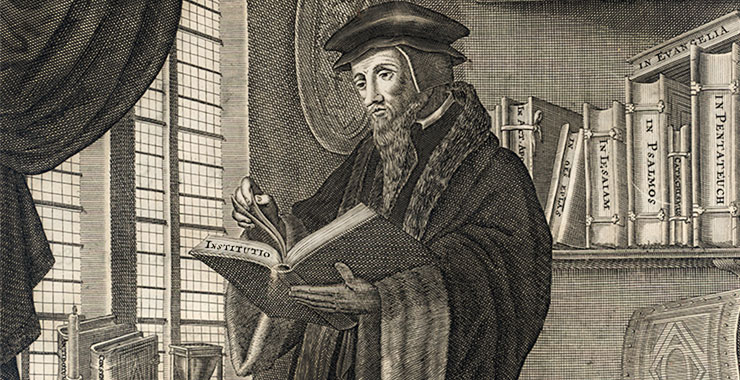
This statement is only part of a bigger statement by John Calvin. It is found in the “Prefatory Address to the King of France,” at the beginning of Institutes of the Christian Religion. In this section, Calvin is responding to Roman Catholic criticisms of the Reformation, one of which was that the Reformation lacked miracles, which they said proved that the Reformation was not a legitimate, apostolic, work of God.
In his response, Calvin said that the immediate purpose of a miracle like healing was to bring relief to the individual, but the ultimate purpose was to prove that the apostolic preaching was true. Calvin then argues that the Reformation is not a new revelation, but rather the reaffirmation of the original apostolic preaching, therefore it does not necessitate miracles to confirm its validity.
Calvin then takes it one step further by suggesting that many of the supposed miracles reported by the Roman Catholic Church may not be from God, but may instead be of the sort talked about by Jesus in Matthew 24:24, i.e. performed by false prophets by the power of Satan to lead people astray and deceive them.
Interestingly however, Calvin does not disavow miracles entirely, but suggests that there were actually miracles that accompanied the Reformation. He then makes the concluding point that the test of miracles should be what they cause you to worship and trust in. Any miracle which causes you to trust in false doctrines or turn away from the Word of God, he says, are suspect in their origin.
This final point is a good one; you might remember that in Exodus, Pharaoh’s sorcerers were able to do replicate some of the miracles which Moses performed. The effect of these miracles was to cause people not to listen to God and repent, but to trust in false gods. I have witnessed a similar phenomenon amongst people in some circles today who seek signs and wonders; sometimes the signs they seek cause them to trust in things other than God, His Word, and the gospel.
You can read a larger excerpt of what Calvin wrote here, but here are some highlights:
In demanding miracles from us, they act dishonestly; for we have not coined some new gospel, but retain the very one the truth of which is confirmed by all the miracles which Christ and the apostles ever wrought.
But the mark of sound doctrine given by our Savior himself is its tendency to promote the glory not of men, but of God (John 7:18; 8:50). Our Savior having declared this to be test of doctrine, we are in error if we regard as miraculous, works which are used for any other purpose than to magnify the name of God.
And it becomes us to remember that Satan has his miracles, which, although they are tricks rather than true wonders, are still such as to delude the ignorant and unwary. Magicians and enchanters have always been famous for miracles, and miracles of an astonishing description have given support to idolatry: these, however, do not make us converts to the superstitions either of magicians or idolaters.
But our opponents tell us that their miracles are wrought not by idols, not by sorcerers, not by false prophets, but by saints: as if we did not know it to be one of Satan’s wiles to transform himself “into an angel of light” (2 Cor. 11:14).
We, then, have no lack of miracles, sure miracles, that cannot be gainsaid; but those to which our opponents lay claim are mere delusions of Satan, inasmuch as they draw off the people from the true worship of God to vanity.







 Theology for the People