Psalm 23 is one of the most well-known and beloved passages in the Bible. It is often read at funerals, or at times when people are in need of comfort. And yet, there is more to this Psalm than many people realize.
According to David, Psalm 23 echoes the major themes of the Bible and foreshadows God’s saving work through Jesus – in a way that is wonderful, edifying, and encouraging. Rather than being a Psalm for death – he wants to show us how this is a passage about life, for those who follow Jesus!
Psalm 23 is one of the most well-known and beloved passages in the Bible. It is often read at funerals, or at times when people are in need of comfort.
And yet, there is more to this Psalm than many people realize. According to my guest, David Gibson, Psalm 23 echoes the major themes of the Bible and foreshadows God’s saving work through Jesus – in a way that is wonderful, edifying, and encouraging.
Rather than being a Psalm for death – he wants to show us how this is a passage about life, for those who follow Jesus!
David Gibson is the minister of Trinity Church in Aberdeen, Scotland, and the author of several books, including his latest: The Lord of Psalm 23: Jesus Our Shepherd, Companion, and Host.
Make sure to check out the Theology for the People website at nickcady.org
Someone recently asked me to give them a list of the equipment and software I use for podcasting. I figured other people might be interested in this info as well, so here you go!
Finally, you’ll need some USB-C cables to connect the mixing board to your computer.
Software
For editing and production, I use Descript. It’s great, and it uses AI to transcribe the episodes, so you can easily edit them. You can also use it to make all kinds of clips with subtitles for social media.
For remote recording, I use Riverside.fm. What’s great about it is that it records locally on each computer, and them uploads the recordings, that way, if someone has a weak connection, it won’t affect the integrity or the quality of the recording.
For publication, I use Spotify for Podcasters. It’s a free service which distributes to all major podcast platforms and gives great analytics.
Many people consider Jesus to be a great teacher, but few actually realize just how incredible his teachings actually were.
In this episode of the Theology for the People podcast, I speak with Dr. Peter J. Williams, the principal of Tyndale House in Cambridge, and the chair of the International Greek New Testament Project. He is also a member of the ESV Translation Oversight Committee, and the author of several books, including: Can We Trust the Gospels?
Dr. Williams’ latest book is called The Surprising Genius of Jesus: What the Gospels Reveal about the Greatest Teacher, in which he examines Jesus’ teachings in the Gospels and shows how we know that these teachings truly do originate with Jesus, and that they show an incredible awareness of, and connection to the Old Testament in a way that would have triggered the memories of the first listeners, and which contains layers of meaning for us as readers today.
This is a fascinating discussion; I hope you enjoy it!
Peter J. Williams – Why Jesus’ Teachings in the Gospels are Reliable & Incredible –
Theology for the People
Many people consider Jesus to be a great teacher, but few actually realize just how incredible his teachings actually were.
Dr. Peter J. Williams is the principal of Tyndale House in Cambridge, and he is the chair of the International Greek New Testament Project. He is also a member of the ESV Translation Oversight Committee, and the author of several books, including one titled: Can We Trust the Gospels?
Dr. Williams' latest book is called The Surprising Genius of Jesus: What the Gospels Reveal about the Greatest Teacher, in which he examines Jesus' teachings in the Gospels and shows how we know that these teachings truly do originate with Jesus, and that they show an incredible awareness of, and connection to the Old Testament in a way that would have triggered the memories of the first listeners, and which contains layers of meaning for us as readers today.
Make sure to check out the Theology for the People website at nickcady.org
October 3, 2023 marks 10 years since the passing and heavenly homecoming of Pastor Chuck Smith. Pastor Chuck was the man God used to start the Calvary Chapel Movement of churches.
For this anniversary, I wrote an article for CalvaryChapel.com about how Pastor Chuck impacted my life, and the lives of many other young people – including my pastor, Tom Stipe.
Additionally, I recorded a bonus episode of the Mission & Methods Podcast, in which I spoke with Pastor Brian Brodersen about Chuck’s approach to ministry, including some questions about how Chuck pastored personally, and what were the major influences that shaped Chuck’s theology, and his preaching.
Pastor Brian is uniquely qualified to speak to these questions, as he not only served alongside Pastor Chuck and eventually succeeded him as the Senior Pastor of Calvary Chapel of Costa Mesa — but he also shares close family ties to Pastor Chuck, as his son in law.
How God Used Chuck Smith To Empower A New Generation Of Pastors
When I was 18 years old, I boarded a plane bound for Hungary. Despite the fact that I had only been following Jesus for two years, my pastor, the late Tom Stipe, sent me out as a missionary. Three years later, when I was 21, Tom ordained me as I was going out to plant a church.
At the time, these actions didn’t strike me as abnormal or unusual, yet now, years later, I look back on them with a sense of surprise. Why was Tom willing to take a chance on me, as young as I was? Why did he trust that I could serve the Lord in those ways without any formal training?
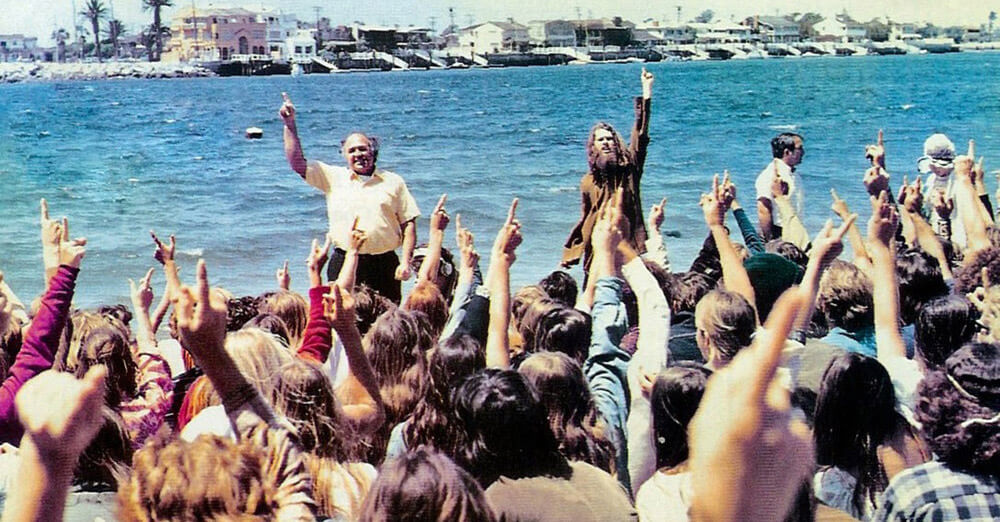
Later on, I came to realize that the reason was because that is what Chuck Smith had done for him when Tom was a young man: In 1976, Pastor Chuck sent Tom to Colorado to start a Calvary Chapel church here. In the movie, “Jesus Revolution,” millions of people saw the portrayal of how Chuck Smith empowered the young Greg Laurie to plant a church in Riverside, California. Still, the even more incredible reality is that Pastor Chuck did similar things with many young people over the years. Tom was doing for me what Chuck had modeled for him.
I remember sitting with Tom and listening to him tell stories of the early days of Calvary Chapel. One thing that Tom told me was that, in his opinion, the true genius of Chuck Smith was not his verse-by-verse teaching, as many people assume, and as masterful as that was. The true genius of Chuck Smith, Tom said, was that Chuck was willing, and even eager, to empower young people to serve the Lord in meaningful ways because he genuinely believed in the work of the Holy Spirit in and through people who were willing to make themselves available to God.
I finally got to meet Pastor Chuck in Austria, at the conference center that he had acquired for Calvary Chapel as a launching point for ministry in Eastern Europe. He asked about our ministry in Hungary and gave encouragement and affirmation. As I look back on that, I’m full of appreciation for him as a person who was more than just a good Bible teacher but an example of foresight and faith. Not only did Pastor Chuck want the Gospel to go forth into the whole world, but he understood that God wanted to use many other people to do that work. He was willing to support missionaries and church planters, including some of us who maybe wouldn’t have been empowered to do those things by anyone else who didn’t have the measure of faith he did!
Now, ten years after Pastor Chuck’s heavenly homecoming, I’m more inspired than ever to carry on his legacy of Bible teaching, evangelism, missions, and empowering people, especially young people, to serve the Lord.
Q&A On Chuck Smith’s Approach To Ministry – With Nick Cady And Brian Brodersen
Nathan Knight is the Lead Pastor of Restoration Church in Washington DC — a church that he planted 14 years ago.
He now leads a church planting network in the DC area called Treasuring Christ Together, and he recently wrote a book (published by Crossway and 9Marks) about church planting called: Planting by Pastoring: A Vision for Starting a Healthy Church.
In our discussion, Nathan and I talk about the premise of his book, which seeks to encourage the planting of new churches, while getting back to the biblical definitions of what a church is, what a church does, and how to define “success” in a local church.
Nathan Knight is the Lead Pastor of Restoration Church in Washington DC — which is a church that he planted 14 years ago. He now leads a church planting network in the DC area called Treasuring Christ Together, and he recently wrote a book (published by Crossway and 9Marks) about church planting called: Planting by Pastoring: A Vision for Starting a Healthy Church.
In our discussion, Nathan and I talk about the premise of his book — which seeks to encourage the planting of new churches, while getting back to the biblical definitions of what a church is, what a church does, and how to define “success” in a local church.
Make sure to visit the Theology for the People website at nickcady.org
Elisabeth Elliot was one of the most well-known and influential figures of the late 20th century, and early 21st century, both in evangelical circles, but also in the culture at large.
On this episode Lucy and I speak about who Elisabeth Elliot was and the influence she had.
As Lucy points out, Elisabeth Elliot was a sometimes controversial figure, who changed her views on things throughout her life, and her life reflects much of the history of evangelicalism in the 20th century.
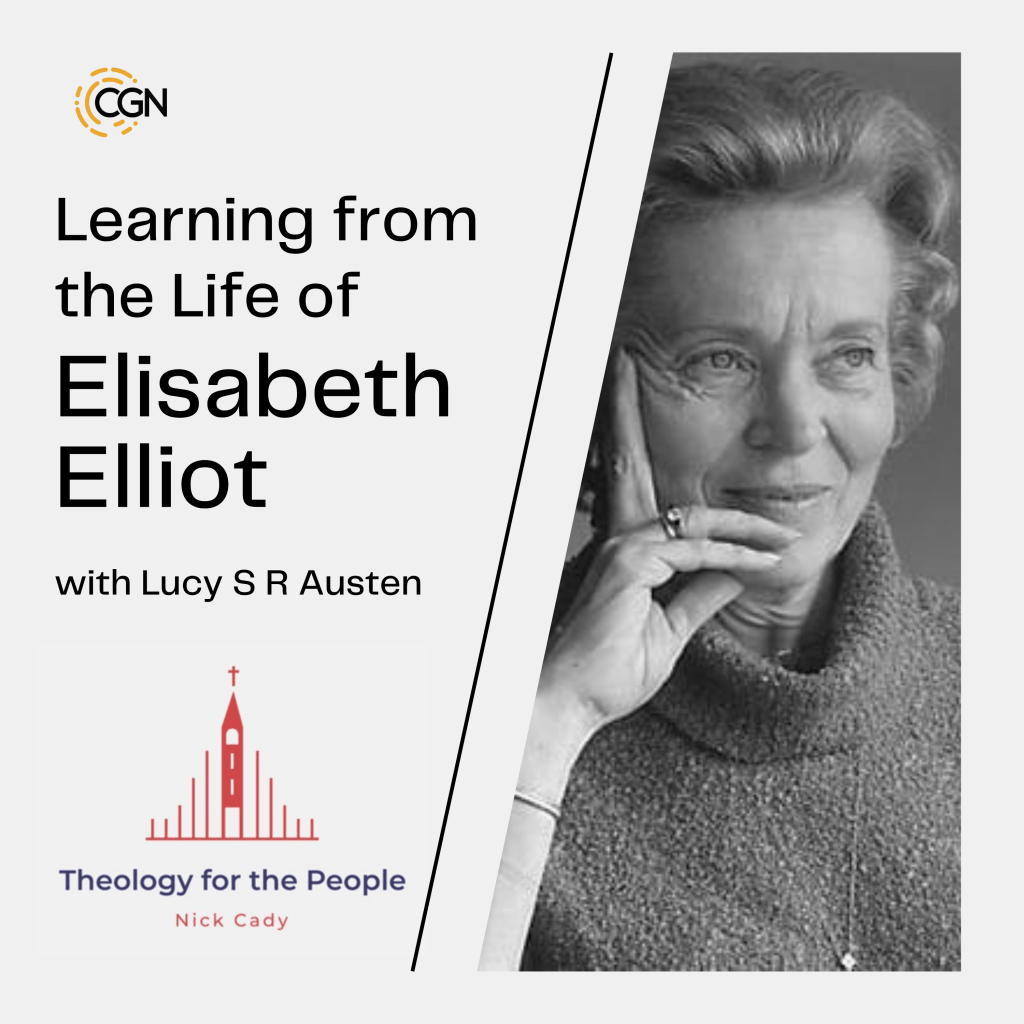
Elisabeth Elliott was one of the most well-known and influential figures of the late 20th century, and early 21st century, both in evangelical circles, but also in the culture at large. Recently a biography of her life was written by Lucy S R Austen, and published by Crossway Publishing, titled Elisabeth Elliot: A Life.
On this episode of Theology for the People, I speak with Lucy S R Austen about who Elisabeth Elloitt was and the influence that she had. As Lucy points out, Elisabeth Elliot was a sometimes controversial figure, who changed her views on things throughout her life, and her life reflects much of the history of evangelicalism in the 20th century.
Visit the Theology for the People website at nickcady.org
Earlier this year I traveled to Ukraine to help lead a conference for Christians who had been providing aid for people in their country since the full-scale Russian invasion began in February 2022.
While I was there, I heard stories from many people of tragedy and loss, but I also heard stories of heroism, faith, and spiritual revival.
I also had the opportunity to record a few interviews with members of different churches, in which they got to share their experiences in the early days of the war, how things look now, and how God has been working and using them to share his love to hurting people.
These interviews are being released on the CGN Voices Podcast. There will be four episodes in this mini-series, and they will be released every Friday for the next few weeks.
The first episode came out last week, and it is one which was particularly meaningful to me. You can listen to it here, or in the embedded player below.
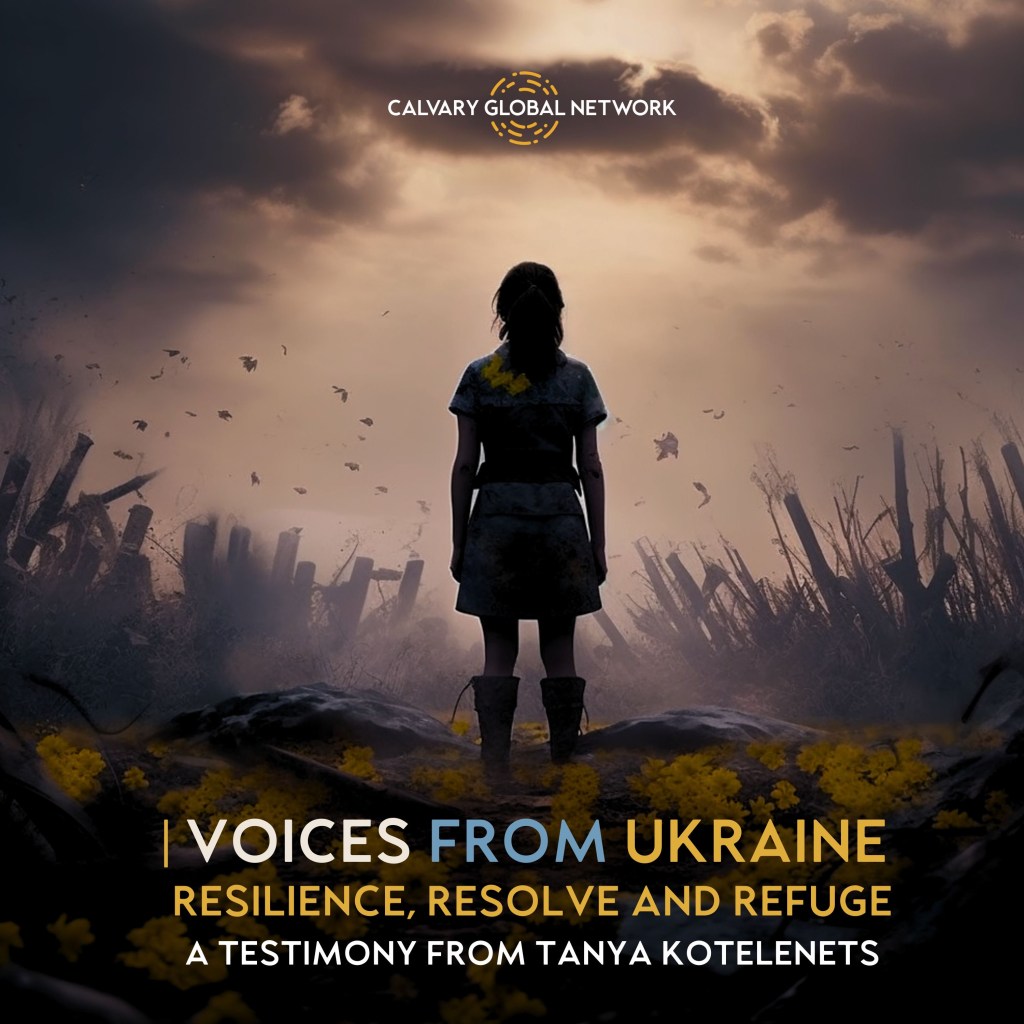
Ukraine: Resilience, Resolve and Refuge – A Testimony from Tanya Kotelenets –
CGN Voices
Welcome to "Voices from Ukraine", a mini-series inside look at the resilience, faith, and service of Calvary Chapel believers in Ukraine during the difficult months since Russia's full-scale invasion began in February 2022.
In this special edition, we sit down with Tanya Kotelenets from a church in eastern Ukraine. Kotelenets shares her harrowing experiences from the first days of the war – the fear, uncertainty and eventual decision to flee the city with her church community. Despite difficult conditions, God's provision and grace sustained them.
Though she returned home months later, the impact of war remains. Kotelenets’s husband ministers at funerals almost daily, including that of a coworker who recently died in combat. Our listeners are reminded that all parts of the body of Christ feel the suffering of others.
Kotelenets asks for prayers for the children enduring so much change and loss, and for strength to continue living through this conflict with hope. If you'd like to support relief efforts in Ukraine, donations can be made through calvaryglobalnetwork.com/relief
Join us next time for another firsthand account of courage, sacrifice and faith continuing to burn bright within the Calvary Chapel family amidst the darkness of war.
My guest is Shane Angland. Shane is a graduate of Dallas Theological Seminary, and he was also a missionary in Eastern Ukraine.
The Raskol of 1666 was a schism that took place in the Russian Orthodox Church, which highlights some of the distinctive features of Orthodox theology, and Russian Orthodoxy theology uniquely. Furthermore, we talk about how Russian Orthodox theology plays a role in the current war in Ukraine.
On this episode of Theology for the People, we dive into the topic of Russian Orthodox Christianity.
My guest is Shane Angland. Shane is a graduate of Dallas Theological Seminary, and he was also a missionary in Eastern Ukraine.
The Raskol of 1666 was a schism that took place in the Russian Orthodox Church, which highlights some of the distinctive features of Orthodox theology, and Russian Orthodoxy theology uniquely. Furthermore, we talk about how Russian Orthodox theology plays a role in the current war in Ukraine.
Visit the Theology for the People blog at nickcady.org
On this episode of the Theology for the People Podcast, I speak with Mike Neglia about the 7 letters to 7 churches in Revelation 2-3, and what these letters show us about Christ’s concern for local churches, and how that should shape the way we feel and act towards the local church ourselves.
Mike Neglia is the Lead Pastor of Calvary Cork, in Cork, Ireland. He is a graduate student at Western Seminary and he leads Expositors Collective, an initiative to train and equip the next generation of Christ-centered expository Bible teachers.
Christ's Concern for the Local Church: Seen in the 7 Letters to Churches in Revelation – with Mike Neglia –
Theology for the People
Mike Neglia is the Lead Pastor of Calvary Cork, in Cork, Ireland. He is a graduate student at Western Seminary and he leads Expositors Collective, an initiative to train and equip the next generation of Christ-centered expository Bible teachers.
In this episode, Mike and I speak about the 7 letters to 7 churches in Revelation 2-3, and what these letters show us about Christ's concern for local churches, and how that should shape the way we feel and act towards the local church ourselves.
Resources mentioned in this episode include:
Expositors Collective Podcast episode with Jeffrey Weima
The Sermons to the Seven Churches of Revelation: A Commentary and Guide, by Jeffrey Weima
Calvary Global Network International Conference
Calvary Cork YouTube page
On this episode of the Theology for the People Podcast, I speak with Shane Angland about the Radical Reformers of the 16th Century, and how the ideas of the Radical Reformation, though they were initially met with opposition, have had an incredible impact on Christianity as we know it today, including how the church relates to the government and society as a whole. Furthermore, we discuss some of the lessons we can learn today from the mistakes and missteps of the Radical Reformers.
Shane is a Teaching Elder at Ennis Evangelical Church in County Clare, Ireland. He spent several years as a missionary in Ukraine, and is a graduate of Dallas Theological Seminary.
On this episode I speak with Shane Angland about the Radical Reformers of the 16th Century, and how the ideas of the Radical Reformation, though they were initially met with opposition — they have had an incredible impact on Christianity as we know it today, including how the church relates to the government and society as a whole. Furthermore, we discuss some of the lessons we can learn today from the mistakes and missteps of the radical reformers, as well.
Shane Angland is a Teaching Elder at Ennis Evangelical Church in County Clare, Ireland. He spent several years as a missionary in Ukraine, and is a graduate of Dallas Theological Seminary.






 Theology for the People