William Tyndale and the Desire for the English Bible – with Shane Angland

If you read the Bible in English, you may not realize all of the drama and sacrifices that went into getting the Bible translated into the English language. 

In this episode of the Theology for the People Podcast, I speak with Shane Angland of Ennis Evangelical Church in County Clare, Ireland. Shane holds a Master of Divinity degree from Dallas Theological Seminary, and specializes in historical theology.

Shane and I speak about William Tyndale: an English biblical scholar and linguist who became a leading figure in the Protestant Reformation, until he was executed for his beliefs. Tyndale created the first English translation of the New Testament from the original Greek text and was working on translating the Old Testament from Hebrew. Much of his work can still be seen in the way the Bible is translated into English to this day. 

Click here to listen to the episode, or listen in the embedded player below.

William Tyndale and the Desire for the English Bible – with Shane Angland Theology for the People

If you read the Bible in English, you may not realize all of the drama and sacrifices that went into getting the Bible translated into the English language.  William Tyndale was an English biblical scholar and linguist who became a leading figure in the Protestant Reformation, until he was executed for his beliefs. Tyndale created the first English translation of the New Testament from the original Greek text and was working on translating the Old Testament from Hebrew. Much of his work can still be seen in the way the Bible is translated into English to this day.  In this episode, my guest is Shane Angland of Ennis Evangelical Church in County Clare, Ireland. Shane holds a Masters of Divinity from Dallas Theological Seminary, and specializes in historical theology.

Understanding the Person and Work of the Holy Spirit – with Fred Sanders

Who is the Holy Spirit, and how does an understanding of the person and work of the Holy Spirit contribute to our life and faith as believers in Jesus?

In this episode of the Theology for the People podcast, I speak with Fred Sanders. Fred is professor of theology at the Torrey Honors College at Biola University. He is the author of a much sought-after series of theological comic books, as well as the recently published book, The Holy Spirit: An Introduction, which is part of the Short Studies in Systematic Theology series put out by Crossway Publishing.

Fred has focused much of his theological work on the topic of the Trinity, so when it comes to talking about the person and work of the Holy Spirit, he has a unique and helpful perspective.

In this episode we talk about what the Bible says and doesn’t say about the Holy Spirit, whether it’s okay to pray to the Holy Spirit, and more.

Click here to listen to the episode, or listen in the embedded player below.
Understanding the Person and Work of the Holy Spirit – with Fred Sanders Theology for the People

Who is the Holy Spirit, and how does an understanding of the person and work of the Holy Spirit contribute to our life and faith as believers in Jesus?  Fred Sanders is professor of theology at the Torrey Honors College at Biola University. He is the author of a much sought-after series of theological comic books, as well as the recently published book, The Holy Spirit: an Introduction, which is part of the Short Studies in Systematic Theology series put out by Crossway Publishing. Fred has focused much of his theological work on the topic of the Trinity, so when it comes to talking about the person and work of the Holy Spirit, he has a unique and helpful perspective.  In this episode we talk about what the Bible says and doesn’t say about the Holy Spirit, whether it’s okay to pray to the Holy Spirit, and more. Make sure to visit the Theology for the People website at nickcady.org

Mental Health & the Bible – with David Murray

How should we, as Christians think about mental health and mental illness? Are there ways in which the Bible gives us insights into treating mental illness, that go beyond what modern secular scholarship can provide?

In this episode of the Theology for the People Podcast, I speak with David Murray.  David Murray holds a PhD from Vrije Universiteit Amsterdam and has pastored churches in Scotland and the USA. He is also a counselor, and the author of several books, including the latest, which he co-authored, A Christian’s Guide to Mental Illness: Answers to 30 Common Questions.

In our discussion, David talks about his own struggles with mental illness, and about how the Bible gives us the best possible framework for dealing with issues that are often both spiritual and physical in nature.

Click here to listen to the episode, or listen in the embedded player below.
Mental Health & the Bible – with David Murray Theology for the People

How should we, as Christians think about mental health and mental illness? Are there ways in which the Bible gives us insights into treating mental illness, that go beyond what modern secular scholarship can provide? In this episode, I speak with David Murray.  David Murray holds a PhD from Vrije Universiteit Amsterdam and has pastored churches in Scotland and the USA. He is also a counselor, and the author of several books, including the latest, which he co-authored, A Christian’s Guide to Mental Illness: Answers to 30 Common Questions. In our discussion, David talks about his own struggles with mental, and about how the Bible gives us the best possible framework for dealing with issues that are often both spiritual and physical in nature.

Discipleship Pathways

Earlier this year I met with the team from Expositors Collective in the mountains of Southern California for a few days of meetings and recording our content into a video series.

During our time, we recorded a discussion for the Expositors Collective podcast, which turned out surprisingly well! We started off talking about pet peeves, but finished with a strong discussion about creating a discipleship pathway for your church.

Listen to the episode here: Pet Peeves and Pathways (Expositors Collective Podcast)

Sometimes when people hear the word “discipleship,” it invokes an image in their mind of one-on-one mentorship, studying through a book together. Certainly this is one method of making disciples, but to conceive of discipleship only in this way is incredibly reductionistic.

Discipleship is a multifaceted thing, and requires multiple inputs and opportunities for growth. Everything from attending worship services, serving, taking Communion, participating in small group Bible studies – just to name a few – are ways that people are equipped as disciples of Jesus.

In this episode, Dr. John Whittaker (check out johnwhittaker.net) mentions the importance of creating a discipleship pathway, and I join in with my thoughts on why it is important. Shortly after this trip, I went to Ukraine and Serbia, where I spoke a lot with church leaders there about the importance of creating discipleship pathways for their churches. Upon returning home, we discussed this at our staff meeting at White Fields Church, and our Executive Pastor, Jason, put together this great infographic to share with our church. Maybe it can be helpful for you as well, as you think about creating a discipleship pathway for your church.

Explaining the Three Main Views on Eschatology

For many people, the study of the “End Times” can feel mysterious and disorienting. But, upon examination, what you find is that there are really only three main lenses through which people interpret the eschatological texts in the Bible.

In this episode of the Theology for the People Podcast, my friend Aaron Salvato from the Good Lion Podcast, interviews me about the end times passages in the Bible and I lay out the three different ways these passages have been interpreted, and why. 

I outline the futurist, preterist, and idealist positions, and explain how they correspond to premillennialism, postmillennialism, and amillennialism. I also weigh the strengths and weaknesses underlying these different interpretations.

Click here to listen to the episode, or listen in the embedded player below.
Explaining the Three Main Views on Eschatology Theology for the People

For many people, the study of the “end times” can feel mysterious and disorienting. But, upon examination, what you find is that there are really only three main lenses through which people interpret the eschatological texts in the Bible. In this episode, my friend Aaron Salvato from the Good Lion Podcast, interviews me about the end times passages in the Bible and I lay out the three different ways these passages have been interpreted, and why.  I outline the futurist, preterist, and idealist positions, and explain how they correspond to premillennialism, postmillennialism, and amillennialism. I also weigh the strengths and weaknesses underlying these different interpretations. Make sure to visit the Theology for the People website at nickcady.org

How Psalm 23 is a Microcosm of the Bible – with David Gibson

Psalm 23 is one of the most well-known and beloved passages in the Bible. It is often read at funerals, or at times when people are in need of comfort. And yet, there is more to this Psalm than many people realize.

In this episode of the Theology for the People podcast, I speak with David Gibson, the Minister of Trinity Church in Aberdeen, Scotland, and the author of several books, including his latest, The Lord of Psalm 23: Jesus Our Shepherd, Companion, and Host.

According to David, Psalm 23 echoes the major themes of the Bible and foreshadows God’s saving work through Jesus – in a way that is wonderful, edifying, and encouraging. Rather than being a Psalm for death – he wants to show us how this is a passage about life, for those who follow Jesus!

Click here to listen to the episode, or listen in the embedded player below.
Why Psalm 23 is a Microcosm of the Bible – with David Gibson Theology for the People

Psalm 23 is one of the most well-known and beloved passages in the Bible. It is often read at funerals, or at times when people are in need of comfort.  And yet, there is more to this Psalm than many people realize. According to my guest, David Gibson, Psalm 23 echoes the major themes of the Bible and foreshadows God’s saving work through Jesus – in a way that is wonderful, edifying, and encouraging.  Rather than being a Psalm for death – he wants to show us how this is a passage about life, for those who follow Jesus! David Gibson is the minister of Trinity Church in Aberdeen, Scotland, and the author of several books, including his latest: The Lord of Psalm 23: Jesus Our Shepherd, Companion, and Host. Make sure to check out the Theology for the People website at nickcady.org

Here’s the Equipment and Software I Use for Podcasting

Someone recently asked me to give them a list of the equipment and software I use for podcasting. I figured other people might be interested in this info as well, so here you go!

Hardware

For my microphone, I use the Shure SM7B Dynamic Vocal Microphone. This is the industry standard for vocal mics, and the quality is great.

Next, you’ll need an audio interface to plug the microphone into. I use this one: Focusrite Scarlett 2i2 3rd Gen USB Audio Interface. This mixer is perfect for 2 microphones. If you want to have 3-4 guests on your podcast, you’ll need the 4-Channel mixer.

For that microphone and mixer, you’ll also need a preamp like this one: sE Electronics DM1 Dynamite Active In-line Microphone Preamp. That preamp also comes with the xlr microphone cables you’ll need. You can also buy those cables separately, like here for example.

Boom mic stand to mount it on your desk: Gator Frameworks Deluxe Desk-Mounted Broadcast Microphone Boom Stand with Integrated XLR Cable.

Finally, you’ll need some USB-C cables to connect the mixing board to your computer.

Software

For editing and production, I use Descript. It’s great, and it uses AI to transcribe the episodes, so you can easily edit them. You can also use it to make all kinds of clips with subtitles for social media.

For remote recording, I use Riverside.fm. What’s great about it is that it records locally on each computer, and them uploads the recordings, that way, if someone has a weak connection, it won’t affect the integrity or the quality of the recording.

For publication, I use Spotify for Podcasters. It’s a free service which distributes to all major podcast platforms and gives great analytics.

Why Jesus’ Teachings in the Gospels are Reliable & Incredible – with Dr. Peter J. Williams

Many people consider Jesus to be a great teacher, but few actually realize just how incredible his teachings actually were.

In this episode of the Theology for the People podcast, I speak with Dr. Peter J. Williams, the principal of Tyndale House in Cambridge, and the chair of the International Greek New Testament Project. He is also a member of the ESV Translation Oversight Committee, and the author of several books, including: Can We Trust the Gospels?

Dr. Williams’ latest book is called The Surprising Genius of Jesus: What the Gospels Reveal about the Greatest Teacher, in which he examines Jesus’ teachings in the Gospels and shows how we know that these teachings truly do originate with Jesus, and that they show an incredible awareness of, and connection to the Old Testament in a way that would have triggered the memories of the first listeners, and which contains layers of meaning for us as readers today.

This is a fascinating discussion; I hope you enjoy it!

Click here to listen to the episode, or listen in the embedded player below.
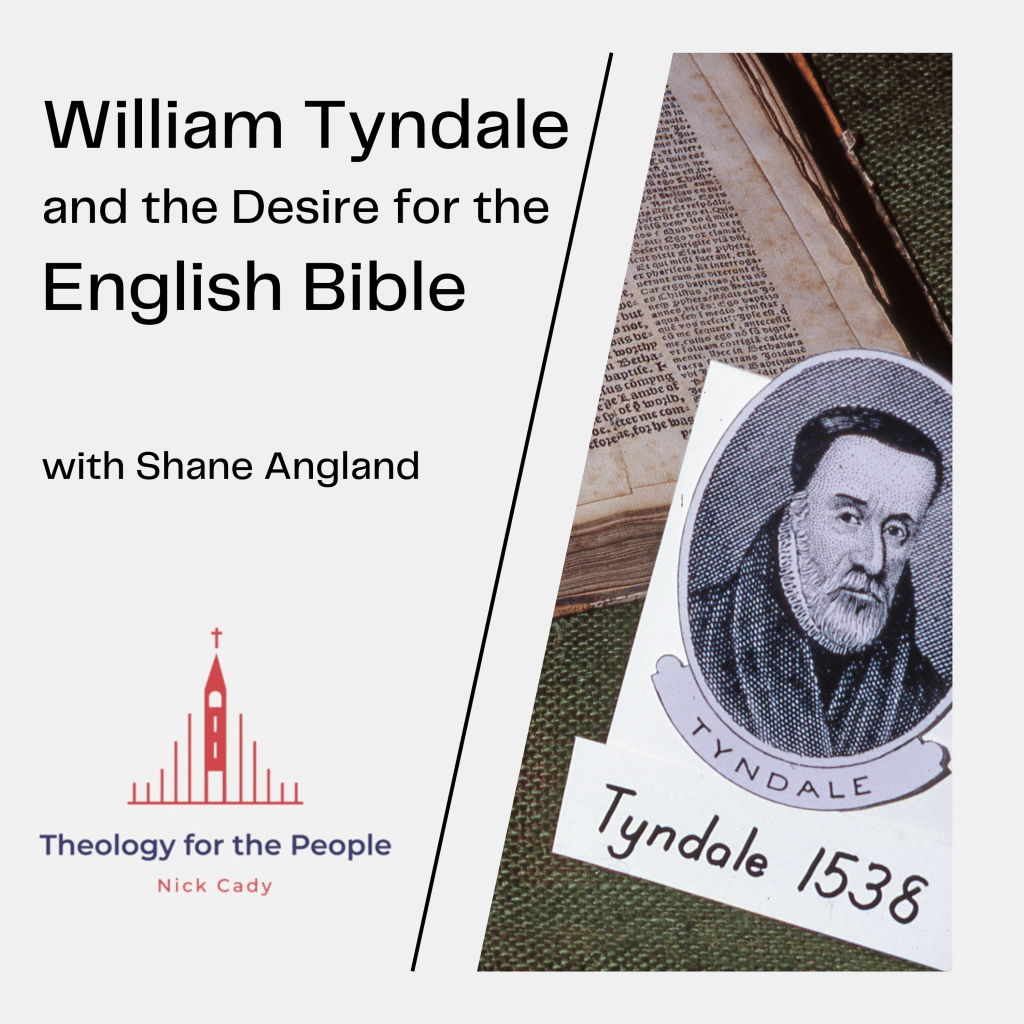
Peter J. Williams – Why Jesus’ Teachings in the Gospels are Reliable & Incredible Theology for the People

Many people consider Jesus to be a great teacher, but few actually realize just how incredible his teachings actually were. Dr. Peter J. Williams is the principal of Tyndale House in Cambridge, and he is the chair of the International Greek New Testament Project. He is also a member of the ESV Translation Oversight Committee, and the author of several books, including one titled: Can We Trust the Gospels? Dr. Williams' latest book is called The Surprising Genius of Jesus: What the Gospels Reveal about the Greatest Teacher, in which he examines Jesus' teachings in the Gospels and shows how we know that these teachings truly do originate with Jesus, and that they show an incredible awareness of, and connection to the Old Testament in a way that would have triggered the memories of the first listeners, and which contains layers of meaning for us as readers today. Make sure to check out the Theology for the People website at nickcady.org

Remembering Pastor Chuck Smith

October 3, 2023 marks 10 years since the passing and heavenly homecoming of Pastor Chuck Smith. Pastor Chuck was the man God used to start the Calvary Chapel Movement of churches. 

For this anniversary, I wrote an article for CalvaryChapel.com about how Pastor Chuck impacted my life, and the lives of many other young people – including my pastor, Tom Stipe.

Additionally, I recorded a bonus episode of the Mission & Methods Podcast, in which I spoke with Pastor Brian Brodersen about Chuck’s approach to ministry, including some questions about how Chuck pastored personally, and what were the major influences that shaped Chuck’s theology, and his preaching.

Pastor Brian is uniquely qualified to speak to these questions, as he not only served alongside Pastor Chuck and eventually succeeded him as the Senior Pastor of Calvary Chapel of Costa Mesa — but he also shares close family ties to Pastor Chuck, as his son in law.

Here is the article, and the podcast episode can be listened to here or in the embedded player below.

How God Used Chuck Smith To Empower A New Generation Of Pastors

When I was 18 years old, I boarded a plane bound for Hungary. Despite the fact that I had only been following Jesus for two years, my pastor, the late Tom Stipe, sent me out as a missionary. Three years later, when I was 21, Tom ordained me as I was going out to plant a church.

At the time, these actions didn’t strike me as abnormal or unusual, yet now, years later, I look back on them with a sense of surprise. Why was Tom willing to take a chance on me, as young as I was? Why did he trust that I could serve the Lord in those ways without any formal training?

Later on, I came to realize that the reason was because that is what Chuck Smith had done for him when Tom was a young man: In 1976, Pastor Chuck sent Tom to Colorado to start a Calvary Chapel church here. In the movie, “Jesus Revolution,” millions of people saw the portrayal of how Chuck Smith empowered the young Greg Laurie to plant a church in Riverside, California. Still, the even more incredible reality is that Pastor Chuck did similar things with many young people over the years. Tom was doing for me what Chuck had modeled for him.

I remember sitting with Tom and listening to him tell stories of the early days of Calvary Chapel. One thing that Tom told me was that, in his opinion, the true genius of Chuck Smith was not his verse-by-verse teaching, as many people assume, and as masterful as that was. The true genius of Chuck Smith, Tom said, was that Chuck was willing, and even eager, to empower young people to serve the Lord in meaningful ways because he genuinely believed in the work of the Holy Spirit in and through people who were willing to make themselves available to God.

I finally got to meet Pastor Chuck in Austria, at the conference center that he had acquired for Calvary Chapel as a launching point for ministry in Eastern Europe. He asked about our ministry in Hungary and gave encouragement and affirmation. As I look back on that, I’m full of appreciation for him as a person who was more than just a good Bible teacher but an example of foresight and faith. Not only did Pastor Chuck want the Gospel to go forth into the whole world, but he understood that God wanted to use many other people to do that work. He was willing to support missionaries and church planters, including some of us who maybe wouldn’t have been empowered to do those things by anyone else who didn’t have the measure of faith he did!

Now, ten years after Pastor Chuck’s heavenly homecoming, I’m more inspired than ever to carry on his legacy of Bible teaching, evangelism, missions, and empowering people, especially young people, to serve the Lord.

Q&A On Chuck Smith’s Approach To Ministry – With Nick Cady And Brian Brodersen

A Biblical Approach to Church Planting – with Nathan Knight

Nathan Knight is the Lead Pastor of Restoration Church in Washington DC — a church that he planted 14 years ago.

He now leads a church planting network in the DC area called Treasuring Christ Together, and he recently wrote a book (published by Crossway and 9Marks) about church planting called: Planting by Pastoring: A Vision for Starting a Healthy Church

In our discussion, Nathan and I talk about the premise of his book, which seeks to encourage the planting of new churches, while getting back to the biblical definitions of what a church is, what a church does, and how to define “success” in a local church.

Click here to listen to the episode or listen in the embedded player below.
A Biblical Approach to Church Planting – with Nathan Knight Theology for the People

Nathan Knight is the Lead Pastor of Restoration Church in Washington DC — which is a church that he planted 14 years ago. He now leads a church planting network in the DC area called Treasuring Christ Together, and he recently wrote a book (published by Crossway and 9Marks) about church planting called: Planting by Pastoring: A Vision for Starting a Healthy Church.  In our discussion, Nathan and I talk about the premise of his book — which seeks to encourage the planting of new churches, while getting back to the biblical definitions of what a church is, what a church does, and how to define “success” in a local church. Make sure to visit the Theology for the People website at nickcady.org