“The Kids Haven’t Changed. You Have.”

I see a lot of talk online about ‘Millenials’, and almost all of it is negative. It’s been going on for years now. Recently I saw a video in which a young woman apologizes on behalf of millenials everywhere for them being so awful. This video was shared widely by, you guessed it: people 35 years old and up.

A few years ago I went to a conference in Colorado Springs with Jeff, the Administrative Pastor at White Fields. The conference was put on by Barna Research Group and was about ministry to Millenials.

There were a few really good points made at the conference. One was that it’s going to be really hard to reach young people if they feel that you disdain them and don’t like them. The other one was, that despite all the chatter that Millenials are lazy, self-centered and entitled, if you really look at the virtues of this generation, you will see things like: they are heroic – they want to do great things and save the world! What if that was harnessed and directed towards good goals? That youthful zeal could accomplish many great things.

Here’s what I think: Each generation of adults is quick to forget that older people looked at their generation and thought the same things about them that they now think about Millenials. Remember GenX?  Remember Generation Y?  Remember how in the 90’s everyone thought the sky was falling and that the GenX-ers were never going to get jobs and move out of their parents’ basements?

Or how about we go back even a little bit further, to 1985, to John Hughes and The Breakfast Club. Remember the conversation between Vern the assistant principle and Carl the janitor?  Here’s a clip to refresh your memory:

“The kids haven’t changed. You have.”

Good point, Carl.

One of the things I appreciate most about the association of churches I found myself in as a young person (Calvary Chapel) was that they encouraged young people’s zeal, and gave them outlets for it. As a young person I had the opportunity to go overseas, full of zeal and idealism, and serve Jesus. I will forever be thankful for that opportunity. They didn’t squash my zeal, they gave me an outlet for it. They didn’t tell me that if I wanted to serve God then I needed to go to school for 6 years first and get a degree in Youth Ministry, until I came out tired and so burdened with debt that I wouldn’t dare do anything daring. Being busy serving God and working with churches as a missionary probably kept me from the siren call of temptation and other vain pursuits.

How about instead of bemoaning this up and coming generation, we encourage them to use their enthusiasm and heroism for God’s mission and give them plenty of opportunities to do so?


The Etymology of God

I enjoy linguistics; I consider it a hobby. I speak only 2 languages fluently, and several others to varying degrees. Whereas some people find language learning tedious, I find it invigorating.

One of the areas of linguistics I enjoy most is etymology: the study of the origin of words.

Etymology gives you a window into the thinking of a culture or a people group.

For example: I have been teaching a church history class at White Fields, and last week we were talking about how Constantine, before his conversion to Christianity, had monotheistic leanings and had declared “the venerable day of the Sun” (Sunday) to be a free day, on which no one was to work. Until that time, Sunday had been a work day, and Christians gathered for worship and the taking of the sacrament (communion) before work and then again after work, in the evening. More on that here.

Someone in the class said: Oh, so that’s why it’s called SUNday?  Yes, and in English that’s why it’s called Monday (Moon) and Saturday (Saturn).

In fact, it is interesting to consider the etymology of the names of the week in other languages. In Russian, Sunday is called: Воскресенье, which is a close derivative of the word воскрешение, which means “Resurrection”.

In Hungarian, it’s not quite as cool: Sunday is “Vasárnap” – which no doubt derives from “vásár-nap”: “Market Day”… Definitely not as cool (or as Christian) as “Resurrection”. While Romans were all about honoring the Sun, Hungarians were all about shopping…

But if etymology gives insight into the way a culture thinks, then what can we learn from the etymology of “God”?

The English word God, does not derive from the word “good”, as one might think, but comes from the Germanic Gott, which derives from the Gothic Gheu, which is thought to derive from the Sanskrit: Hu – meaning: “the one who is invoked” or “the one who is sacrificed to.”  It refers to the supreme being.

The Latin Deus, along with the related Greek Theos comes from the Indo-Iranian Deva/Sanskrit Dyaus, which are related to the terms for “to give light”, “to implore”. It is from these roots that the Spanish Dios comes.

In Hungarian, the word for God is Isten.  I’ve been told that this modern form derives from:  Ős-tény – literally: “The ancient truth (or: ancient fact)”

One of the very interesting things to read about is how different missionaries tried to find a given culture’s word for God, sometimes with great success and sometimes without. For example, in Korea, Catholic missionaries believed that the Koreans had no good word for God – as in, the Supreme Being of the universe – so they used the Chinese word for God, a word which was foreign to the Koreans, and which caused the Koreans to think of Christianity as a foreign religion. It was only when Protestant Presbyterian missionaries came to Korea, that they got to know the Korean culture and language well enough to realize that they did in fact have a word (and therein a concept) for the God of the Bible: the creator and sustainer of all things, the righteous judge of all the Earth – 하나님 (Hananim).

It is as Paul the Apostle said: God has not left himself without witness in any culture, or amongst any group of people. (Acts 14:17)  Etymology gives us a window into this truth.


Finishing Up the Trip

Yesterday was our final full day in Ukraine. We spent the day running errands and going around with Ben to look at different properties the church in Svitlovodsk has their eye on to purchase.
Svitlovodsk, with the Dniper river in the background
As part of our support of the ministry there, White Fields donated towards their building project. They currently meet in a 50 square meter (500 square foot) space in an office building, with a few extra rooms for children’s ministry. They estimate that for 60,000 USD they should be able to either buy land and build something from scratch or buy and refurbish a building. Pray for them in this regard.
In the evening we held part 2 of the Work as Worship seminar. Travis taught and then he and I fielded questions on the topic. It went really well and I think that we could easily fine tune this seminar and present it elsewhere. It is a topic which affects all people but something evangelical Christians fail to teach on enough – or to give a comprehensive enough vision for. I look forward to how we might be able to bring this teaching to our church in Longmont.
Travis teaching Work as Worship seminar: part 2 at Calvary Chapel Svitlovodsk

Right after the seminar ended, Levi, the assistant pastor and worship leader, drove Travis and I to Boryspil, where we stayed at a hotel near the airport, and then at 3:30 we woke up and got to the airport by 4:00am.

We had a 5 hour layover in Frankfurt, so we took atvantage of the great public transport here and went into the city. If you’ve been to Frankfurt, you know that there’s not a whole lot to see, so that was plenty of time.

Right now we are in the airport waiting for our flight to Denver. It’s been an extremely fruitful trip, but it will be great to be home.

Here are a few pictures from yesterday and today:

The first rule of cross fit: always talk about cross fit. Apartment building in Ukraine.
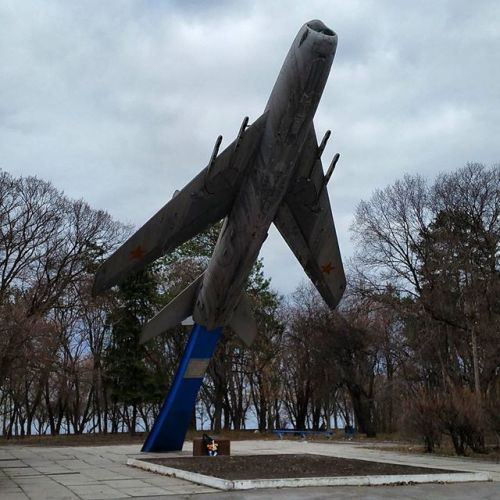
Glorious Soviet Air Force Jet in Svitlovodsk
Downtown Frankfurt
…always talk about Crossfit. Frankfurt Stock Exchange
Frankfurt City


Work as Worship Seminar in Svitlovodsk

Today we spent the day in Kremenchug and then in the evening we did our first session of the Work as Worship seminar at Calvary Chapel Svitlovodsk.

The seminar was well attended and the Q&A drew many thoughtful questions.

Tomorrow night Travis will teach part 2.

I am looking forward to seeing how this seminar, as well as the one on Christocentrisity which Ben and I taught at the Pastors and Leaders Conference in Kyiv, can be shared in other places, including our church in Longmont.

Teaching the Work as Worship seminar at CC Svitlovodsk, with Ben Morrison translating into Russian


Calvary Chapel Ukraine Pastors and Leaders Conference and Calvary Chapel Svitlovodsk

The past few days have flown by in a blur. On Friday Jani and Tünde arrived to Kyiv from Eger and then we headed out the the Calvary Chapel Ukraine Pastors and Leaders conference which was held at a very nice Christian conference center in Irpen, just North-West of Kyiv. There were also pastors in attendance from Belarus and Moldova, almost 40 in total.
Ben Morrison and I taught the conference on the topic of Christocentric preaching, and our focus was on explaining why it's important to preach that way and how to do it. Let's just say, the weekend and the material was nothing short of revolutionary for these pastors, and I can see how God is going to use this approach to shape this movement going forward. It was so good that I plan to make sharing this approach a priority in the US and wherever else I will have the opportunity to do so.
One of the pastors in Ukraine, in the city of Kharkiv, is the nephew of a lady at White Fields, so it was great to connect. Additionally, the pastor who came up from Moldova is an old friend of my wife and I, and it was great to catch up with him and hear what the Lord is doing there.
After the conference, Travis and I drove with Ben and Levi to Svitlovodsk, and this morning I taught at their church service. The people are very open and responsive to the Gospel and I was able to see many of the people I had met on my trip last year.
In the evening we did a men's fellowship at the Banya (Russian sauna) and had a great time.
Tomorrow evening and the following evening Travis and I will be teaching a seminar on Work as Worship, so please pray that goes well.
Here are some photos of the conference and church today:

Me teaching at the CC Ukraine Pastors and Leaders Conference with Victor Fisin translating. Victor is the pastor of Calvary Chapel Kharkov, Ukraine
Ben Morrison teaching at the conference
Teaching the morning at Calvary Chapel Svitlovodsk with Ben translating to Russian
CC Svitlovodsk


A Day in Kyiv

We arrived yesterday to Kyiv and have been staying with George and Sharron Markey. George's dad pioneered Calvary Chapel church planting in Ukraine, where there are now around 20 churches.
About 9 months ago George and his family moved back to Kyiv from Ternopil, where they had planted a church several years ago, to lead the church in Kyiv after the previous pastor stepped down. When I lived in Eger I had come to Ternopil twice to work with George and visit the church there.
After we arrived yesterday we went with George to the church office where he had a meeting, and then we got to walk around the city center of Kyiv.
In just a little bit we will be heading to the conference center for the Pastors and Leaders Conference which begins this afternoon. Jani and Tünde from Eger are on their way; I'm hoping they'll be blessed, instructed and encouraged by the conference and get connected with the Ukrainian Calvary Chapel leaders.
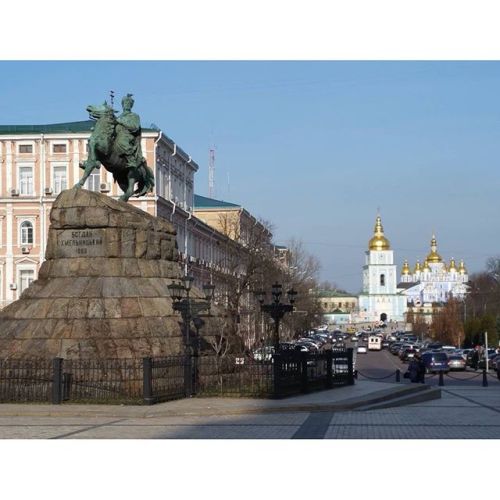
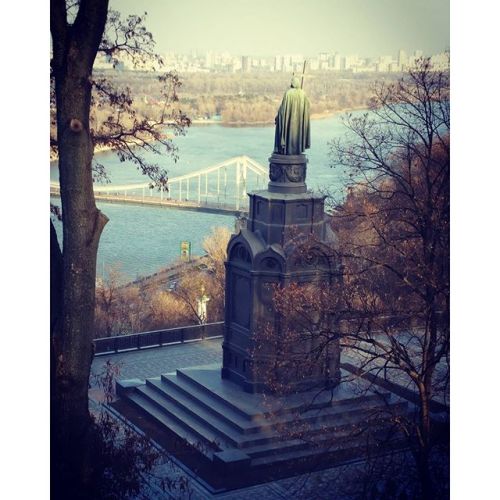
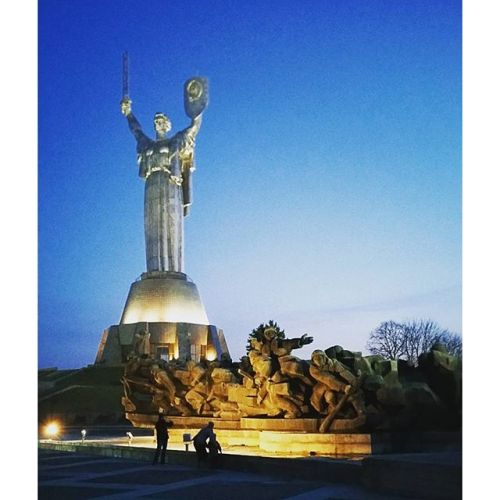
Here are some pictures from downtown Kyiv:

Dniper River in Kyiv
Mother of the Motherland Statue and Great Patriotic War Memorial

Famine Memorial


Good Times in Eger and a Surpise in Heves

Yesterday we spent the day in Eger. The church here has a car, which we were able to borrow and I was able to Travis out to see the site where we do our English Camp outreach every summer.
A couple from the Eger church, Zakk and Mira joined us and we went to Heves, where in 2010 we started an outreach fellowship which morphed into a gypsy church. Before I left Hungary, this ministry really took off, and it has continued to be a big part of the Eger church's outreach focus.
It was a weekday afternoon, so not everyone was around, but 20 or so people gathered to see us.
While we were there, some people came up to me and showed me their 4 month old baby – a baby they had named after me, Nikolasz, because I had been their pastor! I was blown away and honored and humbled that someone would have felt so impacted by our ministry there that they would name a child after me.
I prayed over their church and over a woman who is sick, and then we came back to Eger, where we met with people from the church there. The church organized an open house for people who wanted to come and see me, and it was a great time of catching up.
Afterwards Travis, Jani and I went out to the thermal bath in Demjén until midnight and talked about life, ministry, church and family before returning to our apartment for the night.
We will see Jani and Tünde again on Friday, because they are coming to Kyiv for the pastors conference I'll be teaching at. Please pray for their family and the ministries they lead in Eger; they are doing well and doing a great job with the church. It has been wonderful to see Jani develop as a pastor over the past 4 years.
Currently we are on the train to Budapest. I have a few meetings today and will teach tonight at Golgota Budapest (Calvary Chapel Budapest), and Travis will be getting together with Németh Laci, the pastor of Golgota Dél-Pest to go see the city and to discuss the ministry Laci leads to combat human trafficking in Hungary. Laci is doing a great work, and we would really like to find out if there is anything we can do to support him and the work he is doing to set people free from modern-day slavery right in his own backyard.

Some of the people we met with in Heves
Little Nikolasz, who was named after me
Communist statue at the site of our English Camp. It says Faithfulness to your nation, Faithfulness to your party!
Hanging out with people from Golgota Eger at Jani and Tünde's house


Follow-up on Bibles for Refugees

A few months ago, when the refugee crisis was at its peak in Europe, White Fields Church collected money to purchase Bibles for refugees, mostly from Iran and Syria, who had come to Hungary and had either become Christians or were interested in Christianity.

Bibles, especially Farsi (Persian) Bibles are expensive and hard to come by, but we were able to send 50 Bibles in various languages to those working on the ground with these refugees. Last summer, my wife Rosemary was able to meet with some of them in Debrecen, before the refugee camp there was closed this November. Since then most of the refugees have been moved to Bicske, near Budapest, and Békéscsaba in South-East Hungary. Those in Bicske are coming now every Monday to Golgota Budapest to learn the Bible and have Hungarian lessons.

The friends of ours in Budapest who help them asked me if Travis and I could come down and meet them today since we were in Hungary and our church had purchased these Bibles for them.

After breakfast with some friends from the Eger church, Travis and I took the train to Budapest, met with some friends at the church, and then went and joined the refugee Bible study, which was in English with translation into Farsi.

After Bible study, I got the opportunity to speak to the group. I told them about how Rosemary and I had spent years doing refugee ministry and we had seen several people from Iran come to faith in Jesus, and how we had also seen some of those people have their lives threatened, one man was attacked and almost killed, for their new faith.

For these people, the Gospel really is a matter of life and death – of all or nothing. As a result of becoming Christians, their lives will be at risk from their fellow countrymen for having converted and they will likely be disowned by their families and communities. However, though they may lose everything for following Christ in this life, they will gain eternal life in the next. Is it worth it? They would say: Absolutely.

One of the men, when they received the Bibles that our church sent them, held it up and said: “In my country I could be killed for reading this! Think about how powerful the message of this book must be that they want to do everything to keep us from reading it!”

One of the things I told this group, was that we were glad that we could provide for them the Bibles that we did, and that if they needed more, we would be happy to provide those also.

After I spoke to the group, I prayed for them. And after the prayer, Lisa, a missionary with Calvary Chapel in Hungary came over and showed me an email she had just received as I was speaking, from the Hungarian Bible Society, that they had located 30 Farsi Bibles, but they weren’t cheap. Lisa showed me the email and asked if I was serious about providing more Bibles…

We said yes, and we were able to purchase 30 Farsi Bibles for these young believers who have never owned a Bible of their own before. One of the men had received a New Testament in his language before, but was eager to read the Old Testament. Another man had received a Bible from us back in September, but had given it away to another man who wanted to read it and needed another one for himself to read.

Can you imagine not having access to a Bible? Or your faith being a matter of life and death? That is what these people face for their decision to follow Jesus.

God is doing a great work amongst these people, and he is going to use them to be evangelists to other refugees in Europe. These people are our brothers and sisters in the faith. Please pray for them and consider ways to support them. The harvest is plentiful, but the workers are few.


Going Back East, Way East

For the next 10 days I will be in Eastern Europe, first Hungary, where I lived for 10 years, and then to Ukraine.

The main purpose for my trip is to teach at a Pastors and Leaders Conference in Kyiv for Calvary Chapels in Ukraine. During my time there I’ll also be going down to visit a ministry White Fields partners with in Svitlovodsk.

Since I’m in the area, I’ll be visiting friends and ministries in Hungary, in Debrecen, Eger and Budapest.

image
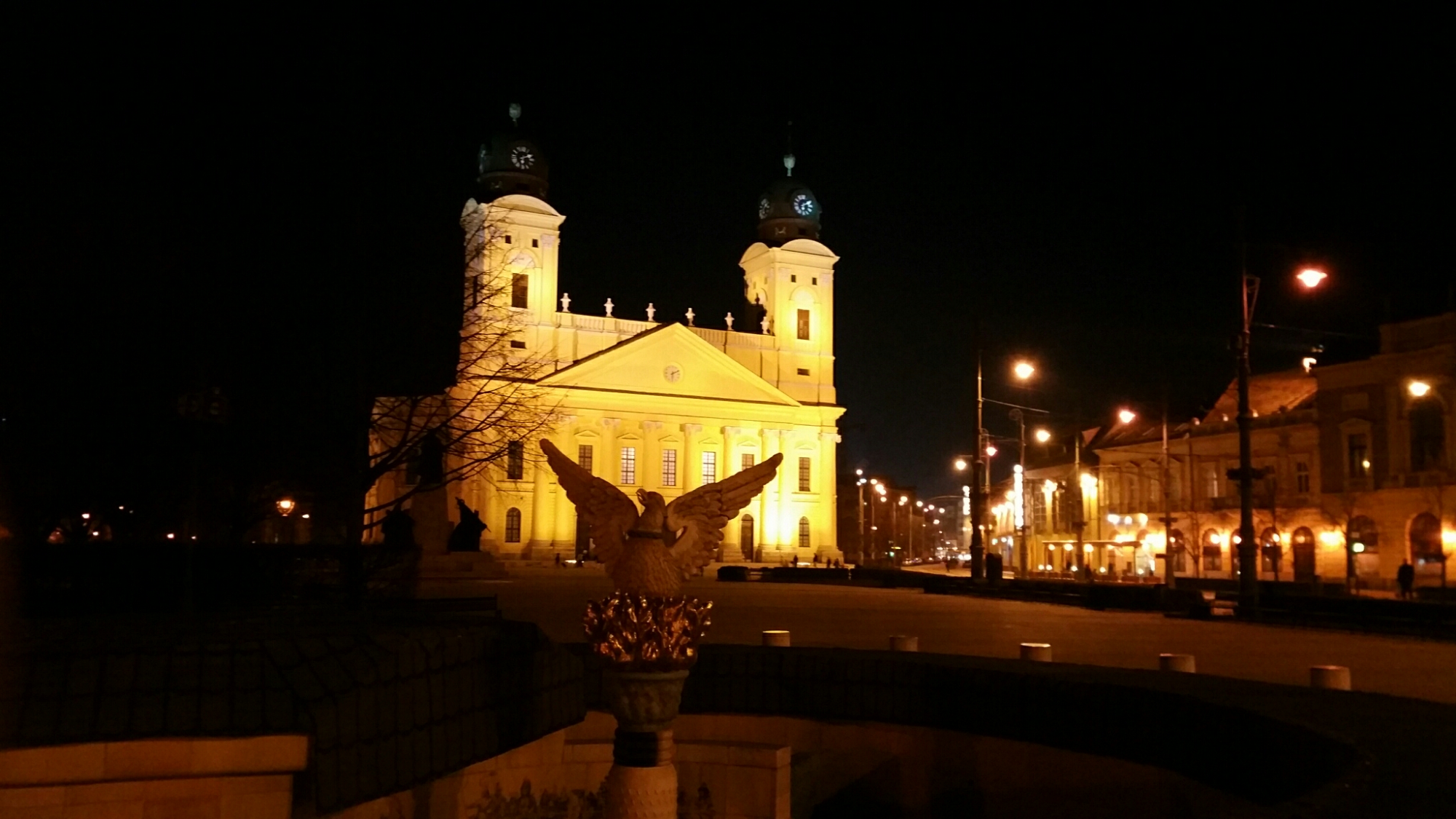
Debrecen City Center

Currently I’m in Debrecen, the 2nd largest city in Hungary, the city where I first lived when I moved here. This is where I met my wife and enjoyed 3 years of fruitful ministry to youth, refugees and university students.
Tomorrow morning I will speak at Golgota Debrecen, the church we used to serve at here, and then will spend the day with the pastor and his family.

I’ll be posting more pictures throughout my time here, so stay tuned.

About Those Muslims…

I ran across this factoid in my reading today:

In my experience working with muslim refugees from places like Iran, Afghanistan and Kosovo, I found that many people born and raised in muslim families in majority muslim countries are open to hearing and considering the Gospel – sometimes more open than people in “Christian” Europe and North America.

Many people born and raised in Islam know very little about what the Koran teaches, and for them being muslim is more about cultural identity than theological conviction.

Consider this: the majority of muslims in the world do not speak Arabic, yet the Koran is to be read only in its “pure” form: in Arabic. What this means is that the majority of muslims have not read the Koran for themselves. The largest muslim majority country in the world by population is not even in the Middle East: it is Indonesia, and in Indonesia Christianity is legal, there is a sizable Christian population and there is opportunity for muslim people to hear the Gospel.

Did you know that Christianity is the most culturally and racially diverse religion in the world – by far?!  Every other major faith has 80% or more of its adherents on 1 or 2 continents, but roughly 20% of Christians are in Africa, 20% are in South America, a little less than 20% are in Asia, a little more than 20% are in Europe and North America each.  No other religion even comes close to the ethnic and cultural diversity of Christianity.

One of the differences between Christianity and Islam is that whereas Christianity affirms other cultures and languages, Islam does not. Wherever Islam has spread it imposes a foreign (Arabic) language and culture, including dress, art, music and other forms of expression upon its adherents. Christianity does not; rather Christianity liberates the African to be fully African and the European to be fully European in regard to language, dress, art, music and other forms of cultural expression. Considering the fact that the majority of muslims live outside of the Arabian Peninsula, this is a particularly compelling aspect of Christianity compared to Islam, which has imposed Arabic culture upon people at the cost of suppressing their African, Persian, Indian, etc. forms of cultural expression. For the Arab, while Islam does represent a distinctly Arab cultural expression, the fact remains that for 600 years a strong and healthy, culturally-Arab Christian community thrived in the Middle East, the remnants of which still remain – although they are currently endangered – in Syria, Lebanon and Iraq.

Christians, we have been given a mission which is greater than protecting and preserving our comforts. We have been given a mission to “preach the Gospel to all creatures” and to “make disciples of all nations”.  This includes the 1.6 billion people on around the world who self-identity as muslim. We live in unprecedented times, in which more people raised muslim have come to faith in Jesus Christ in the last 20 years than in the previous 1400 combined. May God do an even greater work in the years to come, and may we share His heart for all people.