For many people, the study of the “End Times” can feel mysterious and disorienting. But, upon examination, what you find is that there are really only three main lenses through which people interpret the eschatological texts in the Bible.
In this episode of the Theology for the People Podcast, my friend Aaron Salvato from the Good Lion Podcast, interviews me about the end times passages in the Bible and I lay out the three different ways these passages have been interpreted, and why.
I outline the futurist, preterist, and idealist positions, and explain how they correspond to premillennialism, postmillennialism, and amillennialism. I also weigh the strengths and weaknesses underlying these different interpretations.
For many people, the study of the “end times” can feel mysterious and disorienting. But, upon examination, what you find is that there are really only three main lenses through which people interpret the eschatological texts in the Bible.
In this episode, my friend Aaron Salvato from the Good Lion Podcast, interviews me about the end times passages in the Bible and I lay out the three different ways these passages have been interpreted, and why.
I outline the futurist, preterist, and idealist positions, and explain how they correspond to premillennialism, postmillennialism, and amillennialism. I also weigh the strengths and weaknesses underlying these different interpretations.
Make sure to visit the Theology for the People website at nickcady.org
Yet, some further explanation will provide helpful in understanding exactly how to understand the times we are living in and what to expect.
The Promise of Jesus’ Coming
In 2 Peter chapter 3, Peter the Apostle responds to those who, in his day, were asking the question: “Where is the promise of his coming?”
In other words, even 2000 years ago, in the First Century A.D., people were asking this same question: “Are we living in the End Times?” And the question, “If Jesus said he would return, why hasn’t he come back yet?”
Peter tells us that “the promise of Jesus’ coming” was predicted by the Old Testament Prophets, was promised by Jesus, and by the Apostles. In 2 Peter 3:7, he tells us that Jesus’ (second) coming will involve a day of judgment, and the destruction of the ungodly.
Peter says in 2 Peter 3:10-12 that Jesus’ (second) coming will be “the day of the Lord,” in which the Lord will return to Earth, and the heavens will pass away with a roar, and the heavenly bodies (stars) will be burned up and dissolved, and the earth and everything in it will be exposed.
And in 2 Peter 3:13 he says that this will not only be a day of judgment, but for those who are in Christ, it will be a day of salvation. It will be at this time that God’s promise will be fulfilled, of bringing about the New Heavens and New Earth in which righteousness dwells (see also Revelation 21:1-4)
The Day of the Lord
The “Day of the Lord” is a really important concept in the Old Testament, especially in the Prophets. It refers to a time in history when God intervenes in the happenings on Earth, in order to bring judgment on those who do evil, and salvation to those who belong to Him.
Throughout the Old Testament there were many smaller “days of the Lord,” when God intervened and brought judgment (such as the flood in the time of Noah, which Peter mentions in 2 Peter 3:6.
But all of these “smaller” “days of the Lord” were just previews and foreshadowings of THE Day of the Lord, which is still yet to come. And what Jesus told us is that THE Day of the Lord, AKA: “the day of God’s coming, will be the day when He returns to Earth in the Second Coming.
The “Parousia”
The phrase “Second Coming of Christ” is not found in the Bible, but instead, the word the Apostles used to speak about the Second Coming was the Greek word “word “”Parousia,” which means “presence,” or “appearing,” or “arrival.” More specifically, it might be translated as, “presence after absence.”
The word “Parousia” is used 13 times in the New Testament, and every time it is used it speaks of Jesus’ Second Coming.
In Jesus’ first coming, he came to live as one of us, as our substitute in life (a life of perfect obedience to God), and in death (as an atoning sacrifice for our sins). Further, he resurrected, in order to make a way for us to also be resurrected from death to life everlasting.
In Jesus’ Second Coming, he will come as king: judge, and ruler.
Are we living in the Last Days?
Peter tells us in 2 Peter 3:3 that in the last days, there will be scoffers who will say, “Where is the promise of His coming?” In other words, “If Jesus is really coming back, why hasn’t he come back yet?”
After all, modern readers of the Bible might ask the question, “If Peter and the early Christians, who lived nearly 2000 years ago, thought that they were living in the last days, then does that mean that they were wrong?” “And what does that mean for us today, especially if you say that we are living in the Last Days right now?”
It is true, that the early Christians believed that Jesus was going to return during their lifetimes, and that he did not, and that he still has not returned since that time. So, if those early Christians thought that they were living in the End Times, then how can we say that we are living in the End Times?
This requires an understanding of what the “End Times” is.
Are we living in the End Times? Yes. Was Peter living in the End Times when he wrote this letter? Also: Yes.
Here’s why: Because the “End Times” or “Last Days” is a PERIOD of time which BEGAN with Jesus’ ascension into Heaven, 40 days after his resurrection.
How do we know that? Because in Acts chapter 2, we read about how, on the day of Pentecost (10 days after Jesus’ ascension), the Holy Spirit was poured out on the 120 believers who were gathered in an upper room in Jerusalem. As a result, those people began to speak about God’s amazing works, in multiple languages, and the people down on the street who heard them doing this, said amongst themselves, “Look! Those people are already drunk, and it’s only 9:00 in the morning!” (Acts 2:13)
And Peter stood up at that moment and addressed the crowd, and said to them: These people are not drunk! Rather this is what was spoken of by the Prophet Joel. (Acts 2:14-16)
Peter then quoted from the Book of Joel, chapter 2 — where the Prophet Joel said that in the Last Days, God will pour out his Spirit, and these kinds of things would happen. (Acts 2:17)
In other words: Peter was explaining to those people, that with the ascension of Jesus and the coming of the Spirit on Pentecost, the “Last Days” had begun. The Last Days is the final period in the timeline of history, before the “coming of the Lord.” We are in that period right now, and have been for the past several centuries since Jesus’ ascension into Heaven.
You can think of it like this: Until the ascension of Jesus, history was moving forward, towards “the end of the age,” (Matthew 24:3). But when Jesus ascended into Heaven, the timeline of history turned, and began running parallel to “the end.”
That’s why we have been in the “End Times” or “Last Days” for almost 2000 years now. And the reason that’s important is because it means that Peter and the early Christians were not wrong in expecting Jesus to return in their lifetimes.
Further, it means that there is currently nothing preventing Jesus from coming back at any moment.
Peter says in 2 Peter 3:10 that when Jesus comes, it will be like the coming of a thief. When I lived in Hungary, one evening while we were out at dinner, our house got broken into and robbed. The thieves did not notify us that that they would be coming over at 7:00 PM on Tuesday. The only way for us to have been ready for their coming, would have been for us to always be ready. In the same way, Jesus’ coming could happen at any time.
Why Does Jesus Delay His Coming?
Jesus has not actually delayed or postponed his coming, though, to many of us, it may seem like the “end times” has been going on a long time.
In 2 Peter 3:8-9, Peter says:
But do not overlook this one fact, beloved, that with the Lord one day is as a thousand years, and a thousand years as one day. The Lord is not slow to fulfill his promise as some count slowness, but is patient toward you, not wishing that any should perish, but that all should reach repentance.
2 Peter 3:8-9
Our sense of time is very different than God’s sense of time, Peter tells us. 2000 years may feel like a long time to us, but it’s not a long time to God.
In other words, God is not slow, but He is patient. And God’s patience has a purpose.
The purpose of God’s patience is that there are more people He wants to save! There are more people he wants to rescue and redeem, and bring into His family. Personally, I sure am glad He waited for me!
As Christians today — we often (rightly) say, “Come quickly Lord Jesus!” “Come and deal with all the wickedness in the world! Come, and bring your Kingdom of Righteousness!” Yet, if Jesus would have returned 10 years ago, or 20 years ago, many of us would not have been in a saving relationship with Jesus.
We should not confuse the patience of God with the permission of God. That’s the mistake that some in the New Testament era made. There is an urgency to the message of the gospel. And yet, God’s patience has a purpose: that more would be saved.
How to Live in the Last Days
In 2 Peter 3:11-12, Peter tells us that “Since all these things are thus to be dissolved, what sort of people ought you to be in lives of holiness and godliness, waiting for and hastening the coming of the day of God”
Since this world is going to pass away, it would be foolish to live lives focused on and for earthly things that will not last. Instead, our attention is better spent focusing on things that will last.
When everything is destroyed, what will remain are: God and human souls.
Therefore, the focus of our lives should be on pursuing godliness and holiness, because a relationship with the Living God is eternal (see John 17:3).
Furthermore, holiness and godliness matter for our mission. Jesus taught us: Let your light shine before others, so that they may see your good works and give glory to your Father who is in heaven (Matthew 5:16).
Both Peter and Paul talks the importance of Christians living holy lives so that the way of Jesus is not reviled. Hypocrisy and ungodly actions and attitudes undermine our effectiveness in the mission we have received from Jesus to spread His love and truth to people all over the world.
In Matthew 25, after talking to his disciples about the signs of His coming and the end of the age (Matthew 24), Jesus then told his disciples a parable to describe what it means to be “ready” for Jesus’ coming. To be ready, Jesus told them, is to be actively investing the resources that God has given you, to further his Kingdom. In other words, the way to live in the Last Days is to be busy about God’s work until Jesus comes again.
In this episode I’m joined by Pastor Jon Markey from Ternopil, Ukraine. Along with being a pastor and missionary, Jon is a musician and producer. We discuss how the resurrection infuses our lives, including our work and art, with meaning and purpose.
Sometimes people have the idea that if the world is going to burn anyway, then there is no point in trying to invest time and energy into work or art in this world; it would simply be akin to hanging curtains in a house that is on fire. However, as Jon and I discuss, Jesus’ resurrection changes that story in a big way.
Check out Jon and Steffie’s work at Room for More on Instagram and YouTube.
If "It's All Gonna Burn" Then What's the Point? – How the Resurrection Gives Meaning to Work & Art –
Theology for the People
In this episode I'm joined by Pastor Jon Markey from Ternopil, Ukraine. Along with being a pastor and missionary, Jon is a musician and producer. We discuss how the resurrection infuses our lives, including our work and art, with meaning and purpose.
Sometimes people have the idea that if the world is going to burn anyway, then there is no point in trying to invest time and energy into work or art in this world; it would simply be akin to hanging curtains in a house that is on fire. However, as Jon and I discuss, Jesus' resurrection changes that story in a big way.
Check out Jon and Steffie's work at Room for More:
Instagram
YouTube
Last year I added a page on this site where readers can submit questions or suggest topics (click here for that page). Recently I received the following questions:
How Do I Watch Your Church Services Live Online?
To livestream services from White Fields Church, the best option is to subscribe to our YouTube channel: White Fields Church YouTube channel. Two of our services are livestreamed, at 9:30 & 11:00 AM on Sundays, and if you click the bell to receive notifications, it will alert you when we go live.
Which Bible Translation is Closest to the Original Biblical Writings, and Why?
Specifically this reader asked me to rank the New Living Translation, English Standard Version, New International Version, & New King James Version.
There are two main factors that go into determining which Bible translation would be closest to the original Biblical writings:
Source documents
Accurate translation of the text
For this reason my ranking would be the following:
English Standard Version (ESV)
New International Version (NIV)
New King James Version (NKJV)
New Living Translation (NLT)
This is not a matter of readability, or preference about the use of language. The ESV, NIV, and NLT all use the same source documents, which use older manuscripts and more manuscripts than those used in the NKJV. The NKJV is mostly the King James Version updated for modern English vernacular, but it uses the same source documents. Those source documents are based on a set of manuscripts compiled in the 1500’s. Since that time, we have been able to gather more and older source documents, which means greater accuracy towards the original text.
The other issue with translation is the literal versus vernacular continuum, and the New Living Translation looses much of the literal meaning of the text in its attempt to be readable in modern English, in my opinion.
I have gone into more detail on Bible translation in a mini-series I did on this blog a few years ago, and I would refer you to that for further reading. In this series I addressed how translation works, the controversial 2011 NIV translation, and the question of whether new translations remove verses:
The “rapture” is the belief that believers, who are alive at some point in time when it takes place, will be “caught up” to God from Earth while still alive.
This is a Biblical teaching, taught by Jesus in Matthew 24:
Then two men will be in the field; one will be taken and one left. Two women will be grinding at the mill; one will be taken and one left.
Matthew 24:40-41
And by the Apostle Paul in 1 Thessalonians 4
For this we declare to you by a word from the Lord, that we who are alive, who are left until the coming of the Lord, will not precede those who have fallen asleep. For the Lord himself will descend from heaven with a cry of command, with the voice of an archangel, and with the sound of the trumpet of God. And the dead in Christ will rise first. Then we who are alive, who are left, will be caught up together with them in the clouds to meet the Lord in the air, and so we will always be with the Lord.
1 Thessalonians 4:15-17
Furthermore, I believe that in Revelation 4, what John experienced was a “preview” of the rapture:
After this I looked, and behold, a door standing open in heaven! And the first voice, which I had heard speaking to me like a trumpet, said, “Come up here, and I will show you what must take place after this.” At once I was in the Spirit, and behold, a throne stood in heaven, with one seated on the throne.
Revelation 4:1-2
The question is not so much if the rapture is Biblical, but when it will take place. Will it take place before the “Great Tribulation” (the time of great trouble described in Revelation and elsewhere where God will bring judgment upon the Earth, with the opportunity for people to still repent and be saved), whether it will happen in the middle, or whether it will happen at the end, or that the rapture and the Second Coming of Jesus will happen at the same time.
My view is that the rapture will take place prior to the wrath of God being poured out in temporal judgment on the Earth, in other words: before the tribulation. The reason for this is because there is a pattern throughout the Bible showing that when God brings judgment upon the Earth, he removes the righteous.
Before God judged the world in Noah’s time (which the coming judgment is compared to 1 Peter 3), God spared righteous Noah from the flood. When God judged Sodom and Gomorrah, he removed “righteous” Lot. When God judged Egypt, he made a way for the Israelites to be spared from the judgment.
Far be it from you to do such a thing–to kill the righteous with the wicked, treating the righteous and the wicked alike. Far be it from you!
Genesis 18:25
If we have been declared righteous through faith in the completed work of Jesus on our behalf, then we are counted in this category, not because of any merit of our own, but by Christ’s merit accounted to us.
This assumes, by the way, a futurist view of Revelation, which I can address later on if you’d like.
Can you Recommend a “Down to Earth” End Times Study?
I would recommend Chuck Smith’s The Final Act. Pastor Chuck has a great way of making things simple and clear, which is helpful on a topic like this.
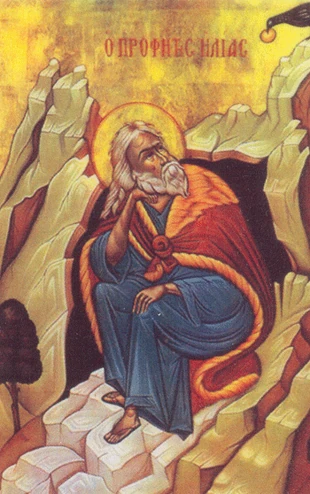
One of the questions this brings up, is in regard to the identity of John the Baptist. Was John the Baptist actually the return, or the reincarnation of Elijah?
Here are the key issues:
Elijah Never Died…
Elijah is one of only a handful of people in the Bible who never tasted death. Another is Enoch, in Genesis 5.
Some people speculate that maybe Moses never actually died, but was also taken by God before tasting death. The reason for that has to do with something in Revelation 11, which I will address further down in this article, but Deuteronomy 34:5 clearly states that “Moses died in the land of Moab according to the word of the Lord.” The speculation here comes from the idea that this chapter of Deuteronomy was not written by Moses, and therefore the writer only assumed that Moses died. That conclusion seems to be clearly in contradiction of what the text clearly states, however, and as people who believe in the inspiration of the Bible, we should reject it.
The Prophecies
Malachi 3:1, speaking about the coming of the Messiah, says: “Behold, I send my messenger, and he will prepare the way before me. And the Lord whom you seek will suddenly come to his temple; and the messenger of the covenant in whom you delight, behold, he is coming, says the LORD of hosts.”
Malachi 4:5, also speaking about the Day of the Lord and the coming of the Messiah says: “Behold, I will send you Elijah the prophet before the great and awesome day of the LORD comes. And he will turn the hearts of fathers to their children and the hearts of children to their fathers, lest I come and strike the land with a decree of utter destruction.”
The Words of Jesus
Here’s what Jesus had to say about John the Baptist:
As they went away, Jesus began to speak to the crowds concerning John: “What did you go out into the wilderness to see? A reed shaken by the wind? What then did you go out to see? A man dressed in soft clothing? Behold, those who wear soft clothing are in kings’ houses. What then did you go out to see? A prophet? Yes, I tell you, and more than a prophet. This is he of whom it is written, “‘Behold, I send my messenger before your face, who will prepare your way before you.’ For all the Prophets and the Law prophesied until John, and if you are willing to accept it, he is Elijah who is to come. He who has ears to hear, let him hear.
Matthew 11:7-15
Two important things here:
Jesus is claiming that John is the promised messenger from Isaiah 40:3 who would prepare the way for the coming of the Messiah.
Jesus is claiming that John is the fulfillment of Malachi’s prophecy about the messenger in Malachi 3:1.
This statement of Jesus that “if you are willing to accept it, he is Elijah who is to come” has led some people to believe that John was the return, or reincarnation of Elijah. However…
The Claim of John the Baptist Himself
John the Baptist explicitly denied being Elijah the Prophet:
And this is the testimony of John, when the Jews sent priests and Levites from Jerusalem to ask him, “Who are you?” He confessed, and did not deny, but confessed, “I am not the Christ.” And they asked him, “What then? Are you Elijah?” He said, “I am not.” “Are you the Prophet?” And he answered, “No.” So they said to him, “Who are you? We need to give an answer to those who sent us. What do you say about yourself?” He said, “I am the voice of one crying out in the wilderness, ‘Make straight the way of the Lord,’ as the prophet Isaiah said.”
John 1:19-23
Rather, John identifies himself as the promised messenger from Isaiah 40:3, which Jesus also identified him as.
Are John and Jesus contradicting each other?
Some people believe that John was in denial about his identity as Elijah…
I don’t believe either of these options to be true, rather there is a simple explanation:
“The Spirit and Power of Elijah”
In the Gospel of Luke, chapter 1, when the angel Gabriel is telling Zechariah (John the Baptist’s Father) about who his son will be, he says that John “will turn many of the children of Israel to the Lord their God, and he will go before him in the spirit and power of Elijah, to turn the hearts of the fathers to the children, and the disobedient to the wisdom of the just, to make ready for the Lord a people prepared.” (Luke 1:15-17)
Here, Gabriel is quoting from Malachi 3:1 and 4:5. This tells us that those verses are speaking about the same person, and it tells us that that person is John.
In conclusion, John the Baptist was not literally Elijah, i.e. the reincarnation of Elijah, rather he is a prophet sent by God in the spirit and the power of Elijah.
This is why Jesus said John “was Elijah, if you are willing to accept it.” In other words, John is the fulfillment of the coming of the prophet Elijah in the sense that he came in the spirit and power of Elijah, but he is also not literally Elijah reincarnated.
The Transfiguration
Further proof of this fact is that Elijah himself appeared at Jesus’ transfiguration (Matthew 17:11-12), not John the Baptist.
Furthermore, both Herod and the people distinguished between Elijah and John the Baptist (see Mark 16:14-16 & 8:28)
Will Elijah Come Again During the Great Tribulation?
Revelation 11 describes two witnesses who will come on the scene during the Tribulation, a time of great trouble for the world before the return of Jesus.
And I will grant authority to my two witnesses, and they will prophesy for 1,260 days, clothed in sackcloth.” These are the two olive trees and the two lampstands that stand before the Lord of the earth. And if anyone would harm them, fire pours from their mouth and consumes their foes. If anyone would harm them, this is how he is doomed to be killed. They have the power to shut the sky, that no rain may fall during the days of their prophesying, and they have power over the waters to turn them into blood and to strike the earth with every kind of plague, as often as they desire. And when they have finished their testimony, the beast that rises from the bottomless pit will make war on them and conquer them and kill them, and their dead bodies will lie in the street of the great city that symbolically is called Sodom and Egypt, where their Lord was crucified. For three and a half days some from the peoples and tribes and languages and nations will gaze at their dead bodies and refuse to let them be placed in a tomb, and those who dwell on the earth will rejoice over them and make merry and exchange presents, because these two prophets had been a torment to those who dwell on the earth. But after the three and a half days a breath of life from God entered them, and they stood up on their feet, and great fear fell on those who saw them. Then they heard a loud voice from heaven saying to them, “Come up here!” And they went up to heaven in a cloud, and their enemies watched them.
Revelation 11:3-12
From the descriptions given of the two witnesses, it seems clear that allusions are being made to Elijah and Moses.
In 2 Kings 1, when Ahaziah sent soldiers to arrest and assumedly kill Elijah, Elijah called down fire from Heaven to consume them. This isn’t exactly “fire pouring from their mouths to consume their foes” but it is similar.
Elijah did shut the sky by his prayers so it did not rain (1 Kings 17 & James 5), and Moses struck the waters and they turned to blood.
Some people assume that it is because Elijah did not die that he is able to return, and that this might be a further fulfillment of Malachi 4:5, in this case Elijah returning in the flesh as opposed to John the Baptist coming in the spirit and power of Elijah. This is also the reason why some people assume that Moses never died, because they assume that the reason Elijah is able to come back is because he never tasted physical death. Others speculate that perhaps the second witness is Enoch, the other person in the Bible who never tasted death.
However, I am not convinced that having never died is a prerequisite for being one of these witnesses. Although they didn’t die physically, their Earthly lives did end.
Furthermore, it seems that if John the Baptist could fulfill Malachi 4:5 by coming in the spirit and power of Elijah, it is not necessary that these two witnesses be the literal reincarnations or reappearances of Elijah and Moses; they could be people who come in the spirit and power of those men.
Conclusion
In summary: John the Baptist was Elijah in that he came in fulfillment of Malachi 3:1 & 4:5, and he came in the spirit and power of Elijah, but he was not a reincarnation of Elijah himself.
COVID-19, social unrest, natural disasters… A lot of people have been asking what these current events mean in light of Bible prophecy.
Does the Bible speak about these events – and if so, what does it say?
Furthermore, if the return of Jesus is imminent, what does it mean for us to be “ready” for His return?
Some people believe that to be ready means to stockpile food and guns – you know, so you can shoot your neighbors when they get hungry and try to take your food, right?! I’m quite sure that’s not what Jesus wants us to do, and it’s not what it means to be ready for his return.
So, what does it mean for us to be “ready” for Jesus’ return? If we are living in the last days, what should we be doing?
Mike and I sat down to discuss these questions in our latest video. Check it out:
Earlier this year I added a page on this site where readers can submit questions or suggest topics (click here for that page). Recently I received this question:
“Dear Pastor Nick, I am an avid listener to Hope FM in Baltimore, MD, and love when you host the call in show. I have a question: How will we not be fooled by others that pretend they are the Christ in these days ahead. Maybe even trying to deceive us with signs or wonders. Thank you so much.”
The Text: The Olivet Discourse
The text you are referring to comes from what is called the “Olivet Discourse,” a teaching Jesus gave to his disciples on the Mount of Olives, a hill east of Jerusalem, during his “passion week,” the week Jesus spent in Jerusalem leading up to his crucifixion.
In Matthew 24, Mark 13, & Luke 21, Jesus warns his disciples that a time is coming when many will come claiming to be the Christ, but not to be deceived by them.
As he sat on the Mount of Olives, the disciples came to him privately, saying, “Tell us, when will these things be, and what will be the sign of your coming and of the end of the age?” And Jesus answered them, “See that no one leads you astray. For many will come in my name, saying, ‘I am the Christ,’ and they will lead many astray. And you will hear of wars and rumors of wars. See that you are not alarmed, for this must take place, but the end is not yet. (Matthew 24:3-6)
The disciples ask two questions: (1) when will these things be, and (2) what will be the sign of your coming and of the end of the age?
Jesus’ answer to these questions intertwines prophecy concerning the destruction of Jerusalem and his second coming. The nearer event (the destruction of Jerusalem) serves as a symbol and foreshadowing of the more distant event (the second coming).
Jesus warned his disciples from the outset that many people would be deceived as they awaited his return. There have been many times in history in which this has happened, in three main forms:
1. People claiming to be the Messiah
Tragically, those who rejected Jesus when He came to them as Messiah ended up falling after false messiahs who led them into nothing but death and destruction. For example, 100 years after Jesus, a man named Bar Kokhba was considered by many Jews to be the messiah. He led a revolution against the Romans and enjoyed early success, but was soon crushed.
2. People claiming that Jesus has returned, or that they are him
In the First Century, the Christians of Thessalonica had heard a rumor that Jesus had returned, and that they had missed it! Paul the Apostle wrote his Second Letter to the Thessalonians, in part, to dispel this rumor, and assure them that Jesus had not yet returned, and that when he did, they would surely know it.
The Jehovah’s Witnesses claimed that Jesus returned in 1914, invisibly, and began his reign over the Earth from within the Watchtower Bible and Tract Society (official name of the Jehovah’s Witness organization). The problem with this, of course, is that the Bible says that when Jesus returns, it will be visible, and will usher in a time of peace, which clearly the world has yet to see.
3. People wrongly predicting the date of Jesus’ return
William Miller produced publications which convinced hundreds of thousands in the United States that Jesus would return in 1846. When Jesus did not return, there was great disappointment, with some falling away, and some cultic groups spawned from the prophetic fervor.
Trying to predict the date of Jesus’ return is a fool’s errand, since Jesus not only told us not to worry about it (Acts 1:7), and that no one knows the date or the hour, and that it would happen at a time when we do not expect it. In other words, there is no secret code that anyone is going to crack and figure it out.
How will you recognize Jesus’ return?
When Jesus comes, it won’t be a secret coming. Everyone will know.
The Apostle John tells us in Revelation 1:7: Behold, he is coming with the clouds, and every eye will see him
John did not need a special vision to know that every eye will see Him. John heard Jesus this himself: So, if they say to you, ‘Look, he is in the wilderness,’ do not go out. If they say, ‘Look, he is in the inner rooms,’ do not believe it. For as the lightning comes from the east and shines as far as the west, so will be the coming of the Son of Man. (Matthew 24:26-27)
So, how can you be sure not to be deceived? Ignore alleged predictions or claims of Jesus’ return. Jesus’ second coming will not happen without you knowing it.
Earlier this year I added a page on this site where readers can submit questions or suggest topics (click here for that page). Recently I received this question:
The end sounds so perfect and beautiful but we still have not seen the last of satan because it says he will be released for a short time. Why? Does he finally repent and come back to God or does he get out and give God the finger and go back to hell?
The Text: Revelation 20
The section of Scripture you are referring to is Revelation 20, which describes, in apocalyptic language, a few things that will happen leading up to the final judgment:
1. Satan will be bound for a thousand years. (Revelation 20:1-3)
It’s worth noting that it doesn’t say that Satan will be in Hell, only that he will be bound. Currently, we know that Satan’s abode isn’t in Hell, but that he “roams the Earth” (see Job 1:7). As to how or where Satan will be bound, we don’t know the details.
2. Christians, but not non-Christians, are raised from the dead to reign with Christ for this thousand year period. (Revelation 20:4-6)
In 2 Timothy 2:12, Paul encourages the believers that “if we endure, we will also reign with him.”
3. When the thousand years are ended, Satan will be released from his prison and will come out to deceive the nations and lead a war against the saints in Jerusalem. (Revelation 20:7-9)
4. Satan will be defeated by God and thrown into the lake of fire. (Revelation 20:10)
So, to answer one of your questions directly: “Does he finally repent and come back to God or does he get out and give God the finger and go back to hell?” The answer is: No, Satan does not finally repent. He is released from being bound, and then judged by God and cast into the Lake of Fire (so, not exactly back to Hell, since Hades and the Lake of Fire are not the same thing, and the Lake of Fire is the final judgment).
Three Views on the Millennium
There are three main views on the thousand year period of time described in Revelation 20. Here’s a summary of each:
Premillenialism
Believe Christ will return “pre” (before) the millennium (Latin for 1000 years). Premillenialists understands the millennium to be a future time of great peace and justice, a literal 1000-year period which will begin when Christ returns to reign on earth as a physically present King.
Postmillenialism
Believe that Christ will return “post” (after) the millennial period. Postmillenialists think that before Christ returns to earth, the gospel will spread and triumph so powerfully that societies will be transformed and peace and justice will reign on earth for a thousand years (or for a long period of time), after which Christ will return for the final judgment.
Amillenialism
Those who hold an “a” (non-literal) millennial view believe the thousand years described in Revelation 20 is the present church age, and that there will be no future “millennium” before Christ returns for the final judgment.
Related to this is the question of whether the thousand years are to be interpreted literally (most premillennialists hold this view) or symbolically (most postmillennialists and amillennialists, and some premillennialists hold this view).
The nature of the binding of Satan is important to the three millennial views. Premillennialists read this as predicting a complete removal or restriction of Satan from the earth during this golden age of social righteousness, international peace, and physical well-being, with Christ reigning on earth. They argue that the phrases “shut it” and “sealed it over him” picture a removal of Satan from the earth too complete to represent the current age.
Postmillennialists also think this will be a future golden age, but that Christ will not return until the end of that time. Amillennialists believe that the Jesus’ first coming has already bound Satan and brought God’s light to the nations, therefore they argue that this binding of Satan for “a thousand years” refers to the gospel’s spread among all nations during the present age, and to the present restraint of the church’s persecutors until an outbreak of rebellion before Christ’s return.
I would agree with the pre- (and post) millennialists, that it is quite a stretch to say that Satan is currently bound; watching the news for 5 minutes will show you that evil is very present in our current day, and the New Testament speaks about Satan being active, for example: 1 Peter 5:8 says “Be sober-minded; be watchful. Your adversary the devil prowls around like a roaring lion, seeking someone to devour. Resist him.” If Satan is bound, then why does it say that he prowls around, and he must be resisted?
Each of these views falls within the realm of Christian orthodoxy and are based on different ways of interpreting this text along with other texts in the Bible.
Why is Satan released at the end of the thousand years?
It seems that the purpose of Satan’s release is one last temptation, to address the question of whether people have been following God because they were not tempted, or because they truly loved God.
The End is Beautiful
You mentioned that the end seems so perfect and beautiful, but we haven’t seen the end of Satan. I guess that depends on what you mean by “the end.” I would say that Revelation 20 doesn’t describe the end, but only the beginning of the end. It is in Revelation 21 that we see the true end, about which we are told:
Then I saw a new heaven and a new earth, for the first heaven and the first earth had passed away, and the sea was no more. And I saw the holy city, new Jerusalem, coming down out of heaven from God, prepared as a bride adorned for her husband. And I heard a loud voice from the throne saying, “Behold, the dwelling place of God is with man. He will dwell with them, and they will be his people, and God himself will be with them as their God. He will wipe away every tear from their eyes, and death shall be no more, neither shall there be mourning, nor crying, nor pain anymore, for the former things have passed away.” (Revelation 21:1-4)
This is the hope that we hold onto and look forward to, and we rejoice in the fact that the day is coming very soon (James 4:14 says that this life is but a mist which appears for a moment and then is gone) when Satan will be defeated and all evil and suffering will be no more, forever.
That is the glorious hope that we hold onto, which puts everything in perspective!






 Theology for the People