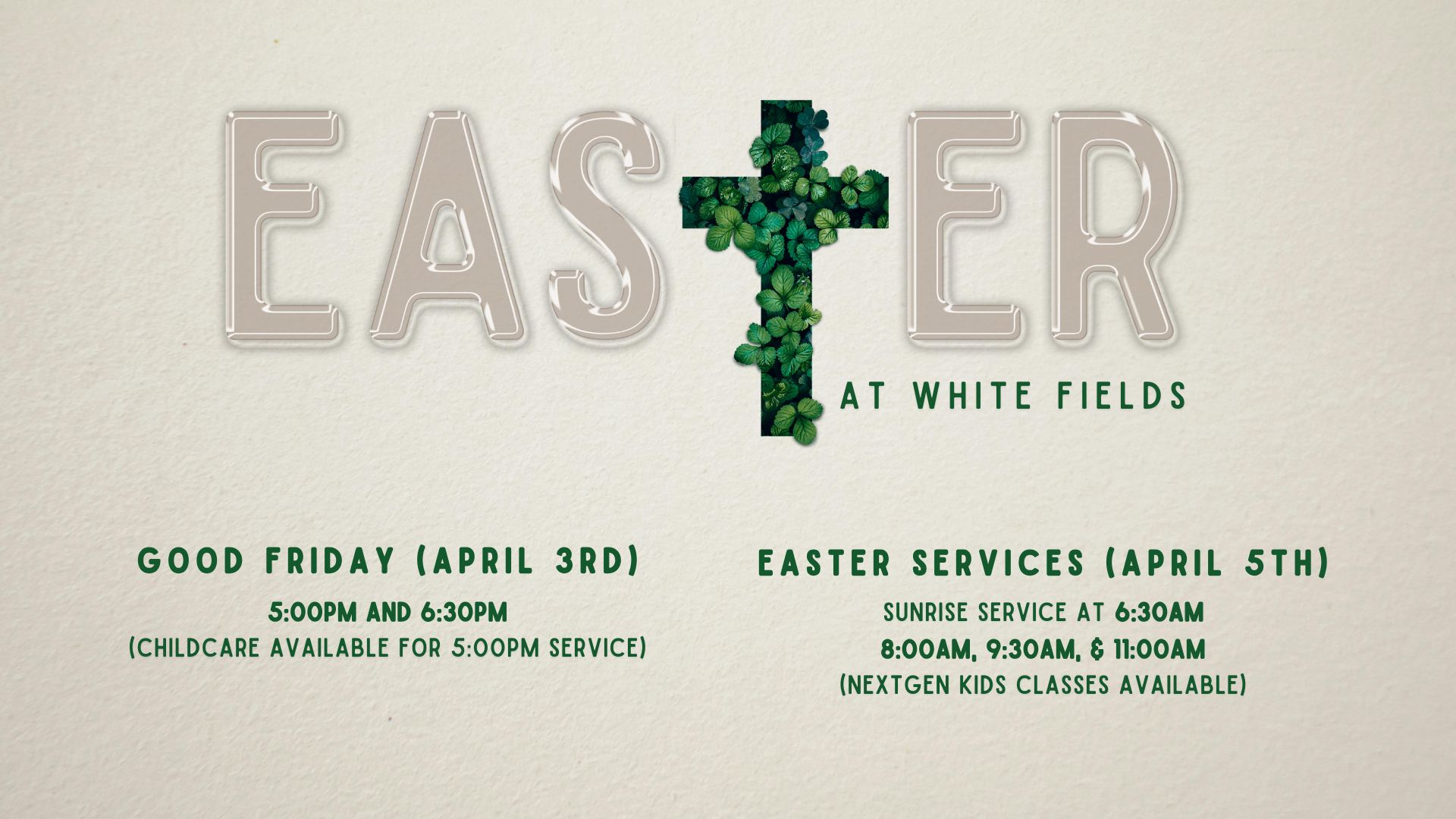
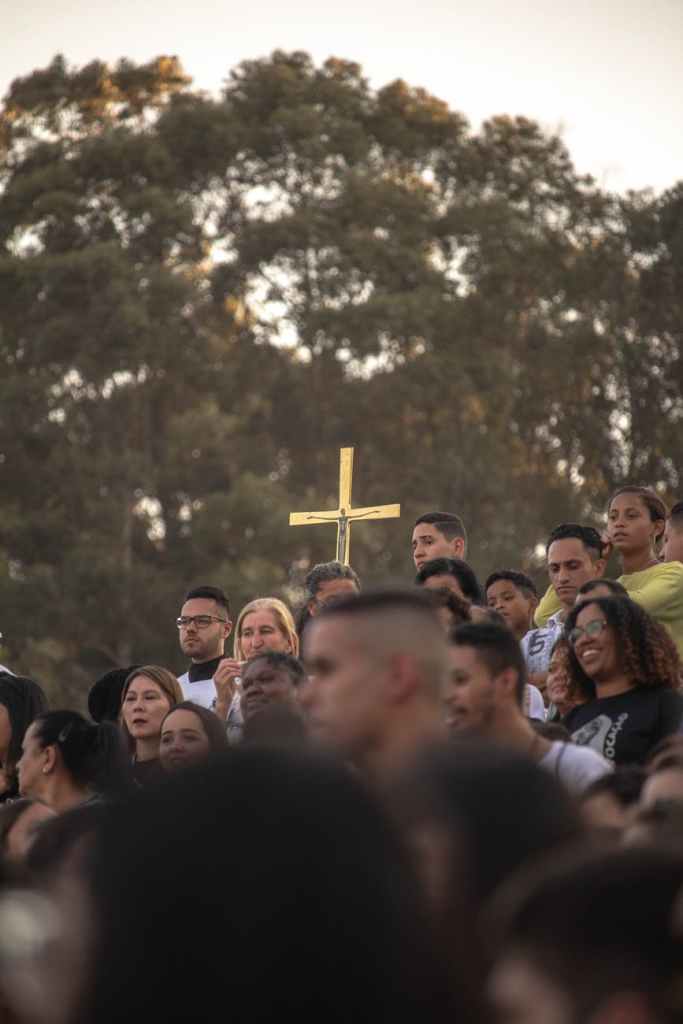
6:30 – Sunrise Service on the large grassy area in front of our church building, with a beautiful view of the Sunrise, as we celebrate how the resurrection of Jesus has ushered in a new day for our lives and for the world! Stick around after Sunrise service for breakfast and coffee.
8:00, 9:30, & 11:00 AM – Easter Worship Services. NextGen Kids classes are available at all three services!
Note: The Sunrise Service and the Easter Worship Services are two distinct services, with different messages and music. Come to both!
Good Friday Services – April 3, 2026
5:00 & 6:30 PM – Join us as we remember and celebrate Jesus’ death on the cross for us.
Family Eggvent – April 4, 2026
11:00 AM -1:00 PM – Bring your kids and friends for this fun community event! We will have a food truck serving tacos, bounce houses, crafts, and a puppet show for children, and egg hunts for kids of multiple ages.
Here’s a short video invitation for you to watch and share with others:
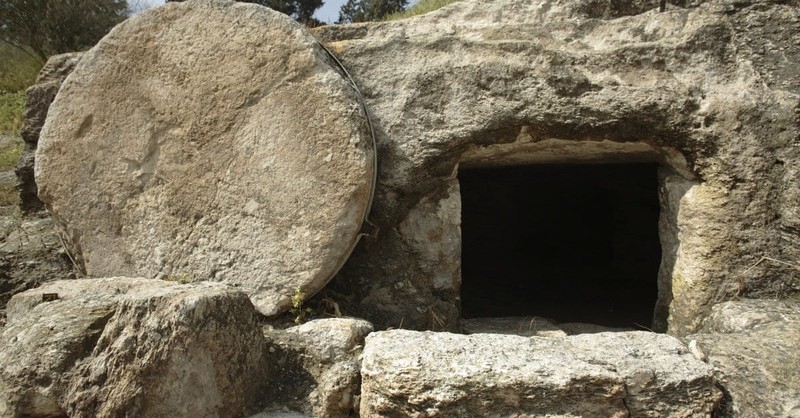
According to the Gospel of Matthew, the guards who were watching over Jesus’ tomb reported to the chief priests what had happened when the angel of the Lord appeared and rolled away the stone from the tomb (Matthew 28:2).
Matthew 28:11-15 says that the chief priests paid the guards a large sum of money and instructed them to say that the disciples came and stole Jesus’ body while they were asleep.
These guards were Roman soldiers who were assigned to keep watch over the tomb. We don’t know if they were punished for failing in their duty to protect the tomb, which would have been normal practice at that time, nor do we know if they got in trouble for accepting the bribe from the chief priests.
It is clear from Matthew’s Gospel that the guards were aware of the miraculous events that took place at the tomb. Perhaps they ran away when the earthquake happened or the stone rolled away from the entrance. We don’t know if they saw Jesus walk out of the tomb or not.
No matter when they left the scene, they would have been left with a powerful testimony to Jesus’ resurrection, as would the chief priests. It is significant to remember what it says in Acts 6:7, that many of the priests in Jerusalem became believers in Jesus. I wonder if any of those who became believers were part of the group who paid off the guards!
This video is particularly good at depicting the incredulity of the idea that Jesus’ disciples stole his body:
On this episode of the Theology for the People podcast, Michael Payne and I discuss what is at stake in regard to Jesus’ resurrection, as well as some alternative explanations for Jesus’ missing body that have been proposed. Finally, we share some of the strongest evidences for why Christians believe that Jesus did in fact rise from the grave.
In this episode, Nick Cady and Michael Payne discuss what is at stake in regard to Jesus' resurrection, as well as some alternative explanations for Jesus' missing body that have been proposed. Finally, they share some of the strongest evidences for why Christians believe that Jesus did in fact rise from the grave.
For more from Nick and Mike, check out the White Fields Church Podcast, whitefieldschurch.com, or the White Fields YouTube channel.
Make sure to visit the Theology for the People blog at nickcady.org for more articles and content.
Jesus’ last week in Jerusalem, known as Holy Week and Passion Week (from the Latin passio = to endure suffering), is the most significant and well-documented period of Jesus’ life. The Gospels all spend more time talking about this one week of Jesus’ life, along with the build up to it, than any other period in Jesus’ life or ministry.
Here is a timeline of the events which took place during this week:
Palm Sunday – The Triumphal Entry
The week begins with Jesus’ triumphal entry into Jerusalem on a donkey, fulfilling the prophecy of Zechariah 9:9. The people of Jerusalem lay down their cloaks and palm branches as a sign of honor and welcome. Jesus enters the city to the cheers and acclamations of the people, who cry out, “Hosanna! Blessed is he who comes in the name of the Lord!” (Matthew 21:9).
Monday – Cleansing the Temple
On Monday, Jesus returns to the temple and cleanses it of the merchants and moneychangers who had set up shop there. He teaches in the temple, and the religious leaders challenge his authority. Jesus responds with a series of parables, including the Parable of the Tenants and the Parable of the Wedding Banquet.
Tuesday – The Olivet Discourse
On Tuesday, Jesus continues to teach in the temple, and his opponents attempt to trap him with questions about paying taxes and the resurrection. Jesus responds with his famous declaration, “Render unto Caesar the things that are Caesar’s, and unto God the things that are God’s” (Mark 12:17). He also delivers his Olivet Discourse (Matthew 24-25), in which he prophesies about the destruction of the temple and the signs of his coming and of the end of the age.
Spy Wednesday
Wednesday is traditionally known as “Spy Wednesday” because it is believed to be the day on which Judas Iscariot agrees to betray Jesus to the authorities. This event is not recorded in the Gospels, but it is mentioned in Matthew 26:14-16, Mark 14:10-11, and Luke 22:3-6.
Maundy Thursday
On Thursday evening, Jesus shares a Passover meal with his disciples in the Upper Room. During this meal, he institutes the sacrament of the Eucharist and washes his disciples’ feet, giving them a powerful example of humility and service. After the meal, they go to the Garden of Gethsemane, where Jesus prays and his disciples fall asleep. Judas arrives with a crowd of soldiers and betrays Jesus with a kiss, leading to his arrest.
The word maundy comes from the Old French mande, in turn from the Latin mandātum, which means “mandate or command.” After washing the feet of his disciples during the Last Supper, John 13:34 tells us that Jesus told his disciples: “A new commandment (mandate) I give you, that you love one another; even as I have loved you, that you also love one another.”
Good Friday
On Friday, Jesus is brought before the High Priest and the Sanhedrin. They accuse him of blasphemy and condemn him to death. He is then taken to Pontius Pilate, the Roman governor of Judea, who finds no fault in him but is pressured by the crowd to have him crucified. Jesus is beaten, mocked, and forced to carry his own cross to a hill outside the city walls called Golgotha, where he is crucified alongside two criminals. He dies in the afternoon and is buried in a nearby tomb.
Holy Saturday
On Saturday, Jesus’ body lies in the tomb, and his followers observe the Sabbath in mourning and prayer.
Resurrection Sunday
On Sunday morning, several women go to Jesus’ tomb to anoint his body with spices. They discover that the tomb is empty, and they encounter angels who tell them that Jesus has risen from the dead. Jesus appears to his disciples throughout the day, including to the women at the tomb, to two disciples on the road to Emmaus, and to the disciples gathered in a locked room. He commissions them to go and make disciples of all nations, and he ascends into Heaven forty days later.
A Possible Alternative Timeline
Along with this traditionally held timeline, is a popular and plausible view which sees some of the events of Monday-Wednesday being combined, and has Jesus actually being crucified on Thursday rather than Friday, since John’s Gospel tells us that it took place on a “special Sabbath.”
As part of the discussion, Aaron asked Mike and I about our worst Easter sermon ever. As I was telling about my worst Easter sermon, I remembered something that happened on our first Easter (also our first Sunday) planting a church in Eger, Hungary. It wasn’t something I did (or even saw), but it was something which probably made it the worst Easter service ever for those who attended 😂. Here’s the video of that part of our discussion:
Aaron broke up our discussion into sections and created a helpful article, with Mike and I discussing about Good Friday, how to support staff and volunteers amongst the busyness of Easter weekend, and how to keep Easter fresh.
This past Sunday we concluded our Eastertide (the 50 days following Easter) series called The Risen Life, in which we studied the post-resurrection appearances of Jesus from the perspective of what His risen life shows us about what it means for us to live as people who have died with Christ and been risen to new life.
Today as we celebrated Easter at White Fields Church in Longmont, Colorado, we had a special greetings sent in from some of the missionaries we support around the world, including several in Ukraine.
Here’s the video of the Easter service, which includes the greetings from those missionaries:
Some of the missionaries in Ukraine mentioned that their country celebrates Easter a week later than we do in the United States, leading some people to ask why that is.
Council of Nicea (325 AD): Setting a Common Date for Easter
The First Ecumenical Council of Christin leaders around the world as held in 325 AD and is known as the Council of Nicea.
Prior to Nicea, churches in different parts of the world celebrated Easter on different Sundays of the year. In order to bring unity, council members created a formula to would calculate the date for Easter for all churches around the world: the first Sunday after the first full moon which follows the vernal equinox, after the Jewish Passover.
To avoid confusion, it determined that the vernal equinox was on March 21. This system guaranteed that all churches around the world celebrated Easter on the same day.
The Great Schism and the Introduction of the Georgian Calendar
In 1054 the Eastern and Western churches split. The division was for theological, cultural, and political reasons. Shortly after this, Pope Gregory VIII introduced the Gregorian calendar, whereas the Eastern Empire continued with the Julian calendar, which had been used since the time of Julius Caesar.
The reason for the introduction of the Gregorian calendar was the realization that the Julian calendar was discovered to be 11 minutes too long, which, though not much, led to the spring equinox no longer being on March 21 by that time. The Gregorian calendar sought to bring correction to this issue, whereas the Eastern Empire (and its churches) continued with the Julian calendar despite the fact that according to it, the vernal equinox was no longer on March 21.
By using two different calendar systems, the vernal equinox now fell on March 21 under the Gregorian calendar and April 3 on the Julian calendar. The two empires (and their churches), as a result, began celebrating Easter on two different days, though on occasion Easter date does still fall on the same day for both calendars (e.g. in 2017 and next in 2025).
The Apostles’ Creed, one of the oldest Christian creeds – in continual existence since at least the 4th Century A.D. – contains a line which many people have found intriguing: it declares that Jesus “descended to the dead.”
Older translations of the original text into English sometimes translate this phrase as saying that Jesus “descended into Hell.”
Looking at the creed in ancient languages is interesting as the Greek text says: κατελθόντα εἰς τὰ κατώτατα, which means: “descended to the bottom” – and the Latin text says: descendit ad inferos, the word inferos being translated as “Hell.”
More recent translations into English have chosen to say “descended to the dead” rather than “descended into Hell” as “the dead” would be more accurate biblically and theologically than “Hell.” The reason for this is based on a particular understanding of “Sheol” in the Old Testament and the Jewish mind, which was the dwelling place of all souls, being divided (according to Luke 16:19-31) into two parts: Abraham’s Bosom and Hades, AKA: Hell.
Abraham’s Bosom, we are told in Luke 16, was a place of comfort for those who died in faith, i.e. the “Old Testament saints,” such as those described in Hebrews 11, who died prior to the redemptive actions of Jesus, but died in faith that they would be “raised up to a better life” (Hebrews 11:35)
He Proclaimed What He Had Done, and Led Captives in His Train
In 1 Peter 3:19 and 4:6, Peter tells us that Jesus’ spirit went to Sheol after his death on the cross but prior to his resurrection, and declared to the souls of the deceased there what he had accomplished in his life and death. This message would have been:
A message of redemption and release from Sheol for those who were kept in Abraham’s Bosom awaiting the redemptive work of the Messiah (“He led captives in his train” – Ephesians 4:8)
A message of condemnation for those held in the Hades/Hell portion of Sheol.
God Often Does His Greatest Work in the Dark
For the disciples, that first “Holy Saturday” would have seemed much less than holy. It would have felt like defeat and been perhaps the lowest point in their lives. Many of them, having left everything to follow Jesus, would have been wondering, “Now what am I going to do with my life?” – not to mention the fact that they were afraid that they would be next: that the Romans and Jewish leaders would likely come be coming to arrest and execute them as well.
And yet, in the awful silence of that day, God was doing a great work of redemption!
Remember: with God, silence is not absence. Sometimes when God seems most distant to us, is when He is accomplishing his most profound work.
That is the reminder of Holy Saturday: we can’t always see what God is doing.
May God bless you and give you rest in your soul this Holy Saturday!
For Christians, Easter is our biggest celebration of the year. And yet, how do you celebrate in the midst of a crisis in which thousands of people are sick and dying, and millions are out of work and hurting financially?
Some churches have suggested that celebrations of Easter should be delayed until this crisis gets better. I disagree. In fact, I would say that there is no more appropriate time for us to celebrate Easter than in the face of sickness, instability, and death, because these things are the very reasons why Easter is good news worth celebrating!
In fact, this may be the one moment in all of our lives when we understand the weight of what Easter means, and the hope that it brings, more than ever.
The meaning of Easter is that the Lord of Life died in order to destroy death, and make it possible for us to be reconciled to Him and resurrected to “a better life” (Hebrews 11:35, 40).
This year we will be having our church’s first ever Good Friday service, but since we cannot gather physically we put out pre-packaged communion supplies for people to pick up outside of the church.
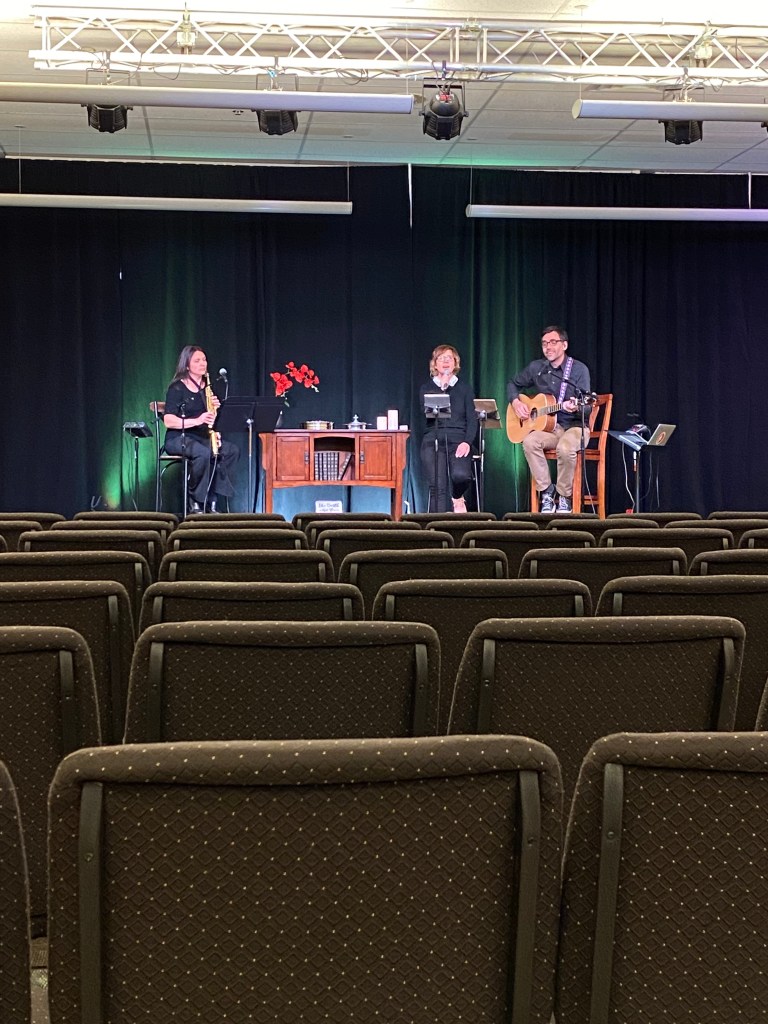
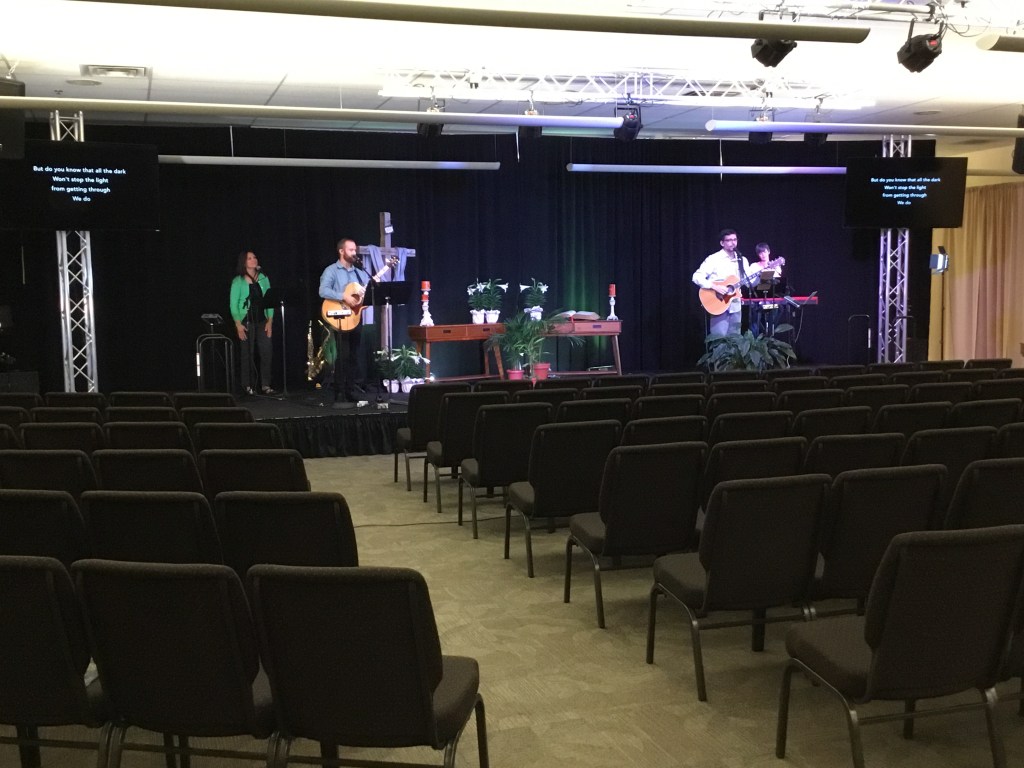
We have been pre-recording our services in order to create a worshipful experience for those who watch at home.
This past Sunday (March 22, 2020) was supposed to have been our last service in the Saint Vrain Memorial Building, where White Fields Church has met since its inception, years before I became pastor.
However, because of concerns about the Coronavirus outbreak, not only are we not gathering physically out of concern about spreading the virus, but the Memorial Building is closed.
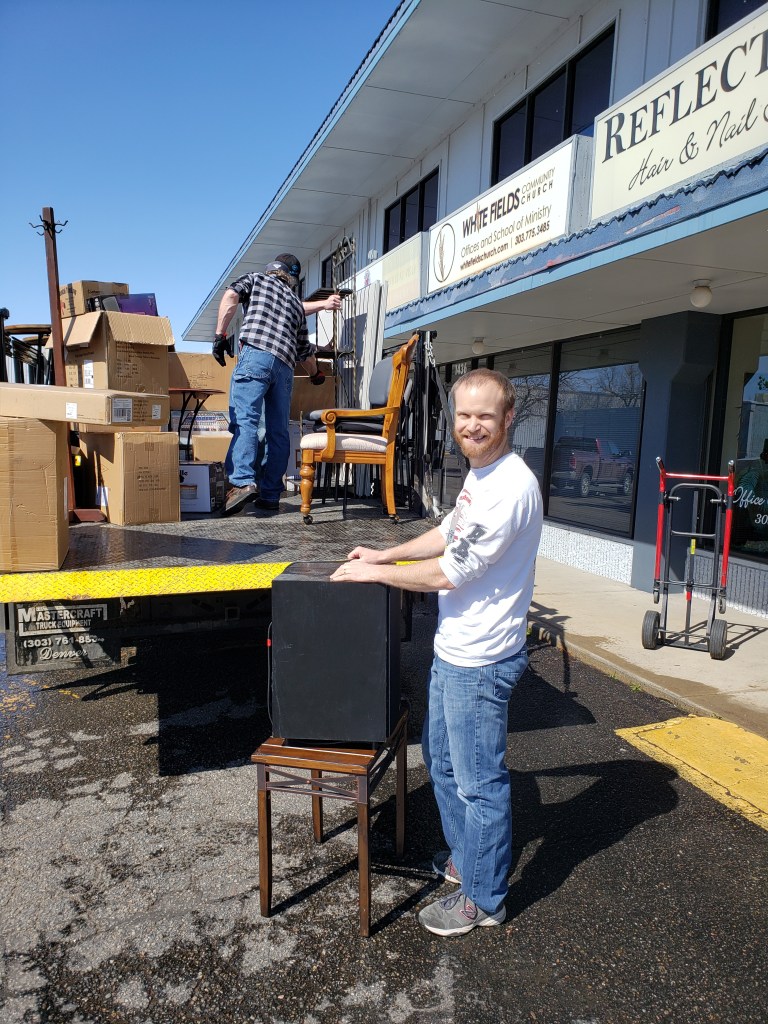
This past week, some members of our congregation were able to get in to move our things out of storage at the Memorial Building to move them to the new facility. The group also moved us out of the offices our church has been in for the last 2.5 years.
Moving out of the Memorial Building and church office
Looking at the pictures, it was a bit surreal realizing that it is the end of a season during which a lot of good ministry took place, and when I last left those places I had no idea that I wouldn’t be able to return!
This coming Sunday (March 29, 2020) was scheduled to be our first Sunday in the new building, and we were planning to kick off doing two services on Easter. Right now, it is looking unlikely that churches will even be able to gather on Easter at all.
However, I was able to go into the empty church building last Saturday and pre-record my sermon by preaching to an empty room, making this the first service in our new building… kind of.
I can’t wait for the time when we will get to gather physically again, and have a proper grand opening!













 Theology for the People