Miles is a PhD student at Southern Seminary studying AI ethics, and in this discussion, they explore the topic of epistemology: what it is, why it matters, and how it affects everything from how we read the Bible to how we navigate truth in a world of misinformation and digital confusion.
Whether you’re new to the term or already intrigued by philosophy, this conversation will help you think more clearly about how we know what we know—and why that matters for following Jesus today.
In this episode, Pastor Nick Cady interviews Pastor Miles DiBenedictus of Cross Connection Church in Escondido, California.Miles is a PhD student at Southern Seminary studying AI ethics, and in this discussion, they explore the topic of epistemology: what it is, why it matters, and how it affects everything from how we read the Bible to how we navigate truth in a world of misinformation and digital confusion. Whether you're new to the term or already intrigued by philosophy, this conversation will help you think more clearly about how we know what we know—and why that matters for following Jesus today.Follow Miles on YouTube: https://www.youtube.com/@pastormilesVisit Miles' website: https://pastormiles.com/
I have also started posting more on the Theology for the People YouTube channel. You can watch this interview on video here:
In the latest episode, I speak with theologian, author, and pastor Sam Storms about what it truly means to experience the love of God.
In a culture where love is often redefined and misunderstood, how can we anchor ourselves in the steadfast love that Scripture proclaims? We discuss how culture has distorted the meaning of love, the biblical concept of God’s covenantal and unshakable love, and why love is meant to be more than just a doctrine we affirm—it’s meant to be a reality we feel.
Sam and I also explore how God’s love transforms us, the tension between love and truth in our world today, and practical steps for keeping ourselves in the love of God.
What does it truly mean to experience the love of God? In a culture where love is often redefined and misunderstood, how can we anchor ourselves in the steadfast love that Scripture proclaims?In this episode, I sit down with theologian, author, and pastor Sam Storms to talk about his latest book, The Steadfast Love of the Lord. We discuss how culture has distorted the meaning of love, the biblical concept of God's covenantal and unshakable love, and why love is meant to be more than just a doctrine we affirm—it’s meant to be a reality we feel.We also explore how God's love transforms us, the tension between love and truth in our world today, and practical steps for keeping ourselves in the love of God.Resources Mentioned:The Steadfast Love of the Lord Sam Storms' website: www.samstorms.orgExpositors Collective Training WeekendVisit TheologyForThePeople.com
Have you ever wrestled with doubts about your faith? If so, then you are in good company. The Bible contains several stories of men and women of faith who also had seasons in which they struggled with doubts.
In this episode Dr. Ryken shares advice for those currently struggling with doubts, with the goal of also helping others to be equipped to help those around them to come to greater confidence in Jesus and a more vibrant faith.
Faith Under Pressure: How Wrestling Through Your Doubts Can Lead to Deeper Faith – with Dr. Philip Ryken –
Theology for the People
Have you ever wrestled with doubts about your faith? If so, then you are in good company. The Bible contains several stories of men and women of faith who also had seasons in which they struggled with doubts.
Dr. Philip Ryken is the President of Wheaton College in Wheaton, Illinois. He has a Doctorate in Philosophy from Oxford University, and he is the author of over 50 books. His latest book is called I Have My Doubts: How God Can Use Your Uncertainty to Reawaken Your Faith.
In this episode Dr. Ryken shares advice for those currently struggling with doubts, with the goal of also helping others to be equipped to help those around them to come to greater confidence in Jesus and a more vibrant faith.
Listen to Dr. Ryken's previous episode on Theology for the People: The Role of Beauty in Theology
Visit the Theology for the People website at nickcady.org
In recent years it has become increasingly popular for people who grew up in Christianity to go through a process of “deconstruction” in which they seek to examine and question the origins of their beliefs.
Deconstruction isn’t always a bad thing, but the deconstruction movement, powered by social media, largely targets younger people and encourages them to cast off their Christiaan beliefs.
This episode of the Theology for the People podcast is the recording of a workshop which Nick Cady and Aaron Salvato co-lead at the 2023 Calvary Global Network International Conference on the Topic of Doubt and Deconstruction.
We start out by defining deconstructionism and examining its philosophical roots, then we look at the impact of this movement and some of the common themes in its claims. Finally, we discuss a Biblical response to doubt and deconstruction and give some helpful tips for addressing the questions that those who are deconstructing may have.
In recent years it has become increasingly popular for people who grew up in Christianity to go through a process of “deconstruction” in which they seek to examine and question the origins of their beliefs.
Deconstruction isn’t always a bad thing, but the deconstruction movement, powered by social media, largely targets younger people and encourages them to cast off their Christiaan beliefs.
This episode of Theology for the People is the recording of a workshop which Nick Cady and Aaron Salvato co-lead at the 2023 Calvary Global Network International Conference on the Topic of Doubt and Deconstruction.
We start out by defining deconstructionism and examining its philosophical roots, then we look at the impact of this movement and some of the common themes in its claims. Finally, we discuss a Biblical response to doubt and deconstruction and give some helpful tips for addressing the questions that those who are deconstructing may have.
Check out more from Aaron Salvato on the Good Lion Podcast.
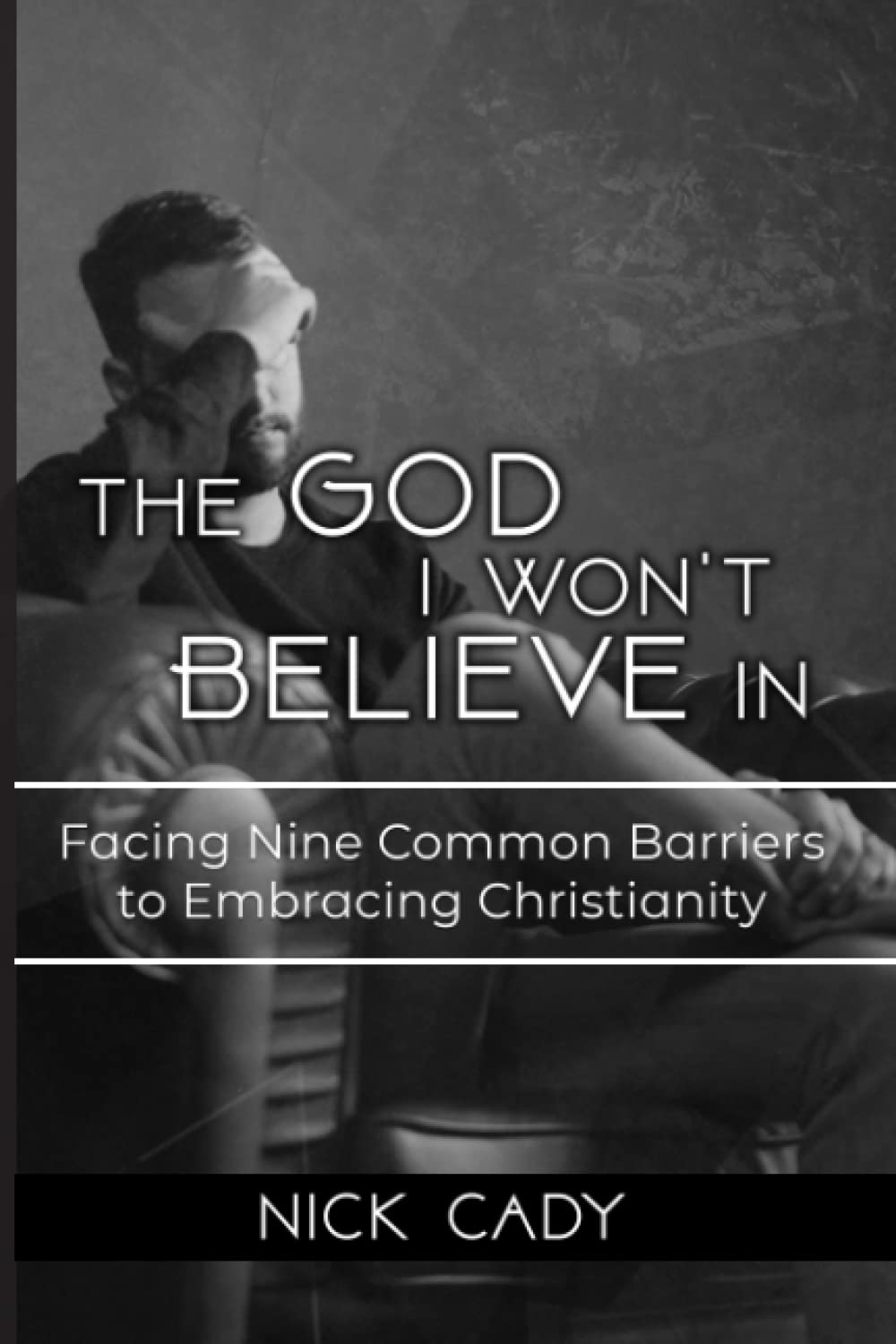
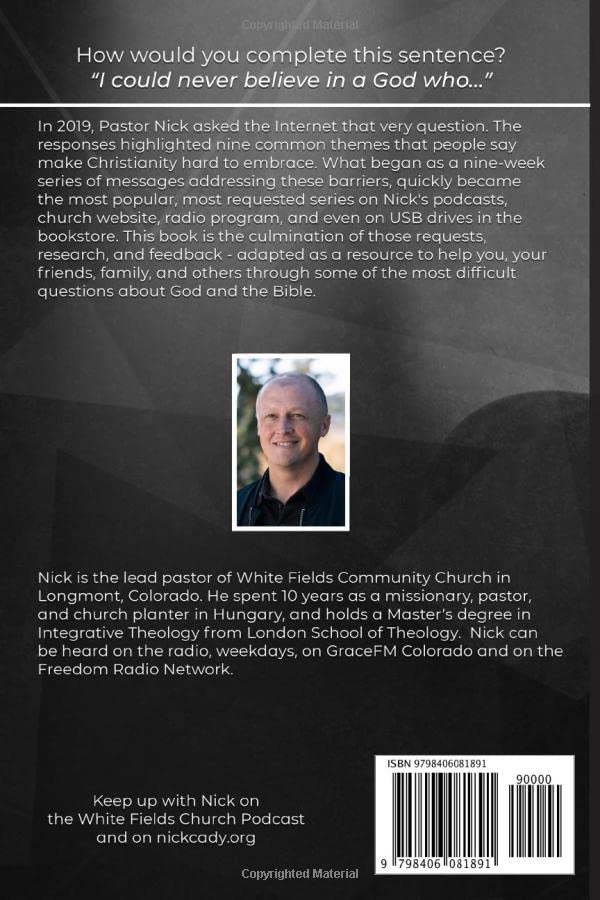
My book, The God I Won't Believe In: Facing Nine Common Barriers to Embracing Christianity, can be found here.
Visit the Theology for the People blog at nickcady.org
We have paperback copies of the book for sale in our church’s bookstore, and it will be available in other churches and through book distributors soon.
If you would like to get copies for your church or group at bulk discount, contact us here.
Each chapter begins with the phrase: “I Could Never Believe in a God Who…”
A God Who Hasn’t Proven His Existence
A God Who Gave Us a Faulty Bible
A God Who Condoned Genocide in the Old Testament
A God Who Creates Hateful, Hypocritical Followers
A God Who Suppresses Women and Minorities
A God Who Sends People to Hell
A God Who Says Some Love is Wrong
A God Who Lets Bad Things Happen to Good People
A God Who Doesn’t Answer My Prayers
Book Signing This Sunday
For those who are within driving distance of Longmont, Colorado, this Sunday I will be signing copies of the book after each of our 3 services at White Fields Church. We will have copies for sale on site. If you can make it out, I’d love to see you there!
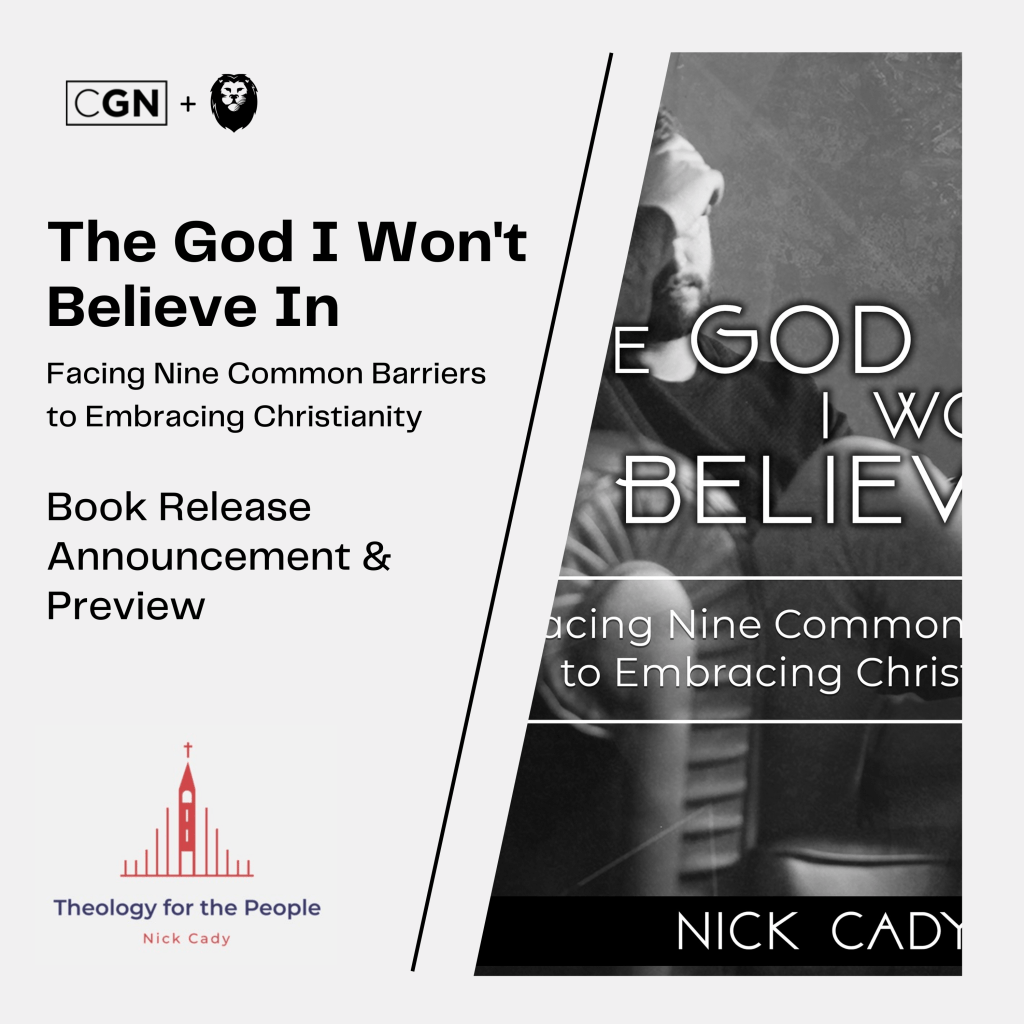
In this week’s episode of the Theology for the People podcast, I sit down with Michael Payne and Curt Fuller to discuss my forthcoming book, The God I Won’t Believe In: Facing Nine Common Barriers to Embracing Christianity. The book is scheduled to be released on March 6, 2022, and will be available for purchase online, as well as in our church’s bookstore. We are currently working on distribution, and getting it into other bookstores and book distributers as well.
In this episode, Michael interviews me and Curt, who edited the book, as we discuss the backstory behind how it came about, as well as the content of the chapters, and who this book is for.
I hope this book will be a great resource to help both those who are wrestling through facing these barriers to embracing Christianity, as well as those who seek to be equipped to help their family and friends move from doubt to belief.
I’d love it if you’d consider buying a copy of the book, and if you’d help spread the word about it online!
Book Release Announcement & Preview – The God I Won't Believe In: Facing Nine Common Barriers to Embracing Christianity –
Theology for the People
Nick wrote a book! It's coming out March 6, 2022 and is available for pre-order on Amazon here.
The book is titled, The God I Won't Believe In: Facing Nine Common Barriers to Embracing Christianity.
In this episode, Nick sits down with Michael Payne and Curt Fuller, who edited the book, the discuss how the book came about, who it's for, and what it's about.
Make sure to visit the Theology for the People blog at nickcady.org for more articles and content.
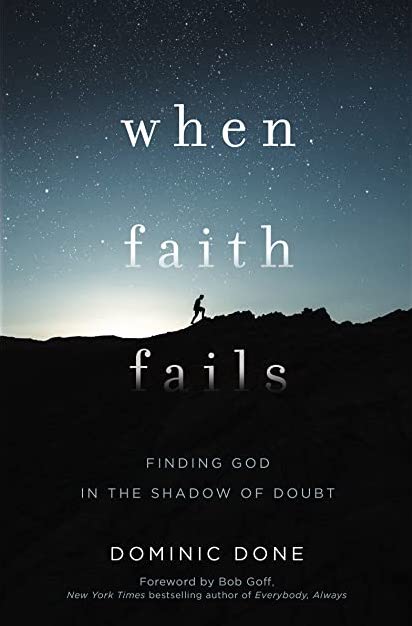
Pastor and author Dominic Done will be joining us at White Fields Community Church on Sunday, November 14, at all three services: 8:00, 9:30 & 11:00 AM.
I was given a copy of Dominic’s book when it first came out, and it sat on my shelf until I picked it up one Saturday to thumb through it, and next thing I knew I had read every word and used up an entire highlighter. I read the whole thing in one sitting because it was so fascinating, well-written, and applicable.
More recently, in September of 2021, I got to spend some time with Dominic in Colorado Springs at an Expositors Collective training weekend where he was one of our guest speakers.
We are excited for Dominic to come and speak at our church on November 14, and I encourage you: if you are within driving distance of Longmont, make sure to join us and bring someone with you who needs to here this important, helpful, and relevant message!
If you have ever struggled with doubts, or if you are curious about deconstruction: what it means, if it is a good thing or a dangerous thing – join us for this special Sunday!
Doubt is an inherent part of having faith. Faith, the Bible tells us, is having convictions about things which you cannot see (Hebrews 11:1). This extends to things which cannot be empirically proven through scientific method. If you can see something and prove it, there is no need for faith. Doubt therefore, is not how faith ends, but is the occasion where faith and trust begin.
But it is not only “believers” who have doubts. Studies have shown that professing atheists also have doubts about whether they are right.
CS Lewis, in his book Mere Christianitysaid, “When I was an atheist, I had moods in which Christianity looked terribly probable.”
A recent poll from Newman University and YouGov found that one in five British atheists and over a third of Canadian atheists agreed with the statement: “Evolutionary processes cannot explain the existence of human consciousness.” [1]
In his book The Reason for God, Timothy Keller challenges those who doubt to “doubt their doubts,” i.e. to consider to the faith and beliefs (the assumptions which cannot be empirically proven) that underly their doubts, and to honestly question whether they actually stand on firm ground. His conclusion is that faith is God is actually more plausible than the alternative.
This week in our Sermon Extra, Pastor Mike and I discussed the role of doubt in faith, the fact that atheists have doubts too, and what we should do with our doubts. Check it out here:
Hi, a question coming from your recent sermon on May 2 about belief and doubt. You were talking about how doubt is held in a sort of middle ground, not to be vilified or esteemed too highly. Today I came across these verses in Romans regarding eating by conscience:
The faith that you have, keep between yourself and God. Blessed is the one who has no reason to pass judgment on himself for what he approves. But whoever has doubts is condemned if he eats, because the eating is not from faith. For whatever does not proceed from faith is sin. (Romans 14:22-23 ESV)
That last sentence feels very strong in that ANYTHING not from faith is sin. How does this relate to the topic on Sunday?
Additionally, where do we draw a line to keep from absurd conclusions about this? When I go on a bike ride for health, I’m not doing it in faith – I just want to keep fit. What about choosing the right date for traveling on vacation? This verse could easily cause a person to stop making decisions due to fear of sin.
The sermon mentioned in this question is from the series The Risen Life, in which we looked at the post-resurrection appearances of Jesus in the Gospels for the season of Eastertide. The sermon was from John 20:19-30 and was called “From Doubt to Belief.”
In John 20:24-29, in the story of "doubting Thomas," we see that moving from doubt to belief involves hearing testimony, seeing the evidence, and responding in faith.
Doubt and Faith in Romans 14:23
In Romans 14:23, Paul is talking about “gray areas” or “disputable matters” in the Christian life. At that time, some people said that it was acceptable for Christians to eat meat which had been sacrificed to idols, whereas others said that it was not acceptable. Each side had their reasons.
Similar discussions exist today: Is it acceptable for Christians to drink alcohol? To participate in Halloween festivities? To do yoga or martial arts?
In some of these cases, it may be that something may not be categorically wrong, but it may be wrong for a particular person because of their particular propensities. Furthermore, that person may have a strong conviction that they ought not to do something, even if it wouldn’t necessarily be a sin for anyone to do that thing.
Paul is saying that if you have a sincere conviction before God that you should not do something, then you should act on that conviction in faith, and do so as unto the Lord. This, Paul says, honors God. However, if you do something in contradiction to your conviction that you should not do it; i.e. if you have doubts about whether that thing is acceptable or permissible for you to do – then for you to do it anyway would be sin.
Thus, the way doubt and faith is used here is different than in the sense in which we talked about doubt and faith in the above mentioned sermon, where our focus was rather on doubting versus believing in God’s existence, God’s goodness, the validity of God’s Word, or the reliability of God’s promises.
Is Everything that Does Not Proceed from Faith Really Sin?
I believe the answer is: Yes. Let me explain, and I’ll explain how this applies to situations such riding your bike and choosing dates for vacation:
In Hebrews 11:6 we are told that “without faith it is impossible to please God.” In Romans 4:20, faith is correlated with giving glory to God. In 1 Corinthians 10:31 we are told, “whether you eat or drink, or whatever you do, do all to the glory of God.”
The point therefore, is that acting in faith is all about giving glory to God in our actions. If you doubt whether a particular action brings glory to God, then for you to do it anyway would be a sin. It is in this way that anything that does not proceed from faith is sin.
The Question We Often Ask, & the Question We Ought to Ask
I find that too often, we tend to ask the question: “Is it permissible to _________” or “Am I allowed to _________.” What this passage (and others) teach us is that the question we ought to be asking instead is: “Will this action glorify God?” or “Will God be honored, pleased, and glorified through this action?”
If you can do that action in faith so that your motive is to glorify God, then good. If you have doubts about that, then to do it anyway would be sin – at least for you.
This is why Augustine argues that for those who act apart from faith in God, even their virtues can be sinful: because if you do something good – apart from faith in God – your motive in doing so is not to glorify God, but must be either to glorify yourself, or to justify yourself. Thus, even virtuous actions, apart from faith in God, can be sinful. Tim Keller often speaks, quoting the Puritans, of how it is important therefore that we repent not only of our evil actions, but of our good actions done for self-justifying or self-glorifying motives.
May we be those who endeavor to do everything for the glory of God!
Starting April 28, the Sunday after Easter, we will be doing a series at White Fields called “I Could Never Believe in a God Who…”, in which we will be addressing some of the common struggles and objections that people have about God, the Bible, and Christianity.
You can help me by taking a second to fill out this quick anonymous poll to let me know what are some of the biggest hurdles to faith that you have experienced yourself or encountered in other people. Thanks!
Please also share this with others; I’d like to get as many responses as possible to get a clear picture of the things people are really struggling with.
(email subscribers can click here to access the poll)




 Theology for the People