An Important Perspective on the Difficult and Mudane

beofpp

A while back a friend shared an interesting concept with me, which I have come to see applies to many areas of life. We were on our way to meet with a ministry that our church supports and we knew that there would be some hard conversations that needed to be had – some behaviors and attitudes which needed to be confronted and challenged, some practices that needed to be critiqued.

What my friend told me is that things like this are hard in the moment, but when you zoom way out, and you take the big picture view of what is going on, they are actually beautiful – and if you can keep that perspective, it helps you to do those things which are difficult in the moment.

The example he used was his family: if you look at any given moment up close, it probably doesn’t look that beautiful: dad is frustrated and scolding the kids for not doing their chores, mom is complaining that someone left their shoes in the middle of the floor, siblings are bickering with each other, the dog is barking and scratching up the glass door…  It’s all terrible, right?

Except it’s not. If you zoom out from the details of the moment and take the 30,00o foot view, where you see what is happening there as a whole, what you see is something beautiful: you see a group of people who are living together, who love each other and are committed to each other. And 20 years from now, it’s not going to be the siblings bickering that you’ll remember, it’s the big picture of the family that was together.

The point is: Even if in the moment it isn’t glorious and beautiful, in the big picture it is.

I think this can be applied to many areas in life. In general, creating things and building things is an inglorious process, but the big picture of the process itself, not only the finished product, can be a beautiful thing.

I know someone who felt a calling to move his family to a certain city a few years ago to plant a church. They were excited, they felt that they loved the culture of this city, that it would be a great fit for their family, and they expected that God would use them to birth a new church. After arriving in town and getting established, they set up the church’s website, affiliated with a group of churches, and announced a weekly meeting. They were prepared that it might be slow-going getting started, but they were excited when someone they had invited showed up for their Bible study. However, little encouragements like this became more and more rare. For two years they did everything they could think of to get this church started, the whole family was involved, and the husband worked also worked a full time job to pay the bills. After two years, they shut it down and moved back to where they had come from, disappointed and confused: had they not discerned God’s will correctly that this is what they were supposed to do?  Or was it possible that God had led them out there on purpose, knowing that the church plant would not succeed, in order to teach them something?

If you would have looked at any given moment, you might have seen intense discouragement. You might have seen kids complaining that their parents had taken them away from their friends back home to move to this place, and for what? To have a Bible study in their house that was poorly attended? You might have seen a marriage that was struggling under the stress and sadness of a dream that was not materializing. Nothing beautiful. Nothing glorious.

But when you take a step back and look at the big picture, you do see something that is beautiful. You see something that is downright glorious. You see a family together, taking a step of faith and following God; working together and serving together, praying together for God to work in a city and call people to new life. You see a man and a woman who are seeking God for direction, and asking Him to speak to them. You see a group of kids who have a mom and dad who are setting an amazing example for them of values which really matter… That is beautiful. That is glorious.

That isn’t to say that everything people do is glorious in the big picture. There are plenty of things which are not. But doing things that matter often consists of doing many things which aren’t glorious or pretty or fun. Sometimes they are messy or painful or even just super boring. This is true of business, school, relationships, marriage, and just about anything else that matters.

Keep that perspective in mind this week: try to see the big picture in the difficult moments, and let that encourage you to continue on working for things that matter.

4 Strategies for Families Divided by Politics

636070480073674241164334377_political-incivility-color

We live in a highly charged political climate, where many people see those on the opposite side of the political divide as being “what’s wrong with America.”

But what about when this touches your family? How can you have a family get-together without it deteriorating into arguments, awkwardness, alienation and hurt feelings? Is the only solution to just ignore the “elephant in the room” and not talk about politics?

This week I did an interview for the Longmont Times-Call newspaper on this subject. The article will come out on November 20. At the same time, a family I’m connected to is dealing with this exact scenario: their family is divided politically and it is straining their relationships.

Here are 4 simple strategies that can help families divided by politics:

1. Establish ground rules

In almost any mediation situation, the mediator will begin by establishing some ground rules for the discussion. This can be done in a family setting as well.

Here are some examples:

– No accusations allowed, only perception-based statements.

Rather than, “You people are ________” say something like, “This stance comes across to me as __________”.

– Discuss issues, not identities.

Rather than “Trump supporters are  ________” say, “I disagree with this policy because __________”.

– When it starts to feel negative, stop.

Take a break. Politicians come and go, and even they are willing to work together. Don’t let politics divide your family. It’s not worth it.

2. Zoom out to see the big picture

A political campaign is a marketing campaign. Each side is trying to get you to buy what they’re selling. To do this, they employ many strategies, particularly hyperbole and portraying the other side as dangerous and evil. But as soon as the campaign is over, they change their tone drastically. Why? Because they understand the nature of political campaigns. The problem is, many people don’t understand this the way politicians themselves do.

For example: In the final weeks of the campaign, President Obama said that Donald Trump was “very dangerous” and “a threat to democracy.” Trump called Obama “a disaster”, “the founder of ISIS” and “the most ignorant president in our history.” But then this week, the tone changed completely. Obama said Trump will be his president, that they were on the same team and that he was committed to helping Trump succeed. Trump said of Obama that “he is a very good man”.

It’s a game, a contest – and each side wants to win. But when it’s over, they know how to turn off the personas and work together.
It’s similar to a football game: for 60 minutes the players on each side try to crush each other. They use intimidation tactics, they hit each other as hard as they can – but when the game is over, they exchange jerseys and hug.

It’s often been noted that in congress, after heated partisan discussions, they all go eat lunch together in the cafeteria, and people from different parties who were at each other’s throats in the negotiating room, sit down and eat together.

Here’s the point: Politicians themselves understand campaigns for what they are. It would help us to do the same.

3. Affirm the noble values of the other person’s position

People who care about politics generally do so because they genuinely care about other people. They want to make things better. They’re passionate, interested and thoughtful. Most people who hold political views consider themselves to be heroic and compassionate. In other words, people all across the political spectrum believe that they are opposing evil and advocating for the good of others. In the end, we all want many of the same things, we just differ on how we believe those things can be achieved.

To take the teeth and the animosity out of a political discussion, it helps to affirm the noble values inherent to the other person’s position, and acknowledge that you hold those same values yourself.

For example: someone might say, “I support this political party because I care about the poor” or “…because I believe that all people are created equal” or “…because I consider life sacred.” Rather than take that as an insinuation that people who differ from them politically don’t care about those things, simply affirm that you do. Affirm all of the noble values that the other person cares about – and explain that you also want those same end goals. Then you can begin talking about strategies to achieve those goals, having taken many of the accusations and value judgments out of the equation and creating a less emotional, more rational discussion, because you’ve shown that you’re both interested in achieving the same ultimate goals.

4. Diffuse the tension by inviting the other person to tell you their views without argument

Love, the Bible teaches, is not a feeling, it is an action: a self-sacrifical, giving action. Because people love to talk about themselves, one of the greatest expressions of love you can give a person is to invite them to explain their views to you, and you only listen. No arguing. No interrupting. Just listening.

Maybe that would feel like a small death to you, and it may very well be an exercise in dying to yourself – but that is how God expressed His love for us: by suffering and dying for our sake.

Hebrews 12:2 tells us that it was for the joy that was set before him that Jesus endured the cross. So, in the end, there was something in it for him, but it wasn’t a selfish motive – it was for the sake of us (him and us together) that he did it. He subjected himself to suffering for the sake of repairing our broken relationship with him — which was, by the way, our fault alone. But yet, he reached out, he offered to suffer and die for the sake of the joy of a restored relationship with us.

Even if it feels like a small death, or you suffer through listening to your family member share their views with you – one of the greatest acts of love you can give them is to listen intently without saying a word, then affirming the good values and principles in their views. You might just find that the other person is so surprised and honored that you took the time to hear them out that they are most open to listening to you in return. And rather than being toxic and divisive, your discussion can be healthy and amiable – even if you still agree to disagree on the methods and strategies.

Have you experienced a similar situation?  Do you have any other suggestions or strategies?
Leave a comment below!

2 Thoughts for U.S. Christians in the Wake of the Election

forecast-grid

Someone needs to take 2016’s keys away, because it’s not acting normal.

The Denver Broncos won the Super Bowl without an offense. Brexit happened. The Chicago Cubs won the World Series. And now Donald Trump just won the presidential election. What kind of bizarro world are we living in?

Here are 2 thoughts for Christians to consider in light of the election:

1. Our country is divided and we are called to be peacemakers

Here in Boulder County, voters overwhelmingly voted Democrat. 71% voted for Hillary Clinton. The majority of the City of Longmont went for Hillary. Republicans took control of the House and Senate nationally, but Democratic candidates won almost every seat they ran for here in this area.

Nationally, as of right now Hillary Clinton won the popular vote. Right before the election 61% of people said that they considered Donald Trump unfit to hold the office of president, which means that most people in our country are deeply concerned with the results, including some of the people who voted for Trump themselves.

Furthermore, this election was very divisive. I read a post on social media from a young woman today that said, “Every vote for Trump was a direct assault against me, my friends and my loved ones. I will not forget it.”

For Christians, no matter what your political stance, I think we must avoid the “us and them” mentality. Such a mentality encourages people to make value judgments about other people which are often not fair, such as “Liberals think that __________” or “Trump supporters condone __________.” Those generalizations are often, if not usually, untrue, and the reason for a person’s decision for how they vote is usually much more nuanced than people on the other side make it out to be.

I liked what President Obama said during his speech today, “This was an intramural scrimmage; we are all on the same team.”

Jesus taught his disciples, “Blessed (literally: “Happy”) are the peacemakers, for they will be called sons of God” (Matthew 5:9). Helping people make peace with God is at the core of what it means to be a follower of Jesus. An “us and them” mentality which divides people over political issues will only hinder that from happening.

Whoever loves God must also love his brother. – 1 John 4:21

Furthermore, resentment towards others hinders people from having a relationship with God. 1 John 4:20-21 says: If anyone says, “I love God,” and hates his brother, he is a liar; for he who does not love his brother whom he has seen cannot love God whom he has not seen. And this commandment we have from him: whoever loves God must also love his brother. Yes, even someone who holds different political views than you.

We are called to be peacemakers, between God and people and between people and people. Let us not be those who perpetuate divisions, but those who encourage reconciliation.

2. Getting caught up in politics can hinder your true mission

President Obama said to the nation today, “Whether you are a Democrat or a Republican, we are all Americans first.” As Christians, we go one very big step beyond that: We are not Americans first, we are Christians first.

As Christians, we have a calling to be ministers of the gospel. Jesus said to his disciples, “Just as the Father sent me, so I also send you.” (John 20:21) When people think of Christians, we don’t want them to associate us with a politician or a political affiliation or party, we want them to associate us with Jesus and the gospel message of the love and grace of God.

In a country as divided as ours is right now, it is very possible for politics to become a stumbling block and a hindrance to people being willing to hear the message of the gospel from those they disagree with politically. We can’t allow that. Our mission is so much more important.

Christians need to strive to be known not for alignment with a particular party or stances on economic policy or gun rights, but for our concentrated focus on the mission of God and the message of the gospel. This is not to say that Christians should not have opinions on such matters, it is to say that we must not allow these things to be associated with what it means to be a Christian.

May God bless our nation and help us who call ourselves Christians to faithfully follow Jesus, communicate his heart and carry out his mission.

If then you have been raised with Christ, seek the things that are above, where Christ is, seated at the right hand of God. Set your minds on things that are above, not on things that are on earth. For you have died, and your life is hidden with Christ in God. When Christ who is your life appears, then you also will appear with him in glory. (Colossians 3:1-4)

In Longmont We Met a Refugee from a Muslim Country. Here’s Her Story.

Pew Research Center reports that the United States admitted a record number of Muslim refugees in 2016. 38,901 Muslim refugees entered the U.S. in fiscal year 2016, making up almost half (46%) of the nearly 85,000 refugees who entered the country in that period, based on data from the State Department’s Refugee Processing Center.

In a previous post, I mentioned what I would do if refugees moved into our neighborhood. This past week, we met someone who lives in our neighborhood who came to the United States as a refugee from a muslim country.

Last Friday, our kids were invited to 2 birthday parties on the same night. I took one kid to the one party, my wife took the others to the other party.

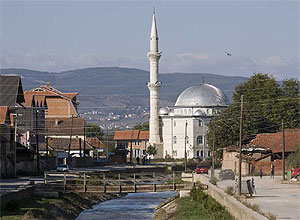
binladen_mosque_kosovo
Kosovo

At the party my wife went to, she got to talking with one of the parents and came to find out that she was born into a muslim family from a muslim country, who had come to the US as refugees. The country? Kosovo.

After growing up in New York City, this woman married an American man, and together, the two of them became Christians.

This woman’s parents, at that point, refused to speak to her, but once she had children, her parents started coming around more often.

This woman and her husband now live in Longmont and they are involved in supporting various Christian ministries, churches and missionaries in Kosovo and travel there from time to time.

Here’s the point: this is what happens to good number of muslims who come to the United States: they meet Christians, they hear the Gospel, they become Christians, and then they begin to reach out and support Christian missions in their country of origin.

08-21-14_the_green_prince_mainIf you haven’t yet, check out the movie The Green Prince. It’son Netflix. It’s about Mosab Hassan Yousef, a Palestinian and the eldest son of Sheik Hassan Yousef, one of the founders of Hamas. The Green Prince, is the film adaption of the book, Son of Hamas: A Gripping Account of Terror, Betrayal, Political Intrigue, and Unthinkable Choices, tells the true story of how Mosab was recruited by Israeli intelligence to work against Hamas.

But what is particularly interesting about Mosab’s story, as is documented in the book and the movie, is how in 2007, Mosab left the West Bank and came to the United States. Living in San Diego, he was invited by some acquaintances to come visit their church. There he heard the gospel, the message of God’s love, and he met Christian people who embraced him. In 2008, Mosab publicly announced his conversion to Christianity, putting himself at risk by doing so.

Now guess what he does: He reaches out to Arabic speakers with the message of the gospel. Talk about legit: a son of Hamas speaking in Arabic about Jesus and the hope of the Gospel. That’s powerful for people in that culture, and in ours as well.

“Religion steals freedom, kills creativity, turns us into slaves and against one another. Religion can’t save mankind. Only Jesus could save mankind through his death and resurrection. And Jesus is the only way to God.” – Mosab Hassan Yousef

With all of these refugees from muslim countries coming to the United States, there is an incredible opportunity: for the first time, many of these people will be able to hear the Gospel, to meet and be embraced by Christian believers, and to choose for themselves what they will believe.

May we who call ourselves Christians be found faithful to act towards them as Jesus would, and may we be used by God to help them find love, liberty and salvation in Christ. Lives and destinies will be changed, and maybe even the world as we know it.

The US Election and Some Reasons to be Hopeful

This past weekend I went with the elders of White Fields Church to Allenspark, where we had a marathon of meetings, but in such a beautiful spot that we could also enjoy some hiking and the natural beauty of the Rocky Mountains.

wp-1478360242646.jpg
Sunrise on Mt. Meeker
wp-1478360321019.jpg
We happened upon this mama bear and her 2 cubs in a tree near Lyons

We had a great time together, but I was surprised how exhausted I felt at the end of it. However, I feel very encouraged about where our church is at and where we are going.

Speaking of exhaustion and encouragement: the US election is coming up in 3 days.

I’m exhausted by the campaigns, by the division it causes, I’m exhausted because both of the major party candidates have major character flaws and neither of them are someone I can be excited to vote for.

However, I am also hopeful. Yesterday I ran across an article by Carey Nieuwhof that was a breath of fresh air. True, he’s a Canadian, so he doesn’t really have any skin in the game, but then on the other hand, they have Justin Trudeau and pretty much all of the things conservative Americans are concerned about happening in the US have already happened in Canada – so maybe a Canadian is the exact person who can speak into our situation.

Here’s the article: Despairing about the US Presidential election? 5 predictions that point toward hope.

Here are the 5 predictions he gives:

  1. There will be renewed interest in the sovereignty of God
  2. The church will look to Christ more and to the state less
  3. Living out your values will become more important than ever
  4. The tone of public discourse will get worse…or better
  5. The work of the local church will be more important than ever

Carey expounds on each of these in his post – it’s worth reading, but the tone of what he is saying is something I have found curiously lacking from Christian leaders during this election season.

I, for one, cannot lose hope – because as a Christian I know that 1) God is sovereign and 2) the best is yet to come.

The Problem with Facades

In Exodus 34, we read an interesting story: when Moses went to meet with God on the mountain to receive the tablets of the 10 Commandments, it caused Moses’ face to glow.

It says that when he came down from the mountain, the people were frightened to see his face glowing. In another place we are told that they couldn’t look upon it, because the glow was so bright.

behind-the-veilBut then an interesting thing happens; if you read the text it says that Moses would first let the people look at his face (or at least see that his face was glowing), then he would cover his face with a veil (supposedly for their sake), and then whenever he would go in before the Lord, he would remove the veil, get “charged up,” then come back, let the people see that his face was glowing again, and then put the veil back over his face.

Now, think about it: If the reason Moses covered his face was for the sake of the people, so as not to blind them by the glow on his face, then why let them look at his face first, and only then cover it up until the next time he went in before the Lord?

There is something implied there which is made explicit in another place in the Bible: in 2 Corinthians 3, Paul tells us that the reason Moses covered his face was because he didn’t want the people to know that the glow was fading away…

In other words, Moses hid behind the veil in order to keep up an appearance before the people, that wasn’t really true. Moses didn’t want people to know that he was just like them. He liked having people look up to him and be in awe of him, so he hid his face, lest everyone see that the glory was fading.

It was a facade.

That’s what a veil is: it’s something you hide behind. It’s a kind of mask that you use to cover up your blemishes, lest people see the real things about you that might change their image of you.

As a pastor, I see this a lot.

There are many examples of this today, in our own culture. Oftentimes people are willing to help other people deal with their “messiness,” but they don’t want anyone to know about the messy things in their lives. People tend to be quick to offer help, but reticent to admitting that they need help, or accepting help when it’s offered. They’d rather keep up a facade that they’ve got their stuff together, that their face glows with the glory of the Lord, even when that’s not the case.

In other words: “Life is messy, and that’s okay – as long as it’s not my mess.” “Community is about serving each other, and that’s great, as long as it’s me serving others and not me being served.”

Veils hinder true fellowship and community. Facades can hinder people from getting help when they need it. If your curtains are on fire, but you don’t want to call the fire department, lest your neighbors see that there was a problem at your house, then the fire will spread until the entire house burns down. All too often, that’s exactly what happens.

If your curtains are on fire, but you don’t want to call the fire department, lest your neighbors see that there was a problem at your house, then the fire will spread until the entire house burns down.

Furthermore, when leaders put up a facade, like Moses did, that things are better than they actually are, or that they are more spiritual than they actually are, it creates a culture which encourages people to not be honest about where they are really at. I believe that people deserve to have leaders they can look up to, and that they should expect more from leaders: to be a leader means to be out in front; after all, how can you follow someone, unless they are a few steps ahead of you? However, it should be authentic and not contrived. What Moses did was contrived.

In Genesis 3, we read about the first time people tried to cover up their shame: Adam and Eve had been naked and unashamed until they rebelled against God, but when sin came into the world, they were overcome with a sense of shame, and they tried to hide it by covering themselves with leaves. Leaves are good for a lot of things, but they made terrible coverings. They’re itchy. They’re drafty.

adam_and_eve_hide

Here’s what God did: he said, “I will make a covering for you,” and he made them coverings of animal skins. Do you know how you get animal skins? By killing an animal. In other words: because of their sin, an innocent creature had to die, in order to cover their shame.

Are you picking up what the story is putting down? The only way for us to be covered, is by the death of another. That other, the ultimate covering for our sin and shame, was Jesus – the “lamb of God.”

Any of your attempts to cover yourself will be not only uncomfortable and drafty, they will be insufficient and unhelpful. Facades create unnecessary barriers which hinder fellowship and growth. Embrace the covering of Jesus, and pursue authenticity rather than facades in your relationships and in your spirituality!

Happy Reformation Day!

luther-posting-95-theses-560x366

499 years ago today, Martin Luther – a German professor of theology, priest and monk, nailed his 95 Theses to the door of the All Saints Church (ironically on the eve of All Saints Day – AKA: Halloween) in Wittenburg, Germany. This act is considered the spark which ignited the Protestant Reformation.

If you own a Bible in your own language, that you can read any time you want, you have the Reformers to thank for that. It was not always that way; people fought for these things.

Before Luther, there were others who sought to bring reform to the church. John Wycliffe (1331-1384) published the first English translation of the Bible. Jan Hus (1369-1415) started a movement of the prolific teaching of the Bible to the common people, and was ultimately executed in Prague. Peter Waldo (1140-1218) commissioned a translation of the New Testament into the local vernacular of southern France. Each of these people were persecuted for trying to put the Scriptures into the hands of the common people.

In 1516, John Tetzel was sent to Germany to raise money for the building of Saint Peter’s Basilica in Rome. His means of raising money was the sale of plenary indulgences, which promised the release of a person from purgatory, based on their purchase.

The sale of plenary indulgences had been one of Jan Hus’ major contentions with the medieval Catholic Church, and Luther took issue with it as well: the idea that God’s favor or blessings could somehow be earned, not to mention purchased, was something he whole-heartedly rejected. Furthermore, the concept of purgatory is in conflict with the Biblical teaching of the sufficient atonement of Christ on the cross.

Luther had long struggled with feelings of condemnation and never being able to measure up, but had experienced an epiphany when he read Habakkuk 2:4: Behold, as for the proud one, His soul is not right within him; But the righteous will live by his faith.

This led Luther to the other places in the Bible where this phrase is repeated: in Romans 1:17, in Galatians 3:11, in Hebrews 10:38 – where the message is clear: It is not by our own works that we are justified before God, but it is God who justifies us as an unearned gift of His grace, and we receive that justification by FAITH. That is how Abraham became righteous (Abraham believed and it was credited to him as righteousness – Genesis 15:6; Romans 4:3 & 22), and that is how we receive God’s righteous, which he has provided for us in Christ!

Luther’s re-discovery of this Biblical truth came through his reading of the Scriptures. He became convinced that everyone needed to be able to read the Scriptures for themselves, and that the practice of the church at that time, of keeping the Scriptures out of the hands of the common people, was something that needed to end. He believed that people had the capacity and the right to read and interpret the Holy Scriptures for themselves. Luther himself, in the pursuant years, translated the Bible into German, a translation which is widely used to this day.

Luther came to believe that the Scriptures alone are the source of theology, that justification is by Christ alone through faith alone.

The 5 “solas” (alone statements) of the Reformation are:

  • Sola Scriptura (by Scripture alone)
    • The Bible is the only source of Christian doctrine
  • Sola Fide (by faith alone)
    • Justification is received by faith alone
  • Sola Gratia (by grace alone)
    • Justification is by God’s grace alone
  • Sola Christus (through Christ alone)
  • Soli Deo gloria (glory to God alone)

This October 31st, I hope you’ll remember that there is something much better than “fun size” candy bars: having God’s Word available to you, for you to read and understand yourself.

After all – what is “fun” about “fun size”?  There’s nothing fun about tiny candy bars. They should be called “sad size”…

In April 1521, Luther was brought before Holy Roman Emperor Charles V at the Diet of Worms, at which Luther was commanded to recant his teachings. Luther thought he would have a chance to defend his ideas. Charles would only accept an absolute recantation. Luther refused to do so.

martin-luther-at-the-diet-of-worms-anton-von-werner-1877-768x398

Here is a portion of Luther’s statement at the Diet of Worms:

“Unless I am convinced by the testimony of the Holy Scriptures or by evident reason – for I can believe neither pope nor councils alone, as it is clear that they have erred repeatedly and contradicted themselves – I consider myself convicted by the testimony of Holy Scripture, which is my basis; my conscience is captive to the Word of God. Thus I cannot and will not recant, because acting against one’s conscience is neither safe nor sound. God help me.”

If the Reformers could speak to us today, they would tell us this: the Reformation never ends. It is a continual movement of returning to the Scriptures and examining our lives and our practices in light of them.

Happy Reformation Day!

3 Ways to Identify Idols in Your Life & What to Do About Them

Recently at White Fields Church, we have been studying through the Book of Exodus in a series called Be Set Free.

This past Sunday we began to study the 10 plagues, and we saw how each of the plagues was a direct confrontation of the various deities of Egypt. For example: the Egyptians worshiped 3 deities associated with the Nile river, so, the first plague, which defiled the water of the river, struck at the heart of the confidence the Egyptians had in these deities who protected the Nile.

The purpose of the plagues was to erode the confidence of the Egyptians in their false gods, and cause them to trust in the Lord God – and just in case you’re wondering: it worked! Exodus 12:38 tells us that when the Hebrews left Egypt in the Exodus, many of the Egyptians joined them.

Primitive vs. Sophisticated Religion

Modern people tend to look down on old pagan cultures as “primitive” because they worshiped many different gods. They had a god or goddess for nearly everything you can imagine: from wealth to beauty, success and money, sex and fertility, weather and security, etc.

On the other hand, we tend to think of ourselves as being much more sophisticated, because we don’t worship a pantheon of deities like the ancients did.

But are we really as sophisticated as we like to think?   Were they really as primitive as we tend to assume? The answer to both questions is simply: NO.

Each of the pagan gods represented something. They worshiped things which they felt were good and desired to have: such as sex, prosperity, power, family, money, beauty and success.

Do we not worship the same things? Pick up a copy of People Magazine. Turn on E! Entertainment network. Browse the trending topics or the Moments section of Twitter. Listen to popular songs and music. If you’re honest, you have to admit that we idolize, i.e. worship, the same basic things that they did then. We’re not more sophisticated than they were – and they weren’t as primitive as we tend to paint them.

The only difference between us and them in this regard is that at least they had the self-awareness and the honesty to call a spade a spade, and admit that they worshiped those things! In that sense, they are actually perhaps more sophisticated than we are.

The Bible actually speaks of “idolatry of the heart” (cf. Ezekiel 14:1-3) – meaning that idols are just statues, but they are things that you worship. John Calvin famously said that “human nature is a perpetual factory of idols;” meaning that we have a propensity to worshiping things, and we will make an idol out of nearly anything.

However, one of the central themes of the Bible, particularly the Old Testament, is the devastating effects of idolatry on people’s lives. “Idols,” author Timothy Keller says, “are spiritual addictions that lead to terrible evil.”

Idols are spiritual addictions that lead to terrible evil. – Timothy Keller

Here are 3 ways we can we identify or recognize the idols in our lives:

1. The feeling of: If I have ______, then my life is worth living. If I don’t have ______, then my life is not worth living.

When the meaning of your life is tied to a particular thing and it has become the central thing in your life, it is the thing which justifies your existence. You believe that as long as you have it, you will be “okay” – and to not have it would mean that your entire reason for being has been lost.

When this describes a relationship, we call it a co-dependant relationship. A better word for this is: idolatry. When something is the central focus of your life, the underlying motivation behind all of your decisions, the best word to describe that relationship is: worship.

2. You are willing to compromise your own long-held values for it

A litmus test of idolatry in your life is when you are willing to compromise your own long-held values for the sake of that thing.

What causes a person who sincerely believes that something is wrong – to do that exact thing?

Take the family man who cheats on his spouse, or the pastor who steals from his church. These are terrible things, and we rightly call this hypocrisy. But what causes a person who on any given day would have told you that it is wrong to cheat on your spouse, or a person who not only preaches, but sincerely believes that stealing is wrong – to do that exact thing?

The answer is: there is something that they want so much more in that given moment, that they are willing to compromise their own values, and hurt other people and themselves in order to get it.

We have sayings in our culture, like: “I would kill for that.” Of course it’s hyperbole, but the message is: there are certain things out there that I want so badly that I would be willing to break my own rules, compromise what I believe is right, and hurt people in order to get them. That is certainly not just hyperbole – that kind of thing happens all the time, and always with devastating consequences.

You may not be there yet, but if you’ve had thoughts about doing something that goes against the very principles that you yourself sincerely believe in – that is a major red flag, that that thing is an idol in your life.

3. You’re looking to it to give you things which only God can give you

Identity. Security. Love. Rest. Hope.

If I have this much money… then I would really be somebody. Then I would be secure. Then I could rest…
If my family looks like this… then I will be secure. Then I will be happy with who I am. Then I can rest. Then I will be loved.

If your looking to any relationship or material thing to give you what only God can give you, that thing is an idol in your life.

An idol is almost always a good thing, but it becomes an idol when you elevate it from a good thing to an ultimate thing.

Idols can be things that you have, but are afraid of losing – or perhaps even more often, they can be things which you’ve never had at all, but desperately want.

What Is the Solution?

The cure for idolatry is to get a vision of God as He truly is.

When you see God for the greatness of who He is, when you understand what He has done for you in Jesus Christ, you realize that everything you ultimately desire and need is found in and through Him.

To see God in this way is to see Him as more desirable and more satisfying than anything else in the world – and when that happens, you will no longer turn to idols, which will always disappoint and the pursuit of which have devastating consequences.


A Refugee Story of Our Own

60 years ago this week, the Hungarian people rose up against the Stalinist government of Hungary and the Soviet occupation.

3dfd560222c03cb9179a1e3b159afcd2
Toppled Statue of Stalin in Budapest

The revolution ultimately failed, and in the wake of it, my wife’s father, Ferenc, fled Hungary along with some 200,000 people, and became a refugee. Ferenc was able to escape across the border into Austria along with a friend thanks to the help of a local villager who helped them navigate the minefield at the border. Unfortunately they later received news that this man had been caught and executed.

1101570107_400

Those who fought and those who fled were known as 56-ers (Ötvenhatosok).

Time magazine named the Hungarian Freedom Fighter the Man of the Year in 1956.

The revolution began on October 23, 1956 with rallies and protests. When the  ÁVH (Hungarian secret police) fired into the crowd of protesters in front of the parliament building, people formed militias, armed only with rocks and molotov cocktails, but were later able to break into military weapon storage and get guns. The revolution spread throughout the country, and on Oct 28, 1956 Soviet troops withdrew from Budapest. The Hungarians thought they were free, and began to establish a new government, but on Nov 4, in the middle of the night, the Soviet army rolled into Budapest and crushed the revolution completely and finally.

One of the saddest parts of the story of the revolution, was that the United States had been broadcasting into the Eastern Block via Radio Free Europe, telling people there that if they were to rise up against the Soviets, the US would support them. Unfortunately, that didn’t happen, because at the exact time when the Hungarians did rise up, the US was in the middle of negotiations about the Suez Canal and needed the support of the Soviet Union, and they weren’t prepared to turn the Cold War into World War III.

My father-in-law, Ferenc, was able to get refugee status in Austria and petitioned for asylum in the United States, and was among those who were accepted. The United States said they would accept 100 young men who were willing to work. They took them on a B-52 Liberator, and after a stop-over somewhere in Africa, they were brought to a military base in New Jersey. Asked where they wanted to live in the United States, they chose Chicago, because it was the only American city they had heard of.

maxwell_b-24
B-52 Liberator, the plane Ferenc and other refugees were brought to the US in

Ferenc later gained US citizenship, got married and had 2 kids. He went to college and worked in the tech industry. He loved Hungary, but understood he couldn’t go back. He also loved America, because of the opportunities and the freedoms he enjoyed here.

It was also in the United States that Ferenc heard the Gospel of Jesus Christ and became a Christian. He was born in Hungary during World War II and raised in the Stalinist era of communist Hungary, which meant that although he identified as Roman Catholic, he never practiced it. Upon coming to the US, Ferenc began attending Catholic mass, but the real turning point in his life came when his son, my brother-in-law, was invited as a teenager to a church by some friends. My wife and her brother had gone to Catholic church growing up with their parents, but as they got older they had stopped attending. Tony, my brother in law embraced the gospel message of who Jesus was and what he did: the Divine Son, dying in our place, for our sins, so we could be forgiven, justified and redeemed; rising from the dead that we might have eternal life through him.

Tony invited Rosemary, my wife, to come to church with him, and she did. He also invited his mom and dad, who were much more hesitant to come because of the charismatic nature of this particular church.

Ferenc, however, listened to what Tony said about Jesus, and so Ferenc looked for a church where he felt comfortable going and learning more. He ended up finding Calvary Chapel in Vista, CA – and Rosemary began attending with him.

Rosemary remembers the time when her dad really understood the gospel for the first time. She says that he was emotional, having been touched deeply by the love and the grace of God towards him, and at the same time somewhat angry, saying: “I went to church for years…but I never heard the gospel!   Why did they never tell me that I needed to repent of my sins and put my faith in Jesus, and that God extends grace and mercy and eternal life to those who will receive it?” 

I went to church for years…but I never heard the gospel!   Why did they never tell me…? – Ferenc Kovács

Ferenc attended Calvary Chapel in Vista for years. While he attended there he met another man, István, who was also a 56-er. About this time, the great changes were taking place in Eastern Europe which led to the end of Communism in those countries. Calvary Vista led the way in sending teams to preach the gospel and to plant churches, first in Yugoslavia and then in Hungary.

Ferenc was so excited to see what God was doing, and he wanted so badly to go to Hungary and tell his fellow countrymen the good news of the gospel, and the message that God loved them and that Jesus had died for them. Unfortunately, he never got that opportunity. Ferenc suffered from Juvenile Parkinson’s Disease, a devastating condition for a man who had formerly been an avid athlete and soccer player. Ferenc died from complications from Parkinson’s in 1996, at the age of 59, but not before seeing his daughter go on mission trips to Hungary. His friend István did go to Hungary and spent years working with Calvary Chapel in Budapest.

We ended up working together in, of all places, a refugee camp

In 1998, Rosemary moved to Hungary to work with Calvary Chapel, spreading the gospel and planting churches. It was there that I met Rosemary in 2001. We ended up working together in, of all places, a refugee camp, in Debrecen, Hungary where we ministered several times a week to people mostly from muslim countries, who had never heard the gospel of Jesus Christ. We provided for them materially through donations, and we also offered them Bibles and held Bible studies, translated into several languages. Over this period of time, we saw people from Kosovo, Iran, Afghanistan and several African countries become Christians after hearing the gospel clearly presented for the first time in their lives and having the opportunity to read the Scriptures for themselves.

Today, we have a modern-day refugee crisis. We’ve been told that they are a “Trojan Horse” – and maybe some of that rhetoric has some truth to it, but I also know that people were sceptical of people like Ferenc, my father-in-law, who came from a Communist country – and guess what: during the Cold War, some spies and people with bad intentions against America did come to the US pretending to be refugees. It doesn’t change the fact of Ferenc and many other refugees’ stories of escaping oppressive regimes and not only finding freedom, but also having the opportunity for the first time in their lives to hear the life-transforming message of the gospel.

I see the current refugee situation through this lens: the lens of my wife, her brother and my late father-in-law. I see it through the lens of the many people who became Christians in the refugee camp I worked in, who had never had the opportunity to hear the gospel or the freedom to become Christians in their home countries. I see it through the lens of the Iranian refugees I met in Budapest last year, whom White Fields church bought Bibles for, because they were hearing about Jesus and getting baptized, changing their names and evangelising other refugees.

I’m not afraid of refugees – my father-in-law was one. The mass exodus of people from Syria is a difficult and messy situation, but here’s what I’m going to do if Syrian refugees move into my neighborhood: I’m going to befriend them, love them, show them kindness and seek to share with them the life-changing message of the gospel, a message which they likely have never heard before. I hope you’ll do the same.


Changes to The Longmont Pastor Site

As of a few days ago, The Longmont Pastor has changed addresses – it is now located at nickcady.org

One of my long-term goals is to write books, and so I plan to use this address as more of a hub rather than just a blog.

For those of you who subscribe to this blog, this shouldn’t change anything for you – you should continue to get posts delivered to you as usual.  The old address  (longmontpastor.wordpress.com) will still continue to work, but will redirect you to the new address.
For those of you who don’t subscribe yet, go on and do it! You can subscribe via email using the form on this page, through WordPress or RSS, or by following me on Twitter.

Additionally, I’ve made a few aesthetic changes to make the site look better and be easier to navigate. I also plan on posting more frequently, creating a schedule to make sure that posts are more regular.

Thanks for reading! See you soon.