Senator Ben Sasse’s Speech at the Gospel Coalition 2017 Conference

Take a minute to watch this short address given by Senator Ben Sasse of Nebraska at the Gospel Coalition 2017 Conference a few weeks ago in Indianapolis.

Sasse is a graduate of Yale and studied in Oxford. He is a Christian and in this address he sounds more like a pastor than a politician. He has served as an elder in his church and on the board of trustees of Westminster Seminary California.

Here’s an article about him and his faith that was published in World Magazine: Ben Sasse: a Reformed reformer.

Here’s the video of his session: “What Does Washington Have to Do with Jerusalem?”:

Easter Weekend Recap

This past Saturday White Fields had our annual Easter Outreach, an Easter egg hunt and festival that we do in Roosevelt Park, right next to where our church meets at the St. Vrain Memorial Building in downtown Longmont. We had a lot of great volunteers who made the event a success both in terms of hosting a fun event for our community and sharing the message of the hope that we have because Jesus Christ died for our sins so that we can be forgiven and justified, and rose from the dead so we can have everlasting life. We estimate that 1500-1700 people attended this year.

A crowd watches the puppet show at our Easter Outreach which shares the meaning and message of the Resurrection

We want to say thank you to the Longmont Times-Call and Boulder Daily Camera for covering the event once again this year. When we saw the article come out on Saturday night, we were disappointed that it failed to mention that White Fields was the sponsor and host of the event. In past coverage of the event, White Fields has always been mentioned. Several members of our church and others who attended the event wrote the Times-Call about this, and yesterday morning the editor called our church  to let us know the online version of the article had been updated. We were impressed with the quick and gracious way they handled it.

Our daughter made the paper.

Sunday morning we had two services at White Fields. We broke attendance records, we had visitors from the outreach on Saturday, and we had people respond to the gospel for the first time to become Christians.

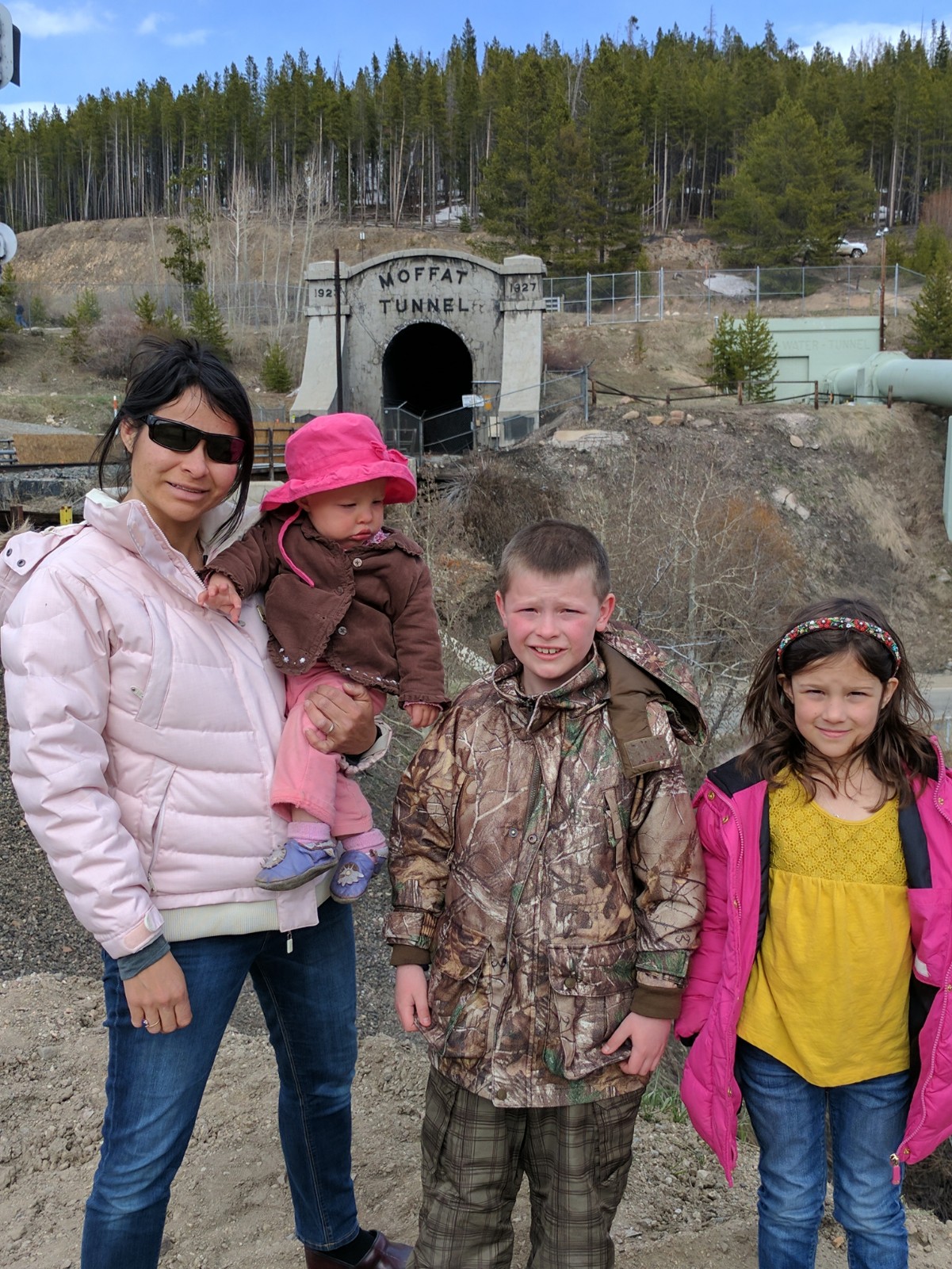
After lunch our family (minus one who had to work) headed up to Winter Park for a family get-away. Yesterday my son and I snowboarded.

Right next to Winter Park ski area is the western portal of the Moffat Tunnel, a train tunnel built through the Continental Divide in the 1920’s. My family is actually part of this tunnel’s history: my great-grandfather worked in it as a welder during its construction and his brother died in it in a dynamite explosion.

I hope you had a great weekend celebrating Jesus’ resurrection!  He is risen indeed!

Was Jesus in the Grave Three Days and Three Nights? Here’s How It Adds Up

In Matthew 12:38-41, we read about how some of the scribes and Pharisees asked Jesus for a sign that he really was who he said he was: the Messiah. Jesus responded that only one sign would be given to them: the “sign of the prophet Jonah.”

For just as Jonah was three days and three nights in the belly of the great fish, so will the Son of Man be three days and three nights in the heart of the Earth.

Here’s the problem: If Jesus died on Good Friday and rose on Easter Sunday, that doesn’t add up to 3 days and 3 nights. At most it adds up to 2.5 days and 2 nights.

So… does that mean that Jesus didn’t stay in the grave long enough to fulfill his own prophecy?

Nope. Jesus really was in the grave three days and three nights, which is why the early Christians also taught that he was raised on the third day (Acts 10:40, 1 Corinthians 15:4). Let me explain how it adds up, but be prepared: it’s going to change the way you think about “Good Friday.”

Some Basics to Start With

  1. The Jewish calendar is lunar (based on the cycles of the moon), whereas the Roman calendar (which we use) is solar (based on the rotation of the Earth around the Sun). As a result, they don’t always correspond, hence the reason why the date of Easter changes every year. Today in Western Christianity, Easter is celebrated on the Sunday following the Paschal Full Moon. For more on why the date of Easter changes each year, click here.
  2. We tend to think of the new day beginning when we wake up, but in the Jewish mindset, the new day begins at sunset. So, when the sun sets on Monday, it is not considered Monday evening, it is considered the beginning of Tuesday.
  3. We know that Jesus resurrected on a Sunday, “the first day of the week” (Matthew 28:1; Mark 16:2,9; Luke 24:1)

What is a “Sabbath”?

The word sabbath means “rest,” and it refers to a holy day when no work is to be done.

Every Saturday is a sabbath, but there are other sabbaths as well – also known as “special Sabbaths.” Some of these “special Sabbaths” are celebrated on a specific calendar date, no matter what day of the week that date falls on – kind of like how we in the USA celebrate Independence Day on the 4th of July, and we observe that holiday no matter what day of the week it falls on.

In John 19:31, we read this about the day when Jesus was crucified:

Now it was the day of Preparation, and the next day was to be a special Sabbath. Because the Jewish leaders did not want the bodies left on the crosses during the Sabbath, they asked Pilate to have the legs broken and the bodies taken down.

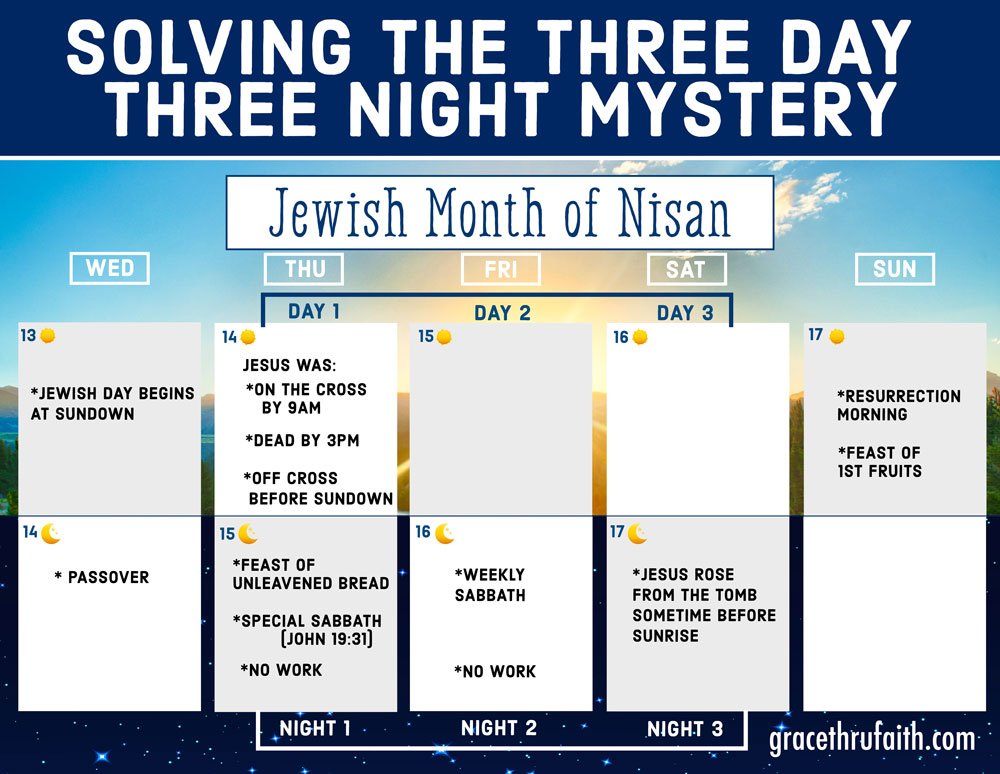
The special Sabbath referred to here was the Feast of Unleavened Bread, a holiday which is always observed on the 15th day of Nisan according to the Jewish calendar.

According to Leviticus 24:4-14, there are three special holidays in the month of Nisan: Passover (the 14th of Nisan), the Feast of Unleavened Bread (15-22 of Nisan) and the Feast of First Fruits which was held on the Sunday following the Passover.

Let’s Sum This Up

Jesus actually died on a Thursday. Friday and Saturday were both sabbaths: Friday was the first day of the Feast of Unleavened Bread, and Saturday was the weekly sabbath.

Jewish Month of Nisan

How can we be sure that this is what happened?

Several decades ago, the London Royal Observatory took on the challenge that since they could theoretically identify the position of the planets and start on any date in history, to figure out if around the time of Jesus there was such a time when Passover fell on a Thursday. Since the Jewish calendar is lunar, there is always a full moon on Passover, so this is pretty easy to figure out. Not surprisingly, there were several years around the time of Jesus when this took place. It’s really not that uncommon – just like how Christmas falls on a Tuesday every few years.

Even More Interesting…”Coincidences”?

According to Exodus 12:1-13, God told the Israelites that they were to select the Passover Lamb on the 10th day of Nisan. They were to examine it from the 11th to the 13th to make sure it was without blemish, and they were to sacrifice it on the 14th.

If the 14th was Thursday – and Jesus was crucified on “the day of Preparation” (Matthew 27:62, Mark 15:42, Luke 23:54, John 19:31) which was the day when Passover began and the celebration began with the eating of the Passover meal (Jesus and his disciples then would have eaten the last supper Passover meal on Wednesday evening). Then what this means is that when Jesus entered Jerusalem on Palm Sunday, that was on the 10th of Nisan – the day when the Passover lambs were to be selected!

Furthermore, remember that the Sunday after Passover was the Feast of First Fruits (Leviticus 23:9-11) – which means that Jesus resurrected on the Feast of First Fruits. This is what Paul the Apostle is making direct reference to in 1 Corinthians 15:20-23, where he says:

But in fact Christ has been raised from the dead, the firstfruits of those who have fallen asleep. For as by a man came death, by a man has come also the resurrection of the dead. For as in Adam all die, so also in Christ shall all be made alive. But each in his own order: Christ the firstfruits, then at his coming those who belong to Christ.

So there you have it:

Jesus was indeed in the grave for three days and three nights. It really wasn’t that much of an anomaly, but it resulted in two sabbaths back to back – something which regularly happens every few years.

So “Good Friday” was actually on Thursday, “Maundy Thursday” was actually on Wednesday, and “Holy Saturday” was actually two days long.

However, it is incredible to see how God orchestrated and prepared for this to happen as it did for thousands of years before it happened. In reality, the Bible tells us that God had planned this whole thing out from eternity past (see Revelation 13:8) – and all of it so that you may have life in His name by believing! (John 20:31)

Note: this post draws largely from the work of Jack Kelley, “Solving the Three Day Three Night Mystery” 

The Less Famous Days of Holy Week

holyweek

Good Friday and Easter Sunday get all the press, but there are other important days of Holy Week.

Maundy Thursday

What is a “maundy” anyway? It comes from the Middle English and Old French word Mandé, which comes from the Latin Mandatum – which means Mandate.

Maundy Thursday refers to the mandate that Jesus gave the night before his crucifixion, when he shared his last supper with his disciples. After Jesus had washed his disciples’ feet in an act of love and service, he then told them:

A new commandment (Latin: mandatum) I give to you, that you love one another: just as I have loved you, you also are to love one another. By this all people will know that you are my disciples, if you have love for one another. (John 13:34-35)

On Maundy Thursday we remember the events of the last supper, the institution of the sacrament of communion, the betrayal of Jesus by one of his closest friends, and the all night prayer vigil that Jesus had in the Garden of Gethsemane, where he sweat blood from the stress and anxiety he was experiencing as he looked forward to the physical and spiritual suffering that awaited him.

It was on this night that Jesus prayed three times: “My Father, if it be possible, let this cup pass from me; nevertheless, not as I will, but as you will.” (Matthew 26:39-44)

The fact that the Father did not remove this “cup” of suffering from Jesus reminds us that there was no other way for us to be saved, then for Jesus to go forward with taking our place in death and judgment so that we might be able to receive forgiveness and eternal life.

Holy Saturday

The day between Good Friday and Resurrection Sunday is known as Holy Saturday. For the disciples of Jesus this would have been a day a great darkness and uncertainty, when the effects of Jesus’ crucifixion were not yet understood by all, and even though it wasn’t the case – it seemed like all hope was lost. Little did they realize that Sunday was coming…

Max Lucado wrote an excellent post on “The Silence of Saturday” a few years ago:

Jesus is silent on Saturday.  The women have anointed his body and placed it in Joseph’s tomb.  The cadaver of Christ is as mute as the stone which guards it.  He spoke much on Friday. He will liberate the slaves of death on Sunday.  But on Saturday, Jesus is silent.

So is God.  He made himself heard on Friday.  He tore the curtains of the temple, opened the graves of the dead, rocked the earth, blocked the sun of the sky, and sacrificed the Son of Heaven.  Earth heard much of God on Friday.

Nothing on Saturday.  Jesus is silent.  God is silent.  Saturday is silent.

Easter weekend discussions tend to skip Saturday.  Friday and Sunday get the press.  The crucifixion and resurrection command our thoughts.  But don’t ignore Saturday.  You have them, too.

Silent Saturdays.  The day between the struggle and the solution; the question and the answer; the offered prayer and the answer thereof.

Saturday’s silence torments us.  Is God angry?  Did I disappoint him? God knows Jesus is in the tomb, why doesn’t He do something?  Or, in your case God knows your career is in the tank, your finances are in the pit, your marriage is in a mess. Why doesn’t He act?  What are you supposed to do until He does?

You do what Jesus did.  Lie still.  Stay silent.  Trust God.  Jesus died with this conviction: “You will not abandon me to the grave, nor will you let your Holy One see decay” (Acts 2:27 NIV).

Jesus knew God would not leave him alone in the grave.  You need to know, God will not leave you alone with your struggles.  His silence is not his absence, inactivity is never apathy.  Saturdays have their purpose. They let us feel the full force of God’s strength. Had God raised Jesus fifteen minutes after the death of His son, would we have appreciated the act? Were He to solve your problems the second they appear, would you appreciate His strength?

For His reasons, God inserts a Saturday between our Fridays and Sundays.  If today is one for you, be patient.  As one who endured the silent Saturday wrote:  “Be patient, brethren, until the coming of the Lord” (James 5:7 NKJV).

Good Friday: The Great Exchange

103 the crucifixion of christ-tintoretto

The good news of Good Friday is that “It is finished!” (John 19:30) Because of that, we can rest from our labors of trying to justify ourselves, and we can revel in hope, because not only were our sins imputed to Jesus, but his righteousness was imputed to us.

This is what it means when it says: “For our sake, He (God) made Him (Jesus), who knew no sin, to be sin on our behalf, so that we might become the righteousness of God in Him.” (2 Corinthians 5:21)

It’s the most astonishing exchange of all time: for those who receive Him (John 1:12), all of your sinfulness was placed on Him, and in return all of His righteousness was accounted to you.

Jürgen Moltmann puts it this way:

“When God becomes man in Jesus of Nazareth, he not only enters into the finitude of man, but in his death on the cross also enters into the situation of man’s godforsakenness. In Jesus he does not die the natural death of a finite being, but the violent death of the criminal on the cross, the death of complete abandonment by God. The suffering in the passion of Jesus is abandonment, rejection by God, his Father. God does not become a religion, so that man participates in him by corresponding religious thoughts and feelings. God does not become a law, so that man participates in him through obedience to a law. God does not become an ideal, so that man achieves community with him through constant striving. He humbles himself and takes upon himself the eternal death of the godless and the godforsaken, so that all the godless and the godforsaken can experience communion with him.” (from The Crucified God)

Moltmann goes on to say:

God weeps with us so that we may one day laugh with him.

May your Good Friday be filled with reflection upon, appreciation for and response to what Jesus did for you on Calvary, the ultimate expression of God’s love for you!


Christians Who Don’t Believe – Part 2

In case you missed Part 1 of this post, you can read it here.

There was a BBC article published this past Sunday about the beliefs of people in England regarding the resurrection of Jesus and life after death.

According to their survey:

  • 25% of people who call themselves Christians in Great Britain do not believe that Jesus resurrected from the dead.
  • Only 17% of the general public in Britain believe word-for-word the account of Jesus’ resurrection.
  • 10% of non-religious people in Britain believe that the Easter story contains some truth, but only 1% believe it is literally true.
  • 21% of non-religious people believe in life after death.
    • Of these, 65% said they believe that their soul would go to heaven or hell, and 32% believe they will be reincarnated.

And here’s the one I find most shocking:

  • 31% of British Christians surveyed said they do not believe in life after death.

While someone like me looks at this and sees an incredibly dire situation, the article says that Church of England officials were actually quite encouraged by it! Here’s why:

  1. Because it showed that “many British people, despite not being regular churchgoers, hold core Christian beliefs.”
  2. It showed more regular church attendance amongst younger Christians than older ones.

Maybe it’s me, but in light of the survey it seems like a bit of stretch to say “many” and to say “core Christian beliefs”. Is literally believing in the resurrection of Jesus from the dead not considered by them to be a “core Christian belief”?

What’s interesting about this is that the Bible directly addresses those who call themselves Christians and yet do not believe that Jesus actually rose from the dead.

In 1 Corinthians chapter 15, Paul speaks first to those who call themselves Christians and do not believe in life after death, and then he speaks to those who deny that Jesus literally rose from the dead. It’s almost like this chapter could have been written for 31% and 25% of British Christians respectively.

The first point Paul makes is that the literal resurrection of Jesus from the dead is and has always been a central tenant of the gospel: the core of Christian belief, and it is only by believing this gospel that we are saved. (1 Corinthians 15:1-4)

The second point Paul makes is that not only was the death of Jesus foretold by the Scriptures, but so was his resurrection. (1 Corinthians 15:3-4)

The third point Paul makes is that there were hundreds of eye witnesses still alive at that time who could attest to having seen Jesus alive after his crucifixion. (1 Corinthians 15:5-8)

Then Paul goes on to say (Vs 12-15) that if there is no life after death, then all of the apostles and Christians were liars, because they told people that Jesus had risen from the dead and that they had seen him.
If they had lied about this, they either did it knowingly or unknowingly. If they did it knowingly, then they are intentionally conning people and they should therefore not be trusted. If they lied unknowingly, that means that they are delusional and should not be followed, because they are, to put it crassly: deranged.

Next, Paul says that if there is no life after death, then Christian faith is pointless, and they have just been wasting their time and believing in a fairy tale (Vs 17-18) – and ultimately there is no hope, and no good news. And if this is the case, that Christianity is just another form of moralism and empty rituals, then Christians are the greatest fools in the world. (Vs 19, 30-34)

If in Christ we have hope in this life only, we are of all people most to be pitied. (1 Corinthians 15:19)

But… if Christ is truly and literally risen from the dead, then that means that God has broken a hole in the pitiless walls of this broken world, and made a way for us to be saved! And Jesus is the first fruits of those who will be resurrected from death to everlasting life.
And the day is coming when the perishable puts on the imperishable, and the mortal puts on immortality, then shall come to pass the saying that is written:

“Death is swallowed up in victory.”
“O death, where is your victory?
O death, where is your sting?” (1 Corinthians 15:54-55)

And because that day is coming, we can have the confidence in whatever circumstances we may face in this life to be steadfast, immovable, always abounding in the work of the Lord, knowing that in the Lord your labor is not in vain. (1 Corinthians 15:58)

The story of Jesus’ resurrection is an integral and indispensable part of the good news of the gospel: the core message of Christianity. The hope that we have as Christians is based on it. To deny it is to deny Christian belief and to try to change Christianity into a form of moralism full of empty rituals which encourages condescension towards God and towards other people of faith, but which leaves you as a person worthy to be most pitied because you are without hope in anything greater than yourself.

If however, you believe in God, then let me ask you the question Paul the Apostle asked the crowd at his own trial: Why is it thought incredible by any of you that God raises the dead? (Acts 26:8)

It would be incredible if you or I raised someone from the dead, but if God is God — the creator and sustainer of life — then such a thing is neither impossible nor even difficult for him.

May you be filled with true belief this Easter season, so that you may believe, and in believing have life! (John 20:31)

Christians Who Don’t Believe – Part 1

20120507-incredulity_of_saint_thomas_by_caravaggio

What does it mean to be a Christian? Most people would say that it means that you are a follower of Jesus or that you believe a certain set of doctrines.

The BBC published an article this past Sunday about the beliefs of people in England regarding the resurrection of Jesus and life after death. The report corresponded with some comments I made this past Sunday about how there is a correlation between rising standards of living and a decrease in religious adherence in many societies of the world, and what some of the reasons for this are. You can listen to the audio of that message here.

Here are some of the statistics listed in the article:

  • 25% of people who call themselves Christians in Great Britain do not believe that Jesus resurrected from the dead.
  • Only 17% of the general public in Britain believe word-for-word the account of Jesus’ resurrection.
  • 10% of non-religious people in Britain believe that the Easter story is true.
  • 21% of non-religious people believe in life after death.
    • Of these, 65% said they believe that their soul would go to heaven or hell, and 32% believe they will be reincarnated.

And here’s the one that I find most shocking:

  • 31% of British Christians surveyed said they do not believe in life after death.

This brings up a very important question: What do you actually have to believe in order to be a Christian?

Or to put it another way: Are there any things which, if you don’t believe them, you can no longer legitimately call yourself a Christian?

When I was 16 years old, one of my Christian friends from school told me I wasn’t a Christian. I was offended – because, you see: I grew up going to Lutheran school. I was catechized and confirmed in the Lutheran church, and I sincerely believed in God’s existence. In fact, I believed that Jesus was God the Son and the Son of God and that he literally died and rose from the dead just as the Bible describes.

So how dare she say that I was not a Christian, right?

But she was right. I wasn’t a Christian.
And I knew it.

Here’s the text she turned me to if you’re interested: Matthew 7:21-23

But here’s why, in spite of believing the biblical doctrines were true, I was not a Christian: because that is not the kind of belief by which a person is saved and becomes a child of God.

But to all who received him, who believed in his name, he gave the right to become children of God, (John 1:12)

Because here’s the thing: the Bible says that the devil also believes all of those things about God: in God’s existence, in the fact that Jesus was God and that he lives, died and resurrected on the third day. (James 2:19)

The word “to believe” in Greek is the word πιστεύω (pisteuo).
It doesn’t mean less than believing in something’s existence or acknowledging that something happened, but it does mean more than that. It means: to trust in, to cling to, to rely on, to adhere to, to commit to.

This is the kind of belief that the Bible is talking about when it says:

  • But to all who received him, who believed in his name, he gave the right to become children of God, (John 1:12)
  • these are written so that you may believe that Jesus is the Christ, the Son of God, and that by believing you may have life in his name. (John 20:31)
  • Jesus answered them, “This is the work of God, that you believe in him whom he has sent.” (John 6:29)
  • For God so loved the world, that he gave his only Son, that whoever believes in him should not perish but have eternal life. (John 3:16)

I have a few more thoughts to share about this, but I’ll save them for tomorrow.
Stay tuned for Part 2.

The Courage to Say “I’m Sorry”

nrg-2016-140-i1

Probably you know what it’s like to have people you don’t actually know, but who you know of, because you move in the same circles and you have a lot of common friends.

Having been missionaries in Eastern Europe for many years, there are many people whom my wife and I don’t know personally, but we know of them, because we’ve been in the same places at different times, or we’ve met once or twice before.

During my recent trip to Ukraine, I met one of these people: a long-time missionary in Kyiv named Cara Denney. On this trip, however, I did get the chance to spend some time with Cara and really enjoyed getting to know her. We have a lot of friends in common, but this was the first time we’d ever really talked.

As Cara was telling me part of her story, she said something that was very profound: she was telling me about how she had a strained relaitonship with her mom for many years, but after she became a Christian, she was able to forgive her mother in light of how Christ had forgiven her.

Be kind to one another, tenderhearted, forgiving one another, as God in Christ forgave you. (Ephesians 4:32)

It was a few years after that, that her mother approached her, and finally apologized for the pain and suffering she had caused Cara earlier in her life.

Now here’s the good part: Cara told her mother at that point, “Mom, I forgave you years ago!” — to which her mom replied: “I know. That’s what gave me the courage to say, ‘I’m sorry’!”

“I forgave you years ago.”
“I know, that’s what gave me the courage to say ‘I’m sorry.'”

That story reminds me of a few things:

  1. It is the kindness of God that leads us to repentance. (Romans 2:4)
    The fact of God’s love for us displayed in Him acting to save us through Christ — while we were yet enemies! (Romans 5:10) — shows us that God deeply loves us, and this kindness and love gives us the courage to come to him and confess our sins, knowing that they have already been dealt with in Christ and that we will be welcomed in and received with open arms by the Father.
  2. You don’t have to wait for someone to say they are sorry in order to forgive them.
    Some people will never say they are sorry. But if you hold onto resentment against them, you will be the one who suffers, not them! It has been said that holding onto resentment against another person is like drinking poison and expecting to other person to die. In the end you are only hurting yourself. In order to be free, you’ve got to forgive that person for what they’ve done against you, whether they apologize or not. And who knows, maybe like with this woman, the fact that you have already forgiven them will be the thing that gives them the courage to say, “I’m Sorry.”
    After all, God is the judge, and Jesus has already died for that sin – which means that justice will be served and/or has already been satisfied. Knowing this gives us the strength and the freedom to forgive.

Holding onto resentment is like drinking poison and expecting to other person to die. In the end, you’re only hurting yourself. Forgiveness sets you free.

For more from Cara, check out this article she wrote for calvarychapel.com: Where is God in the Conflict With Russia & Ukraine?

“I don’t want any presents, I just want my daddy”

A few weeks ago I was preparing to go out of town for 10 days.

For the past several years I have taken trips like this one to visit different ministries and speak at churches and conferences. Last year when I was preparing to leave, my kids were sad that I was leaving, but when I told them that I would bring them Túró Rudi from Hungary, they cheered up and asked me, “When are you leaving?!”

But this year was different. My daughter was very upset that I was leaving, pretty much to the point of being inconsolable. In an attempt to cheer her up I told her that I would bring her back a present from one of the countries I was visiting, and I asked her what she would like.

Her response broke my heart: through her sobs she said, “I don’t want any presents, I just want my daddy.”

In Exodus 33 there is an interesting story. After God had heard the people’s cries and saved them from slavery in Egypt, brought them through the Red Sea and provided for them in the wilderness and entered into a covenant with them, the people had turned their backs on God and created a golden calf to worship instead. God chose to forgive them for this, but in Exodus 33 he told them: Even though you haven’t kept up your end of our deal, I’m still going to give you the Promised Land. I will send an angel before you, who will protect you and who will give you victory in all the battles you face. BUT… I will not go with you.

Think about what God was saying… He was testing them: Did they only want Him for the things He could give them, or did they actually want Him?

Essentially, God was offering them success, security and prosperity – without Him. He wouldn’t be there to tell them what to do. They could live their lives however they wanted, and they could have everything they wanted.

Sounds like a pretty good deal, right?

But rather than being excited by this offer, we read that the people mourned when they heard this “disasterous word.”

I wonder how many of us would consider this a “disastrous word” and bad news, that we could have everything we want — without God. I’m sure there would be many people who would be quite fine with that offer: if they could have success, security and prosperity and no God around telling them what to do and what not to do.

And yet these people were willing to give up all of those things, in order that they might have a relationship with God! It’s the same sentiment that was expressed by my daughter on the eve of my trip: “I don’t want any presents, I just want my daddy.”

The claim that many detractors and critics of Christianity make, that one of the only reasons people are religious is because they view God as a “cosmic fairy” or a genie in a bottle, whom they can invoke to give them what they want. But this flies in the face of that!

Let me ask you: What if you could have everything that you’ve always dreamed of having: money, success, the dream house, the trophy spouse, fame and recognition, and/or whatever it is that you dream of having — but without God. Would you be excited by that prospect, or would you consider it “disasterous”?

What we see later on in Exodus 33 is that Moses, having come to know some of who God is, makes a bold request: he asks to see God’s glory. Because here’s the thing: one of the defining characteristics of a person who has truly come to know God is that they want more of Him.

May we be those who come to know God in such a way that we want more of Him, and desire to know Him more than we want the “presents” that He can give us.

Back to School

Yesterday I received my letter of acceptance from London School of Theology, where I will begin my postgraduate studies starting this September to get a Master of Arts in Integrative Theology.

lst-logo-new

I will be studying via distance learning, which means I won’t have to travel at all and will be able to make my own schedule, both of which are important to me since I’m a full-time pastor and have a family at home. I looked into a local school in Colorado, but I prefer the British approach to education. Also, British schools are more affordable than US schools when it comes to studying Christian theology because in the US it is only taught in private universities because of the separation of church and state – whereas in the UK public universities can have theology departments. I would recommend Americans who want to study theology to really consider looking into studying via distance learning in Britain.

I’m excited to go back to school and continue my theological education. It’s been nice taking a year off, but I am ready to get back into it.

I am still in Kyiv; I fly home tomorrow morning. Today I got to visit Ukrainian Evangelical Theological Seminary and speak to the students and staff.

IMG_20170328_104501-1
The faculty and students of Ukrainian Evangelical Theological Seminary

Several months ago I met a couple who live in Berthoud, CO who run an organization called Ukraine Orphan Outreach. It was through them that I got connected to people at the seminary, and as it turns out there are several people from Calvary Chapel in Ukraine who work and study there.

I was impressed with their school and its mission: “To strengthen churches and transform society” – as well as the work they are doing to accomplish that. Having an interdenominational evangelical seminary in Ukraine is a great asset to the church here.

The school has many students from outside of Ukraine, and recently they started a second campus of their school in Bishkek, Kyrgyzstan. They also operate several mini-campuses in cities around Ukraine, for people who want to study with them but have difficulty coming to Kyiv.

IMG_20170328_114241-1
A class at UETS

I’m praying that God uses and blesses the work of UETS to raise up and train many ministers of the gospel to work in this country and the former republics of the Soviet Union.