Upcoming at White Fields

We’ve got a few things happening at White Fields Church in Longmont, Colorado that I wanted to let you know about:

Tomorrow we will be starting a new series called “Church Matters” in which we will be taking four weeks to talk about church: why it matters to God, to us and to the world. We’ll be studying the Bible to see God’s vision for the church, and what therefore we should be about.

White Fields Community Church fényképe.

There is a great local company that helps us with some of our graphic designs: CryBaby Design. Check them out and hit them up if you’re looking for someone to help with graphic design, branding or web design.

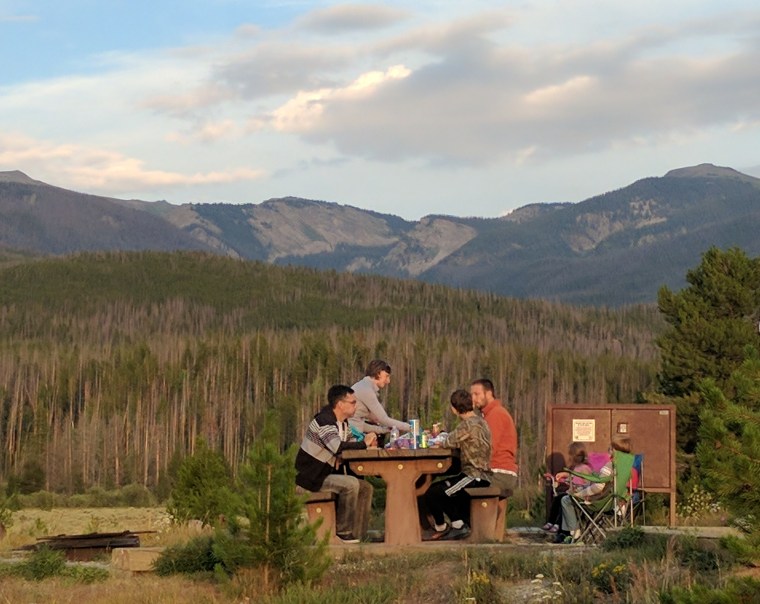
We also have a great administrative assistant on our staff who does some design and media work for us, like the following graphic for our upcoming Outdoor Worship Service on August 13, 2017 at 10 a.m.

download_20170805_142709

If you are in or around Longmont, we’d love to have you join us!

Finally, here is a video preview of what’s happening tomorrow at White Fields. Our mission team we recently sent to Hungary to work with the church that we planted years ago is now back and will be giving an update about what God did through them.

We also have some friends in town who are missionaries in Athens, Greece: Travis and Kristen Spencer, who will be giving a presentation after service about their ministry there.

Here’s that video:

Is Christianity in Decline? Yes and No. – Part 2

growth

In Part 1 of this post I shared some thoughts on the commonly held belief that religious belief is in decline around the world and eventually doomed for extinction.

Today, we look at three more important factors to keep in mind regarding this topic:

2. Liberal Religion is Declining, but Conservative Religion is on the Rise

I wrote about this phenomena recently here: When You Stand for Nothing…, where I talked about the case of two Presbyterian denominations, one which is theologically liberal and the other which is theologically conservative. The liberal denomination is bleeding out quickly, whereas the conservative one is growing strongly.

It seems that there has been a major miscalculation by many people about the eventual demise of theologically conservative beliefs.

Since many of the historical mainline Protestant denominations, such as the Evangelical Lutheran Church in America (ELCA), the United Methodist Church (UMC), the Presbyterian Church in the United States of America (PCUSA) and the Episcopal Church in America (TEC) have taken a hard turn towards theological liberalism, they have seen rapid declines in their membership and attendance. And since these denominations compromised a large portion of the population in the United States, their declines have caused many to say that Christianity in the United States is in crisis.

Of the people leaving these denominations, many have transferred into theologically conservative Evangelical Protestant Churches. According to this article from Christianity Today, over the last four decades, there has been more than a 400 percent growth in Protestants who identify as nondenominational. Non-denominational Evangelical Protestant Churches now compromises about 30% of all Christian church attendance in the United States.

Around the world, both in Christianity and outside of Christianity, it is the conservative branches of religious movements which are on the rise, not the liberal ones. This is surprising to those like Richard Dawkins, who assume that as the world becomes more educated and developed, religion will either turn into sentimental tradition or just die out completely. Quite the opposite is happening actually.

3. Secularism is Set to Decline in the Future

In an interview with the Christian Post (full article here), author and pastor Timothy Keller said:

“In the past there was hardly anybody who was secular,” Keller told the Christian Post. “In the future there will be significant numbers of people who are secular more than have ever been in history. But, the facts on the ground are that Christianity and Islam in particular are growing faster than the population. And that over the next 25-45 years the number of people who say that they are secular, the percentage of the world’s population that is secular, is actually going down.”

Is Keller correct? According to a Pew Research Center report released in April 2015, he is. That report projected out to 2050, finding that, as the world population changes in the coming decades, the world’s religious profile will also change.

Christianity is poised to remain the largest religion in the world, but Islam is growing quickly, less by conversion than by birth. This relates again to my previous post, in which I pointed out that inherited religion is in decline globally. It would be assumed that this decline will affect the growth of Islam as well.

4. Only a Small Part of the World is Moving Towards Greater Secularism, and They Will Soon be a Minority

What the Pew Research Center report had to say about the “nones”:

“Atheists, agnostics and other people who do not affiliate with any religion – though increasing in countries such as the United States and France – will make up a declining share of the world’s total population.”

So, it would seem that secularism is set to decline rather than increase in coming decades.

It is important to remember that the rise of religious beliefs is taking place as education as well as industrial and economic development is taking place. It would seem that as the world is becoming more educated and more developed, people are increasingly aware of their need for God.

Is Christianity in Decline? Yes and No. – Part 1

empty_church

Last week a friend of mine sent me a video in which Richard Dawkins was interviewed, and in the interview he stated his view that religion as a whole is eventually destined to die out. Then he sent me another article from The Guardian (UK), about how there is a correlation between the increase of secularism and standards of living around the world.

It seems as if from every angle, people are claiming that Christianity is in decline and it is simply a matter of time until all religion dies out in the world. The assumption is that as we become more “enlightened,” people will cast off their “superstitious” religious beliefs and everyone will be secular, AKA atheist – or atheism’s more friendly cousin: agnostic.

Many people take these claims as foregone conclusions, but is this really the case? Is religion in general, and Christianity in particular, in decline?

The answer is: yes and no. The answer to those questions depends on 1) what kind of religion (and what kind of Christianity) we are talking about, and 2) which parts of the world we are talking about.

There are a few very important factors to keep in mind. We will look at the first one today, and others tomorrow.

1. Inherited Religion is in Decline, but Chosen Faith is on the Rise

This is something we experienced as missionaries in Europe. While it is true that Europe is full of empty churches and has high rates of people who identify as atheists, we also experienced great openness to the gospel, and we saw many people come to faith in Christ and churches planted.

What we are seeing is the decline of inherited religion, but at the same time there is still an increase in chosen faith. There is certainly a down-side to this, in that people who assume inherited Christianity will still be exposed to Christian teaching and the Bible, and such exposure may very well lead to real, personal faith at some point in their life. In a situation where Christian faith is inherited, Christianity is seen in a positive light, as is going to church and reading the Bible. This perception can make it easier for a person to become a Christian than if one is raised in an environment where Christianity is portrayed negatively.

However, from a Christian perspective, there are also benefits of the decline of inherited religion. For example, as many people from Muslim background come to the West, many of them, rather than assume their parents’ religion, are open to the idea that their faith is something they must choose for themselves.

Furthermore, inherited religion, including Christianity, can leave people with a false sense of security, that they are guaranteed salvation or that they are right with God, even when in fact they are not. This is one of the great themes of the Book of Deuteronomy – as Moses speaks to the new generation who will enter Canaan, and he emphasizes to them that they must have their own faith; it is not enough that the Lord was their parents’ God, He must be their God as well.

This article by Timothy Keller for The Gospel Coalition addresses this topic very well: Inherited Faith is Dying. Chosen Faith is Not.

Here’s an excerpt:

[At a recent conference in Paris,] Grace Davie, emeritus professor of sociology at the University of Exeter in Great Britain pointed out that nominal or inherited Christianity is declining. However, she noted (against all expectations) that new movements of Christian faith are growing in Western cities.
The growing Christian churches are evangelical and Pentecostal, and they emphasize the biblical call to “choose for yourselves this day whom you will serve” (Josh. 24:15) and the biblical teaching that we stand or fall on our own faith, not the choices of our family or community (Ezek. 18). These churches teach that vicarious, formal religion isn’t enough; there must be a radical, inward conversion (Deut. 30:6Jer. 9:25Rom. 2:29). Christianity that foregrounds these important biblical concepts and lifts up heart-changing personal faith can reach many contemporary people—and it can reach cities.

Tomorrow we will look at the statistics which point to the fact that secularism is actually poised to decline in coming decades, whereas religious belief, and Christianity in particular is set to increase worldwide. Stay tuned!

Want to Join a Korean Doomsday Cult?

This past Sunday I received a message from someone who attends White Fields. She said that she was in Alta Park in Longmont when a couple approached her who were from the Worldwide Mission Society Church of God, seeking to evangelize her.

When she told them that she is a Christian, they questioned her salvation and told her that Jesus had claimed that he would come again as a man, give his church a new name, and that in order to be saved, one needs to be part of this church, and adhere to several “new covenant requirements” including keeping all of the feasts mentioned in the Book of Leviticus.

They mentioned that they belonged to a branch of this church which had recently started in Boulder, and that they were planning to start a Longmont branch soon as well.

I had never heard of this group before, so I looked them up. Turns out they have some pretty crazy doctrines, which, unsurprisingly, they kept quiet about in this interaction in the park.

Who are they and what do they believe?

The Worldwide Mission Society Church of God (WMSCOG) was founded by Ahn Sahng-Hong in South Korea in 1964. He was a long-time Seventh-day Adventist, until he split off to establish his own religion.

They believe in God the Father and God the Mother, and they believe that their founder, Ahn Sahng-Hong (deceased) was the reincarnation of Jesus Christ (this is what the people in Alta Park were talking about when they said Jesus came back as a man and gave his church a new name), and that his wife (still alive) is the incarnation of God the Mother.

Ahn Sahng-Hong’s wife, Jang Gil-ja, is not only considered to be divine as God the Mother, but she is also known as “The Bride of Christ” – because she was married to Ahn Sahng-Hong, whom they believe to be the reincarnation of Christ.

Along with referring to him as “Christ Ahn Sahng-Hong,” they also believe that he is the Holy Spirit and they baptize and pray in the name of the Father, Son and Ahn Sahng-Hong.

I just threw up a little bit in my mouth as I wrote that…

They teach that all people were originally created as angels in Heaven, but then sinned against God and were sent to Earth as a second chance to return to God. The only way for humans to be saved and return to heaven is by keeping the Levitical feasts and following the teachings of Ahn Sahng-Hong, which includes believing in God the Mother, AKA Jang Gil-ja, Ahn Sahng-Hong’s wife, who gives everlasting life.

When you lay it out like this, it’s pretty clear how crazy this is. Not only is it a cult of personality, it is a radical deviation from Biblical doctrine. It’s not surprising that they keep most of this stuff to themselves when they go out preaching in parks.

And yet, the WMSCOG is growing very rapidly. They boast of 450 churches in Korea and 3000 around the world.

The member of our church who met them concluded her message to me by saying that this whole experience made her realize how unprepared she was to explain and, if necessary, defend what she believes and why.

How should you respond if you are approached by the WMSCOG? Or by any other pseudo-Christian group that has their own heterodox interpretation of the Bible?

There is one thing which is common to every religion in the world, other than Christianity: they teach that salvation is something that you have to earn. The gospel message of Jesus Christ, on the other hand, teaches that salvation is something that Jesus earned for you, and which is given to you by God as a free gift.

Notice that the soteriology (doctrine of salvation) of the WMSCOG is one of salvation by works.

Here’s what the Bible has to say:

“for it is by grace that you have been saved, through faith; and that not of yourselves, it is the gift of God; not as a result of works, so that no one may boast,” (Ephesians 2:8-9).

On the matter of feasts and Sabbaths:

“Therefore no one is to act as your judge in regard to food or drink or in respect to a festival or a new moon or a Sabbath day— things which are a mere shadow of what is to come; but the substance belongs to Christ” (Colossians 2:16-17).

“But now that you have come to know God, or rather to be known by God, how is it that you turn back again to the weak and worthless elemental things, to which you desire to be enslaved all over again? You observe days and months and seasons and years. I fear for you, that perhaps I have labored over you in vain” (Galatians 4:9-11).

The gospel is not a call to celebrate feast days and Sabbaths in order to obtain salvation, it is the good news of who Jesus is and what He has done for you, in order to save you. Anyone who teaches that such things are necessary for salvation is not only wrong, they are creating a different gospel.

Jesus said that when he would return again, he would come to judge the living and the dead. The teachings of the WMSCOG are not only incorrect and dangerous, they are heretical; both in their deification of Ahn Sahng-Hong and Jang Gil-ja and in their teaching of salvation by works, which goes contrary to the clear teaching of the Bible that we are justified by God through faith in Christ and his finished work on the cross.

In the big picture, this is just another re-branding of an old, and widespread lie: that you can (and must) work your way to God. The good news of the gospel is that salvation is not earned by your performance being good enough, but on the sufficient sacrifice of Jesus on the cross. Rest in that, and be on guard against those who teach otherwise.

For more on the Worldwide Mission Society Church of God and sources for this article, check out these sites:

They Sold Themselves Into Slavery

lamb-slainUnitas Fratrum (Unity of the Brethren) is the formal name of the group often referred to as the Moravian Brethren or Moravian Church. They were one of the very first Protestant groups in the world, originating from Jan Hus and the Bohemian Reformation of the 15th century in what is now the Czech Republic.

Fleeing religious persecution, they fled to Saxony in 1722, and some of them were given permission to settle on the land of a nobleman named Count Nikolaus von Zinzendorf, a Lutheran Pietist who had a large estate outside of Berthelsdorf.

The Moravian Protestants who settled there, together with Zinzendorf, established a church and named their settlement Herrnhut (The Lord’s Watch). One characteristic of their new community was continuous prayer, done in shifts by different people. This continuous prayer at Herrnhut went on uninterrupted for 100 years.

What is particularly significant about the Moravian church at Herrnhut is that they were a missionary church. They were the first large-scale Protestant missionary group, and they were the pioneers of the modern missionary movement.

During the eighteenth century alone, the Moravians established mission outposts in the Virgin Islands (1732), Greenland (1733), North America (1734), Lapland and South America (1735), South Africa (1736), and Labrador (1771).

Their all-consuming purpose was to spread the gospel to the ends of the earth, a passion that was evident in their proportion of missionaries to laypeople, by some estimates a ratio of 1:60.

Some of the very first Moravian missionaries went to the Caribbean island of St Thomas. They went there in order to minister to the slaves on the island, even selling themselves as slaves in order to get access.

The Moravians had learned that the secret of loving the souls of men was found in loving the Savior of men. On October 8, 1732, a Dutch ship left the Copenhagen harbor bound for the Danish West Indies. On board were the two first Moravian missionaries; John Leonard Dober, a potter, and David Nitschman, a carpenter. Both were skilled speakers and ready to sell themselves into slavery to reach the slaves of the West Indies. As the ship slipped away, they lifted up a cry that would one day become the rallying call for all Moravian missionaries, “May the Lamb that was slain receive the reward of His suffering.” The Moravian’s passion for souls was surpassed only by their passion for the Lamb of God, Jesus Christ. (Source)

I don’t know about you, but it challenges me to see that these people were willing to sell themselves into slavery in order to minister to people they had never met before. That is radical love and radical self-sacrifice. It expresses true belief in the importance and urgency of people coming to know the good news of who Jesus is and what He has done.

This attitude is absolutely counter-cultural, not only in our day, with our extreme focus on self, but also in every generation, since humans are naturally inclined to self-centeredness. This radically different approach to life and others comes from having a Savior and a God who gave up everything to save enemies and rebels, out of love for us.

For while we were still weak, at the right time Christ died for the ungodly. For one will scarcely die for a righteous person—though perhaps for a good person one would dare even to die— but God shows his love for us in that while we were still sinners, Christ died for us.
For if while we were enemies we were reconciled to God by the death of his Son, much more, now that we are reconciled, shall we be saved by his life. (Romans 5:6-8,10)

To read more about the Moravians and their hearts for prayer and missions, you can check out the entire article this excerpt comes from.

I also recommend this book for those interested in the history of Christian missions: From Jerusalem to Irian Jaya: A Biographical History of Christian Missions.

Aren’t Justice and Mercy Incompatible by Definition?

web-justice-mercy-lisa-aiken-shutterstock_197111327

Recently at White Fields we have been studying through the Book of Jonah. Jonah was called by God to go to Nineveh, the capital of Assyria – a violent and imperialistic nation which posed a clear and present danger to the very existence of Israel. And Jonah was called to take them a message which carried with it the promise of mercy if they would repent of their sins and turn to the Lord.

Archaeologists and historians who have studied the Assyrian Empire report things such as human sacrifice, furniture upholstered with human skin, pyramids of human skulls, how they would put hooks in the faces of captives and leading them around by chains…

So it is not surprising that one of Jonah’s hesitations with going to Nineveh was that he didn’t think it would be fair for God to show mercy to people who did such terrible things. Jonah struggled with the question of how God could still be just if he were to forgive these sins and show them mercy.

This is a question many people struggle with:  If you forgive someone, then what about justice?  Can anyone just do anything they want and then say sorry, and suddenly it’s okay, and there are no repercussions? Where’s the justice in that?

For this reason, some people are hesitant to forgive those who have hurt them: because it kind of feels like in that case, they are getting away with it, or you are saying that it wasn’t a big deal — even though it was. (More on this topic here: Does Forgiving Mean Forgetting?)

One of the great promises of the Bible is that God is just, and even if we don’t see it in our lifetime, there will be justice.  Nothing is hidden from the eyes of God, and He will deal justly with every hurtful action and every wrongdoing. This gives us great comfort in the face of injustice, corruption and unfair and unethical behavior that we see or which touches our lives.

In the Psalms, the Psalmist often bemoans the injustice that he sees in the world: that those who lie, cheat and steal get ahead, at the expense of those who are fair and honest. Nice guys finish last. Good doesn’t always defeat evil. However, the Psalmist then goes on to comfort himself with the knowledge that, in the end, God will bring about justice: there is no wrong deed that will not go unpunished.

There’s only one problem with that:    ALL of us have done wrong things. Without exception…

So the problem with justice is: if God is totally just and judges every wrong deed, then that means that He will have to not only judge those who have sinned against us, but He will have to judge us as well.

But then, the Bible gives us the good news: for those who turn to the Lord, He will give them mercy!

But here’s the thing:   The definition of Justice is:  Giving someone what they deserve. On the other hand, the definition of Mercy is:  NOT giving someone what they deserve.

So, by definition: if you show someone mercy, then you are no longer being just! The two are diametrically opposed. So, if God shows mercy, doesn’t that mean He is no longer being just? Does one of God’s attributes therefore contradict another one of His attributes?

Isn’t mercy therefore a travesty of justice?

One of the great tensions of the Old Testament is the question of how God can be both Just and Merciful at the same time.

In my last post I wrote about another one of these great tensions: the question of whether the covenant with God is conditional or unconditional.

Neither of these tensions are actually resolved in the Old Testament. They only find their resolution in the New Testament – in Jesus.

The way that God can be both just and merciful at the same time, is because Jesus took all of the righteous judgment that we deserved, so that God could show us mercy. In this way, God remains completely just, and yet is able to show mercy without compromising his justice. In this way, He is both just and the justifier of the one who trusts in Jesus by faith. (Romans 3:26)

In Jesus, the Judge of all the Earth came to the Earth and took our judgment HIMSELF, so that we could be saved. It was the ultimate act of grace. 

Whereas justice is giving someone what they deserve, and mercy is not giving someone what they deserve, grace is giving someone something they don’t deserve.

Jesus is the answer to all the riddles.

Is God’s Love Conditional or Unconditional?

As a young Christian, I remember hearing that God’s love is unconditional. And yet, I also heard that it was necessary to believe in Jesus and embrace the gospel in order to become a child of God and receive salvation. Is that a “condition”? Is God’s love really unconditional?

I saw an interesting conversation online yesterday. It was a discussion over what was being taught at a certain church in regard to salvation, the love of God and the work of Jesus on the cross.

Recently William Paul Young, the author of The Shack, released his first non-fiction book: Lies We Believe About God, in which he lays out what he believes. I happened to see this book on the shelf at Walmart recently, alongside a bunch of other books in the religion/spirituality realm which I hope that no-one will ever read because of their aberrant/heterodox theology and claims about God.

Here’s a word of advice: As a rule, don’t buy books about God / Spirituality / Theology from Walmart.

Basically, in Lies We Believe About God, William Paul Young comes out as a full-fledged universalist; he believes that all people will be saved, that God doesn’t require anything of us, that the idea of Hell is a creation of Medieval Christendom for the purpose of manipulating people into submission, and that no matter someone does or believes, they are a child of God and will therefore be saved and have eternal life.

Of course, these beliefs fly in the face of what the Bible clearly teaches and what Christians have taught and believed for 2000 years. For an explanation of the content of this book and a response to it, check out this great article from the Gospel Coalition.

How this ties into the online discussion that I witnessed yesterday, was that this church which had embraced the views of Wm. Paul Young and had taken a hard turn towards universalist theology. As a result, some people had left the church while others had embraced this teaching.

The crux of both this online conversation and the beliefs of William Paul Young is the question of whether the love of God is conditional or unconditional. The one thing that was assumed as true by all, is that God’s love is unconditional, which then created some issues, questions and difficulties for those on both sides…

Some made the conclusion that if God’s love is unconditional, then even the requirement that one must believe in Jesus constitutes a condition! Therefore, they conclude: ‘believing in Jesus must not be necessary for salvation.’ Furthermore, they conclude: ‘God does not require anything of us in order to accept us as his children, since he loves us unconditionally, and therefore all people are children of God simply by virtue of having been created, and therefore all of the promises of the Bible which pertain to the “children of God” belong to all people universally, no matter what they do or believe.’

Others, who hold orthodox Christian beliefs, disagreed with this, pointing out that Jesus himself clearly taught that unless one believes in Him they will not have salvation (John 3:18), and that the status of “Child of God” is reserved for those who believe (John 1:12). They struggled, however, to explain how these things did not constitute “conditions” – which would then contradict the claim that God’s love is “unconditional.”

So what is the answer? Is God’s love conditional or unconditional?

First of all, I do believe that God loves all people, but the question of whether all people have salvation or are in a covenant relationship with God is another issue.

This question of whether the covenant with God is conditional or unconditional is one of the great tensions of the Old Testament. In some places, it seems to be saying that God will love and bless and be faithful to his people unconditionally, no matter what they do. Yet, in other places it seems to be saying that the covenant is conditional, that certain requirements must be met in order for it to apply.

This tension builds and builds throughout the Old Testament, but is never actually resolved… UNTIL we get to Jesus!

In Jesus, the question is answered and the tension is resolved. The message of the gospel is that Jesus met all of the conditions of the covenant so that IN HIM (and only in Him) God can love us and accept us unconditionally.

The message of the gospel is that Jesus met all of the conditions of the covenant so that IN HIM (and only in Him) God can love us and accept us unconditionally.

Jesus is the answer to all the riddles.

Is God’s love conditional or unconditional? The answer is: Yes.
The good news of the gospel is that Jesus met all the righteous requirements of the Law, he fulfilled all of the conditions of the covenant, once and for all, on our behalf, so that if we are “in Him” by faith, then we are declared righteous, we are justified, and we have become children of God. Apart from Jesus, there is no such promise or hope. This is why the gospel is truly good news!

Much aberrant theology comes from deficient Christology.

May we be those who make much of Jesus and who celebrate the gospel: “the mystery hidden for ages and generations but now revealed to His saints.” (Colossians 1:26)

Welcome Mike!

We are excited to be joined here in Longmont by our friend Mike Payne, who is coming on staff at White Fields to serve as our Worship Pastor.

IMG_20170629_192302
Picking up Mike and David at the airport last night. His parents recently moved to our area as well!

Mike and his wife Marika have been serving the Lord in Hungary for many years through music, media arts, teaching and evangelism. We look forward to how his skills and leadership will be used by God at White Fields!

Marika stayed back in Hungary to be with her ailing father. Please pray for both of them.  She will join us in Colorado when the time is right.

Mike will begin leading worship for us this Sunday, July 2! If you’re in the area, come meet him and worship with us!

What is Over-Realized Eschatology?

Oftentimes the word “eschatology” is thought of only in terms of the timeline of Jesus’ return. This is one aspect, but certainly not the full meaning of what eschatology is. “Eschatology” means the study of final or ultimate things. It comes from the word “eschaton,” which means “final event” or “culmination.”

The promise of the gospel is that because of what Jesus accomplished in his life, death and resurrection, ultimately, one day, God will wipe away every tear and sickness and death and all of the effects of the curse of sin will be eradicated forever (cf. Revelation 21:1-4 , among others), and that there will be a new heavens and new Earth, a renewed and restored and redeemed creation in which all things are the way that God designed them to be apart from the curse of sin and death. That is the “eschatological (final/ultimate) hope” of the Bible for those who are “in Christ.”

All of Christianity is Eschatological

In this sense, all of Christianity is eschatological, in that it hopes in and looks to a final culmination in which certain things will take place. Conversely, any form of “Christianity” that doesn’t have hold to this eschatological hope is arguably no longer true Christianity.

I recently read Randy Alcorn’s book, Heaven. I picked it up expecting it to be a tedious read full of sentimentality, but I was pleasantly surprised. Instead, it presents a systematic theology of heaven, which reveals that this eschatological hope is much more material and physical than many Christians commonly think. If you haven’t read the book, I recommend you check it out.

How we understand this eschatological hope and our place in relation to it today will inevitably shape our thinking and practice as Christians.

A Biblical Picture: Dawn

A picture the Bible uses to describe the place where we are at in history is: Dawn (2 Peter 1:19). Dawn is that in-between time after the first light of morning has broken the darkness of night – but before the sun has crested the horizon and driven out night’s darkness completely. During the dawn, light and dark are both present at the same time, yet neither are present in full force; the darkness is not as dark as it once was, and neither is the light as bright as it will be. The promise of dawn is that the shift from night to day will come; it has begun and will not regress. It’s full fruition is only a matter of time. Peter refers to Jesus as the “morning star,” i.e. the signifier of the dawn of a new day.

Another picture the Bible uses to help us understand the world and our place in it, in relation to the eschaton, is Jesus’ Parable of the Wheat and the Weeds, in which Jesus describes the world as a field in which God planted good seed, but an enemy came in and planted bad seed. The farmer then makes the surprising decision to allow the wheat and the weeds to grow together until the harvest, at which time they will be separated – the wheat brought into the storehouse and the weeds burned. This is a picture of the world we live in, where good and evil are both present, and God is fully committed to eradicating evil, but the day to do so has not yet come, thus these two “kingdoms” currently exist in the world at the same time, and yet the eschatological promise is that the kingdom of darkness and evil will be eradicated at the eschaton.

(Click here to listen to a sermon I preached on this parable)

Over-Realized Eschatology and the Prosperity Gospel

An “over-realized eschatology” is when someone expects that the eschatological hope of Christianity is already here and now. They might say, Well, if Jesus has come and the Kingdom has come, then there should no longer be evil in the world, everyone should be healed of sickness, there should be no poverty or suffering, and everything should be the way that God designed it to be NOW, and if you believe well enough, or have enough faith, you will experience it.

This leads to what is sometimes called a “prosperity gospel,” which is best understood as an over-realized eschatology which expects something which will ultimately happen for those who are in Christ to happen right now. One of the problems with it is that it places an incredible burden on people by telling them, “If you’re not healthy and wealthy, it must be because you are doing it wrong.” It fails to take into account the nature of the world and our time and place in God’s plan of redemption, not to mention the sovereignty of God.

Converesely, there is such a thing as an under-realized eschatology. This is one which does not recognize that with the coming of Jesus into the world, the Kingdom of God has come to this world, even if not yet in fullness.
Both over- and under- realized eschatology fails to take hold of the “already, but not yet” nature of our unique place in time: after Jesus’ death and resurrection and before the eschaton – which is illustrated by the picture of dawn and the Parable of the Wheat and the Weeds.

A Balanced, Biblical View of Eschatology Leads to Healthy Christian Living

This understanding helps us to make sense of the world we live in today in which sin, death and sickness are realities we still grapple with, without laying unnecessary burdens upon people that their illnesses and difficulties must be the result of their own lack of faith, while holding onto the glorious eschatological hope of the gospel which empowers us to have endurance in the face of whatever hardships come our way.

Here is a good explanation of this principle from John Piper. The whole video is good, but the last part addresses this specifically:

Luther’s Big Anniversary

This year marks 500 years since the beginning of the Protestant Reformation. On October 31, 1517, Martin Luther – a German monk and professor of theology – nailed his 95 Theses to the door of the All Saints Church in Wittenberg, Germany. This act is considered the official beginning of the Reformation.

To celebrate this anniversary some European countries have declared special events and programs. Ukraine, for example, has declared an official program called R500 that includes special teaching in public schools about the Reformation and Protestants. This is particularly interesting considering how Protestants in Eastern Ukraine have suffered persecution from separatist authorities.

In honor of this anniversary I’ll be posting some of my favorite quotes from Luther over the next few months. I grew up going to Lutheran school, so I have some familiarity with him and affinity for him.

Luther’s Large Catechism begins with some insight about the first commandment:

The First Commandment: Thou shalt have no other gods before Me

That is: Thou shalt have and worship Me alone as thy God.

What is the force of this, and how is it to be understood? What does it mean to have a god? or, what is God?

Answer: A god means that from which we are to expect all good and to which we are to take refuge in all distress, so that to have a God is nothing else than to trust and believe Him from the heart; as I have often said that the confidence and faith of the heart alone make both God and an idol. If your faith and trust be right, then is your god also true; and, on the other hand, if your trust be false and wrong, then you have not the true God; for these two belong together faith and God. That now, I say, upon which you set your heart and put your trust is properly your god.

Therefore it is the intent of this commandment to require true faith and trust of the heart which settles upon the only true God and clings to Him alone. That is as much as to say: “See to it that you let Me alone be your God, and never seek another,” i.e.: Whatever you lack of good things, expect it of Me, and look to Me for it, and whenever you suffer misfortune and distress, creep and cling to Me. I, yes, I, will give you enough and help you out of every need; only let not your heart cleave to or rest in any other.

To read the continuation, click here.