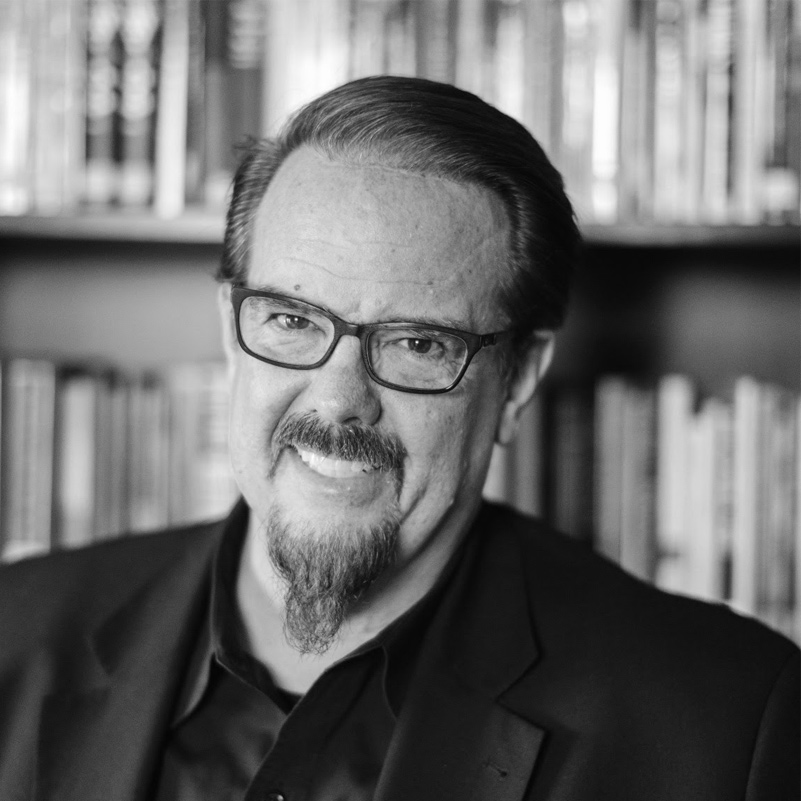
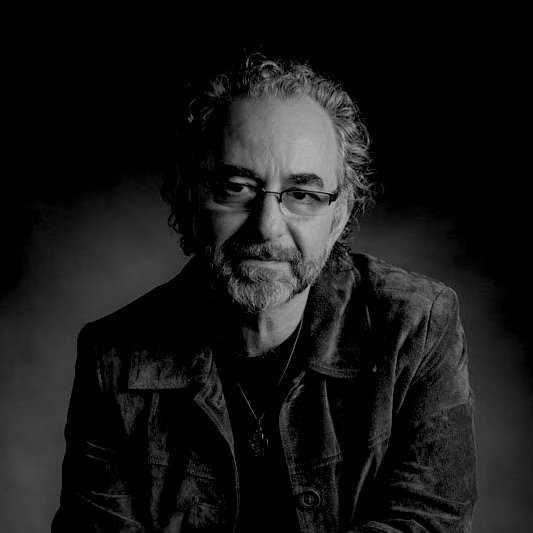
There are some excellent speakers lined up this year. Personally, I’m really excited that missiologist Alan Hirsch will be there, as well as Gavin Ortlund and Ed Stetzer, who is such an important voice in the church today – and happens to love Calvary Chapel!
Gavin Ortlund
Ed Stetzer
Alan Hirsch
I will be teaching an in-person Training Track at the conference on the topic of: “Preaching and Teaching Gospel-Centered Expository Messages.”
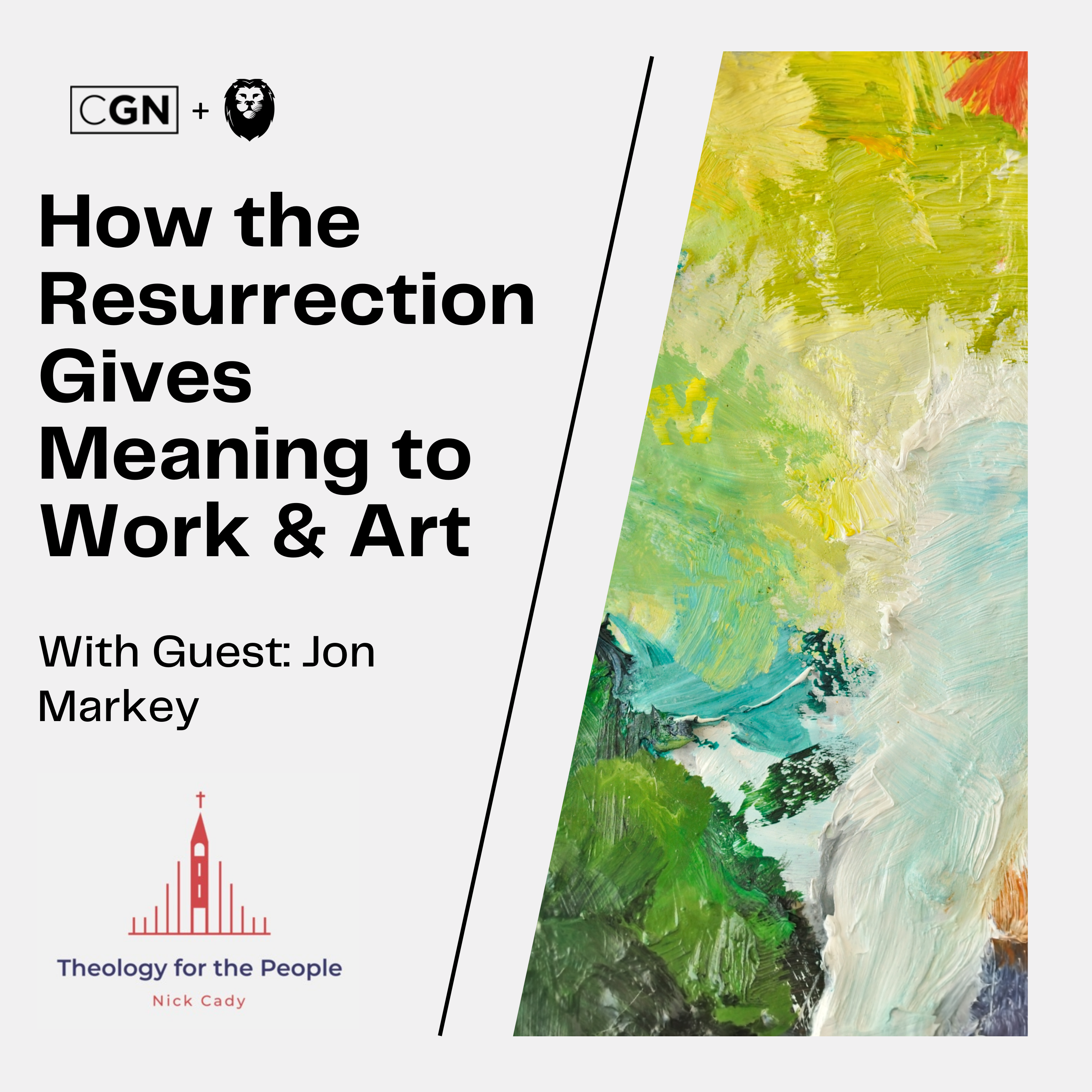
In this episode I’m joined by Pastor Jon Markey from Ternopil, Ukraine. Along with being a pastor and missionary, Jon is a musician and producer. We discuss how the resurrection infuses our lives, including our work and art, with meaning and purpose.
Sometimes people have the idea that if the world is going to burn anyway, then there is no point in trying to invest time and energy into work or art in this world; it would simply be akin to hanging curtains in a house that is on fire. However, as Jon and I discuss, Jesus’ resurrection changes that story in a big way.
Check out Jon and Steffie’s work at Room for More on Instagram and YouTube.
If "It's All Gonna Burn" Then What's the Point? – How the Resurrection Gives Meaning to Work & Art –
Theology for the People
In this episode I'm joined by Pastor Jon Markey from Ternopil, Ukraine. Along with being a pastor and missionary, Jon is a musician and producer. We discuss how the resurrection infuses our lives, including our work and art, with meaning and purpose.
Sometimes people have the idea that if the world is going to burn anyway, then there is no point in trying to invest time and energy into work or art in this world; it would simply be akin to hanging curtains in a house that is on fire. However, as Jon and I discuss, Jesus' resurrection changes that story in a big way.
Check out Jon and Steffie's work at Room for More:
Instagram
YouTube
This past Sunday we concluded our Eastertide (the 50 days following Easter) series called The Risen Life, in which we studied the post-resurrection appearances of Jesus from the perspective of what His risen life shows us about what it means for us to live as people who have died with Christ and been risen to new life.
Recently someone reached out asking for a simple explanation of what it means to be “born again.”
Blessed be the God and Father of our Lord Jesus Christ! According to his great mercy, he has caused us to be born again to a living hope through the resurrection of Jesus Christ from the dead.
1 Peter 1:3 ESV
The idea of being “born again” is something that the Bible speaks about using a variety of terms, such as: Receiving a new heart, becoming a new creation, being made alive in Christ.
The exact phrase, “born again” is something which Jesus used when speaking to a man named Nicodemus: a moral, religious man who was well-respected in his community. Nicodemus came to Jesus asking for the essence of Jesus’ teaching, and Jesus told him: “Truly, truly, I say to you, unless one is born again he cannot see the kingdom of God.” (John 3:3)
What this means is that although we are born physically alive, every person’s default condition is that they are spiritually dead and disconnected from God.
God loves us, and yet: we are sinners, both by nature and by choice, and as a result there is a separation between us and God, and our default condition is that we are spiritually dead rather than alive.
There are a lot of people in the world who are like Nicodemus: moral and “good” people. And yet, Jesus told this moral man that he needed to be born again. And this is the message of Jesus to all of us as well: “YOU need to be born again!” Not just everyone else; not just the drunks and the immoral people, but YOU too!
YOU need to be born again by coming into a relationship with God by faith in Jesus Christ: faith in the fact that he died in your place to reconcile you to God by imputing his righteousness to you, and imputing your sins to him; faith that he rose from the dead to give you the hope and promise of eternal life!
When you are born again you receive:
a NEW HEART: The very essence of who you are changes! You receive a new heart, with new desires.
a NEW IDENTITY: You change from being an enemy of God to being a child of God.
a NEW MIND: You begin to think differently.
NEW EMOTIONS: You feel differently; God pours out his love, joy, and peace into your heart.
A NEW COMMUNITY: You become part of the people of God, those who are being saved.
A NEW POWER: Power over sin; we are no longer slaves to our flesh, but we gain the power to be free when we are born again by putting our faith in Jesus and God places his Spirit inside of you to strengthen you in your weakness.
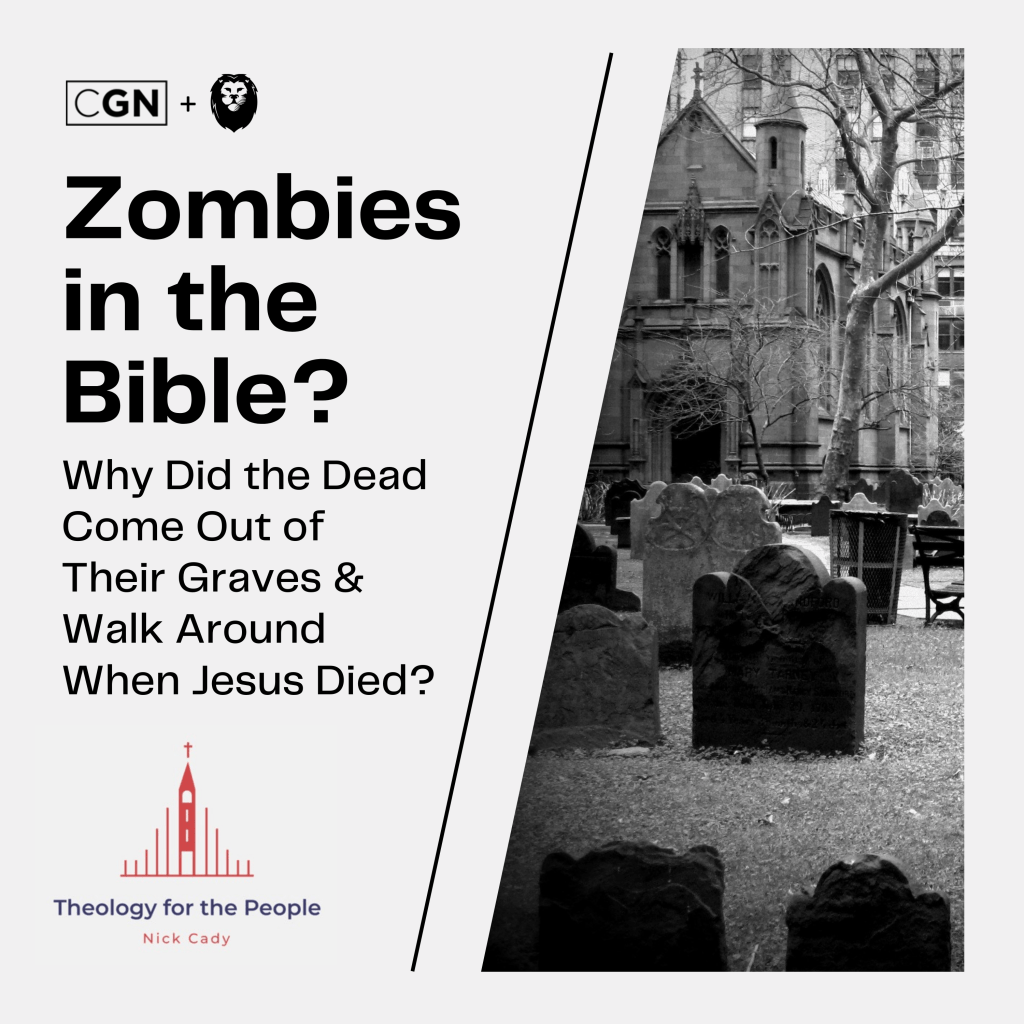
In Matthew 27:52-53 it says that when Jesus died, “The tombs also were opened. And many bodies of the saints who had fallen asleep were raised, and coming out of the tombs after his resurrection they went into the holy city and appeared to many.”
Why did this happen? And what happened to these “walking dead”: did they ascend into Heaven with Jesus, or did they die again at a later date? What was the meaning and significance of this?
I address this question in the latest episode of the Theology for the People Podcast – in which I tell a story of regret from my honeymoon and explain why this event can only be understood in light of Jesus’ first miracle of turning water into wine.
Zombies in the Bible? Why Did the Dead Come Out of Their Graves and Walk Around When Jesus Died? –
Theology for the People
In Matthew 27:52-53 it says that when Jesus died, "The tombs also were opened. And many bodies of the saints who had fallen asleep were raised, and coming out of the tombs after his resurrection they went into the holy city and appeared to many."
Why did this happen? And what happened to these "walking dead": did they ascend into Heaven with Jesus, or did they die again at a later date? What was the meaning and significance of this?
You can find more articles and content, as well as a place to submit questions or suggest topics at the Theology for the People blog site.
In the Bible, Satan is referred to as “the ruler of this world,” (John 12:31, 14:30) and even “the god of this world” (2 Corinthians 4:4). 1 John 5:19 says that the whole world lies under the power of the evil one.
How then can Jesus say that “all authority in Heaven and on Earth” has been given to him (Matthew 28:18)?
In this week’s Sermon Extra, Pastor Mike and I discuss the authority of Satan, and what the Bible has to say about it: Did Adam and Eve hand over “regency” of the Earth to Satan in the Garden of Eden? And how does this relate to the scroll that only Jesus can open in Revelation 5?
Furthermore, we discuss the claim of Richard Dawkins and others, who say that Jesus’ death on the cross was “divine child abuse,” since the innocent Son of God was sacrificed by the Father – and how the deity of Christ changes everything when it comes to understanding the meaning of the cross.
Doubt is an inherent part of having faith. Faith, the Bible tells us, is having convictions about things which you cannot see (Hebrews 11:1). This extends to things which cannot be empirically proven through scientific method. If you can see something and prove it, there is no need for faith. Doubt therefore, is not how faith ends, but is the occasion where faith and trust begin.
But it is not only “believers” who have doubts. Studies have shown that professing atheists also have doubts about whether they are right.
CS Lewis, in his book Mere Christianitysaid, “When I was an atheist, I had moods in which Christianity looked terribly probable.”
A recent poll from Newman University and YouGov found that one in five British atheists and over a third of Canadian atheists agreed with the statement: “Evolutionary processes cannot explain the existence of human consciousness.” [1]
In his book The Reason for God, Timothy Keller challenges those who doubt to “doubt their doubts,” i.e. to consider to the faith and beliefs (the assumptions which cannot be empirically proven) that underly their doubts, and to honestly question whether they actually stand on firm ground. His conclusion is that faith is God is actually more plausible than the alternative.
This week in our Sermon Extra, Pastor Mike and I discussed the role of doubt in faith, the fact that atheists have doubts too, and what we should do with our doubts. Check it out here:
Hi, a question coming from your recent sermon on May 2 about belief and doubt. You were talking about how doubt is held in a sort of middle ground, not to be vilified or esteemed too highly. Today I came across these verses in Romans regarding eating by conscience:
The faith that you have, keep between yourself and God. Blessed is the one who has no reason to pass judgment on himself for what he approves. But whoever has doubts is condemned if he eats, because the eating is not from faith. For whatever does not proceed from faith is sin. (Romans 14:22-23 ESV)
That last sentence feels very strong in that ANYTHING not from faith is sin. How does this relate to the topic on Sunday?
Additionally, where do we draw a line to keep from absurd conclusions about this? When I go on a bike ride for health, I’m not doing it in faith – I just want to keep fit. What about choosing the right date for traveling on vacation? This verse could easily cause a person to stop making decisions due to fear of sin.
The sermon mentioned in this question is from the series The Risen Life, in which we looked at the post-resurrection appearances of Jesus in the Gospels for the season of Eastertide. The sermon was from John 20:19-30 and was called “From Doubt to Belief.”
In John 20:24-29, in the story of "doubting Thomas," we see that moving from doubt to belief involves hearing testimony, seeing the evidence, and responding in faith.
Doubt and Faith in Romans 14:23
In Romans 14:23, Paul is talking about “gray areas” or “disputable matters” in the Christian life. At that time, some people said that it was acceptable for Christians to eat meat which had been sacrificed to idols, whereas others said that it was not acceptable. Each side had their reasons.
Similar discussions exist today: Is it acceptable for Christians to drink alcohol? To participate in Halloween festivities? To do yoga or martial arts?
In some of these cases, it may be that something may not be categorically wrong, but it may be wrong for a particular person because of their particular propensities. Furthermore, that person may have a strong conviction that they ought not to do something, even if it wouldn’t necessarily be a sin for anyone to do that thing.
Paul is saying that if you have a sincere conviction before God that you should not do something, then you should act on that conviction in faith, and do so as unto the Lord. This, Paul says, honors God. However, if you do something in contradiction to your conviction that you should not do it; i.e. if you have doubts about whether that thing is acceptable or permissible for you to do – then for you to do it anyway would be sin.
Thus, the way doubt and faith is used here is different than in the sense in which we talked about doubt and faith in the above mentioned sermon, where our focus was rather on doubting versus believing in God’s existence, God’s goodness, the validity of God’s Word, or the reliability of God’s promises.
Is Everything that Does Not Proceed from Faith Really Sin?
I believe the answer is: Yes. Let me explain, and I’ll explain how this applies to situations such riding your bike and choosing dates for vacation:
In Hebrews 11:6 we are told that “without faith it is impossible to please God.” In Romans 4:20, faith is correlated with giving glory to God. In 1 Corinthians 10:31 we are told, “whether you eat or drink, or whatever you do, do all to the glory of God.”
The point therefore, is that acting in faith is all about giving glory to God in our actions. If you doubt whether a particular action brings glory to God, then for you to do it anyway would be a sin. It is in this way that anything that does not proceed from faith is sin.
The Question We Often Ask, & the Question We Ought to Ask
I find that too often, we tend to ask the question: “Is it permissible to _________” or “Am I allowed to _________.” What this passage (and others) teach us is that the question we ought to be asking instead is: “Will this action glorify God?” or “Will God be honored, pleased, and glorified through this action?”
If you can do that action in faith so that your motive is to glorify God, then good. If you have doubts about that, then to do it anyway would be sin – at least for you.
This is why Augustine argues that for those who act apart from faith in God, even their virtues can be sinful: because if you do something good – apart from faith in God – your motive in doing so is not to glorify God, but must be either to glorify yourself, or to justify yourself. Thus, even virtuous actions, apart from faith in God, can be sinful. Tim Keller often speaks, quoting the Puritans, of how it is important therefore that we repent not only of our evil actions, but of our good actions done for self-justifying or self-glorifying motives.
May we be those who endeavor to do everything for the glory of God!
Based on your knowledge of activity in Heaven what was going on in Heaven prior to the crucifixion and how did it change, if at all after Jesus resurrection? For example, was there joy in the presence of angels over sinners repenting before Jesus died and rose??
Interesting question! Here are my thoughts:
The Sons of God Shouted for Joy
In the Book of Job, when God speaks, God challenges Job by saying this:
“Where were you when I laid the foundation of the earth? …when the morning stars sang together and all the sons of God shouted for joy?”
The “sons of God” mentioned here is a reference to the angels. What this is telling us is that at the creation, the angels were “the audience” who watched and cheered as God created the universe.
The Heavenly Audience
This theme of the angels being an audience, watching the things which happen on Earth, is carried through the Bible.
At the beginning of the Book of Job, we read about Satan asking for permission from God to afflict someone. The picture we get from that scene is that those in Heaven are aware and attentive to the happenings of people on Earth.
Not only are those in Heaven aware and attentive to what is happening on Earth, they seem to be emotionally invested in what is happening on Earth. For example, in Revelation 5, we read that when no one was found who could open the seal, there was weeping in Heaven until it was revealed that the Lamb was worthy to do so.
The whole picture of Revelation is that John the Apostle gets a preview of Heaven. Starting in chapter 4, John is caught up to Heaven, and what he describes is how, from that vantage point, he joins the angels in watching the happenings down below on Earth. The picture, therefore, is of Heaven being aware of and attentive to, as well as emotionally invested in, the happenings here on Earth.
The Stadium and Those in the Stands
In Hebrews 12:1 we read:
Therefore, since we are surrounded by so great a cloud of witnesses, let us also lay aside every weight, and sin which clings so closely, and let us run with endurance the race that is set before us,
The picture the writer is painting here is that of a stadium, and Greco-Roman competitions, such as the Olympics. He describes life as being a race, a theme which Paul also discusses, using similar language drawing from Greco-Roman athletic competitions.
But here the writer highlights a particularly interesting aspect of those competitions: as we run this race, we are surrounded by a cloud of witnesses. The “witnesses” are those who were mentioned in the previous chapter, Hebrews 11, where we are told about those who preceded us in the faith – the “Old Testament saints,” as they have been called.
The image the writer is invoking is that of a stadium, in which the stands all around us are full of those who have preceded us in the faith, and who are now “cheering us on” as we run the race that is set before us.
The Angels and the Saints
What we are left with, therefore, are two groups: the angels and the saints. Both groups are apparently aware and attentive to what is happening on Earth, and are rooting for us and eagerly awaiting the fulfillment of God’s promises.
What Changed in Heaven When Jesus Died and Resurrected?
The word angel literally means “messenger” in Greek, and this aligns with what the Bible tells us about angels; that they are “ministering spirits.” It would seem that the angels have been and still are aware, attentive to, and emotionally engaged in what is happening on Earth.
Thus, to answer your question, I do think there was joy in the presence of the angels over sinners repenting – prior to Jesus’ death and resurrection.
The one thing which changed when Jesus died and resurrected, is that those who were kept in Abraham’s Bosom awaiting the redemption of their souls were released from Sheol and taken to be in God’s presence.
What are they? How do we recognize them before it’s too late? And how do we avoid being carried away by them?
We give some examples of winds and waves in the recent past, as well as the desire to move beyond the basics of Christianity to the “deeper things.” We discuss what people often mean when they use that phrase, and how to discover and experience the deepest things in reality.
In this episode Nick and Mike discuss what it means in Ephesians 4:14 where the Apostle Paul talks about “winds and waves of doctrine.” What are they? How do we recognize them before it’s too late? And how do we avoid being carried away by them?
Along with some examples of winds and waves in the recent past, we discuss the “deeper things” of Christianity: what many people mean when they use that phrase and what the deepest things are in reality.
Also visit the Theology for the People blog.
Theology for the People Now on GoodLion Podcast Network
The Theology for the People podcast is now on the GoodLion Podcast Network, where you can find a lot of other great podcast content. As part of joining GoodLion, all of our episodes were updated with new graphics. Check them out: