On this last day of 2021, it’s nice to stop and reflect on the past year. While many tragedies took place over the course of our last trip around the sun, there is much to celebrate and reason to give thanks for God’s faithfulness.
Rebranding & a Podcast
This year, prompted by my friends at the Goodlion Podcast Network, this blog was rebranded from The Longmont Pastor to Theology for the People. Along with that came the introduction of the Theology for the People podcast.
Increased Readership
Readership of this site grew this year by 130% to over 100,000 page views.
On December 30, 2020 – my pastor, Tom Stipe passed away. He is sorely missed, but he left behind a legacy which will bear fruit for generations to come, particularly here on the Front Range of Colorado.
One of my favorite Christmas carols is “O Holy Night,” mostly because I love the first verse:
Long lay the world in sin and error pining, ‘til He appeared and the soul felt its worth.
A thrill of hope, the weary world rejoices, for yonder breaks a new and glorious morn!
THE WEARY WORLD
If there is one word that accurately describes the feeling in the world right now, it is probably “weary.”
We are weary from two years of pandemic. We are weary of restriction and new variants. We are weary of our friends and family members getting sick, and even dying. We are weary from the divisiveness in society. We are weary of inflation, tragedy, tension, and strife.
But, as this song reminds us, the coming of Jesus into the world is good news for the weary world. It gives us weary people a reason to rejoice. Why? Because it tells us that, “yonder breaks a new and glorious morn.”
THE DAY DAWNS
One of the greatest metaphors the Bible uses to describe where we are at currently in the big picture of human history is: Dawn.
The true light, which gives light to everyone, was coming into the world. – John 1:9
Dawn is an interesting period; *it is a time when night and day, darkness and light, exist simultaneously in the same space, yet neither are in full force*.
At dawn, the darkness that formerly ruled the night is broken by the light, but it is still dark out … though not as dark as it used to be. However, at dawn, even though light has come, the light is not yet present in its full form, because although the light has appeared, it has not yet broken over the horizon to fully dispel the darkness.
Peter expressly uses this metaphor of dawn in his second letter:
We have the prophetic word more fully confirmed, to which you will do well to pay attention as to a lamp shining in a dark place, until *the day dawns* and *the morning star* rises in your hearts. – 2 Peter 1:19
THE MORNING STAR
Jesus is called “the morning star.” The “star” known as the morning star is not actually a star, but the planet Venus. The reason it is called the morning star is because it is the last “star” that is visible in the sky once the dawn has come.
The meaning and message of Christmas is that the true light has come into the world, and the dawn has begun. The beginning of dawn is an irreversible occurrence; once the first light of dawn has broken the darkness of night, it is only a matter of time before the sun crests the horizon, totally dispelling the darkness, bringing about the full light of the new day.
We live in a time right now where there is darkness in the world. It touches our lives, and we groan, along with all of the fallen creation, under the weight of the curse of sin and death. And yet, with the coming of Jesus into the world in His first advent, dawn has come: The light of life has come into our world in the person of Jesus Christ. We have the light of God’s Word to guide us … as we wait with eager expectation for Jesus’ second advent when He comes again!
For our world, covered in the shroud of darkness, a darkness which permeates even our own hearts, the message is clear: The advent of Jesus is the death knell of darkness and the guarantee that a new day is on the horizon.
Let us look to the morning star to give us hope until that day comes!
Some people view God as a cosmic killjoy: one who sits in Heaven with a frown on his face, looking down on the world to make sure anyone down here isn’t having too much fun…
The fact is, for many of us, our view of God is shaped not only by the Bible, but by interactions we’ve had with other people, including those who claimed to be Christians, authority figures, peers, etc. The result, is that for many people, our view of God is not wholly biblically formed, and we can pick up assumptions about God that are actually inaccurate.
Consider the following verses:
“You shall rejoice before the Lord your God…” (Leviticus 23:40). “Shout for joy!” (Psalm 32:11). “Sing and rejoice, O daughter of Zion” (Zechariah 2:10).
An Islamic Perspective: “There is No Humor in Islam”
For comparison, here’s a quote from Ruhollah Khomeini, the grand ayatollah of Iran.
“Allah did not create man so that he could have fun. The aim of creation was for mankind to be put to the test through hardship and prayer. An Islamic regime must be serious in every field. There are no jokes in Islam. There is no humor in Islam. There is no fun in Islam. There can be no fun and joy in whatever is serious. Islam does not allow swimming in the sea and is opposed to radio and television serials. Islam, however, allows marksmanship, horseback riding and competition.”
Peter Hussein, Islam in Its Own Words (Morrisville: Lulu Self Publishing, 2018), 16. cited in S.E. Zylstra, The Weary World Rejoices (The Gospel Coalition, 2021)
In contrast to that, consider Isaiah 65:18: “But be glad and rejoice forever in that which I create; for behold, I create Jerusalem to be a joy, and her people to be a gladness.” Furthermore, the Israelites’ “mouths were filled with laughter, [their] tongues with songs of joy” (Psalm 126:2).
Rather than being a cosmic killjoy, humor and friendship are part of God’s design.
The First of Jesus’ Signs
Something unique about the Gospel of John is that John refers to Jesus’ miracles as “signs.”
The nature of a sign is that a sign points to something beyond itself. Thus, what John is telling us, is that Jesus’ miracles weren’t just cool things that Jesus could do, but those miracles were actually signs which pointed to something beyond themselves.
This is significant when you consider that Jesus’ first sign was that he turned water into wine at the wedding feast at Cana in order to prolong the party.
This, the first of his signs, Jesus did at Cana in Galilee, and manifested his glory.
John 2:11
They say you only get one chance to make a first impression. So it’s interesting that Jesus would choose this to be his first miracle: turning water into wine, so a celebration wouldn’t have to end.
In the ancient world (and even today), wine was a symbol of merriment and joy – of celebration and festivity. And so, if the wine ran out, the party was over.
Throughout the Bible: in both the Old Testament and the New Testament, Heaven is described as being like a wedding feast; it’s the ultimate party, which never ends.
Look at how the Prophet Isaiah describes what Heaven will be like:
On this mountain the Lord Almighty will prepare a feast of rich food for all peoples, a banquet of aged wine—the best of meats and the finest of wines. On this mountain he will destroy the shroud that enfolds all peoples, the sheet that covers all nations; he will swallow up death forever. The Sovereign Lord will wipe away the tears from all faces; he will remove his people’s disgrace from all the earth. The Lord has spoken.
Isaiah 25:6-7
This first of Jesus’ miracles wasn’t only a cool thing he did, it was a sign, pointing to who Jesus was and why He had come. That first miracle at Cana was a glimpse, a preview, a foreshadowing of the Kingdom which Jesus came to bring — a Kingdom there will be joy and celebration forever, without end.
Sin is the ultimate joy killer, and in this sin-tainted world we will have tribulation, but we can take heart because the hope of the gospel is that the Kingdom or eternal joy will indeed come.
You can be sure that God is not a cosmic killjoy, but the author of joy, whose ultimate joy is that we would experience joy in His presence, both now and forever.
To “deconstruct” something is to seek to take something apart and examine the parts that make it up.
In my Masters studies, one of my focuses was on “theological method,” which is a process by which you can deconstruct the implicit process by which people arrive at different theological beliefs or conclusions. (For more on Theological Method, click here)
#Deconstruction #Exvangelical
However, the word “deconstruction” is currently being used in popular culture in a way which is different from the scholarly usage of the term. People who were raised in Christian environments are deconstructing their faith, which means that they are questioning what they were taught and believed.
This is nothing new, people have been doing this for thousands of years, and sometimes it can be a very good thing. For example, it is helpful to go through the process of differentiating what about a belief system is culturally influenced, which parts are tangental or superfluous “chaff” which deserves to be shed, or at least relegated to secondary importance, and which things are core, essential beliefs.
It is also important and necessary for a person, as they mature, to make the transition from inherited or assumed belief, to personal and sincere, heartfelt beliefs. This is exactly what we see in the Book of Deuteronomy, for example, where Moses speaks to the new generation: their parents had been the ones who had experienced the Exodus and had seen God’s miraculous provision in the splitting of the Red Sea, water from the rock, and the fire on the mountain. This new generation had heard about these things, but had not experienced them personally, and in Deuteronomy – at the end of his life, Moses speaks to this younger generation and urges them that they must have their own faith, they can’t merely ride on the coattails of their parents’ faith.
In the process of examining what you believe and why, some people go through a process of deconstruction: a critical examination of what they were taught, what they experienced in the church environment, and whether actually believe those things themselves. This is always a precarious process by nature, but in a way, it is necessary for a vibrant, personal faith commitment.
Recently there has been a trend online, encouraging people to deconstruct their faith, but not necessarily for asking important questions which will lead to vibrant, personal faith – rather more for the purpose of influencing others to abandon their faith in Christianity.
Don’t Forget to Deconstruct Your Deconstruction…
In examining some of the videos and other materials that people have shared with me on this topic, what I’ve found is that many of these people, while they may be sincere, they fail to deconstruct their deconstruction.
Theological Method is, in fact, the true and greater deconstruction, because it has the capacity to not only deconstruct religious beliefs, it also has the capacity to deconstruct the reasons why people abandon their previously-held religious beliefs, or even why people reject certain beliefs altogether.
Theological Method: Sources of Theology and Why People Arrive at Different Conclusions About Matters of Faith and the Bible –
Theology for the People
In this episode, Nick and Mike discuss the topic of "theological method", which involves the study of how people arrive at theological conclusions based on how they use the "sources of theology" in relation to each other.
We discuss the 5 commonly recognized sources of theology, explain different theological methods that exist, and how they relate to interpreting the Bible in light of our ever-changing world.
Check out the Theology for the People blog site at nickcady.org
Let’s Deconstruct a Deconstruction TikTok
Recently someone sent me this video, and asked for my take on it.
This person comes across smart, winsome, and knowledgable about Christianity. There are some things she says which are correct about what Christians believe regarding the person of Jesus and his atoning death.
The problem with her argument, however, comes at the beginning where she lays out the basis of her premise. Her fundamental assumption is that God has established some completely arbitrary rules, and then punishes people for breaking those rules. Then, she claims that Jesus’ death was essential unnecessary, since it was just God appeasing his own unnecessary rules which he set up in the first place.
Her Assumptions: God’s “Rules” are Arbitrary, and Judgment is Unnecessary
This woman’s view of sin, is that sin = things which God forbids, or not doing what God commands. In other words, her view is that nothing is inherently bad or good, but God capriciously chooses what He thinks are bad or good, and imposes that standard on His subjects.
The problem with this view, is that it is NOT what the Bible actually teaches. What the Bible teaches is that morality is rooted in actuality: some things are actually good, and other things are actually bad – whether God says they are or not, and whether you believe in God or not.
In other words: Sin is not bad because it is forbidden, rather: Sin is forbidden because it is bad.
Sin is Not Bad Because It’s Forbidden, Sin is Forbidden Because It’s Bad
As Moses tells the Israelites in Deuteronomy: All of God’s commandments have been for your good always. (Deuteronomy 5:29, 6:24, 10:13). Since God loves, and since He knows more than you, He – as a loving Father – tells you what to do and what not to do, because sin (missing the mark, doing wrong) is destructive. It’s as if there’s a glass of water and a glass of antifreeze on the table, and God’s command is: “Drink the water, Don’t drink the antifreeze!” – and our reply is: “God is just making up arbitrary rules…” No, God loves you enough to tell you, based on his infinite knowledge, what will be best for you.
Furthermore, as God is the embodiment of goodness and love, morality is directly linked to his character and attributes. For this reason, to rebel against God is to sin, and this brings with it the natural consequence of judgment for those actions.
Interestingly, we live in a world today where there is an increasing consensus and belief that certain activities (racism, hatred, prejudice, etc.) are fundamentally, objectively wrong (whether you believe in God or not). It is widely accepted that to do those things is actually wrong and deserves some form of judgment. This is based on the belief that there is a standard of morality which is not arbitrarily defined by a cosmic deity, but which truly and actually exists. This is what Christians, informed and confirmed by the Bible, actually believe as well.
So, the premise presented in this video can be seen to be a gross misrepresentation of what the Bible teaches and what Christians believe.
Did Jesus’ Death Cause God to Change His Mind About Judging Us for Our Sins?
One final point: She claims at the end, that because of the death of Jesus, God “changed His mind” about punishing us for His own arbitrary rules. This is not what Christians believe, nor what the Bible teaches either – rather: the message of the gospel is that all of us have sinned and fallen short – not only of God’s standards, but of even our own standards of right and wrong. We have all done things and thought things which missed the mark, and the result of sin is death. However, the good news of God’s grace is that He came to us in the person of Jesus Christ to do for us what we could not do for ourselves: in life, death, and resurrection – in order to reconcile us to Himself without compromising His fundamental characteristics of justice and mercy.
If “justice” = giving someone exactly what they deserve, and “mercy” = not giving someone the judgment they deserve for the wrong things they’ve done, then justice and mercy cannot co-exist since they negate each other. However, as part of the definition of goodness, God, we are told in the Bible is BOTH just and merciful. It is only in His self-sacrifice that we see how these two seemingly incompatible characteristics can both be embodied by God at the same time – and that’s really good news!
Send Me Videos to Deconstruct!
Using this form, send me any TikTok videos you’d like me to deconstruct.
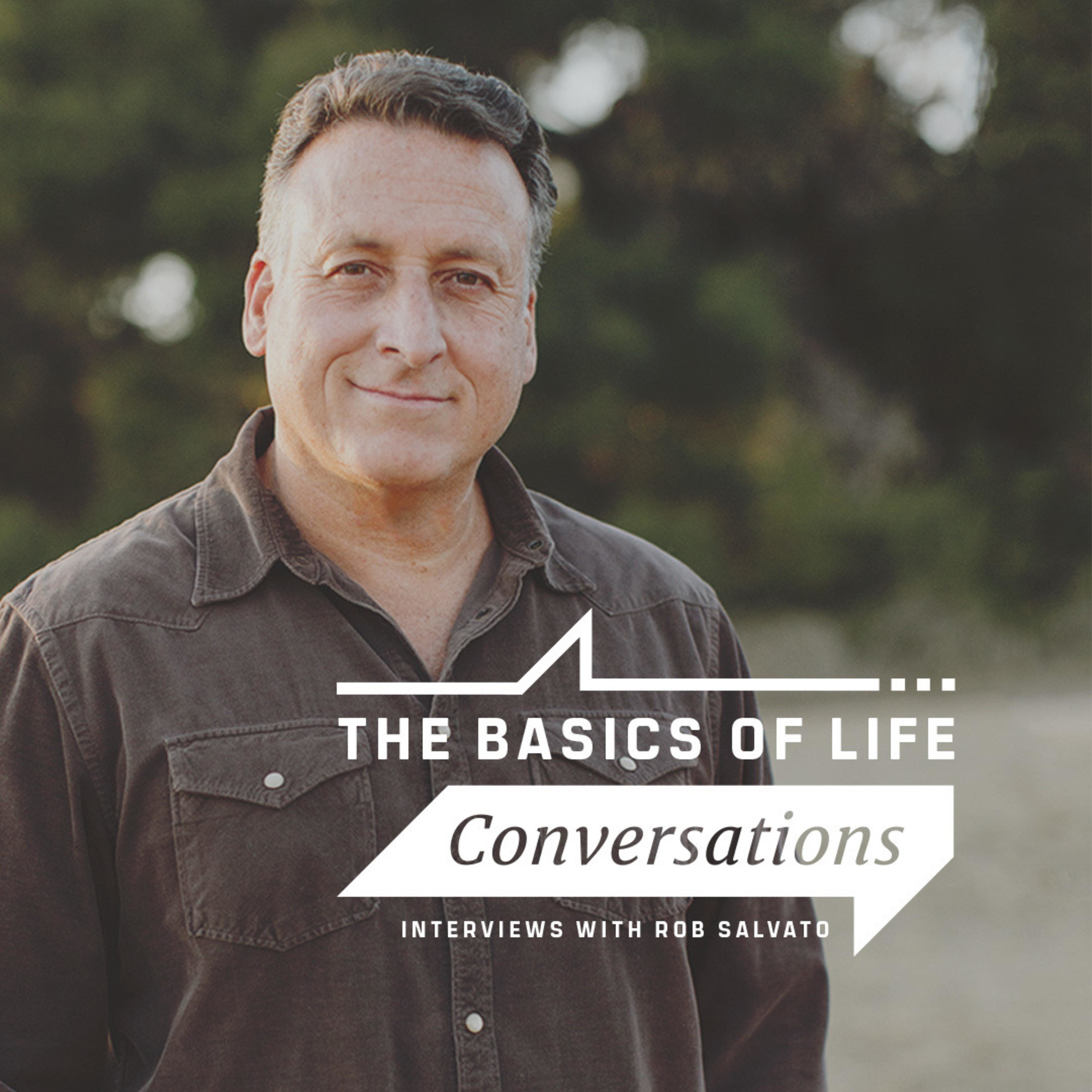
Recently I had the opportunity to be a guest on the Basics of Life Podcast with Rob Salvato.
The Basics of Life is not only Rob’s podcast, but the episodes are broadcast on KWVE Christian radio in Southern California.
Rob is currently doing a series on that podcast on “the hard sayings of Jesus,” and he asked me to tackle John 6:52-55, which says:
The Jews then disputed among themselves, saying, “How can this man give us his flesh to eat?” So Jesus said to them, “Truly, truly, I say to you, unless you eat the flesh of the Son of Man and drink his blood, you have no life in you. Whoever feeds on my flesh and drinks my blood has eternal life, and I will raise him up on the last day. For my flesh is true food, and my blood is true drink.
John 6:52-55
Not Cannibalism Nor Communion
When people originally heard Jesus say these words, they thought he was talking about cannibalism – but he most certainly wasn’t!
Many readers since that time have assumed that Jesus is talking about communion, i.e. the Lord’s Supper or Eucharist. This assumption is understandable in light of the fact that Jesus called the elements for the Lord’s Supper his “body” and “blood” – and yet, that is not what he is talking about here either.
What Jesus is talking about here can be understood by reading the passages which come before and after (context is king!). I share what Jesus is talking about in the conversation with Rob, which is linked below.
Why Be Cryptic?
And yet, even if it can clearly be derived from the context what Jesus was referring to, the question remains: Why did Jesus speak in a way that was cryptic or hard to understand? Didn’t he want people to understand what he was saying? Why would he speak in a way that people could misunderstand, and perhaps even choose to not follow him because of their misunderstanding?
I answer this question in the podcast episode linked below, but this is something we see Jesus did on more than one occasion! For example, we see this from Jesus in John 9 and Matthew 13, where Jesus speaks in a way that those who want to understand will lean in and seek to understand, but those who weren’t willing to lean in and seek the truth could misunderstand or easily miss.
Clearly Jesus is communicating that a desire to understand is a prerequisite for spiritual understanding.
Pastor Nick Cady joins Pastor Rob Salvato to talk about what Jesus meant when He thinned out the crowds after the feeding of the five thousand.
Rob Salvato
Pastor Rob is the lead pastor of Calvary Vista, in San Diego County, California. Calvary Vista is my wife Rosemary’s home church, which sent her out as a missionary to Hungary years ago. Later, after Rosemary and I met in Hungary and got married, Calvary Vista became our home base and one of our main supporting churches. We love Rob and his wife Denise, and he has been a faithful pastor over that wonderful congregation for many years. Right now the church is experiencing a time of growth and a real move of God. Pray for them during this exciting time!
Today is the day in the United States when we set aside to give thanks and reflect on all the Lord has done in our lives over this past year.
Other countries, like Canada and Ukraine also have national holidays dedicated to giving thanks, but days of thanksgiving have a rich history in Christian groups all over the world, going back before the pilgrims held their famous thanksgiving feast in Plymouth.
In the Old Testament, God instructed his people to hold several days of thanksgiving every year: Passover and the Feast of Unleavened Bread in early Spring, thanking God for delivering them from slavery and for the beginning of the barley harvest; the Feast of Weeks in early Summer, thanking God for the beginning of the wheat harvest; and the Feast of Tabernacles in the Fall, thanking God for the end of the harvest season. God told them to “Be joyful at your festival…because the Lord your God will bless you” (Deuteronomy 16:14-15).
For us as Christians, Thanksgiving is not only a day we celebrate, but a way of life. Colossians 2:6-7 says: : “Therefore, as you received Christ Jesus the Lord, so walk in him, rooted and built up in him and established in the faith, just as you were taught, abounding in thanksgiving.”
Thanksgiving Shapes Us
Spending time reflecting on what God has done for us and giving thanks not only honors Him, it also shapes us. The Thanksgiving meal obviously shapes us into certain kinds of people: slightly rounded than we were before! But the practice of giving thanks also shapes us: the more we give thanks, the more our eyes are opened to see the things God is doing and has done – which builds our faith and trust in Him!
Kellen Criswell is a pastor, ministry leader, and former missionary who holds and MA in Global Leadership from Western Seminary and is currently working on his doctorate. He is the Executive Director of Calvary Global Network and has a heart for the mission of God and the global church.
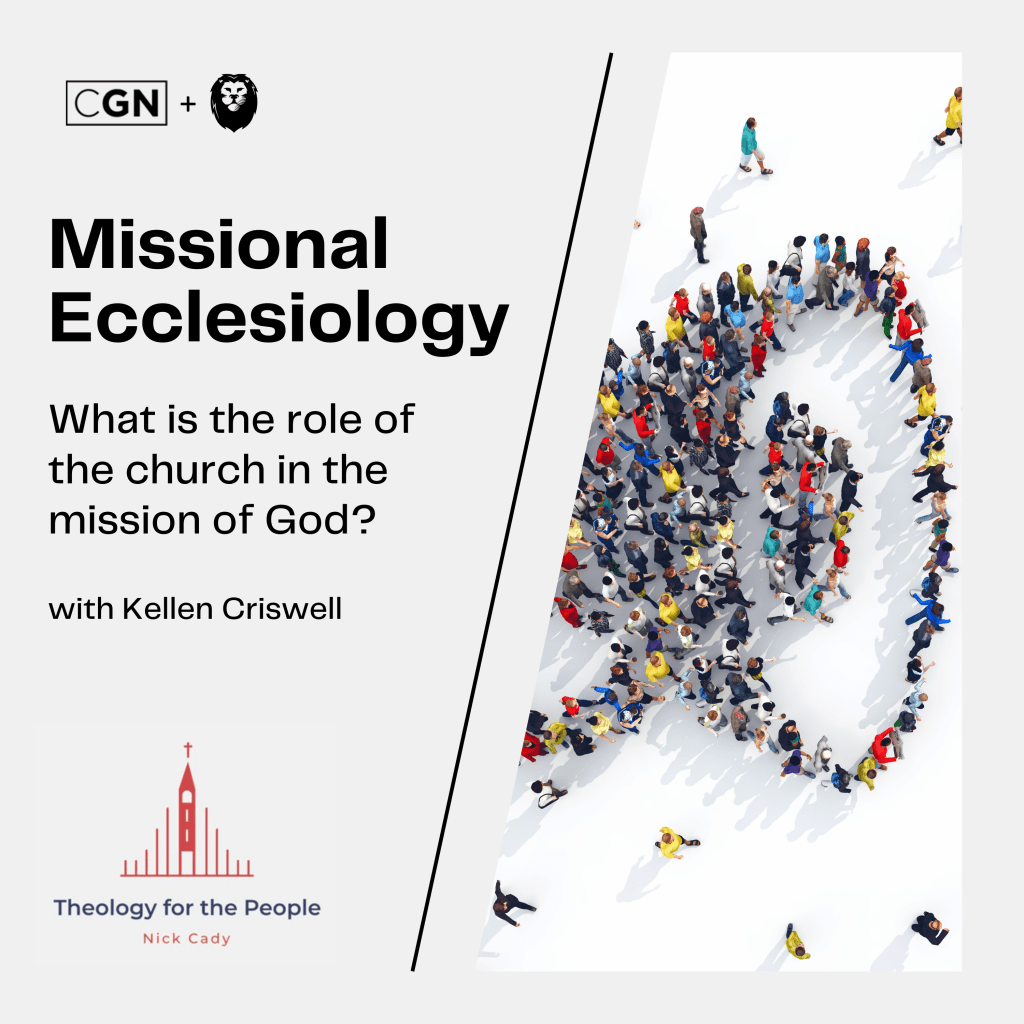
After a brief discussion about Kellen’s favorite music and the fact that he is from Utah (AKA “Colorado Jr.”), we dive into a discussion about Missional Ecclesiology, which is a way of understanding the identity, purpose, and function of the church within the Missio Dei (the love-motivated, self-sending, mission of God into the world to save, redeem, and restore).
One more thought about Utah: If you have to tell people (on your license plates) that you have “the best snow in the world,” you probably don’t. It’s kind of like using the world “Real” in a title. If you have to say that something is “real ______” – it probably isn’t. And also, what Margaret Thatcher said: “Being a leader is like being a lady: If you have to tell people you are one, you probably aren’t.” Same with the snow, Utah…
But I digress…
Ecclesiology is the discussion of what the Church is called to be and to do – including its nature, purpose, hopes, structures, and practices.
We discuss how this concept works out practically, including a discussion of “foreign missions” and how they fit into this understanding. Furthermore, we discuss what the past nearly two years of pandemic has revealed about ecclesiology, and why there is hope as we move forward.
Missional Ecclesiology: What is the role of the church in the mission of God? – with Kellen Criswell –
Theology for the People
Kellen Criswell is a pastor, ministry leader, and former missionary who holds and MA in Global Leadership from Western Seminary and is currently working on his doctorate. He is the Executive Director of Calvary Global Network and has a heart for the mission of God and the global church.
In this episode we discuss Missional Ecclesiology, which is a way of understanding the identity, purpose, and function of the church within the Missio Dei (mission of God). Ecclesiology is the discussion of what the Church is called to be and to do – including its nature, purpose, hopes, structures, and practices.
We discuss how this concept works out practically, including a discussion of "foreign missions" and how they fit into this understanding. Furthermore, we discuss what the past nearly two years of pandemic has revealed about ecclesiology, and why there is hope as we move forward.
Bibliography and recommended resources:
Hirsch, Alan. The Forgotten Ways: Reactivating Apostolic Movements.
Goheen, Michael. The Church and it’s Vocation: Leslie Newbigin’s Missionary Ecclesiology.
Stetzer, Ed. Planting Missional Churches: Your Guide to Starting Churches that Multiply.
Newbigin, Leslie. The Gospel in a Pluralist Society.
Van Engen, Charles. Transforming Mission Theology.
Wright, Christopher J.H.. The Mission of God: Unlocking the Bible’s Grand Narrative.
Bosch, David. Transforming Mission: Paradigm Shifts in Theology of Mission.
Hooker, Paul. "What is Missional Ecclesiology?"
Make sure to check out the Theology for the People blog at nickcady.org
Make sure to check out some of the books and papers listed below for more information and study on this topic.
Does the Bible encourage people who are poor to ask for help, or does it put the onus on the rich to provide for the poor?
The Bible gives a pretty nuanced view of provision for the poor, which includes both proactive provision for the poor, while still requiring action on the part of the recipient.
For example, in Leviticus 19:9-10, farmers were instructed to leave the corners of their fields unharvested so the poor could come and glean. So while the rich were called to sacrifice some of their profits to provide for the poor, the poor were still required to go and harvest the food for themselves. Rather than giving them flour, for example, those in need were required to harvest grain and grind it into flour themselves. If someone was unwilling to work, in this case, they would not eat – but provision was made for them, via sacrifice on the part of those who had enough, to be able to get what they needed to survive.
A similar sentiment is found in the Epistle to the Galatians, where in Galatians 6:2 it says, “Bear one another’s burdens, and so fulfill the law of Christ,” but a few verses later, it says, “Each person will have to bear his own load.” (Galatians 6:5). The difference is that the “burden” mentioned in 6:2 refers to a crushing burden, whereas “load” in 6:5 refers to an individual’s burden of responsibility. So, we are called to help those who are facing burdens they are unable to bear on their own, yet with the goal of helping those people to stand on their own two feet and take responsibility for themselves and their lives.
In 2 Thessalonians 3, we read an interesting passage:
If anyone is not willing to work, let him not eat. For we hear that some among you walk in idleness, not busy at work, but busybodies. Now such persons we command and encourage in the Lord Jesus Christ to do their work quietly and to earn their own living.
2 Thessalonians 3:10-12
For some reason, there were people in the Thessalonian church were unwilling to work, and were living off the generosity of others. Some believe that the reason for this attitude is because they believed it was more spiritual not to work, since they expected the imminent return of Jesus. While Paul encouraged them that Jesus could return at any time, they were encouraged to work in order to provide for themselves if they were able. Here again, we see the importance of providing for those in need while at the same time encouraging people to take initiative and responsibility to work if they are able.
So, to answer the question: The onus is first on those who have to help provide for the poor, no matter how or why they became poor. But this generosity is not to be done in order to create dependence, but rather to relieve a burden and encourage responsibility and independence.
Local Resource: Table of Hope Food Pantry
Table of Hope Food Pantry is a ministry which was born out of White Fields Community Church in Longmont, Colorado and serves Southwest Weld County, Longmont, and the surrounding communities by providing residents in need with nutritious food, the ability to become more self-sufficient, and hope for their future.
Table of Hope is open to anyone, no questions asked, and no ID required. For more information about Table of Hope, check out Table-of-Hope.com
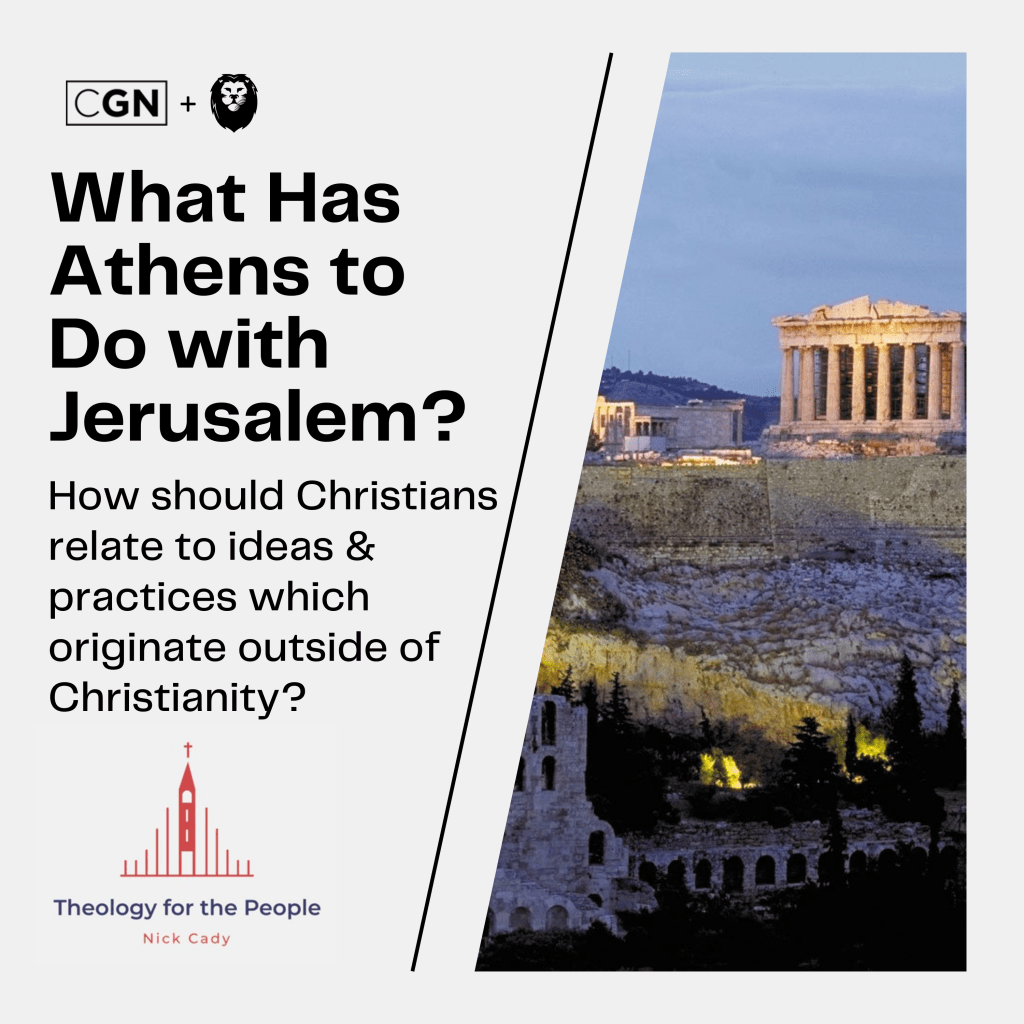
In this episode of the Theology for the People Podcast, Michael and I discuss the topic about which I wrote my BA dissertation: How should Christians relate to ideas and practices in our culture and society which have their origin outside of Christianity?
Some good examples would be:
Can Christians practice yoga? (Origins in Hinduism)
How about martial arts?
What about Christmas? (December 25 was originally a pagan solstice festival which Christians “took over,” detached it from its pagan origins, and infused it with new meaning and made it all about Jesus)
What about psychology?
How about certain instruments, like drums?
What about rock music and electric guitars?
This discussion of how Christians should relate to ideas and practices which originate outside of Christianity can be traced all the way back to a historical argument between Tertullian and Justin Martyr, early Christian apologists and theologians, and can be summarized by Tertullian’s classic question: “What Has Athens to Do with Jerusalem?”
In this episode, Michael and I discuss the relevant principles from the Bible we should follow as guides in navigating these matters.
How does the redemptive narrative arc of Scripture affect how we relate to these practices? How about what Paul says about meat sacrificed to idols in 1 Corinthians 8-10 and Romans 14?
What Has Athens to Do with Jerusalem?: How Should Christians Relate to Ideas and Practices Which Originate Outside of Christianity? –
Theology for the People
In this episode Nick Cady and Michael Payne speak about how Christians should relate to things which originate outside of Christianity, such as yoga, psychology, Christmas, drums, or rock music.
This discussion can be traced all the way back to a historical argument between Tertullian and Justin Martyr which can be summarized by Tertullian's classic question: "What Has Athens to Do with Jerusalem?"
Visit the Theology for the People blog site at nickcady.org – where you can ask questions or submit suggestions for future episodes.
Every November White Fields Community Church hosts Project Greatest Gift, a home-grown ministry that serves children and caretakers in the foster and kinship care systems in Northern Colorado at Christmastime.
Project Greatest Gift works with the Health and Human Services departments of Weld, Adams, and Boulder Counties to provide Christmas gifts, as well as help with groceries and clothing for families in kinship and foster care at this time of the year. This is a practical way we, as the Body of Christ, can show the heart of God and the love of Jesus to those in need in our community.
Last year I sat down with Christine, the founder of Project Greatest Gift, to discuss its origins, the vision behind it, and how God has used it over the past 10+ years. You can watch that discussion in the video below.
You can participate in Project Greatest Gift no matter where you are located since sign-ups for sponsoring children and caretakers are now completely online!