
The Hijacked Mind (and How to Be Free)

I don’t usually feel much sympathy for cockroaches, but I recently found out about a strange parasite that attacks beetles, grasshoppers and cockroaches.

250px-spinochordodes_in_meconema

Spinochordodes tellinii (S.T.) is a parasitic worm. Once it enters its host, it lives quietly and peacefully inside of them as it develops and grows. Once the S.T. has grown into maturity, it hijacks the mind of its host and causes them to commit suicide by compelling them to find water and cast themselves into it and drown.

The S.T., which by this point has grown to be larger than the host when stretched out, emerges, leaving their host dead in the water, and swims away to find a mate and reproduce.

You can read more about it here: Parasites Brainwash Grasshoppers into Death Dive

The way this parasite functions is similar to the way that sin works in our lives.

We have been studying the Epistle to the Romans on Sunday Mornings at White Fields. (Click here to see those messages) This Sunday we will be looking at Romans chapter 6, which tells us that sin is not something we can merely dabble in, but that our sins actually enslave us.

The only way to be free, we are told, is paradoxically by becoming “slaves of God.”

The paradox of freedom is that freedom from God enslaves us, but serving God frees us.

This is why, when God told Pharaoh through Moses to let his people go, he didn’t merely say, “Let my people go,” (as Charlton Heston incorrectly portrayed), the message was always actually, “Let my people go that they may serve me.” (For more on this, check out: The Setting for Salvation, a study of Exodus chapter 1)

In other words: freedom from the slavery they were in was not found in just coming out of slavery and then doing whatever they wanted. Why? Because it only would have been a matter of time before they would have been captured and enslaved by someone else. The only way for them to experience true freedom was for them to serve a new master who could, and would, truly liberate them and cause them to thrive.

As Bob Dylan sang, “You’re gonna have to serve somebody. It may be the devil or it may be the Lord, but you’re gonna have to serve somebody.”

In Romans 6, we are told that we will either be slaves to sin or slaves to righteousness. The thing about sin is that it acts a lot like the Spinochordodes tellinii: it seems innocuous at first, but as it grows and matures, it will enslave you and ultimately destroy you.
The good news is: there is one who is greater than the greatest parasite: Jesus Christ, who took our sin and conquered the great enemy, so that we might be free. He sets us free from the great hijacker of our minds, hearts and souls.

Jesus told his disciples: “Greater love has no one than this, that someone lay down his life for his friends. You are my friends if you do what I command you. No longer do I call you servants, for the servant does not know what his master is doing; but I have called you friends, for all that I have heard from my Father I have made known to you.” (John 15:13-15)

And yet, the followers of Jesus would refer to themselves as “bondservants of Jesus.” A bondservant was a slave by choice; it was a slave who had been granted their freedom, and yet chose to serve their master, because of their love for their master and desire to remain with them. (See: Free to Be a Slave)

To be a Christian is to be set free from bondage to sin, and to become a bondservant of God, because of Jesus.

I appeal to you therefore, brothers, by the mercies of God, to present your bodies as a living sacrifice, holy and acceptable to God, which is your spiritual worship. Do not be conformed to this world, but be transformed by the renewal of your mind, that by testing you may discern what is the will of God, what is good and acceptable and perfect. (Romans 12:1-2)
Why Church Attendance Isn’t Like Rental Car Insurance

I came across this article in my Apple News feed this morning, posted by a major news source:

Americans still believe in God, so why do so many of us see it as just optional rental car insurance?

The article cites research which shows that despite the fact that 80% of Americans believe in God, church attendance is decreasing. Americans aren’t necessarily giving up on God, they’re just not going to church like they once did.

Contributing factors are our American culture, which is radically individualistic. It’s not a stretch to say that our modern Western culture is the most individualistic culture which has ever existed in the history of the world.

(Read: Toxic Loneliness and How to Break Out)

Furthermore, the Bible has been placed in the hands of the people. No one has to go to church any more in order to hear what the Bible says. Sermons are available via podcast and there are more Christian books on the market than one could probably ever read in a lifetime. Thus, people are increasingly considering church to be optional rather than vital.

The author of this article, a pastor, argues that the church as a community is irreplaceable and meets a deep spiritual need.

(Read: Why Go to Church If You Already Know It All? Here’s Why)

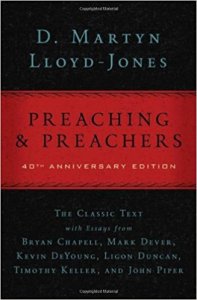
41aomdoo-sl-_sx325_bo1204203200_I am currently reading Martyn Lloyd Jones’ classic Preaching & Preachersbased on a series of lectures he gave back in 1969. Interestingly, he mentions the same issue as having existed at that time as well; the availability of journals, books, radio and television broadcasts of sermons or other Christian content had led many people to opt out of church because they felt they could feed their souls and connect with God on their own via these mediums, apart from the local church.

Here’s his response:

“This is a wrong approach because it is too individualistic. The man sits on his own reading his book. That is too purely intellectual in its approach, it is a matter of intellectual interest. The man himself is too much in control. What I mean is that if you do not agree with the book you put it down, if you do not like what you are hearing on the television you switch it off. You are an isolated individual and you are in control of the situation. Or, to put it more positively, that whole approach lacks the vital element of the Church.

Now the Church is a missionary body, and we must recapture this notion that the whole Church is a part of this witness to the Gospel and its truth and its message. It is therefore most important that people should come together and listen in companies in the realm of the Church. That has an impact in and of itself. I have often been told this. The preacher after all is not speaking for himself, he is speaking for the Church, he is explaining what the Church is and what these people are, and why they are what they are. 

Not only that, when a person comes into a church, to a body of people, he begins to get some idea of the fact that they are the people of God, and that they are the modern representatives of something that has been known in every age and generation throughout the centuries. This makes an impact. The person is not simply considering a new theory or a new teaching or a new idea. They are visiting or entering into something that has long history and tradition.

The person who thinks that all this can be done by reading, or by just looking at a television set, is missing the mysterious element in the life of the Church. What is this? It is what our Lord was suggesting when He said, ‘Where two or three are gathered together in My name, there am I in the midst.’ It is not a mere gathering of people; Christ is present. This is the great mystery of the Church. There is something in the very atmosphere of Christian people meeting together to worship God and to listen to the preaching of the Gospel.”

He then goes on to tell the story of a woman who had been involved in occult practices, who one time entered one of his church services when he pastored a small fellowship in Wales. She continued coming and eventually converted. When asked what kept her coming when she first started attending, she said that she sensed a “clean power” in their midst.

“All I am contending for is that when you enter a church, a society, a company of God’s people, there is a factor which immediately comes into operation, which is reinforced still more by the preacher expounding the Word in the pulpit; and that is why preaching can never be replaced by either reading or by watching television or any one of these other activities.”
(Lloyd-Jones, Preaching and Preachers, pp. 52-55.)

Let us not forsake the assembling of ourselves together, as is the manner of some, but let us encourage one another all the more as you see the Day approaching. (Hebrews 10:25)

Treasure in Unexpected Places

3019926-inline-stall-tight-private

Did you know that a few years ago, the British artist Banksy set up a stall at the edge of New York’s Central Park, and offered some of his most famous and sought-after works of art up for ridiculously low prices?

Some of Banksy’s most famous pieces, the monkey with a sign, the guy throwing flowers, the rat with a smirk, they were all there – but people walked by and completely ignored them.

Pieces which are worth hundreds of thousands of dollars were on sale for $60 a piece, and yet, over the course of the day, only three people bought prints from the old man watching over the stall, which was only labeled “Spray Art.”

One lady bought two pieces, but only after haggling for a 50% discount. One young woman bought a large canvas at full price, and one lucky man from Chicago bought four of them for his new house, because he just wanted “something for the walls,” and he thought these would suffice.

All in all, Banksy sold $225,000 of art for just $420. The entire stall was holding over $1 million worth of art, but no one recognized the incredible value of what they were walking right past.

Here’s an article about it, and below is a video which was taken of the stunt as it happened.

Or maybe you’ve heard about the world famous violinist, Joshua Bell, who, two days after selling out a theater in Boston where the average seat price was over $100, entered a Washington D.C. metro station and played one of the most intricate pieces ever written, on a violin worth $3.5 million. In 45 minutes, he made $32 in tips, and of the thousands of people who walked by, only six stopped to listen.

Here’s an article and a video of that.

“From now on therefore…”

How many times do we do the same thing? We overlook the treasure that is right before us, because it is in a place we didn’t expect to find it.

We overlook it in the people about whom we are predisposed to think a certain way. We overlook it in nature and in all kinds of other places.

The Apostle Paul says in 2 Corinthians 5:16: “From no on therefore, we will regard no one according to the flesh.”

He is making a determination, that he will not look at people the same way anymore. Why not? Because in the prior verses, he talked about how Jesus has died to redeem us. Not everyone will receive that gift of redemption; Paul mentions that when he talks about how, in light of what God has done, we now seek to compel and persuade others to look to Jesus and receive God’s grace freely offered to them, as if God as making his appeal through us: we implore you on behalf of Christ, be reconciled to God! (2 Corinthians 5:11,20)

CS Lewis put it this way:

There are no ordinary people. You have never talked to a mere mortal. Nations, cultures, arts, civilizations – these are mortal, and their life is to ours as the life of a gnat. But it is immortals whom we joke with, work with, marry, snub and exploit – immortal horrors or everlasting splendors.
(CS Lewis, The Weight of Glory)

Beyond just the fact that no human you ever encounter is a mere moral, Paul tells us something even more astounding: that for those of us who have received this gift of redemption and new life in Christ, God has placed the light of his glory within us – as if someone put a great treasure in a simple clay pot… or if Banksy set up a stall in Central Park, or if the greatest violinist in the world were playing in a subway station…

Will you determine to see the beauty and the majesty that God has placed around you? Will you determine to see people differently than you have – as those who bear the image of God, and for those who have been redeemed: those in whom the glory of God dwells?

I know that I need to do this myself: to slow down and consider the treasure and the beauty of what (and who) is around me. I bet I’m not the only one 🙂

Update on Project Back to School 2018

img_20180723_1033401
Drop off time!

Recently I told you about Project Back to School: White Fields Community Church’s annual summertime outreach to kids in foster care in conduction with Weld County Health and Human Services.

This month-long project concluded today with some of us from the church delivering the backpacks to the case workers in Weld County. They will be delivered to these needy families in the coming days and weeks.

Here’s a message from Travis Hergert, who oversees missions and outreach for White Fields:

Backpacks delivered!!

This morning, Joe Cady, Pastor Nick and I had the great privilege of delivering the backpacks that you so graciously provided to 135 elementary, middle school and high school age foster children.  As you all are well aware, each pack was filled with the needed school supplies for Weld County Schools.

It took two pickup trucks to haul all of the backpacks to Greeley!  As we were unloading them at the facility, I was so moved when one of the Human Services workers commented that he is always amazed at how our church manages to provide this amount of backpacks and an incredible amount of gifts at Christmas.  He said he wanted to know the secret of how a congregation is so engaged with their community!  All of the Human Services case workers were incredibly appreciative and very excited to give each child their new backpack and supplies.

This goes beyond just backpacks, you truly showed the love of Christ in a tangible way!

…As it is written, “How beautiful are the feet of those who preach the good news!” (Romans 10:15, ESV)

It was great to see how excited the case workers were about the backpacks, having personal knowledge of the kids and the details of their situations. Please be in prayer both for the kids, their caretakers and these case workers who care so much about them.

“Let us not love in word or talk but in deed and in truth.” (1 John 3:18)

This is an ongoing outreach, so if you would like to be involved with either Project Back to School or Project Greatest Gift, contact White Fields by clicking here.

Who’s Holding Whom?

Screen Shot 2018-07-06 at 1.26.01 PM

I have a two-year old daughter whom I love with my whole heart. At this age, she is learning and growing so fast, especially in her speech.

Lately, every day she looks up at me and says, “Can I hold you?”

That’s her way of asking me to pick her up. Last night I was holding her, and she asked me, “Can I hold mommy?”

When we pick her up, she holds on tight. I’m not sure if she’s just mixing up her words, and really means to say, “Can you hold me?”, or if she really thinks of it as her holding us when we pick her up. Certainly she is holding on, but at the end of the day, our grip on her is much stronger than her grip on us.

I can’t help but think of this in regard to a believer’s relationship with God.

We are told by the writer of Hebrews that we are to “hold fast” to the gospel (Hebrews 3:14, 4:14, 10:23). We should love Him, seek Him, and cling to Him.

But here’s the good news: if and when you fail to do so, if and when you feel weak, confused and exhausted to the point where you are struggling to hold onto Him – He will still be holding on to you.

My daughter thinks she is holding onto me. But the truth is: I’m holding onto her much more firmly than she’s holding onto me, and I’m much stronger than she is.

2 Timothy 2:13, most likely quoting from an early Christian creed or song, says: if we are faithless, he remains faithful—for he cannot deny himself.

At the church where I served my first few years in Hungary, the pastor would read this passage at the end of every service:

Now unto him who is able to keep you from falling, and to present you faultless before the presence of his glory with exceeding joy,
To the only wise God our Savior, be glory and majesty, dominion and power, both now and ever. Amen. (Jude 24-25)

Find security in knowing this today: If you are His child, then as much as you might be clinging to Him (and you should be), He is clinging to you much more tightly, and He is infinitely stronger!

Discipleship is a Direction

24-770x468

Recently I posted some things I had learned from a book I read called No Silver Bullets by Daniel Im. (Read that post here: “Inputs and Outputs for Growth and Maturity”)

Last week I was in California attending the CGN Pastors and Leaders Conference at Calvary Chapel in Costa Mesa, and Daniel Im was there speaking about some of the topics covered in his book.

By the way, recordings of the messages and panel discussions from the conference are available here. I thought the panel discussion on current issues in theology was particularly good.

One of the things Daniel wrote about in his book and talked about at the conference is the idea that discipleship is a direction, rather than a destination. While there is an ultimate destination to our discipleship: experiencing the glory of God in the fullness of His Kingdom forever, as long as we are here on this Earth, being a disciple of Jesus is about direction, not destination.

  • A destination is a place you can arrive at. Once you’re there, then you’ve arrived.
  • A direction implies active and sustained movement towards something.

What is the measure of maturity?

What is it that makes a Christian disciple “mature”?

Consider this: in the Bible, we read about many people who encountered Jesus, from ultra-religious pharisees to prostitutes, extortioners and even thieves.

If the measure of spiritual maturity is simply knowledge or religious observance, then it’s no question: the pharisees were more mature. They knew more about the Bible and their record of religious observance was spotless. The only problem was: the pharisees were far from God in their hearts. (Mark 7:6 – “These people honor me with their lips, but their heart is far from me).

On the other hand, you have people like Zacchaeus (Luke 19:1-10), an extortioner who hasn’t got everything in his life sorted out, but he’s changed directions and is moving towards Jesus even though he’s just now at the beginning of his journey.

Who is the greater disciple? The answer is: Zacchaeus, because he is moving towards Jesus, as opposed to the pharisee who isn’t.

The implications of viewing discipleship in this way

Viewing discipleship as direction rather than a destination has profound implications. It means that you don’t become a disciple by successfully learning a block of material or completing a discipleship workbook or 4-part class. Rather discipleship is an ongoing process.

Unlike justification, which is an outside, definitive, unchanging status that is bestowed on a believer by God, discipleship by definition implies sustained movement. So, if at one point in your life you were passionately seeking God and following Jesus, but are not currently doing so, your past discipleship doesn’t make up for your current posture. Knowledge, longevity nor familiarity equate to having “arrived” as a disciple, in other words. Discipleship is about direction.

A Case Study: the Cussing Christian

When I was pastoring in Hungary, we had a young woman come to our church. She had grown up in an atheist family and her father was a musician. She was a bohemian herself. At our church, she heard the gospel, and she received it – and immediately she began to grow and change. She was at every Bible study, taking copious notes, so hungry to know God and understand His Word and His will for her life. She was all-in, whole-heartedly following Jesus and asked to be baptized.

She also cussed like a sailor. My wife and I learned some new Hungarian words from her… You see, we were fluent in Hungarian, but being in church settings, there were certain “colorful” words, which we had never been exposed to. That all changed when this woman came around. Every Wednesday, after Bible study, there was a time for people to ask questions and then we would pray together. She would often have questions or comments, a praise report or a prayer request – and as she would speak, we’d hear her say some words which didn’t recognize, and then we’d watch as the others in the group grimaced from the words she chose to use. Quickly, we learned what those words meant.

Although we didn’t love the fact that she was using this language, we were happy to see the change in her heart and in her life and her obvious love for Jesus. This was how she had talked before she came to know the Lord, and we trusted that the Holy Spirit would do the work of sanctification, and as she followed Jesus, she would be transformed in every area, including this one.

One day a middle-aged woman from the church approached me. She was angry that we allowed this woman to come to our church and be baptized, considering that she used foul language. This middle-aged woman had been raised in a Christian home, but had a penchant for gossiping about others and slandering them. Unlike with the young woman, I had not witnessed any of the fruits of the spirit in this middle-aged woman’s life, but instead had distinctly seen judgmental and legalistic tendencies.

Which of these two women was the greater disciple? Clearly the older woman knew more about the Bible and had been a Christian longer, but if discipleship is a direction, then the answer is: the younger woman.

What direction are you moving in?

If discipleship is about active, sustained direction, what direction are you moving in? Have you perhaps stagnated?

The good news is, you can change direction. That’s what the word “repentance” means: to change direction.

That was, after all, the first message Jesus preached: “repent, for the Kingdom of Heaven is at hand.” Change directions, whatever you’ve been pursuing, running after – instead, change directions and follow me.