Both God the Father and the Son have distinct and obvious eternal roles that we see in the Bible, but as I was thinking through the role of the Holy Spirit in eternity, I couldn’t come up with anything concrete.
Could you give a brief overview of the role of the Holy Spirit in eternity?
Great question! I would begin by stating, that from God’s perspective, eternity is not a future reality, but an ongoing reality. Jesus said (speaking to the Father): “this is eternal life, that they know you, the only true God, and Jesus Christ whom you have sent.” (John 17:3) In other words, eternity is the continuation of what has already been ongoing for eternity past. For that reason, there are many things about the Holy Spirit which will not change, but, there are some that will.
I laid out the distinction between the “ontological Trinity” (who the members of the Trinity are) and the “economic Trinity” (what the members of the Trinity do) in this post, which is worth checking out: The Trinity: Ontological & Economic
What will not change
For eternity, the Holy Spirit will continue to be the third person of the Trinity—fully God, co-equal and co-eternal with the Father and the Son.
Furthermore, the Spirit, who now dwells in believers as a guarantee of our inheritance (Ephesians 1:13–14), will continue to indwell God’s people, enabling perfect love, worship, and joy in the presence of the Triune God.
What will change
Some of the roles of the Spirit in the present age include:
Conviction of sin and the need for a savior
Empowerment for mission and fulfilling God’s callings
Sanctification of believers
In eternity, these roles will not continue, because they will no longer be needed. However, the indwelling Spirit will continue to unite the redeemed, not only with one another, but also with the Father and Son as we are brought into the eternal communion of the Godhead in a greater way than we experience now here on Earth.
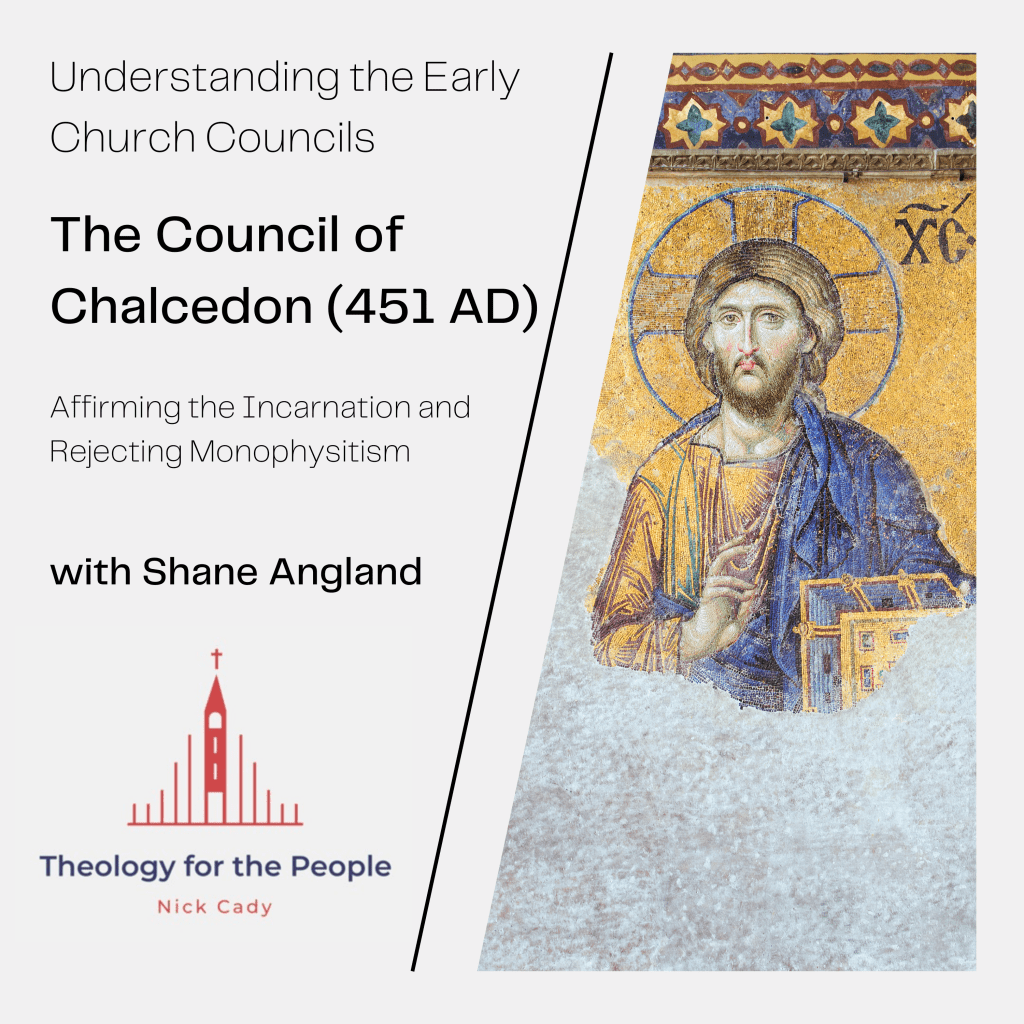
In this episode of the Theology for the People Podcast, I sit down with returning guest Shane to explore the Council of Chalcedon (AD 451), the fourth ecumenical council of the early church.
Recorded live in Colorado during an Expositors Collective training weekend, this conversation traces the events leading up to Chalcedon, its theological breakthroughs, and its messy aftermath.
From the fallout of the Council of Ephesus, to the clash between the Alexandrian and Antiochian schools of Christology, and the mess of Ephesus II, Shane breaks down the stakes: how do we understand the two natures of Christ—human and divine—in one person?
The episode also tackles the political power plays, the deposition of bishops, and the schisms that followed, including the rise of the Oriental Orthodox churches. Plus, hear why Shane sees Chalcedon as both a triumph and a tragedy—and what it still teaches us today.
Resources Mentioned:
The Definition of Chalcedon (available online for further reading).
In this episode, Nick sits down in person with returning guest Shane to explore the Council of Chalcedon (AD 451), the fourth ecumenical council of the early church. Recorded live in Colorado during an Expositors Collective training weekend, this conversation traces the events leading up to Chalcedon, its theological breakthroughs, and its messy aftermath. From the fallout of the Council of Ephesus to the clash between the Alexandrian and Antiochian schools of Christology, Shane breaks down the stakes: how do we understand the two natures of Christ—human and divine—in one person? The episode also tackles the political power plays, the deposition of bishops, and the schisms that followed, including the rise of the Oriental Orthodox churches. Plus, hear why Shane sees Chalcedon as both a triumph and a tragedy—and what it still teaches us today.Resources Mentioned:The Definition of Chalcedon (available online for further reading).Bruce Shelley’s Church History in Plain Language (Fifth Edition).Augustine’s The Unity of the Church on the role and limits of councils.Visit TheologyforthePeople.com
In this episode of the Theology for the People Podcast, we continue our series on the first four ecumenical councils of the early church, diving into the Council of Ephesus (431 AD).
Matthew Pursely, Executive Pastor at Park Hill Church in San Diego, CA, joins us again to explore the theological debates surrounding Nestorius, the nature of Christ, and the implications of the hypostatic union—Jesus being fully God and fully man.
We discuss how this council addressed Nestorianism, affirmed Mary as the “Theotokos” (God-bearer), and shaped Christian understanding of communion and humanity’s connection to Christ.
The Council of Ephesus (431 AD): Hypostatic Union, Nestorianism, & Theotokos – with Matt Pursely –
Theology for the People
In this episode, we continue our series on the first four ecumenical councils of the early church, diving into the Council of Ephesus (431 AD). Matthew Pursely joins us again to explore the theological debates surrounding Nestorius, the nature of Christ, and the implications of the hypostatic union—Jesus being fully God and fully man. We discuss how this council addressed Nestorianism, affirmed Mary as the "Theotokos" (God-bearer), and shaped Christian understanding of communion and humanity’s connection to Christ.Recommended ResourcesFor those wanting to dive deeper into the councils and related theology:Edward Siecienski – The Filioque: History of a Doctrinal ControversyAdonis Vidu – Exploring the Doctrine of Divine InseparabilityJohn Behr – The Nicene Faith (2 volumes) and John the Theologian and the Mystery of ChristKallistos Anatolios – Retrieving NicaeaJohn Henry Newman – Arians of the Fourth CenturyWilliam Bright – Notes on the Canons of the First Four General CouncilsTodd Miles – Superheroes Can’t Save You: Epic Examples of Historic Heresies (compares heresies to superhero archetypes—highly recommended entry-level read).Connect with Us:Subscribe to the Theology for the People podcastVisit the Theology for the People website at theologyforthepeople.com
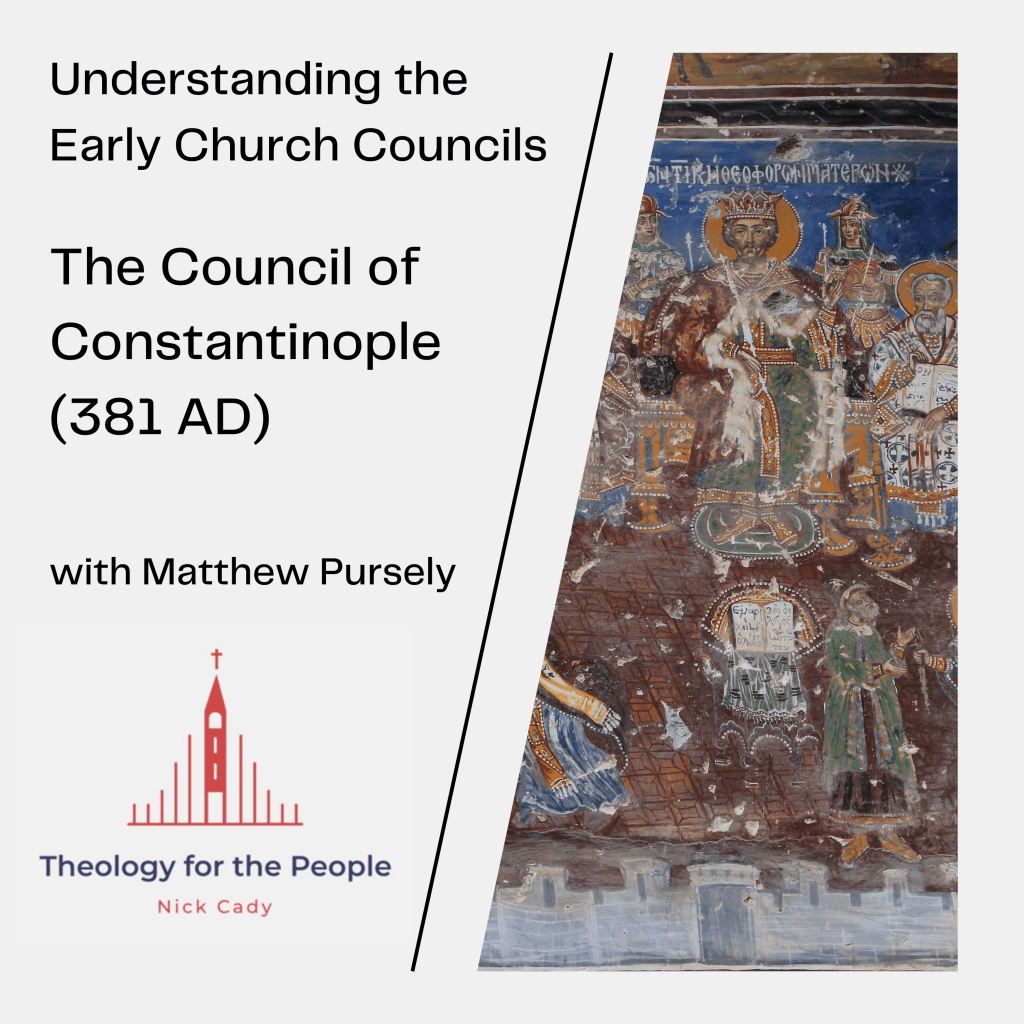
How did the early church come to a clear understanding of who Jesus is and how the Holy Spirit relates to the Father and the Son? And why did it take more than one council to settle these questions?
In this episode, I’m joined again by Matthew Pursley, Executive Pastor at Park Hill Church in San Diego, CA, and an expert in historical theology. Last time, we discussed the Council of Nicaea, and in this episode, we continue the conversation by diving into the Second Ecumenical Council—Constantinople (381 AD).
We discuss why the Council of Constantinople was necessary even after Nicaea, the role of the Cappadocian Fathers in defining the Trinity, the Filioque controversy, and how this council still shapes our faith to this day.
How did the early church come to a clear understanding of who Jesus is and how the Holy Spirit relates to the Father and the Son? And why did it take more than one council to settle these questions?In this episode, I'm joined again by Matt Pursley, Executive Pastor at Park Hill Church in San Diego, CA, and an expert in historical theology. Last time, we discussed the Council of Nicaea, and in this episode, we continue the conversation by diving into the Second Ecumenical Council—Constantinople (381 AD).We discuss why the Council of Constantinople was necessary even after Nicaea, the role of the Cappadocian Fathers in defining the Trinity, the Filioque controversy, and how this council still shapes our faith to this day. Make sure to visit the Theology for the People website.
Jeremy Treat is the Pastor for Preaching and Vision at Reality LA, a church in Los Angeles, California. He is also an Adjunct Professor of theology at BIOLA University, and he has his PhD from Wheaton College.
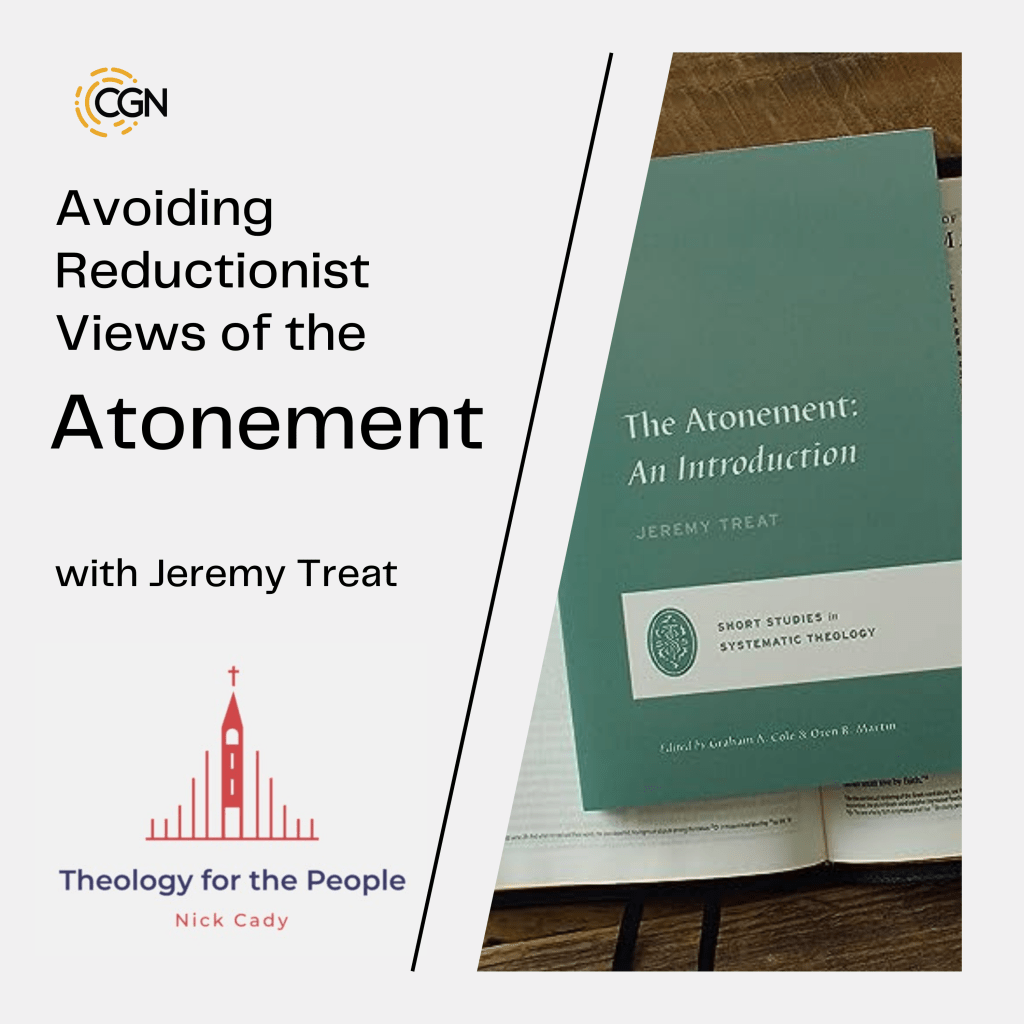
On this episode of the Theology for the People podcast, I spoke with Jeremy about the doctrine of the Atonement, including what it means, and why it is so central to Christianity.
We also discuss some common errors that people commit when thinking about the atonement, and how many of these errors are due to a view of the atonement which is reductionistic. Further, we talk about the practical implications of those different reductionist views.
Jeremy believes that the best narrative in which to understand the atoning work of Jesus is that of the Kingdom of God, in light of the entire story that the Bible tells.
Jeremy Treat is the Pastor for preaching and vision at Reality LA, a church in Los Angeles, California. He is also an Adjunct Professor of theology at BIOLA University, and he has his PhD from Wheaton College.
Jeremy is the author of several books. His latest book is The Atonement: an Introduction, published by Crossway Publishing as part of their series of Short Studies in Systematic Theology.
In this episode, Jeremy speaks with Nick Cady about the doctrine of the Atonement, including what it means, and why it is so central to Christianity.
They also discuss some common errors that people commit when thinking about the atonement, and how many of these errors are due to a view of the atonement which is reductionistic. Further, they talk about the practical implications of those different reductionist views.
Jeremy believes that the best narrative in which to understand the atoning work of Jesus is that of the Kingdom of God, in light of the entire story that the Bible tells.
Unitarianism is the belief that God is not Trinitarian in nature.
This belief can take many forms, such as Modalism: the belief that the Father, the Son, and the Spirit are “modes” in which God sometimes manifests, or in Partialism: the belief that the Father, the Son, and the Spirit are “parts” of who God is.
Other unitarians believe that Jesus is not divine and that there was a time when Jesus was not, i.e. that at one point in time, Jesus came into being – and that he has not existed from eternity past, as the Father has. Further, unitarians might believe that the Holy Spirit is either essentially the Father, or that the Holy Spirit is an impersonal force, but not a “person” of the Trinity.
The following is a list of responses to common Unitarian claims, written by Pastor Jason Cralley, Executive Pastor at White Fields Community Church.
Creeds show progression of development towards the Trinity.
False. The creeds were developed to fight heresy. As one heresy appears, they created a creed to address it. When another heresy appeared around the same topic, they would change the creed to make it more specific. According to the earliest Christian writings it is very clear that they believed in the trinity. Ignatius of Antioch, Polycarp of Smyrna, Theophilus of Antioch, Tertullian, and others all church fathers that wrote about the Trinity long before the first creed was ever written.
The Old Testament foretold that Jesus would be a human being.
True. But it also said he would be God. Isaiah 9:6 “For to us a child is born, to us a son is given; and the government shall be upon his shoulder, and his name shall be called Wonderful Counselor, Mighty God, Everlasting Father, Prince of Peace.” Isaiah 7:14 “Behold, the virgin shall conceive and bear a son, and shall call his name Immanuel.” As Matthew 1:23 points out, Immanuel means “God with us.” The Biblical Unitarians argue that the Jews never understood that these meant the Messiah would be God. True. But as we knew they misunderstood most of the prophecies about Jesus. They thought he would come and set up an earthly kingdom. We cannot take what they believed as truth.
The New Testament teaches that Jesus was a man.
True. But it also teaches that Jesus was God. We have to take the Bible as a whole and not take some verses to make a theology and leave others out. Jesus has divine attributes that only God possesses: he is omnipresent (Matt. 28:20), Omniscient (Mark 2:8, John 6:64; 16:30; 21:17), Omnipotent (Matt. 28:18, Mark 4:37-41; 6:30-44), Created all things (John 1:3, Col. 1:16-17), he keeps the universe going by his power (Heb. 1:3). Jesus thought himself as God: he forgave sins (Mark 2:3-12) and the everyone knew that was something only God could do as they tried to kill him (Luke 7:48-50), he accepted worship as God and never rejected it (Matt. 28:9, 17; Luke 24:52; John 9:38; 20:28), He stated he was God (John 10:30-33, Mark 14: 61-62, Rev. 1:8).
The Bible teaches that Jesus was a created being.
False. Jesus explains his own preexistence ((John 3:13; 6:33, 38, 62; 8:23; 16:28) and that he existed before Abraham (John 8:58). God sent his Son proving that Jesus existed before his incarnation (Rom. 8:3; 1 John 1:2; Gal. 4:4). He didn’t create a son but sent the one that already existed.The New Testament teaches that Jesus is eternal: He existed before creation (John 1:1-3; 17:5), Jesus holds all creation together therefore he had to preexist before his birth (Col. 1:17), Jesus has always been and always will be (Heb. 13:8, Rev. 1:8), created all things meaning he was there before creation (John 1:3, Col. 1:16-17), he keeps the universe going by his power so he had to be preexistent (Heb. 1:3).
The Bible teaches that Jesus has a God.
True and False. Jesus has two natures: fully human (Gal. 4:4) and fully divine (John 1:1, 14; Col. 2:9; Heb. 1:8). When he came down to earth he humbled himself and cooperated with the limitations of being a human (Phil 2:5-8, Heb. 2:9). Jesus the man had someone he would call his God (the Father). Jesus still has a human nature (1 Tim. 2:5; Col. 2:9). Jesus will always have a human nature and will therefore always call the Father God. This does not mean that Jesus doesn’t share the same divine nature as God the Father.
Biblical Unitarianism commits the logical fallacy of equivocation where the meaning of a word changes as it is used. Saying “The Trinity is the teaching that the one God of all existence, consists of three divine persons: The Father, the Son, and the Holy Spirit” is not the same as “The Father is God, the Son is God, and the Holy Spirit is God.” The first sentence uses God as a quantitate, dealing with how many gods there are. The second sentence is qualitative, dealing with the nature of divinity. The Unitarians are confusing the qualitative with the quantitative. Jesus is qualitatively stating that the Father is God. He is not quantitatively stating that only the Father is God, and he is not.
Jesus Called the Father the only true God.
True. But Jesus claims that the Father and he are one (John 10:30) which his opponents knew to mean that Jesus was claiming to be God and picked up stones to kill him (John 10:31). He later states the Father is in him, and he is in the Father (John 10:36-38). So, if the Father is the one true God, then so is he. The Triune God is the one true God.The Holy Spirit is simply the Father. False. The Holy Spirit is distinct from the Father. The Father sent the Spirit (John 14:26). The Spirit does the will of the Father (Rom. 8:27). The Holy Spirit is mentioned with the Father and Son (Matt. 28:19). If the Father was the Spirit, none of these would make sense.
In this episode of the Theology for the People podcast, Nick Cady and Jason Cralley respond to the best arguments for Biblical Unitarianism, which is the a non-Trinitarian interpretation of biblical texts about who God, Jesus, and the Holy Spirit are.
In doing this, we look at the history of Arianism and Trinitarian formulations of who God is, including a discussion about Constantine and the First Council of Nicaea, and the Nicene Creed.
Further, we look into the arguments put forth regarding certain Biblical passages that Unitarians point to as evidence of God’s non-trinitarian, or unitarian nature, and give a defense for trinitarian beliefs.
Below, you can find a link to the video mentioned in the episode about Bad Trinitarian Analogies.
What is Biblical Unitarianism? – Considering the Best Arguments For and Against It –
Theology for the People
In this episode, Nick Cady and Jason Cralley respond to the best arguments for Biblical Unitarianism, the a non-Trinitarian interpretation of biblical texts about who God, Jesus, and the Holy Spirit are.
In doing this, they look at the history of Arianism and Trinitarian formulations of who God is, including a discussion about Constantine and the First Council of Nicaea, and the Nicene Creed.
Further, they look into the arguments put forth regarding certain Biblical passages that Unitarians point to as evidence of God's non-trinitarian, or unitarian nature, and give a defense for trinitarian beliefs.
Make sure to visit the Theology for the People website at nickcady.org
As Christians, we confess that there is one God who eternally exists in three distinct persons: Father, Son, and Holy Spirit.
The three persons of the Trinity are equal in power and glory, are co-eternal, and are of the same essence (Ousia in Greek).
The Father is God, the Son is God, the Spirit is God, but the Father is not the Son, the Son is not the Father, nor is the Spirit the Father or the Son.
The three persons of the Trinity also have unique functions, and relate to each other in unique ways. As a result, we can speak about the Trinity in two ways: the “Ontological Trinity” and the “Economic Trinity.”
OntologicalTrinity
“Ontological” has to doing with “being.” So, to speak of the Ontological Trinity is to explain who God is, and who the three persons of the Godhead are.
The major ecumenical councils of the church, such as Nicaea and Chalcedon, focused on the ontological nature of the persons of the Trinity, and affirmed that Jesus, the Son, is very God of very God, and that the Holy Spirit is not an impersonal force, but is, indeed, God.
So, to speak about the Trinity ontologically, is to affirm both the divine nature and the unique personhood of the three persons of the Trinity.
Economic Trinity
“Economic” has to do with action, roles, and function: what God (and each person of the Godhead) does.
So, when we take an economic view of the Trinity, we are talking about the things which the Father does, or which the Spirit does, which are unique to that person of the Godhead.
For example, it is the role and function of the Holy Spirit to perform the sealing and sanctifying functions of God in the life of a believer.
Jesus, the divine Son, uniquely took on human flesh, came to Earth, lived a sinless life, and died on a cross for our redemption.
The Father sent the Son, the Son submitted to the Father and obeyed the Father, the Father and the Son sent the Spirit. The Spirit glorifies and points to the Son. The Son glorifies the Father. The Father exalts the Son. The Son ever lives to make intercession for us. The Spirit indwells believers, reminding them of what the Son said, and bringing about conviction of sin, righteousness, and judgment.
Application
One important application of these principles, is the understanding that economic actions, such as submission, leadership, and difference of roles, does not diminish or take away from a person’s ontological identity, value, dignity, or identity.
This is communicated explicitly in Philippians 2, where we are told that Jesus, although he was equal with the Father, as God (ontologically), did not regard equality with [the Father] (economically) something to be grasped, but emptied himself, taking the form of a servant, being born in the likeness of men, and humbled himself in obedience, even to the point of death on a cross.
The point here is that Jesus’ economic activity did not detract from his ontological nature.
A point of application is made in the New Testament, in the complementary roles of men and women in the church. Though men are called to teach and exercise authority in the “household of God” (1 Timothy 3:15), this does not diminish or take away from the ontological equality of men and women as human beings, and as children of God, but is rather a matter of economic function. If this is true of the Trinity (and clearly it is), then it should not surprise us that it is true in the “household of God,” acted out by those who reflect His image to the world.
For more on this, check out this discussion of 1 Timothy 2:8-15, which I had with my wife, Rosemary, for our church’s weekly Sermon Extra video:
Both God the Father and the Son have distinct and obvious eternal roles that we see played out in the Bible, with Jesus being more obvious, but as I was thinking through the role of the Holy Spirit in eternity, I couldn’t come up with anything concrete. Could you give a brief overview of the roles of the triune persons of God as it pertains to eternity? I’m mostly interested in the Holy Spirit, but would love a pastor’s perspective on the other two also.
The “Ontological Trinity” and the “Economic Trinity”
There are two fields of discussion when it comes to the Trinity. The “ontological” and the “economic.” “Ontological” refers to who God is, i.e. that which pertains to being, whereas “economic” refers to what God does.
Specifically applied to the Trinity, study of the “ontological Trinity” is focused on those parts of the Bible which communicate that the Father is God, the Son is God, and the Holy Spirit is God, and yet these three, while distinct persons, are one God. Study of the “economic Trinity” is focused on the passages in the Bible which tell us what each of these three persons does as their role in “the Godhead.”
So, ontologically, it is important to point out that eternality is part of God’s nature. God is eternal, and each person of the godhead is eternal. So, the role of God in eternity is merely a continuation of who God has been until now, and who God will forever be.
However, the question above is about the economics of the Triune God after this present age is over, and we have transitioned into what the Bible calls “the new heavens and new Earth.” What will the functions of the three persons of the Triune God be in “the age to come”?
The Role of the Son in the Age to Come
The Son, we are told, is currently seated at the right hand of the Father, and for eternity he will reign and rule as king over all of redeemed creation. (See Revelation 22:3)
Currently, Jesus is making intercession for believers, advocating for us, and is seated on a throne, but for eternity, all we really know is that he will be an eternal sovereign, ruling over a kingdom of righteousness and peace which will never end.
The Role of the Father in the Age to Come
Along with ruling over the redeemed creation from a heavenly throne, revelation tells us that God (not necessarily just the Father) will be a source of light, which will preclude the need for the sun to illuminate, since God himself will be our light.
The Role of the Holy Spirit in the Age to Come
The one thing that sticks out about the Holy Spirit’s role in eternity, is that, whereas the Father and the Son have a throne in the New Heavens and New Earth, the Holy Spirit does not (Revelation 22:3).
Beyond this, I can’t think of any verses which speak specifically about a role of the Holy Spirit in the age to come – but that is not surprising, and here’s why:
What we read regarding the economic Trinity mostly has to do with the work of God to redeem human beings. Remember, the Bible is a book about Jesus: who he is, and how he saves us.
Since the Bible is focused on the story of the salvation and redemption of humankind, it does not tell us very much about what God did before creating the world, nor does it tell us much about what God will do after the redemption of the world is complete.
“The Great Story Which No One on Earth has Read”
This reminds me of the final paragraph of C.S. Lewis’ The Final Battle, which is the final book in the Chronicles of Narnia series, which is full of allegories about biblical passages and teachings.
C.S. Lewis poetically describes “the age to come” in this way:
“…but the things that began to happen after that were so great and beautiful that I cannot write them. And for us this is the end of all the stories, and we can most truly say that they all lived happily ever after. But for them it was only the beginning of the real story. All their life in this world and all their adventures in Narnia had only been the cover and the title page: now at last they were beginning Chapter One of the Great Story which no one on earth has read: which goes on for ever: in which every chapter is better than the one before.”
C.S. Lewis, The Last Battle
The Bible doesn’t tell us much about what the three persons of the Trinity will do in eternity, because that is not the story which the Bible exists to tell.
God Will Do What God Did Before
Prior to the creation of the world, it is important to remember that God existed from eternity past. Without human beings to rescue, sanctify, and redeem, what did God do?
What we can be sure of, is that God was neither bored nor lonely.
From eternity past, the one God, who exists as Father, Son, and Holy Spirit existed as a mutually edifying and glorifying community unto himself. Creation, was God inviting us to join in the “perichoresis,” the eternal relationship which exists between Father, Son, and Holy Spirit, sometimes referred to as “the dance of God.”
In other words, in eternity, we can expect that God will do what God did before: delighting in himself, with each person fueling this mutually edifying and glorifying relationship.
Ask a Question or Suggest a Topic
If you have a question or would like to suggest a topic for me to address here on the blog, click here: Ask a Question or Suggest a Topic
In Genesis 31:22-32, who did Jacob wrestle with: the Angel of the Lord? Archangel Phanuel? Or ???
In Genesis 31, we read that Jacob was about to meet with his brother Esau and he was greatly afraid, assuming that Esau wanted to kill him. The night before their meeting, Jacob ventures off alone into the wilderness, and there encounters a man with whom he ends up wrestling until daybreak. The man touches Jacob’s hip, dislocating it, but Jacob refuses to release his grasp on the man unless the man agrees to bless him.
The man consents to blessing Jacob, and changes his name from Jacob (conniving) to Israel (wrestles with God).
Jacob then calls this place Peniel, which means ‘the face of God,’ and says: ‘For I have seen God face to face, and yet my life has been spared.’
So, let’s take stock: Jacob wrestled with a man, but then he claimed that the man he wrestled with was God, and that he had seen God face to face, yet he had not died.
Who did Jacob wrestle with? He wrestled with a man, who is also God… There is only one such man: the Divine Son, the second person of the Trinity: Jesus.
This story in Genesis 31 is one of many Christophanies in the Old Testament: appearances of Jesus before he was born as a baby in Bethlehem.
The first chapter of the Gospel of John tells us that Jesus has existed since eternity past, that he is God, and that he is distinct from the Father, who is also God. We are told that no one has ever seen God the Father, but the Divine Son has made him known. We are told in Colossians that Jesus is ‘the image of the invisible God.’
In other words: when we see God in human form, we are seeing an appearance of God the Son, i.e. Jesus before he came as a baby in Bethlehem.
As for the ‘Archangel Phanuel’: Phanuel is a form of transliteration of Peniel, which means ‘the face of God.’ The ‘Archangel Peniel’ is only mentioned in an apocryphal book called the Book of Enoch, which has never been considered Holy Scripture, neither by the Jews nor the Christians. We have no substantial reason to believe in the existence of any archangel by that name, as the inspired authority of the Book of Enoch is dubious and suspect. The reason Jacob called the place Peniel is because he understood that he had come face to face with God.
Bible Commentary Recommendations
Which Bible commentary is the closest to the word of God: Life Application Bible Commentary or the Bible Knowledge Commentary. Would you have a recommendation?
I’m not very familiar with the Life Application Bible Commentary, but I do know the Bible Knowledge Commentary, and I think it is quite good. My top recommendation for a commentary series would be the New International Commentary of the Old and New Testaments. The Word Biblical Commentary is also quite good.
Will We See the Trinity in Heaven?
When we get to haven will we see God the Father, God the Son, and God the Holy Spirit, with Jesus sitting at the right hand of the Father. Please explain.
I believe the answer to this question is: Yes, we will see the three persons of the Godhead as separate persons. For example, in Revelation, John sees Jesus as separate from the Father several times. What is not clear is if we will ‘see’ the Holy Spirit, since I can’t think of any instance in the Bible when the Holy Spirit is seen.
The best, most concise summary of what Christians believe about the Trinity, the triune God revealed to us in the Bible, is found in the Athanasian Creed:
This is the [universal Christian] faith:
That we worship one God in trinity and the trinity in unity, neither blending their persons nor dividing their essence. For the person of the Father is a distinct person, the person of the Son is another, and that of the Holy Spirit still another. But the divinity of the Father, Son, and Holy Spirit is one, their glory equal, their majesty coeternal.
What quality the Father has, the Son has, and the Holy Spirit has. The Father is uncreated, the Son is uncreated, the Holy Spirit is uncreated.
The Father is immeasurable, the Son is immeasurable, the Holy Spirit is immeasurable.
The Father is eternal, the Son is eternal, the Holy Spirit is eternal.
And yet there are not three eternal beings; there is but one eternal being. So too there are not three uncreated or immeasurable beings; there is but one uncreated and immeasurable being.
Similarly, the Father is almighty, the Son is almighty, the Holy Spirit is almighty. Yet there are not three almighty beings; there is but one almighty being.
Thus the Father is God, the Son is God, the Holy Spirit is God. Yet there are not three gods; there is but one God.
Thus the Father is Lord, the Son is Lord, the Holy Spirit is Lord. Yet there are not three lords; there is but one Lord.
The creed goes on and it worth reading, but the point is that the three persons of the Godhead are not only functionally distinct, but are ontologically distinct. This means that just as they have been distinct from eternity past, they will be distinct from eternity future, although they are persons of the one God.






 Theology for the People