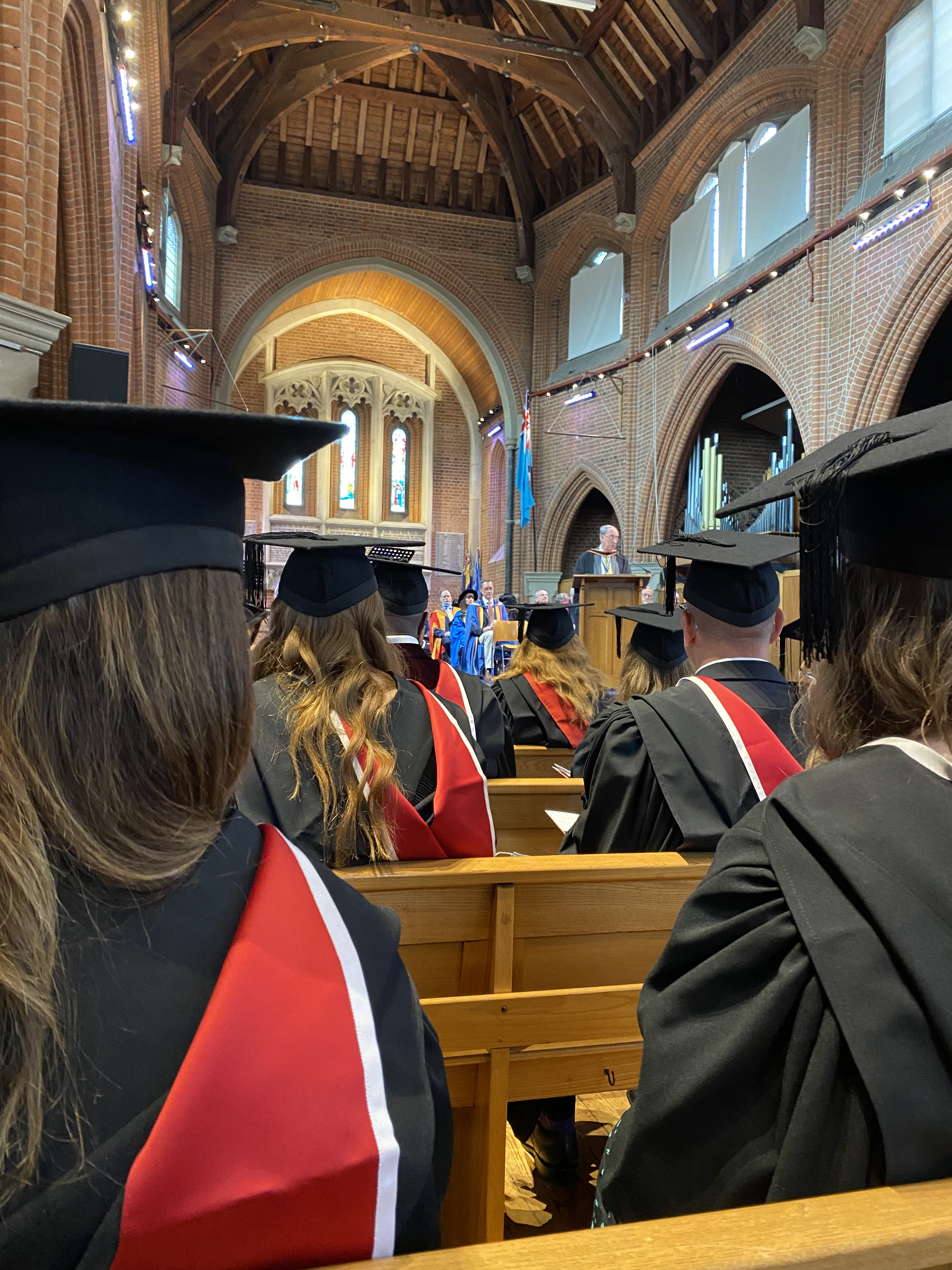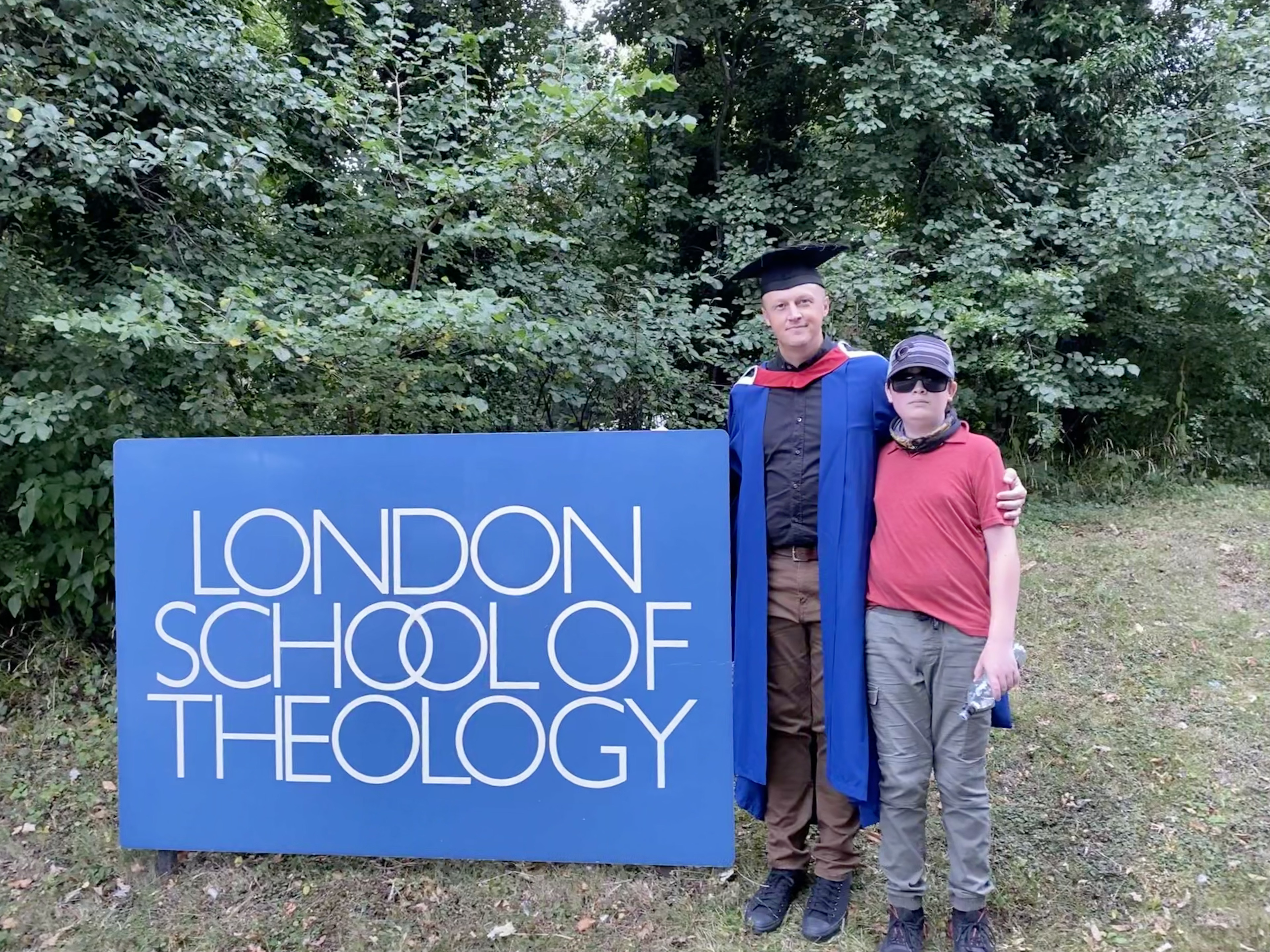
In the latest episode of the Theology for the People podcast, Mike and I discuss the topic of “theological method,” which was a big part of my Masters study in Integrative Theology.
Integrative theology weaves together historical, biblical, systematic, and other approaches to doing theology in order to take a holistic approach, and the result is an integrated theological method.
Here’s the thing: everyone uses a method for doing theology, whether they recognize it or not. Furthermore, the reason why different people and groups arrive at different conclusions is because they are using different theological methods.
In this episode, I explain the 5 commonly recognized “sources of theology,” and answer the question of how to examine your own theological method.
Theological Method: Sources of Theology and Why People Arrive at Different Conclusions About Matters of Faith and the Bible –
Theology for the People
In this episode, Nick and Mike discuss the topic of "theological method", which involves the study of how people arrive at theological conclusions based on how they use the "sources of theology" in relation to each other.
We discuss the 5 commonly recognized sources of theology, explain different theological methods that exist, and how they relate to interpreting the Bible in light of our ever-changing world.
Check out the Theology for the People blog site at nickcady.org
One of the questions that is sometimes asked about the Holy Spirit, is whether God will ever remove the Holy Spirit from a person because of disobedience or sinful actions.
Certainly there are verses which talk about God removing the Holy Spirit from people, such as Psalm 51:11, where King David prays, “Cast me not away from your presence, and take not your Holy Spirit from me.” David prayed this in the wake of his sin with Bathsheba (2 Samuel 11), so that brings up the question: Are there times when God removes the Holy Spirit from someone if they do something really bad?
Furthermore, in 1 Samuel 16, is says that the Spirit of the Lord departed from King Saul, and in the Book of Judges, it says that the Spirit of the Lord departed from Samson.
So, does this mean that God will REMOVE his Spirit from YOU, if you live in a bad way? If so, that would be a pretty big problem, because Romans 8:9 says “Anyone who does not have the Spirit of Christ does not belong to him.”
Understanding the Three Relationships the Holy Spirit has with different groups of people
In order to answer this question and understand what it meant for David, Saul, and Samson – and what it means for us today, we have to first understand the 3 different relationships that the Bible tells us the Holy Spirit has with different groups of people.
Relationship 1: “WITH” All People
In John 14:17, Jesus told his disciples that the Holy Spirit had been with them up until that point.
Jesus then he told them that the work of the Spirit in the world is that He brings about conviction in people’s hearts and minds about 3 things: Sin, Righteousness, and Judgment (John 16:8)
In other words, the Holy Spirit is at work in the world in every country, with all people, and he is whispering in their ears and speaking to their hearts about the fact that 1)They are sinners (they have fallen short of God’s perfect standard), and 2) God is righteous, so therefore 3) There is coming a day of judgment when they will have to stand before that righteous God and give account for their lives.
The purpose of this conviction is not to just make people feel bad about themselves; the purpose is to draw them to Jesus by bringing them to a realization of why they need a savior, so they will embrace Jesus and what He has done in order to save them.
Relationship 2: “IN” those who have been redeemed by Jesus
Jesus told his disciples in John 14:17: The Holy Spirit has been WITH YOU up until this point — but soon, the Holy Spirit will also be IN YOU.
This indwelling of the Holy Spirit is something that was prophesied by the Old Testament prophets Ezekiel and Jeremiah, that one day God was going to put His Spirit within His people (Ezekiel 36:27), in order to transform them from the inside out.
For people in the Old Testament, the indwelling of the Holy Spirit was always a future event, but after Jesus had died and resurrected, we read in John 20:22 that Jesus met with his disciples and he breathed on them and said to them, “Receive the Holy Spirit.” It was at this moment, that the disciples received the Holy Spirit within them, and it was at this moment that they were “born again.” (See also: “What does it mean to be “Born Again”?)
What it comes down to is this: Only those who have put their faith in Jesus have the Holy Spirit within them, and every person who has put their faith in Jesus has the Holy Spirit dwelling with them.
The Bible tells us that when you put your faith in Jesus, God puts his seal on you and gives you His Spirit in as a guarantee(2 Corinthians 1:23). Furthermore, the regenerating and indwelling Spirit is called “the Spirit of Adoption” (Romans 8:15) It’s His guarantee that you belong to Him, and you are His.
The indwelling Spirit sanctifies, leads, guides, strengthens, and transforms from within.
Relationship 3: “UPON” Some people at different times, to empower them to do what God has called them to do
Remember how in John 20 Jesus breathed on his disciples and said, “Receive the Holy Spirit”? Well, right after that, Jesus told his disciples to stay in Jerusalem and wait until the Holy Spirit came upon them. (Luke 24 & Acts 1:4)
But… if they just RECEIVED the Holy Spirit, then why did Jesus tell them to wait for the Holy Spirit?
Because: this is speaking about two different relationships with the Holy Spirit!
When Jesus breathed upon them, they received the Spirit IN them (and they were born again) — but then they were to wait in Jerusalem for the Holy Spirit to come UPON them: to EMPOWER THEM to carry out the mission Jesus had given them.
That’s why Jesus His disciples in Acts 1:8, “But you will receive power when the Holy Spirit has come UPON you, and you will be my witnesses in Jerusalem and in all Judea and Samaria, and to the end of the earth.”
Throughout the Old Testament, before people could have the Holy Spirit WITHIN them — we read that the Holy Spirit would come UPON people, to empower them to do things God had called them to do. For example, it says that the Spirit of the Lord came upon Gideon! (Judges 6:34 NKJV) We’re also told that the Holy Spirit came UPON Samson, and UPON David, and UPON Elisha, and others — to EMPOWER them to do what God had called them to do.
So, Jesus was promising his disciples (and us) — that the Holy Spirit will also come upon us, to empower us to carry out the callings He has placed upon our lives.
Un-Adopting? Un-Sealing?
Remember: in the Old Testament, the Spirit was WITH people (to bring conviction) and the Holy Spirit was UPON people (to empower them), but at that point that Spirit was not yet WITHIN people. So when we read in the Old Testament about God “removing” his Spirit, it’s not in the sense of a person who had the Holy Spirit dwelling within them, rather it’s in the sense of God removing the empowering work of the Holy Spirit from those people.
But for a person who has been sealed by the Holy Spirit indwelling them, we never read of God removing His Spirit from someone in that sense. The indwelling Holy Spirit is the Spirit of Adoption. God does not un-adopt us when we make mistakes and mess up, rather: he disciplines us like a loving Father (see Hebrews 12).
If He has SEALED you, as a guarantee of your salvation, that’s exactly what it is: He has placed his Spirit within you as a guarantee that He will see you through and bring to completion the good work that He has begun in you.
If you are His child, He won’t give up on you – and that’s really good news!
Further Study
For more on the 3 Relationships with the Holy Spirit, see this study: The Promised Helper
In this week’s episode of the Theology for the People Podcast, I sat down with Pastor Wayne Taylor from Calvary Fellowship in Seattle, Washington.
Wayne has a long history as a leader in the Calvary Chapel movement. He founded Calvary Fellowship in Seattle and served there as lead pastor for 42 years. Under Wayne’s leadership, 55 churches were planted, both in the Pacific Northwest and abroad.
Wayne recently spoke at White Fields Church. That message, in which he reads a limerick he wrote about me(!), can be found here: Ephesians 2:10 – God’s Poem’s at Work.
In this episode, Pastor Wayne and I discuss Charismatic Christianity: where the word “charismatic” comes from, what it means, arguments for and against charismatic practices, as well as John MacArthur, theological method, Calvary Chapel, and our own personal experiences and biases.
Pastor Wayne Taylor has a long history as a leader in the Calvary Chapel movement; he founded Calvary Fellowship in Seattle, Washington, where he served as lead pastor for 42 years. Under his leadership, 55 churches were planted out of Calvary Fellowship, both in the Pacific Northwest and abroad. Wayne now serves on the executive leadership team of Calvary Global Network.
In this week's episode, Wayne and I discuss what it means to be "charismatic." We discuss the origin of the word, arguments for and against charismatic practices, as well as John MacArthur, theological method, Calvary Chapel, and our own personal experiences and biases.
Follow Pastor Wayne on Facebook, and check out the Theology for the People blog.
The sermon series from White Fields Church on the Holy Spirit can be found here: The Spirit-Filled Life.
When I was a missionary in Hungary, we used to visit a refugee camp populated with thousands of people from muslim-majority countries, with whom we didn’t have a common language. Everyone in the camp got by with a mix of English, Russian, and sometimes German words that formed a special form of refugee pidgin. But this was insufficient for deeper conversations, such as those about God, Jesus, and salvation.
So, with the help of the International Bible Society, we were able to get New Testaments in Urdu, Dari, Farsi, and other languages, and we handed these out along with humanitarian aid, telling those we met to read them, and then we would follow up. For many of them, this was their first time ever having access to the New Testament in their own language, and by God’s grace, we did see many of them become followers of Jesus.
But this approach to ministry was based on an underlying assumption: that anyone with average reading comprehension skills can sufficiently understand the meaning of the Bible when it comes to what it says about who Jesus is and how salvation is possible through Him.
This assumption is known as belief in the “perspicuity,” or clarity of Scripture.
Not everyone embraces the idea that Scripture is perspicuous, notably the Roman Catholic Church and Eastern Orthodox churches – as well as fringe groups including the Mormons (AKA Latter Day Saints) and the Jehovah’s Witnesses.
It was after a friend of mine converted to Roman Catholicism based on claims he had heard about Scripture not being perspicuous that I was intrigued by this topic and wanted to research it further. I ended up writing my Masters dissertation on the topic – specifically looking at the question of whether the concept of the perspicuity of Scripture was novel to the Reformation, or if it is also found in the writings of the early Church Fathers – which would mean that the insistence on the perspicuity of Scripture in the Reformation period was actually a return to the way the early Christians understood and viewed Scripture.
In this week’s episode of the Theology for People Podcast, Mike asks me questions about the perspicuity of Scripture; what it is and why it matters, and what is at stake when it comes to this issue.
The Perspicuity of Scripture: Is the Bible Clear? Can Everyone Understand It? –
Theology for the People
Can anyone pick up the Bible, read it and understand it? Is Scripture "clear," and if it is: about what and for whom is it clear?
I wrote my Masters dissertation on the topic of the perspicuity, or clarity, of Scripture. This is an important topic, because whether or not we view Scripture as clear affects how we handle and use the Bible and how we relate to church traditions, and how we view the world in the midst of a culture in which many long-held beliefs and assumptions are being challenged.
In this episode, Nick and Mike discuss the concept of the perspicuity of Scripture, looking at the history of this concept and what is at stake in this debate.
For more articles and content, make sure to check out the Theology for the People website.
Last week I had the honor of being a guest on Gino Geraci’s radio show: Crosswalk with Gino Geraci, on 94.7 FM KRKS which airs in the Denver metro area and online.
We discussed the topic of the “perspicuity” or “clarity” of Scripture, which was the subject of my MA dissertation.
The discussion certainly wasn’t exhaustive, and there is more I would like to share about meaning and implications of the perspicuity of Scripture via this blog and my podcast – such as the difference between the external and internal aspects of perspicuity, but this was a great introduction to the topic.
Gino is well-read and understands the subject well, and it was fun to talk with someone who enjoys discussing these things and helping other people understand them.
What is perhaps most interesting about our discussion is that we spent time talking about how the perspicuity of Scripture speaks to the current trend of postmodern thinking and epistemology, in which even many professing Christians are taking up views which are contrary to the clear reading of Scripture because of pressure from the culture.
You can listen to the two hours we spent discussing this topic on the radio here:
In Part 2 of this two-part series, Mike and I discuss the process through which the New Testament was recognized as Holy Scripture.
At what point were the books of the New Testament recognized as Scripture? Who was involved in that process, or who made that determination? What about the disputed books, and why was the Gospel of Thomas kept out of the Bible?
We answer these questions and more in this episode. (Click here to listen to Part 1.)
The Formation of the New Testament Canon: Part 2 – Recognition, Disputes & the Gospel of Thomas –
Theology for the People
In Part 2 of this two-part series, Nick and Mike discuss the process through which the New Testament was recognized as Holy Scripture.
At what point were the books of the New Testament recognized as Scripture? Who was involved in that process, or who made that determination? What about the disputed books, and why was the Gospel of Thomas kept out of the Bible?
We answer these questions and more in this episode.
Make sure to check out the Theology for the People blog as well.
In Matthew 27:52-53 it says that when Jesus died, “The tombs also were opened. And many bodies of the saints who had fallen asleep were raised, and coming out of the tombs after his resurrection they went into the holy city and appeared to many.”
Why did this happen? And what happened to these “walking dead”: did they ascend into Heaven with Jesus, or did they die again at a later date? What was the meaning and significance of this?
I address this question in the latest episode of the Theology for the People Podcast – in which I tell a story of regret from my honeymoon and explain why this event can only be understood in light of Jesus’ first miracle of turning water into wine.
Zombies in the Bible? Why Did the Dead Come Out of Their Graves and Walk Around When Jesus Died? –
Theology for the People
In Matthew 27:52-53 it says that when Jesus died, "The tombs also were opened. And many bodies of the saints who had fallen asleep were raised, and coming out of the tombs after his resurrection they went into the holy city and appeared to many."
Why did this happen? And what happened to these "walking dead": did they ascend into Heaven with Jesus, or did they die again at a later date? What was the meaning and significance of this?
You can find more articles and content, as well as a place to submit questions or suggest topics at the Theology for the People blog site.
Based on your knowledge of activity in Heaven what was going on in Heaven prior to the crucifixion and how did it change, if at all after Jesus resurrection? For example, was there joy in the presence of angels over sinners repenting before Jesus died and rose??
Interesting question! Here are my thoughts:
The Sons of God Shouted for Joy
In the Book of Job, when God speaks, God challenges Job by saying this:
“Where were you when I laid the foundation of the earth? …when the morning stars sang together and all the sons of God shouted for joy?”
The “sons of God” mentioned here is a reference to the angels. What this is telling us is that at the creation, the angels were “the audience” who watched and cheered as God created the universe.
The Heavenly Audience
This theme of the angels being an audience, watching the things which happen on Earth, is carried through the Bible.
At the beginning of the Book of Job, we read about Satan asking for permission from God to afflict someone. The picture we get from that scene is that those in Heaven are aware and attentive to the happenings of people on Earth.
Not only are those in Heaven aware and attentive to what is happening on Earth, they seem to be emotionally invested in what is happening on Earth. For example, in Revelation 5, we read that when no one was found who could open the seal, there was weeping in Heaven until it was revealed that the Lamb was worthy to do so.
The whole picture of Revelation is that John the Apostle gets a preview of Heaven. Starting in chapter 4, John is caught up to Heaven, and what he describes is how, from that vantage point, he joins the angels in watching the happenings down below on Earth. The picture, therefore, is of Heaven being aware of and attentive to, as well as emotionally invested in, the happenings here on Earth.
The Stadium and Those in the Stands
In Hebrews 12:1 we read:
Therefore, since we are surrounded by so great a cloud of witnesses, let us also lay aside every weight, and sin which clings so closely, and let us run with endurance the race that is set before us,
The picture the writer is painting here is that of a stadium, and Greco-Roman competitions, such as the Olympics. He describes life as being a race, a theme which Paul also discusses, using similar language drawing from Greco-Roman athletic competitions.
But here the writer highlights a particularly interesting aspect of those competitions: as we run this race, we are surrounded by a cloud of witnesses. The “witnesses” are those who were mentioned in the previous chapter, Hebrews 11, where we are told about those who preceded us in the faith – the “Old Testament saints,” as they have been called.
The image the writer is invoking is that of a stadium, in which the stands all around us are full of those who have preceded us in the faith, and who are now “cheering us on” as we run the race that is set before us.
The Angels and the Saints
What we are left with, therefore, are two groups: the angels and the saints. Both groups are apparently aware and attentive to what is happening on Earth, and are rooting for us and eagerly awaiting the fulfillment of God’s promises.
What Changed in Heaven When Jesus Died and Resurrected?
The word angel literally means “messenger” in Greek, and this aligns with what the Bible tells us about angels; that they are “ministering spirits.” It would seem that the angels have been and still are aware, attentive to, and emotionally engaged in what is happening on Earth.
Thus, to answer your question, I do think there was joy in the presence of the angels over sinners repenting – prior to Jesus’ death and resurrection.
The one thing which changed when Jesus died and resurrected, is that those who were kept in Abraham’s Bosom awaiting the redemption of their souls were released from Sheol and taken to be in God’s presence.
What are they? How do we recognize them before it’s too late? And how do we avoid being carried away by them?
We give some examples of winds and waves in the recent past, as well as the desire to move beyond the basics of Christianity to the “deeper things.” We discuss what people often mean when they use that phrase, and how to discover and experience the deepest things in reality.
In this episode Nick and Mike discuss what it means in Ephesians 4:14 where the Apostle Paul talks about “winds and waves of doctrine.” What are they? How do we recognize them before it’s too late? And how do we avoid being carried away by them?
Along with some examples of winds and waves in the recent past, we discuss the “deeper things” of Christianity: what many people mean when they use that phrase and what the deepest things are in reality.
Also visit the Theology for the People blog.
Theology for the People Now on GoodLion Podcast Network
The Theology for the People podcast is now on the GoodLion Podcast Network, where you can find a lot of other great podcast content. As part of joining GoodLion, all of our episodes were updated with new graphics. Check them out:
What is the benefit of attending church? A person is demanded to surrender personal faith in Jesus and personal relationship with Jesus Christ to become a Borg in a socialist swamp. It’s great for becoming robotized, lobotomized, Romanized, and institutionalized.
But its pointless for knowing Jesus Christ personally.
Don’t go. Jesus isn’t welcome there. Conformity is King. Not Jesus.
I was tempted to ignore the comment, but I think this view of church is actually pretty widespread, even amongst professing Christians, that it warranted a response. And since I’ve recently started the Theology for the People Podcast, I figured this would be a good topic to discuss in more detail there.
In this episode Nick and Mike discuss a comment that came in to the Theology for the People blog claiming that church is only good for "becoming robotized, lobotomized, Romanized, and institutionalized," and is "pointless for knowing Jesus Christ personally." This comment represents a not-uncommon attitude to "organized religion" in general and church in particular.
This episode includes discussions about the Bible, Jesus, American history, and Henry David Thoreau.
The book recommended in this episode is The Bible in America: Essays in Cultural History