A Timeline of Jesus’ Post-Resurrection Appearances

At White Fields Church, I have been teaching through the Gospel of Matthew [listen to the series here] for almost two years, and this past Sunday we reached the final chapter.

After my sermon on Matthew 28:1-15, someone asked a great question:

“How does Mary Magdalene weeping at the tomb in John 20:11-18 fit with Matthew’s account of the women meeting Jesus on the way in Matthew 28:8-10?”

After looking into it, there’s a simple and satisfying explanation. But also, this question touches on a larger issue, of how the different Gospel accounts fit together. The different Gospel writers give different perspectives which ultimately complement, rather than contradict each other.

The Women Who Went to the Tomb

  • Mary Magdalene (Matthew 28:1, Mark 16:1, Luke 24:10, John 20:1)
  • The other Mary (Matthew 28:1; Mark 15:40; Luke 24:10) — most likely Mary the mother of James and Joseph (also called Joses; cf. Matthew 27:56)
    • This seems to be the same person Mark calls “Mary the mother of James” (Mark 16:1)
    • Some people believe this is Mary the Mother of Jesus, while others believe it’s a separate person.
  • Salome (mother of James and John, the sons of Zebedee) (Mark 16:1)
  • Joanna (wife of Chuza, a steward in Herod’s household) (Luke 24:10, cf. Luke 8:3)
  • Other unnamed women who had followed Jesus from Galilee (Luke 23:55; 24:10)

All four Gospel accounts mention Mary Magdalene. John’s Gospel only mentions Mary Magdalene, not to the exclusion of the other women, but only to focus on her previously undocumented encounter with Jesus at the tomb. The fact that Mary Magdalene was not alone is alluded to by John 20:2, “They have taken the Lord out of the tomb, and we do not know where they have laid him.” The plural “we” indicates she wasn’t alone.

The Women Arrive at the Tomb, but Mary Leaves Immediately

As this group of women arrived at the tomb with spices to anoint Jesus’ body, they saw that the stone had been rolled away. At this point, Mary Magdalene appears to separate from the group and run ahead. Having seen the open tomb, she assumes the worst: that someone has taken the Lord’s body (John 20:2). She runs to tell Peter and John, while the other women remain at the tomb.

The Women Encounter the Angel

Matthew 28:2–7; Mark 16:5–7; Luke 24:4–8: While Mary Magdalene is gone, the other women encounter angels at the tomb. Matthew focuses on one angel, who is sitting on the stone, while Mark and Luke mention two inside the tomb.

The angels proclaim the good news: Jesus has risen, just as He said. The women are told to go and tell the disciples that Jesus is alive and will meet them in Galilee. Shaken by what they had seen, and filled with joy, they rush off from the tomb to share the message with the disciples.

Peter and John Run to the Tomb

John 20:2-10; Luke 24:12: Meanwhile, Mary Magdalene reaches Peter and John with the news that, “They have taken the Lord out of the tomb, and we don’t know where they have laid Him.”

Peter and John sprint to the tomb. John arrives first, looks in, and sees the linen clothes. Peter then arrives; he goes in and notices the face-cloth folded up in a place by itself. This detail indicates that whatever happened in the tomb took place in an orderly manner, rather than a chaotic hurry.

Peter and John realize that something significant has happened, but they don’t yet understand that Jesus has risen. They then head back home (to the place where the disciples were staying in Jerusalem).

Mary Magdalene Weeping at the Tomb

John 20:11-18: Once Peter and John have left, Mary is alone at the tomb. She stands outside the tomb weeping. As she weeps, she stops to look inside the tomb. In the tomb, she sees two angels seated where Jesus’ body had lain. She speaks with the angels, but then turns around and sees Jesus standing there, but does not recognize that it is Him (possibly because of back-lighting, or possibly due to the difference in appearance of Jesus’ resurrection body).

Jesus asks Mary why she is weeping. Mary assumes that he is the gardener, but then Jesus speaks her name: “Mary.” Mary then recognizes that the person speaking to her is Jesus.

Mary embraces Jesus, but He tells her not to cling to Him, but to go and tell his “brothers” (disciples) that He is soon going to ascend to the Father.

It seems that Mary is the first eyewitness of the risen Jesus, and she tells the others that she has seen the Lord.

Jesus Appears to the Other Women

Matthew 28:8-10: As the other women are on the way from the tomb, sent by the angels to tell the disciples, Jesus meets them. The women fall at his feet and worship Him – grasping onto Him.

This likely happened shortly after Mary’s encounter. Jesus tells these women to go and tell the disciples to go to Galilee, promising that they will see Him there.

The Women Report to the Other Disciples

Luke 24:9-11; Mark 16:8-11: The women tell the disciples what they have seen, but their words seem like “an idle tale,” and the disciples are reluctant to believe it.

The Road to Emmaus

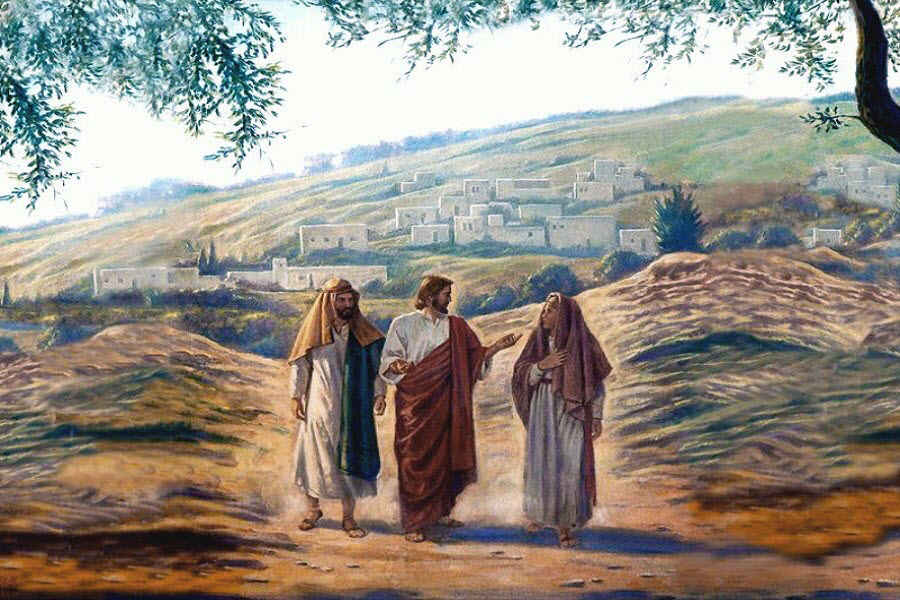
Luke 24:13-35: Later that day, two disciples are walking toward the village of Emmaus, talking about what happened to Jesus and trying to make sense of it. We don’t know who these disciples were, or if they belonged to “the eleven” or were part of the larger group of Jesus’ followers.

Jesus joins them as they walk and engages them in conversation. They explain their confusion: they had thought that Jesus was the Messiah, but when He was captured and killed, they began to doubt. They also mention the report of the women who had been to the tomb, and that they are struggling to know whether to believe it, because despite the women claiming to have seen the angels and Jesus, when the disciples (including Peter and John) went to check it out for themselves, they saw neither Jesus nor angels at the tomb.

Jesus then said to them, 25“O foolish ones, and slow of heart to believe all that the prophets have spoken! 26Was it not necessary that the Christ should suffer these things and enter into his glory?” 27And beginning with Moses and all the Prophets, he interpreted to them in all the Scriptures the things concerning himself. 

When the disciples arrive to their destination, Jesus acts as if He will go on further down the road, but they press Him to eat with them. 30When he was at table with them, he took the bread and blessed and broke it and gave it to them. 31And their eyes were opened, and they recognized him. And he vanished from their sight.

They then rush back to Jerusalem to tell the others.

Jesus Appears to the Disciples Behind Locked Doors in Jerusalem

Luke 24:36–43; John 20:19–23: On the evening of that same day, as the disciples were gathered together behind locked doors, Jesus appeared in the room with them.

Jesus showed them His hands and side. He ate with them. He then breathed on them, imparting the Holy Spirit to them (as promised in John 14:17), and conveyed His mission to them. Despite imparting the Spirit, He also tells them to wait in Jerusalem until they are clothed with power from on high – speaking of the empowerment they would receive on Pentecost (cf. Acts 1:8). Even though the disciples have been called to meet with Jesus in Galilee, they will return to Jerusalem for Jesus’ ascension (40 days after the resurrection) and to wait for this empowerment (received 50 days after the resurrection).

During this meeting, Jesus opened their minds to understand the Scriptures, and explained to them everything written about Him in the Law of Moses, the Prophets, and the Psalms (i.e. the entire Hebrew Bible, AKA “Old Testament”). By doing this, Jesus showed them the hermeneutical key to understanding the Bible; that it is a book about Him.

Thomas was not present on this occasion.

Jesus Appears to the Disciples with Thomas Present

John 20:26-29: Eight days later, apparently in the same location in Jerusalem, Jesus appears to the disciples again, this time with Thomas present.

Jesus calls Thomas to not disbelieve, but believe. Having seen Jesus’ wounds and heard His call to believe, Thomas exclaims a confession of faith in Jesus as “My Lord and my God!”

In Galilee

Matthew 28:16-20: Assumedly after the meeting in Jerusalem where Thomas was present, Jesus’ disciples meet Him on a mountain in Galilee, where the disciples worship Him, and Jesus commissions them to go and make disciples of all nations, baptizing them in the name of the Father, the Son, and Holy Spirit.

John 21:1-23: Jesus meets with the disciples on the shore of the Sea of Galilee, where they share breakfast and Jesus restores Peter to a leadership role after Peter’s denial of Jesus on the night of His arrest.

Other Appearances

In 1 Corinthians 15:5-7 Paul the Apostle lists some other appearances of Jesus, but we aren’t quite sure when or where they took place:

  • A private meeting with Peter (1 Corinthians 15:5)
  • A large group of over 500 people at one time (1 Corinthians 15:6)
  • A meeting with James — likely the half-brother of Jesus, who later became the leader of the Jerusalem church and the author of the Epistle of James – (1 Corinthians 15:7)
  • An appearance to “all the apostles” (apparently a broader group than just “the twelve” (cf. 1 Cor. 15:5)

Conclusion

By harmonizing the Gospel accounts, we get a three-dimensional picture of Jesus’ post-resurrection appearances.

For further study, check out the series of messages I taught a few years ago called “The Resurrected Life” – in which I preached about some of the post-resurrection passages: The Risen Life (2021)

Theology of Disability: The Image of God & the Mission of the Church – with Sandra Peoples

In this episode of the Theology for the People Podcast, I speak with Sandra Peoples — a disability ministry consultant, author, and pastor’s wife — to discuss her new book: Accessible Church: A Gospel-Centered Vision for Including People with Disabilities and Their Families

Sandra shares from personal experience as both a sister and mother of individuals with disabilities, and she casts a compelling vision for churches to become accessible and inclusive to people of all ability levels.

They explore the theological foundations for understanding disability, the relational and spiritual impacts of accessibility, and practical ways churches of any size can serve individuals and families affected by disability.

Whether you’re a pastor, ministry leader, or church member, this conversation will challenge and equip you to take steps toward a more inclusive and grace-filled church culture.

👉 Learn more about Sandra’s work and resources at sandrapeoples.com

Follow Theology for the People on YouTube⁠https://www.youtube.com/@theologyforthepeople

Click here to listen to the episode, or listen in the embedded player below.

Theology of Disability: the Image of God & the Mission of the Church – with Sandra Peoples Theology for the People

In this episode, Nick Cady is joined by Sandra Peoples — a disability ministry consultant, author, and pastor's wife — to discuss her new book: Accessible Church: A Gospel-Centered Vision for Including People with Disabilities and Their FamiliesSandra shares from personal experience as both a sister and mother of individuals with disabilities, and she casts a compelling vision for churches to become accessible and inclusive to people of all ability levels.They explore the theological foundations for understanding disability, the relational and spiritual impacts of accessibility, and practical ways churches of any size can serve individuals and families affected by disability. Whether you're a pastor, ministry leader, or church member, this conversation will challenge and equip you to take steps toward a more inclusive and grace-filled church culture.👉 Learn more about Sandra’s work and resources at sandrapeoples.comFind articles and more content at TheologyforthePeople.com

I have recently started posting more on the Theology for the People YouTube channel. You can watch this interview on video here:

Cultivating a Heavenward Mindset in an Epicurean World – with Cameron Cole

Cameron Cole experienced every parent’s worst nightmare: they put their son to bed one night, and in the morning they awoke to find that he had died in his sleep. However, the message of the Gospel, is that their son did indeed wake up — in a greater and more profound way: he awoke to eternal life with Jesus, his Savior.

In the wake of his son’s death, Cameron did a deep dive into the passages in the New Testament where Paul the Apostle writes about Heaven and eternal life. That study gave birth to his recent book, Heavenward: How Eternity Can Change Your Life on Earth.

In this episode of the Theology for the People Podcast, I speak with Cameron about what he learned through this experience, and how it made him more heavenly minded. Cameron also shares about how to the hope of eternal life ought to shape the way we live here and now.

Cameron’s ministry, Rooted, seeks to equip parents and churches to disciple children and students towards lifelong faith in Jesus Christ.

Click here to listen to the episode, or listen in the embedded player below.

Cultivating a Heavenward Mindset in an Epicurean World – with Cameron Cole Theology for the People

Cameron Cole experienced every parent’s worst nightmare: they put their son to bed one night, and in the morning they awoke to find that he had died in his sleep. However, the message of the Gospel, is that their son did indeed wake up in a greater and more profound way: he awoke to eternal life with Jesus, his Savior. In the wake of his son’s death, Cameron did a deep dive into the passages in the New Testament where Paul the Apostle writes about Heaven and Eternal Life. That study gave birth to his recent book, Heavenward: How Eternity Can Change Your Life on Earth. In our discussion, Cameron shares what he learned through this experience, and how it made him more heavenly minded. Cameron also shares about how to the hope of eternal life ought to shape the way we live here and now. Check out Cameron’s ministry: Rooted, which seeks to equip parents and churches to disciple children and students towards lifelong faith in Jesus Christ. Visit the Theology for the People website at nickcady.org

Reader Response: What Does John 10:17-18 Mean?

There is a page on this site where readers can submit questions or suggest topics. Recently I received the following question:

Please kindly explain John chapter 10 verses 17 and 18.

Here’s what those verses say:

For this reason the Father loves me, because I lay down my life that I may take it up again. No one takes it from me, but I lay it down of my own accord. I have authority to lay it down, and I have authority to take it up again. This charge I have received from my Father.”

John 10:17-18

Context: The Good Shepherd Discourse

In John 10:1-18, Jesus gives the Good Shepherd Discourse, which he spoke in response to the events that took place in John 9 and the actions of the “bad shepherds” of Israel: the religious leaders who had excommunicated a family because they refused to deny that Jesus had healed their son who had been blind from birth.

In response to the actions and attitudes of the “bad shepherds,” Jesus describes himself as the Good Shepherd.

Fulfillment of Messianic Prophecies

In Ezekiel 34:23 and 37:24, Ezekiel (writing hundreds of years after the death of King David), predicted a future day when “David” would rule over the people of Israel as their single shepherd.

Rather than having many shepherds (spiritual leaders), who were often bad, God was going to raise up a single shepherd, from the line of David. This was certainly a reference to the promise God made to David in 2 Samuel 8, called the Davidic Covenant, in which God promised that the Messiah would come from David’s family line.

Consider this passage from Jeremiah 23, which is clearly speaking of Jesus as the future, coming “Good Shepherd.”

“Woe to the shepherds who destroy and scatter the sheep of my pasture!” declares the LORD. Therefore thus says the LORD, the God of Israel, concerning the shepherds who care for my people: “You have scattered my flock and have driven them away, and you have not attended to them. Behold, I will attend to you for your evil deeds, declares the LORD. Then I will gather the remnant of my flock out of all the countries where I have driven them, and I will bring them back to their fold, and they shall be fruitful and multiply. I will set shepherds over them who will care for them, and they shall fear no more, nor be dismayed, neither shall any be missing, declares the LORD.
“Behold, the days are coming, declares the LORD, when I will raise up for David a righteous Branch, and he shall reign as king and deal wisely, and shall execute justice and righteousness in the land. In his days Judah will be saved, and Israel will dwell securely. And this is the name by which he will be called: The LORD is our righteousness.’

Jeremiah 23:1-6

So, that’s the context for what Jesus says in John 10:17-18.

The Good Shepherd Lays Down His Life for the Sheep

In this section, in verses 11 and 15, Jesus says that, as the Good Shepherd, one of the things which differentiates him from the bad shepherds – or really from all other shepherds, is that he will lay down his life for the sheep, which he explains is motivated by his love for them.

But in verses 17-18, Jesus shows that another motivation for laying down his life, is that he is doing it in obedience to the Father.

The Connection Between Love and Keeping God’s Commands

Verse 17 should not be understood to mean that Jesus earns the Father’s love by laying down his life, rather that there is a relationship of mutual love between the Father and the Son. Jesus’s obedience to the Father’s authority and commands is a reflection of his love for the Father.

In John 14:15, Jesus told his disciples: “If you love me, you will keep my commandments.” And in John 15:10, Jesus explains that “abiding” in his love looks like, in practice: keeping his commands, just as he keeps the Fathers commands and thereby abides in the Father’s love:

Abide in my love. If you keep my commandments, you will abide in my love, just as I have kept my Father’s commandments and abide in his love.

John 15:9b-10

Clearly there is a connection between love and keeping God’s commands. Jesus expressed his love for the Father by doing what the Father had called him to do, and there was a relationship of mutual love between them, which manifested itself in Jesus being willing and glad to submit to the Father’s authority.

Laying Down His Life, Only to Take It Up Again

In verses 17 and 18, Jesus explains that the plan of the Father, by which he would save his people from their sins (cf. Matthew 1:21) was not only that he would lay down his life, but that he would take it up again, i.e. resurrect from the dead.

This is one of the few places in the New Testament where Jesus’ resurrection is attributed as an action of Jesus himself. In most other places, God the Father is described as raising Jesus from the dead. This is important because it is one more example of the fact that the Bible teaches that Jesus is God: because Jesus does the works that are attributed to God alone, e.g. the creation of the world.

On a human level, Jesus’ life was taken from him by the actions of evil men. And yet, as we see in verse 18, those events were not outside of Jesus’ control. Jesus was not as a victim of circumstance, but the one who was in control of his destiny. Later on, during his trial, before he was crucified, Pontius Pilate said to Jesus, “Don’t you realize I have power either to free you or to crucify you?” (John 19:10). Jesus replied, “‘”You would have no power over me if it were not given to you from above” (John 19:11). These incidents show that Jesus was in control of his own destiny.

A good example of this two-fold understanding of why Jesus died is found in Acts 2:23, where Peter says to the crowd gathered on the day of Pentecost:

this Jesus, delivered up according to the definite plan and foreknowledge of God, you crucified and killed by the hands of lawless men.

Acts 2:23

In this verse we see both the human responsibility and the plan of God which were at work in the death of Jesus. Jesus laid down his life willingly; he certainly could have walked away from the Garden of Gethsemane on the night when he was arrested. He didn’t have to come to Jerusalem at all, actually – and many people urged him not to! But Jesus went, knowing what awaited him, intent on laying down his life BOTH as an act of loving obedience to the Father who sent him, and as an act of loving redemption for those whom he came to save.

Ask a Question or Suggest a Topic

If you have a question or would like to suggest a topic for me to address here on the blog, click here: Ask a Question or Suggest a Topic

What Happened to the Guards Who Were Watching Over Jesus’ Tomb?

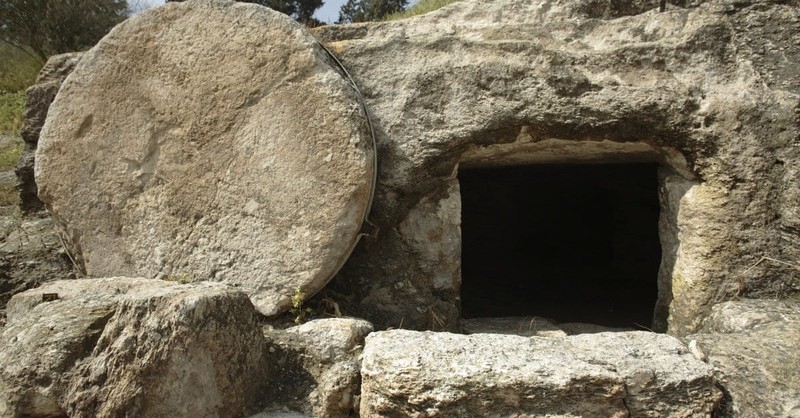
According to the Gospel of Matthew, the guards who were watching over Jesus’ tomb reported to the chief priests what had happened when the angel of the Lord appeared and rolled away the stone from the tomb (Matthew 28:2).

Matthew 28:11-15 says that the chief priests paid the guards a large sum of money and instructed them to say that the disciples came and stole Jesus’ body while they were asleep.

These guards were Roman soldiers who were assigned to keep watch over the tomb. We don’t know if they were punished for failing in their duty to protect the tomb, which would have been normal practice at that time, nor do we know if they got in trouble for accepting the bribe from the chief priests.

It is clear from Matthew’s Gospel that the guards were aware of the miraculous events that took place at the tomb. Perhaps they ran away when the earthquake happened or the stone rolled away from the entrance. We don’t know if they saw Jesus walk out of the tomb or not.

No matter when they left the scene, they would have been left with a powerful testimony to Jesus’ resurrection, as would the chief priests. It is significant to remember what it says in Acts 6:7, that many of the priests in Jerusalem became believers in Jesus. I wonder if any of those who became believers were part of the group who paid off the guards!

This video is particularly good at depicting the incredulity of the idea that Jesus’ disciples stole his body:

What Proof is there that Jesus Actually Resurrected?

On this episode of the Theology for the People podcast, Michael Payne and I discuss what is at stake in regard to Jesus’ resurrection, as well as some alternative explanations for Jesus’ missing body that have been proposed. Finally, we share some of the strongest evidences for why Christians believe that Jesus did in fact rise from the grave.

Click here to listen to the episode, or listen in the embedded player below.

What Proof is there that Jesus Actually Resurrected? Theology for the People

In this episode, Nick Cady and Michael Payne discuss what is at stake in regard to Jesus' resurrection, as well as some alternative explanations for Jesus' missing body that have been proposed. Finally, they share some of the strongest evidences for why Christians believe that Jesus did in fact rise from the grave. For more from Nick and Mike, check out the White Fields Church Podcast, whitefieldschurch.com, or the White Fields YouTube channel. Make sure to visit the Theology for the People blog at nickcady.org for more articles and content.

Will We Really See Our Loved Ones In Heaven?

When someone is sick or dying, or when a loved one has passed away, it’s common for people to comfort each other by telling them that they will be reunited with that person in Heaven.

But does the Bible actually teach this, or do we just say it because it is a “sweet little lie” that makes us feel better?

Clearly the Bible does teach about Heaven and eternal life for those who believe, but does the Bible actually teach that we will be reunited with people we knew on Earth? Are there any passages in the Bible that teach that we will recognize each other and hang out in Heaven?

Reunited and It Feels So Good

In 2 Samuel 12, when David’s infant son was sick, David fasted and prayed. When his son then died, David’s servants were afraid to break the news to him, thinking that if he was so distraught over his son being sick, surely the news of his son’s death would send him over the edge…

When David saw his servants whispering, he realized his son had died. Rather than being distraught, David was at peace – much to the surprise of his servants.

David explained his response by pointing out that since his son was dead, there was now no more he could do; praying for his son’s recovery wouldn’t help at this point. Instead, David went to the house of the Lord and worshiped, explaining to his servants that he was at peace, since, he said, “I shall go to him, but he will not return to me.” (2 Samuel 12:23)

David clearly took comfort in the knowledge that he would be reunited with his son in the life to come.

But this begs a question: When David would see his son, who died in infancy, would that child be an infant perpetually, for all of eternity? That question finds answers in some other passages in the New Testament, which we will consider next.

Recognizing…But Not Right Away

The gospel accounts in Luke 24 and John 20 tell us that when Jesus resurrected, three days after his crucifixion, some of his disciples met with him, but they did not immediately recognize him. After they realized it was him, however, they did recognize him.

This is an important detail for several reasons. In 1 Corinthians 15:20, Paul the Apostle explains that Jesus was the “first fruits” of those resurrected from the dead to eternal life. Other people had been raised back to life, but those people all subsequently died again, that time for good. Jesus was the first to raise to never die again – the fate which awaits those who believe in Him.

As the “first fruits” of those raised from the dead to eternal life, Jesus’ resurrection body is a prototype of what our resurrection bodies will be like. So what was Jesus’ resurrection body like?

We know from John 20 and Luke 24, that Jesus’ body was physical, for he ate food and people touched him. Yet, his physical body also had properties which were different than our moral bodies; he entered a locked room without using a door, for example.

Furthermore, Jesus’ appearance was, on the one hand, recognizable, and on the other hand, different enough that his closest friends didn’t recognize him – until they did.

In 1 Corinthians 15, Paul the Apostle mentions that over 500 people saw Jesus at one point after his resurrection, and those people all recognized that it was Jesus. When Jesus appeared to Thomas, who doubted that he had actually risen from the dead, Thomas recognized him, touched him, talked with him, and believed.

For these reasons, we can conclude that our bodies, in the resurrection and eternal life will be:

  • Physical, yet with unique properties that our mortal bodies do not possess.
  • Recognizable, yet somewhat different than the way you look now. (It seems reasonable to assume that infants will not be infants forever, and that these new bodies will be free of infirmity or other limitations related to age). It will truly be you, and will be recognizable as you, but will not be identical to your current appearance.

For more on the resurrection body, check out this message on 1 Corinthians 15:35-58.

The Transfiguration

In Luke 9, we read about Jesus’ transfiguration, when his closest disciples were allowed to see a glimpse of his divine glory. During the transfiguration, Moses and Elijah appeared with Jesus before their eyes, and it says that the disciples recognized them.

This is interesting, because the disciples had never seen Moses nor Elijah, since they died long before the disciples were born. The disciples were able to recognize them somehow, possibly by interacting or speaking with them, or though their personalities.

Either way, it’s an example of long-deceased people being recognized as who they were. The implication is that in the life to come, people will be recognizable, and interact with those who have passed away before them.

That Weird Story about the Prophet Samuel and the Witch of Endor

Another story in which we see an instance of a deceased person interacting with and being recognized by someone they previously knew in this life, is found in 1 Samuel 28:8-17, where King Saul asked a necromancer to summon Samuel the Prophet, so Samuel could give him advice.

In this story, it seems that the necromancer is genuinely surprised that Samuel actually appeared. Her usual practice, in other words, didn’t produce that result. It can be assumed she was a charlatan, and that the deceased do not usually interact with the living, yet on this occasion, God allowed an exception, in order to teach King Saul an important lesson.

Reunited in the Sky

In 1 Thessalonians 4, Paul encourages the Thessalonians, and us, regarding the fate of those believers who have died prior to the return of Jesus. For the first Christians, who expected Jesus to return in their lifetime, they were genuinely surprised by and confused about the death of other Christians who had died Jesus had returned.

Paul encourages them by telling them that when Jesus returns, those who died in faith will be resurrected, and we who are alive will be caught up and we will meet Jesus and those who passed away before us in the sky. Paul then tells us to encourage each other with these words.

The Rich Man, Lazarus, and Abraham

In Luke 16, Jesus tells a story about two men who died, and what happened to them after they died. One was an unnamed rich man, the other was a poor man named Lazarus.

The irony of the the reversal is poignant: a man who had “a name” on Earth, and a “nameless” beggar – yet in eternity, the beggar has a name and the rich man is nameless.

These men find themselves in Sheol, a place of waiting, which is divided into two parts, with an impassable chasm between them: Abraham’s Bosom – a place of waiting for the redemption promised in the Messiah, and Hades – a place of waiting for the ultimate judgment.

For more on Sheol, Abraham’s Bosom, and Hades, see: Did People Go to Heaven Before Jesus’ Death & Resurrection?

Interestingly, these two men not only recognize and interact with each other, but they recognize and interact with Abraham – yet another example of people in the afterlife interacting with and recognizing each other.

Eden Restored (and then some)

The Bible begins with God placing the man and woman he created in a garden paradise in Eden, and charging them to be fruitful and multiple. Sin, however, comes into the good creation, leading to death and destruction. God immediately announces his plan of redemption through a savior, but the effects of sin are pervasive.

In Revelation 21, we see that after God has redeemed the world and defeated evil, Satan, and death, that there will be a new Earth. In this new Earth, we see a scene strikingly similar to Eden; people dwell with God, and there is a special tree: the Tree of Life, which hasn’t been seen since the garden paradise of Eden back in the Book of Genesis.

There is a difference, however: whereas Eden was a garden, this new place is a garden city. This place, in other words, isn’t just Eden restored, it is Eden fulfilled: it is what Eden would have become if sin and death hadn’t entered into the world.

The reason this is important for our discussion, is because it shows that Heaven will not be an ethereal place where we will float on clouds, or live in mansions. (The word “mansions” in some English translations of John 14:2 is a poor translation. The word monai should rightly be translated “rooms.”) Heaven will be a physical place, similar to the world we currently live in, but – just like our resurrection bodies – with important differences, and free from entropy and decay.

Conclusion

With all these thoughts together, we can be fairly confident that for those who are “in Christ,” who have put their faith and trust in him, we will indeed be reunited with our loved ones in eternity.

For further reading, I recommend Randy Alcorn’s book Heaven.

If “It’s All Gonna Burn” Then What’s the Point? – How the Resurrection Gives Meaning to Work & Art

In this episode I’m joined by Pastor Jon Markey from Ternopil, Ukraine. Along with being a pastor and missionary, Jon is a musician and producer. We discuss how the resurrection infuses our lives, including our work and art, with meaning and purpose.

Sometimes people have the idea that if the world is going to burn anyway, then there is no point in trying to invest time and energy into work or art in this world; it would simply be akin to hanging curtains in a house that is on fire. However, as Jon and I discuss, Jesus’ resurrection changes that story in a big way.

Check out Jon and Steffie’s work at Room for More on Instagram and YouTube.

Click here to listen to the episode, or listen in the embedded player below:

If "It's All Gonna Burn" Then What's the Point? – How the Resurrection Gives Meaning to Work & Art Theology for the People

In this episode I'm joined by Pastor Jon Markey from Ternopil, Ukraine. Along with being a pastor and missionary, Jon is a musician and producer. We discuss how the resurrection infuses our lives, including our work and art, with meaning and purpose. Sometimes people have the idea that if the world is going to burn anyway, then there is no point in trying to invest time and energy into work or art in this world; it would simply be akin to hanging curtains in a house that is on fire. However, as Jon and I discuss, Jesus' resurrection changes that story in a big way. Check out Jon and Steffie's work at Room for More: Instagram YouTube 

Sri Lanka & the Hope of the Resurrection

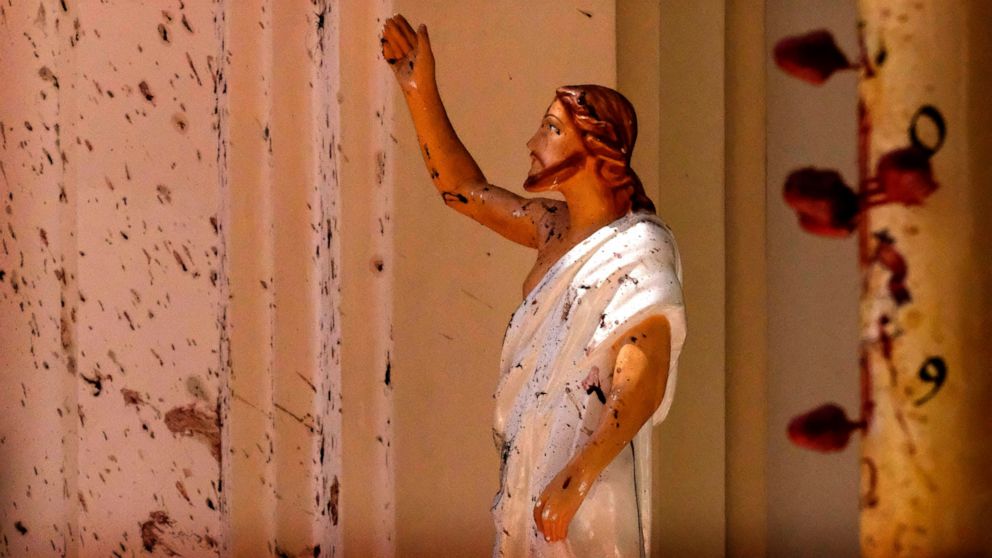
Image result for sri lanka jesus statue covered in blood
Church in Negombo, Sri Lanka after the attack on Easter Sunday

Jesus said, “I am the resurrection and the life. Whoever believes in me, though he die, yet shall he live.” (John 11:25)

Yesterday, as people around the world gathered to celebrate the resurrection of Jesus, terrorists attacked three churches in Sri Lanka, killing nearly 300 and injuring over 500. [source]

The irony of the situation is profound: The goal of terrorism is to incite fear by taking lives, but they carried out their attacks on the day when Christians revel in the fact that we can live without fear because of the hope that we have in eternal life.

What Jesus’ resurrection means for Christians, is that not only did Jesus die to forgive our sins, but he rose from the grave to conquer over death forever, so that we can have eternal life.

1 Corinthians 15 tells us that Jesus is the “first fruits” of those who are going to be resurrected to eternal life, and because that is true, death has lost its sting! Death will not have the final word.

As a result of this great truth, we who have this hope of eternal lives are free to live without fear. We are free to be courageous and generous, because we have nothing to lose – and the greatest gain is already ours!

Paul the Apostle put it this way: “If the dead are not raised, then we should just eat and drink for tomorrow we die.” (1 Corinthians 15:32) The idea is that, if this life is all we’ve got, then it would make sense for us to be selfish and short-sighted with the time we’ve got, since this is all we have. However, if Jesus did indeed rise from the dead, and we will too – then “to live is Christ, and to die is gain!” (Philippians 1:21)

If you have the hope of eternal life, then this life isn’t as good as it will ever get for you, rather, this life is as bad as it will ever be for you. If you know that you’ve got a thousand, million, billion years ahead of you, in which you will experience joy, security, adventure and love, then you are truly free to use the little window of time you’ve got here on Earth in the service of others, and in the service of God.

If you have the hope of eternal life, you are free to love sacrificially, and to give without holding back!

In other words: Jesus’ resurrection makes us brave, because it gives us hope.

Jesus’ disciples who saw him after his resurrection were so transformed by it, that they went from being timid and fearful to being bold, to the point where they came out of hiding and publicly proclaimed their faith, unwaveringly – even in the face of violence towards them and their families. As Paul says in Acts 13:31, they became “witnesses to the people”; rather than fearing for their lives, they boldly carried out a mission.

Our hearts break, and our prayers go out for those who are suffering from injuries, as well as for the families who were affected by this horrible act of violence. Our hearts ache as we look around and see the brokenness in the world, manifesting itself in hatred and violence. But as Christians, we must refuse to live in fear.

Instead, we set our hearts and minds all the more on the fact that we are pilgrims in this world, and our purpose here is not comfort or security. The time for comfort and security will come – fully and forever! But our time here on Earth is to be dedicated to courageously doing the will of God and carrying out His mission in the world, to bring to others the love of God and the good news of Jesus: the light of the world, who conquered death, and through whom we can have eternal life.

Easter Math: How Does it Add Up?

Have you ever wondered why the date of Easter changes every year?

Have you ever wondered how it can be that Jesus was in the grave for three days and three nights if he was crucified on a Friday and rose on a Sunday?

How does the Jewish Passover Week correspond with Jesus’ final week leading up to his crucifixion?

Check out this video in which Mike and I discuss these questions!  (Hint: Good Friday is indeed good, but it wasn’t a Friday…)